Cities are engines of innovation and failing to police them makes us poorer.
Cities are great because of agglomeration—firms, innovators, creatives, etc. being close.
In a landmark study published earlier this year, @StuartBDonovan found that crime disrupts urban agglomeration:
Cities are great because of agglomeration—firms, innovators, creatives, etc. being close.
In a landmark study published earlier this year, @StuartBDonovan found that crime disrupts urban agglomeration:
There are benefits to living in cities.
Urban dwellers enjoy a premium to their wages, but urban areas also command an increase to rents, because they're desirable locations to be.
You can use these correlated quantities in the investigation of agglomeration.
Urban dwellers enjoy a premium to their wages, but urban areas also command an increase to rents, because they're desirable locations to be.
You can use these correlated quantities in the investigation of agglomeration.
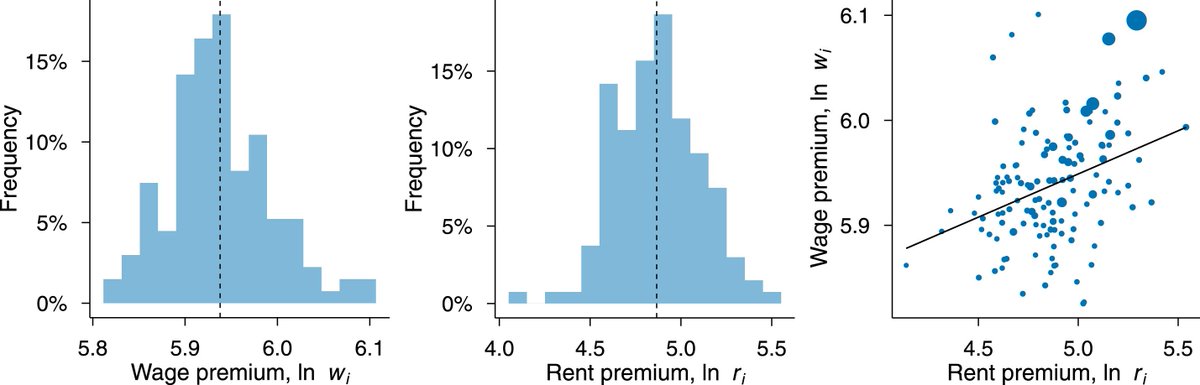
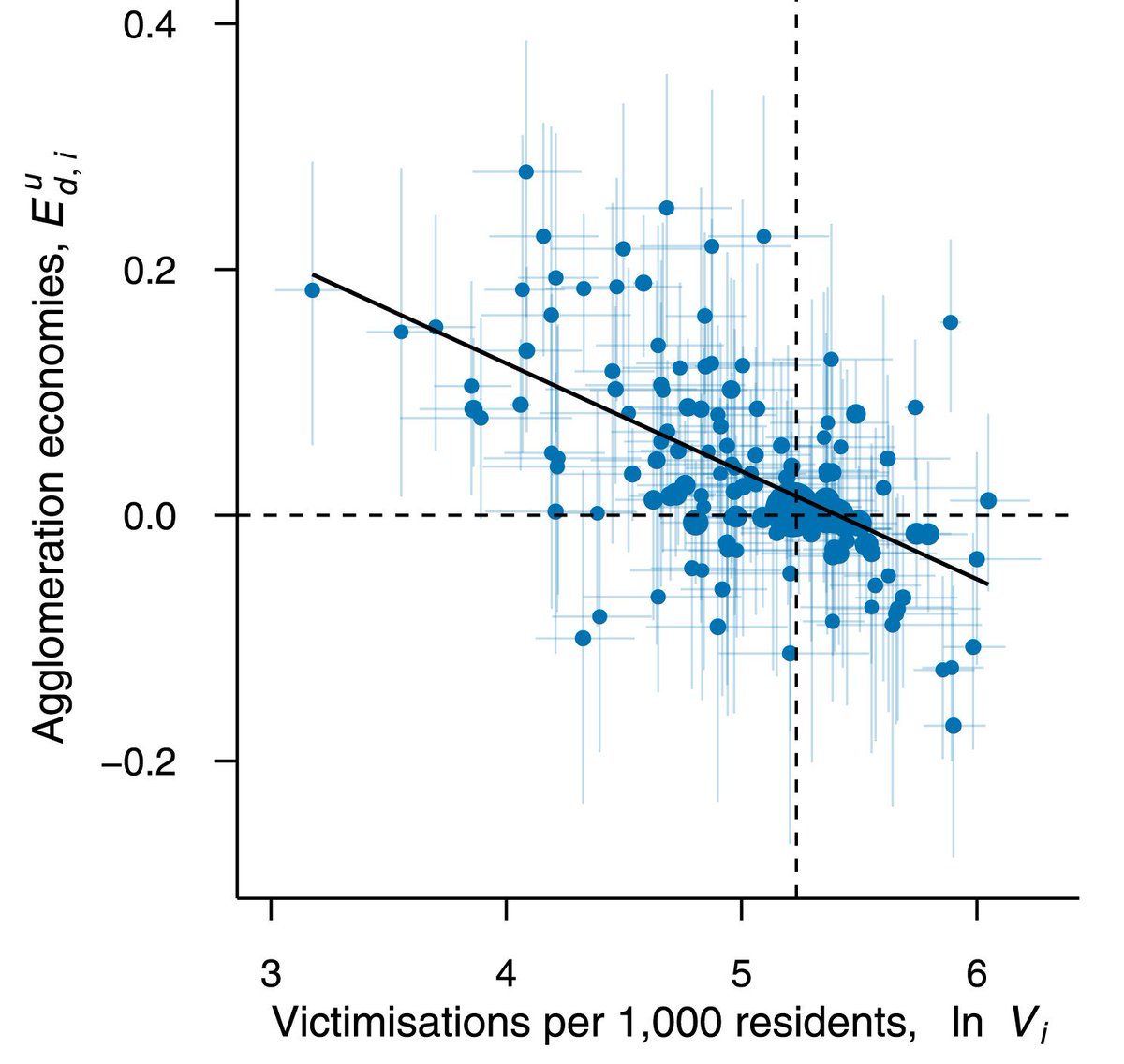
Both are correlated with one another, and with agglomeration (the benefits accruing to clumping people, firms, amenities, etc. together).
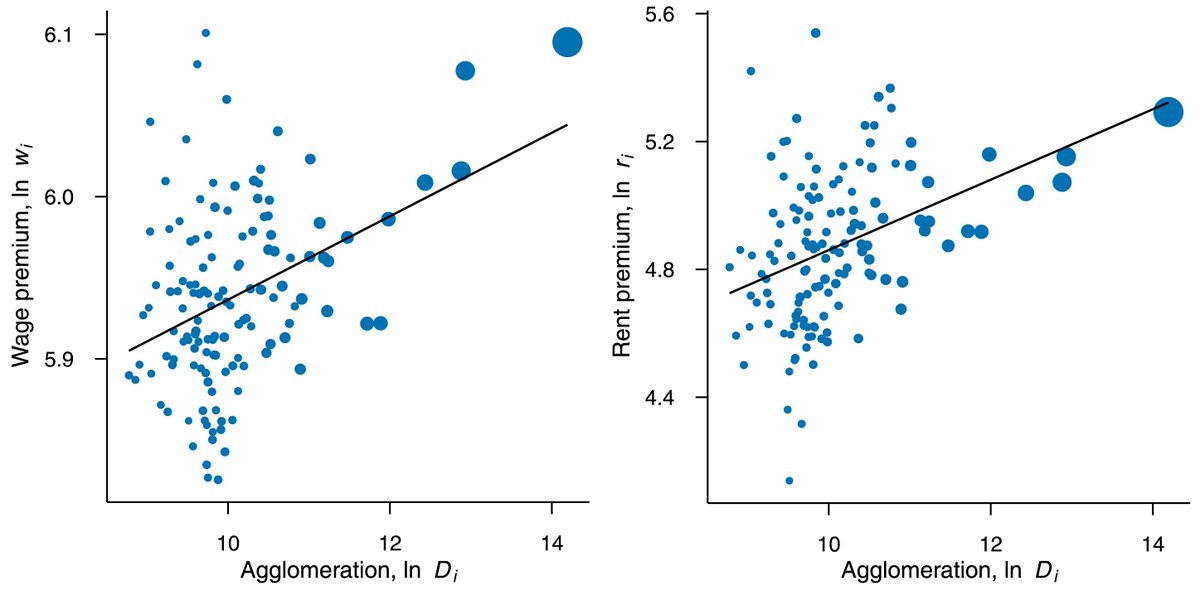
And both are negatively correlated with criminal victimizations in the area.
But the larger effect here runs through rents.
But the larger effect here runs through rents.

The picture these results paint is one where crime causes people to leave urban areas, and (at least partly in doing so) it reduces the value of urban amenities.
Crime makes it harder to enjoy the benefits of everyone being able to work together in a close area.
Crime makes it harder to enjoy the benefits of everyone being able to work together in a close area.
Crime is inimical to the civilizational purpose of cities.
Cities should be founts of creation, bastions of mobility, shiny places people go to build.
But if women are getting mugged, druggies are normal, and kids can't walk to school safely, cities can't fulfill that purpose.
Cities should be founts of creation, bastions of mobility, shiny places people go to build.
But if women are getting mugged, druggies are normal, and kids can't walk to school safely, cities can't fulfill that purpose.
There's a lot more to this paper, and I hope you all go read it, because it is very informative and it fleshes out so much more than I had space to say.
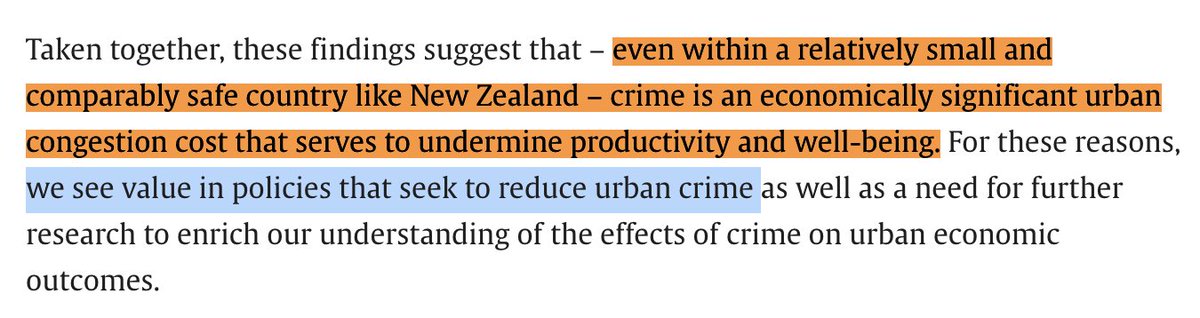
I'll leave with this quote from it:
I'll leave with this quote from it:
And a link: sciencedirect.com/science/articl…
And if you want to learn more about agglomeration, why not check out Stu's meta-analysis? Here it is: onlinelibrary.wiley.com/doi/10.1111/jo…
And if you want to learn more about agglomeration, why not check out Stu's meta-analysis? Here it is: onlinelibrary.wiley.com/doi/10.1111/jo…
And for further reading, see @mattyglesias on "Europe's 'law and order' urbanism": slowboring.com/p/europes-law-…
And see @Noahpinion on why you can't have a good city without controlling crime: noahpinion.blog/p/good-cities-…
And see @Noahpinion on why you can't have a good city without controlling crime: noahpinion.blog/p/good-cities-…
• • •
Missing some Tweet in this thread? You can try to
force a refresh