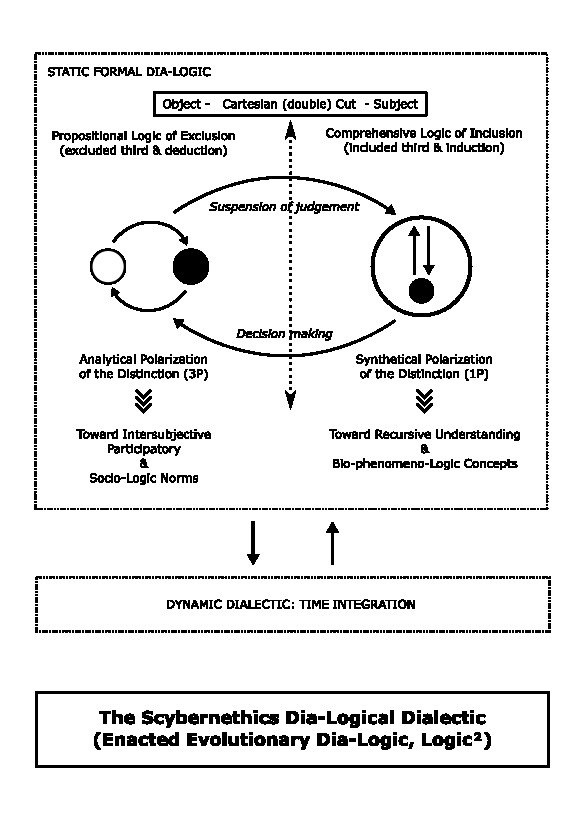
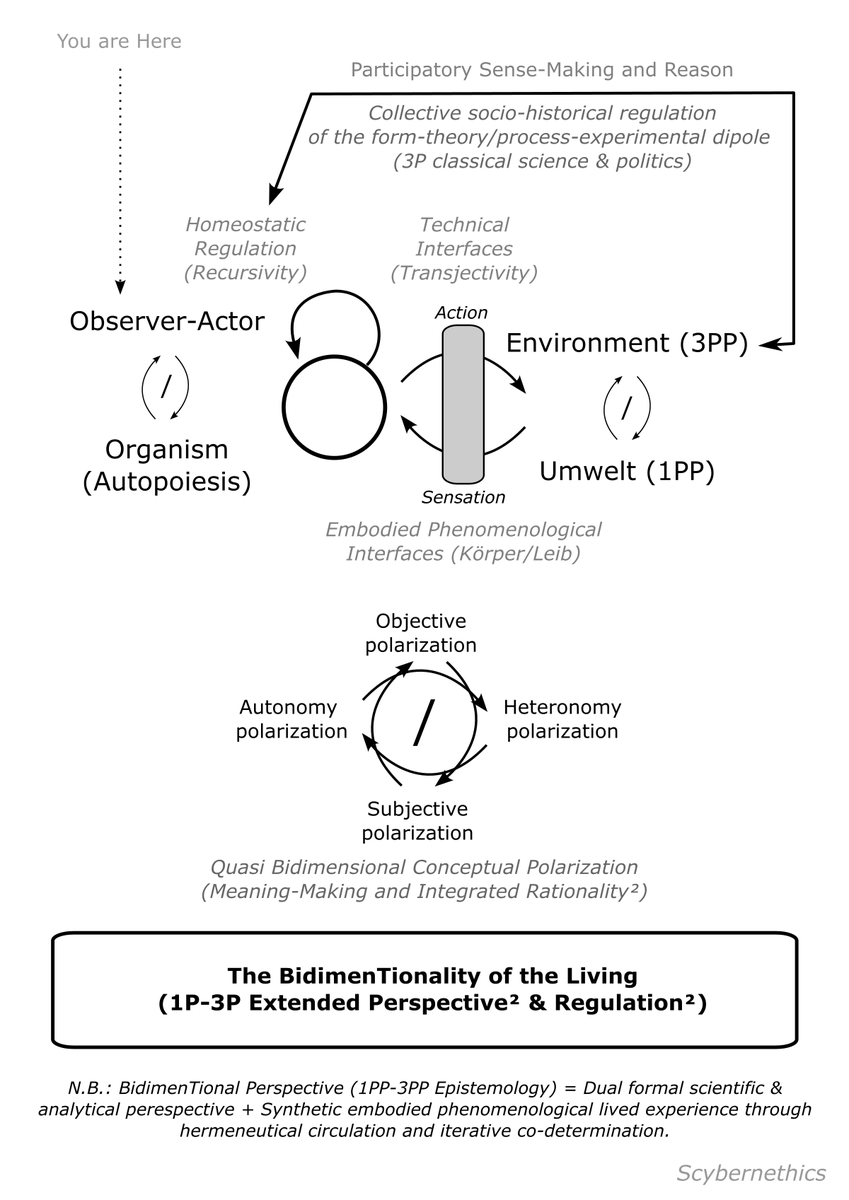
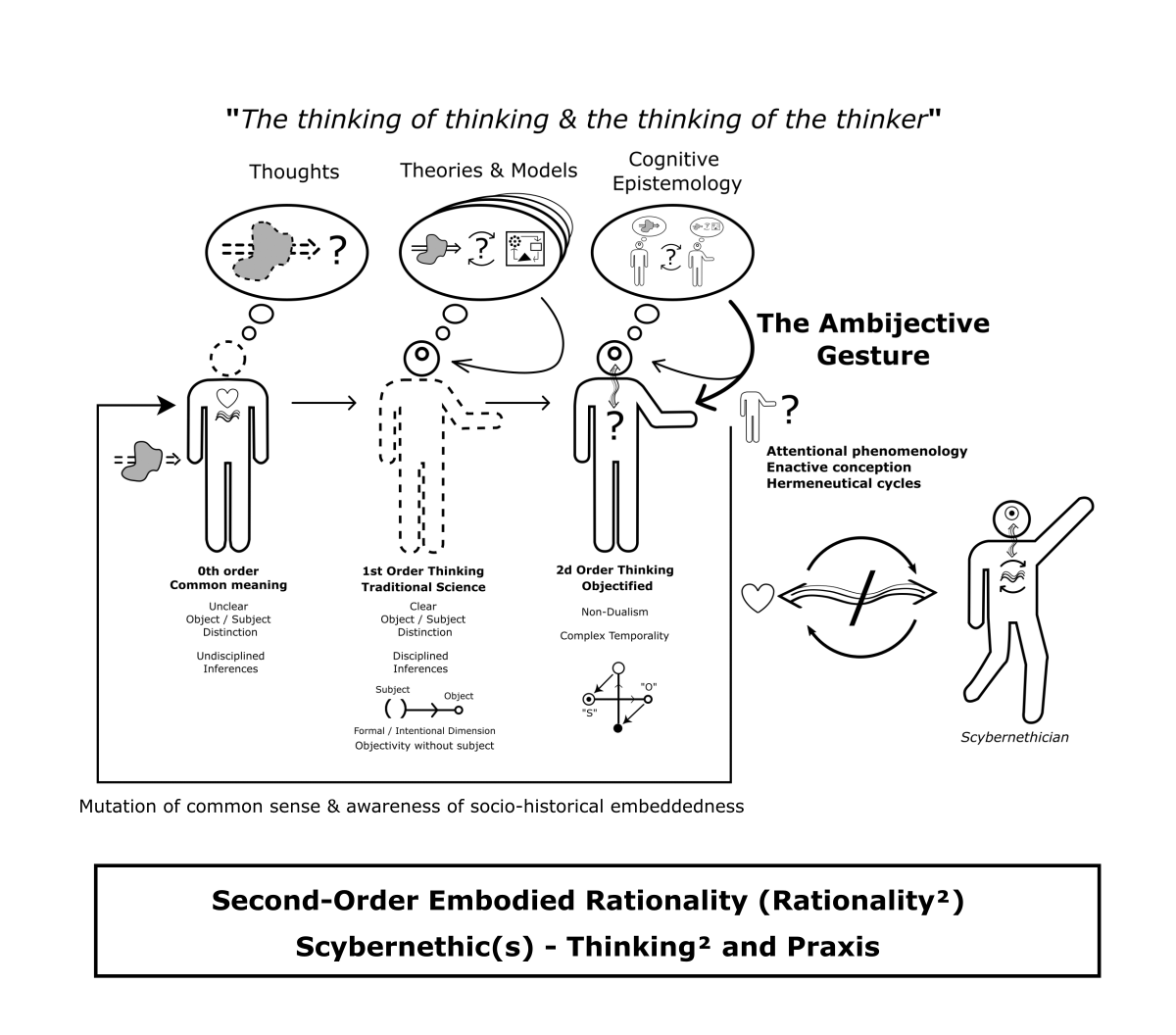
[ "Metaphysics": Formal Worldview vs Processual Method ] 🧵

I don't like the old term "metaphysics" because of its lack of analytical discrimination: do we speak politely about the subjective preconceptions of a view (so critically about its hidden & implicit political agenda), Image
or about its transcendental (Kant) a priori conditions of possibility?

Moreover, even if physics has historical precedence as a prototype of the objective study of the world-out-there, i.e. of a materialist so-called "realist" formal view,
science is today much broader, even if restricted to the sciences of nature (not so "natural"...), and physics much more fluffy.
I'm much more interested in speaking about today's *meta-epistemology and onto-epistemology*.
What's the point of conflicting different preconceptions of reality, moreover when one of its polarity is in phase with our usual common sense (popular/populist doxa), if we don't speak also and first about the way we know it?!
What makes science, in regard to a specific cognitive and phenomenological domain (discipline, ontological domain), is not so much its secondary communicated formal "worldview", but much more fundamentally it's enacted processual and evolutionary *method* (wink Descartes).
But the Cartesianist scientific method, a shifting importation of a philosophical view toward an applied view (Bacon), while wonderful to describe the world, totally failed to complexify our *experience* of it.
Back to square one, but this time with all the knowledge and technologies capitalized on cognition since his time, as science is also implicitly an inspirational recursive way of self-transformation:
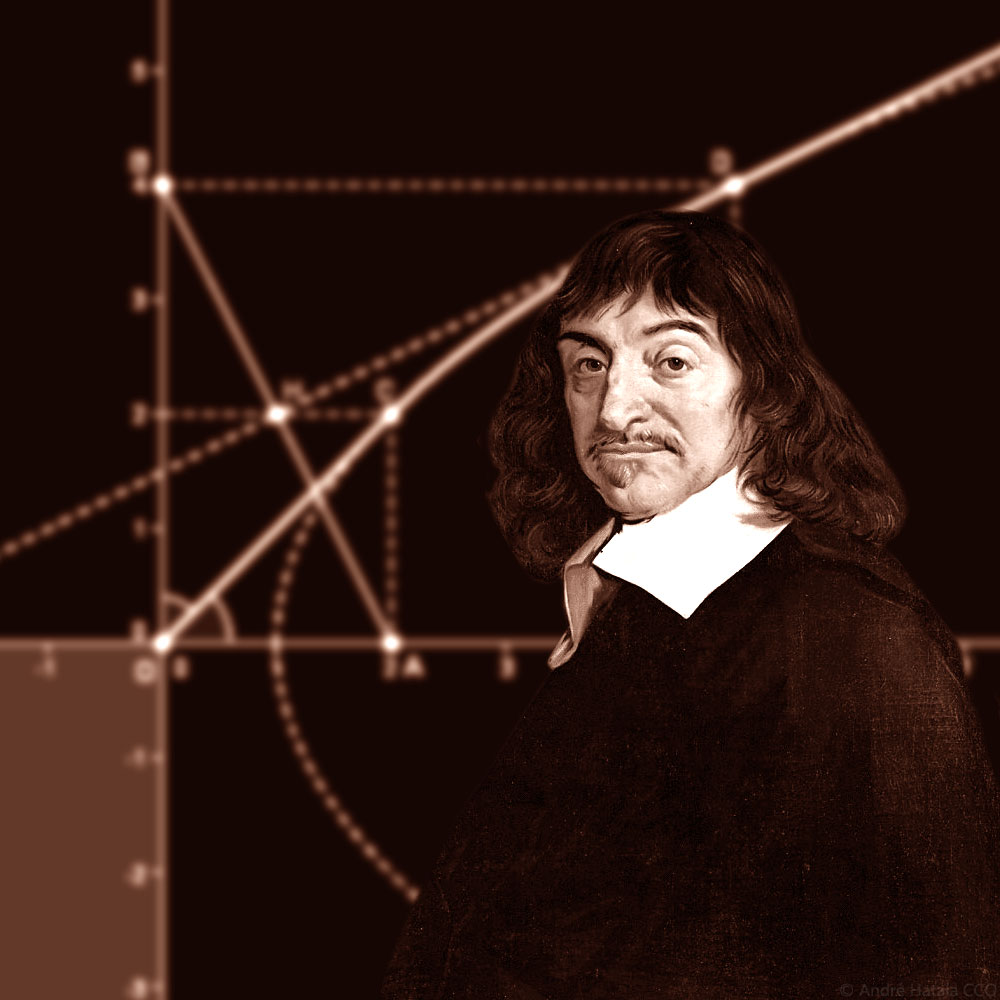
"Thus my intention here is not to teach the method that each person must follow to conduct his reason well, but only to show in what way I have tried to conduct mine".

- Descartes, Discourse on the Method. Image
@threadreaderapp unroll

• • •

Missing some Tweet in this thread? You can try to force a refresh

 

Keep Current with Christophe Rigon / Soto² 🪸 - Scybernethician

Christophe Rigon / Soto² 🪸 - Scybernethician Profile picture

Stay in touch and get notified when new unrolls are available from this author!

Read all threads

This Thread may be Removed Anytime!

PDF

Twitter may remove this content at anytime! Save it as PDF for later use!

Try unrolling a thread yourself!

how to unroll video
  1. Follow @ThreadReaderApp to mention us!

  2. From a Twitter thread mention us with a keyword "unroll"
@threadreaderapp unroll

Practice here first or read more on our help page!

More from @ki_cog

Jan 7
[ Logic²: from Morin's Complex Thinking to Ancient Catuṣkoṭi Logic ] 🧵🪡

I'm happy because yesterday I have finally academically sourced (G. Priest) my second order logic, or exploration heuristic and hermeneutic logic, the other complementary, Image
implicit and hidden face of classical normative and propositional logic (Aristotle, Russell, Frege, etc). Image
Both define what I call a bidimenTional formal space: one linear classical Cartesian representational dimension coupled orthogonally with a recursive self-referencial imaginary/complex (math. sense), "fractal" one. Image
Read 15 tweets
Jan 5
[ Scybernethics & Neurophenomenology ] 🧵🪡

Both shares the same influences (enaction) and objectives: to exceed the mind-mind problem (extension of the traditional mind-body problem, Jackendoff), i.e. relating computational & phenomenological aspects of the mind. Image
While neurophenomenology is polarized on the traditional first order of science, coupling the rational dimension with experimental empiricism, scybernethics is more philosophically polarized and aimed at the active transformation of the observer-actor himself.
In short, neurophenomenology is more normative while scybernethics is more heuristic and hermeneutical. Two faces of enactive science.
Read 12 tweets
Jan 2
[ Hacking the Machine (in Ourself) ] 🧵💉

People should stop blaming or adulating robotic machines and understand that they are just an objectified mirror of *our own automatism and conventions*. Image
It is important to see that this reflection can be used in a cognitive reverse engineering perspective (cognitive hacking) to better understand our own habitual and therefore uncontested *unconscious* habits of the body (concrete mechanics) and mind (abstract computations). Image
This is why it is essential to understand in depth, in a practical (know-how) and historical (evolutionary epistemology) way, what it means to "code" and design "functions".
Read 7 tweets
Jan 1
[ Defining Scybernethics ]

It is really hard for me to define "what" is scybernethics, as its nature is processual (how, why). For me, in the tradition of "Enaction" (Varela & al.), forms are always thought as a posteriori of processes. Image
Initially it was just a endeavor to model and theorize legitimately my own mind to better understand it because beyond the world in which I live, it was the other mystery I wanted to explore in my lifetime. Image
I can see now that It has led me from biology and computer modeling practices to a new and creative second order (von Foerster) phenomenological and cognitive domain, a new territory of our conceptual and rational space. Image
Read 11 tweets
Dec 28, 2024
[ The Form / Process Dipole & Enaction: Toward a New Rational Spiritual Path ] 🧵🪡

"I believe that the fundamental commitment of Euro Western civilization and thinking is to explain away movement by something that doesn’t move" - Thomas Nail.

👉 Image
For me, as an enactive and embodied thinker, all static formalizations (including this one) are to be understood more deeply as "enacted" by a socio-historical (history AND theories of epistemology) and organic (sensorimotor schemes) meta-stabilization process.
This process is a doubly recursive negative regulatory feedback ("groundless ground"/ouroboros) between what appear to us initially and analytically as two orthogonal/independant dimensions (the bidimenTionality of conceptual dipoles, antinomies, para-doxes).
Read 11 tweets
Dec 20, 2024
[ Distinction²: Scientific Normative Explanation is NOT Heuristic Understanding ]

The explanation/understanding conceptual dipole, as all c-dipoles, is *asymetrical* for the scientific observer-actor (phenomenological hysteresis process).

1/3
The normativity of a description is toward the general and uninformed public, so called "lay man", while the heuristic is toward informed peers only for stimulating meaning-making and creativity and which are aware of the complex context and subtle meaning conveyed.

2/3
Another common confusion in a technoscience facing its "saturation of disciplinary/ontological domains", trying to bridge non-ethically the mind-body problem, & at the same time unable to renew itself epistemologically toward an extended and second order 1P-3P epistemology.
3/3
Read 4 tweets

Did Thread Reader help you today?

Support us! We are indie developers!


This site is made by just two indie developers on a laptop doing marketing, support and development! Read more about the story.

Become a Premium Member ($3/month or $30/year) and get exclusive features!

Become Premium

Don't want to be a Premium member but still want to support us?

Make a small donation by buying us coffee ($5) or help with server cost ($10)

Donate via Paypal

Or Donate anonymously using crypto!

Ethereum

0xfe58350B80634f60Fa6Dc149a72b4DFbc17D341E copy

Bitcoin

3ATGMxNzCUFzxpMCHL5sWSt4DVtS8UqXpi copy

Thank you for your support!

Follow Us!

:(