@liu_universitet Is this in line with your code of conduct?
Looks like one university already ditched him.
The University has responded quickly.
I wonder if they are aware of Lonnis role in harassing the most cited microbiologist in the world (Didier) and Lonnis impact on the death of patients who lost access to HCQ based on his ideological inquisition?
Note PubPeer making ad hominem and associative fallacies regarding what groups I’ve interacted with in the past.
And they cite a factchecker with conflicted funding as a source.
So scientific.
You would think after all the papers that have replicated the dsDNA contamination in the vaccines, that the trolls at PubPeer could pick up a pipette.
Instead, they use ad homs, factchecks, and associative fallacies.
Can Lonni actually point out a flaw or must he outsource this to factcheckers?
Lonni spends alot of time concerned about peer review.
Notice this papers of his was submitted, peer reviewed and published in 1 day.
This is highly unusual for that Journal
Here he mocks papers that are reviewed in 24 hours. Do as I say, not as I do.
AI platforms are not impressed with his soft social science. Does PubPeer have any complaints about less than 1 day peer review?
He mocked people who pointed out the Surgisphere fraud.
H/T @Arta_PlasmidDNA
This 1 day review paper argued for your reduced mobility during the pandemic.
Does his PubPeer cult have anything to say about this?
If you need more toilet paper... this soft science paper is a good source. Its so soft its 5 ply.
Here Lonni argues for shutting down your schools.
Lots of publication bloat with editorials.
He can safely fire shots at real research while he bloats his embarrassing citation rate with fluff editorials that usually safe from retraction because they are just woke opinions.
As Lonni cries some more about it only being an Editorial.
He commonly publishes with Health Nerd.
Also known as BeijingGideon.
The Dead Man switch has been lifted. Im not dead but the paper has been accepted.
More edits may appear as the Journal typesets this but this stack has the most current versions, Nostr links, Bitcoin links and Zenodo links.
Why this matters-
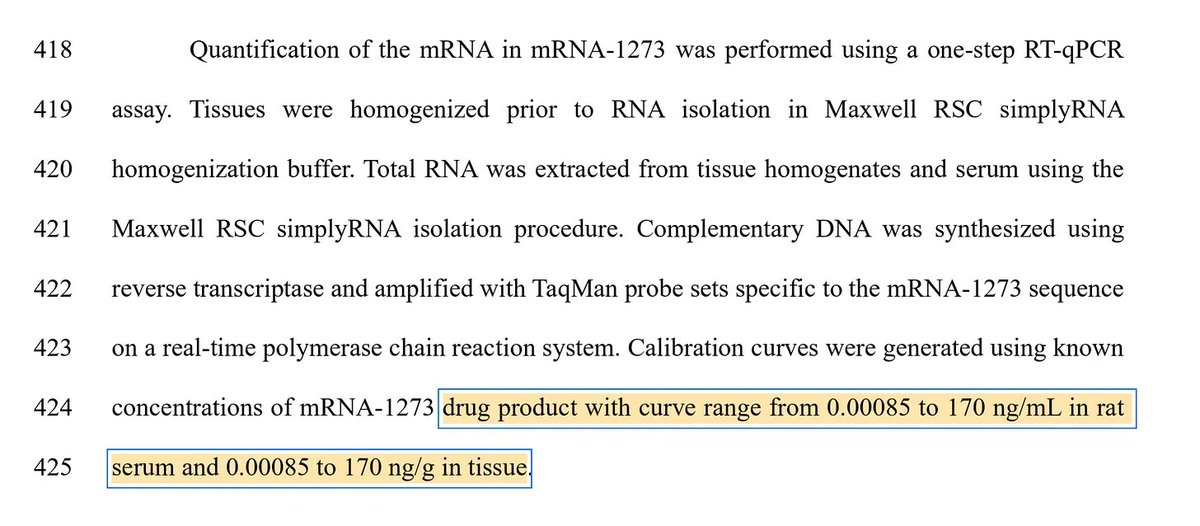
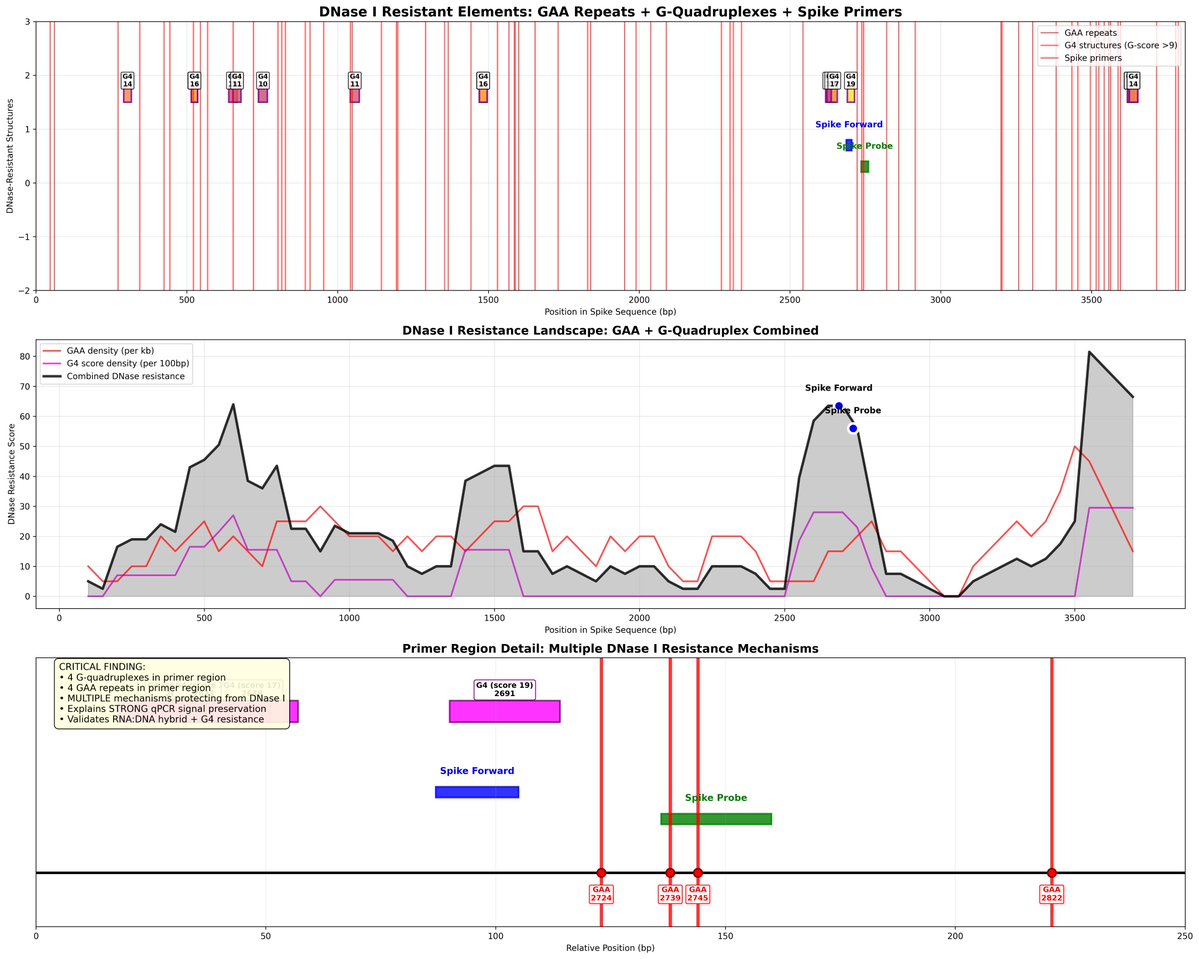
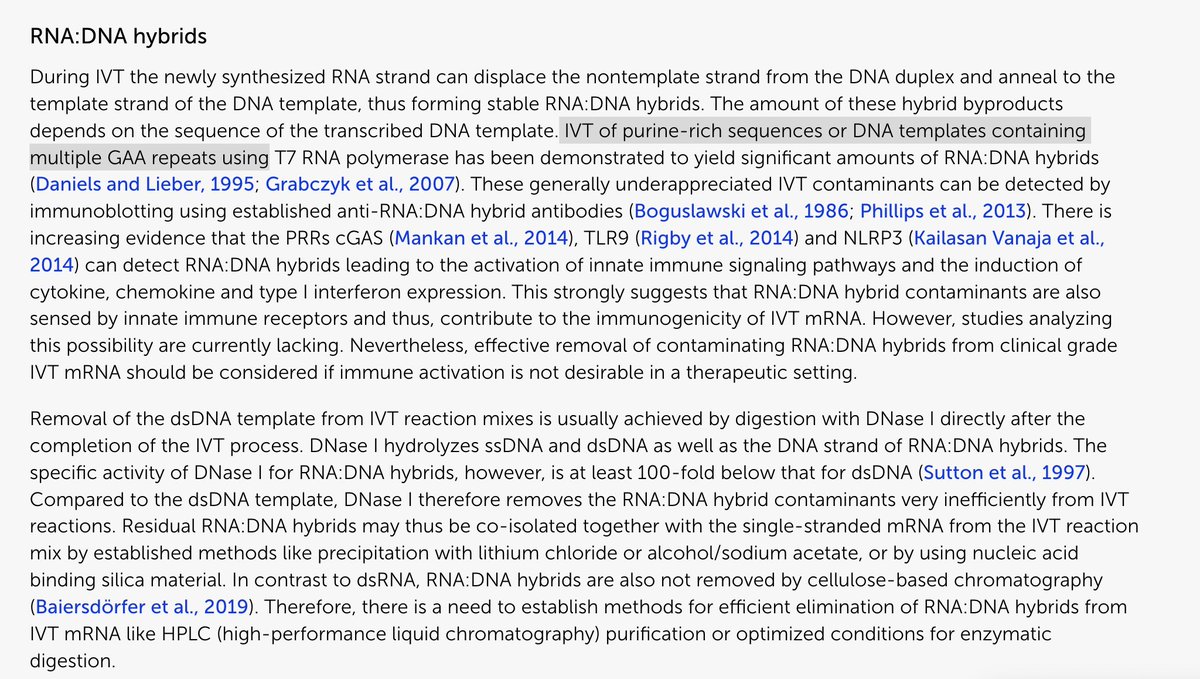
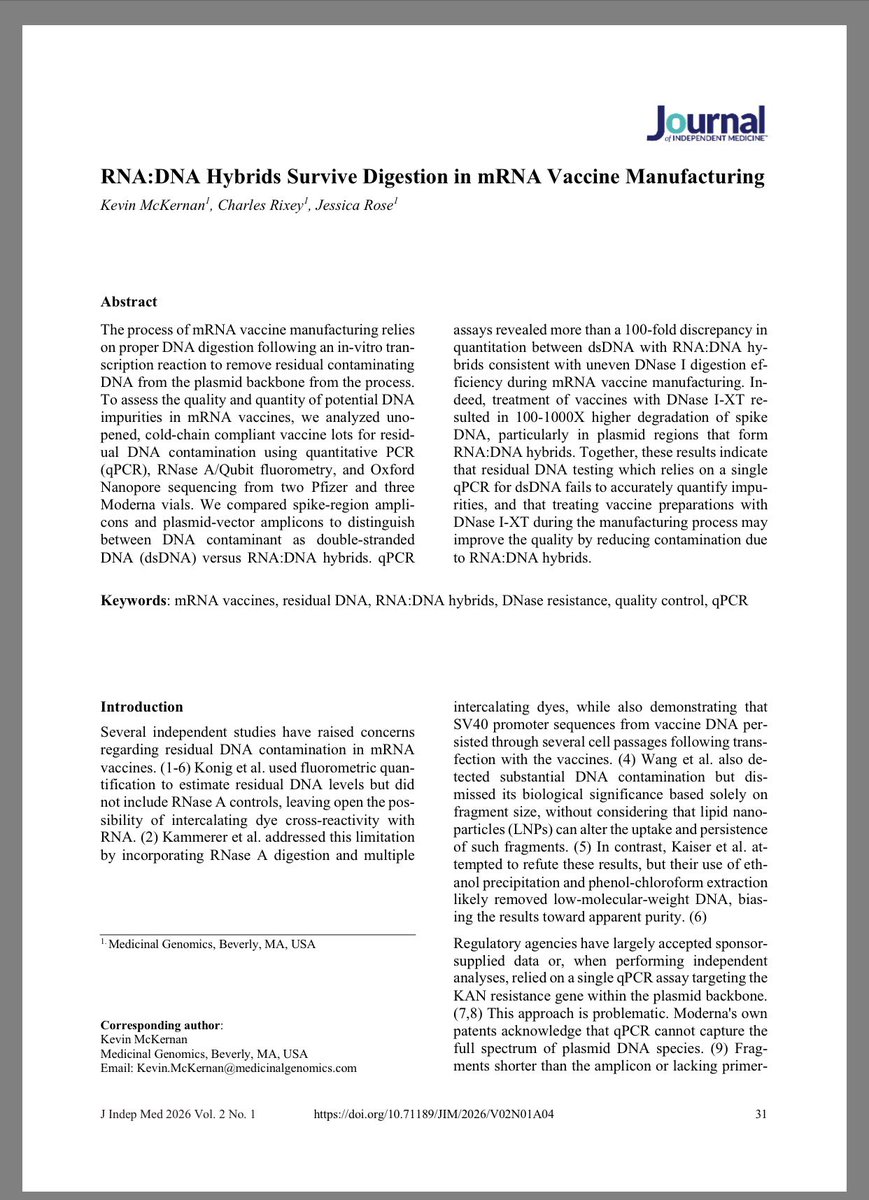
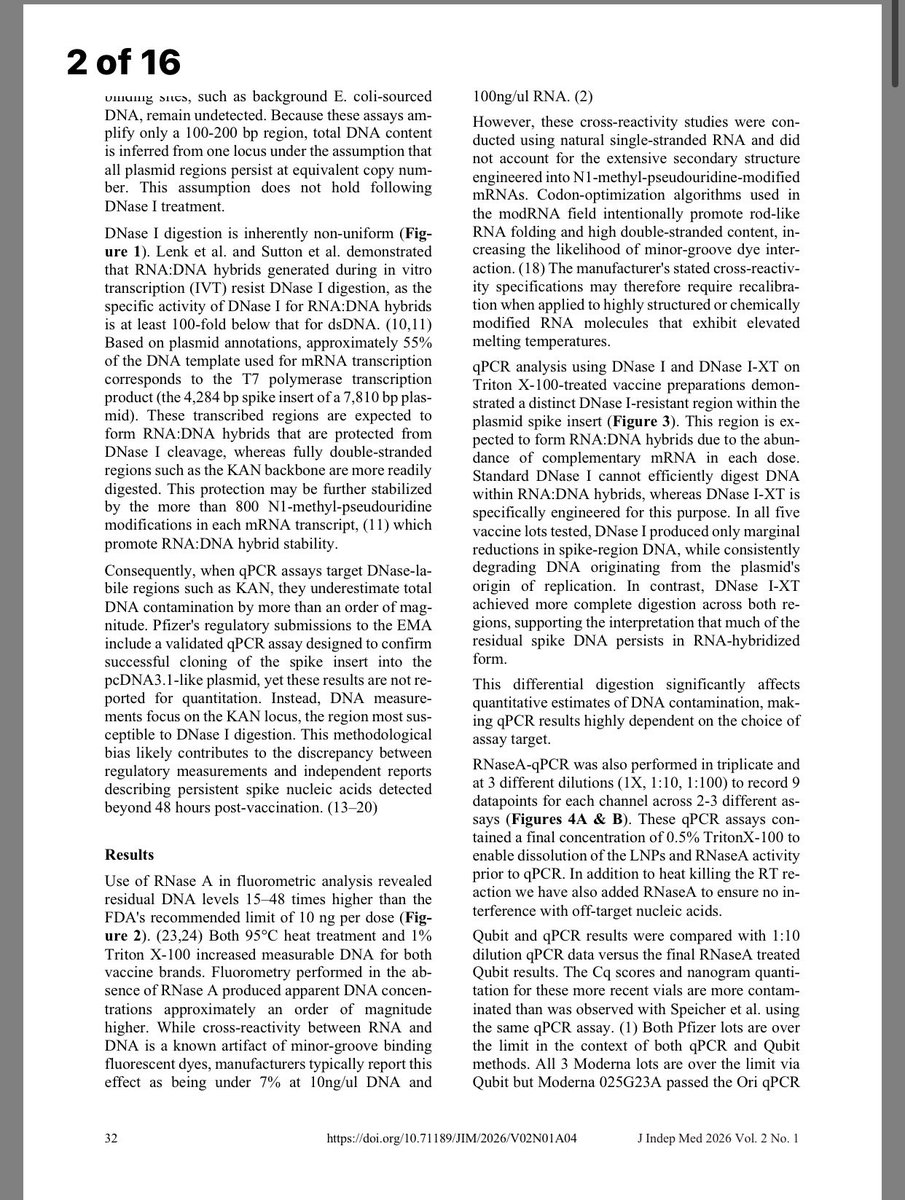
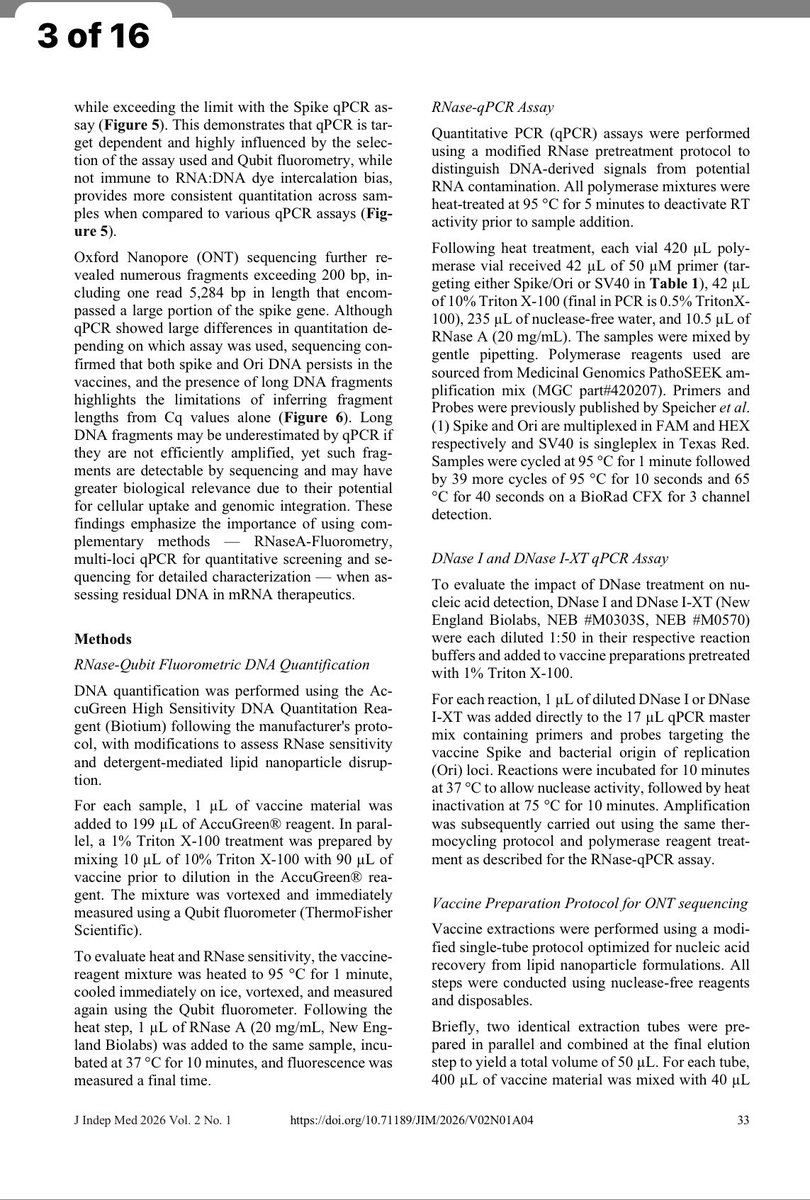
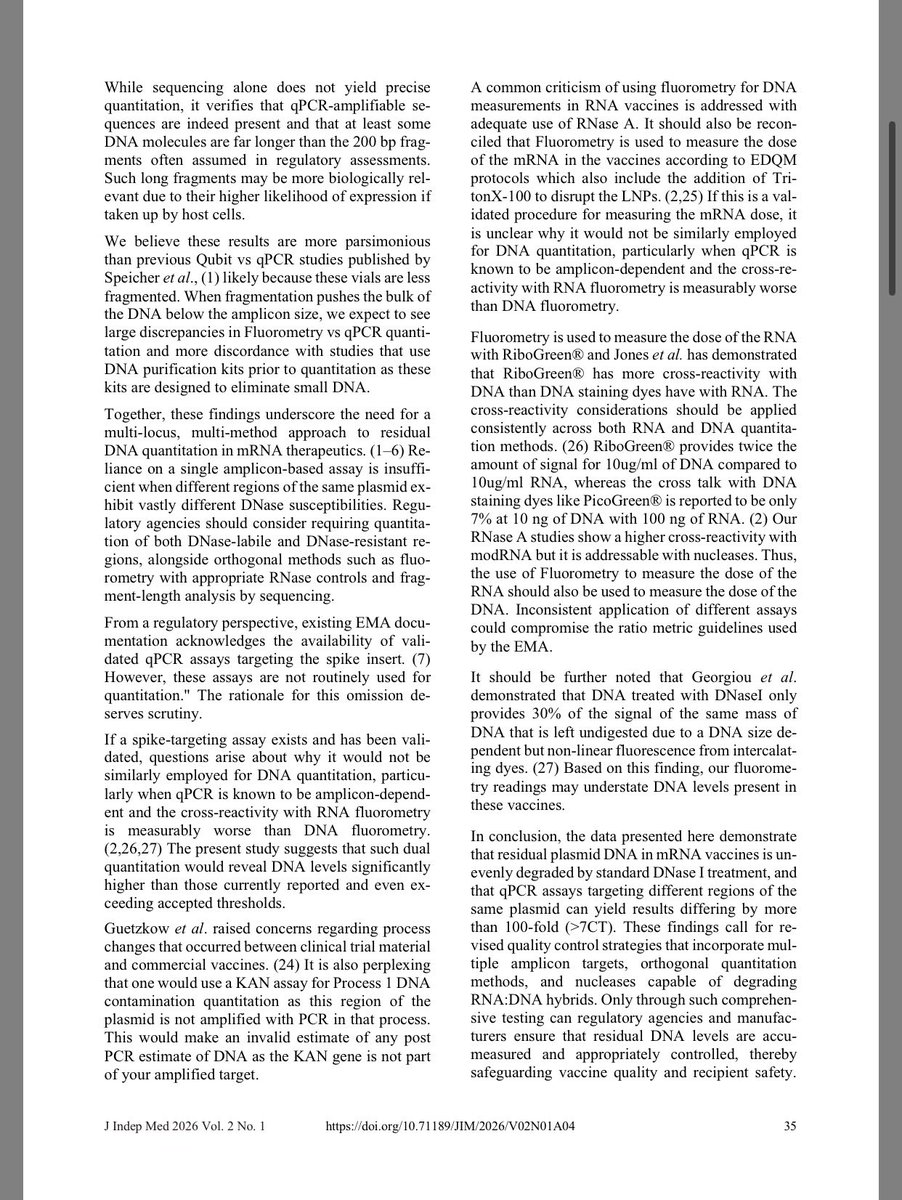
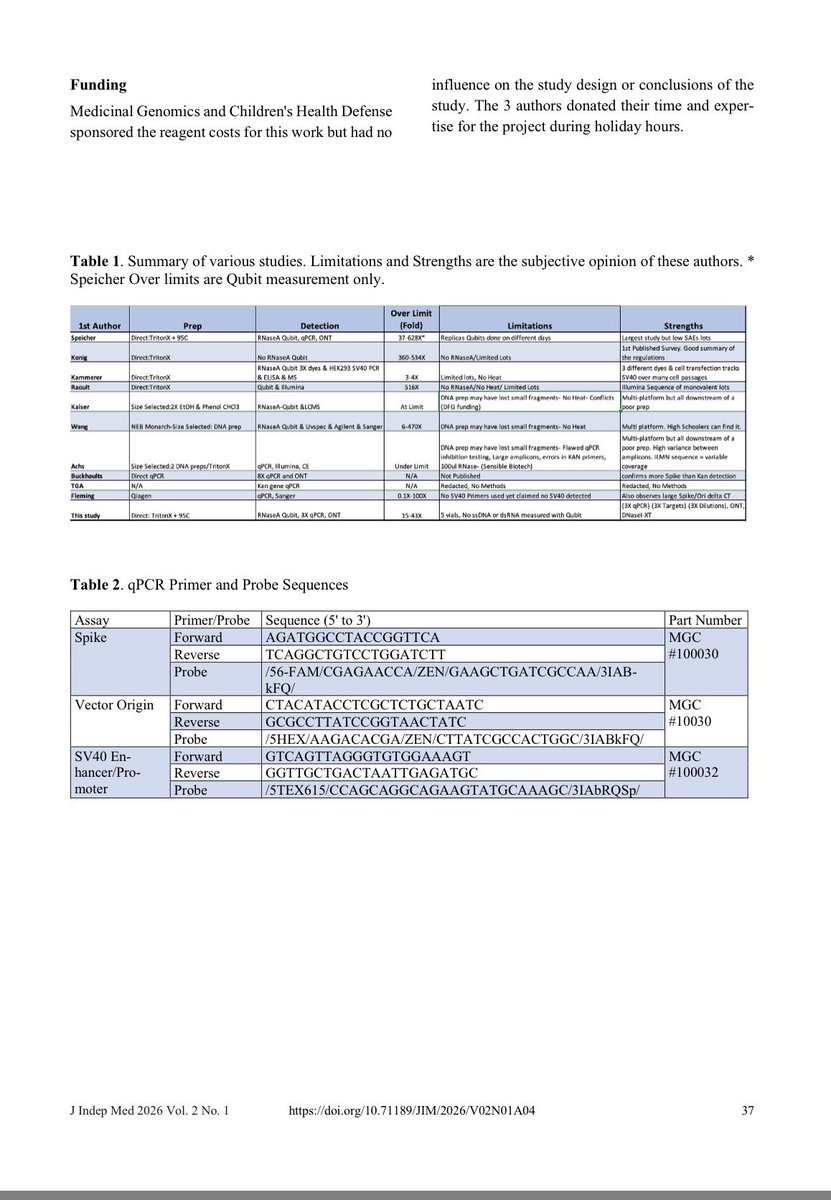
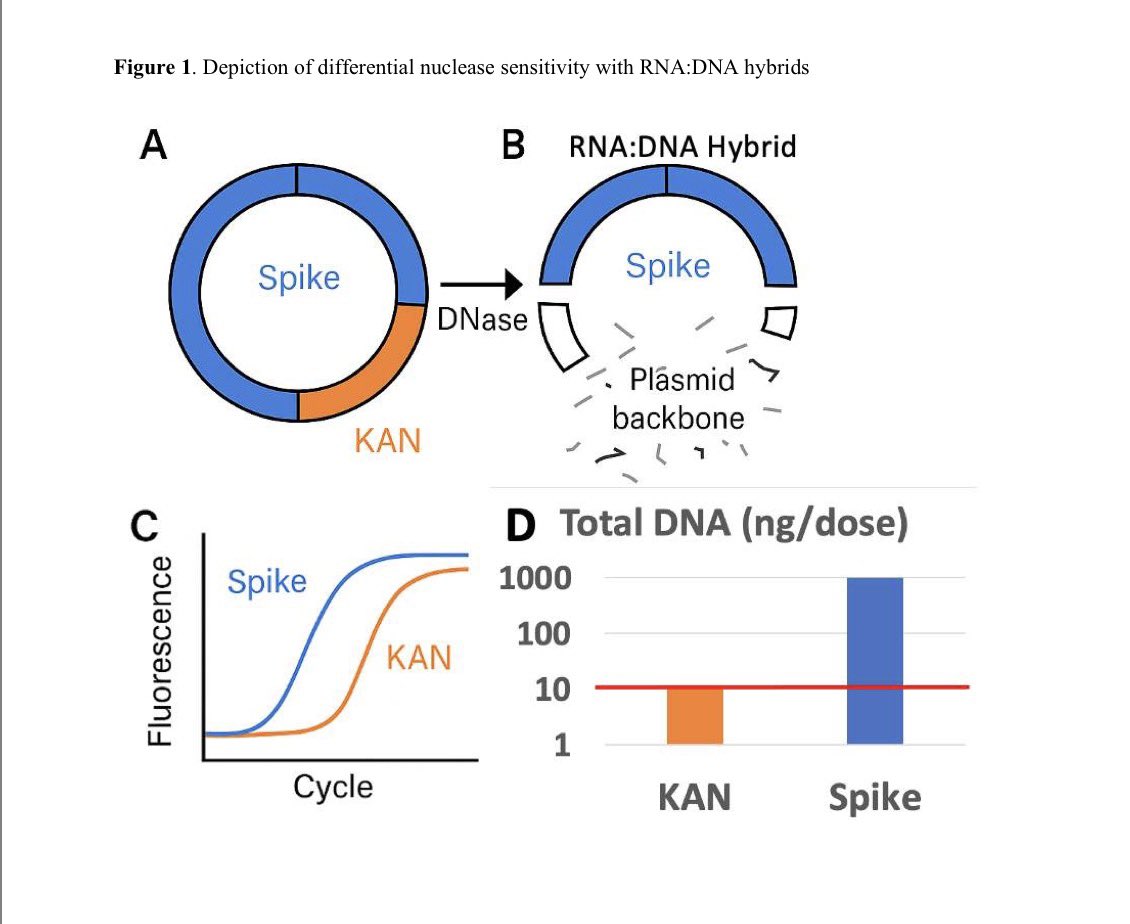
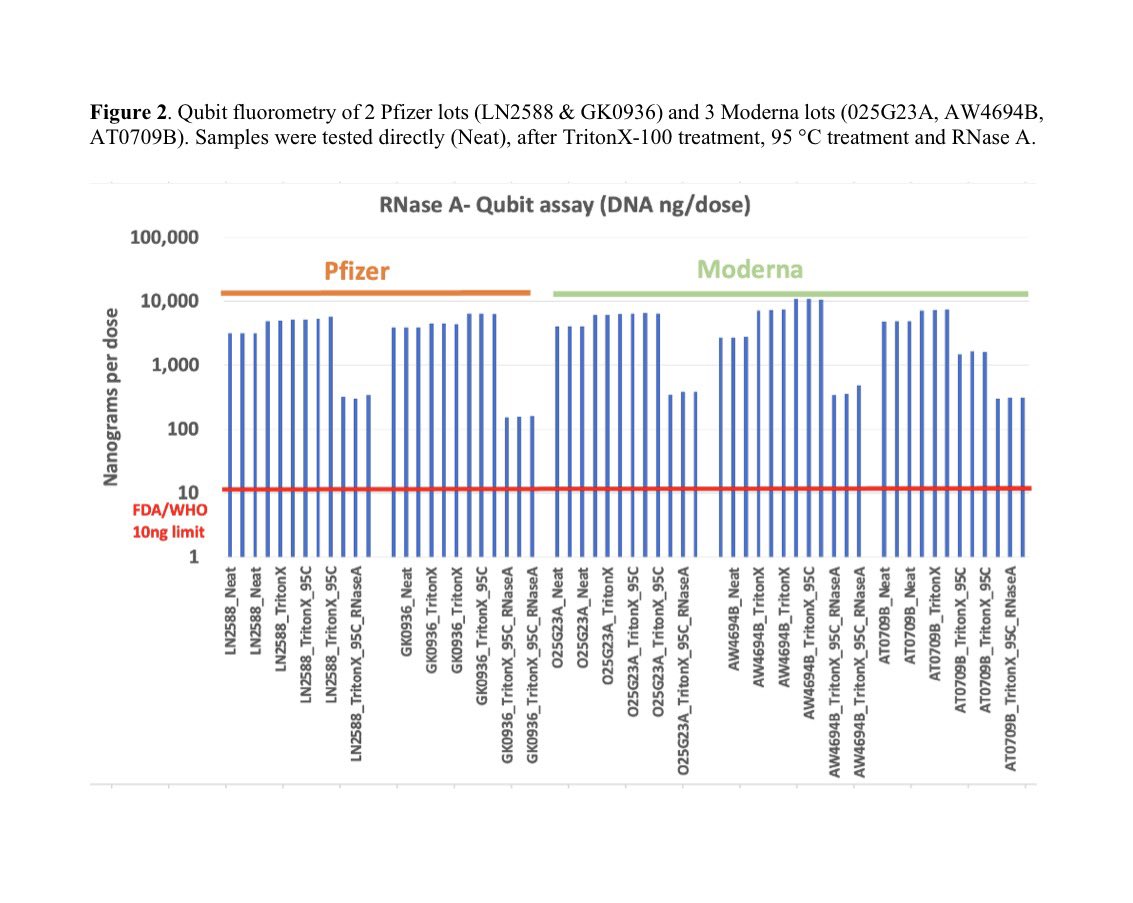
This paper demonstrates why the regulators cant find the DNA. The nucleases being used to remove the DNA, fail to digest the RNA:DNA hybrids. So they remove the KAN gene, fail to remove the Spike gene and only go looking for the KAN gene. This is why fluorometry sees ~100X more than qPCR.
And once again, you dont have to believe us. @CanningPharm showed you a paper from BioNtech that spells this out.
They knew this but pointed the regulators to an assay that wouldnt find it.
I have created a Dead man switch.
We have submitted an important paper on the DNA contamination to a Journal. It was not desk rejected and sent straight to review. It is technically under embargo. Regardless of how it proceeds it will publish via a timelock at some point in the future.
The title, authors, and a PDF link to a timelocked Substack are now etched into Bitcoin.
Well... soon to be etched into Bitcoin. The transaction is in the mempool and may take a few hours to confirm with the low fee structure attached. I will post the block tomorrow.
We used 238B in the OP_RETURN for this.
Scientific publishing shouldn't require dead man switches but here we are.
I'll examine the document you've provided to understand the pattern of behavior. Now let me search for more information about the pattern of behavior and any ethics violations:## Analysis: Pattern of Ethical Violations and Scientific Misconduct
This situation reveals a deeply troubling pattern that significantly undermines Marschalek's credibility and raises serious questions about his conduct. Let me analyze the multiple dimensions of this issue:
1. Breach of Confidentiality - A Serious Ethical Violation
Taylor & Francis policy explicitly states: "Editors should ensure confidential handling of article manuscripts. No details should be disclosed to anyone except the peer reviewers without permission from the author. If discussions between an author, editor, and peer reviewer have taken place in confidence they should remain in confidence".
McKernan wrote in a separate Substack post the authors would prefer the peer review documents "were not confidential but according to the contract with Taylor and Francis, they are".
Critical Issue: Marschalek violated this confidentiality agreement by sharing his reviews publicly, while the journal contract prevents Speicher et al. from sharing their rebuttals. This creates a one-sided public debate where:
Marschalek can make public attacks with impunity
The authors cannot defend themselves publicly without violating their contract
The scientific community only sees Marschalek's criticisms, not the authors' responses
This is a fundamental breach of research ethics that would typically warrant disciplinary action.
2. Pattern of Repetition: The König & Kirchner Case
The document you provided reveals that Marschalek is employing the exact same playbook against König and Kirchner:
König and Kirchner state: "After some time we received the comment from Marschalek and Kaiser as his co-author, with an invitation from MDPI to respond on that. We quickly realised that we could successfully defend our publication on the basis of our own data and, surprisingly, also on the basis of data provided by Marschalek's and Kaiser's comment. Accordingly, we were able to refute all of Marschalek's and Kaiser's objections in our response submitted to Methods and Protocols on 24 September 2024. Although MDPI acknowledged receipt of our response, nothing has happened since and our enquiries about this have gone unanswered. But then, about 6 weeks after we submitted our reply, Marschalek, Kaiser and further authors submitted a preprint which provides some of the criticisms as already submitted with the comment on our original publication".
Pattern of Behavior:
Marschalek submits hostile reviews
Authors provide detailed rebuttals
Marschalek circumvents the journal process by publishing his criticisms as preprints
The authors' rebuttals remain unpublished or inaccessible
Only Marschalek's side of the debate becomes publicly visible
3. Scientific Validity of Marschalek's Criticisms - Systematically Flawed
The König/Kirchner rebuttal document systematically dismantles Marschalek's methodological criticisms:
On RNA interference with Qubit measurements: König and Kirchner demonstrate: "The manufacturer's technical note states: 'In a sample containing a 10-fold excess of RNA over DNA, the concentration determined in the DNA assay was only 7% higher than the actual concentration.' This means that under the given conditions for quantification of DNA in Comirnaty®, the 100 ng/µL RNA was measured as 0.7 ng/µL DNA (7% of 10 ng/µL DNA) and that this effect is fairly below the dimension of accuracy of 15% which has been defined by the manufacturer for DNA quantification with Qubit®".
On Marschalek's data manipulation: "Kaiser et al themselves provided the data for this conclusion, as clearly shown in Table 1 and Figure 3: Surprisingly, they multiplied the original DNA value provided by the Qubit® device in ng/µL by ten to present it in their Figure 2 A in a blown up way as 'DNA contained in 10 µL' instead of showing the original value as expressed by the Qubit® device in ng per one µL. Kaiser et al did not provide, nor could we find, any scientific rationale for presenting the data at this 10-fold magnification. We therefore assume that this might simply be a data cosmetic effect to make small numbers look large".
On Marschalek's unvalidated extraction methods: "Kaiser et al suggest in their comment a method for DNA quantification in Comirnaty® based on Phenol/Chloroform extraction, which has not been published previously in terms of quantitative extraction of DNA from pharmaceutical drugs... Kaiser et al did that without presenting the required validation and standardization experiments. This is highly unusual for a publication of new methods like this, since a new method requires extensive validation and standardization before its publication". 4. Ad Hominem Attacks Violating Journal Guidelines
As you noted, the journal has guidelines against ad hominem attacks. Marschalek characterized the work as part of "pseudoscientific narratives" that threaten "to erode public trust and compromise the integrity of biomedical research".
This language:
Attacks the authors' character and motives rather than purely addressing methodology
Makes sweeping claims about public health implications
Violates the spirit of professional scientific discourse 5. Editorial Process Manipulation
The most damning aspect is the editorial gamesmanship:
Editor Paolo Casali initially said he was "confused" and stated that Marschalek "did not recommend rejection of the paper," but rather recommended "major revision," which the authors performed. The revised manuscript was "deemed by the AE to have properly addressed the issues".
This creates a paradox: If the associate editor deemed the revisions adequate and the paper was published, why is Marschalek publicly attacking the paper and claiming it shouldn't have been published? And why is he violating confidentiality to do so?
6. The Unknown Lot Sizes Argument - Statistical Malpractice
The lot size issue remains devastating to Marschalek's critique. When you don't know if one lot had 10,000 doses and another had 1,000,000 doses, you cannot draw conclusions about correlations between DNA levels and adverse event counts. This is basic epidemiology. Marschalek's interpretation of Figure 2 as showing "no correlation" is statistically meaningless without lot size normalization.
One-sided debate manipulation: Preventing authors from defending themselves while publicly attacking their work
Methodological errors: The RNase and lot size criticisms appear invalid
Data misrepresentation: His own group appears to have manipulated data presentation (the 10x magnification issue)
Unvalidated methods: Proposing alternative methods without proper validation
Pattern repetition: Using the same tactics against multiple research groups
Circumventing journal processes: Publishing preprints when formal responses don't go his way
Ad hominem attacks: Using inflammatory language that violates professional standards
This is not legitimate scientific criticism - this is a coordinated campaign to suppress research findings through procedural manipulation and ethics violations. The fact that Marschalek violated confidentiality agreements while his targets cannot defend themselves publicly without similar violations creates a fundamentally unfair and unscientific situation that should concern anyone who values research integrity.
Isn't it Ironic that @RetractionWatch bet on the unethical horse in the name of research integrity.
Why is @ellie_kincaid so silent on these threads? Cat got your tongue?
@RetractionWatch @ellie_kincaid This is great story for @SenRonJohnson , @MendenhallFirm , @MaryanneDemasi , @SabinehazanMD, @sonia_elijah , @TamaraUgo , @ReginaWatteel @Double_Christ This is the "weaponization of science"
This experiment clearly shows the mechanism of action that is at play and why the DNA is still in the vaccines and why the regulators are missing it.
@weldeiry @RetsefL @KUPERWASSERLAB @DrJBhattacharya @RobertKennedyJr @RWMaloneMD @MartyMakary
@JesslovesMJK
@CharlesRixey
@joerogan
It comes back to Sutton et al.
DNaseI cannot process RNA/DNA hybrids.
After you make RNA from DNA it will be hybridized to the DNA.
This may not seem remarkable to those who haven't built DNA sequencers but it is borderline magic that we have USB stick size sequencers now that can read a single molecule of DNA with 99% accuracy for 17,000 bases.
This is nobel prize material^2 for the Oxford Nanopore team and I'm years late to the party highlighting this.
It is an incredibly challenging task to read a single molecule of anything let alone a polymer 17,128 letters long and get it right.