🧵Descartes gave Western thought the cogito, stressing subjective certainty & challenging external authority/objectivity. This seeded the idea that liberation starts with inward reflection, which then let ppl see oppressive orders as constructs to be unmade→opening later critiques of property, power & identity.
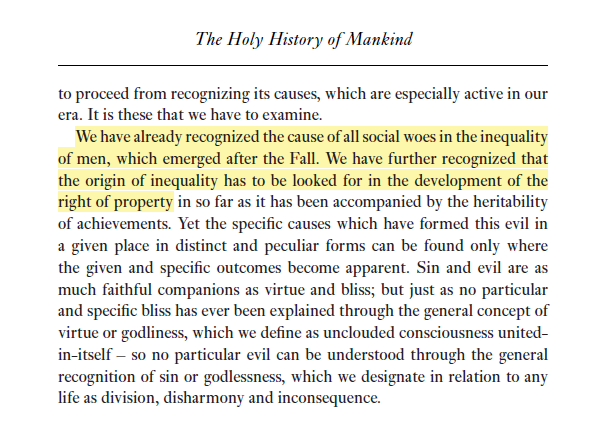
Rousseau exposed how property & society "chain" (man is born free, but everywhere, chains) human freedom, urging rebellion against inequality. He saw civilization corrupting natural liberty, igniting a quest for autonomy that radicals embraced. But attempts to unify under universal ideals often clashed with deep-seated ethnic loyalties & tensions between collective will & individual rights.
Kant -reason frees us from dogma but also confines us within our own lens, revealing hidden frameworks shaping experience. This duality fueled later emancipatory thought, as people asked if they were blind to structural oppression. Kant’s critique laid a foundation for later efforts to expose & transform unseen power.
Hegel -The ol' dialectical method here is abstract idea meets its negation and is sublated into a richer, concrete unity. He introduced the concept of alienation and the Volksgeist, the unique spirit of each people evolving through history. His dialectic applies across these spaces, showing how concepts, natural laws, & human consciousness evolve. In his 'philosophy of history,' Geist realizes itself through human activities, moving society toward its highest ethical realization within the state, where individual freedom & communal good reconcile in rational, ethical life (Sittlichkeit). Plus, his ideas on recognition, esp. via the master-slave dialectic, show self-consciousness emerging through social interaction.
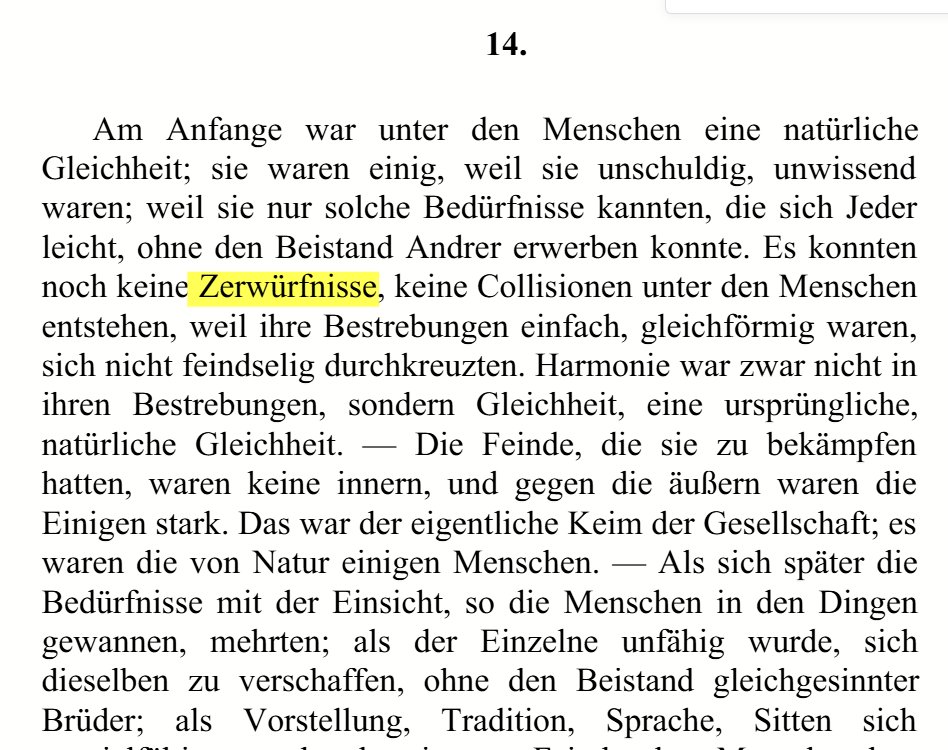
Moses Hess transformed Descartes’s "I think, therefore I am" into "We do, therefore we are," shifting from individual certainty to collective action. Influenced by Rousseau, he argued that societies must harness their creative power to dismantle oppressive chains. Building on Kant’s insight about hidden frameworks, Hess demonstrated how economic & cultural forces shape consciousness, obscuring alienation. He applied Hegel’s dialectic to social conflicts over property, money, & labor (material turn), insisting that alienation is a lived, material experience. This synthesis paved the way for Marx’s materialist analysis, emphasizing that genuine freedom arises when thought & action unite in praxis.
So Hess bridged Descartes, Rousseau, Kant, & Hegel with Marx’s critique of capitalism, promoting a vision of collective emancipation by reclaiming social conditions.
However, their paths diverged in focus & scope. While Marx continued developing a universal framework centered on class struggle and global emancipation, Hess reoriented his approach. Inspired by Hegel's Volksgeist, Hess integrated the idea of a distinct spiritual and cultural ethnos into his consciousness-raising goals. See Hess's work "Rome and Jerusalem," x.com/Ne_pas_couvrir…
So Hess bridged Descartes, Rousseau, Kant, & Hegel with Marx’s critique of capitalism, promoting a vision of collective emancipation by reclaiming social conditions.
However, their paths diverged in focus & scope. While Marx continued developing a universal framework centered on class struggle and global emancipation, Hess reoriented his approach. Inspired by Hegel's Volksgeist, Hess integrated the idea of a distinct spiritual and cultural ethnos into his consciousness-raising goals. See Hess's work "Rome and Jerusalem," x.com/Ne_pas_couvrir…
Marx - Using Hegel & Hess's on alienation, he expanded it bigly within the critique of capitalism, saying that the recognition of this alienation by the proletariat could lead to the development of true class ̷g̷n̷o̷s̷i̷s̷ consciousness... which would in turn dismantle the ̷p̷r̷i̷s̷o̷n̷ exploitative systems of wage labor and private property.
Building upon Descartes (subjective certainty), through Rousseau's (societal 'chains' on human freedom), Kant (frameworks that shape our understanding), & integrating Hegel's dialectical method with Hess's material turn, Marx synthesized a materialist dialectic. Here, economic conditions are the primary drivers of social relations & consciousness. Marx posited that the proletariat, by recognizing their collective alienation from the means of production (a concept he deepened from Hess's insights) would gain a ̷g̷n̷o̷s̷i̷s̷ self-awareness of their exploitation, sparking revolutionary action. His vision was one of ̷G̷n̷o̷s̷t̷i̷c̷i̷s̷m̷ global emancipation, where communal ownership of the means of production would supplant capitalist structures, thereby eradicating class distinctions & free humanity from the ̷d̷e̷m̷i̷u̷r̷g̷e̷ shackles of material alienation.
Underlying this ̷r̷e̷l̷i̷g̷i̷o̷n̷ is the belief that the transformation of economic structures would lead to a transformation in human consciousness and societal organization, fulfilling the potential for universal human liberation. But it's totally material and not ideal, guys.
Building upon Descartes (subjective certainty), through Rousseau's (societal 'chains' on human freedom), Kant (frameworks that shape our understanding), & integrating Hegel's dialectical method with Hess's material turn, Marx synthesized a materialist dialectic. Here, economic conditions are the primary drivers of social relations & consciousness. Marx posited that the proletariat, by recognizing their collective alienation from the means of production (a concept he deepened from Hess's insights) would gain a ̷g̷n̷o̷s̷i̷s̷ self-awareness of their exploitation, sparking revolutionary action. His vision was one of ̷G̷n̷o̷s̷t̷i̷c̷i̷s̷m̷ global emancipation, where communal ownership of the means of production would supplant capitalist structures, thereby eradicating class distinctions & free humanity from the ̷d̷e̷m̷i̷u̷r̷g̷e̷ shackles of material alienation.
Underlying this ̷r̷e̷l̷i̷g̷i̷o̷n̷ is the belief that the transformation of economic structures would lead to a transformation in human consciousness and societal organization, fulfilling the potential for universal human liberation. But it's totally material and not ideal, guys.
In anticipation for the butthurt Marxists, 'Ol Dirty Santa expands on the labor theory of value where labor is the source of all wealth, & surplus value extracted from workers constitutes capitalist profit, revealing inherent exploitation. Dirty, Lazy Santa argues that society's mode of production shapes laws, culture, & politics, driving historical development through class struggle between oppressors & oppressed. Marx sees the state as a tool of class rule under the social prison of capitalism, proposing a transitional phase, the dictatorship of the proletariat (lol), to dismantle capitalist structures & will just wither away on its own to to a stateless, classless society (lawl).
'Ol Dirty Santa also advocates for internationalism, thinking workers globally share a common fight against bourgeois dominance. Marx also critiques ideology, seeing religion, law, and education as mechanisms that perpetuate false consciousness and maintain the capitalist status quo. With Engels the Enabler, he developed dialectical materialism, which 'analyzed' contradictions within capitalism and the role of technology in intensifying class conflict, suggesting that these dynamics make capitalism obsolete (lawl). Later, leftist dummies divined that his work hints at ecological concerns through the concept of the metabolic rift (see link) x.com/Ne_pas_couvrir…
'Ol Dirty Santa also advocates for internationalism, thinking workers globally share a common fight against bourgeois dominance. Marx also critiques ideology, seeing religion, law, and education as mechanisms that perpetuate false consciousness and maintain the capitalist status quo. With Engels the Enabler, he developed dialectical materialism, which 'analyzed' contradictions within capitalism and the role of technology in intensifying class conflict, suggesting that these dynamics make capitalism obsolete (lawl). Later, leftist dummies divined that his work hints at ecological concerns through the concept of the metabolic rift (see link) x.com/Ne_pas_couvrir…
Gramsci - In prison and butthurt over the West's refusal to try communism, built on the above by explaining how the ruling class keeps winning through cultural & ideological hegemony. Specifically, he analyzed how the ruling class maintains power in the capitalist West through cultural & ideological hegemony. He argued that institutions like media, law, religion, family & education in civil society shapes norms & consciousness, making bourgeois ideology seem natural. Gramsci argued that a direct assault on the state was less feasible in the West. Instead, he proposed a war of position: a slow, methodical struggle to build counter-hegemony by infiltrating civil society, which makes sense if you remember he was sitting in prison, writing about it.
Gramsci highlighted the need for ̷c̷o̷m̷m̷i̷e̷ ̷n̷e̷r̷d̷s̷ intellectuals from the working class to lead this cultural struggle & form a national-popular coalition that resonates with everyday people. He saw the state as protected by a 'trench' of civil society, which must be penetrated (bow-chicka-bow-bow) first. He introduced concepts like passive revolution, where reforms defuse revolutionary pressures without altering power, and the historical bloc, where diverse social groups unite under a shared ideology. Commie nerd fantasy-Cultural battles, aiming to transform society from within through education, media, & coalition-building well before confronting state power directly.
Gramsci highlighted the need for ̷c̷o̷m̷m̷i̷e̷ ̷n̷e̷r̷d̷s̷ intellectuals from the working class to lead this cultural struggle & form a national-popular coalition that resonates with everyday people. He saw the state as protected by a 'trench' of civil society, which must be penetrated (bow-chicka-bow-bow) first. He introduced concepts like passive revolution, where reforms defuse revolutionary pressures without altering power, and the historical bloc, where diverse social groups unite under a shared ideology. Commie nerd fantasy-Cultural battles, aiming to transform society from within through education, media, & coalition-building well before confronting state power directly.
Umlaut and accent enjoyer, György Lukács, like Gramsci, was concerned with why the West resisted communism. However, he had a different take, introducing reification-capitalism makes social relations appear fixed and natural-which he identified as a barrier to revolution in the West.
In "History & Class Consciousness," he urged the proletariat to grasp the totality of their conditions to break alienation (see above) and spark revolution. Drawing on Hegel, Lukács used the dialectical to show how capitalism ...mystifies reality.., obstructing the ...spontaneous formation of 'genuine' class consciousness (lol).
So, while Gramsci focused on cultural hegemony, Lukács talked about how capitalist society shapes consciousness through reification like an illusion, which for him explains Western resistance to communism & not because its garbage. Like most post Marxist theorists, both Gramsci and Lukács are similar, with both emphasizing ideology and consciousness but from distinct angles: Gramsci on cultural strategy, Lukács on reification and philosophical depth.
In "History & Class Consciousness," he urged the proletariat to grasp the totality of their conditions to break alienation (see above) and spark revolution. Drawing on Hegel, Lukács used the dialectical to show how capitalism ...mystifies reality.., obstructing the ...spontaneous formation of 'genuine' class consciousness (lol).
So, while Gramsci focused on cultural hegemony, Lukács talked about how capitalist society shapes consciousness through reification like an illusion, which for him explains Western resistance to communism & not because its garbage. Like most post Marxist theorists, both Gramsci and Lukács are similar, with both emphasizing ideology and consciousness but from distinct angles: Gramsci on cultural strategy, Lukács on reification and philosophical depth.
The Frankfurt School - Part 1 (Max Horkheimer & Theodor Adorno)
Post-WWII, they were butthurt. As Jewish scholars, they'd seen revolutionary movements meant to negate capitalism's ills spiral into catastrophes. Fascism and Stalinism, they argued, weren't aberrations but the Enlightenment's dark offspring baked in. The negation of the negation that was supposed to lead to a Communist utopia failed and led to either Fascism or Ethno-socialism. They saw Nazism as a twisted negation of liberal capitalism's failures, not a step toward Marx's classless dream. Stalin's USSR, meanwhile, ditched internationalism after Korenizatsiya flopped, pivoting to Russian ethnos as a unifying force, sidelining Jews and others in purges.
Horkheimer and Adorno, scarred by these betrayals, fled to Golden-Age California, where they co-wrote Dialectic of Enlightenment (1947), which was a takedown of modern reason gone wrong. Here, they argued that the very project of Enlightenment, which was supposed to liberate us through reason, backfired, produced new forms of domination culminating in fascism, Stalinism, a manipulative 'culture industry,' and mass consumer capitalism instead of true freedom. In other words, Ol' Kantian rationality and industrial progress didn't deliver a utopia; they gave us Hitler and Hollywood.
Their big idea of "instrumental reason' says that Western reason got too obsessed with controlling nature and people. What does this mean.. think of science and tech not as paths to truth and liberty but as tools to dominate and turn humans into compliant cogs. Here, they were riffing off Weber's rationalization and Georg Lukacs's notion of reification (the idea that social relations under capitalism solidify into things, commodities that then control us by an "autonomy alien to man.")
Horkheimer and Adorno dialed all this up to 11: under late capitalism, everything, meaning from culture to consciousness, becomes commodified & 'fetishized,' trapping us in a shiny, unthinking consumer trance. They even coined the term "culture industry" for the mass production of art and entertainment, accusing Hollywood, pop music, and magazines of anesthetizing the masses much like religion or ideology did for old Karl Marx. (Adorno infamously hated jazz for being pseudo-individualistic, which is hilarious, considering how derivative his work is)
The irony is these theorists were intellectual magpies: they borrowed from Hegel's dialectics, Marx's critique of ideology, Freud's psychoanalysis (to analyze mass psychology), and Nietzsche's suspicion of modernity- all to explain why the modern world was looking more like a bureaucratic nightmare than an enlightened paradise.
Horkheimer and Adorno knew they were in a bit of a bind b/c they were using reason to critique reason. Ever the butthurt mid-wit, Adorno even admitted this 'performative contradiction' of denouncing Enlightenment's totalitarian turn with Enlightenment's own tools. Yet, they saw no choice; philosophy itself had to become self-critical. In their view, earlier thinkers from Descartes to Kant put a sovereign rational subject at the center, & even progressive heirs like Rousseau or Marx couldn't prevent reason from mutating into domination. They extended Marx's ideology critique beyond the economy into every realm of culture and consciousness. And unlike Gramsci's relatively hopeful idea of cultural hegemony, Adorno and Horkheimer were pretty pessimistic that the working class (or anyone) could resist this new totalizing system. FYI - this was a point where they even parted ways with Lukacs's faith in the revolutionary proletariat.
The only hope, per Adorno, was a "negative dialectics." What this means is relentless criticism that refuses to be satisfied with false wholes. They call out the "false laughter" of TV audiences and the way Enlightenment's promise of freedom ends up as a dark joke. Contradiction was their thing. By highlighting how modern society creates new myths (like consumerism) even as it claims to be rational, these Frankfurt School founders set the stage for generations of radicals to question everything from Hollywood blockbusters to instrumental science. In short, Horkheimer and Adorno are the OGs of critical theory. Their legacy is a method of relentless, endless critique.
I suppose we should take a second on their Authoritarian Personality study (1950), with its F-scale (F for fascism), which was their attempt to pin down why people fall for totalitarian traps. So, using Freudian lenses, they probed how repressed desires and social conformity breed fascist tendencies, a direct response to Nazi horrors. But they sidestepped how their beloved dialectic (here, the negation of the negation) kept landing on fascism, not communism. Instead of owning this, they externalized blame (of course) & doubled down on the dialectic and critique, arguing reason itself was the culprit, mutating into domination. lol. This was how they externalized blame, never admitting the revolutionary spark they admired in Marx and Lukacs led directly to the very monsters they fled from. What a couple of assholes.
Post-WWII, they were butthurt. As Jewish scholars, they'd seen revolutionary movements meant to negate capitalism's ills spiral into catastrophes. Fascism and Stalinism, they argued, weren't aberrations but the Enlightenment's dark offspring baked in. The negation of the negation that was supposed to lead to a Communist utopia failed and led to either Fascism or Ethno-socialism. They saw Nazism as a twisted negation of liberal capitalism's failures, not a step toward Marx's classless dream. Stalin's USSR, meanwhile, ditched internationalism after Korenizatsiya flopped, pivoting to Russian ethnos as a unifying force, sidelining Jews and others in purges.
Horkheimer and Adorno, scarred by these betrayals, fled to Golden-Age California, where they co-wrote Dialectic of Enlightenment (1947), which was a takedown of modern reason gone wrong. Here, they argued that the very project of Enlightenment, which was supposed to liberate us through reason, backfired, produced new forms of domination culminating in fascism, Stalinism, a manipulative 'culture industry,' and mass consumer capitalism instead of true freedom. In other words, Ol' Kantian rationality and industrial progress didn't deliver a utopia; they gave us Hitler and Hollywood.
Their big idea of "instrumental reason' says that Western reason got too obsessed with controlling nature and people. What does this mean.. think of science and tech not as paths to truth and liberty but as tools to dominate and turn humans into compliant cogs. Here, they were riffing off Weber's rationalization and Georg Lukacs's notion of reification (the idea that social relations under capitalism solidify into things, commodities that then control us by an "autonomy alien to man.")
Horkheimer and Adorno dialed all this up to 11: under late capitalism, everything, meaning from culture to consciousness, becomes commodified & 'fetishized,' trapping us in a shiny, unthinking consumer trance. They even coined the term "culture industry" for the mass production of art and entertainment, accusing Hollywood, pop music, and magazines of anesthetizing the masses much like religion or ideology did for old Karl Marx. (Adorno infamously hated jazz for being pseudo-individualistic, which is hilarious, considering how derivative his work is)
The irony is these theorists were intellectual magpies: they borrowed from Hegel's dialectics, Marx's critique of ideology, Freud's psychoanalysis (to analyze mass psychology), and Nietzsche's suspicion of modernity- all to explain why the modern world was looking more like a bureaucratic nightmare than an enlightened paradise.
Horkheimer and Adorno knew they were in a bit of a bind b/c they were using reason to critique reason. Ever the butthurt mid-wit, Adorno even admitted this 'performative contradiction' of denouncing Enlightenment's totalitarian turn with Enlightenment's own tools. Yet, they saw no choice; philosophy itself had to become self-critical. In their view, earlier thinkers from Descartes to Kant put a sovereign rational subject at the center, & even progressive heirs like Rousseau or Marx couldn't prevent reason from mutating into domination. They extended Marx's ideology critique beyond the economy into every realm of culture and consciousness. And unlike Gramsci's relatively hopeful idea of cultural hegemony, Adorno and Horkheimer were pretty pessimistic that the working class (or anyone) could resist this new totalizing system. FYI - this was a point where they even parted ways with Lukacs's faith in the revolutionary proletariat.
The only hope, per Adorno, was a "negative dialectics." What this means is relentless criticism that refuses to be satisfied with false wholes. They call out the "false laughter" of TV audiences and the way Enlightenment's promise of freedom ends up as a dark joke. Contradiction was their thing. By highlighting how modern society creates new myths (like consumerism) even as it claims to be rational, these Frankfurt School founders set the stage for generations of radicals to question everything from Hollywood blockbusters to instrumental science. In short, Horkheimer and Adorno are the OGs of critical theory. Their legacy is a method of relentless, endless critique.
I suppose we should take a second on their Authoritarian Personality study (1950), with its F-scale (F for fascism), which was their attempt to pin down why people fall for totalitarian traps. So, using Freudian lenses, they probed how repressed desires and social conformity breed fascist tendencies, a direct response to Nazi horrors. But they sidestepped how their beloved dialectic (here, the negation of the negation) kept landing on fascism, not communism. Instead of owning this, they externalized blame (of course) & doubled down on the dialectic and critique, arguing reason itself was the culprit, mutating into domination. lol. This was how they externalized blame, never admitting the revolutionary spark they admired in Marx and Lukacs led directly to the very monsters they fled from. What a couple of assholes.
The Frankfurt School 2- Herbert Marcuse Pervert Druggy Boogaloo.
Herbert Marcuse was the Frankfurt School's rockstar, pervy uncle, swapping Horkheimer and Adorno's grim 1940s noir for a 1960s psychedelic rebellion vibe. He fused Hegelian dialectics, Marxian economics, and Freudian psychoanalysis into a volatile cocktail, and his eyes were on the revolution, not just critique. In One-Dimensional Man (1964), he famously called out advanced industrial society for its "comfortable, smooth, reasonable, democratic unfreedom." Capitalism, he said, is a tricky bastard: it stuffs us with gadgets and snacks, making us so cozy we don't even notice our chains. Forget Marx's gritty exploitation at the factory; Marcuse argued consumer culture sedates us, flattening dissent and imagination into a "one-dimensional" haze. It's the Matrix, but with Netflix, Amazon, & Door Dash.
Marcuse remixes Marx's false consciousness with Freud's psyche: the system doesn't need jackbooted stormtroopers when it's got our subconscious on lock. Borrowing Freud's superego, he argued we've internalized authority so deeply we police ourselves. So theres no need for a scowling Big Brother. The old-school patriarchs (mean dads, hellfire preachers) are gone; now, "all domination assumes the form of administration." Power wears a tie, not a jackboot. We think we're free because we've got 50 soda brands, but, for marcuse, the pervy revolutionary, 'real' freedom is to torch the system, and that's gone. So Marcuse is in Golden Age California, is basically screaming "Wake up, comrades!"
Marcuses drive here digs in to the "negation of the negation" that Adorno and Horkheimer feared led to fascism or Stalinist ethno-socialism. For Hegel, the dialectic resolves contradictions into a higher unity; for Marx, it's the proletariat smashing capitalism. Marcuse, though, saw a fork: if the negation of bourgeois society leans on Freud's Thanatos (death-drive), it spirals into fascism-a violent, mythic return to ethnos, race, or "blood and soil." Marcuse called fascism a false negation, a counter-revolutionary scam that resolves capitalism's tensions through authoritarian spectacle, not emancipation. Think Nazi rallies or Stalin's Russian ethnos pivot post-Korenizatsiya, where universalism got swapped for nationalist purges - one Marcuse felt directly as a Jew in exile. Both, for Marcuse, were Thanatos-fueled dead-ends, aestheticizing politics to mask repression.
So, enter Eros, Marcuse's game-changer. In Eros and Civilization (1955), he flips Freud's grim view that civilization demands repression. Why not, he asks, use our advanced society to liberate instincts? Why not just wank and perv everyone in the West. His argument was Eros, the life-drive, play, polymorphous sexuality, can reroute the dialectic's energy away from fascist ethno-socialism toward a non-repressive utopia. Instead of resolving contradictions with mythic unity (race, nation), Eros fuels a "great refusal": rebellion via art, erotic freedom, and aesthetic imagination. It's not just economic revolt but a cultural, libidinal middle finger to capitalism's "performance principle" (all work, no play). Marcuse's vision? A society where labor and libido just mingle together at a mixer, not clash.
He did have a bit of the earlier Frankfurt School's noir side. In One-Dimensional Man, he warned even liberal societies flirt with fascist tendencies, neutralizing contradictions through admin and fake freedom. His "Repressive Tolerance" (1965) an essay that many have covered said tolerance can be a con, absorbing dissent so nothing changes. True tolerance might mean shutting down oppressive ideas.
Unlike Adorno's mopey "reason's doomed" shtick, Marcuse saw revolutionary energy in the the margins of Western society - students, minorities, anti-colonial rebels, hippies, feminists, LGBTQ activists. The 1960s New Left went nuts over all of this wank, perv, drugs, marginalized people stuff, crowning him their "guru." So, Marcuse broadened Marx's revolution beyond class to include psychological, cultural, and sexual liberation. Where Adorno mourned the dialectic's fascist turn, Marcuse gave it drugs and a subscription to Hustler, insisting the 'revolution could work this time™" and negation could birth to the 'real revolution™,' not just ethno-socialist dictatorships.
Herbert Marcuse was the Frankfurt School's rockstar, pervy uncle, swapping Horkheimer and Adorno's grim 1940s noir for a 1960s psychedelic rebellion vibe. He fused Hegelian dialectics, Marxian economics, and Freudian psychoanalysis into a volatile cocktail, and his eyes were on the revolution, not just critique. In One-Dimensional Man (1964), he famously called out advanced industrial society for its "comfortable, smooth, reasonable, democratic unfreedom." Capitalism, he said, is a tricky bastard: it stuffs us with gadgets and snacks, making us so cozy we don't even notice our chains. Forget Marx's gritty exploitation at the factory; Marcuse argued consumer culture sedates us, flattening dissent and imagination into a "one-dimensional" haze. It's the Matrix, but with Netflix, Amazon, & Door Dash.
Marcuse remixes Marx's false consciousness with Freud's psyche: the system doesn't need jackbooted stormtroopers when it's got our subconscious on lock. Borrowing Freud's superego, he argued we've internalized authority so deeply we police ourselves. So theres no need for a scowling Big Brother. The old-school patriarchs (mean dads, hellfire preachers) are gone; now, "all domination assumes the form of administration." Power wears a tie, not a jackboot. We think we're free because we've got 50 soda brands, but, for marcuse, the pervy revolutionary, 'real' freedom is to torch the system, and that's gone. So Marcuse is in Golden Age California, is basically screaming "Wake up, comrades!"
Marcuses drive here digs in to the "negation of the negation" that Adorno and Horkheimer feared led to fascism or Stalinist ethno-socialism. For Hegel, the dialectic resolves contradictions into a higher unity; for Marx, it's the proletariat smashing capitalism. Marcuse, though, saw a fork: if the negation of bourgeois society leans on Freud's Thanatos (death-drive), it spirals into fascism-a violent, mythic return to ethnos, race, or "blood and soil." Marcuse called fascism a false negation, a counter-revolutionary scam that resolves capitalism's tensions through authoritarian spectacle, not emancipation. Think Nazi rallies or Stalin's Russian ethnos pivot post-Korenizatsiya, where universalism got swapped for nationalist purges - one Marcuse felt directly as a Jew in exile. Both, for Marcuse, were Thanatos-fueled dead-ends, aestheticizing politics to mask repression.
So, enter Eros, Marcuse's game-changer. In Eros and Civilization (1955), he flips Freud's grim view that civilization demands repression. Why not, he asks, use our advanced society to liberate instincts? Why not just wank and perv everyone in the West. His argument was Eros, the life-drive, play, polymorphous sexuality, can reroute the dialectic's energy away from fascist ethno-socialism toward a non-repressive utopia. Instead of resolving contradictions with mythic unity (race, nation), Eros fuels a "great refusal": rebellion via art, erotic freedom, and aesthetic imagination. It's not just economic revolt but a cultural, libidinal middle finger to capitalism's "performance principle" (all work, no play). Marcuse's vision? A society where labor and libido just mingle together at a mixer, not clash.
He did have a bit of the earlier Frankfurt School's noir side. In One-Dimensional Man, he warned even liberal societies flirt with fascist tendencies, neutralizing contradictions through admin and fake freedom. His "Repressive Tolerance" (1965) an essay that many have covered said tolerance can be a con, absorbing dissent so nothing changes. True tolerance might mean shutting down oppressive ideas.
Unlike Adorno's mopey "reason's doomed" shtick, Marcuse saw revolutionary energy in the the margins of Western society - students, minorities, anti-colonial rebels, hippies, feminists, LGBTQ activists. The 1960s New Left went nuts over all of this wank, perv, drugs, marginalized people stuff, crowning him their "guru." So, Marcuse broadened Marx's revolution beyond class to include psychological, cultural, and sexual liberation. Where Adorno mourned the dialectic's fascist turn, Marcuse gave it drugs and a subscription to Hustler, insisting the 'revolution could work this time™" and negation could birth to the 'real revolution™,' not just ethno-socialist dictatorships.
Jean-Paul Sartre
Jean-Paul Sartre was French Existentialism's Galouise smoking, bohemian, Parisian enfant terrible of existentialism. He's the guy who quipped "Hell is other people" (We'll get to that below).
First, lets cover Sartre's key mantra, "existence precedes essence," which basically inverted traditional Philosophy. So, where old-school thinkers from Plato to Descartes to Kant assumed some fixed human nature or soul (an essence) that determines our existence, Sartre said Non! We simply exist, and it's up to us to create who we are through our actions. So, you're not born a hero or a coward, a "woman" or a "man" in any essential sense, you become one by what you do. This radical freedom was ripped off from Heidegger and Husserl's phenomenology (Sartre lifted these ideas on consciousness and being while drinking cocktails in 1930s Berlin, as ze legends have it). But Sartre gave it a twist: if there's no God and no fixed nature, we are "condemned to be free," wholly responsible for our choices. He even reimagined Descartes's Cogito so it was not as proof of a solid self, but as a fleeting, self-aware nothingness that must constantly define itself.
In Being and Nothingness (1943), he paints human consciousness as an empty, negating force.. We are defined by what we are *not,* by the possibilities we chase. Super ze exeztentializm, no? 🍷 Sartre delivered it in an irreverent tone that really appealed to a generation finding its way out of the shadow of WWII.
He also addressed Hegel's master-slave dialectic in his own way. in the famous chapter on "The Look," Sartre described how finding someone else's gaze instantly turns you into an object (cue that awkward feeling of being caught spying through a keyhole). Unlike Hegel's version, in Sartre's world this struggle for recognition has no happy dialectical resolution. It's all an endless seesaw of people objectifying each other, a "hell" of intersubjectivity without resolution. (Fun fact-Marcuse quipped that this sounded like "adolescent paranoia." NGL, Sartre's early philosophy feels super edgelord about how other people always ruins your day.
So anyway, edgelord Sartre made subjectivity and freedom the centerpiece of philosophy, boldly critiquing earlier notions of the subject. So, to Kant, for the whaddabout Kant people) the subject was a rational law-giver; to Marx, the human essence was shaped in social labor... then to Sartre, the subject was an ongoing project, a nothingness that must create meaning against absurd odds. For edgelord Sartre, this was an emancipatory move in its own right: it told people that no matter their circumstances, they have some freedom to reinvent themselves (albeit with existential dread lurking). Some took all this to mean that Sartre's existentialism was a banner for individual autonomy and authenticity; to live in "good faith" by embracing your freedom, rather than in "bad faith" by hiding behind excuses (be it God, biology, or "I was just following orders").
But Sartre wasn't just the poster boy for lonely existential angst. The philosophical shape-shifter, he dove headfirst into Marxism in the 1950s, pulling off one of history's most unlikely intellectual hookups: existentialism meets Marxism. In Search for a Method (1957) and the doorstop-sized Critique of Dialectical Reason (1960), he argued individual freedom's cool and all, but it's useless if class, colonialism, and economic exploitation keep folks chained. Marxism, he declared, was the "unsurpassable horizon" of his time-history's backbone-but it had calcified into Soviet dogma. Sartre thought existentialism could spice it up by putting human agency and praxis back in the driver's seat.
Here's where Sartre channels Moses Hess, the OG of using socialism to summon a collective consciousness and flipped Descartes's "I think, therefore I am" into "We do, therefore we are." Like Hess, Sartre saw humanity's essence as something we forge together through action, not some pre-baked soul. But, while Hess later leaned into ethnos (think his Jewish nationalist turn in Rome and Jerusalem), Sartre kept it universal, eyeing a collective consciousness aimed at a teleological prize: a society free from alienation and scarcity. In Critique, he reworks Hegel's dialectic and Marx's materialism, arguing that through praxis (think workers uniting or rebels storming barricades) we raise a collective essence, a shared project to smash oppressive structures and build a liberated world.
This is Sartre's spin on the negation of the negation, a nod to the Frankfurt School's dialectic. Unlike Marcuse's Eros vs. Thanatos face-off, Sartre sees collective praxis as negating capitalism or colonialism to birth a new social reality. So not fascist ethno-socialism, but a humanist horizon. His "group-in-fusion" concept, like a mob seizing the Bastille, shows individuals melting into a collective subject, their consciousness raised toward a shared telos: concrete freedom, where everyone's potential shines. It's Marx's class consciousness with an existentialist glow, freely chosen, yet shaped by gritty material conditions.
Sartre the edgelord rips into "orthodox" Marxists for turning people into history's puppets and bourgeois existentialists for navel-gazing past economics. His synthesis? History's a messy dance of human projects under conditions we don't pick (man making history). He tosses in the "practico-inert," where our actions harden into institutions that bite us back. Think about Marx's reification with a Sartrean smirk. A worker's revolt, for instance, is both a free leap and a spark from economic misery. This puts Sartre in the same millieu as Gramsci and Lukacs, keeping revolution's fire but hyping agency and culture.
So the edgelord who started off saying "Hell is other people" ended up marching with them, backing Algeria's anti-colonial fight, Vietnam's rebels, and Paris '68 protesters. Mr. Individualist found his place summoning the collective consciousness of the marginalized, editing radical journals and snubbing the 1964 Nobel Prize.
Not only did he think the West needed to lose its collective consciousness, he basically thought it needed to cuck itself to the third world. In the preface to Frantz Fanon's "Wreched of the Earth, Sartre said "For in the first days of the revolt you must kill: to shoot down a European is to kill two birds with one stone, to destroy an oppressor and the man he oppresses at the same time: there remain a dead man, and a free man; the survivor, for the first time, feels a national soil under his foot." He really wrote that. What a cucky edgelord.
Jean-Paul Sartre was French Existentialism's Galouise smoking, bohemian, Parisian enfant terrible of existentialism. He's the guy who quipped "Hell is other people" (We'll get to that below).
First, lets cover Sartre's key mantra, "existence precedes essence," which basically inverted traditional Philosophy. So, where old-school thinkers from Plato to Descartes to Kant assumed some fixed human nature or soul (an essence) that determines our existence, Sartre said Non! We simply exist, and it's up to us to create who we are through our actions. So, you're not born a hero or a coward, a "woman" or a "man" in any essential sense, you become one by what you do. This radical freedom was ripped off from Heidegger and Husserl's phenomenology (Sartre lifted these ideas on consciousness and being while drinking cocktails in 1930s Berlin, as ze legends have it). But Sartre gave it a twist: if there's no God and no fixed nature, we are "condemned to be free," wholly responsible for our choices. He even reimagined Descartes's Cogito so it was not as proof of a solid self, but as a fleeting, self-aware nothingness that must constantly define itself.
In Being and Nothingness (1943), he paints human consciousness as an empty, negating force.. We are defined by what we are *not,* by the possibilities we chase. Super ze exeztentializm, no? 🍷 Sartre delivered it in an irreverent tone that really appealed to a generation finding its way out of the shadow of WWII.
He also addressed Hegel's master-slave dialectic in his own way. in the famous chapter on "The Look," Sartre described how finding someone else's gaze instantly turns you into an object (cue that awkward feeling of being caught spying through a keyhole). Unlike Hegel's version, in Sartre's world this struggle for recognition has no happy dialectical resolution. It's all an endless seesaw of people objectifying each other, a "hell" of intersubjectivity without resolution. (Fun fact-Marcuse quipped that this sounded like "adolescent paranoia." NGL, Sartre's early philosophy feels super edgelord about how other people always ruins your day.
So anyway, edgelord Sartre made subjectivity and freedom the centerpiece of philosophy, boldly critiquing earlier notions of the subject. So, to Kant, for the whaddabout Kant people) the subject was a rational law-giver; to Marx, the human essence was shaped in social labor... then to Sartre, the subject was an ongoing project, a nothingness that must create meaning against absurd odds. For edgelord Sartre, this was an emancipatory move in its own right: it told people that no matter their circumstances, they have some freedom to reinvent themselves (albeit with existential dread lurking). Some took all this to mean that Sartre's existentialism was a banner for individual autonomy and authenticity; to live in "good faith" by embracing your freedom, rather than in "bad faith" by hiding behind excuses (be it God, biology, or "I was just following orders").
But Sartre wasn't just the poster boy for lonely existential angst. The philosophical shape-shifter, he dove headfirst into Marxism in the 1950s, pulling off one of history's most unlikely intellectual hookups: existentialism meets Marxism. In Search for a Method (1957) and the doorstop-sized Critique of Dialectical Reason (1960), he argued individual freedom's cool and all, but it's useless if class, colonialism, and economic exploitation keep folks chained. Marxism, he declared, was the "unsurpassable horizon" of his time-history's backbone-but it had calcified into Soviet dogma. Sartre thought existentialism could spice it up by putting human agency and praxis back in the driver's seat.
Here's where Sartre channels Moses Hess, the OG of using socialism to summon a collective consciousness and flipped Descartes's "I think, therefore I am" into "We do, therefore we are." Like Hess, Sartre saw humanity's essence as something we forge together through action, not some pre-baked soul. But, while Hess later leaned into ethnos (think his Jewish nationalist turn in Rome and Jerusalem), Sartre kept it universal, eyeing a collective consciousness aimed at a teleological prize: a society free from alienation and scarcity. In Critique, he reworks Hegel's dialectic and Marx's materialism, arguing that through praxis (think workers uniting or rebels storming barricades) we raise a collective essence, a shared project to smash oppressive structures and build a liberated world.
This is Sartre's spin on the negation of the negation, a nod to the Frankfurt School's dialectic. Unlike Marcuse's Eros vs. Thanatos face-off, Sartre sees collective praxis as negating capitalism or colonialism to birth a new social reality. So not fascist ethno-socialism, but a humanist horizon. His "group-in-fusion" concept, like a mob seizing the Bastille, shows individuals melting into a collective subject, their consciousness raised toward a shared telos: concrete freedom, where everyone's potential shines. It's Marx's class consciousness with an existentialist glow, freely chosen, yet shaped by gritty material conditions.
Sartre the edgelord rips into "orthodox" Marxists for turning people into history's puppets and bourgeois existentialists for navel-gazing past economics. His synthesis? History's a messy dance of human projects under conditions we don't pick (man making history). He tosses in the "practico-inert," where our actions harden into institutions that bite us back. Think about Marx's reification with a Sartrean smirk. A worker's revolt, for instance, is both a free leap and a spark from economic misery. This puts Sartre in the same millieu as Gramsci and Lukacs, keeping revolution's fire but hyping agency and culture.
So the edgelord who started off saying "Hell is other people" ended up marching with them, backing Algeria's anti-colonial fight, Vietnam's rebels, and Paris '68 protesters. Mr. Individualist found his place summoning the collective consciousness of the marginalized, editing radical journals and snubbing the 1964 Nobel Prize.
Not only did he think the West needed to lose its collective consciousness, he basically thought it needed to cuck itself to the third world. In the preface to Frantz Fanon's "Wreched of the Earth, Sartre said "For in the first days of the revolt you must kill: to shoot down a European is to kill two birds with one stone, to destroy an oppressor and the man he oppresses at the same time: there remain a dead man, and a free man; the survivor, for the first time, feels a national soil under his foot." He really wrote that. What a cucky edgelord.
Simone de Beauvoir: From Other to Collective Awakening, and she's also a Perv.
She was Sartre's lifelong partner in crime though history often played her down as Sartre's sidekick.
Fun fact - Beauvoir didn't start out waving a feminist flag. When The Second Sex dropped in 1949, she caught flak and swore she wasn't an activist...yet. She was a philosopher first, sparring with Sartre, Merleau-Ponty, and Camus on freedom and existence, only to have her "women's stuff" dismissed, which probably drove some of her work.
Beauvoir's magnum opus The Second Sex (1949) basically invented feminist existentialism and jump-started second-wave feminism. Her most famous assertion, "One is not born, but becomes a woman," is a choice line that reframes Sartre's existential creed ("existence precedes essence") in feminist terms. By this, she meant that "woman" is not a natural or eternal fact but a situation, here, a social construct imposed on females. Women throughout history, Beauvoir argued, have been defined as 'the Other,' or, the second sex, in relation to man who proclaims himself the One (the default, the essential human). Here, she deploys Hegel's oh so popular master-slave dialectic: just as Hegel described how one consciousness tries to dominate another, Beauvoir shows how men have made women their mirror, their subordinate, to affirm their own self-conception. But *crucial twist* unlike Hegel's slave who can eventually rebel and invert the relation, women's oppression had some unique sticky features. Beauvoir, reading Hegel via Alexandre Kojeve's lectures, noted that men universalized themselves as essential and labeled women as inherently "inferior," using every supposed "feminine" weakness as proof of women's second-class status. Her take was society set up a game women couldn't win: if they're passive, they're inferior by nature; if they're ambitious or smart, they're unnatural.
Beauvoir's big question: can women forge a collective consciousness to break free from this prison? Unlike Sartre's "group-in-fusion" charging toward a classless utopia, Women lack the concrete avenues for solidarity that oppressed classes have- no separate homeland, no unified culture, being dispersed among their male family units- so they couldn't just stage a proletarian-style revolt. As Beauvoir observes, women are "the Other" in a situation where they cannot fully break free: they are taught to identify with men (father, husband, etc.) rather than with other women as a group. In Hegelian terms, the Master (man) keeps the slave (woman) so embedded in his world that she can't form an independent für-sich (for-itself) consciousness to overthrow him. In other words, patriarchy's trick is tying women to men (dads, husbands) over sisterhood, stunting the collective essence Sartre saw in revolutionary mobs. So here she fuses Hegel, Marx, and Freud (she even discusses how women internalize their condition via upbringing and psychology) into a new, liberatory theory of gender. Beauvoir, channeling "We do, therefore we are," insisted women could awaken through praxis, acting against their "Other" status to claim subjecthood. She showed how patriarchal society constructed femininity as a kind of prison- gilded for some, brutal for others- and how myths from Aristotle and Rousseau to cinema, etc., perpetuated the idea that woman's "essence" is to be man's complement (or opposite).
She opened a huge door with her sex-gender split: being female (sex) isn't being "woman," a line that birthed modern gender theory and, to the chagrin of radfems, queer theory. Beauvoir owned the messy contradictions: women can be complicit, chasing marriage's safety like Marx's false consciousness.
She challenged Descartes' "I think, therefore I am" by effectively asking, who gets to say "I"? She also called out Marx and Engels for shrinking women's woes to economics, insisting their existence (biological, social, psychological) demands a broader lens, prefiguring intersectional thinking. Freud also got a half-nod for how women internalize passivity through upbringing, but she wasn't here for his reductive psychobabble garbage.
She engaged the collective consciousness she was raising and actively guided its praxis & telos. By the 1970s, she went all-in, backing France's feminist movement and the 1971 abortion rights Manifesto of the 343, showing the power of collective action. She also opened the door for later thinkers like Betty Friedan, Audre Lorde, Judith Butler, and basically any who would further explore how society 'others' people by gender, race, etc., stand on her work, really, TBH.
So, more fun facts, Beauvoir’s “freedom” got her canned from teaching in 1943 for allegedly seducing a 17-year-old student, among others, with claims she and Sartre groomed young women for affairs. Worse, she signed a 1977 petition backing the decriminalization of some adult-minor relations. Did anyone really expect anything less? Lol.
She was Sartre's lifelong partner in crime though history often played her down as Sartre's sidekick.
Fun fact - Beauvoir didn't start out waving a feminist flag. When The Second Sex dropped in 1949, she caught flak and swore she wasn't an activist...yet. She was a philosopher first, sparring with Sartre, Merleau-Ponty, and Camus on freedom and existence, only to have her "women's stuff" dismissed, which probably drove some of her work.
Beauvoir's magnum opus The Second Sex (1949) basically invented feminist existentialism and jump-started second-wave feminism. Her most famous assertion, "One is not born, but becomes a woman," is a choice line that reframes Sartre's existential creed ("existence precedes essence") in feminist terms. By this, she meant that "woman" is not a natural or eternal fact but a situation, here, a social construct imposed on females. Women throughout history, Beauvoir argued, have been defined as 'the Other,' or, the second sex, in relation to man who proclaims himself the One (the default, the essential human). Here, she deploys Hegel's oh so popular master-slave dialectic: just as Hegel described how one consciousness tries to dominate another, Beauvoir shows how men have made women their mirror, their subordinate, to affirm their own self-conception. But *crucial twist* unlike Hegel's slave who can eventually rebel and invert the relation, women's oppression had some unique sticky features. Beauvoir, reading Hegel via Alexandre Kojeve's lectures, noted that men universalized themselves as essential and labeled women as inherently "inferior," using every supposed "feminine" weakness as proof of women's second-class status. Her take was society set up a game women couldn't win: if they're passive, they're inferior by nature; if they're ambitious or smart, they're unnatural.
Beauvoir's big question: can women forge a collective consciousness to break free from this prison? Unlike Sartre's "group-in-fusion" charging toward a classless utopia, Women lack the concrete avenues for solidarity that oppressed classes have- no separate homeland, no unified culture, being dispersed among their male family units- so they couldn't just stage a proletarian-style revolt. As Beauvoir observes, women are "the Other" in a situation where they cannot fully break free: they are taught to identify with men (father, husband, etc.) rather than with other women as a group. In Hegelian terms, the Master (man) keeps the slave (woman) so embedded in his world that she can't form an independent für-sich (for-itself) consciousness to overthrow him. In other words, patriarchy's trick is tying women to men (dads, husbands) over sisterhood, stunting the collective essence Sartre saw in revolutionary mobs. So here she fuses Hegel, Marx, and Freud (she even discusses how women internalize their condition via upbringing and psychology) into a new, liberatory theory of gender. Beauvoir, channeling "We do, therefore we are," insisted women could awaken through praxis, acting against their "Other" status to claim subjecthood. She showed how patriarchal society constructed femininity as a kind of prison- gilded for some, brutal for others- and how myths from Aristotle and Rousseau to cinema, etc., perpetuated the idea that woman's "essence" is to be man's complement (or opposite).
She opened a huge door with her sex-gender split: being female (sex) isn't being "woman," a line that birthed modern gender theory and, to the chagrin of radfems, queer theory. Beauvoir owned the messy contradictions: women can be complicit, chasing marriage's safety like Marx's false consciousness.
She challenged Descartes' "I think, therefore I am" by effectively asking, who gets to say "I"? She also called out Marx and Engels for shrinking women's woes to economics, insisting their existence (biological, social, psychological) demands a broader lens, prefiguring intersectional thinking. Freud also got a half-nod for how women internalize passivity through upbringing, but she wasn't here for his reductive psychobabble garbage.
She engaged the collective consciousness she was raising and actively guided its praxis & telos. By the 1970s, she went all-in, backing France's feminist movement and the 1971 abortion rights Manifesto of the 343, showing the power of collective action. She also opened the door for later thinkers like Betty Friedan, Audre Lorde, Judith Butler, and basically any who would further explore how society 'others' people by gender, race, etc., stand on her work, really, TBH.
So, more fun facts, Beauvoir’s “freedom” got her canned from teaching in 1943 for allegedly seducing a 17-year-old student, among others, with claims she and Sartre groomed young women for affairs. Worse, she signed a 1977 petition backing the decriminalization of some adult-minor relations. Did anyone really expect anything less? Lol.
The dialectic explained in more detail:
https://x.com/Ne_pas_couvrir/status/1886062520206533089
Descartes' philosophy aligned with nominalism on key points, thereby reinforcing nominalist tendencies in modern thought. In his Principles of Philosophy (1644), Descartes explicitly writes that "number, when considered simply in the abstract or in general, and not in any created things, is merely a mode of thinking; and the same applies to all the other universals". He explains that universals arise because we use "a single idea for thinking of all individual items which resemble each other," applying a common term to them. In other words, for Descartes a "universal" is just a mental label we apply to many similar particulars. It exists in our thought rather than as a real entity outside the mind. Descartes here claim universals are merely 'modes of thinking,' implying they have no mind-independent reality at all. This is essentially a classic nominalist position.
By rejecting the existence of any extramental universals or forms, Descartes broke with the older Scholastic realism (which held that universals are real). Instead, he inclined toward the view that only individual substances and their particular properties are real - universals are just concepts. Overall, Descartes' ontology is "nominalist-inclining." This means that while he may not use the term "nominalism," his approach to universals is in line with nominalist thinking.
Descartes' nominalist-friendly stance influenced other early modern philosophers and the general intellectual climate. For example, his contemporary Thomas Hobbes took an explicitly nominalist position in Leviathan, writing that "there being nothing in the world universal but names; for the things named are every one of them individual and singular." Hobbes argues that a universal is just a name we impose on many individual things that resemble each other in some way. We see here a continuation of the same idea Descartes voiced - universals are human naming conventions, not independent realities. Hobbes and other 17th-century thinkers were part of the broader shift away from the medieval realist view of universals. Descartes was a central figure of this shift (often called the father of modern philosophy), so his adoption of a nominalist-like view helped normalize it in modern philosophy.
Really, Descartes carried forward the nominalist tradition by denying that universals have any existence apart from our thinking. While he did not originate nominalism, his philosophical framework - especially his Principles – clearly exemplifies nominalist principles and thus influenced subsequent thinkers to view universals as "just names."
However, the concern about nominalism is usually about its wider implications. In other words, beyond the technical debate over universals. If nominalism becomes the prevailing mindset, it carries certain consequences for how we understand truth, reason, and society.
Nominalism denies that there are real universal essences (like "Justice," "Human Nature," or "Goodness") out there to be discovered. If only individual, particular things exist, then any general values or truths exist only as human conventions. This can lead to a form of relativism or skepticism about universal truth. (In fact, Weaver famously argued that the triumph of nominalism in the late Middle Ages was a pivotal turning point that eventually led to modern relativism). The idea is that once people no longer believe in universal truths or natures, society begins to lose its moorings.
Another issue is that that nominalism introduces a divide between the words we use and any deeper reality. If our terms are merely names we assign for convenience, then language no longer reveals the true nature of things. If nominalism is correct, our language and concepts might never get at any underlying truth – because there is no underlying universal truth, just isolated facts. This breeds a kind of intellectual superficiality or distrust in reason.
Perhaps the biggest issue critics highlight is that nominalism, especially when combined with Descartes' philosophy, paved the way for what philosophers like Max Horkheimer call "subjective reason." Without objective universals or inherent purposes in things, reason gets redefined as merely an instrument to serve subjective goals, rather than a means to grasp objective truths. Descartes himself, after denying universals, also dismissed the idea that things have inherent final causes or purposes we can know (he famously "ditched" Aristotle's final causes). One consequence is that the world is seen as raw material for human use. So we decide what purpose or meaning to assign to things, rather than discovering an intrinsic meaning. Put another way, imagine if a thing was created and it was unknowable to our minds, then it would have built-in purpose or telos. It is simply available as raw material for us to do whatever we want with it. In this framing, reality has no objective meaning in itself; it only has a subjective reality; the value exists only in our minds. This is basically a shift to a utilitarian and individualistic mindset: without objective ideals or ends, people tend to focus on their own will and utility. Horkheimer would later critique this as "instrumental" or purely means-ends reasoning.
So, nominalism is the issue because it undercuts the foundation for shared, objective meaning. It moves philosophy away from asking why or to what end (since it denies any real universals or purposes) and leaves only the question of how - how to manipulate particulars. This worry isnt just speculative. historically, modern philosophy and science were influenced by nominalism in ways that encouraged focusing on calculation and utility. Frankly, even a scientifically-minded nominalist like Hobbes ends up reducing truth to mere word-use and logic. Frankly, nominalism had a negative social impact. It's rightly blamed for reducing reason to utility, and eroding the belief in objective truth.
By rejecting the existence of any extramental universals or forms, Descartes broke with the older Scholastic realism (which held that universals are real). Instead, he inclined toward the view that only individual substances and their particular properties are real - universals are just concepts. Overall, Descartes' ontology is "nominalist-inclining." This means that while he may not use the term "nominalism," his approach to universals is in line with nominalist thinking.
Descartes' nominalist-friendly stance influenced other early modern philosophers and the general intellectual climate. For example, his contemporary Thomas Hobbes took an explicitly nominalist position in Leviathan, writing that "there being nothing in the world universal but names; for the things named are every one of them individual and singular." Hobbes argues that a universal is just a name we impose on many individual things that resemble each other in some way. We see here a continuation of the same idea Descartes voiced - universals are human naming conventions, not independent realities. Hobbes and other 17th-century thinkers were part of the broader shift away from the medieval realist view of universals. Descartes was a central figure of this shift (often called the father of modern philosophy), so his adoption of a nominalist-like view helped normalize it in modern philosophy.
Really, Descartes carried forward the nominalist tradition by denying that universals have any existence apart from our thinking. While he did not originate nominalism, his philosophical framework - especially his Principles – clearly exemplifies nominalist principles and thus influenced subsequent thinkers to view universals as "just names."
However, the concern about nominalism is usually about its wider implications. In other words, beyond the technical debate over universals. If nominalism becomes the prevailing mindset, it carries certain consequences for how we understand truth, reason, and society.
Nominalism denies that there are real universal essences (like "Justice," "Human Nature," or "Goodness") out there to be discovered. If only individual, particular things exist, then any general values or truths exist only as human conventions. This can lead to a form of relativism or skepticism about universal truth. (In fact, Weaver famously argued that the triumph of nominalism in the late Middle Ages was a pivotal turning point that eventually led to modern relativism). The idea is that once people no longer believe in universal truths or natures, society begins to lose its moorings.
Another issue is that that nominalism introduces a divide between the words we use and any deeper reality. If our terms are merely names we assign for convenience, then language no longer reveals the true nature of things. If nominalism is correct, our language and concepts might never get at any underlying truth – because there is no underlying universal truth, just isolated facts. This breeds a kind of intellectual superficiality or distrust in reason.
Perhaps the biggest issue critics highlight is that nominalism, especially when combined with Descartes' philosophy, paved the way for what philosophers like Max Horkheimer call "subjective reason." Without objective universals or inherent purposes in things, reason gets redefined as merely an instrument to serve subjective goals, rather than a means to grasp objective truths. Descartes himself, after denying universals, also dismissed the idea that things have inherent final causes or purposes we can know (he famously "ditched" Aristotle's final causes). One consequence is that the world is seen as raw material for human use. So we decide what purpose or meaning to assign to things, rather than discovering an intrinsic meaning. Put another way, imagine if a thing was created and it was unknowable to our minds, then it would have built-in purpose or telos. It is simply available as raw material for us to do whatever we want with it. In this framing, reality has no objective meaning in itself; it only has a subjective reality; the value exists only in our minds. This is basically a shift to a utilitarian and individualistic mindset: without objective ideals or ends, people tend to focus on their own will and utility. Horkheimer would later critique this as "instrumental" or purely means-ends reasoning.
So, nominalism is the issue because it undercuts the foundation for shared, objective meaning. It moves philosophy away from asking why or to what end (since it denies any real universals or purposes) and leaves only the question of how - how to manipulate particulars. This worry isnt just speculative. historically, modern philosophy and science were influenced by nominalism in ways that encouraged focusing on calculation and utility. Frankly, even a scientifically-minded nominalist like Hobbes ends up reducing truth to mere word-use and logic. Frankly, nominalism had a negative social impact. It's rightly blamed for reducing reason to utility, and eroding the belief in objective truth.

I suppose if you're asking "WTF" is nominalism. Ok. In classical metaphysics, the debate over universals pits realists (who say universals are real in some sense, either as innate forms, Platonic ideals, or immanent structures in things) against nominalists (who say universals are not real things, only names we use). Looking at garbage Wikipedia, "nominalism is the view that universals and abstract objects do not actually exist, except as names or labels." So, in other words, for nominalists, only particular, individual things exist in reality; when we speak of a general quality (like "redness" or "humanity"), we're not referring to a real entity that all red things or all humans share. This means we're just using one term to group many similar individuals for convenience.
Lets make this more simple. Think of the concept "tree." A realist might say that all particular trees partake in a universal treeness or form of tree that really exists (perhaps in a metaphysical realm or in the mind of God or as an immanent essence). A nominalist, by contrast, would say "tree" is merely a name we apply to individual plants that resemble each other in certain ways; there is no one thing called "Tree" that exists beyond all the individual trees. Hobbes was making this point, how we use one universal name (like "tree") for many individuals, but "the things named are every one of them individual and singular." The universal concept is just in our mind and language, not in the things themselves.
So, nominalism emerged in medieval philosophy. The term comes from Latin, of course. Specifically, nominales. This means "names-men"). It's the idea that only names are universal. William of Ockham is often cited as a key nominalist. Ockham argued that God's absolute power isn't constrained by any natures or forms in creation, which led him to deny that universals have any reality. In his view, only individual substances exist, and our universal concepts are just convenient labels that we use arbitrary 'names' assigned to this or that object." By "arbitrary," he meant there isn't a natural or necessary connection between the word and a real essence; we could have named things differently if we wanted. (Do note, Ockham didn't deny that things have properties – only that there is a separate universal entity corresponding to those properties. So trees exist and are similar, but "treeness" does not exist apart from the trees.)
So, nominalism = only individual entities are fundamentally real; universals (general concepts, categories, forms) are human constructs or names. It stands opposed to the realist philosophy of someone like Plato (who believed universals like Justice or Redness exist in a real abstract realm) or Aristotle/Thomas Aquinas (who believed universals exist within things as real forms or essences). Nominalists say, "No, those 'universals' are not out there or in things - they're in our heads (or just words)."
Lets make this more simple. Think of the concept "tree." A realist might say that all particular trees partake in a universal treeness or form of tree that really exists (perhaps in a metaphysical realm or in the mind of God or as an immanent essence). A nominalist, by contrast, would say "tree" is merely a name we apply to individual plants that resemble each other in certain ways; there is no one thing called "Tree" that exists beyond all the individual trees. Hobbes was making this point, how we use one universal name (like "tree") for many individuals, but "the things named are every one of them individual and singular." The universal concept is just in our mind and language, not in the things themselves.
So, nominalism emerged in medieval philosophy. The term comes from Latin, of course. Specifically, nominales. This means "names-men"). It's the idea that only names are universal. William of Ockham is often cited as a key nominalist. Ockham argued that God's absolute power isn't constrained by any natures or forms in creation, which led him to deny that universals have any reality. In his view, only individual substances exist, and our universal concepts are just convenient labels that we use arbitrary 'names' assigned to this or that object." By "arbitrary," he meant there isn't a natural or necessary connection between the word and a real essence; we could have named things differently if we wanted. (Do note, Ockham didn't deny that things have properties – only that there is a separate universal entity corresponding to those properties. So trees exist and are similar, but "treeness" does not exist apart from the trees.)
So, nominalism = only individual entities are fundamentally real; universals (general concepts, categories, forms) are human constructs or names. It stands opposed to the realist philosophy of someone like Plato (who believed universals like Justice or Redness exist in a real abstract realm) or Aristotle/Thomas Aquinas (who believed universals exist within things as real forms or essences). Nominalists say, "No, those 'universals' are not out there or in things - they're in our heads (or just words)."
Re: The Frankfurt School's Authoritarian Personality, some academics decades later correctly identified it as "the most deeply flawed work of prominence in political psychology," and "a cautionary tale of bias" long after its social impact was cemented.

• • •
Missing some Tweet in this thread? You can try to
force a refresh