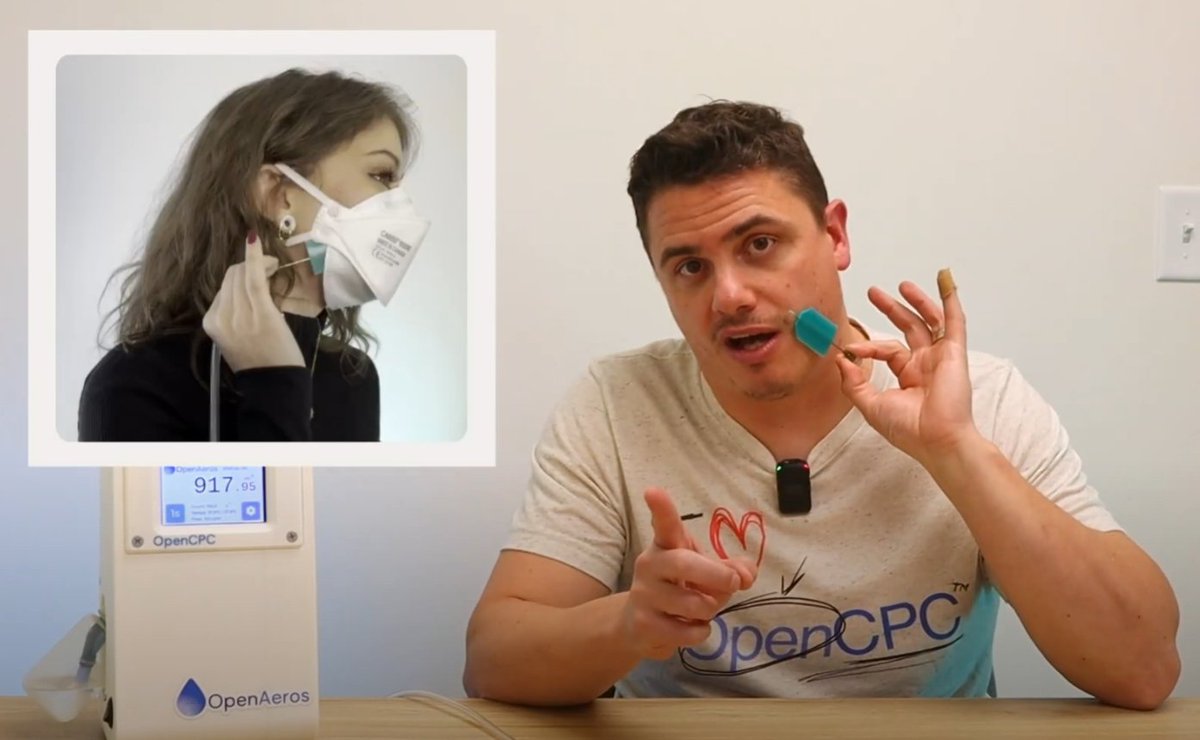
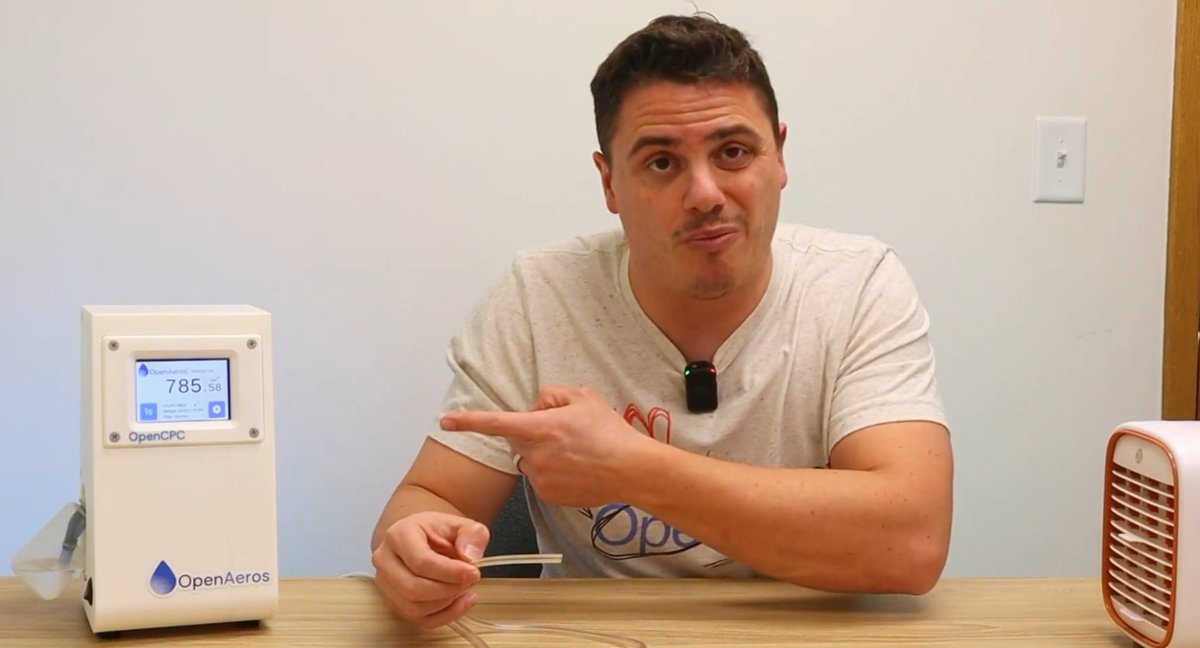
The @elastomaskpro () is a NIOSH approved reusable N95 elastomeric respirator. It is made of silicone so a higher chance it will fit and seal well and is super breathable at the same time. Read on to find out more about my experience with it. 🧵1/ elastomaskpro.com


Full disclosure: ElastoMaskPro sent me a unit to evaluate. There were no strings attached, they just asked that I provided feedback after I tried it. This thread is the first time they are seeing my feedback, they did not review anything before it being posted here. 2/
The ElastoMaskPro is very cost effective at the current sale price of $29.99 which includes two N95 filtering pucks. You can continue using the filters until they either get too dirty or there is increased breathing resistance. 3/

Depending on your environment and usage, the company estimates the filter pucks could last months to more than a year. Replacement filters can currently be purchased for $10.99, much lower cost and less waste than using disposable respirators. 4/
It is important to note that the N95 filtering pucks are "only intended to provide N95-level protection against non-oil particulates and does not provide protection against oil particulates, gases, or vapors." 5/
This means ElastoMaskPro would filter particulate matter (PM) pollution from wildfire smoke but not all of the toxic gases that are also present (which is same for N95 respirators/masks in general like the 3M Aura). 6/
The first thing I noticed when trying ElastoMaskPro is just how breathable it is. This elastomeric is much more breathable than any of the disposable respirators I have tried. 7/
To compare against the 3M Aura 1870+ (N95), a Canada Masq Q100 (CA-N95F-100Pa), and Breatheteq (KN95), I wore the ElastoMaskPro for over an hour and documented the experience. 8/
The NIOSH standard for maximum N95 inhalation resistance is 343 Pa. The 3M Aura 1870+ was not difficult to breathe in but had the highest inhalation resistance of the respirators in the group and I couldn't find any official resistance values for it. 9/

The Canada Masq Q100 and Breatheteq are made using the same material and have a low inhalation resistance of 97 Pa which is 3.5x lower than the NIOSH maximum. These came in second place for breathability. 10/

The ElastoMaskPro was by far the most breathable of the group and the company claims their inhalation resistance is about 59 Pa so 5.8x lower than the NIOSH maximum. 11/
ElastoMaskPro would have similar breathability to the Flo Mask Pro with Everyday Filter (which is not N95 certified) at 59 Pa but more breathable than using the Pro Filter (168 Pa). 12/
The package comes with the silicone respirator and two N95 filter pucks which you need to insert. Unlike some elastomerics that have cartridges that screw on the front, you need to insert these filter pucks from the inside. 13/
It wasn't too difficult to install the filters but took a bit of trial and error the first time. The most challenging part is installing the second puck and sealing it in the holder without popping out the first puck right in the middle where attach very close to each other. 14/

I eventually got it and then you need to flip the respirator over to ensure the filters are snuggly in place from the front as well by looking through the flaps. 15/

How did it fit? There are 2 sizes of ElastoMaskPro with a size guide to help you choose. In my case the guide suggested I get the Medium/Large version of the respirator. 16/
The straps are not adjustable but will stretch and built into the respirator using the same silicon material. The respirator is easy to put on and place the straps. 17/
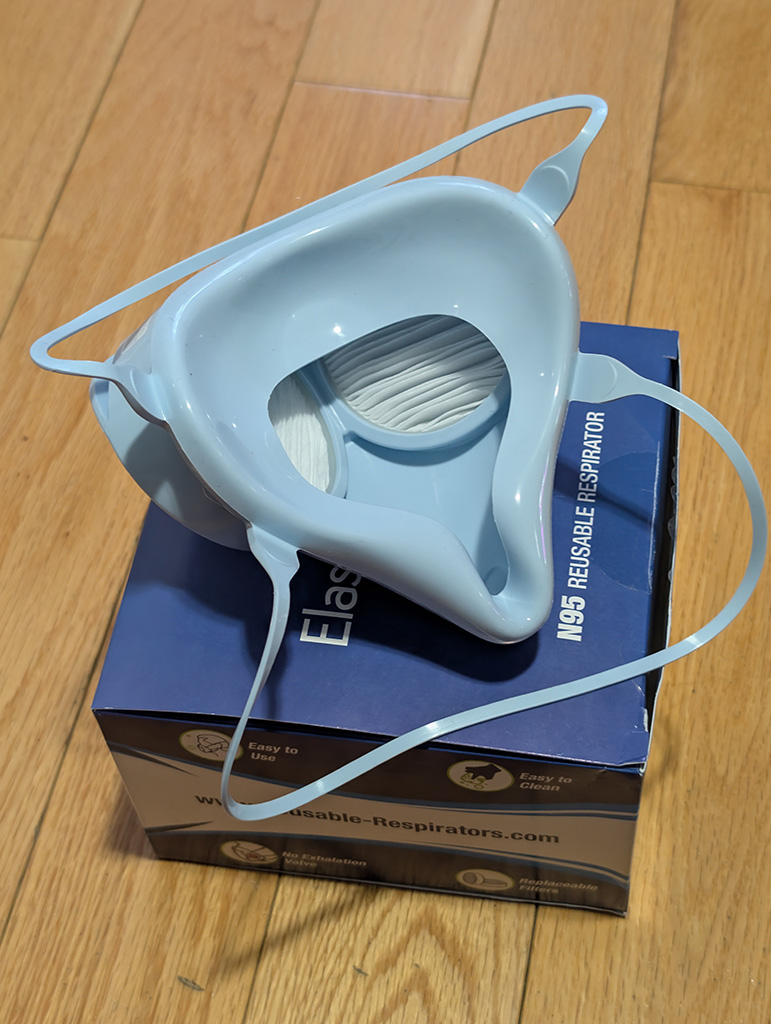
The width of the straps is about half as wide as the 3M Aura 1870+ headbands so I thought they might dig into my skin more with less surface area to spread out. 18/
With the 3M Aura 1870+, I can really feel the headbands on the back of my neck with any head movement while the ElastoMaskPro I can feel them more on the sides of my neck and not on the back of my neck. You can still feel the straps are there on both, but just differently. 19/
After the hour+ of wearing ElastoMaskPro, there were some noticeable marks on my cheeks/side of my face from the straps but nothing worse than what the 3M Aura 1870+ does. 20/
I unfortunately I was not able to do a quantitative fit test, but I did do basic negative-pressure and positive-pressure tests. 21/
Covering and sealing the ventilation slits of ElastoMaskPro with my hands and breathing in, the respirator immediately sucked up against my face and I could not breathe any air in. 22/
Doing the positive pressure test by breathing out, I could feel a small leak of air at the side of my nose. I had to adjust the respirator several times until I got the right placement on my face to pass the positive-pressure test. 23/
There is no nose clip on the ElastoMaskPro so at first it felt like it was a little loose since I’m used to metal nose clips on disposable respirators but after adjusting it, I was able to get it sitting securely. 24/
If you are interested in seeing a fit test done on the ElastoMaskPro you can check out this video from @ghhughes ( ). 25/
Many people need to communicate while working in a respirator. I tried having a conversation with others while wearing the group of respirators. 26/
The ElastoMaskPro majorly blocks sound and everyone kept asking me to repeat myself or speak louder so they could try to understand what I was saying. 27/
It was very challenging to have a conversation. Using the Q100 people had no issues understanding me and the Aura 1870+ was a little more difficult to hear (thicker material) but still no issues communicating. 28/
ElastoMaskPro is also heavier than the rest of the group so it takes more muscle and energy to open your mouth to talk and you can feel it more on your chin and cheeks when moving your mouth. 29/
For comparison the Q100 disposable respirator was the lightest and not even registering 1 gram on my scale, while the Aura 1870+ with its foam nose padding and thicker material was 8g, and finally the ElastoMaskPro is 15x heavier than the Aura at 124g. 30/
The ElastoMaskPro doesn't feel heavy on my face but you definitely notice it a lot more and the weight does pull down on the bridge of the nose. The Aura has hefty nose wire so you can feel it tight on your nose which sometimes leads to more nasal sounding talking. 31/
ElastoMaskPro does not feel tight around your nose but in my case, there was downward pressure on the nose bridge so left a visible mark and a little sore. I also had issues with the Flo Mask Pro, it did not fit my nose bridge and caused pain and left bruising after a while. 32/
The other issue with the nose bridge is that I can't wear glasses with the ElastoMaskPro. The top piece is too far up on my nose bridge for my glasses to fit making the glasses way too high on my face. 33/
I have no problem wearing glasses with the Q100 and Aura and could wear glasses with the Flo Mask Pro as well as it had indentations in the nose bridge to accommodate them. 34/
Elastomeric respirators tend to build up condensation inside with their silicone/sealed designs more than disposable respirators so I was curious to see how ElastoMaskPro compared. After more than an hour there was a little condensation inside but not a significant amount. 35/
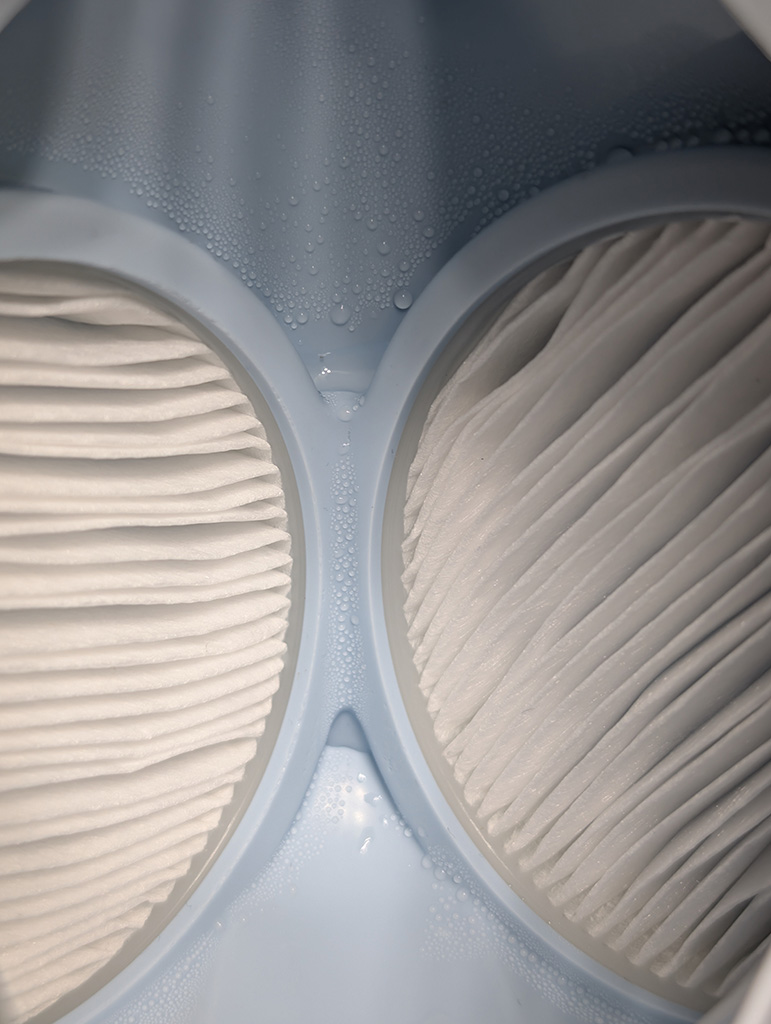
For comparison, the Flo Mask Pro had much more condensation build up for me and they even sell a condensation foam insert to help soak up some of that. It became irritating after a while to have a small pool of water sitting against your skin even with the insert. 36/
If you don't wear glasses and don't need to communicate easily with others while wearing respirators then the ElastoMaskPro may be a very affordable, breathable, and well fitting option that you can wipe down and reuse for a long period of time. 37/
With respirators, the fit is the most important part to ensure all the air you are breathing is actually getting filtered. You can learn more about fit testing here ( ). 38/
https://x.com/jeffgilchrist/status/1652394034055323648
Elastomeric respirators tend to have higher passing rates than many disposables so it might be an option for people looking to get a better fit. 39/
Do respirators actually work? Yes, and not how you might think, they don't work like sieves so they can capture particles much smaller than the size of the holes in the respirator. Learn *how* they work here: ( ). 40/
https://x.com/jeffgilchrist/status/1602994049815908353
They have also been tested and shown to capture real bacteria and viruses and there is a standard to measure just how much. Learn more about that and why you can still smell some things through a respirator here ( ). 41/
https://x.com/jeffgilchrist/status/1728039593700647259
@threadreaderapp please unroll
I made a mistake in the first post, the @elastomaskpro website is actually ( ).reusable-respirators.com
• • •
Missing some Tweet in this thread? You can try to
force a refresh