Ergothioneine from mushrooms increases muscle size & endurance in rats by raising NAD levels
So, what is ergothioneine and where is it found?
@Cell_Metabolism dlvr.it/THVRKK
So, what is ergothioneine and where is it found?
@Cell_Metabolism dlvr.it/THVRKK

Ergothioneine (ET) is a sulfur-containing amino acid, discovered over 100 years ago. Humans and animals can’t make it—we rely entirely on diet to obtain it. The yellow ball is the sulfur

Charles Tanret, a French chemist, isolated the compound from the ergot parastici fungus (Claviceps purpurea) that grows on grains. This is where the name comes from

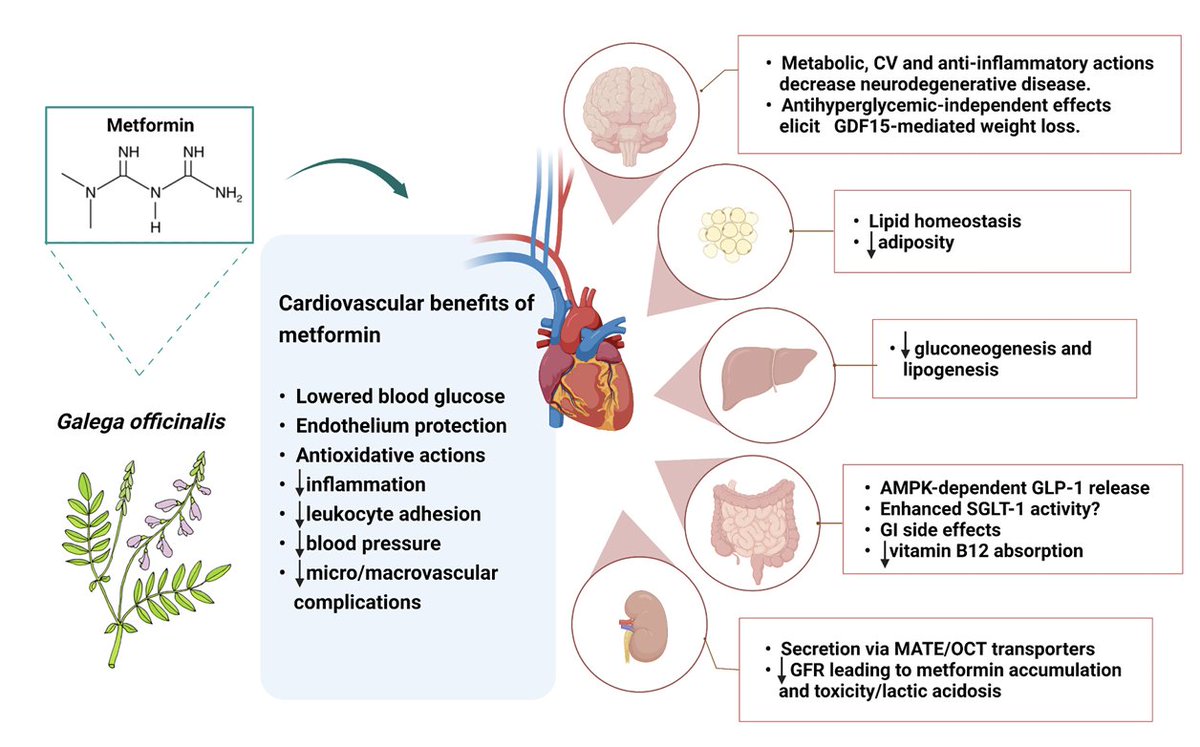
Interestingly, his son Georges identified galegine, an alkaloid with a guanidine, from the French lilac, which led to the diabetes and suspected longevity medicine metformin, a biguanide
Previous work showed ergothioneine improves aerobic performance in mice and activates stem cell markers. Time to exhaustion is a striking 41% longer (p < 0.01)
frontiersin.org/journals/physi…
biorxiv.org/content/10.110…
frontiersin.org/journals/physi…
biorxiv.org/content/10.110…
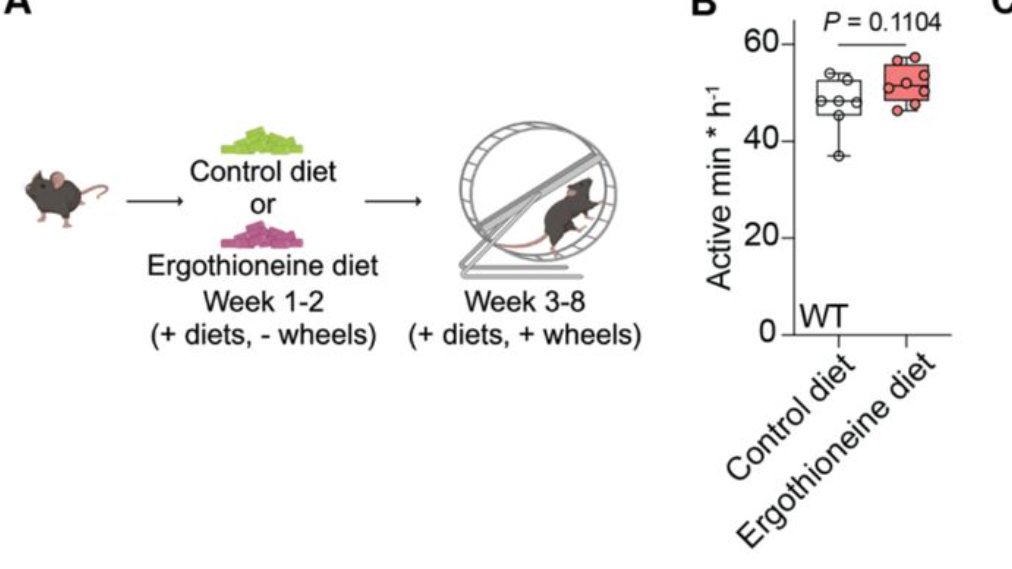
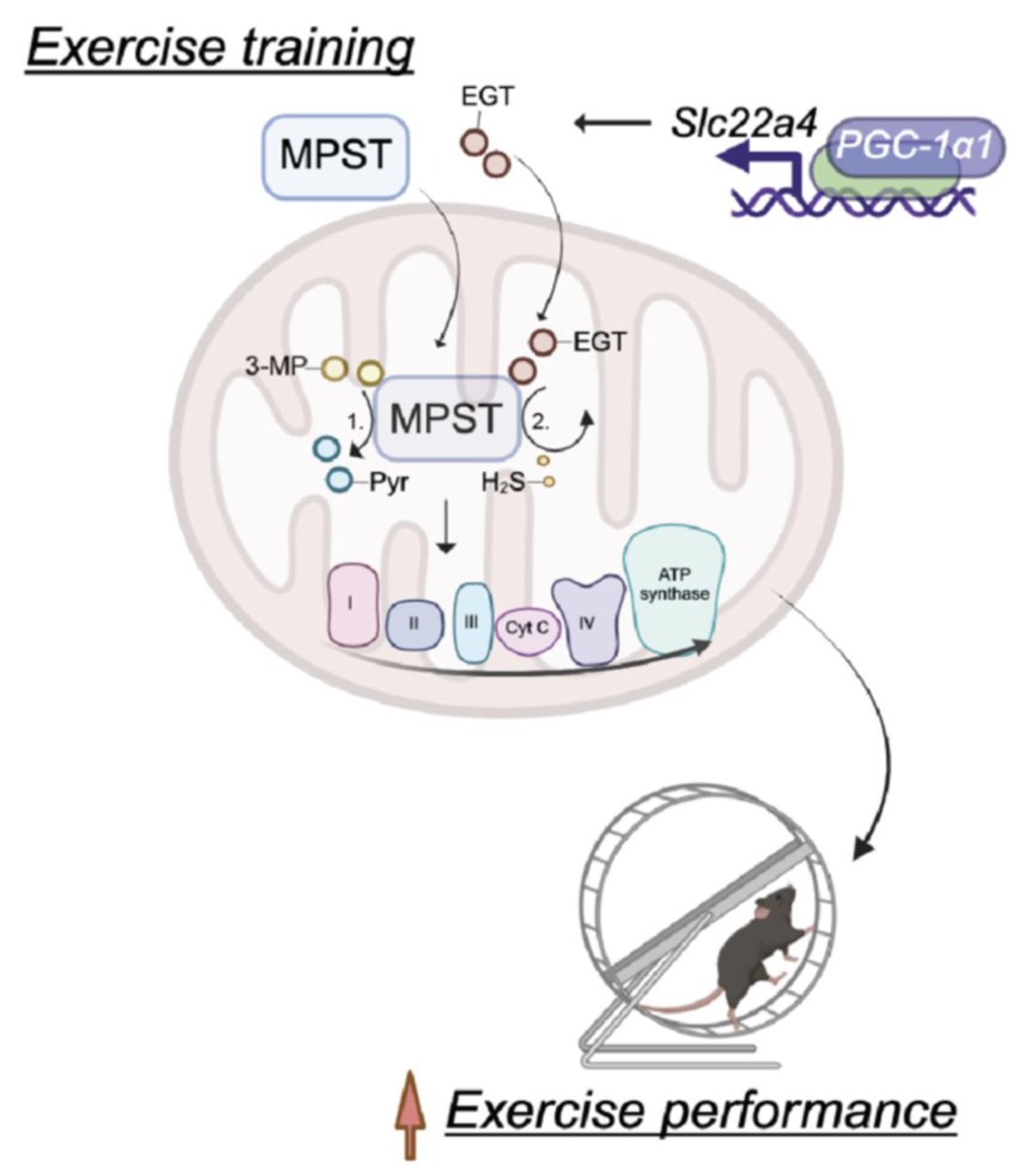
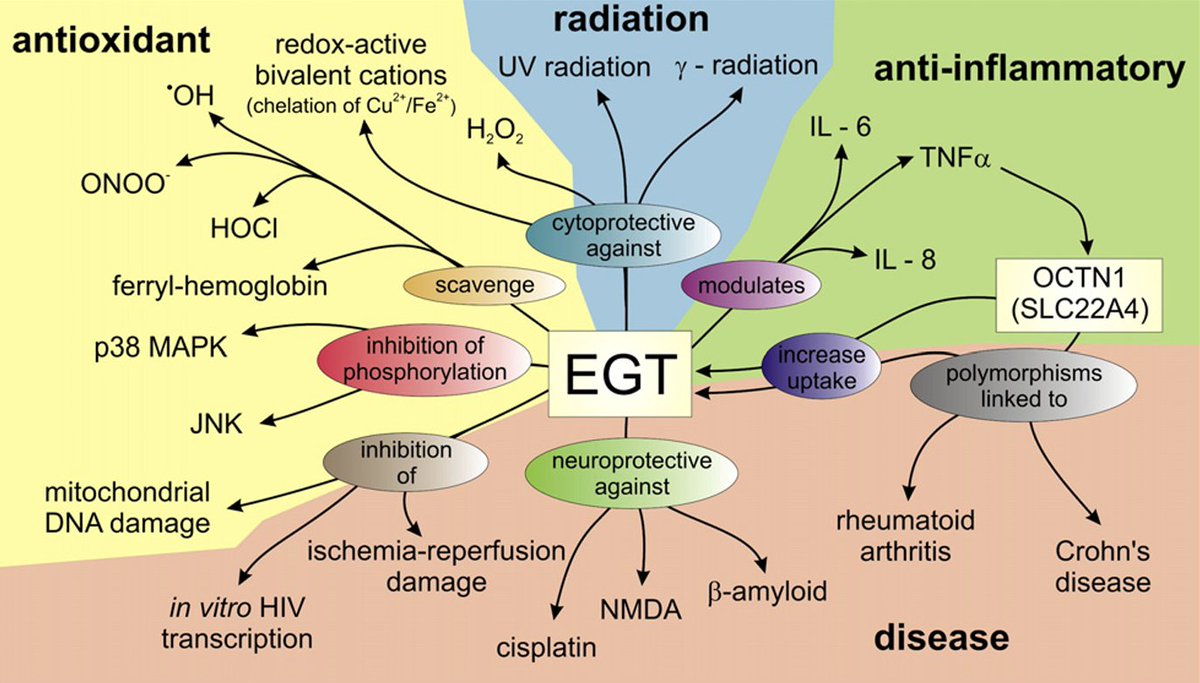
Many of our cell membranes have a specific transporter (OCTN1) to absorb and distribute ergothioneine. This suggests it plays an important biological role, even though we don’t fully understand what that is
One explanation is the Xenohyormesis Hypothesis, the idea that we evolved to sense the state of our food. In tough times, these molecules boost cell defenses to help ensure survival, and long-term they extend lifespan
en.wikipedia.org/wiki/Xenohorme…
en.wikipedia.org/wiki/Xenohorme…
In the 2000s, ET was thought to act as simply an antioxidant, but like most molecules from plants and fungi but, as this new paper shows, we're learning it can control health by interacting with health and longevity-promoting enzymes
Studies have linked higher ergothioneine levels to better brain health, with potential protective effects against conditions like Alzheimer’s and Parkinson’s. It’s also being studied for its role in cardiovascular and immune health
This new paper @Cell_Metabolism shows ET increases NAD+ levels in muscle & stress resistance, and reduces age-related biomarkers, ostensibly by producing more H₂S (rotten egg gas) via cystathionine gamma-lyase (CSE), activating of metabolic enzymes that raise NAD+ in muscle
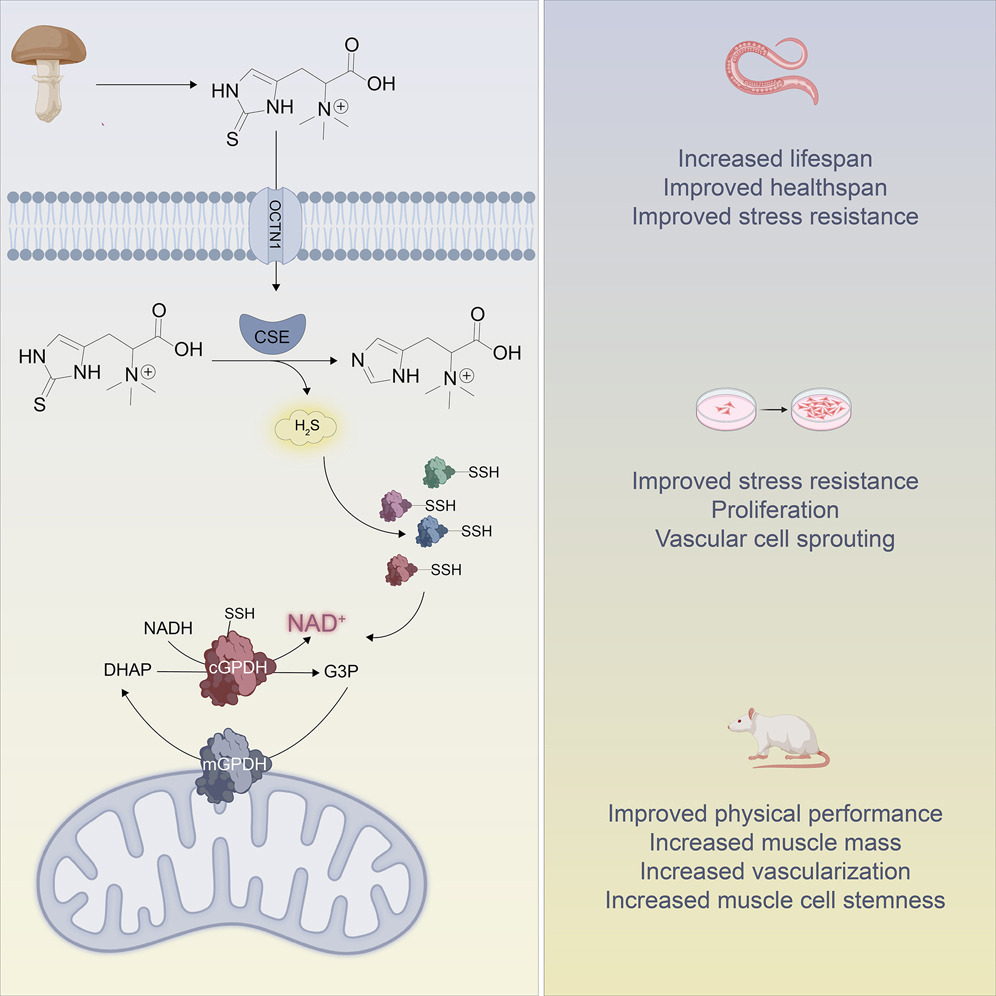
Over the course of aging, NAD+ levels decrease in various tissues, including skeletal muscle, where clinical evidence underscores age-related NAD+ deficiency
In the rat study, both time and distance run before exhaustion were ~ 2X higher in ET-treated rats. 3-week treatment with ET resulted in significant increases in muscle mass and decreases in post-exercise serum & muscle lactate levels
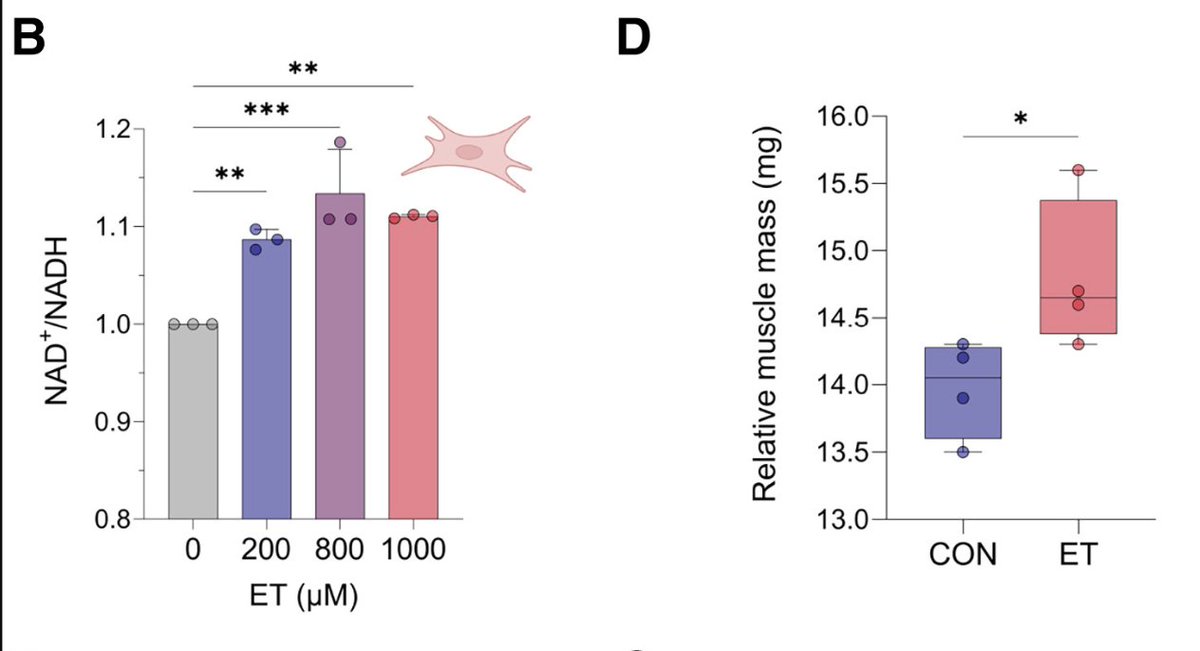
It was already known that treatment of mice with NAD precursors also improves age-related sarcopenia and muscle performance. Two NAD precursors are NR and NMN, both of which have shown promise in human clinical trials
In humans, walking distance increases during a six-minute walking test with 300 mg, 600 mg, and 900 mg groups, compared to placebo at days 30 and 60 (all p < 0.01), though increased NAD levels in muscle aren't seen
link.springer.com/article/10.100…
link.springer.com/article/10.100…
In the aged rats, increased NAD+ levels were claimed to improve muscle mass, vascularization, muscle cell stemness, and treadmill endurance
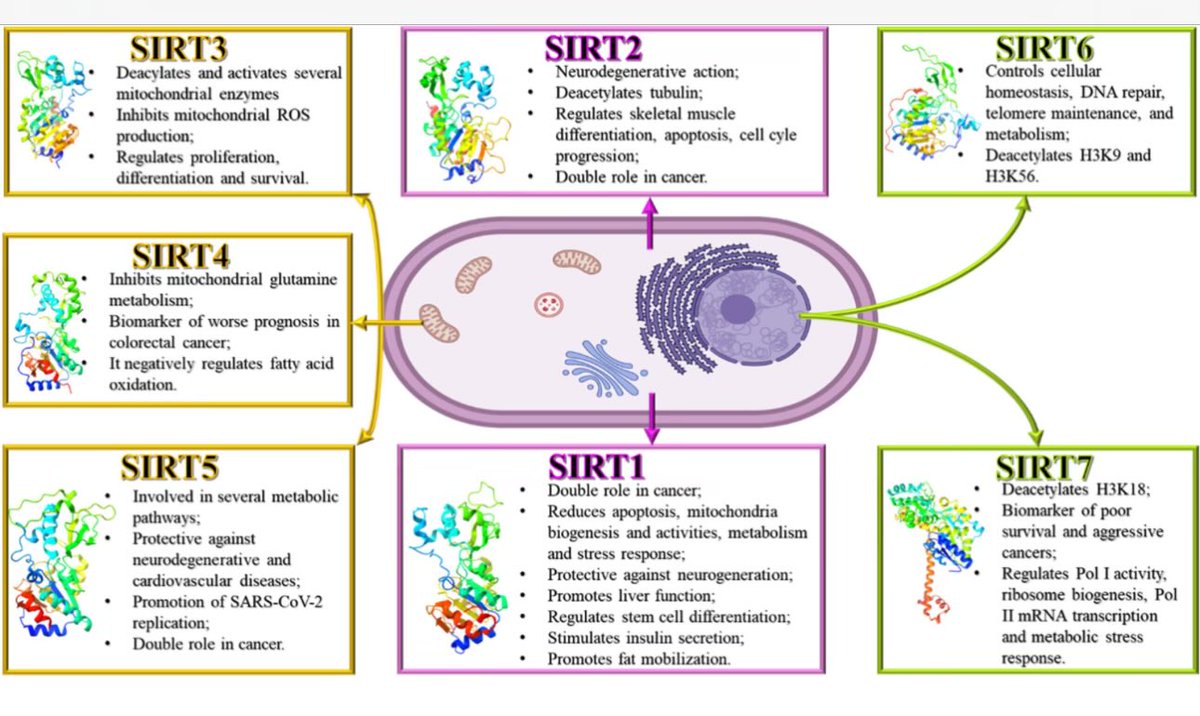
Consistent with this, in 2018 we found that raising NAD+ with NMN boosts activity of SIRT1 & improves endurance by stimulating the growth of blood vessels and blood flow in muscle. With Jay Mitchell's lab, we showed H₂S boosts NAD+, stimulating blood vessels
In this new study, in animals treated with ET there was an "obvious increase in total number of blood vessels per muscle fiber was observed" along with "more vascular endothelial growth factor (VEGF) receptor in the muscles of animals"...
High-electron-density mitochondria were observed in the muscle tissue of ET-treated rats, characteristic of highly active mitochondria
In this study, the rats were given 20 mg/kg of ET in drinking water for either 5 days or 3 weeks, which I calculate using allometric scaling is approx 1.3 g a day for a 70 kg human tinyurl.com/ym6y7uvf
It is unlikely you can consume sufficient amounts of ergothioneine by eating mushrooms alone to match the doses typically used in clinical trials
Mushrooms only contain around 1–5 mg / 100 g, whereas clinical studies often use supplemental doses of 5–30 mg/day, which would require consuming ~500 grams of mushrooms dailyresearchgate.net/figure/The-amo…
Ergothioneine supplements are available in various forms, including capsules and tablets. These supplements are often derived from natural sources like mushrooms or synthesized to ensure purity
In Europe, the European Food Safety Authority (EFSA) has deemed ET safe for use in foods and supplements, approving doses of up to 30 mg per day for adults
As for whether ET is effective for conditions such as liver damage, cataracts, Alzheimer's disease, diabetes, or heart disease, there isn't enough reliable research
Overall, a super interesting study that hopefully will lead to more human trials and improved molecules that could be used to raise NAD levels and/or treat diseases of aging. But will ET be banned by the World Anti-Doping Agency (WADA)?..... we'll see dlvr.it/THVRKK
Hope you found this interesting. I sure did. Follow for more
http://x.com/davidasinclair/status/1882510446340845844
• • •
Missing some Tweet in this thread? You can try to
force a refresh