Thread.
On the left, you can see a map of corruption indexed by the number of mob crimes per 100,000. On the right, you can see corruption indexed by how much people steal from the public purse.
And in the middle, a map of inbreeding.
Clannish people do clannish crimes.
On the left, you can see a map of corruption indexed by the number of mob crimes per 100,000. On the right, you can see corruption indexed by how much people steal from the public purse.
And in the middle, a map of inbreeding.
Clannish people do clannish crimes.

Though it's noted in the image, I want to reiterate that the corruption measure on the right is reverse-coded, so higher values indicate lower corruption.
The correlations with consanguinity are 0.65 and -0.52, and they hold up splitting the country in half and in other specs.
The correlations with consanguinity are 0.65 and -0.52, and they hold up splitting the country in half and in other specs.
Outside of Italy, in the wider world, corruption perceptions also relate to consanguinity.
The correlation is high, and far from perfect, but both measures contain error, so keep that in mind.
The correlation is high, and far from perfect, but both measures contain error, so keep that in mind.

This all makes sense.
Clans are family groups, extended kin networks that help each other. Many cultures have made this explicit, too.
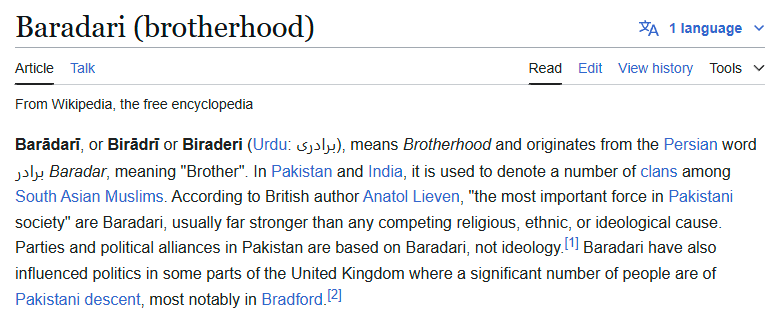
For example, Britain has allowed in Pakistanis who have extended family networks known as Baradari, which promote cousin marriage.
Clans are family groups, extended kin networks that help each other. Many cultures have made this explicit, too.
For example, Britain has allowed in Pakistanis who have extended family networks known as Baradari, which promote cousin marriage.
The people involved in clans prefer helping their own ethnic groups, helping their families, helping their own in general, and often to the exclusion of those not like them.
In some places, they have their own restaurants and entertainment, places of worship, and so on.
In some places, they have their own restaurants and entertainment, places of worship, and so on.
But one place globally has very little clannishness, and the reason has to do with two things:
- Catholics
- Charlemagne and the French
Here's a helpful map showing the area I'm talking about, excluding the areas beyond the red and blue lines:
- Catholics
- Charlemagne and the French
Here's a helpful map showing the area I'm talking about, excluding the areas beyond the red and blue lines:

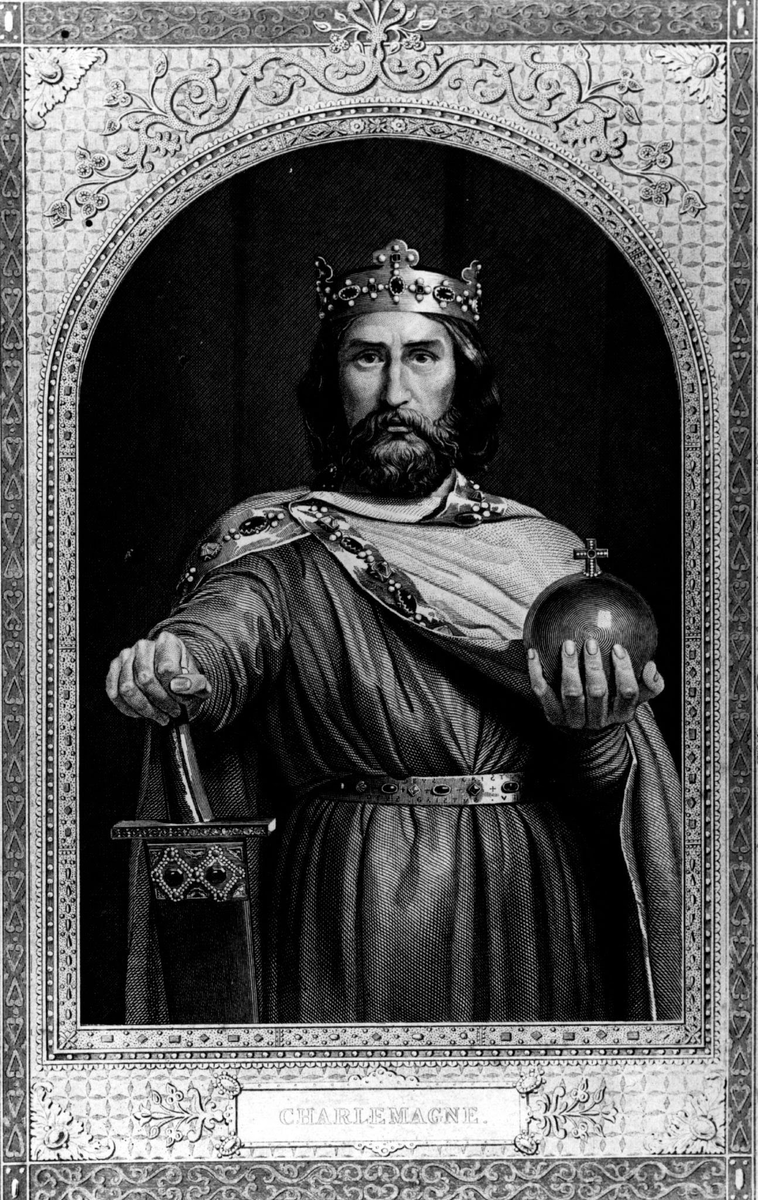
Prior to about 1500 AD and even while under the Roman Empire, the Catholic Church became—in Emmanuel Todd's words—"obsessed" with combatting incest.
The Church wanted to limit relationships between people who were too closely related.
See: This 'Affinity' explainer for kids:
The Church wanted to limit relationships between people who were too closely related.
See: This 'Affinity' explainer for kids:
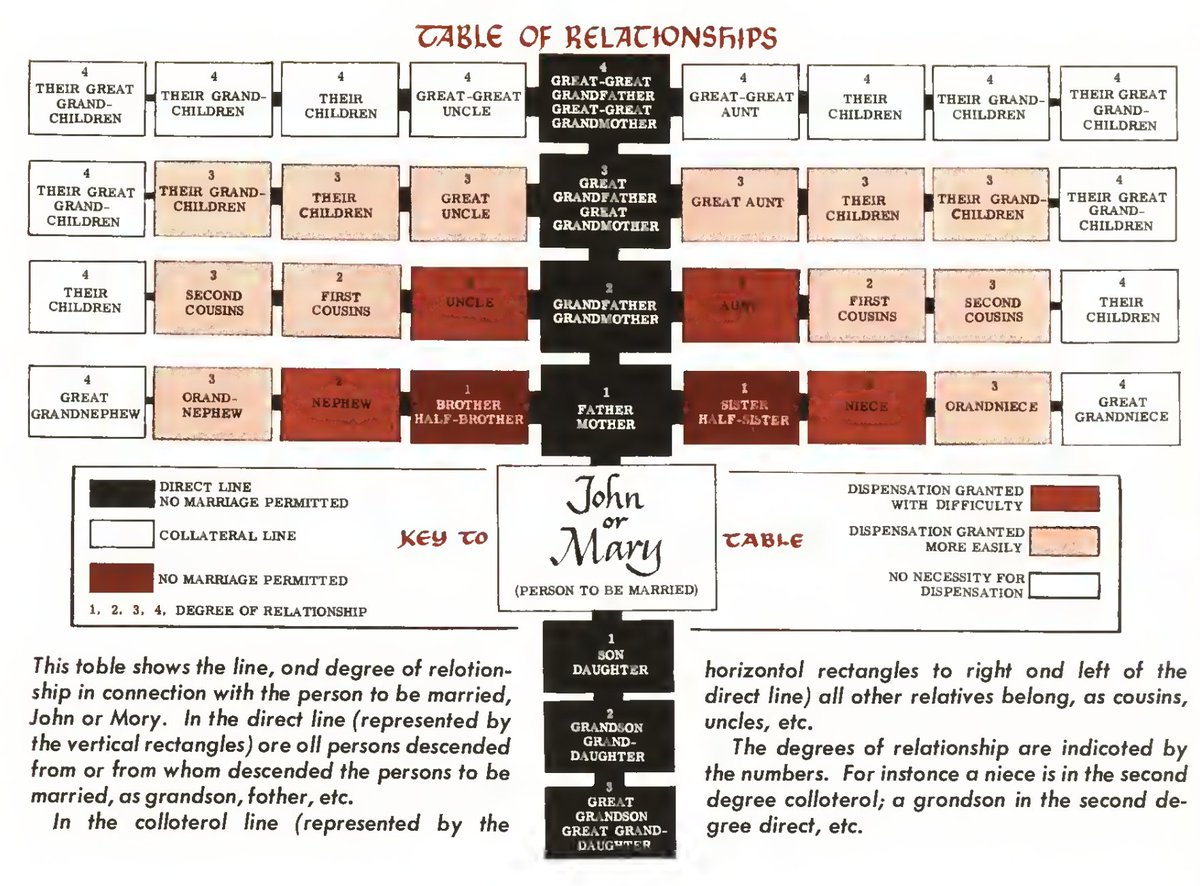
The Church didn't allow people to marry brothers and half-brothers, sisters and half-sisters, they very rarely granted dispensation for marriages with aunts and uncles or nieces and nephews, and didn't often give dispensations for cousin marriage.
This got stricter over time.
This got stricter over time.
The reason behind this is simple:
Organizations like the baradari found in modern Pakistani communities are an impediment to the power of the Church to govern and exert influence over lords and ladies.
If people value clan and family over cardinals and God, the Church loses.
Organizations like the baradari found in modern Pakistani communities are an impediment to the power of the Church to govern and exert influence over lords and ladies.
If people value clan and family over cardinals and God, the Church loses.
And Europe was fragmented.
Europe, after the fall of the Roman Empire, had an insane number of states for most of its history.
A prototypical example of this is the number of states in the Holy Roman Empire. These were so small they were dubbed "Kleinstaaterei" in Germany.
Europe, after the fall of the Roman Empire, had an insane number of states for most of its history.
A prototypical example of this is the number of states in the Holy Roman Empire. These were so small they were dubbed "Kleinstaaterei" in Germany.
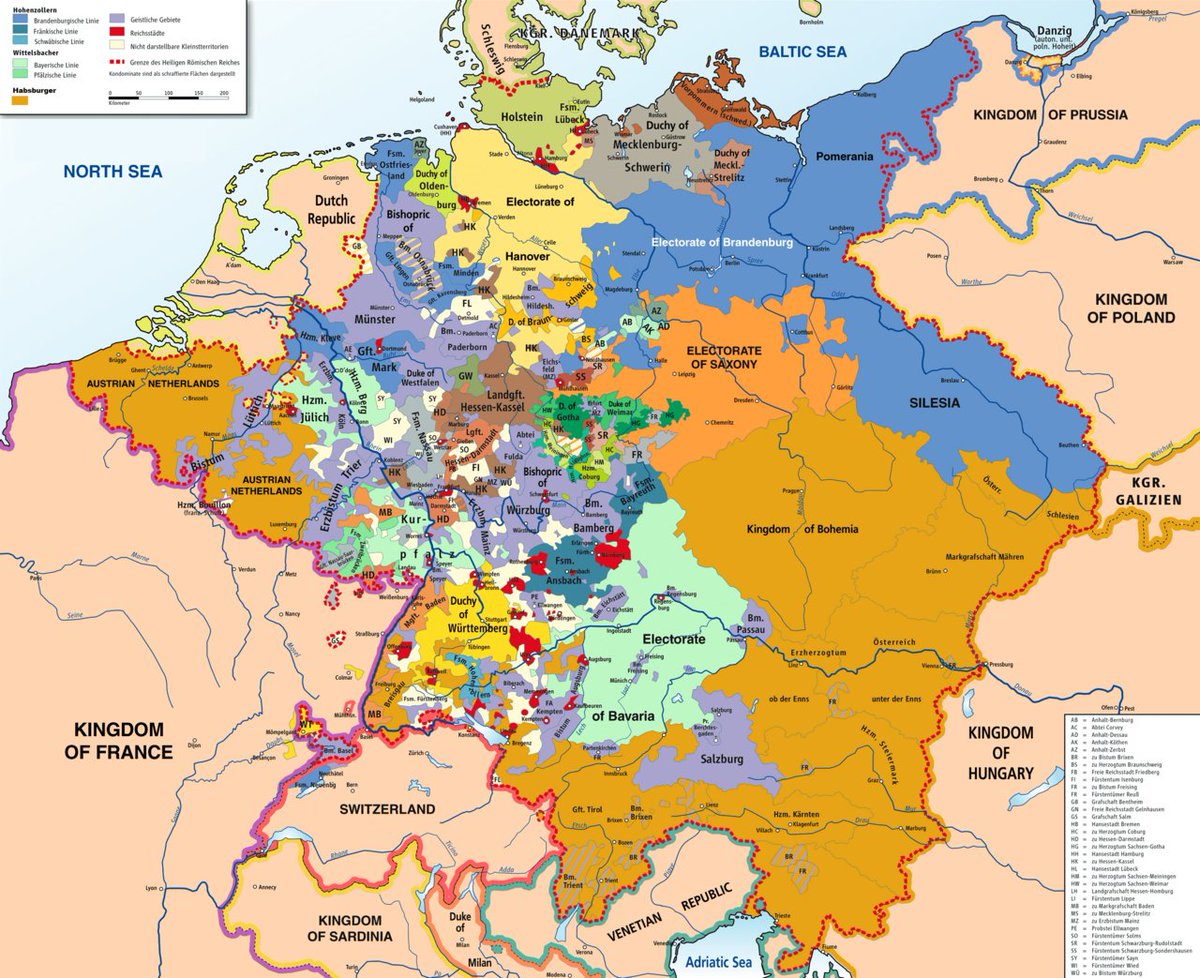
The fragmentation of Europe made it easier for the Catholic Church to impose on the various aristocrats and royals of Europe.
The various realms were individually small and weak, and the Catholic Church was multinational and relatively large and imposing.
The various realms were individually small and weak, and the Catholic Church was multinational and relatively large and imposing.
And impose they did!
The Catholics banned corporatism and crippled kin networks, while supporting efforts from different states that helped them to reach these goals.
The most important of these efforts was the creation of Europe's historical economic structure by the Franks.
The Catholics banned corporatism and crippled kin networks, while supporting efforts from different states that helped them to reach these goals.
The most important of these efforts was the creation of Europe's historical economic structure by the Franks.
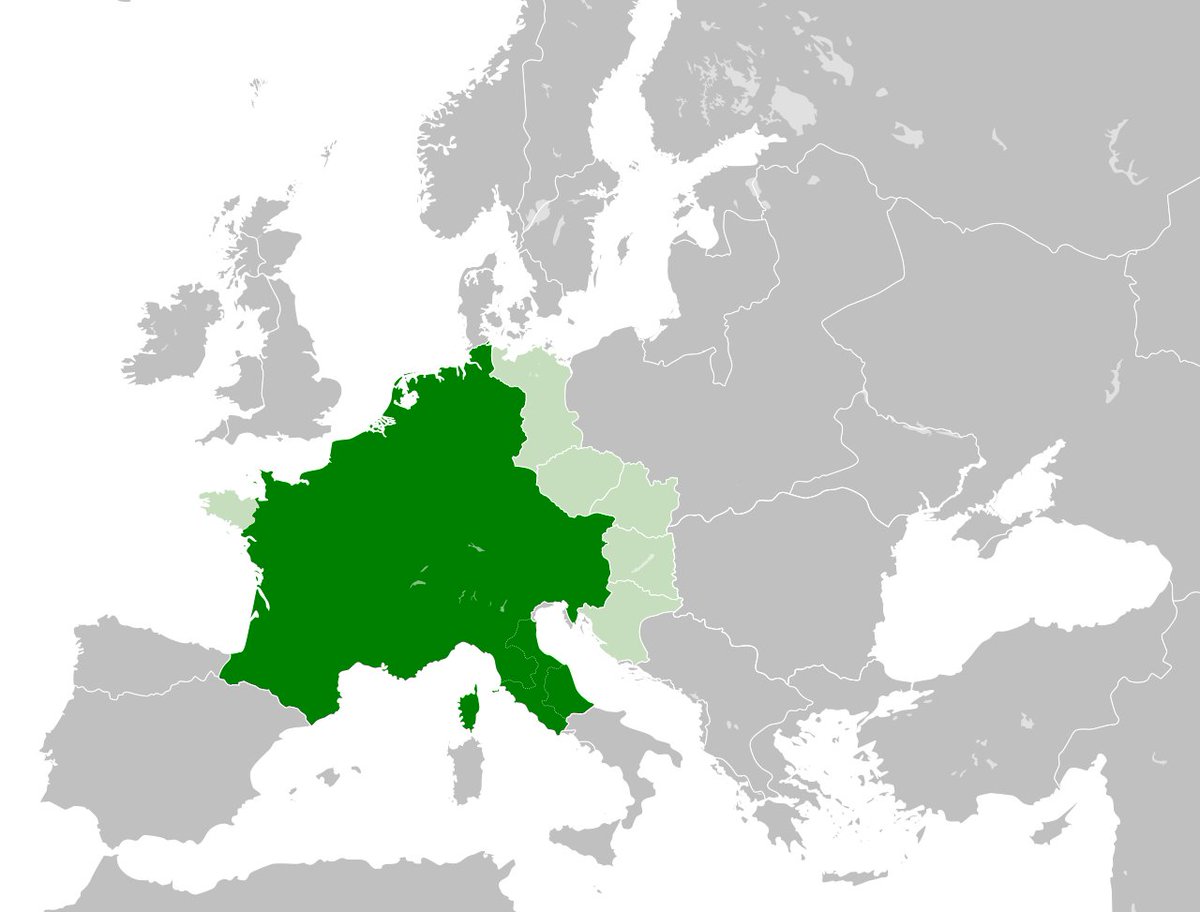
The Carolingian or "Frankish" Empire, whose main parts are shown in dark green and tributary states are shown in a lighter green, expanded the late-Roman Villa system across Europe.
In this system, people lived on and farmed the land around fortified manor houses.
Familiar?
In this system, people lived on and farmed the land around fortified manor houses.
Familiar?
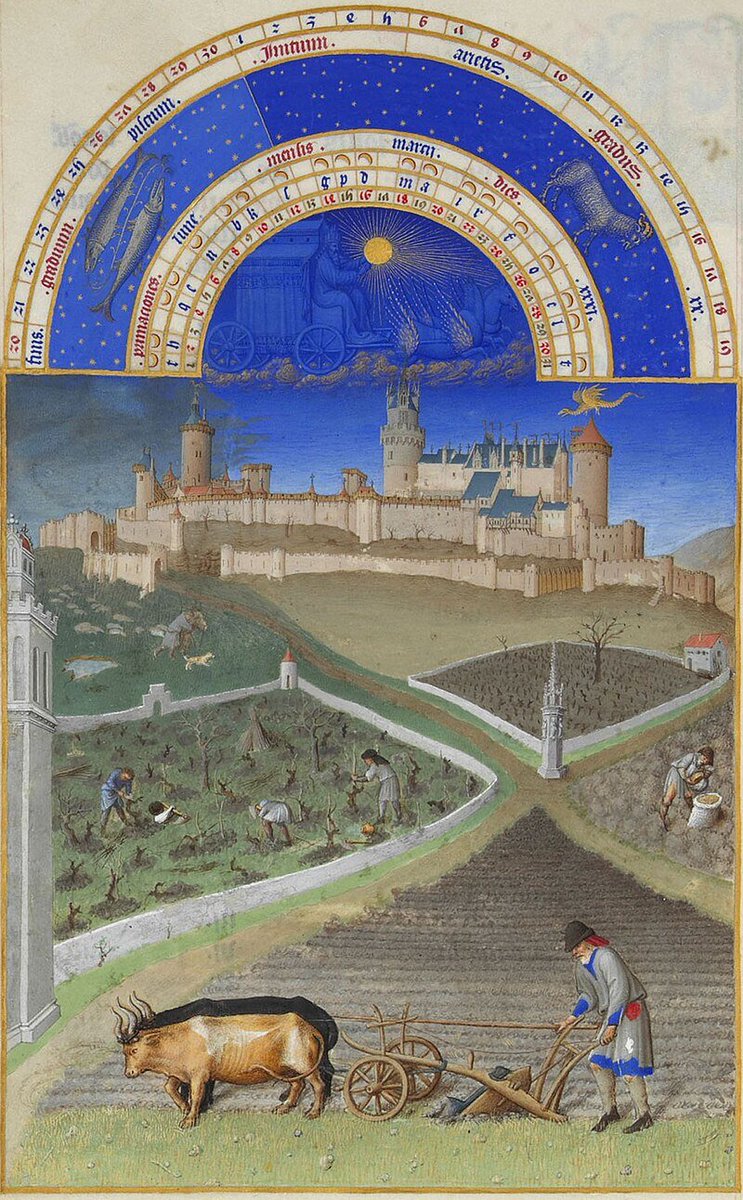
This system set lords up to administer law to lots of people they had a consistent relationship with, in a very local way.
This was great because state capacity in the premodern era was extremely limited, and thus the more local the rule, the more extreme it could be.
This was great because state capacity in the premodern era was extremely limited, and thus the more local the rule, the more extreme it could be.
Extreme rule was needed to ban cousin marriage, and it just so happened to help lords if they went along with that.
For one, it stopped people from organizing against them: Clans were an alternative power structure manor lords didn't care for. For two, it gained Catholic favor.
For one, it stopped people from organizing against them: Clans were an alternative power structure manor lords didn't care for. For two, it gained Catholic favor.
Through centuries of this ban and its accouterments, the areas governed in this way became... WEIRD!
And by that I mean, psychologically what we now call "Western, Educated, Industrialized, Rich, and Developed" in mindset.
And the longer the rule, the more intense this is.
And by that I mean, psychologically what we now call "Western, Educated, Industrialized, Rich, and Developed" in mindset.
And the longer the rule, the more intense this is.

You can see this in Italy (shown below), and you can even see it when you compare the effects of exposure to the Western, Catholic Church, and the Eastern, Orthodox one, which adopted only some of the proscriptions the Catholic Church did.

You can even see this play out in Germany, where Eastern Germany, which was less exposed to the Catholic Church and the Frankish system historically, was systematically different from the rest of Germany long before the Iron Curtain went up:
https://x.com/cremieuxrecueil/status/1760342434972602802
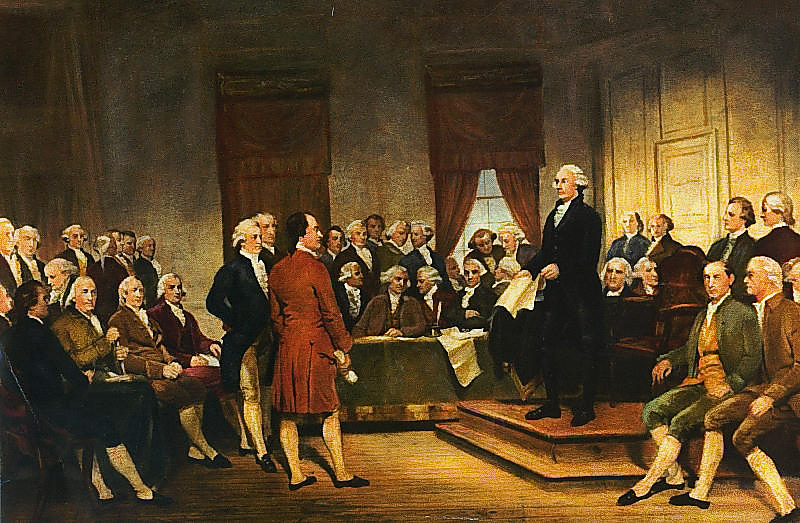
Arguably the most extremely WEIRD people to come out of Europe were the early Americans.
The founding stock of the U.S. was mostly White Anglo Saxon Protestants who rejected clannishness and collectivism.
The founding stock of the U.S. was mostly White Anglo Saxon Protestants who rejected clannishness and collectivism.
In America's early years, immigration was welcomed openly, and it was principally sourced from areas also within the map I showed above.
It came from other places that had become WEIRD!
It came from other places that had become WEIRD!

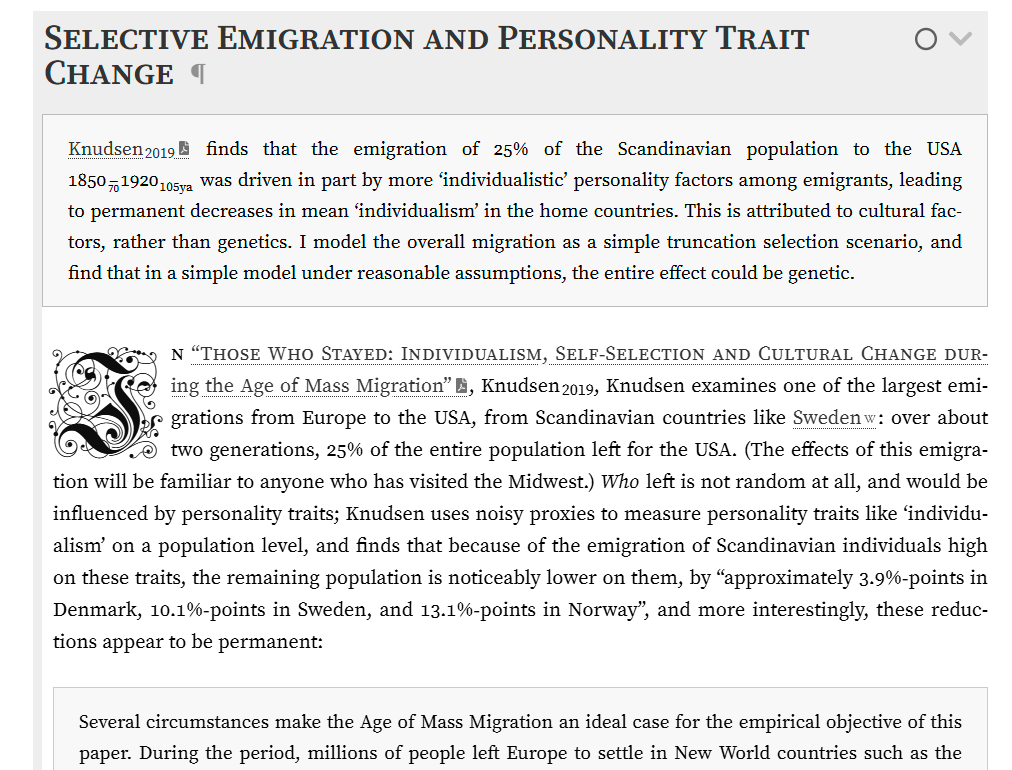
We even have evidence that those people who came to America from Scandinavia were especially individualistic for a place that's already quite individualistic:
But then America opened up a bit more and started taking in people who were not quite WASP-y, but were more just 'White', including Italians, the Irish, Slavs, etc.
This inspired a lot of resent, because it brought machine politics to America:
This inspired a lot of resent, because it brought machine politics to America:
https://x.com/cremieuxrecueil/status/1724951685695480085

The Irish organized political machines, the Italians organized mobs, and though there was collusion and conspiracy before they got to the U.S., the scale was nothing like what happened when America encountered huge numbers of immigrants from outside Europe's anti-clannish zone.
So anti-immigrant sentiment got stronger, and eventually immigration was heavily limited in the early-1920s.
After World War II, immigration patterns changed again, there was partial assimilation, etc.
But these groups changed America in a variety of ways.
After World War II, immigration patterns changed again, there was partial assimilation, etc.
But these groups changed America in a variety of ways.
In any case, whether you're reasoning from global statistics, within particular countries, or even from the experiment of American migration, it's clear:
Clannish people act clannish.
That can be good, it can be bad. I lean that it's bad, so here's an idea: screen against it!
Clannish people act clannish.
That can be good, it can be bad. I lean that it's bad, so here's an idea: screen against it!
We are now at the thread length limit, so I can't go on, but I recommend reading more about this.
P.S. Even America's early Germans were selected for being less clannish since many were '48ers.
For now, sources:
sciencedirect.com/science/articl…
science.org/doi/10.1126/sc…
cremieux.xyz/p/from-caveman…
academic.oup.com/chicago-schola…
cremieux.xyz/p/what-went-in…
gwern.net/note/statistic…
P.S. Even America's early Germans were selected for being less clannish since many were '48ers.
For now, sources:
sciencedirect.com/science/articl…
science.org/doi/10.1126/sc…
cremieux.xyz/p/from-caveman…
academic.oup.com/chicago-schola…
cremieux.xyz/p/what-went-in…
gwern.net/note/statistic…
• • •
Missing some Tweet in this thread? You can try to
force a refresh