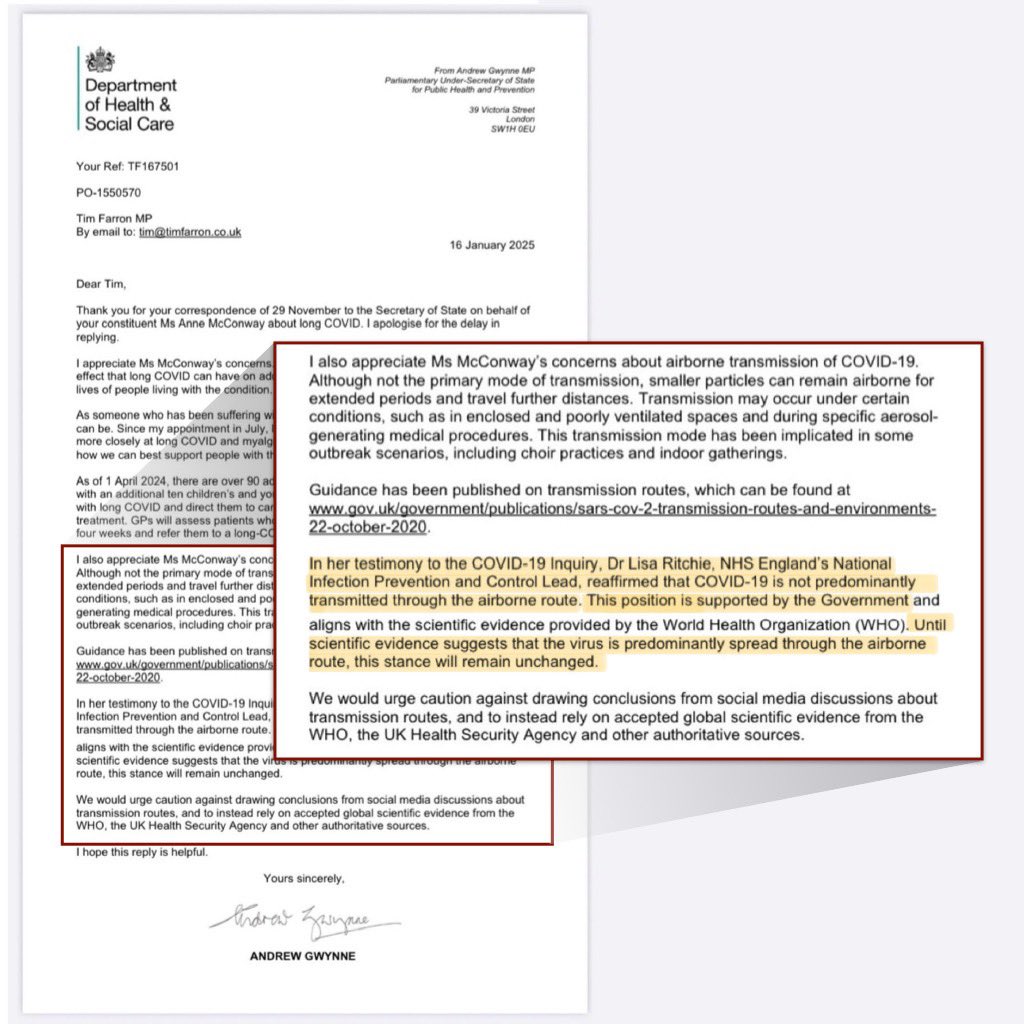
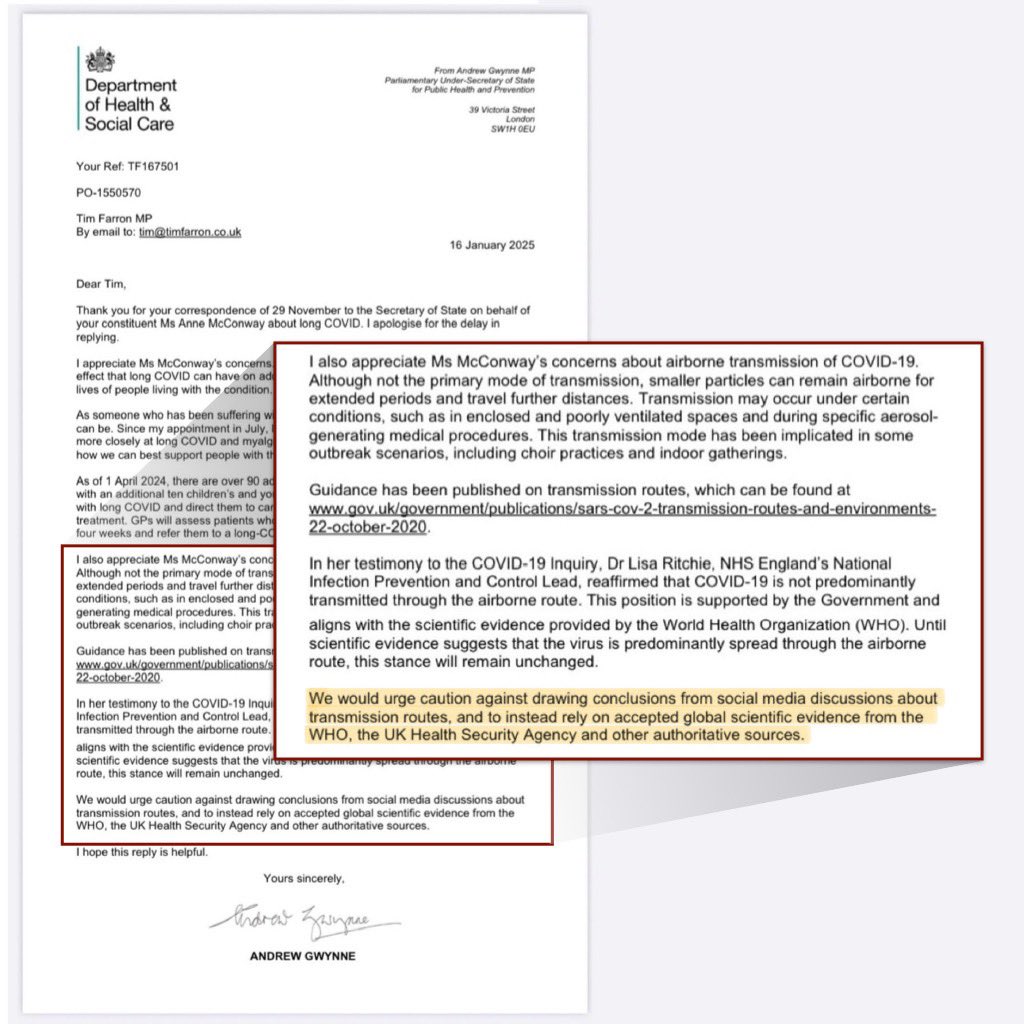
I’ve been reflecting on this letter from Minister @GwynneMP ⬇️
The letter which says the government supports Dr Lisa Ritchie’s view that “Covid is not predominantly transmitted through the airborne route”.
I suspect there may be a little more to it than meets the eye… 🧐
/1
The letter which says the government supports Dr Lisa Ritchie’s view that “Covid is not predominantly transmitted through the airborne route”.
I suspect there may be a little more to it than meets the eye… 🧐
/1

You see, here’s the thing:
Letters like that don’t get written in a vacuum.
Letters like that are usually drafted on behalf of Ministers by a civil servant who has expertise in the subject matter.
So I’m left wondering: who drafted it?
Who is advising Mr Gwynne?
/2
Letters like that don’t get written in a vacuum.
Letters like that are usually drafted on behalf of Ministers by a civil servant who has expertise in the subject matter.
So I’m left wondering: who drafted it?
Who is advising Mr Gwynne?
/2
Dr Ritchie’s testimony at the Covid Inquiry has been widely criticised as her views conflicted so starkly with scientific evidence presented by independent experts like Prof Beggs.
So it seems odd that the letter is written in a way which so emphatically supports her stance.
/3
So it seems odd that the letter is written in a way which so emphatically supports her stance.
/3
Here’s a little more detail from Prof Beggs’ testimony where he again confirms that the latest scientific evidence demonstrates that the BULK of the SARS-CoV-2 virus is carried in the small airborne aerosols…
…NOT in the larger droplets which rapidly fall to the ground.
/4
…NOT in the larger droplets which rapidly fall to the ground.
/4
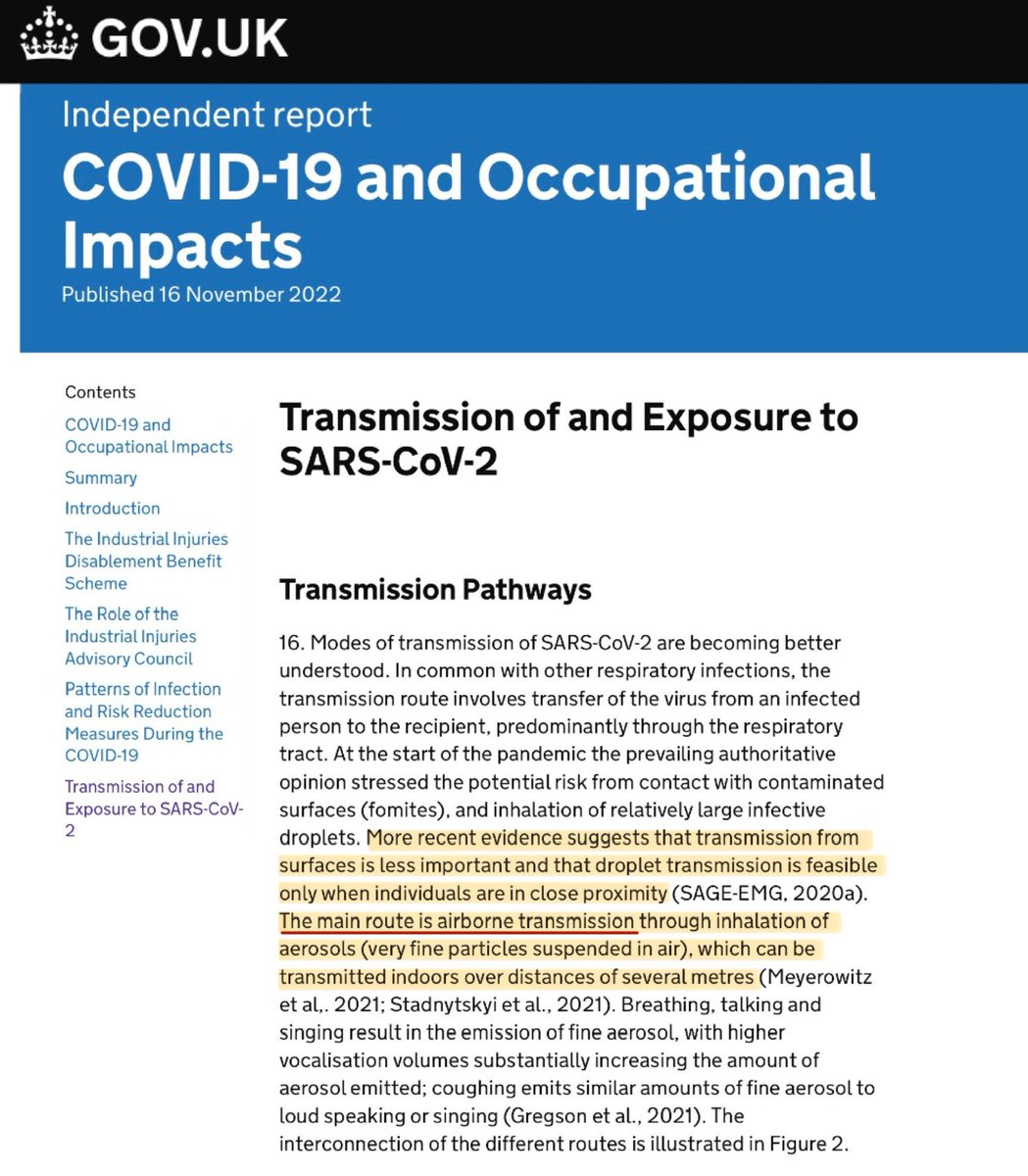
The government website also confirms that the latest scientific evidence shows that transmission from contact & droplets are far less significant than initially thought.
It clearly states that, for Covid:
“THE MAIN ROUTE IS AIRBORNE TRANSMISSION”.
/5 gov.uk/government/pub…
It clearly states that, for Covid:
“THE MAIN ROUTE IS AIRBORNE TRANSMISSION”.
/5 gov.uk/government/pub…
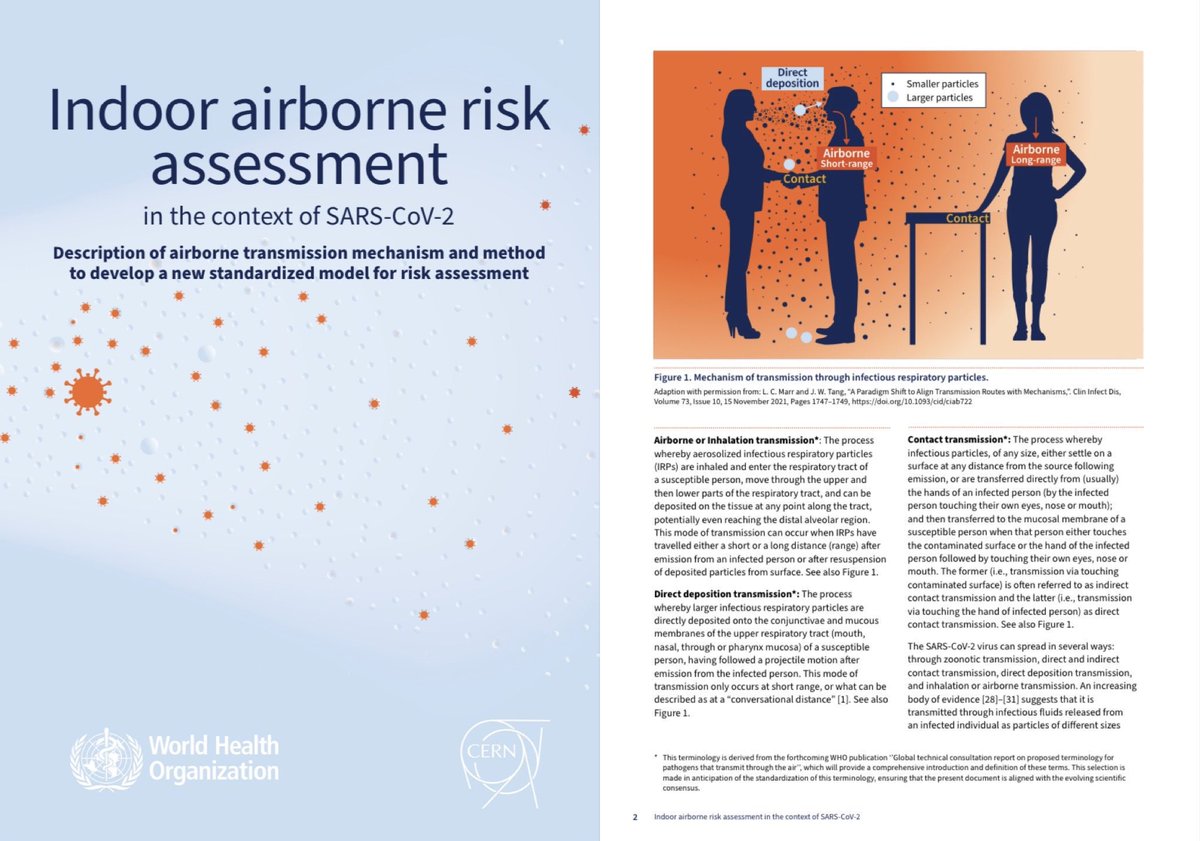
The WHO also published an important document last year which was clear about the significant role which AIRBORNE transmission plays in the spread of Covid.
I wrote a thread at the time which details some of the key insights from that paper ⬇️
iris.who.int/handle/10665/3…
/6 x.com/_catinthehat/s…
I wrote a thread at the time which details some of the key insights from that paper ⬇️
iris.who.int/handle/10665/3…
/6 x.com/_catinthehat/s…
In fact, back in 2022, the WHO’s departing Chief Scientist, @doctorsoumya, even said that “her biggest regret is not acknowledging early in the pandemic that SARS-CoV-2 could be spread by aerosols”.
/7 science.org/content/articl…
/7 science.org/content/articl…

We could argue all day about whether Covid is *predominantly* airborne or not…
…but, quite frankly, it’s just a distraction.
Dr Lisa Ritchie has seized upon the word ‘predominantly’ as a convenient excuse to not change the IPC guidance to address airborne transmission.
/8
…but, quite frankly, it’s just a distraction.
Dr Lisa Ritchie has seized upon the word ‘predominantly’ as a convenient excuse to not change the IPC guidance to address airborne transmission.
/8
But is it even a valid excuse?
There’s a simple way to find out…
Let’s take a look at what it actually says in the National Infection Prevention and Control manual for NHS England, the NIPCM.
/9
There’s a simple way to find out…
Let’s take a look at what it actually says in the National Infection Prevention and Control manual for NHS England, the NIPCM.
/9
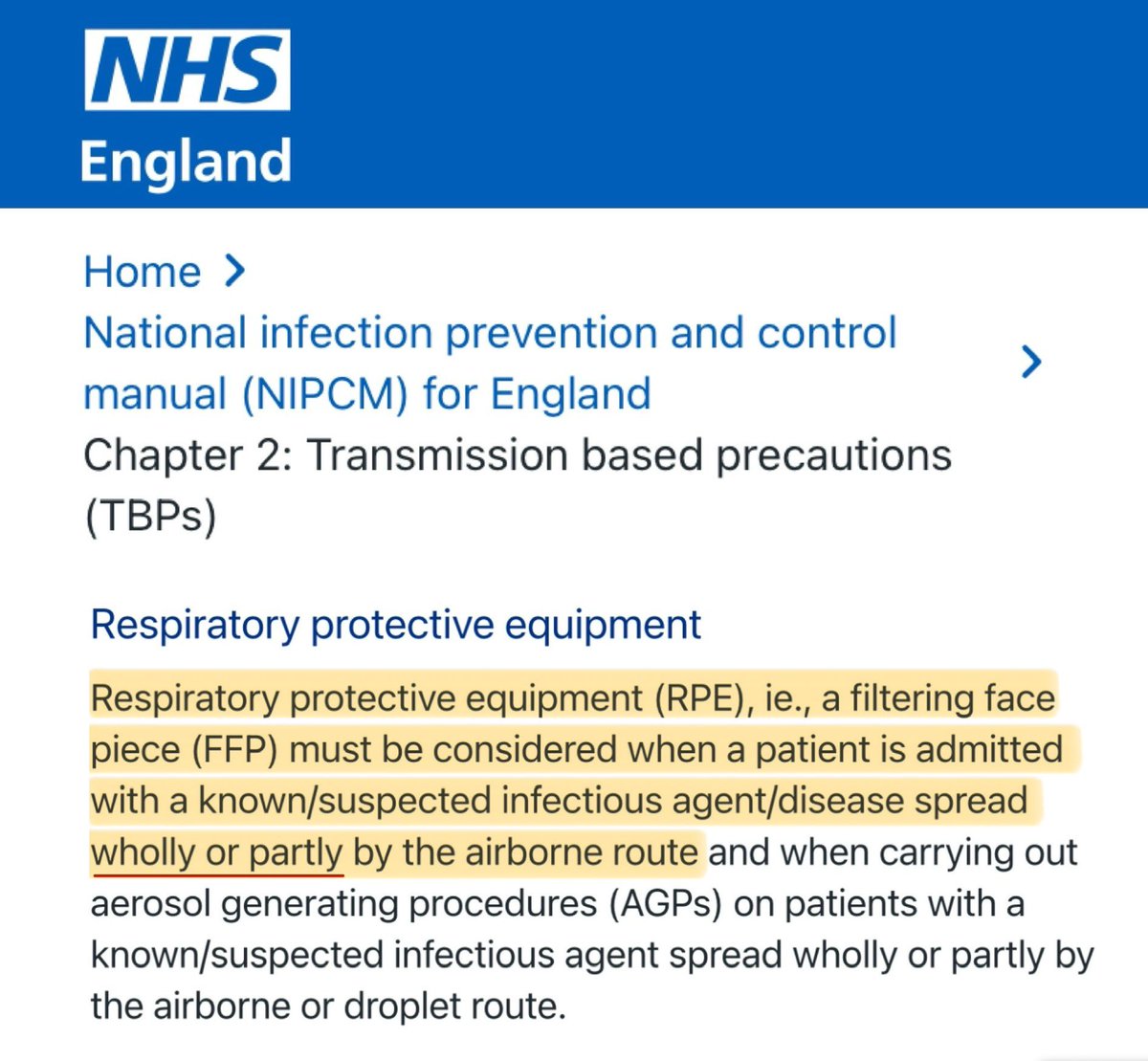
In the chapter on ‘Transmission based precautions’, the manual states that respiratory protective equipment (ie. an FFP mask) MUST be considered when a patient is admitted with a disease spread WHOLLY or PARTLY by the airborne route.
/10 england.nhs.uk/national-infec…
/10 england.nhs.uk/national-infec…
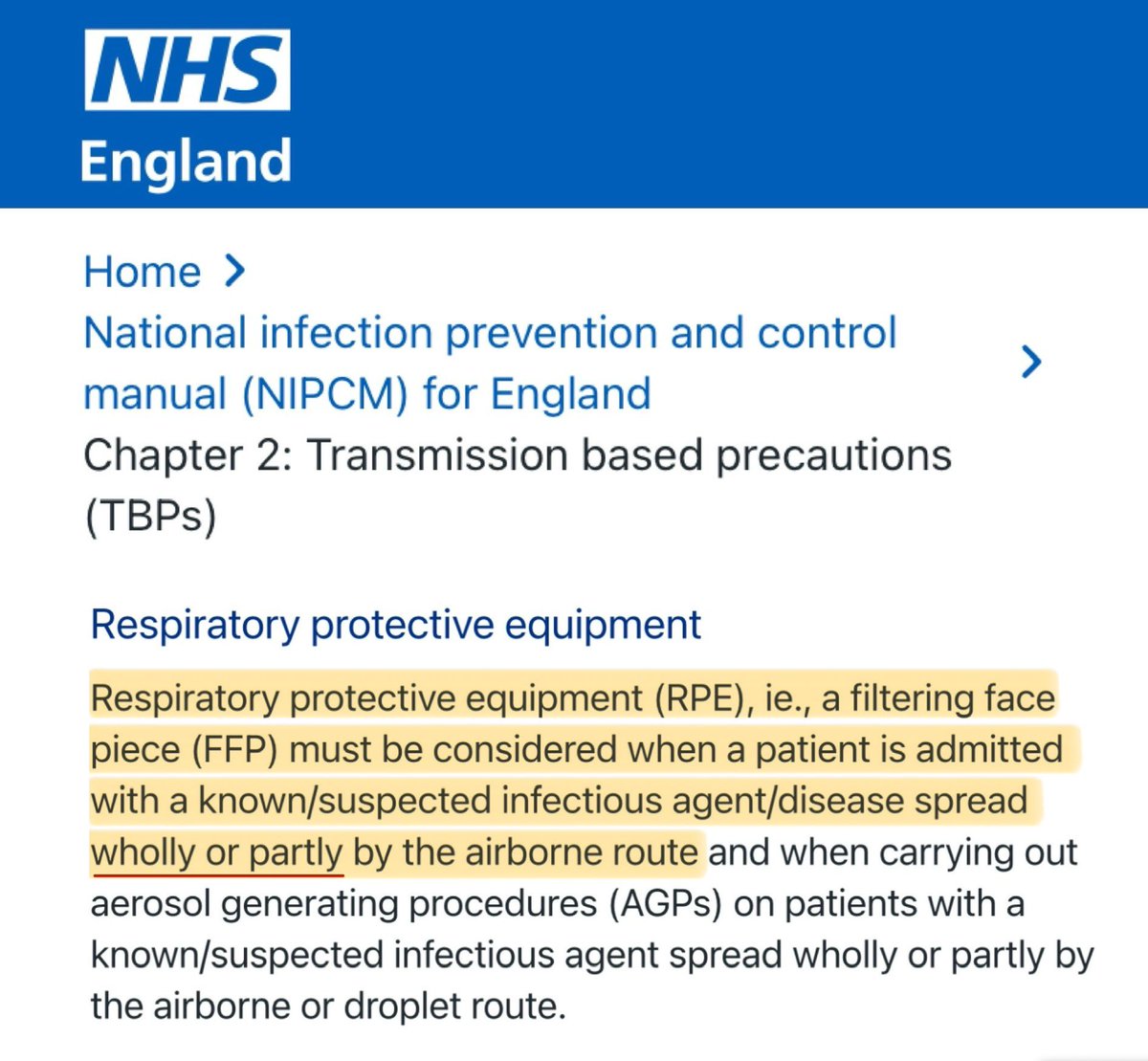
Let’s just zoom in on that…
The key words are “WHOLLY or PARTLY”.
If a virus is known to be even PARTLY spread via the airborne route, then airborne infection control measures like FFP masks MUST be considered.
The word ‘PREDOMINANTLY’ doesn’t even feature.
/11
The key words are “WHOLLY or PARTLY”.
If a virus is known to be even PARTLY spread via the airborne route, then airborne infection control measures like FFP masks MUST be considered.
The word ‘PREDOMINANTLY’ doesn’t even feature.
/11
What really matters is that EVERY scientific expert now agrees that airborne is a SIGNIFICANT component of transmission.
Here’s both Prof Chris Whitty (CMO) and Dame Prof Jenny Harries (UKHSA Chief Exec) confirming this fact.
/12
Here’s both Prof Chris Whitty (CMO) and Dame Prof Jenny Harries (UKHSA Chief Exec) confirming this fact.
/12
It is NOT Dr Lisa Ritchie’s job to decide the mode of transmission. This is not her area of expertise.
As she explained at the Covid Inquiry, her job is to translate scientific evidence & advice into practical IPC guidance.
And, to put it bluntly, she’s NOT doing her job.
/13
As she explained at the Covid Inquiry, her job is to translate scientific evidence & advice into practical IPC guidance.
And, to put it bluntly, she’s NOT doing her job.
/13
Dr Ritchie knows all too well that fluid resistant surgical masks (FRSMs) do NOT provide adequate protection for an AIRBORNE virus.
She states it loud and clear under oath during her testimony at the Covid Inquiry...
/14
She states it loud and clear under oath during her testimony at the Covid Inquiry...
/14
Dr Ritchie even co-authored a paper which explains that surgical masks “DO NOT provide protection against airborne (aerosol) particles”.
“FFP3 is the only FFP class acceptable to HSE for use against infectious aerosols in healthcare in the UK”.
/15 journalofhospitalinfection.com/article/S0195-…
“FFP3 is the only FFP class acceptable to HSE for use against infectious aerosols in healthcare in the UK”.
/15 journalofhospitalinfection.com/article/S0195-…
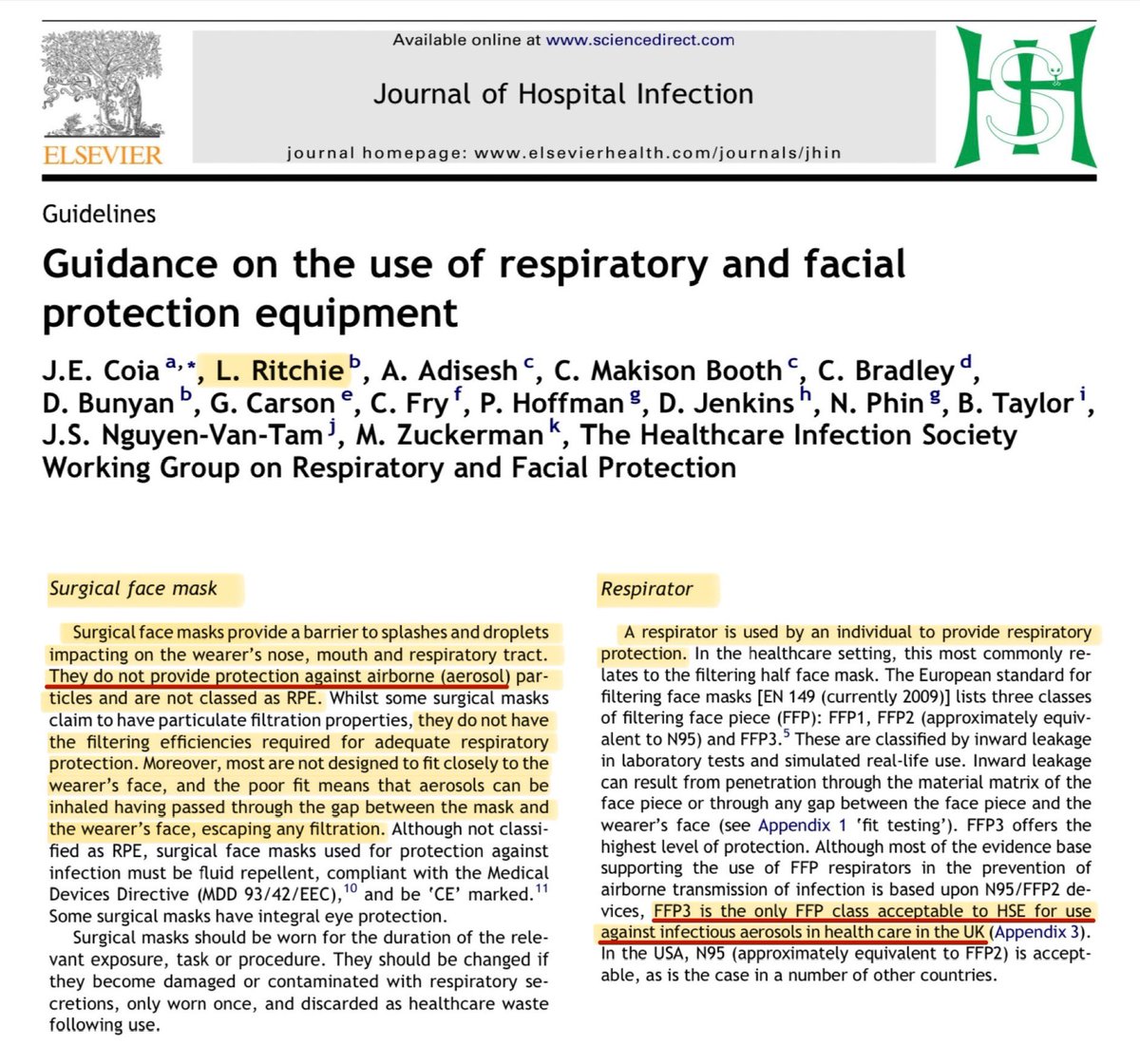
This paper was raised at the Covid Inquiry where a different part of the paper was discussed…
…the part where it states that SARS-1 is airborne & requires use of FFP3 masks.
It’s well worth watching.
Baroness Hallett makes a very astute observation towards the end… 🎯
/16
…the part where it states that SARS-1 is airborne & requires use of FFP3 masks.
It’s well worth watching.
Baroness Hallett makes a very astute observation towards the end… 🎯
/16
But it’s not just masks…
Until the importance of airborne transmission of Covid is acknowledged in NHS IPC guidance, no priority will be given to ventilation & filtration.
The WHO advise a MINIMUM ventilation rate of 12 ACH for hospital rooms under airborne precautions…
/17
Until the importance of airborne transmission of Covid is acknowledged in NHS IPC guidance, no priority will be given to ventilation & filtration.
The WHO advise a MINIMUM ventilation rate of 12 ACH for hospital rooms under airborne precautions…
/17
https://twitter.com/_catinthehat/status/1773676886511509783
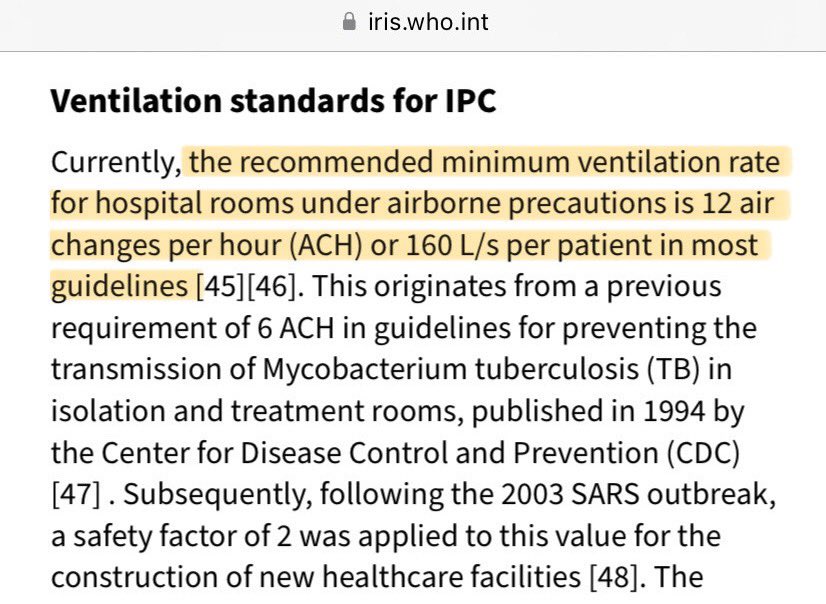
…but, as Prof Beggs pointed out at the Covid Inquiry, many hospitals were built to a standard of just 2.5 air changes per hour…
…and many hospital wards with infectious Covid patients are achieving far less than that, often not even 1 air change per hour.
/18
…and many hospital wards with infectious Covid patients are achieving far less than that, often not even 1 air change per hour.
/18
It’s easy to get caught up in the semantics of airborne vs droplets…
…whether it’s predominantly one or the other.
But the bottom line is that lives are on the line here.
The current infection control guidance is simply NOT good enough.
People are dying because of it.
/19
…whether it’s predominantly one or the other.
But the bottom line is that lives are on the line here.
The current infection control guidance is simply NOT good enough.
People are dying because of it.
/19
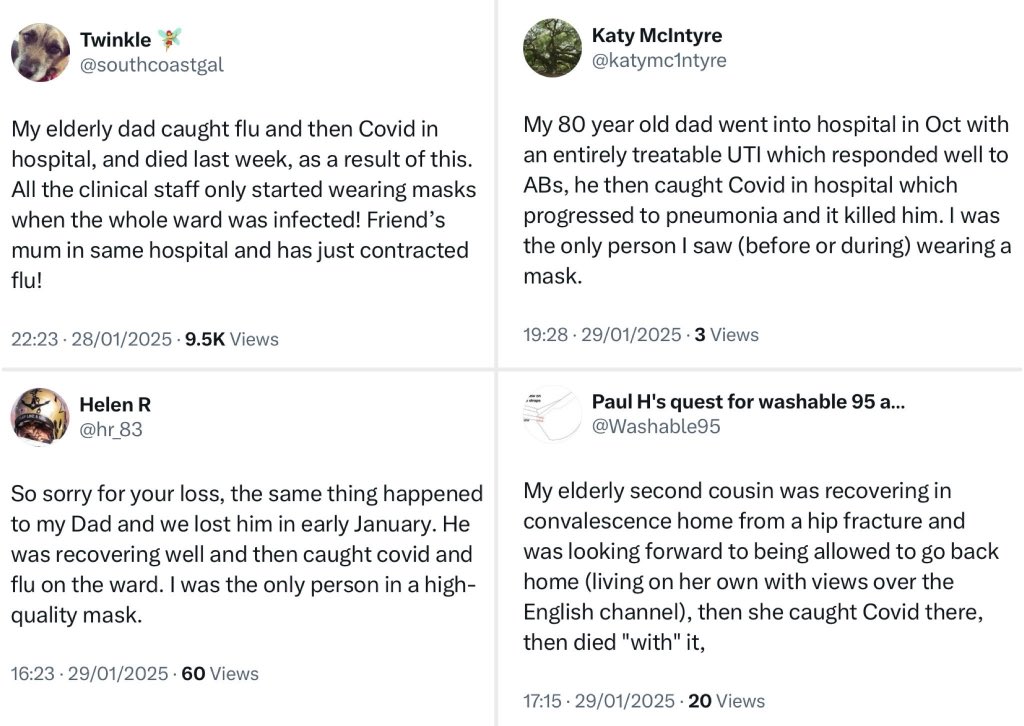
https://twitter.com/southcoastgal/status/1884366784876404841
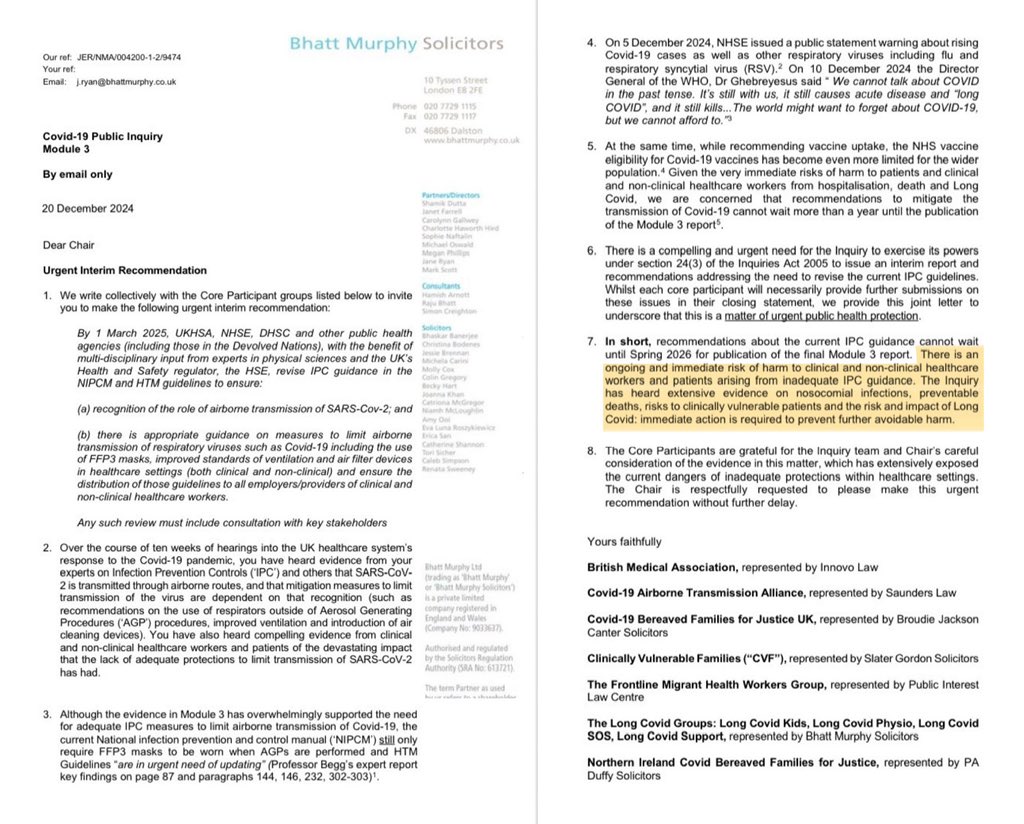
In Dec, a number of Core Participants to the Covid Inquiry wrote to the Inquiry Chair stating:
“There is an ongoing & immediate risk of harm to healthcare workers & patients arising from inadequate IPC guidance.”
They urged her to make urgent interim recommendations.
/20
“There is an ongoing & immediate risk of harm to healthcare workers & patients arising from inadequate IPC guidance.”
They urged her to make urgent interim recommendations.
/20
So that brings me back to the letter from Andrew Gwynne…
I strongly suspect he did not write it himself.
So who did write it?
Who is advising him?
Who checked & signed it off?
Could it have been Dr Ritchie herself?
Or perhaps a close colleague of hers?
/21
I strongly suspect he did not write it himself.
So who did write it?
Who is advising him?
Who checked & signed it off?
Could it have been Dr Ritchie herself?
Or perhaps a close colleague of hers?
/21
It seems clear that Mr Gwynne is being given very poor advice in this matter by someone who is determined to defend Lisa Ritchie to the hilt.
But Mr Gwynne is also at fault here.
He should not be blindly accepting the advice of his advisors. He should be challenging it.
/22
But Mr Gwynne is also at fault here.
He should not be blindly accepting the advice of his advisors. He should be challenging it.
/22
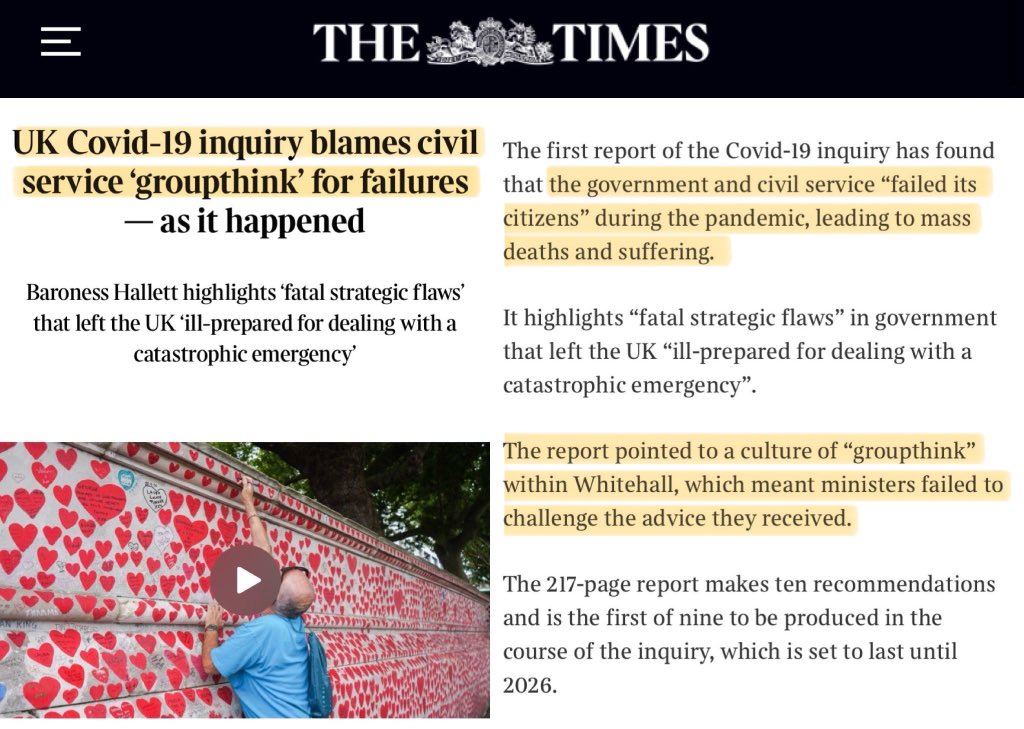
This is not some social media conspiracy, as the author of the letter rather obnoxiously implies.
This is evidence directly from key witnesses at the Covid Inquiry.
It’s time for Mr Gwynne to challenge the ‘groupthink’ of those who are only interested in saving face.
/23
This is evidence directly from key witnesses at the Covid Inquiry.
It’s time for Mr Gwynne to challenge the ‘groupthink’ of those who are only interested in saving face.
/23
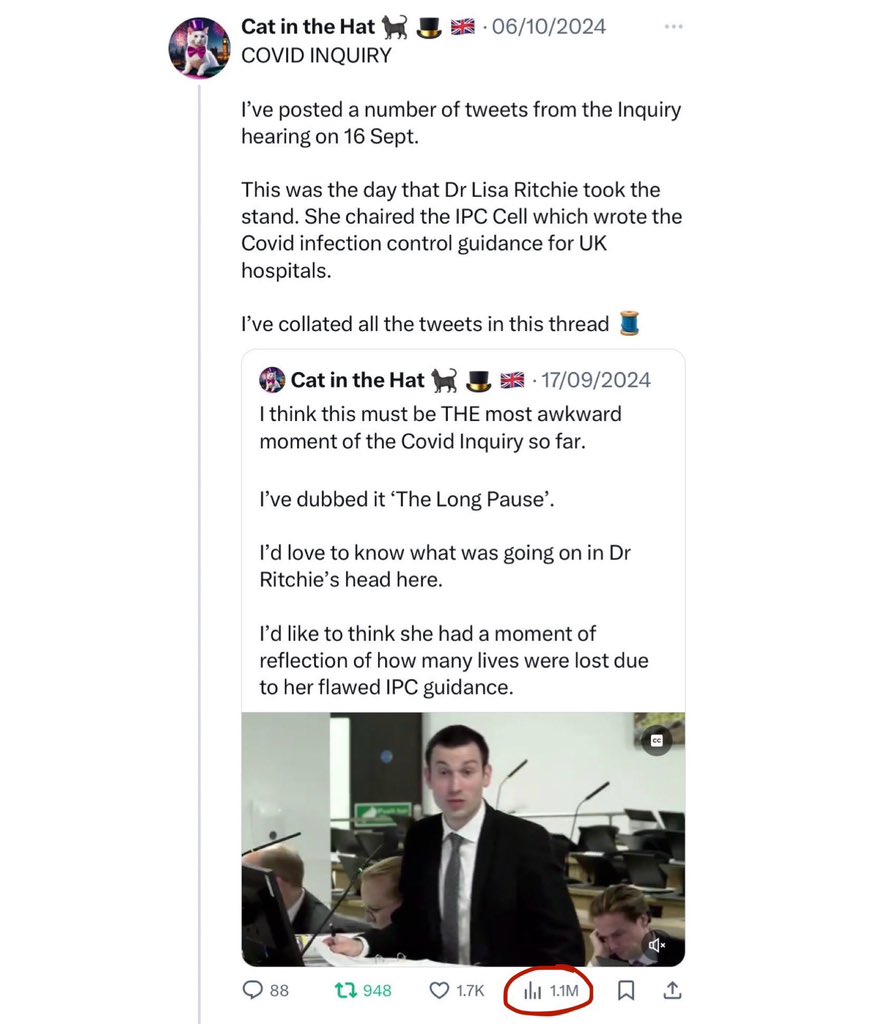
Mind you, I’m not surprised that Dr Ritchie & her associates are fairly enraged by ‘social media discussions’.
A thread of shocking clips from Dr Ritchie’s Covid Inquiry testimony has now had over 1.1 MILLION views. ⬇️
That’s gotta hurt…
/24
A thread of shocking clips from Dr Ritchie’s Covid Inquiry testimony has now had over 1.1 MILLION views. ⬇️
That’s gotta hurt…
/24
https://twitter.com/_catinthehat/status/1842895616868786395
• • •
Missing some Tweet in this thread? You can try to
force a refresh