THIRD WORLDISMS - A GUIDE

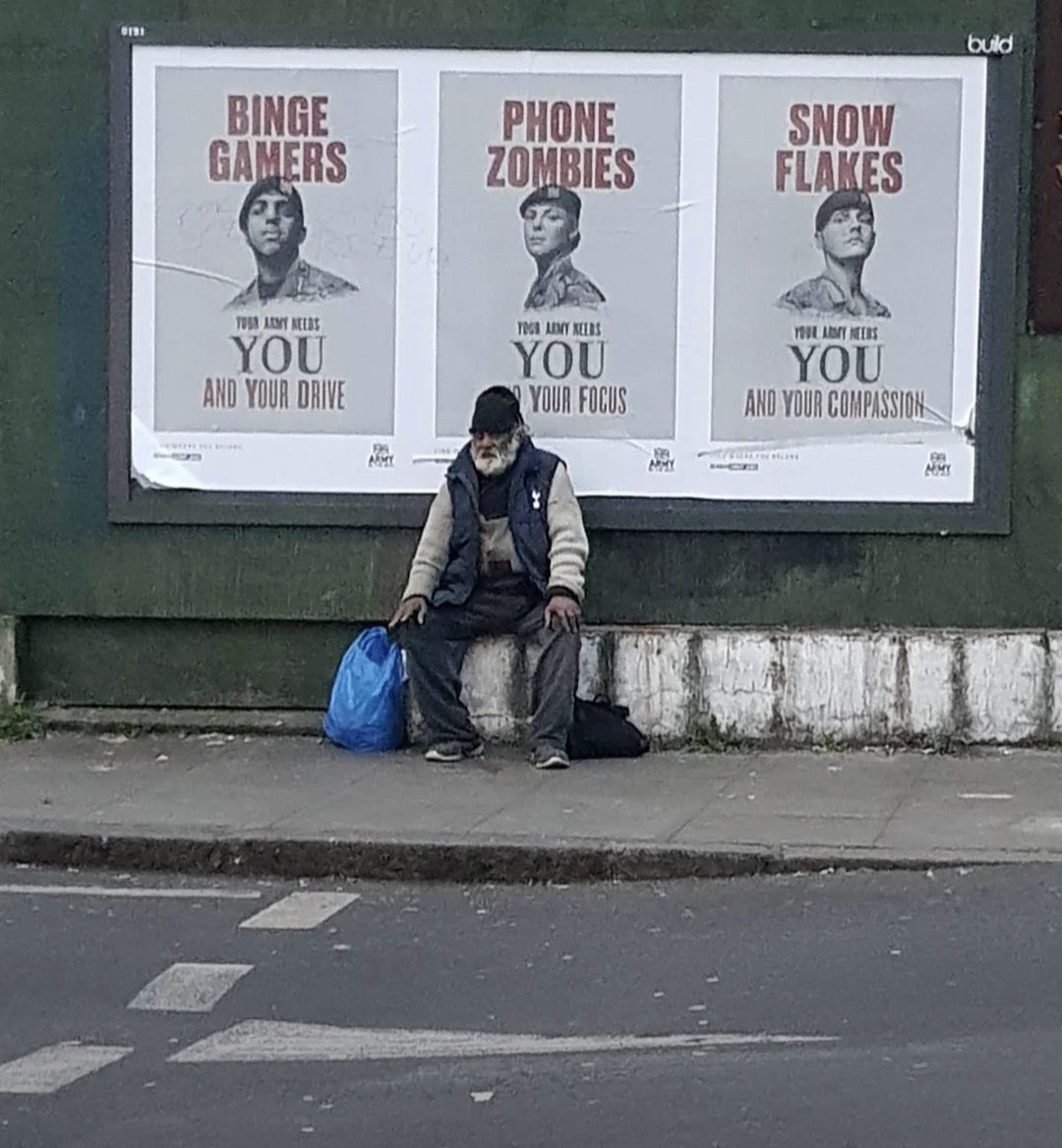
A Masterthread of posts about ‘Third Worldisms’ - Behaviours or Customs typically seen in the Third World that in recent years are becoming increasingly common in the First World because of both migration trends and declining social trust 🧵 Image
CHANGING PUBLIC NOISE LEVELS - Different cultures may have different expectations about appropriate public noise levels, what level of eg speakerphone noise intrudes into the private space etc, which can produce a culture clash
LITTER EVERYWHERE - Maybe the most obvious material signifier of creeping thirdworldification, evidences a real decline in social trust (for whichever reasons) and increased public apathy towards the shared public space
LIMITED CONCEPTION OF THE PUBLIC SPACE - Many cultures have different expectations of standards for the public space, in the extreme seeing it as not something that needs to be maintained. It may lead to casual abuse of the public space, eg noise, littering etc.
LACK OF QUEUEING - Because of a lack of the custom or low social trust or hyper competitiveness in some countries, it may be unusual to queue in a formal manner - if at all. Pushing and jostling may be required to not be taken advantage of in these more informal queues
MILLING AROUND - The practice of standing, hanging or loitering around aimlessly in public places, a very common sight in parts of eg Africa. Sometimes it is a social exercise but more often than not it is just a way to pass time, the act of ‘doing nothing’
DJINNBRAIN - Many people have more reductive or superstitious ways of thinking about the world and that may be reflected in their patterns of behaviour or the way that they engage with the public sphere. What seems unusual or strange often has a motivated internal logic
TRASH FIRES - In parts of the Third World, trash is openly burned on the street - mainly as a way to dispose of it
UNUSUAL HYGIENE STANDARDS - Some groups may have divergent patterns of behaviour emerging from different conceptions of hygiene, for example standards of ritual cleanliness and where it is appropriate to clean objects or oneself, how bathroom facilities should be used etc.
UNUSUAL FOOD HYGIENE STANDARDS - Sometimes food may be prepared or served in an unusual way, not even always for expediency but because there may not be an awareness that the practice is unhygienic
SLUMS - Overcrowding, a weak economy, self-destructive patterns of behaviour, culturally divergent living patterns, slum landlordism etc. etc. - a confluence of factors can create slums or slumification where before there may have been none
SHITBIN - Because parts of the Third World do not have properly functional plumbing there are sometimes special bins next to toilets for disposing of Shitpaper. Even if toilets work people used to using toilets in certain ways may prefer to use them in ways they typically would
AESTHETIC CHANGE - Customs common in places like Africa like the ‘Carrying A Bag On Your Head Look’. Value Judgements aside and on strict value neutral aesthetic terms these kinds of customs mark visible aesthetic changes in society
TUKTUKS / RICKSHAWS - Common in large parts of the Third World because of purchase costs, ease of use, ease of sharing, ease of navigating more informal busier roads etc.
LACK OF ROAD AWARENESS - Disregard for or lack of awareness of road rules. Speeding, driving on pavement, wrong way down the road, lack of signalling, swerving around the road etc.
CHANGING ROAD STANDARDS - There may be a number of visible changes on roads
THEFT AND PUBLIC INFRASTRUCTURE THEFT - Because of a decline in social trust as well as in effective policing and enforcing of rules there may be more cases of both serious crime and petty crime, including theft. In particular high value public infrastructure may be targeted
LACK OF INFRASTRUCTURE MAINTENANCE - Encompasses different types of infrastructure including roads, the electrical grid, lack of new infrastructure projects etc. - infrastructure is not repaired or expanded for various reasons, apathy, corruption and so on
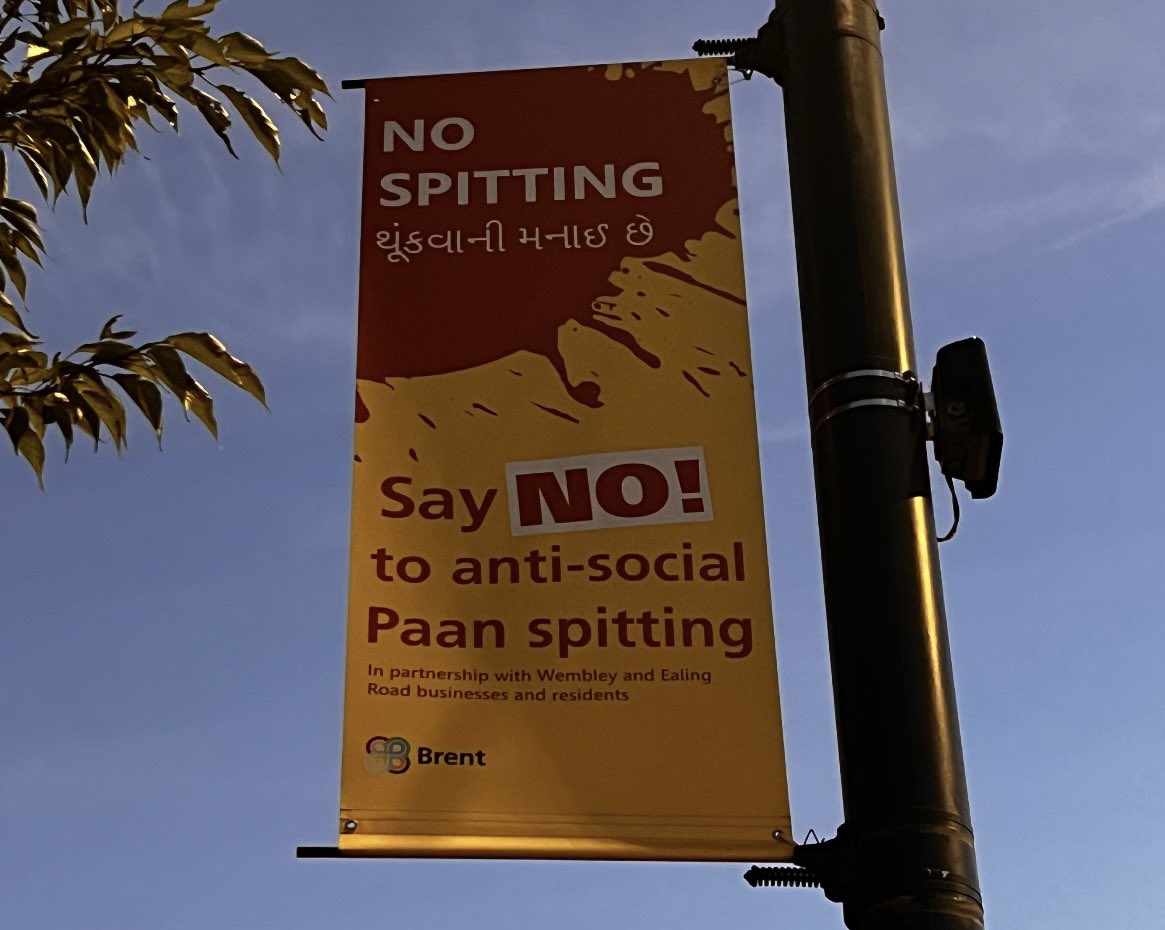
PUBLIC STANDARDS OF CONDUCT - Other non-extensive examples of Third Worldisms that have consequences for the public space might include spitting, urinating, groping and harassment, indifference to smells whether your own smell or the smell of your food, public drug use etc.
This list is not comprehensive but taken together these kinds of behaviours explain a lot of the dysfunction and ‘overwhelmingness’ of parts of the Third World. They may compound or even be a product of problems caused by corruption, sectarian conflict, low human capital etc.

• • •

Missing some Tweet in this thread? You can try to force a refresh

 

Keep Current with ɖʀʊӄքǟ ӄʊռʟɛʏ 🇧🇹🇹🇩

ɖʀʊӄքǟ ӄʊռʟɛʏ 🇧🇹🇹🇩 Profile picture

Stay in touch and get notified when new unrolls are available from this author!

Read all threads

This Thread may be Removed Anytime!

PDF

Twitter may remove this content at anytime! Save it as PDF for later use!

Try unrolling a thread yourself!

how to unroll video
  1. Follow @ThreadReaderApp to mention us!

  2. From a Twitter thread mention us with a keyword "unroll"
@threadreaderapp unroll

Practice here first or read more on our help page!

More from @kunley_drukpa

Feb 11
THE YOOKAY AS ART

A short collection of photographs of Modern Britain AKA ‘The Yookay’ which have some artistic merit or which best capture the changing nature of Britain - of the process of ‘Yookayfication’ 🧵 Image
Scheduled Departures Image
The Swan Snatchers Image
Read 29 tweets
Feb 6
‘YOOKAYIFICATION’ - THE NATURE OF CHANGE IN MODERN BRITAIN

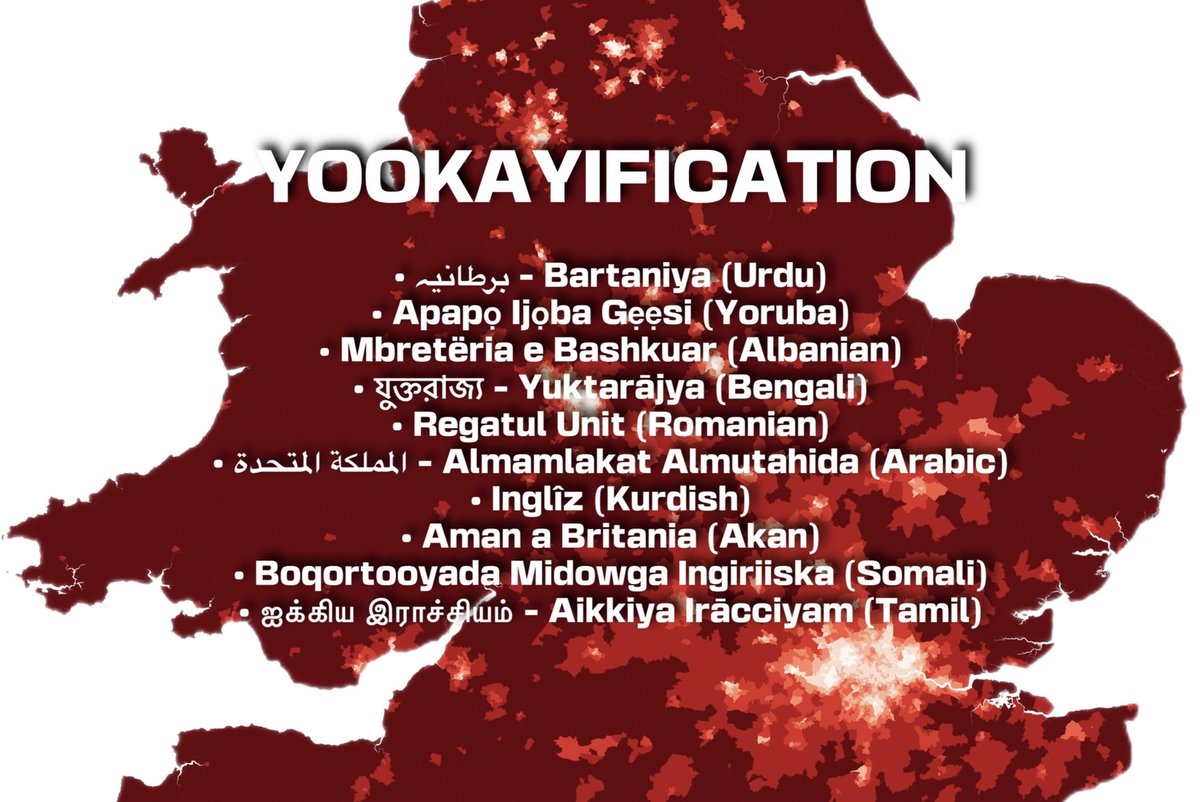
🧵 What is ‘Yookayification’? This is the process of change under which Britain transforms aesthetically, culturally and demographically into its (possible) successor state ‘The Yookay’ - that is, a Britain so heavily influenced by the effects of mass immigration that it makes a kind of sense to consider it a distinct political and cultural entity to the Historical Britain.

What does this transformation look like in practice? For example - a town whose demographics experience near total turn-over in the space of several decades, the interpolation of new cultural forms or vocabulary into the culture or language (ie influences from Urdu, Bengali, Arabic, Yoruba, Somali, the West Indies etc.), the normalisation of different kinds of and standards for behaviour that depart from historical customs etc. etc. This is not to make a value judgement about the nature of the transformation, more instead to describe how this kind of nation re-defining change happens at scale over longer stretches of time under the duress of a critical mass of ‘foreign influence’ so introduced into already existing communities. What you could expect to see as a part of a real life process is a patchwork of ‘Yookayification’ across Britain as immigration continues to unfold - some places that have already been transformed into something else entirely because that is where earlier waves of immigration moved into, other places which are more familiar holdouts of the historical Britain. Large cities the first to experience the changes, then a ‘spreading out’ of that change to the centralised organs of culture (the media, politics etc.) and physically to larger towns, then to villages and rural areas. In many places initially a Bosnia, Malaysia, South Africa, Lebanon etc. type parallel communities living arrangement between groups - but over time the changes becoming more thorough and entrenched nationally until they become so established they constitute a settled fact. There is a historical precedent for this in British History - the Roman and Saxon Invasions and the Celtic and Brittonic Holdouts. Wales, Scotland, Ireland, their languages and cultures representing the pre-Saxon Britain which for centuries ‘held out’ against England before being eventually absorbed into it. At some indeterminate point in the future after the mass movements of people, a final consolidation and the older polities and cultures can no longer be said to properly exist in the same way that they used to.

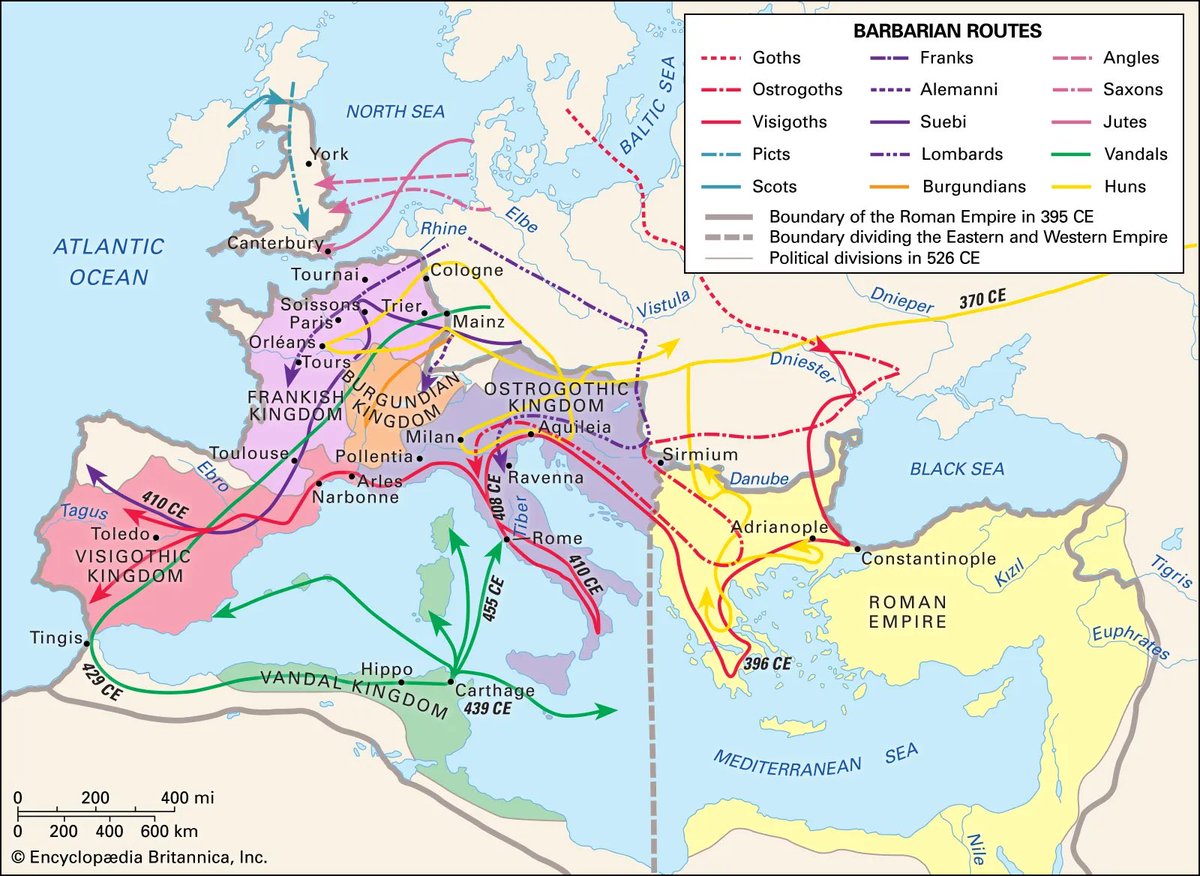
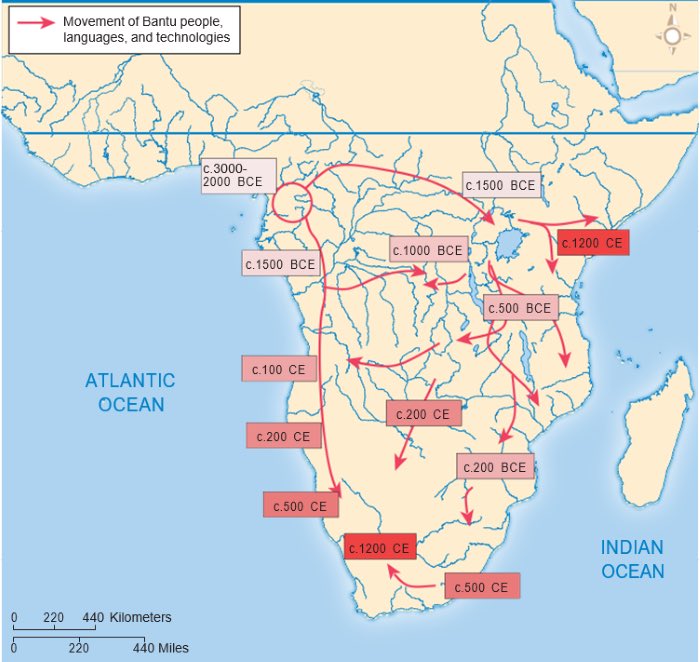
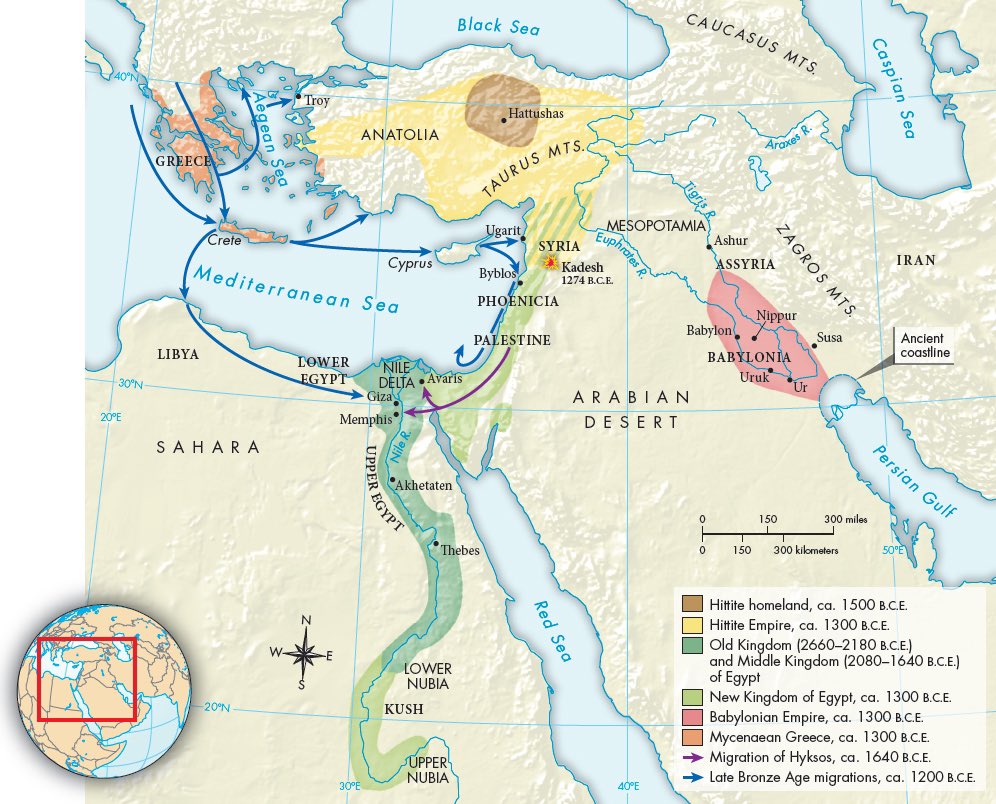
But this is how cultural change will often happen historically. It is true that there is both a certain artificiality and a lack of world historical precedent for the kind of movement of peoples that Britain and the Western World are now experiencing - in the diversity of those peoples, the scale of the migration, how alien the groups are to the historical norms of the countries they migrate to - but the model for how change is affected is historically very familiar. That is, large movements of people catalysing monumental cultural resets. The Ottomans into the Byzantine Empire and the Balkans, the Pax Hellenica and Pax Romana, the Great Migrations at the Fall of Rome, the Saxons into Sub-Roman Britain, the Kushans, the Ghazanvids, the Mughals into India, the Europeans into the Americas, Oceania and Africa, Brazilification, the Russification of Eurasia and Siberia, the Turkic Tribes into Iranian Central Asia (Turkification), the Sinicization of the Middle Kingdom Periphery, Arab traders into Indonesia and Malaysia, below the Sahel, the Sea People, the Hyksos in Egypt, Hurrians and Gutians into Mesopotamia, the Bantu Expansions, the Indo-European Expansions - and so on. These are all examples of world historical movements - or invasions - of people that brought sweeping changes to the places and cultures they arrived in. This is the kind of scale to understand ‘Yookayification’ at.

[1/3]Image
Old cultural forms and groups dissolved and disintegrated and then recombined and synthesised into those incoming forms and groups, new types and expressions of civilisation created. A jarring and disjointing sense of uncanny valley as non sequitur new cultural forms wear the skinsuits of historical forms. Sometimes there is a greater deal of continuity between those historical forms and groups, the changes are less pronounced and disorientating, other times less so. It is true again there are further unique features of the ongoing mass movement of peoples into Britain which make it distinct from other historical mass movements of people listed above - its being into a state with a strong centralised government, the existence of mass media and the internet, the global ubiquity and prominence of the English language, the far-reaching effects of American culture dominance etc. - but there are many more features which are still importantly comparable to these historical examples.

About Timescales - Past a certain historical juncture descriptive claims about this once emerging new country in which its once emerging new features are decried as for example ‘woke’ or ‘alien’ lose much of their punch. To wit, if you have a polity that in the space of a century has become 50% immigrant-descended then describing those immigrants as members of that polity or at least as existing in that polity isn’t ‘woke’ or even ‘assimilationist’ - it’s merely descriptive. You can have a state with world historical levels of eclecticism that is consolidated and established enough that its existence is a ‘mere fact’. That is, its cultural expressions and representations of itself represent a ‘mere fact about the world’. Describing Ottoman Constantinople as Ottoman in the 16th Century isn’t ‘woke’.

How long does it take for this kind of change to become historical fact? For it not to be a merely contingent and reversible state of affairs? A few decades? A century? Two centuries? A millennia? This is the Sorites Paradox of Identity, what Identity is by its nature. It can mean such and such, it might have always have meant such and such (at least for as long as people can remember) but then enough historical contingencies accumulate until it suddenly can’t really be said to mean such and such at all and now means something else entirely. English might have used to mean English but because of the series of events X, Y and Z it no longer means English in quite the same way. The old conception of identity becomes historical, no longer living. But then perhaps it gets revived, like Hebrew, Bulgarian, Polish, Serbian, Greek. But more likely, probably it does not. It depends how much the people left around who still care about it - who will be fewer and fewer in number the further away they are in history from the change - ‘want’ it.

A few hundred years from now, after centuries of hypothetical ‘Yookayification’, perhaps there is a hypothetical revivalist national movement - but it will look less and less like the thing it is trying to revive the more distant from the present it is. Sometimes in History, these Independence Movements have succeeded. Many other times they have not. To contextualise this - Does it make sense to push for a Brittonic Nationalism Revival? We could say we want to (nebulously) return to ‘before’ the Saxons arrived. “Saxons are an alien host on our people.” Maybe this makes a certain kind of very performative sense in Wales but even there it would be a type of ‘larping’ - it is even more farfetched to imagine returning to a ‘pre-Saxon’ England. ‘Saxon-ness’ is culturally and genetically interwoven with the English people. You can’t expunge the one third ‘Saxon-ness’ from your DNA. ‘Saxon-ness’ in the English people is a settled historical fact.

[2/3]Image
Image
Image
Image
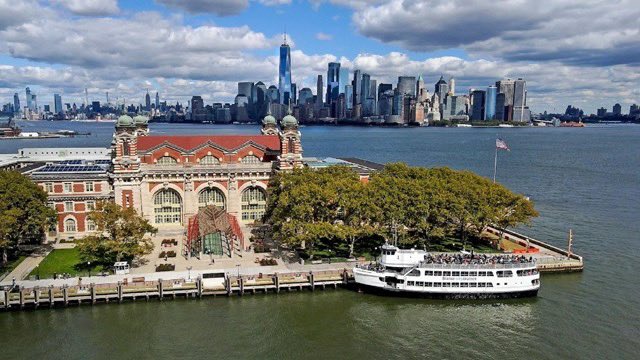
Or in America, imagine a hypothetical revivalist movement - “we want to return to being a WASP country”. This might have made more sense before the arrival of the Ellis Island Cohort or even in the decades following their arrival but the arrival event has now receded far enough into the past that it seems unlikely that ‘a certain idea of America’ as an ‘Anglo-Saxon Nation’ will ever return. Not just because it is implausible that you could ever remove ‘non-Anglo’ ancestry Americans from America, but also because there is a critical mass of settled ‘non-Anglo’ groups and enough ‘Anglos’ intermarried with those groups that the idea is nonsensical to entertain. Quite aside from almost nobody wanting it. Many in the Hart-Cellar Cohort have in the main reached this point too. The mixing and acculturation process already happened, it is a settled fact.

Which is more ‘Roman’ - 15th Century Byzantium or 15th Century Italy? Byzantium with its influx of Avars, Bulgars and Turks or Italy with its influx of Ostrogoths, Lombards and Normans? Byzantium was a more direct political continuation but Italy was a more direct genetic and geographic continuation - and at the start of the Renaissance in some ways a more direct cultural continuation too. Does it even make sense to speak of ‘Roman-ness’ in this way? At some point in history Rome was ‘Roman’ and then at some indeterminate point afterwards Rome was no longer ‘Roman’, or at least no longer ‘Roman’ in the way we usually mean by ‘Roman’. No civilisation is static but there are degrees and magnitudes of change and continuity. We recognise 15th century England as an expression of the same polity and culture and people as 20th century England, but we do not recognise 20th Century Turkey as a continuation of 15th century Byzantium even if some of the ancestors of those Byzantines were nominally Turkish citizens.

This is all to say that over time, old contingencies become increasing ‘baked-in’. Counterfactuals recede into the past. New aesthetics which were once jarring and disjointing and disorienting, perhaps even pointedly emotionally-laden, become less and less so and more and more quotidian. None of these changes are in the strictest sense ever wholly irreversible, but over time reversals become much more of a motivated exertion.

[3/3]Image
Image
Image
Image
Read 4 tweets
Jan 21
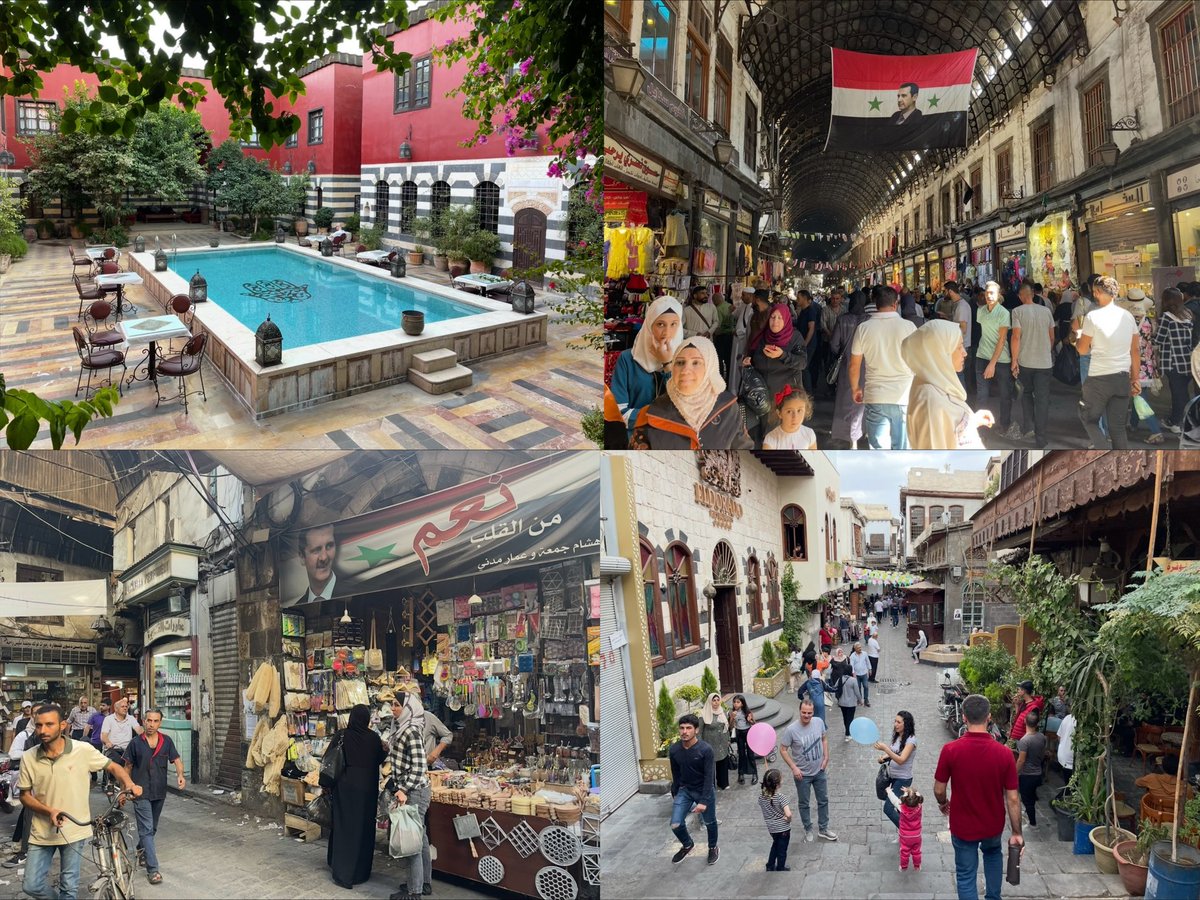
PICTURE THREAD TOUR OF DAMASCUS, SYRIA 🇸🇾

Thread of pictures I took around parts of Damascus during the Syrian Civil War just before the fall of Assad. There were lots of obvious signs of dysfunction and tension - but lots of signs of normalcy too despite the ongoing war 🧵 Image
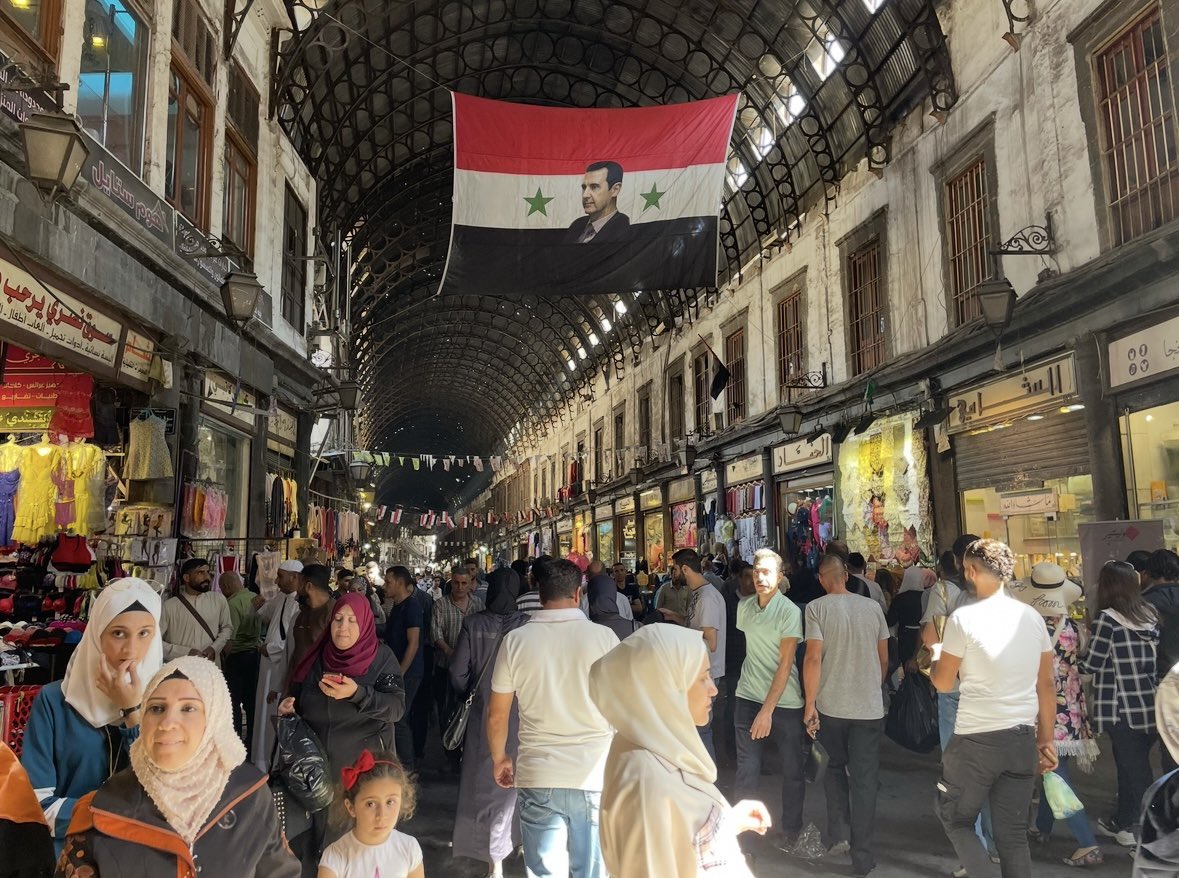
The central Damascus bazaar, the Al-Hamidiyah Souq, tastefully festooned with Assad bunting. The souq is one of the ‘Great Bazaars’ of the Middle East, like Istanbul or Cairo. Always very busy during the day. Got told it was a ‘tourist trap’ even though Syria then had no tourists Image
A street just off the main souq. Again, Assad imagery displayed prominently. Bazaar full of hustle and bustle - merchants yell at you “for you my friend good price.” Some litter on floor but the Damascus litter situation was not egregiously bad. Far worse in other parts of Syria Image
Read 26 tweets
Jan 16
PICTURE THREAD TOUR OF LUTON, UK 🇬🇧

I recently visited Luton - a working class town near London infamously home to both the Tate Brothers and Tommy Robinson and one of the towns in Britain most transformed by immigration - to see what it looks like today 🧵 Image
Luton was one of the towns earliest effected by large scale immigration. It’s against this background that Robinson’s EDL first emerged, the working class living on the frontlines of a changing Britain. My TLDR impression of Luton is that this change has now largely happened Image
In some ways Luton might as well be another country. It’s easy to look at pictures of foreign-coded visuals in your own country and say, “oh it’s from a ghetto, China Town, Little India etc it’s always been like that.” Luton is like if these areas expanded over an entire city Image
Read 34 tweets
Jan 13
Somalians have a reputation for being the most vicious of British Ethnic Gangs and will swarm or ‘Zerg Rush’ at very minor perceived insults. Here a London ‘Mali Gang’ has kidnapped a woman and made her read out an apology for the crime of… “making fun of Somalians on TikTok”
Yookay Man describes “Beefing with the ‘Malis”
72.4% of Somalians in London live in social housing
Read 7 tweets
Jan 7
HOW CULTISH WAS THE CULT OF ASSAD? 🇸🇾

One of the most striking aspects of visiting Syria during the Civil War was just how prevalent Bashar Al-Assad imagery was. Assad’s face was everywhere - probably the most of any Leader of any country I have been to excepting perhaps North Korea. A little hard to have a sense of his ubiquitousness without having actually been there at the time but it very often felt like Bashar was staring down you from every visible surface. This is not a metaphor for the paranoia induced by Assad’s Secret Police (Mukhābarāt) by the way, which was another dimension to Assad’s Kingdom - I just mean the Assad imagery alone. A total assault, physically and psychologically - the man on the street constantly bombarded with images of Bashar Al-Assad. Assad, Assad, Assad, Assad, Assad - Assad’s picture everywhere

To be fair to Assad, though I can’t really speak to his personality beyond what I’ve seen and read and heard about him, he didn’t seem particularly vain by Dictator standards. At the time, Syria was still technically at war and there is a lot to be said for ‘memetically’ shoring up your own side with these kinds of propagandistic ‘signifiers’ provided the effort doesn’t become radicalising in itself because of its obnoxiousness (see eg British NHS rhetoric). Though of course propaganda doesn’t always need to aim to endear the viewer to its subject, implicit threat in its ubiquity too can also achieve ends even if it isn’t inherently as stable long term. In a sectarian developing country like Syria too, the kinds of demographics it has, the steely blue-A10-eyed Alawite imagery may not have necessarily needed to have any more nuance beyond ‘Look at me - I’m the big bossman’. I can’t say exactly what Assad was ‘going for’ but in all in that way probably ‘The Cult of Assad’ was more political expediency than vanity even if there was maybe perhaps some ego in it. A certain kind of detractor of these type of regimes likes to psychologise the ego component of these kinds of phenomena but for me in the setting of an ongoing Civil War that was one of the least interesting things about it

[1/2]Image
Another dimension, with the extra context of all the internet memes about Assad especially it was difficult not to find the imagery sometimes funny. Not to trivialise the situation but it was almost as if Assad was smiling, grinning, laughing, waving down at you wherever you went. The images sometimes had a certain playfulness to them, Assad was very rarely completely stern-faced, it often seemed like he had a little knowing twinkle in his eye. Unsure if that was intentional, if Assad deliberately wanted to project an image of being a ‘fun chill guy’. Probably not. But if he did it did half-work and not in a hugely quirked-up self-parody way, a little more muted but still ‘fun’ - the world’s first ‘ironic’ dictator. The imagery didn’t feel entirely OTT serious like in say North Korea, Turkmenistan etc. Again not to trivialise it and you know, this is all my speaking as an outsider, but this was a recurring thought I kept having - difficult not to ‘notice’

What did the average Syrian think about Assad’s ubiquity? Did they ‘buy into the cult’? Of the real life Syrians in Assad-controlled areas I asked (ie. not internet Syrians who always have very outspoken opinions about it - some may appear below this post to tell me they only said what they said because of fear of the Secret Police, threaten me etc.) there was a full spectrum:

•“It’s fucking stupid”
•“I really hate it”
•“He’s just the President so he must put his picture everywhere”
•“I don’t like it but I support Assad”
•“It’s a bit much but it is a war”
•“I don’t really think about it”
•“It’s fine”
•“Yeah Assad is great, I like it”
•“It’s funny”

[2/2]Image
Image
Image
Image
Read 4 tweets

Did Thread Reader help you today?

Support us! We are indie developers!


This site is made by just two indie developers on a laptop doing marketing, support and development! Read more about the story.

Become a Premium Member ($3/month or $30/year) and get exclusive features!

Become Premium

Don't want to be a Premium member but still want to support us?

Make a small donation by buying us coffee ($5) or help with server cost ($10)

Donate via Paypal

Or Donate anonymously using crypto!

Ethereum

0xfe58350B80634f60Fa6Dc149a72b4DFbc17D341E copy

Bitcoin

3ATGMxNzCUFzxpMCHL5sWSt4DVtS8UqXpi copy

Thank you for your support!

Follow Us!

:(