1/ Rhaetic, like Etruscan, are two non-Indo-European languages, which were spoken in two neighboring regions, surrounded by Indo-European Celtic and Italic languages. Together with Lemnian, they belong to the same linguistic family called Tyrrhenic.
#Rhaetians
2/ The study of epigraphic texts of the three languages has demonstrated that they share common features in phonology, morphology and syntax. Their lexical correspondences are rare, which is probably due to a very early separation from the common protolanguage.
3/The Rhaetic language was spoken in the alpine regions of northern Italy, in the Engadin valley (Switzerland) and Tyrol (Austria), while in recent years Rhaetic inscriptions have even been found in the Bavarian Alps. The epigraphic corpus amounts to approximately 350 documents👉
👉 and dates between the 5th and 1st centuries BC. However, this archive is very small and fragmentary, with the inscriptions containing words of a few letters and without separation between the words. Nevertheless, the main characteristic of non-Indo-European languages 👉
👉 is attested: the agglutination of the morphemes. Another element is the fact that the Rhaetian inscriptions are written in various locally archaic Italic alphabets. All of the above results in the lack of understanding of this language to a large extent.
4/ In these areas, various local cultures flourished, most notably Fritzens-Sanzeno, whose representatives are closely associated with the speakers of Rhaetic. Influences from neighboring Celtic, Etruscan and Venetic regions are evident in all cultural aspects of the Rhaetians.
5/The Rhaetians were characterized by Roman writers as a wild and warlike people, divided into various tribes, which controlled the important passes of the Alps. The Rhaetians imposed tolls and very often were attacking trade caravans crossing the Alps. However,in earlier times👉
👉the Rhaetians had good relations with the Etruscans,had close trade contacts with them and were particularly influenced by Etruscan culture. The Etruscans seem to have been particularly interested in markets beyond the Alps and the Rhaetians constituted a suitable intermediary.
6/Also, the areas of the Rhaetians were rich in minerals. Initially,copper ores were mined,but from the 8th century BC the Rhaetians experienced great prosperity from the rich iron mines. Νevertheless, the Rhaetians were mostly farmers,producing excellent wine and dairy products.
7/ The ancient sources had dealt with the origin of the Rhaetians, citing various versions: common ancestry with the Etruscans of the Po, a Venetic religious group that worshipped the local female deity Reitia. However, modern studies promote the idea that they were indigenous.
8/ In conclusion, the scientists have concluded that Rhaetic is the oldest surviving form of Tyrrhenian. Etruscan differs from Rhaetic in that it includes many later innovations, which came from the contact with neighbour Indo-European languages. 👉
👉 At the same time, genetic studies has shown that both the Rhaetians and the Etruscans shared a common Neolithic origin and do not appear to have been immigrants from Anatolia. The separation of Rhaetians and Etruscans is believed to have occurred during the Eneolithic.
• • •
Missing some Tweet in this thread? You can try to
force a refresh

1/Sicily has been a major trade crossroads since the Neolithic era,through which sea routes passed, connecting the peoples of the Eastern Mediterranean with the West and vice versa. The result of this event was the long-term habitation of the Sicilian land by a mosaic of peoples.
2/ Thus, when the Greek colonists arrived on the island after the mid-8th century BC, they found three population groups: the Sicilians in the E, the Sicanians in the C-W, and the Elymians in the NW. The origin of these peoples has been a subject of controversy since antiquity.
3/ The literary tradition has handed down to us several contradictory narratives, referring to mass migrations, often in the form of mythical tales. The best-known mythological tale is Minos' pursuit of the fugitive Daedalus in Sicily and the founding of Cretan cities there.
1/ Athens has been associated since antiquity with the city's patron goddess, Athena. However, although most people believe that the city was named after the goddess, perhaps the opposite was actually the case. The two words have a common root that is likely of pre-Greek origin.
2/ But let's start from the beginning. Long before the city of Athens became the dominant center of the region, its name was Actaea and it belonged to a wider community, Att(h)is < Attica. The inhabitants of Attica at that time were not Greek-speaking (pre-Greek substrate).
3/ Several scholars argue that both the word Actaea and Attica, and the word Athéne (Ἀθήνη), derive from the word Atthis through corruption. Athéne is the common root from which the word Ἀθῆναι and the word Ἀθηνᾶ came. So both the city and the goddess have pre-Greek origins.
1/ During the same period (1250/40 BC) that the major fortification works were taking place in Mycenae and Tiryns, and the hill of Midea was being rebuilt with new palatial buildings and Cyclopean fortifications, a new fortified palatial settlement was founded on the Acropolis.
2/ But who were the ones who built the new Mycenaean citadel Athens? The answer lies in the question of what purpose its building served. In my opinion, the Athenian elites had neither the financial means nor the know-how to construct such a project.
3/ So the project was designed and financed by a powerful Mycenaean actor outside Attica and he - according to the available evidence - was in Mycenae. The stakes were the limitation of Thebes' influence in Attica and in particular the exploitation of the mines of Lavrion.
1/ The Citadel of Dymaean Wall at the NW end of the Peloponnese has a special place in Aegean prehistoric studies, as it was previously believed to be proof (along with the Isthmus Wall) of the existence of a northern threat (Dorians) to the core of the Mycenaean palatial world.
2/ Recent field study has placed its presence on a more realistic basis. First of all, the human presence on the Hill of Kalogria where the Citadel is built bears evidence of human presence, residential remains and pottery, dating back to the end of the 4th millennium BC.
3/ The choice of location is due to its great strategic importance, at the intersection of the land and the sea, constituting a significant defensive stronghold and an ideal point of surveillance of the sea routes of the Ionian Sea, already since the end of the 3rd millennium BC.
1/ The Trojan War, as presented to us by the Homeric Iliad, is nothing more than a literary text with an epic-mythological character that captures in a single narrative various memories of events of the Mycenaean past, altered by time.
#Ahhiyawa #Homer #Troy
2/The main body of the myth of Trojan War - the gathering of the Achaean warlords under the leadership of the strongest of them, the king of Mycenae, and the naval campaign in the Troad - constitutes the only connection between the historical background and the Homeric narrative.
3/ During the palatial period, the Mycenaean world was structured into powerful local houses that recognized the supremacy of the Great King of the Achaeans, who had his throne in Mycenae and was equal to the powerful rulers of the Eastern Mediterranean (Hatti, Egypt etc).
1/ One of the biggest questions of Minoan archaeology is the existence of two scripts, which accur simultaneously in the same palatial centers (Old Palaces) or even in the same rooms: Cretan Hieroglyphics (2100-1700 BC) and Linear A' (1800-1450 BC).
#Minoan_Scripts
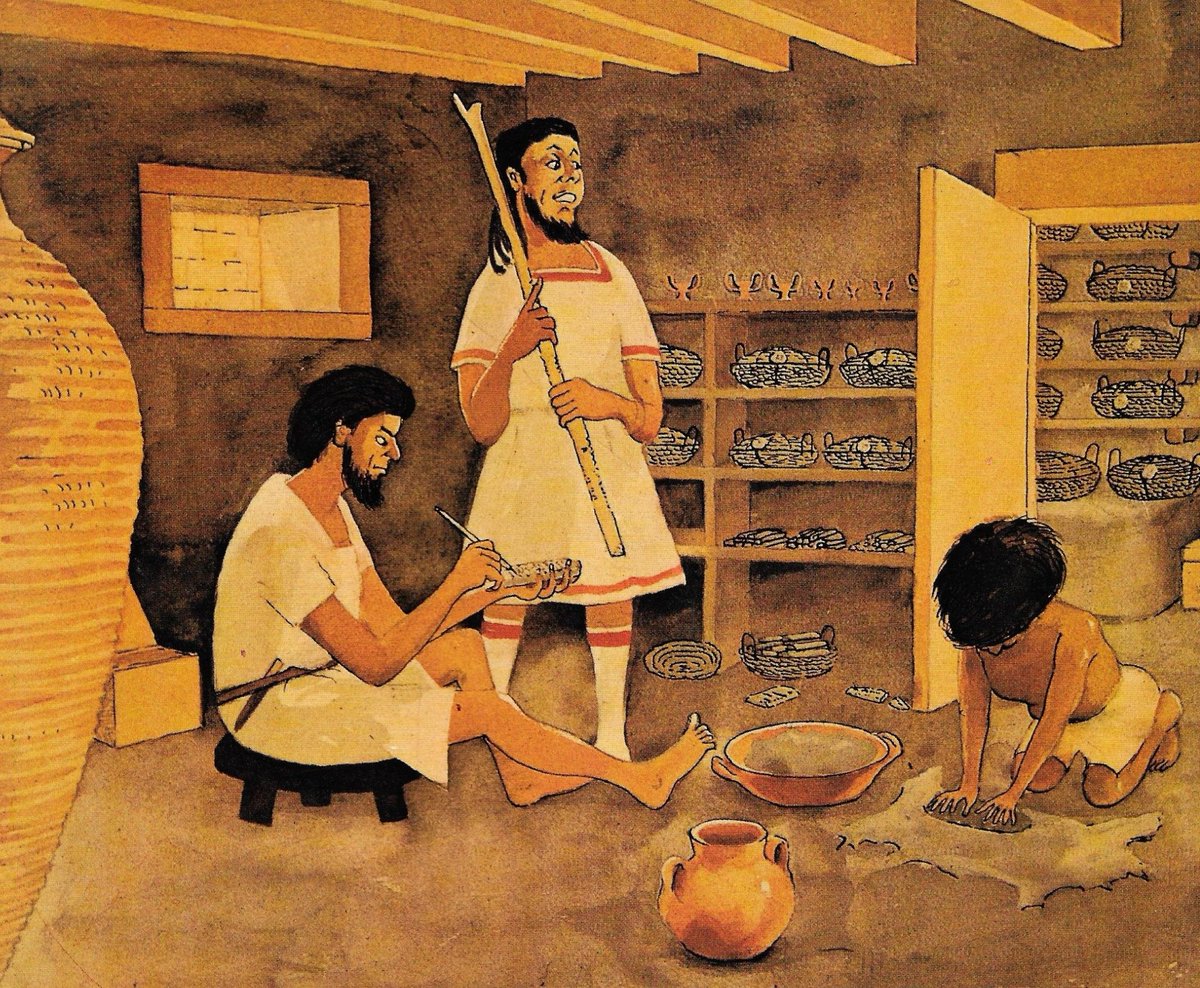
2/ This fact is not an unusual occurrence for the Eastern Mediterranean, as in Egypt and Anatolia two or more languages were used to serve different purposes. However, in Minoan Crete the coexistence of the two scripts for a period of about a century served the same purpose: 👉
👉 the recording of administrative texts, mainly of a financial - accounting nature. What is the reason for this simultaneous presence of two different scripts in Crete? Does this fact conceal some linguistic differentiation between groups of the local population?