Here's a thread about social media decentralization.
A couple years ago, I tried to "like" one of Doomberg's posts about a platform, and I literally saw the heart fill up, and then drain out of it like blood. I'd never seen that before.
Twitter said me liking that was disabled:
A couple years ago, I tried to "like" one of Doomberg's posts about a platform, and I literally saw the heart fill up, and then drain out of it like blood. I'd never seen that before.
Twitter said me liking that was disabled:

Then, when I tried to search on Twitter for that certain platform that apparently can't be named, the search results would replace it with "newsletter" in my search of the network, which was kind of Orwellian:

Even now, I don't say the obvious visible name of that platform that starts with an S. Since an unconscious algo might derank it.
Maybe that's not an issue anymore. Probably.
The funny thing is that I didn't even post about that platform until I couldn't. Then I did a lot.
Maybe that's not an issue anymore. Probably.
The funny thing is that I didn't even post about that platform until I couldn't. Then I did a lot.
Here's the funny thing. I had posted and tweeted throughout the pandemic, which was like censorship city.
I tried to be reasonable, but didn't hold many punches, and just posted. I never was directly censored.
I only found myself censored *after* current management took over.
I tried to be reasonable, but didn't hold many punches, and just posted. I never was directly censored.
I only found myself censored *after* current management took over.
And that censorship was mild.
I just liked a tweet referencing a platform that I didn't even write on, and was told: "no".
I searched for that platform, and the word was replaced with another word.
This was under current management, not prior.
It was 2023.
I just liked a tweet referencing a platform that I didn't even write on, and was told: "no".
I searched for that platform, and the word was replaced with another word.
This was under current management, not prior.
It was 2023.
When you can't post something, or like something, or search for something, it's more about the principal of it than the details.
The fact that it was mild made it *more* annoying, not less, at least for me.
The fact that it was mild made it *more* annoying, not less, at least for me.
Weeks later, multiple serious reports found that Twitter was taking down *more* requests from governments than they used to previously. Especially from strongman countries like Turkey and India.
They complied more with government than before, not less.
forbes.com/sites/katherin…
They complied more with government than before, not less.
forbes.com/sites/katherin…
That opened interesting questions.
If your sole business is social media, maybe you fight back.
But if most of your money is made from cars and rockets, and your side project is social media, would you be more willing to censor leaders' opposition to sell them cars and rockets?
If your sole business is social media, maybe you fight back.
But if most of your money is made from cars and rockets, and your side project is social media, would you be more willing to censor leaders' opposition to sell them cars and rockets?
During the pandemic, I found myself being more direct on my own website than on social media about it, since I was aware of potential censorship.
But I didn't get bluntly censored as I posted about it.
I'm not a medical expert so I was always kind of mild; looking at numbers.
But I didn't get bluntly censored as I posted about it.
I'm not a medical expert so I was always kind of mild; looking at numbers.
So as new management took over, I found myself saying: "It's interesting. I feel like I can post more freely in the US, unless it's about the company's rival. But if we look around, others can arguably post less-freely. We have a more pro-free US and a less-free elsewhere."
I found NOSTR around that time. It's not a competing company, but rather an open-source protocol for decentralized social media. I wrote about it back then in April 2023, when I found Twitter censoring my likes and searches.
lynalden.com/open-networks/
lynalden.com/open-networks/
In June 2024, I had a fireside chat with Jack Dorsey about decentralized social media.
What I found most interesting was the idea of decentralized algorithms:
What I found most interesting was the idea of decentralized algorithms:
In July 2024, I wrote about NOSTR in more detail, as it advanced:
lynalden.com/the-power-of-n…
lynalden.com/the-power-of-n…
And then of course more censorship happened.
When the owner of a certain social media platform was ratioed, which was rare given that he was the most-followed on it, bans and algorithm changes would occur. Couldn't have that.
Look into it more.
When the owner of a certain social media platform was ratioed, which was rare given that he was the most-followed on it, bans and algorithm changes would occur. Couldn't have that.
Look into it more.
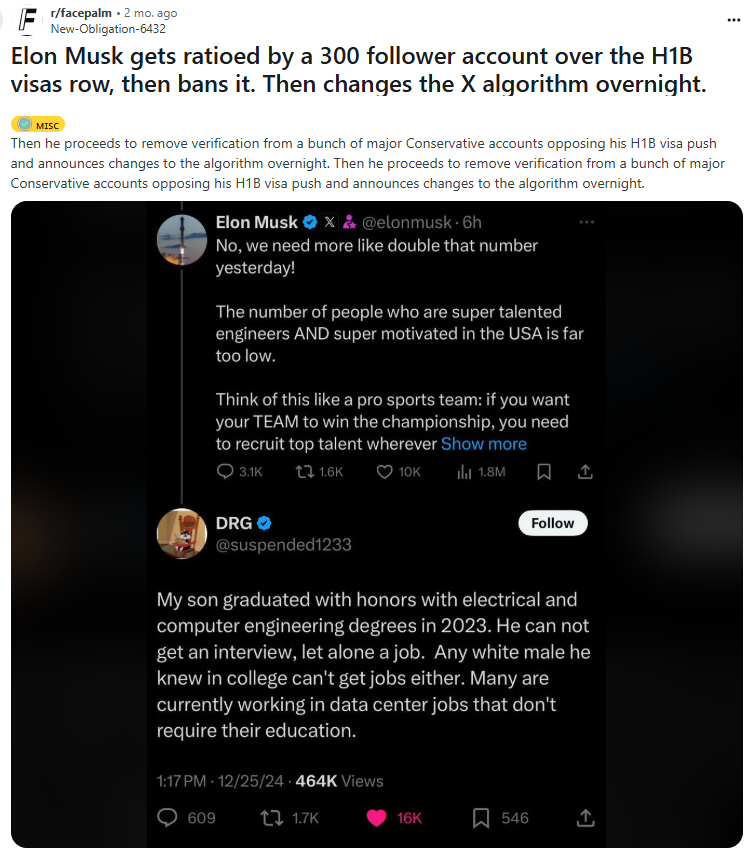
A bunch of people lost their blue checks over that. Some posts disappeared as well.
The platform's owner just took them away. Because he could. Since it's centralized.
The platform's owner just took them away. Because he could. Since it's centralized.
And that wasn't a left-vs-right issue. That was a right-vs-right issue.
Which is what I found interesting all along. My various views could be right or left depending on how the tides turn. During the pandemic I was kind of "right." But as I saw this happen, was I "left" now?
Which is what I found interesting all along. My various views could be right or left depending on how the tides turn. During the pandemic I was kind of "right." But as I saw this happen, was I "left" now?
Back when the US invaded Iraq, I was on the "left".
And I was in favor of gay marriage back then too, before it was popular. I was like, "if two bros or two sis want to marry, I don't give a shit."
So that made me social left I guess, like anti war and pro individuality.
And I was in favor of gay marriage back then too, before it was popular. I was like, "if two bros or two sis want to marry, I don't give a shit."
So that made me social left I guess, like anti war and pro individuality.
And during the pandemic, I was like, "Uh, folks, aren't you over-reacting? Let's not force things." That put me on the "right" side of a lot of things.
And I'm kind of fiscal moderate or fiscal right, favoring hard money, so that puts me toward the "right" there too.
And I'm kind of fiscal moderate or fiscal right, favoring hard money, so that puts me toward the "right" there too.
The point is, I've found myself concerned about censorship from multiple directions. It might be the right or the left.
And it depends on which country, since there are like 200 of them. And I live in more than one country.
And it depends on which country, since there are like 200 of them. And I live in more than one country.
So, I tend to think in universal terms. Rather than relying on the ideal person to run things, I wonder what would ultimately fix things? What would maximize social expression forever?
The only answer I see is open source, decentralized social media.
The only answer I see is open source, decentralized social media.
That means there's no centralized entity that can ban people. They might get banned from part of the network, but not all of it.
And it means people can pick or create their own algorithms, rather than rely on just a centralized one to tell them what content is priority.
And it means people can pick or create their own algorithms, rather than rely on just a centralized one to tell them what content is priority.
Myself aside, I want all my opponents on any given topic to be able to post as much as they like. And search for what they like.
Because I don't feel the need to suppress them; I'm happy to discuss with them about any given topic. Or choose to ignore them.
Because I don't feel the need to suppress them; I'm happy to discuss with them about any given topic. Or choose to ignore them.
I think NOSTR is the best architecture for it that I see currently.
But heck, maybe I'm wrong. Maybe there's a better architecture.
Whatever that best architecture is, I invite people to seek it. Open-source. Permissionless. Decentralized.
But heck, maybe I'm wrong. Maybe there's a better architecture.
Whatever that best architecture is, I invite people to seek it. Open-source. Permissionless. Decentralized.
While I don't always know the right answer, I think I can point to what is clearly the flawed answer: always hoping your favored leader is in charge.
If you're on the left or right and feel like you need a left or right social media leader, you're going to have a bad time.
If you're on the left or right and feel like you need a left or right social media leader, you're going to have a bad time.
• • •
Missing some Tweet in this thread? You can try to
force a refresh