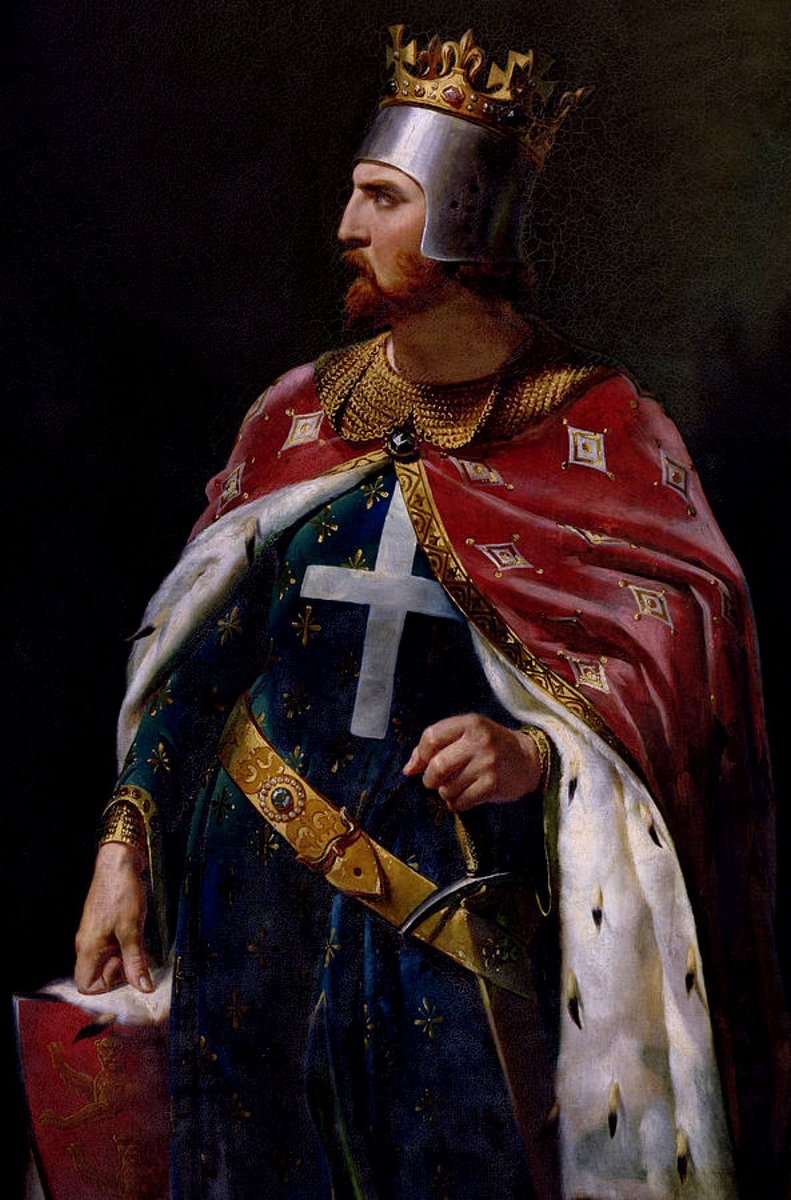
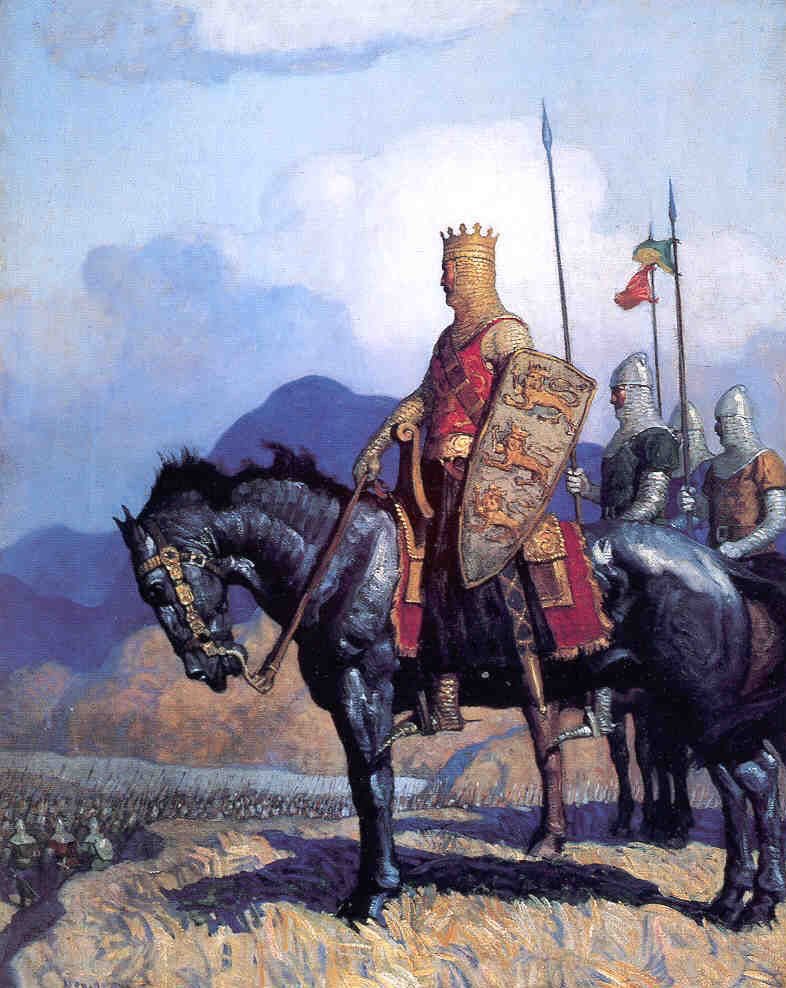
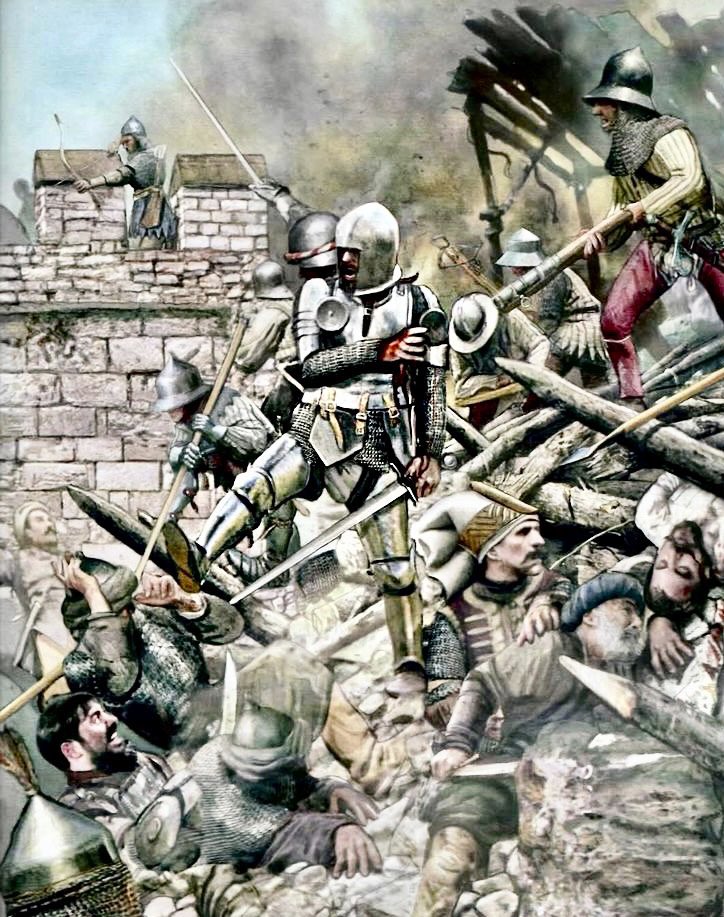
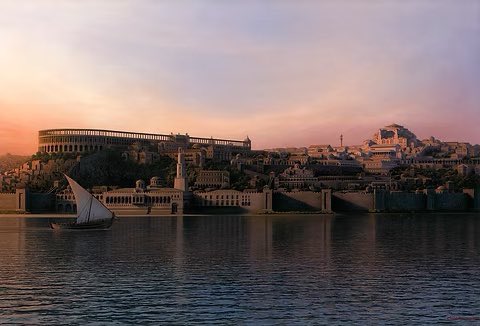
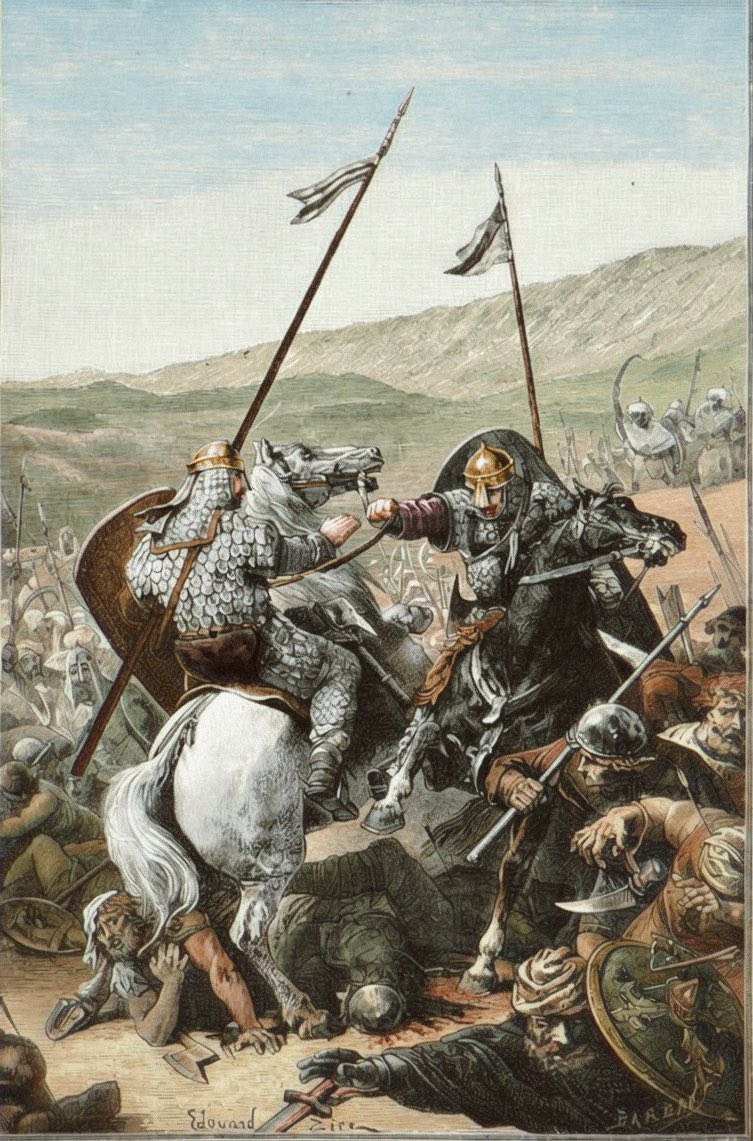
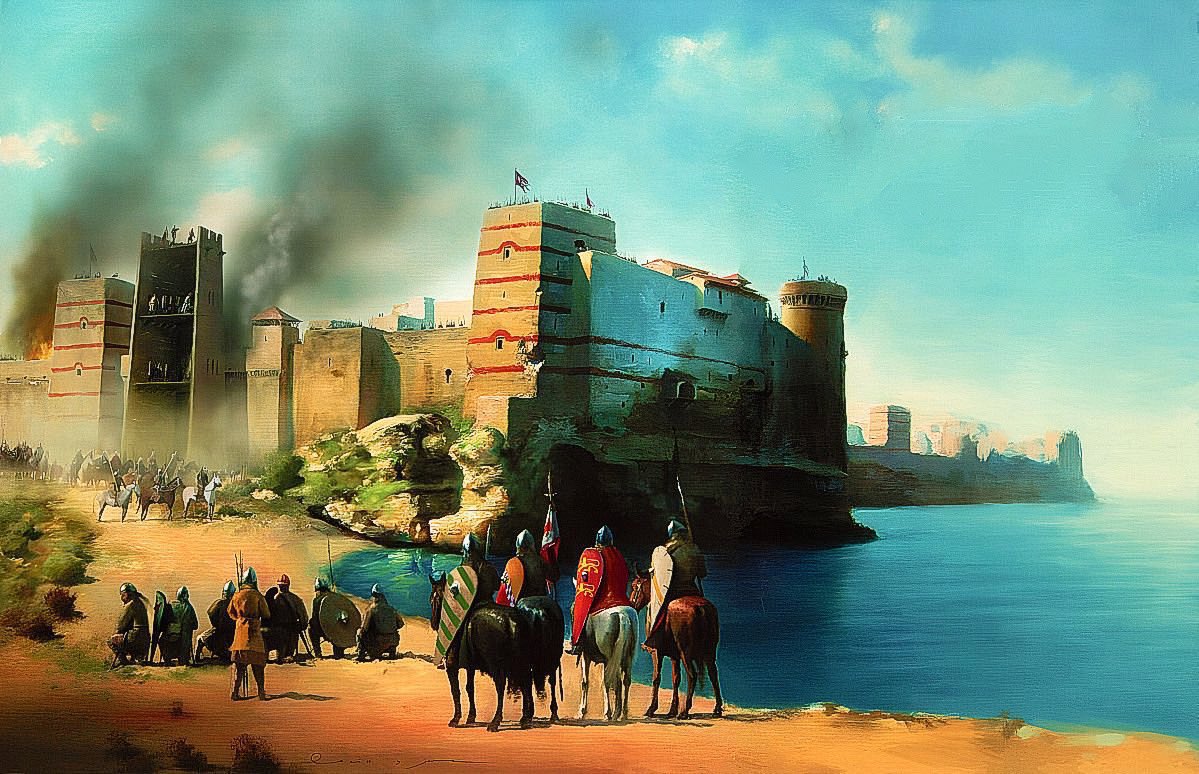
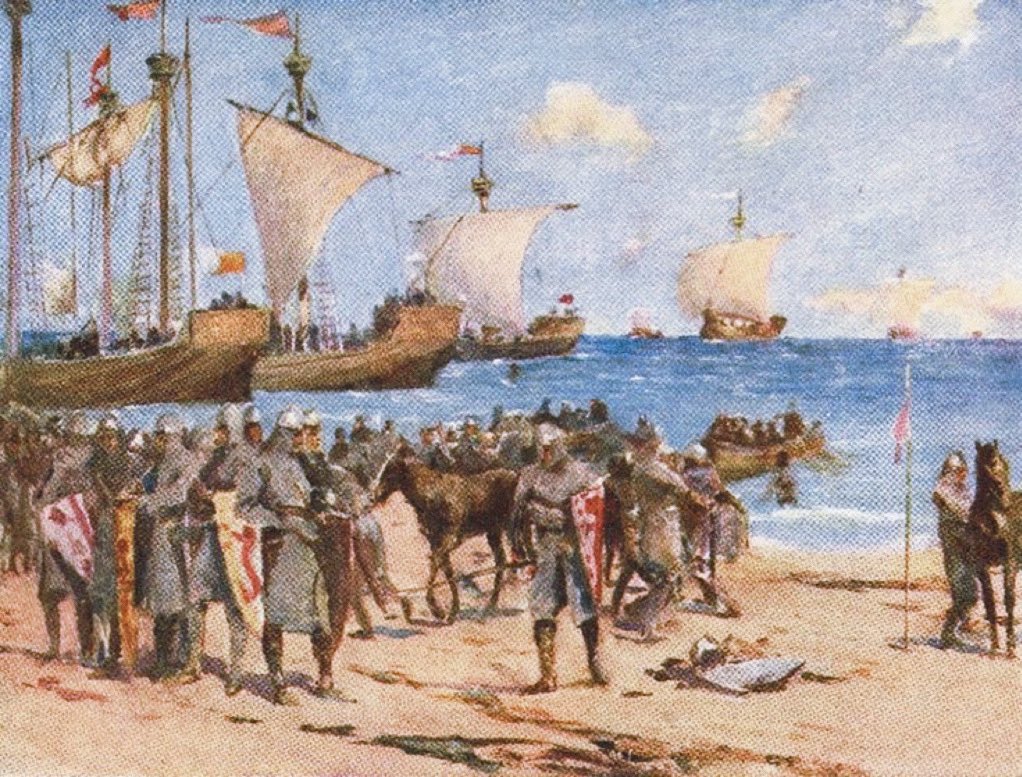
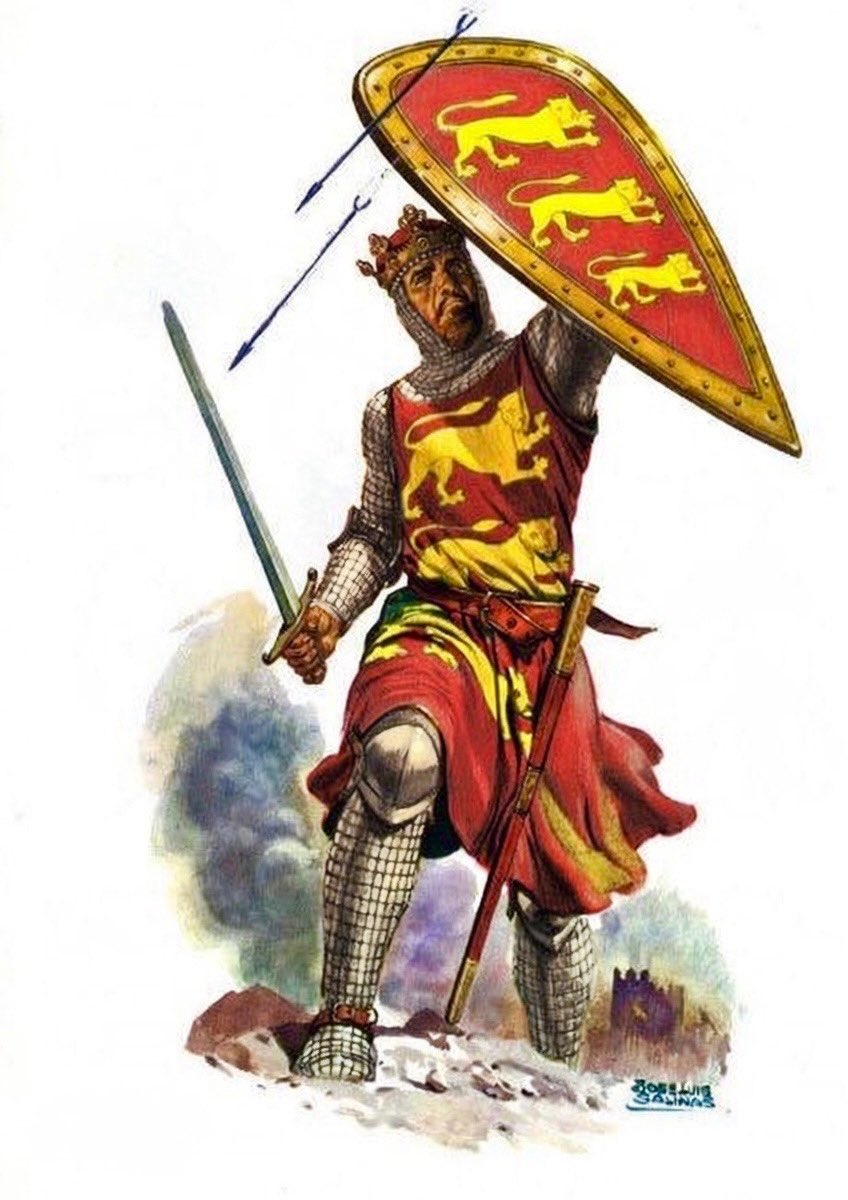
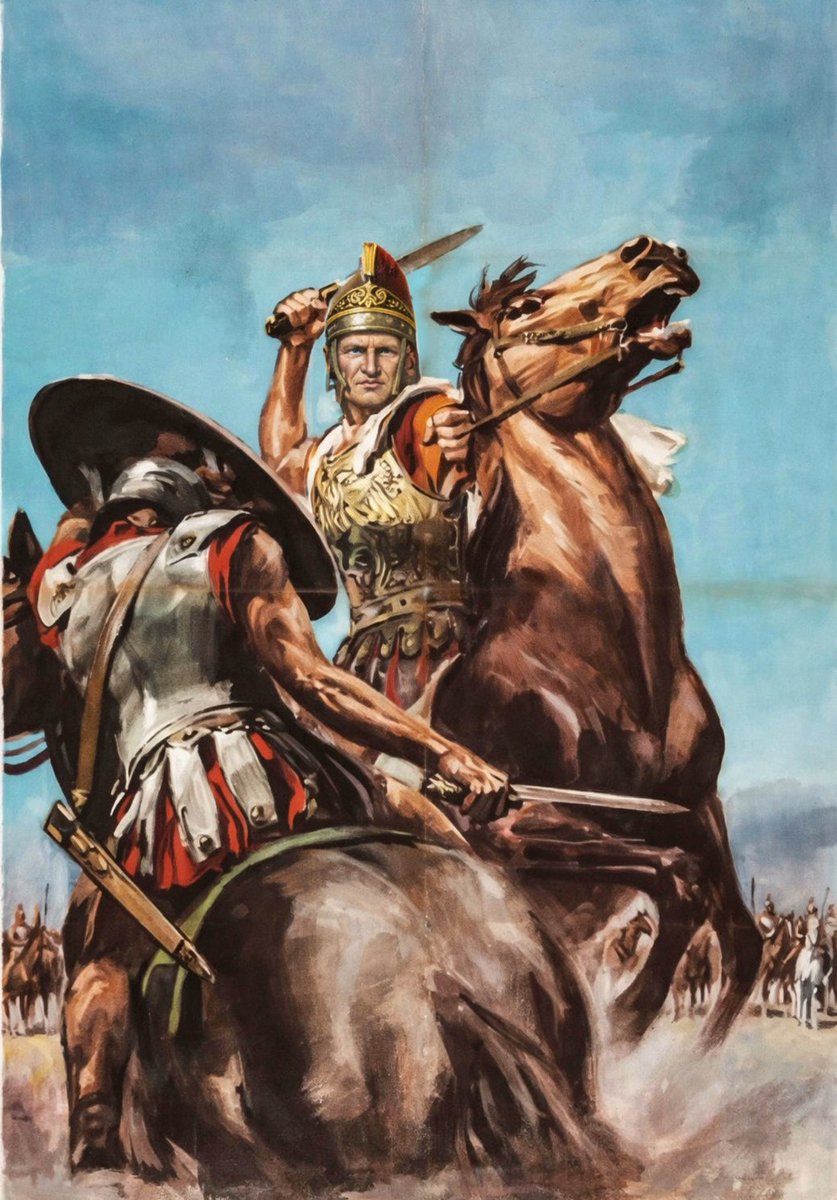
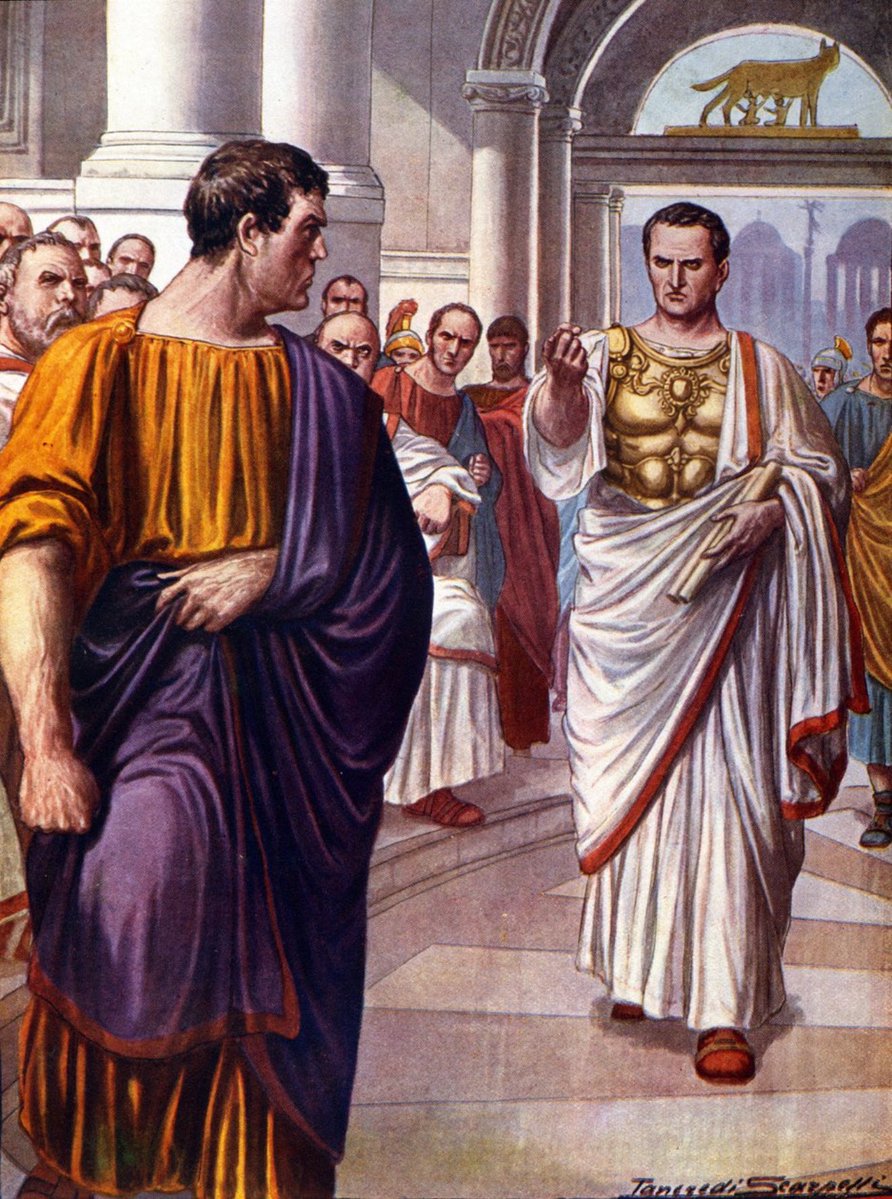
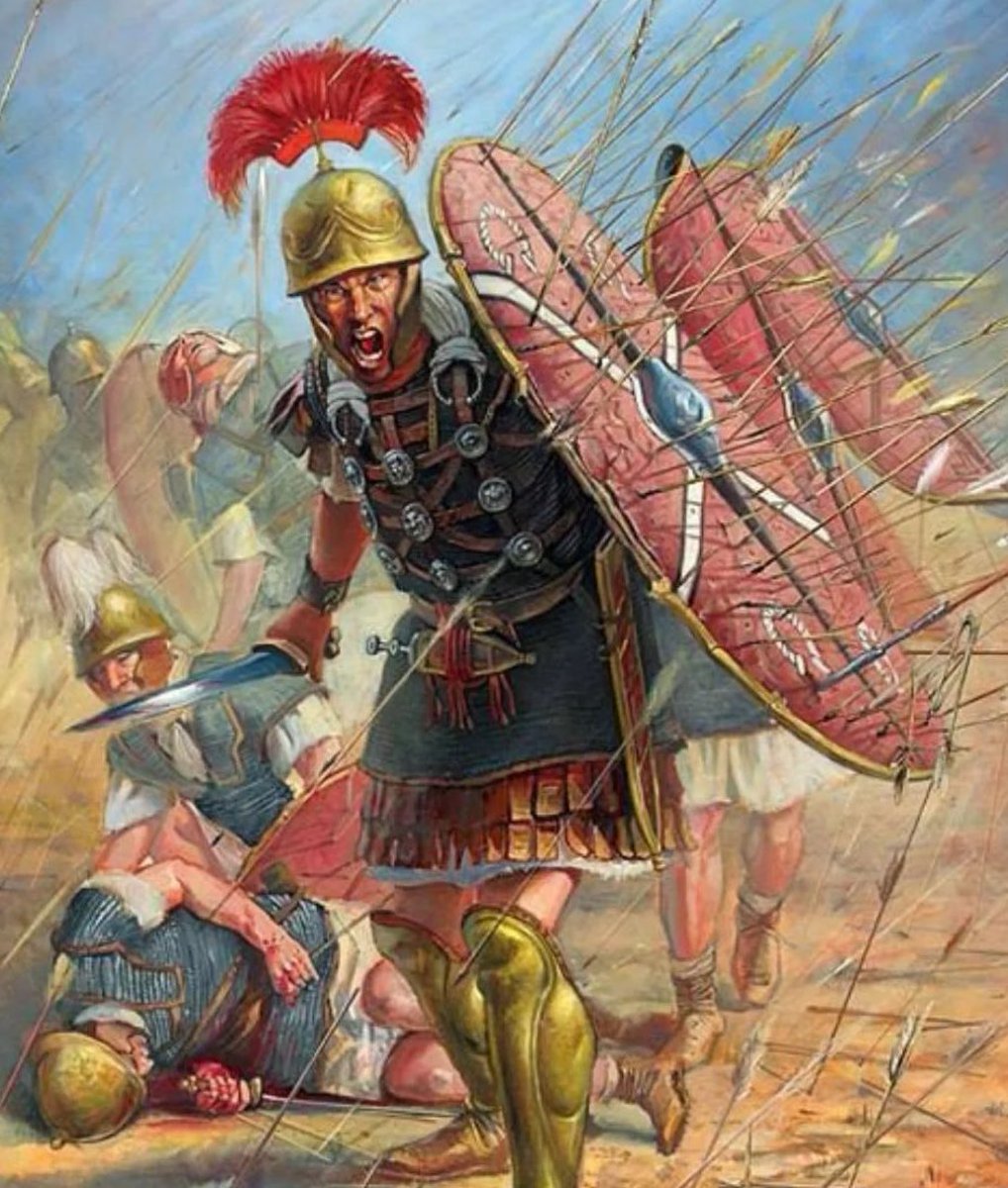
For fifty years Basil II ruled the Empire of the Romans, campaigning tirelessly to secure the borders and bring peace through war.
This is a thread on the mighty life of the greatest ever soldier-emperor:
• The Purple-born Bulgar Slayer •
🧵[Thread]
This is a thread on the mighty life of the greatest ever soldier-emperor:
• The Purple-born Bulgar Slayer •
🧵[Thread]
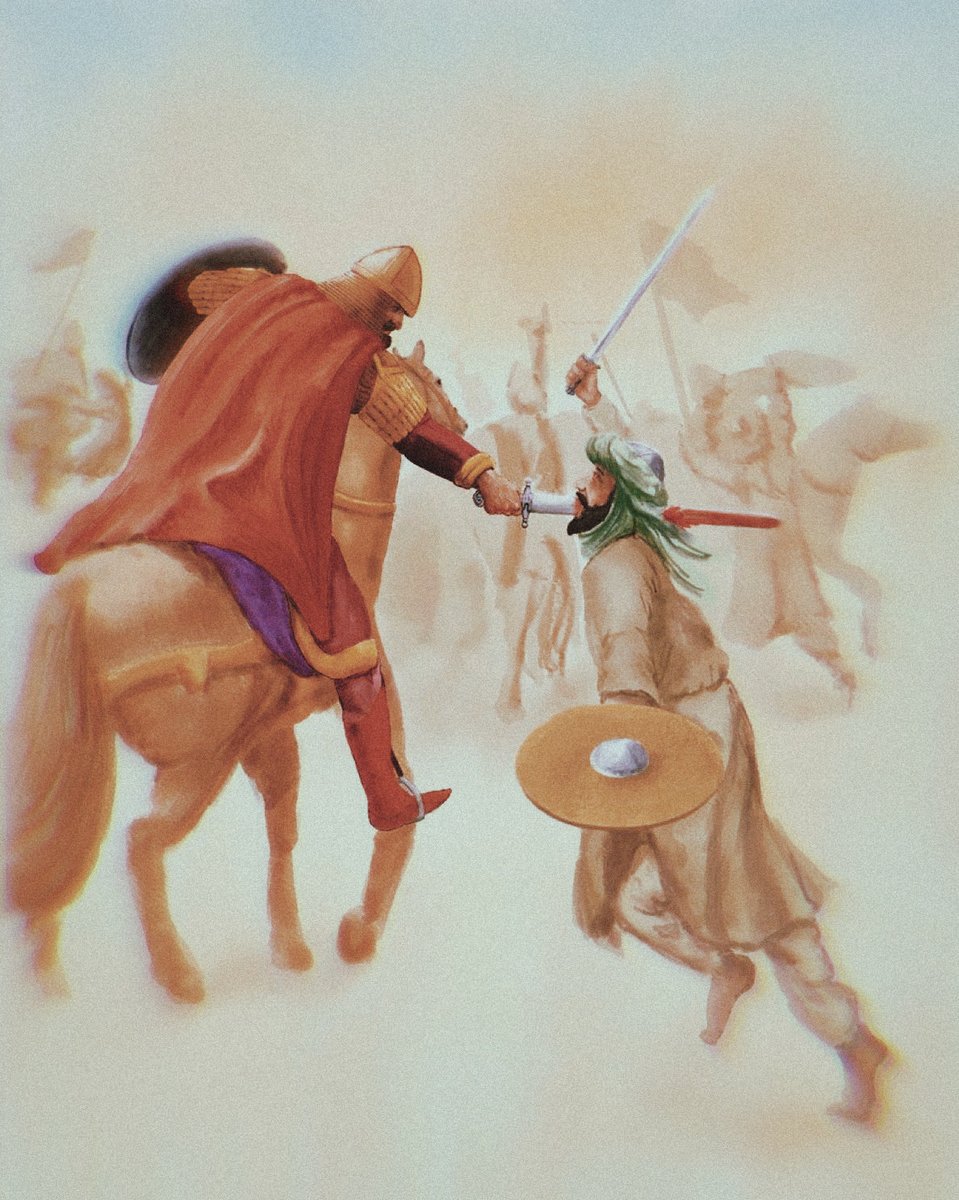
Basil was born in the purple chamber of the imperial palace in Constantinople in AD 958, earning him the moniker ‘Porphyrogénnetos’.
Following the death of his father in 963, Basil’s early life was dominated by regent co-emperors; Nikephoros Phokas & John Tzimiskes, rebelling generals, and overbearing conspiratorial ministers.
When he was 18 the last of his regents, Tzimiskes, died, leaving him as emperor but still partially under the thumb of his chief minister & relative Basil Lekapenos who even provoked a failed rebellion by removing the general Bardas Skleros from power.
These attempts to usurp and control Basil had a profound impact on his rule and personality later in his life.
Following the death of his father in 963, Basil’s early life was dominated by regent co-emperors; Nikephoros Phokas & John Tzimiskes, rebelling generals, and overbearing conspiratorial ministers.
When he was 18 the last of his regents, Tzimiskes, died, leaving him as emperor but still partially under the thumb of his chief minister & relative Basil Lekapenos who even provoked a failed rebellion by removing the general Bardas Skleros from power.
These attempts to usurp and control Basil had a profound impact on his rule and personality later in his life.

Basil knew he needed his own military prestige to demonstrate an alternative to the great military families of the empire and decided to march against the Bulgars who had raided the Balkans.
But his first campaign was a disaster, leading to an ambush and bloody retreat.
This damaged his reputation among the leading generals of the empire and severely damaged his position.
In 985 he dismissed the long-term and incredibly influential chief advisor, Basil Lekapenos.
But his first campaign was a disaster, leading to an ambush and bloody retreat.
This damaged his reputation among the leading generals of the empire and severely damaged his position.
In 985 he dismissed the long-term and incredibly influential chief advisor, Basil Lekapenos.

In response Lekapenos instigated yet another rebellion!
Bardas Skleros had been exiled in Baghdad and won the support of the Buyids and recruited an army of tribesmen as well as Armenians and a force of Georgians sent by David of Tao.
Basil promoted the former rebel Bardas Phokas to deal with Skleros. Phokas was nephew of the former regent emperor Nikephoros, whose family was not yet ready to relinquish their desire for power!
Bardas Skleros had been exiled in Baghdad and won the support of the Buyids and recruited an army of tribesmen as well as Armenians and a force of Georgians sent by David of Tao.
Basil promoted the former rebel Bardas Phokas to deal with Skleros. Phokas was nephew of the former regent emperor Nikephoros, whose family was not yet ready to relinquish their desire for power!

Phokas and Skleros then joined forces against Basil!
Basil was now in the gravest of danger.
Bardas Phokas imprisoned the aged, yet more militarily skilled, Skleros and led the rebellion himself.
This now was the first glimpse the empire would see if the iron will of their emperor, who would never relinquish the power that had for so long been denied to him.
In 988 he allied with the Vladimir, Prince of Rus, sealed with a marriage between Vladimir and Basil’s sister Anna. In return Vladimir would help spread Christianity among his people and, crucially, provide him with 6,000 Varangian Vikings.
Basil was now in the gravest of danger.
Bardas Phokas imprisoned the aged, yet more militarily skilled, Skleros and led the rebellion himself.
This now was the first glimpse the empire would see if the iron will of their emperor, who would never relinquish the power that had for so long been denied to him.
In 988 he allied with the Vladimir, Prince of Rus, sealed with a marriage between Vladimir and Basil’s sister Anna. In return Vladimir would help spread Christianity among his people and, crucially, provide him with 6,000 Varangian Vikings.

The next year the former Catepan of Italy, Kalokyros Delphinas, now allied with the rebels, set up camp at Chrysopolis.
Basil ‘repeatedly asked Delphinas to withdraw and not to set up camp over the capital’ but his plea was ignored.
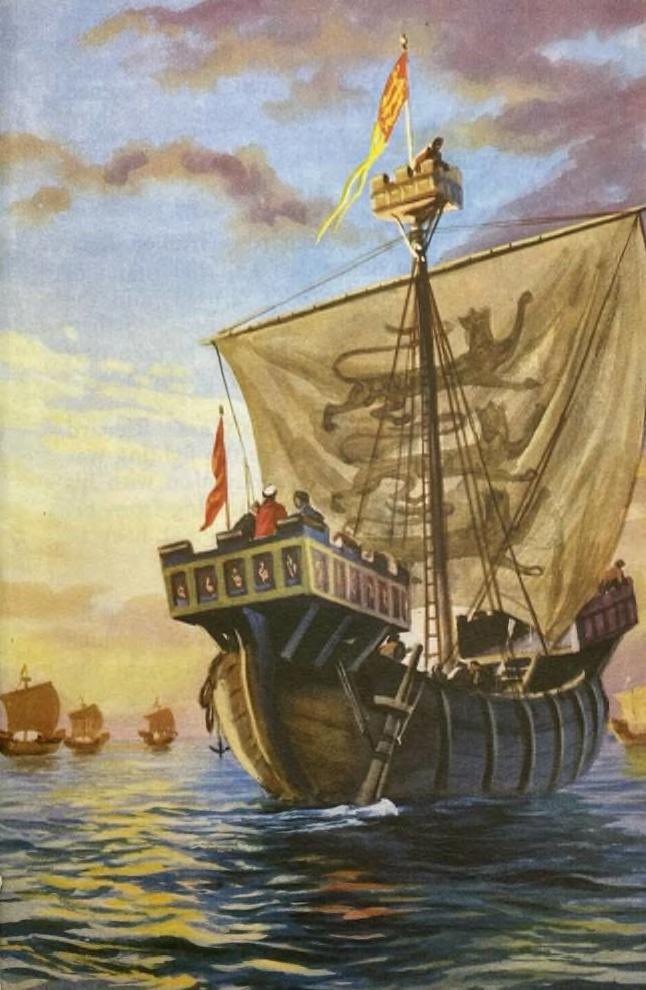
‘Without a second thought’ Basil sailed across the Bosphorus at night and ‘easily subdued them’.
He hanged Delphinas on the spot.
Basil ‘repeatedly asked Delphinas to withdraw and not to set up camp over the capital’ but his plea was ignored.
‘Without a second thought’ Basil sailed across the Bosphorus at night and ‘easily subdued them’.
He hanged Delphinas on the spot.

The Georgian contingent left for home once the news of Chrysopolis arrived and Basil’s ascendancy continued apace. The situation for Phokas became more desperate as Basil advanced towards him at Abydos and he prepared for battle.
But then he died, possibly of a seizure, and the rebellion disintegrated.
But then he died, possibly of a seizure, and the rebellion disintegrated.
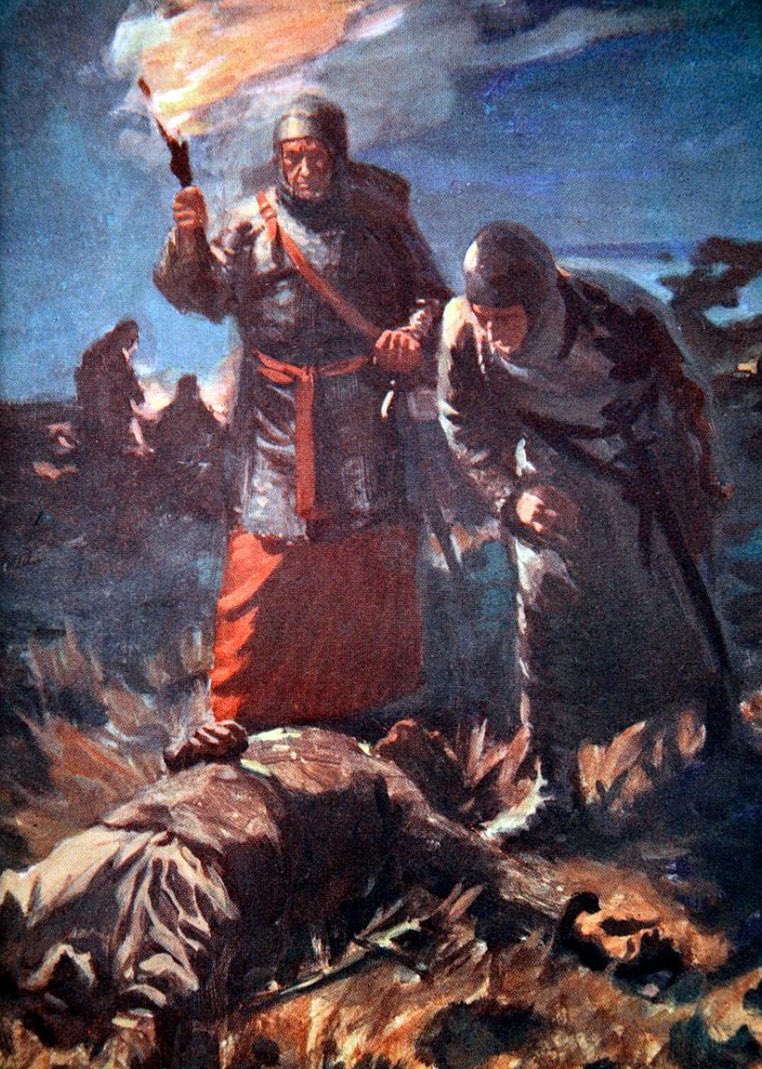
Basil spared Skleros and sent him into enforced retirement. David of Tao agreed to cede his lands to the Roman Empire on his death and accepted the court title of Kuropalates.
In two years Basil had gone from the lowest point in his career to neutralising the Phokas clan and Basil Lekapenos, the family and chief supporter, respectively, of the two men who had seized power and ruled as regents in his youth.
In two years Basil had gone from the lowest point in his career to neutralising the Phokas clan and Basil Lekapenos, the family and chief supporter, respectively, of the two men who had seized power and ruled as regents in his youth.

𝐓𝐡𝐞 𝐄𝐚𝐬𝐭 - 𝐀 𝐂𝐚𝐭 𝐀𝐦𝐨𝐧𝐠 𝐌𝐢𝐜𝐞
Though Basil’s primary military aim was to subdue the Bulgarians, events in the east forced his hand. The revolt by Basil Skleros weakened the empire’s situation in the east and the Fatimid general Manjutakin invaded and defeated Michael Bourtzes but failed to take Aleppo, a tributary of the empire.
In 994 when Bourtzes imprisoned the Fatimid emissary who assured him that their only target was Aleppo, Manjutakin targeted Antioch.
Though Basil’s primary military aim was to subdue the Bulgarians, events in the east forced his hand. The revolt by Basil Skleros weakened the empire’s situation in the east and the Fatimid general Manjutakin invaded and defeated Michael Bourtzes but failed to take Aleppo, a tributary of the empire.
In 994 when Bourtzes imprisoned the Fatimid emissary who assured him that their only target was Aleppo, Manjutakin targeted Antioch.

Bourtzes took an army of 5000 men to bar Manjutakin’s entry but was defeated before Manjutakin returned to attacking Aleppo.
In 995 the situation in Aleppo was dire and when word reached Basil in the Bulgaria that the city would fall, he intervened personally and force marched his army to Antioch in a month.
Upon the news of Basil’s arrival Manjutakin lifted the siege, burned his camp, and fled in a panic.
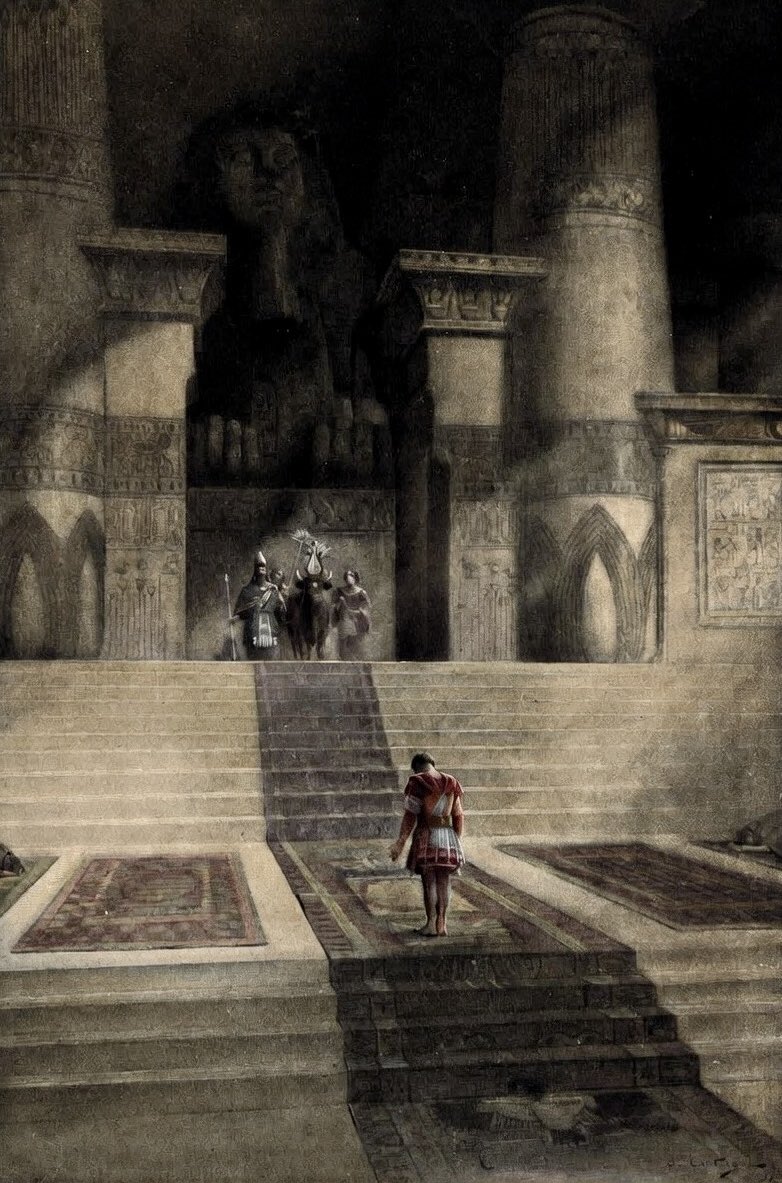
The rulers of Aleppo then came out to lie prostrate before him and pay homage.
In 995 the situation in Aleppo was dire and when word reached Basil in the Bulgaria that the city would fall, he intervened personally and force marched his army to Antioch in a month.
Upon the news of Basil’s arrival Manjutakin lifted the siege, burned his camp, and fled in a panic.
The rulers of Aleppo then came out to lie prostrate before him and pay homage.

Of his time in Syria one historian wrote that Basil,
‘…decided to stay in Syria to show the region what a real Roman army could do. He took Apameia in a day, then Rataniyya, other forts, and Homs, burning, pillaging, and taking captives.
When tribesmen attacked, Basil captured forty, cut off their hands, and let them go. No more attacked him after that.’
‘…decided to stay in Syria to show the region what a real Roman army could do. He took Apameia in a day, then Rataniyya, other forts, and Homs, burning, pillaging, and taking captives.
When tribesmen attacked, Basil captured forty, cut off their hands, and let them go. No more attacked him after that.’
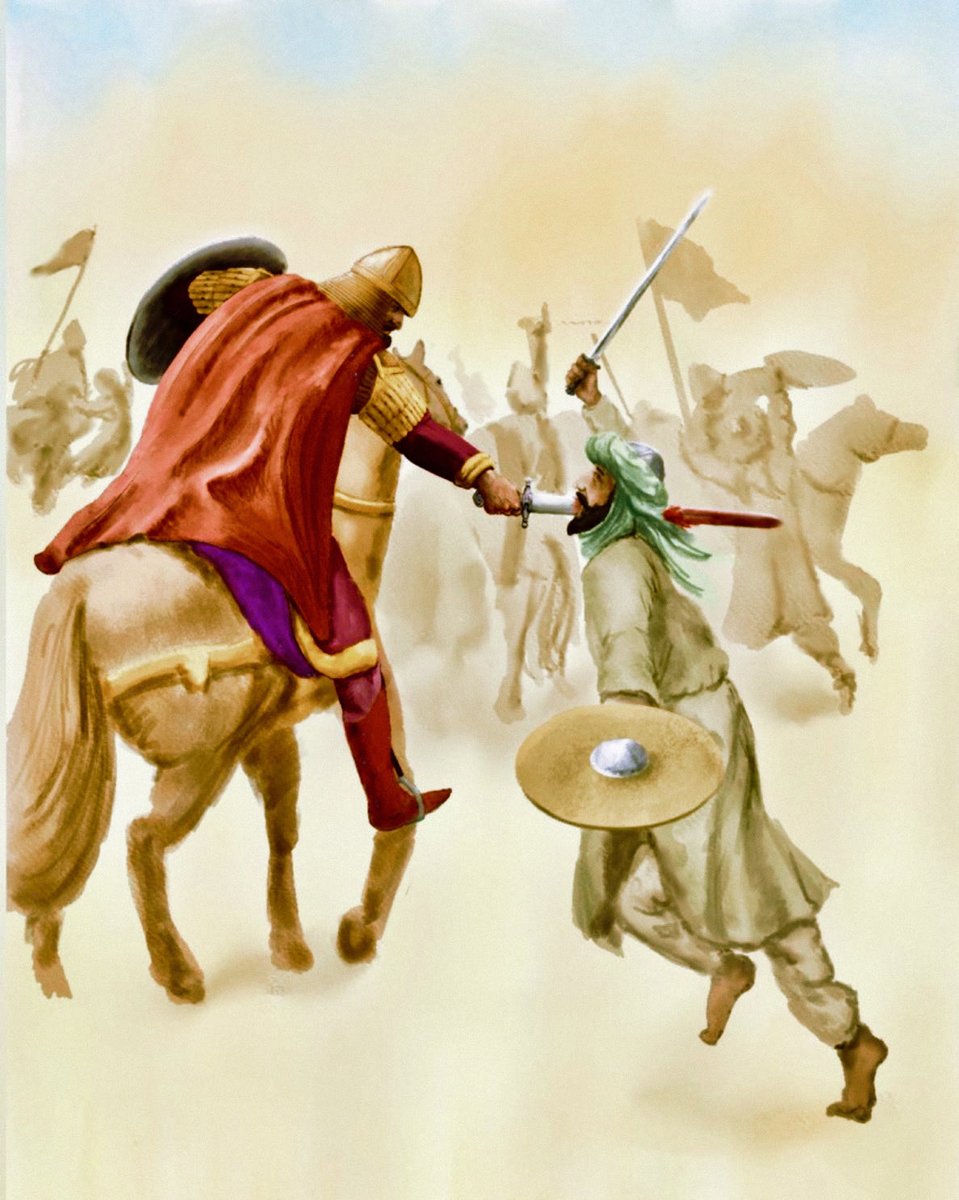
‘Basil appeared as a cat among mice, bringing overwhelming and terrifying force that instantly changed the balance of power.’
He would have to repeat this in 998-99 when the Fatamids defeated the doux of Antioch at Apamea and Basil was again drawn away from fighting the Bulgars in late 999 and re-asserted Roman authority by burning and plundering his way to Homs.
The Fatimids would not face him in battle and were ready to make peace.
He would have to repeat this in 998-99 when the Fatamids defeated the doux of Antioch at Apamea and Basil was again drawn away from fighting the Bulgars in late 999 and re-asserted Roman authority by burning and plundering his way to Homs.
The Fatimids would not face him in battle and were ready to make peace.

n AD 1000 while wintering in Cilicia, news came of the death of David of Tao and Basil was due to inherit his lands.
Court titles were given to some of David’s family and despite a small skirmish between some Georgian nobles and Basil’s Varangians, Basil took the Georgian lands and the empire’s borders had been greatly extended in the east.
Court titles were given to some of David’s family and despite a small skirmish between some Georgian nobles and Basil’s Varangians, Basil took the Georgian lands and the empire’s borders had been greatly extended in the east.

𝐓𝐡𝐞 𝐁𝐮𝐥𝐠𝐚𝐫 𝐒𝐥𝐚𝐲𝐞𝐫
The largest conflict of Basil’s reign was fought against the Bulgars. The first phase of the Bulgarian conflict was interrupted by Basil’s eastern campaigns.
In 991 Basil captured the Bulgar Tsar Roman and held him in captivity until his death. Although he was mostly a figurehead and the real military power was held by Samuil.
In 996 Nikephoros Ouranos shadowed raid of Samuil and attacked during the night, killing much of the Bulgar force in their sleep. Samuil and his son hid among the bodies and escaped.
Ouranos sent 1000 severed heads to Constantinople and the bones of the slain could still be seen decades later.
Samuil sued for peace but then news came that the Bulgar Tsar Roman died in captivity in 997 and Samuil was proclaimed Tsar in his place and the war continued.
The largest conflict of Basil’s reign was fought against the Bulgars. The first phase of the Bulgarian conflict was interrupted by Basil’s eastern campaigns.
In 991 Basil captured the Bulgar Tsar Roman and held him in captivity until his death. Although he was mostly a figurehead and the real military power was held by Samuil.
In 996 Nikephoros Ouranos shadowed raid of Samuil and attacked during the night, killing much of the Bulgar force in their sleep. Samuil and his son hid among the bodies and escaped.
Ouranos sent 1000 severed heads to Constantinople and the bones of the slain could still be seen decades later.
Samuil sued for peace but then news came that the Bulgar Tsar Roman died in captivity in 997 and Samuil was proclaimed Tsar in his place and the war continued.

From 997 to 1003 Basil made gradual gains although the sources are not clear on what exactly happened, and Samuil’s later position suggests that some territory was recaptured by Samuil, causing the war to continue for more than a decade .
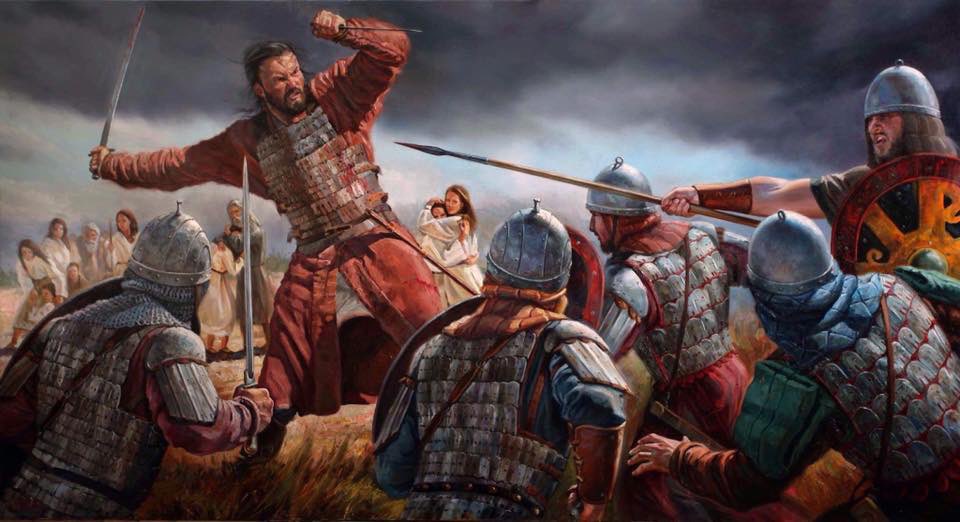
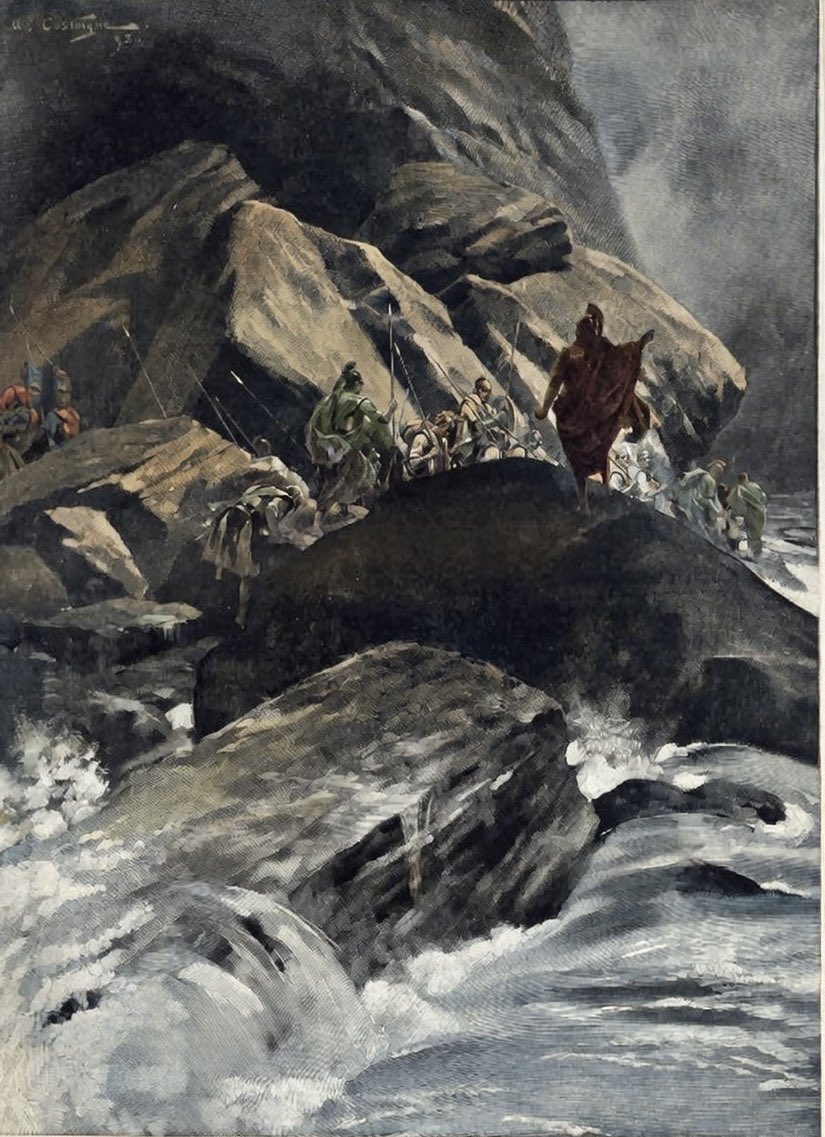
In 1014 Basil achieved his most legendary victory when he fought Samuil at the pass of Kleidion!
Samuil’s men were holding their position valiantly when Nikephoros Xiphias found a way around the pass and attacked the Bulgars from the rear!
Samuil’s force was destroyed and legend tells that Basil ordered the 15,000 Bulgar captives to be blinded, with only one man in a hundred spared in order to lead the Bulgars home, at which point Samuil died of shock upon seeing them.
Though this is unlikely due to the practical difficulties in subduing and blinding so many men, Basil was known for blinding enemies.
Samuil did die, however, and Bulgarian resistance was severely weakened.
Samuil’s men were holding their position valiantly when Nikephoros Xiphias found a way around the pass and attacked the Bulgars from the rear!
Samuil’s force was destroyed and legend tells that Basil ordered the 15,000 Bulgar captives to be blinded, with only one man in a hundred spared in order to lead the Bulgars home, at which point Samuil died of shock upon seeing them.
Though this is unlikely due to the practical difficulties in subduing and blinding so many men, Basil was known for blinding enemies.
Samuil did die, however, and Bulgarian resistance was severely weakened.
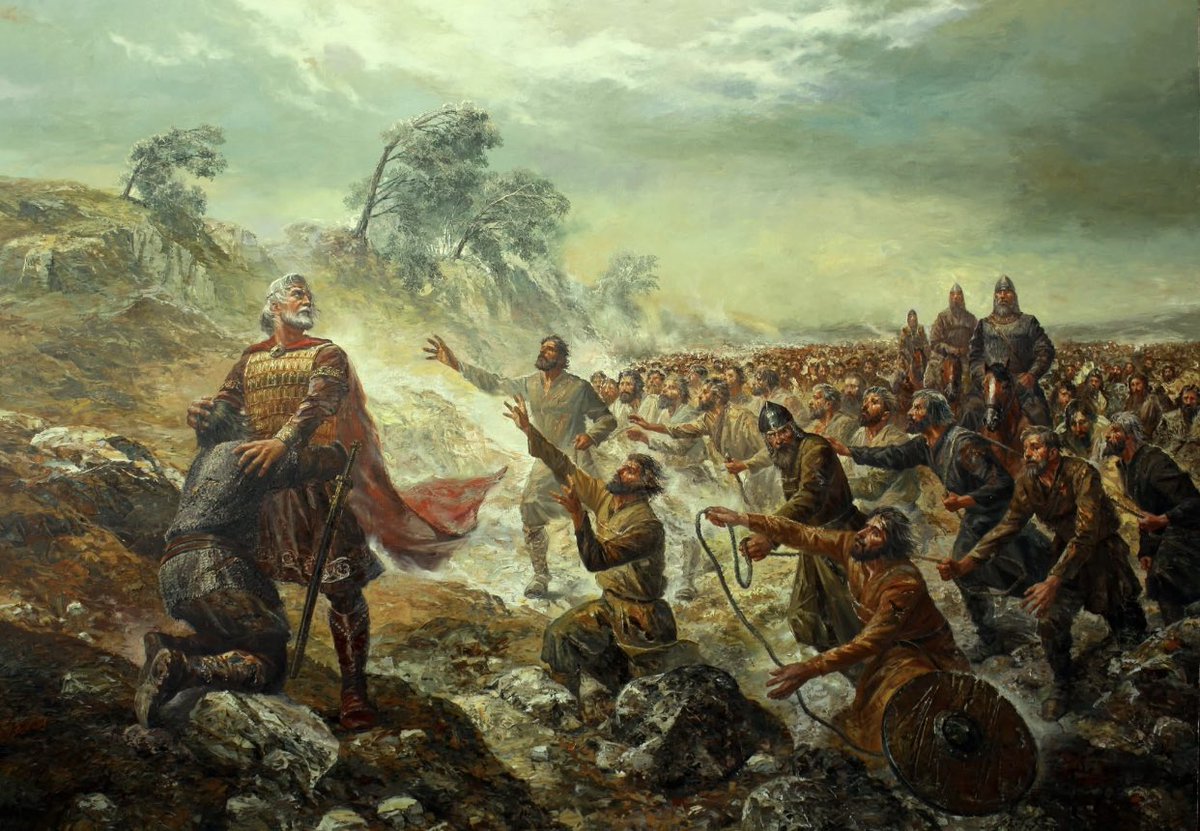
The next year Basil sacked Ohrid while the Bulgarian leadership fractured. Samuil’s son was murdered by Ivan Vladislav.
An imperial army was then destroyed in an ambush but then Ivan Vladislav died in a battle at Dyrrachium while Basil had returned to Constantinople.
At this point the Bulgarians were ready to surrender and Basil appointed many senior Bulgarians to positions in the empire and rewarded them with titles.
David Arianites was appointed as the Catepan of Bulgaria and the war was over when the people of Ohrid came out to acclaim Basil who received the treasury of the tsars.
An imperial army was then destroyed in an ambush but then Ivan Vladislav died in a battle at Dyrrachium while Basil had returned to Constantinople.
At this point the Bulgarians were ready to surrender and Basil appointed many senior Bulgarians to positions in the empire and rewarded them with titles.
David Arianites was appointed as the Catepan of Bulgaria and the war was over when the people of Ohrid came out to acclaim Basil who received the treasury of the tsars.

𝐁𝐚𝐜𝐤 𝐓𝐨 𝐓𝐡𝐞 𝐄𝐚𝐬𝐭
The Georgian prince Giorgi had never accepted the passing of his grandfather David of Tao’s lands into the empire. In the 1010s Giorgi invaded Upper Tao while Basil was busy with the Bulgarian war.
In 1020 he tried to make an alliance with the Fatimids. With the Bulgarian war over, Basil was free to deal with him at last.
Of this, one historian wrote ‘what is amazing is that anyone would find it advisable to offend Basil at this point in his reign’.
The Georgian prince Giorgi had never accepted the passing of his grandfather David of Tao’s lands into the empire. In the 1010s Giorgi invaded Upper Tao while Basil was busy with the Bulgarian war.
In 1020 he tried to make an alliance with the Fatimids. With the Bulgarian war over, Basil was free to deal with him at last.
Of this, one historian wrote ‘what is amazing is that anyone would find it advisable to offend Basil at this point in his reign’.

Basil was marching through Asia Minor while his envoys were rebuffed by Giorgi.
Basil was in ‘wrathful mode’ and is thought to have defeated Giorgi at the battle of Shrimini after which Giorgi fled and Basil ravaged the region, and killed or blinded thousands of captives.
During the winter, Giorgi surrendered. He offered his son as hostage, recognised Basil’s suzerainty and returned the lands he took.
Around this time the Armenian king Senekerim Vaspurakan exchanged his kingdom for lands in Cappadocia and Basil sent in new Roman administrators.
Smbat III, King of Ani also agreed to cede Basil his territories to the empire upon his death, possibly out of fear of Basil’s wrath for having supported Giorgi.
Basil was in ‘wrathful mode’ and is thought to have defeated Giorgi at the battle of Shrimini after which Giorgi fled and Basil ravaged the region, and killed or blinded thousands of captives.
During the winter, Giorgi surrendered. He offered his son as hostage, recognised Basil’s suzerainty and returned the lands he took.
Around this time the Armenian king Senekerim Vaspurakan exchanged his kingdom for lands in Cappadocia and Basil sent in new Roman administrators.
Smbat III, King of Ani also agreed to cede Basil his territories to the empire upon his death, possibly out of fear of Basil’s wrath for having supported Giorgi.

𝐓𝐡𝐞 𝐋𝐚𝐬𝐭 𝐑𝐞𝐛𝐞𝐥𝐥𝐢𝐨𝐧
In 1022 the army officers Nikephoros Xiphias and Nikephoros Phokas rebelled in a shock to Basil, whose reign had been without internal strife for over 30 years.
One historian wrote:
‘Given Basil’s record, and in hindsight, this risk seems akin to madness’
Basil was caught between two hostile forces, the rebels and the Georgians. But Phokas died, killed either by an envious Xiphias or by an Armenian rebel who had changed sides. Support for the rebellion ebbed away Xiphias was then arrested and sent into a monastery.
Giorgi had supported the rebels against Basil and once again drew his ire. Giorgi planned to ambush the emperor but failed with Basil’s army destroying the Georgians. Giorgi sued for peace and surrendered all of the forts Basil demanded of him.
In 1022 the army officers Nikephoros Xiphias and Nikephoros Phokas rebelled in a shock to Basil, whose reign had been without internal strife for over 30 years.
One historian wrote:
‘Given Basil’s record, and in hindsight, this risk seems akin to madness’
Basil was caught between two hostile forces, the rebels and the Georgians. But Phokas died, killed either by an envious Xiphias or by an Armenian rebel who had changed sides. Support for the rebellion ebbed away Xiphias was then arrested and sent into a monastery.
Giorgi had supported the rebels against Basil and once again drew his ire. Giorgi planned to ambush the emperor but failed with Basil’s army destroying the Georgians. Giorgi sued for peace and surrendered all of the forts Basil demanded of him.

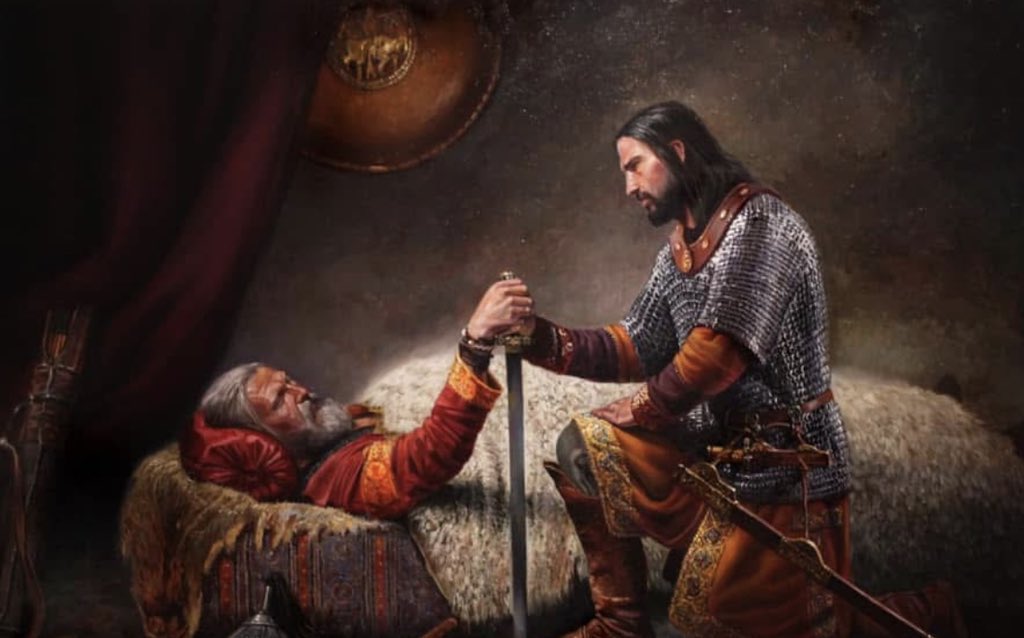
In 1025, Basil was preparing for the conquest of Sicily when he died. He had summoned his brother and asked not to be buried in the imperial mausoleum and not to be in imperial regalia.
Instead he wanted to be buried at a church near at the military mustering grounds outside of the city.
Instead he wanted to be buried at a church near at the military mustering grounds outside of the city.
His funeral epitaph reads:
The emperors of old allotted to themselves different burial-sites: some here, others there;
but I, Basil the purple-born, erect my tomb in the region of Hebdomon.
Here I rest, on the seventh day, from the numerous toils I bore and endured on the battlefield, for from the day when the King of Heaven called upon me to become emperor, the great overlord of the world, no one saw my spear lie idle.
I stayed alert throughout my life and protected the children of New Rome, valiantly campaigning both in the West and at the outposts of the East, erecting myriads of trophies in all parts of the world.
And witnesses of this are the Persians and the Skythians, together with the Abkhazian, the Ismaelite, the Arab, and the Iberian.
O man, seeing now my tomb here, reward me for my campaigns with your prayers?
The emperors of old allotted to themselves different burial-sites: some here, others there;
but I, Basil the purple-born, erect my tomb in the region of Hebdomon.
Here I rest, on the seventh day, from the numerous toils I bore and endured on the battlefield, for from the day when the King of Heaven called upon me to become emperor, the great overlord of the world, no one saw my spear lie idle.
I stayed alert throughout my life and protected the children of New Rome, valiantly campaigning both in the West and at the outposts of the East, erecting myriads of trophies in all parts of the world.
And witnesses of this are the Persians and the Skythians, together with the Abkhazian, the Ismaelite, the Arab, and the Iberian.
O man, seeing now my tomb here, reward me for my campaigns with your prayers?

• • •
Missing some Tweet in this thread? You can try to
force a refresh