Bravos Research Profile picture
Feb 24, 2025 10 tweets 4 min read Read on X
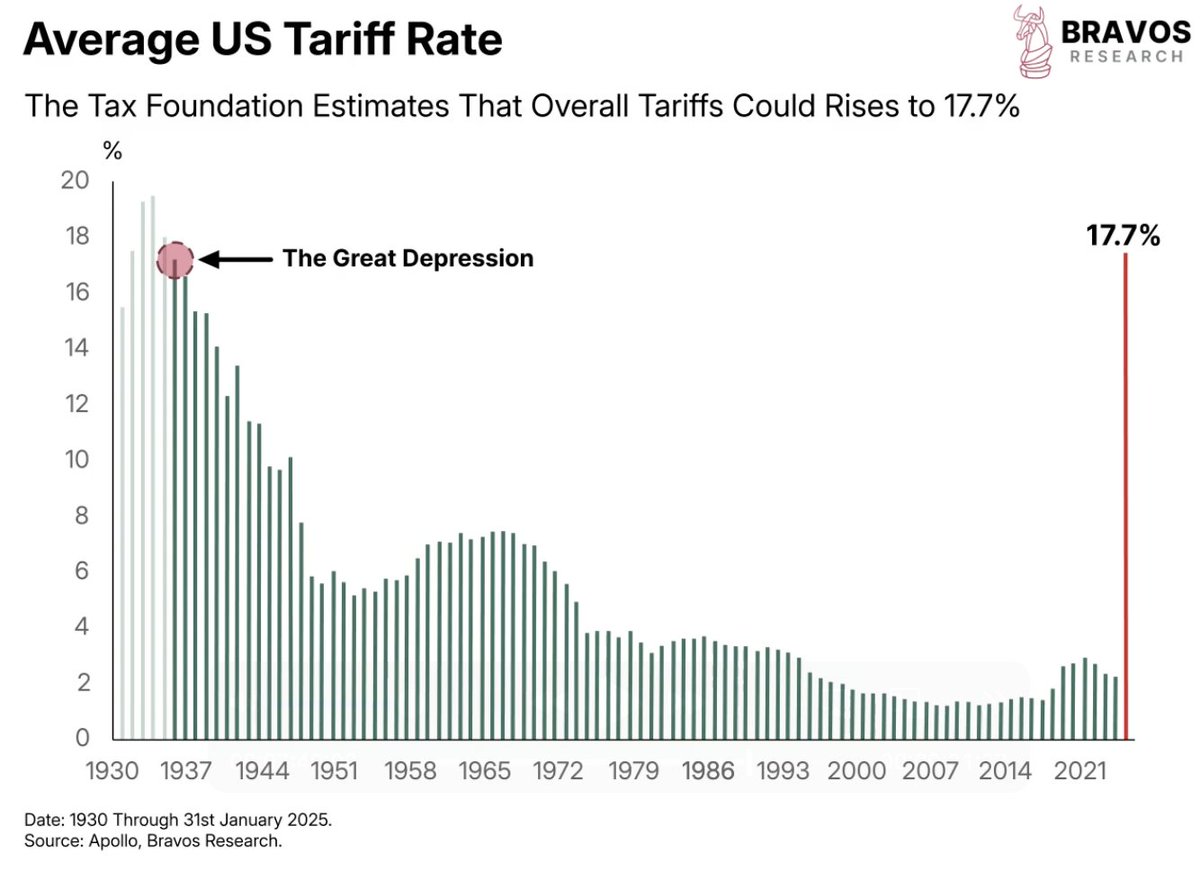
Tariffs are set to rise to 18% under Trump

This level was last seen around the Great Depression

Things are about to get absolutely crazy…

A thread 🧵 Image
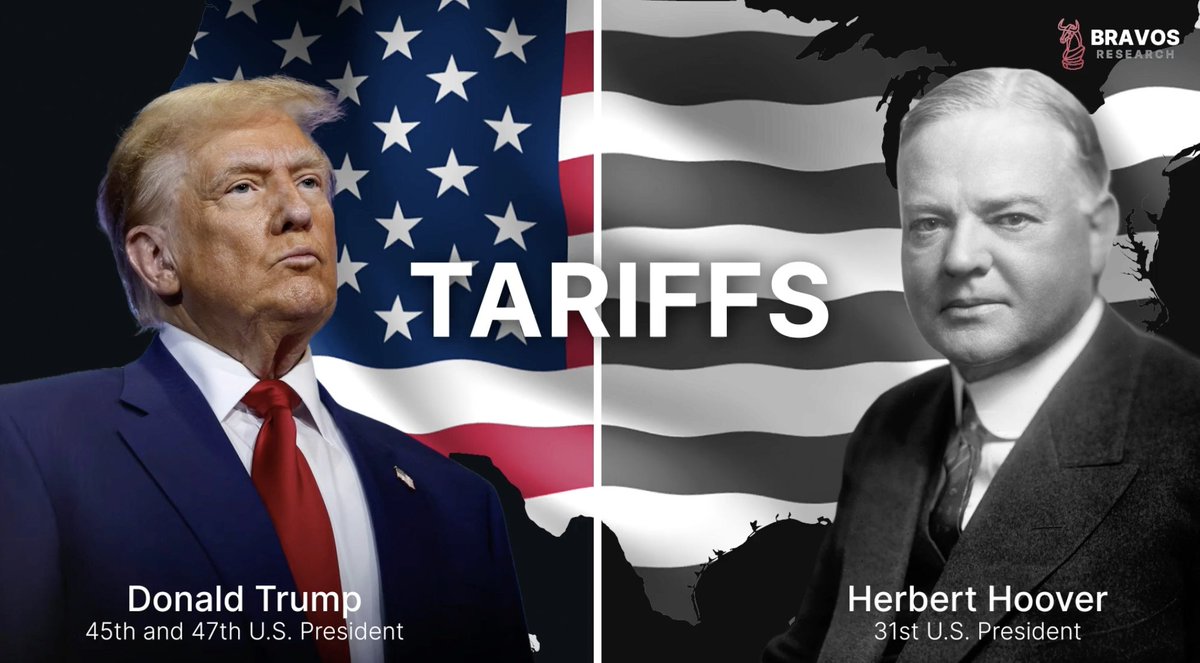
2/ One Trump policy could negatively impact the economy is tariffs

This looks similar to Herbert Hoover’s trade policies

Which contributed to the onset of the Great Depression Image
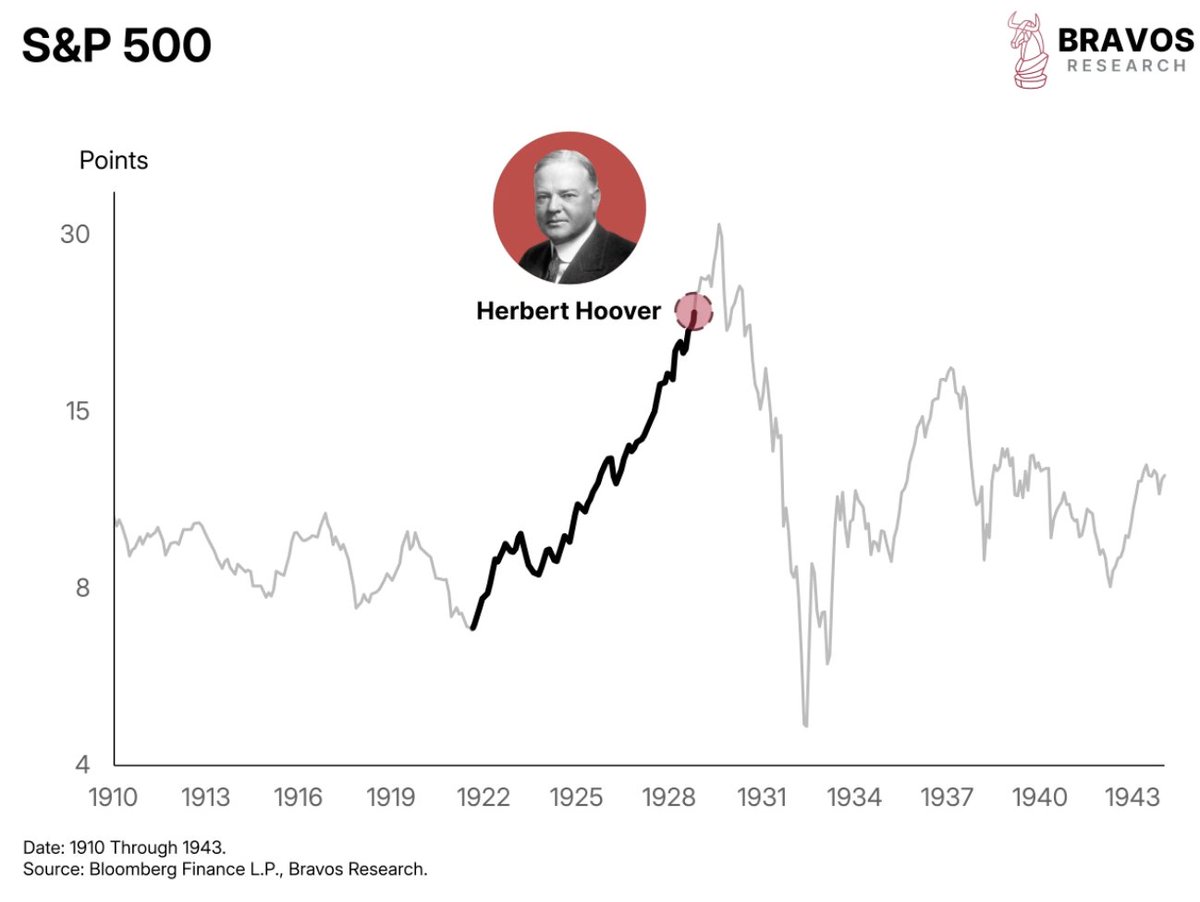
3/ Hoover came to power during a booming market but faced rising wealth inequality - a situation that mirrors today’s conditions

His aggressive tariff policies aimed to address those disparities, but ultimately backfired Image
4/ The Smoot-Hawley Tariffs back then raised US tariff rates to 20%, triggering a global trade war

Many people believe this policy played a major role in the market crash that followed Image
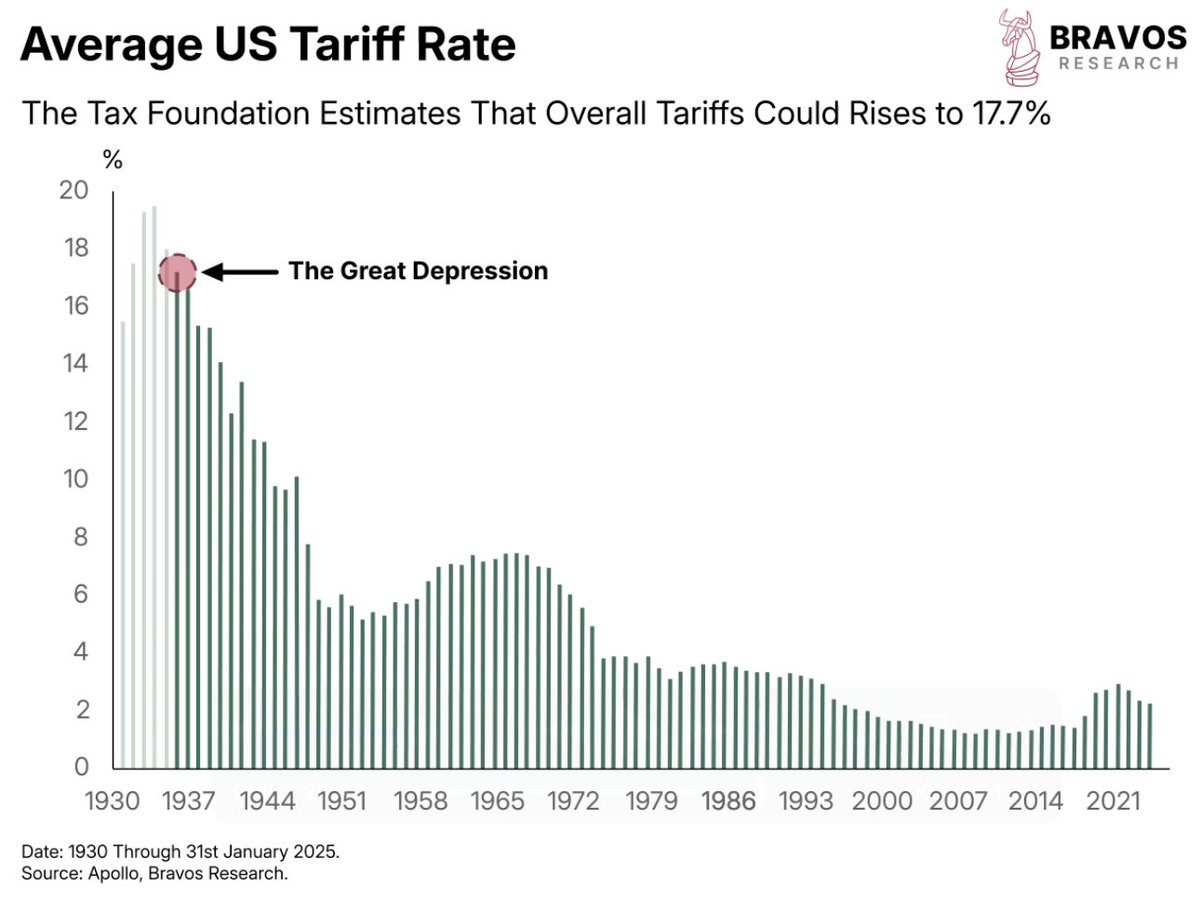
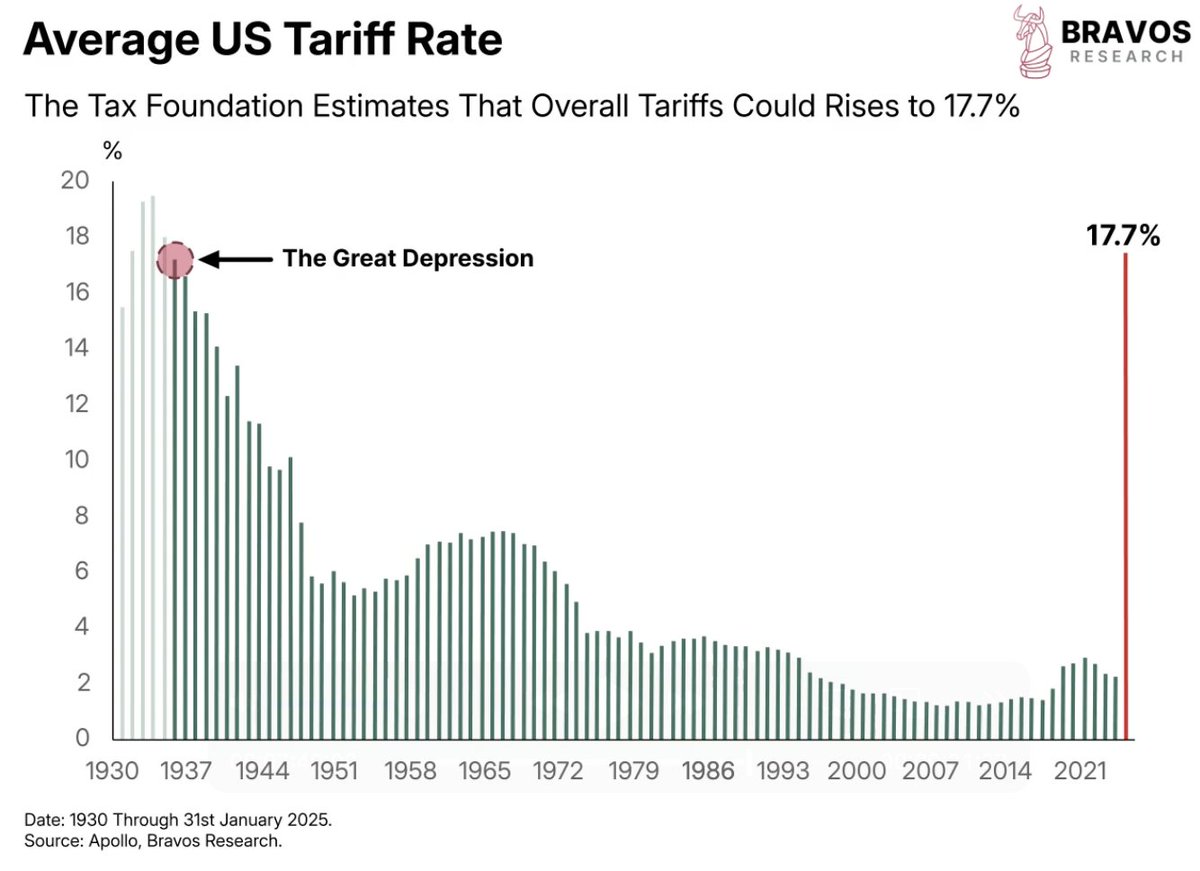
5/ Since then, US tariffs have steadily declined

However, Trump’s proposed trade policies could reverse that trend

Potentially raising rates to nearly 18% - a level that could hurt corporate profits and drag down stock prices Image
6/ For instance, during the Great Depression, profit margins fell from 10–12% to nearly 0%, contributing to a 90% collapse in the US stock market

Tariffs weren’t the only factor behind the crash though - debt, bank failures, and deflation also played roles

Still, trade policies were a significant contributor back then
7/ With corporate profits at all-time highs, a global trade war could reverse that trend

While this might reduce wealth inequality in the long run, falling asset prices could mean considerable short-term financial pain Image
8/ The effects of tariffs wouldn’t be felt immediately though

Studies of past trade wars show a lag of about a year between implementation and economic consequences

Depending on Trump’s actions, the impact could hit by 2026 Image
9/ This strengthens our conviction in an economic downturn in 2026

Don’t forget to join Bravo’s Research competition

And take advantage of the 30% DISCOUNT while it lasts at:

bit.ly/BravosResearch
10/ Thanks for reading!

If you enjoyed this thread, please ❤️ and 🔁 the first tweet below

And follow @bravosresearch for more market insights, finance and investment strategies

• • •

Missing some Tweet in this thread? You can try to force a refresh

 

Keep Current with Bravos Research

Bravos Research Profile picture

Stay in touch and get notified when new unrolls are available from this author!

Read all threads

This Thread may be Removed Anytime!

PDF

Twitter may remove this content at anytime! Save it as PDF for later use!

Try unrolling a thread yourself!

how to unroll video
  1. Follow @ThreadReaderApp to mention us!

  2. From a Twitter thread mention us with a keyword "unroll"
@threadreaderapp unroll

Practice here first or read more on our help page!

More from @bravosresearch

May 8
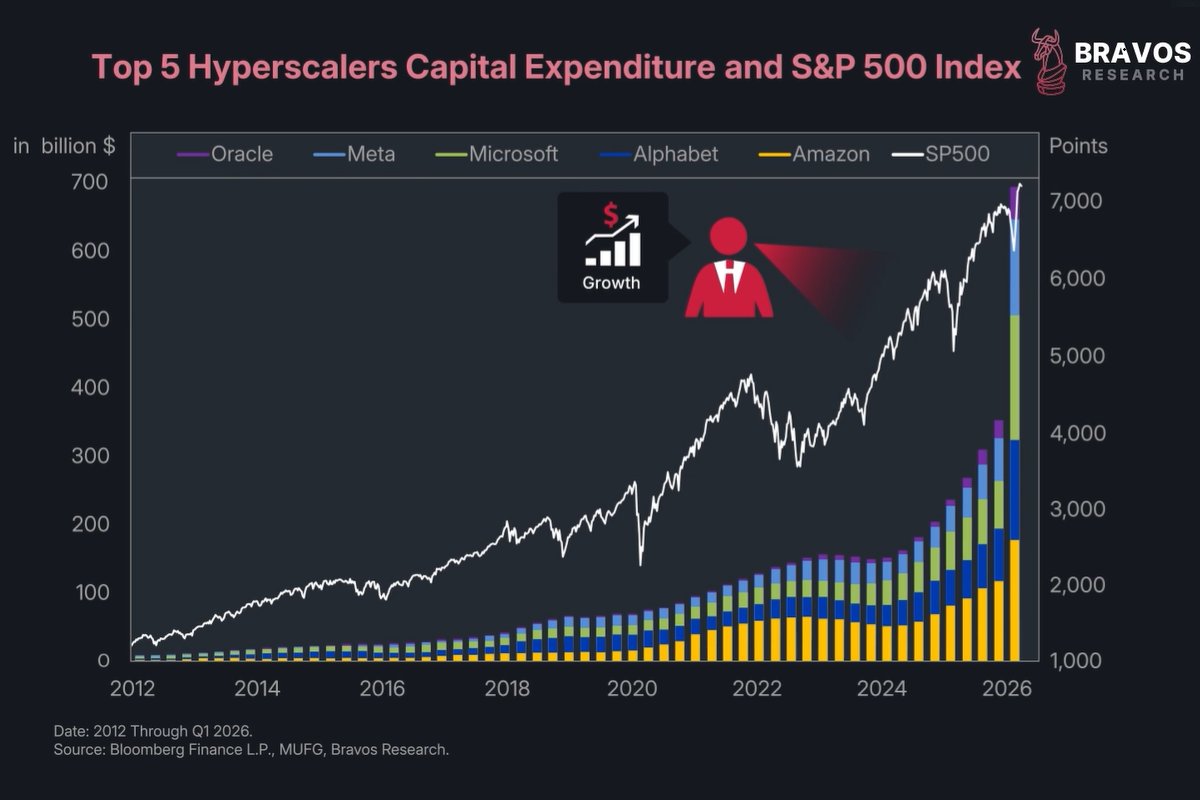
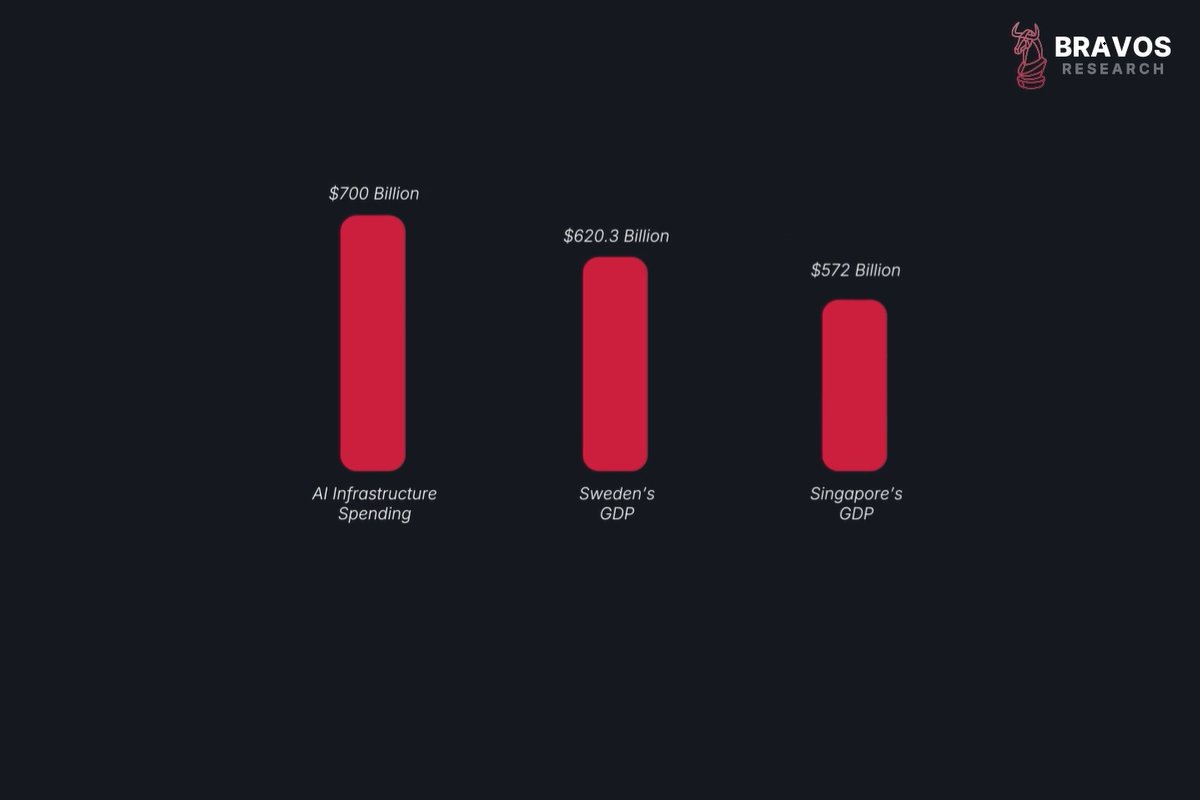
Hyperscalers are set to spend $700 billion on AI infrastructure this year.

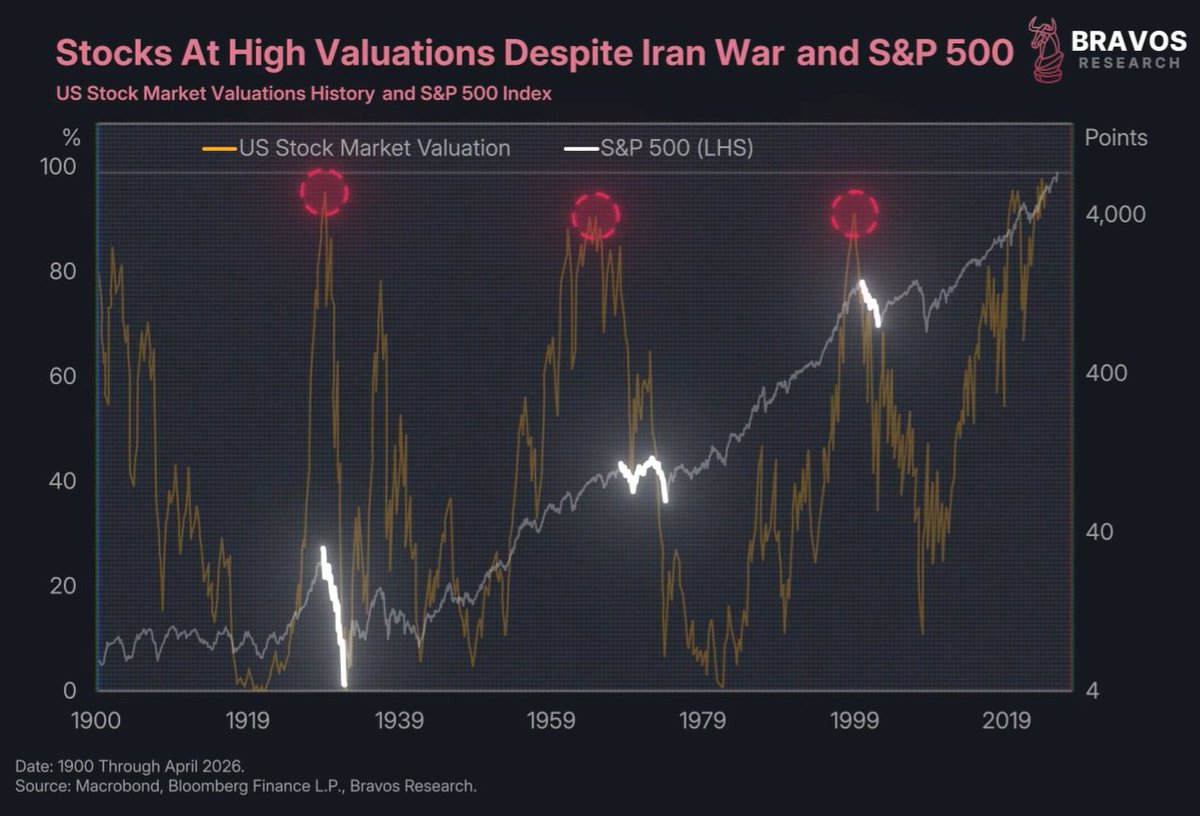
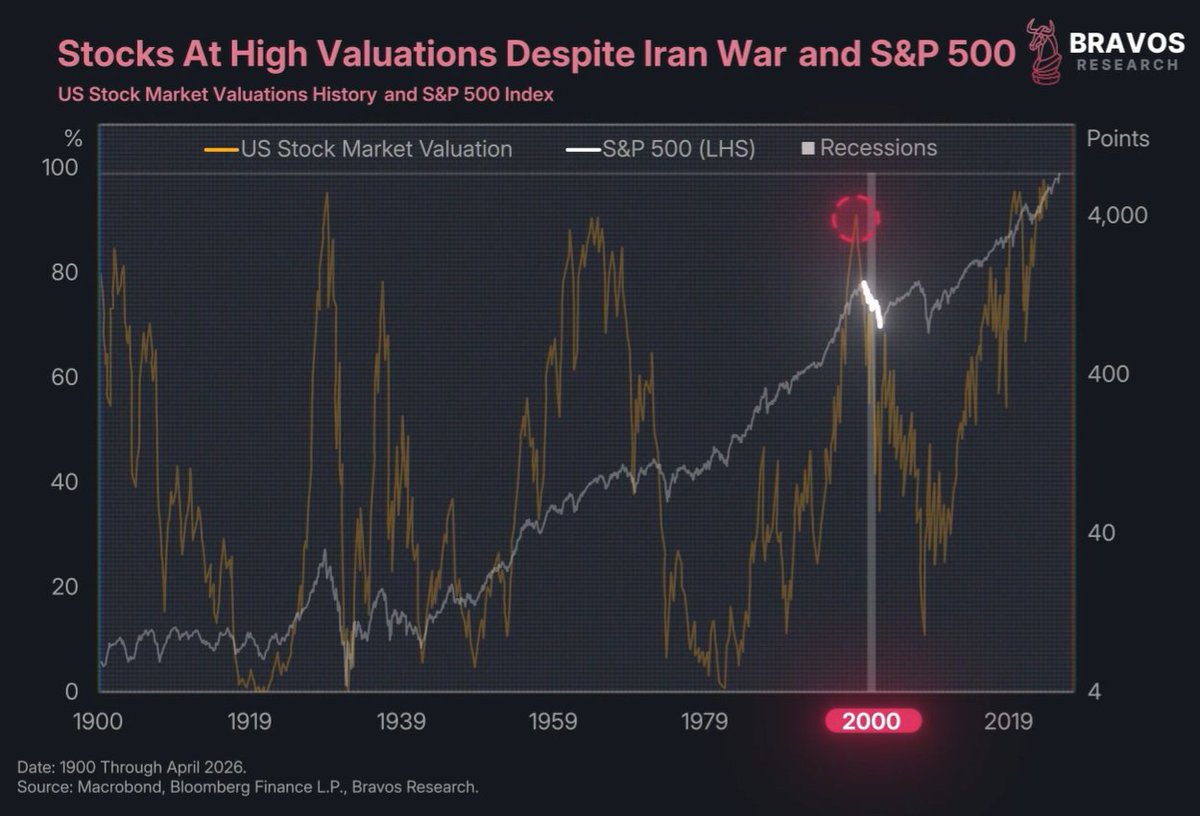
Investors are already comparing today’s AI boom to the 2001 internet bubble.

But the underlying economy may be telling a completely different story…

A thread 🧵 Image
2/ Microsoft, Amazon, Meta, Alphabet, and Oracle are expected to spend $700 billion this year alone on AI infrastructure.

That's more than the entire GDP of developed nations like Sweden or Singapore. Image
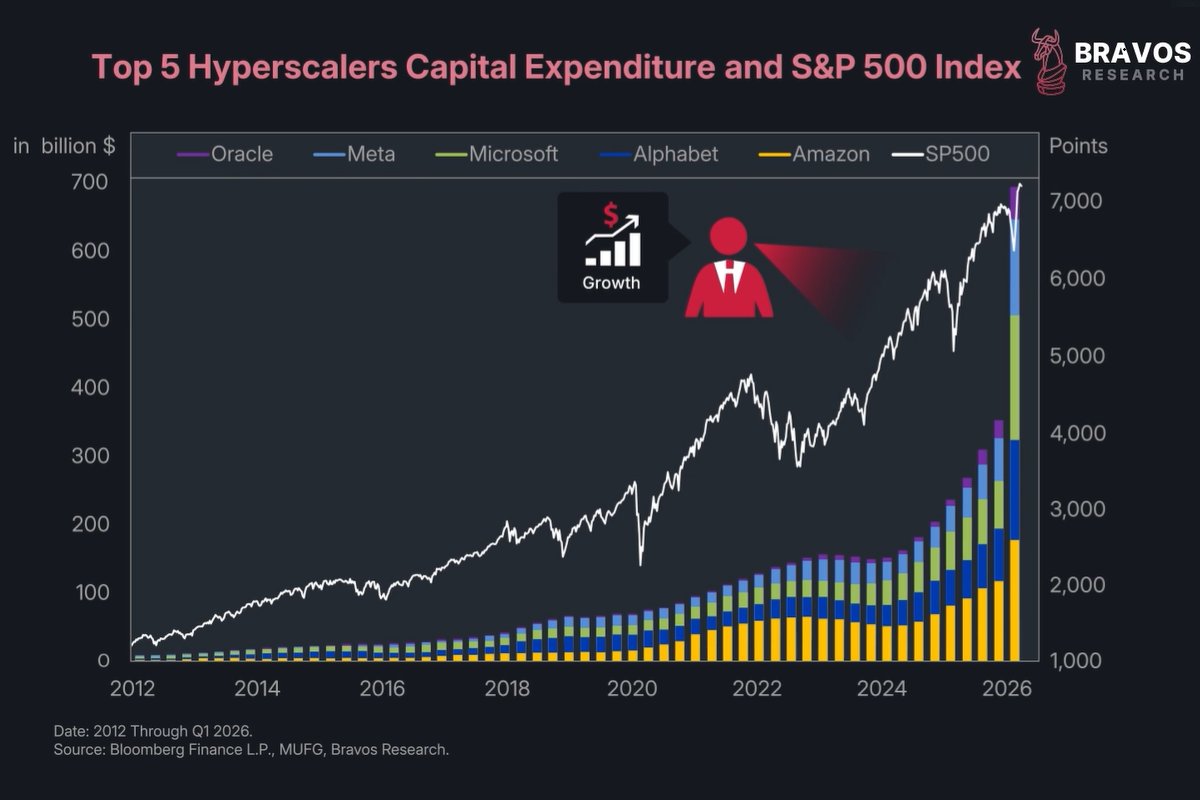
3/ This spending spree has probably been the single biggest force driving the stock market over the past few years.

Investors see this massive spending and assume that it will translate into significant future growth.

And since these companies make up a large portion of the market, their spending has the power to lift the entire index with them.Image
Read 20 tweets
May 6
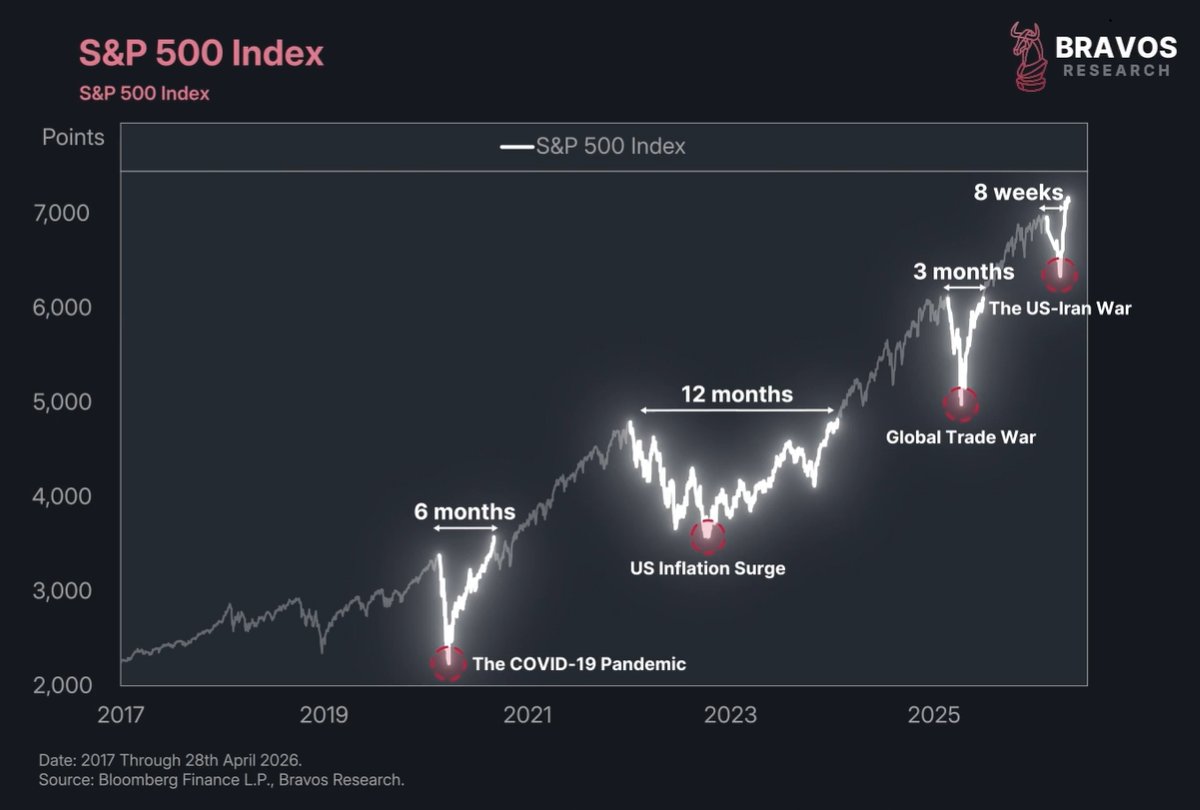
Major market drawdowns have proven to be exceptional buying opportunities

But the forces behind this buy-the-dip psychology are now reversing…

A thread 🧵 Image
2/ The stock market has often recovered quickly from major macro shocks, including:

- 6 months after the pandemic
- 12 months following 50-year high inflation
- 3 months after a trade war disruption

Recently, the Iran war has disrupted global oil supply, but the market recovered to ATHs within just a few weeks.Image
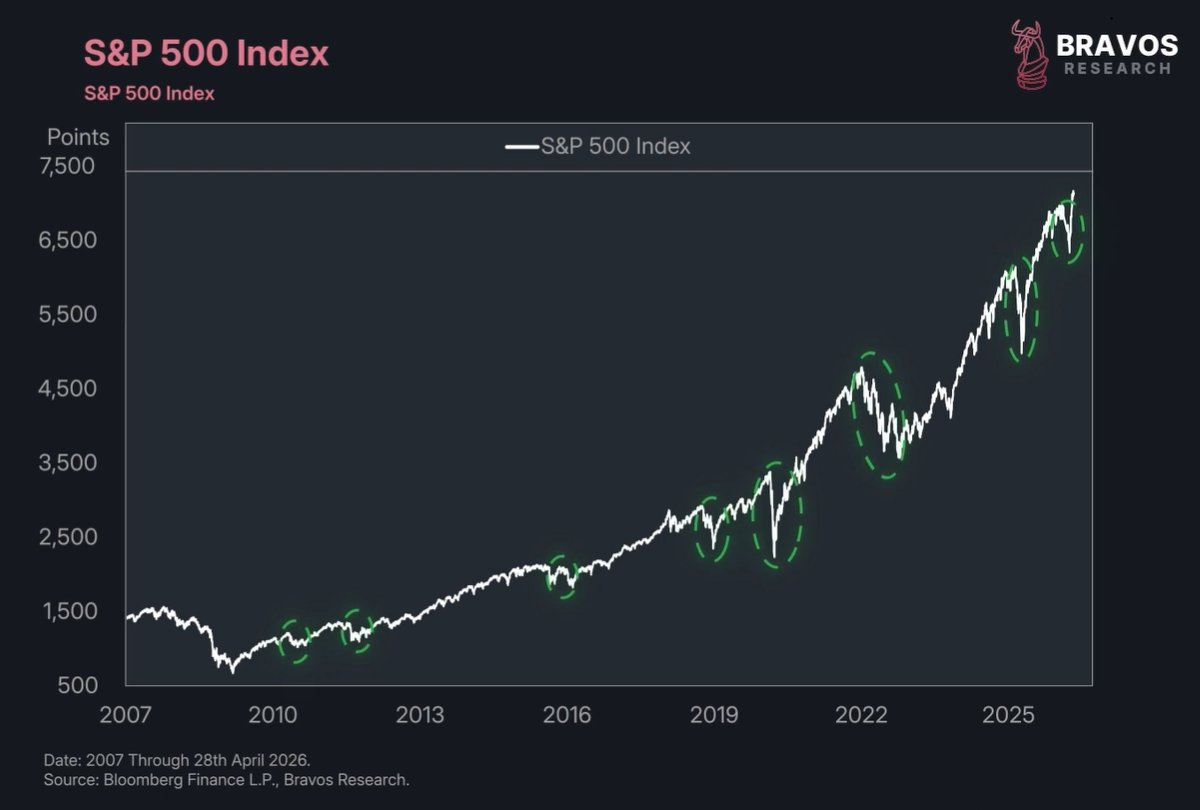
3/ We've seen a similar pattern play out multiple times over the last 15 years.

Every single correction was immediately followed by a market rally.

But today, the forces behind this buy-the-dip mindset are reversing. Image
Read 22 tweets
Apr 30
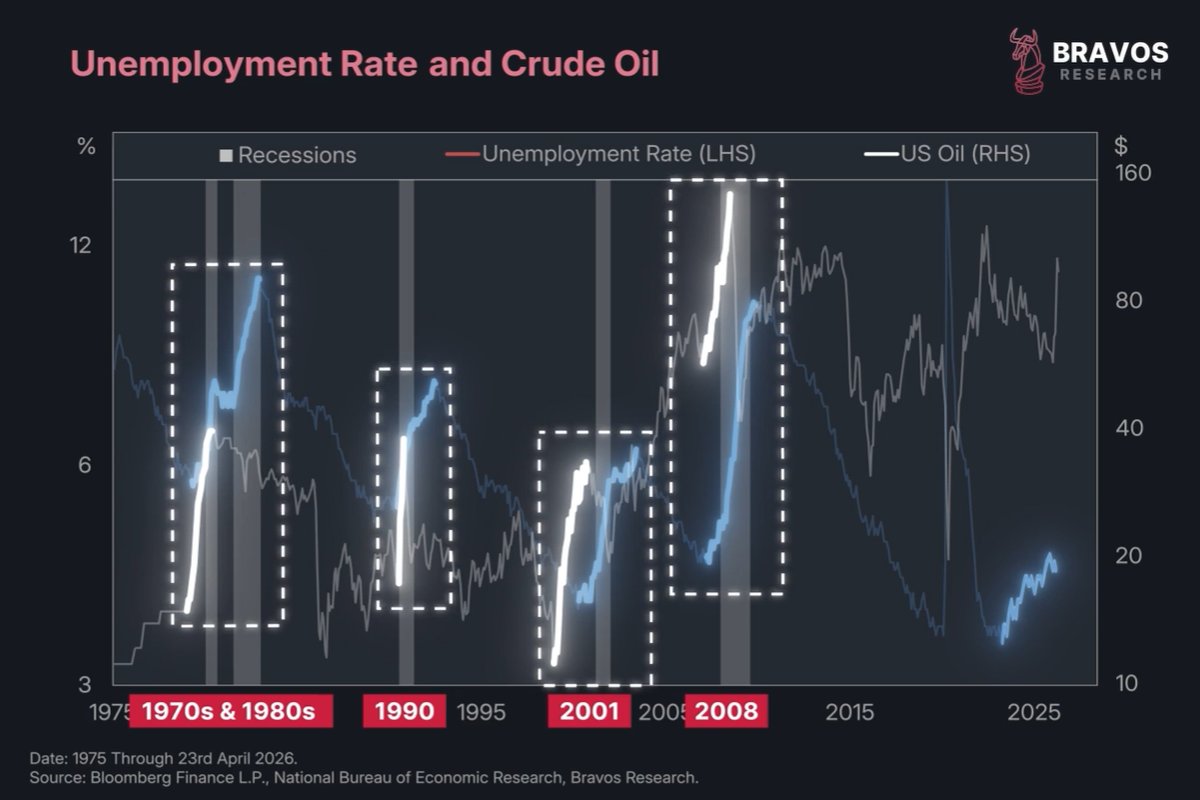
Oil shocks have systematically coincided with a rising unemployment rate

This happened in the 1970s, 1990, 2001, and even 2008

But there is one big difference this time around…

A thread 🧵 Image
2/ The US stock market has just made its fastest 10% jump since May 2025.

We’ve only seen similar moves 4 other times since 2009: April 2020, January 2019, October 2011, and March 2009.

And each of these rallies were followed by more upside on the stock market. Image
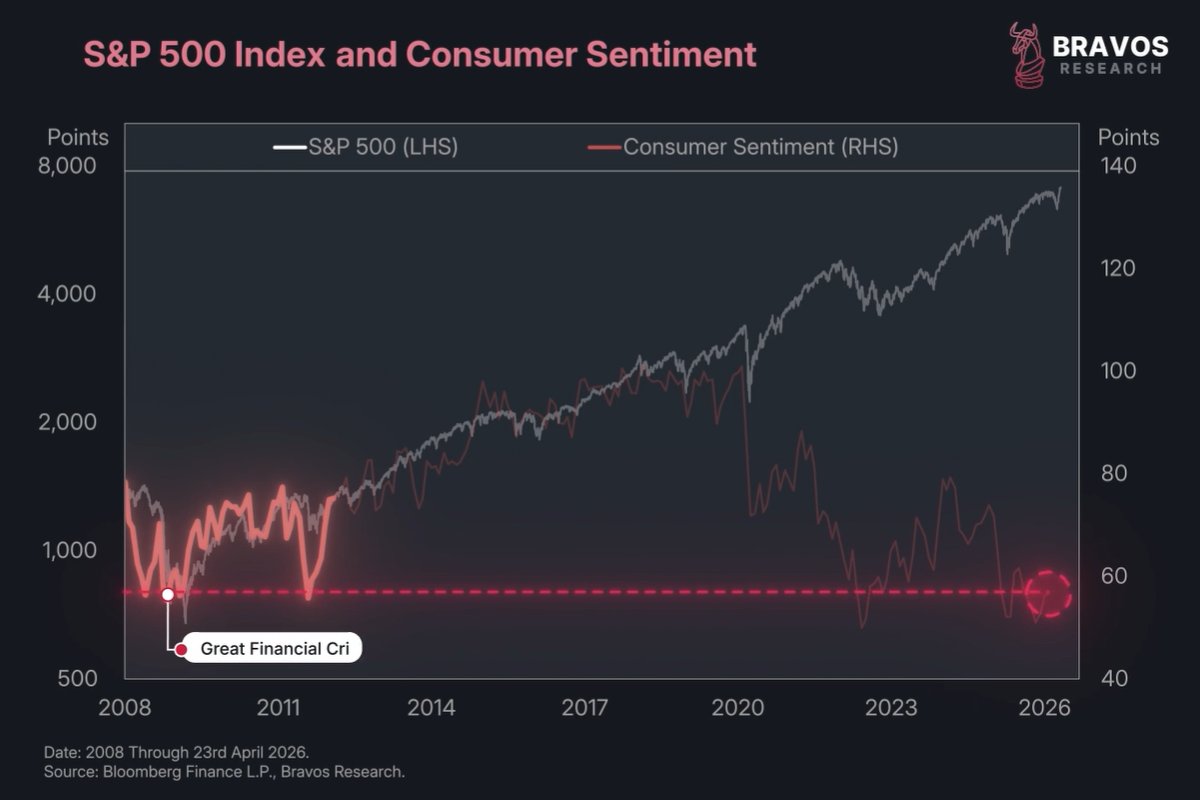
3/ On the other hand, the University of Michigan Consumer Confidence Survey just hit levels weaker than during the heart of the financial crisis.

This is a survey that tells us how people feel about the future of their own financial situation and the economy.

So the war in Iran is certainly not making everyday people more optimistic about the economy, unlike what investors seem to be pricing into the stock market.Image
Read 26 tweets
Apr 28
The US stock market just hit record highs despite a major oil shock

Historically, such oil shocks have triggered economic recessions

Is this time different?

A thread 🧵 Image
2/ After some talks of a ceasefire, oil prices went down and stocks reached new ATHs.

But oil is still 40% up from its pre-war levels.

Shouldn't the economic drag of a 40% oil jump prevent the stock market from hitting record highs? Image
3/ What many people miss is that this has less to do with the S&P 500 itself and more to do with the currency it’s priced in - the US dollar.

And this is leading us straight into what we think is one of the biggest investment opportunities in the last 10-years. Image
Read 24 tweets
Apr 23
Inflation is closely following the footsteps of the 1970s

Economists are wrong about what’s coming next…

A Thread 🧵 Image
2/ The price of oil is up nearly 70% over the last few months.

And at the same time the prices of many other raw materials that power the modern economy have jumped up as well:

- Wheat → 14%
- Cotton → 15%
- Soybean → 17%
- Aluminum → 29% Image
3/ The aggregate commodity index has risen by approximately 30% over the course of the last 6-months.

And it has reached the highest levels since 2022, where it was positioned during the oil shock caused by the Russian invasion of Ukraine. Image
Read 23 tweets
Apr 6
1973, 1979, 1990 - all 3 of them saw an oil shock

Each one triggered major market stress and led to an economic downturn

With oil spiking 60% in just 1 month, is history repeating itself?

A thread 🧵 Image
2/ Since the start of the war in Iran the price of US treasury bonds have declined by nearly 5%.

That may not sound like a lot, but it translates to roughly $1.2 trillion being wiped out.

And any further weakness from here could quickly escalate into a bond market panic. Image
3/ When bond prices fall, bond yields rise.

The yield on a 30-year treasury note is attempting to move up above the 5% level once again.

And the war in Iran is directly impacting the bond market.

This could easily drive yields much higher, putting more pressure on the financial system.Image
Read 24 tweets

Did Thread Reader help you today?

Support us! We are indie developers!


This site is made by just two indie developers on a laptop doing marketing, support and development! Read more about the story.

Become a Premium Member ($3/month or $30/year) and get exclusive features!

Become Premium

Don't want to be a Premium member but still want to support us?

Make a small donation by buying us coffee ($5) or help with server cost ($10)

Donate via Paypal

Or Donate anonymously using crypto!

Ethereum

0xfe58350B80634f60Fa6Dc149a72b4DFbc17D341E copy

Bitcoin

3ATGMxNzCUFzxpMCHL5sWSt4DVtS8UqXpi copy

Thank you for your support!

Follow Us!

:(