Some excerpts from the first two chapters of "Russia Under the Bolshevik Regime" (Richard Pipes), that cover the Russian Civil War. The first phase of the war was fought primarily by non-Russian forces: Latvians on the side of the Reds, Czechoslovaks on the Whites. 
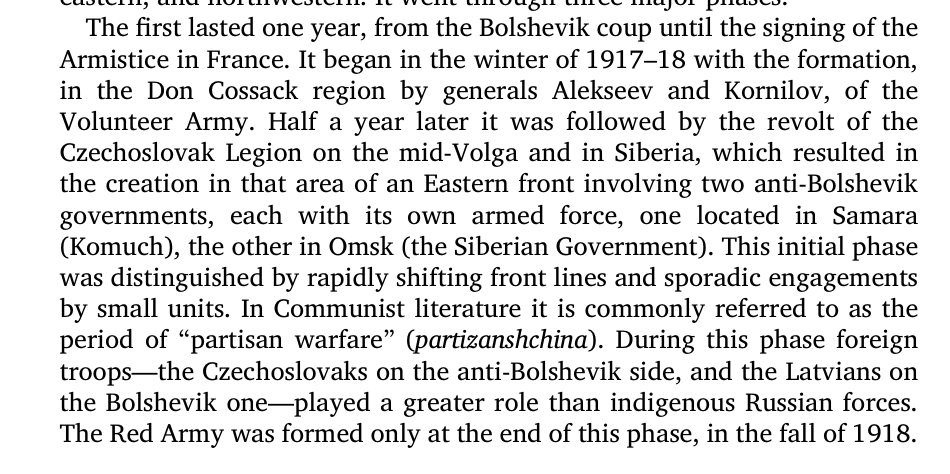
Troop numbers were generally small; much like the colonial wars of 18th century North America, a few hundred or few thousand men in the right place could decide the fate of continents.

The Reds started with a huge population advantage, industrial advantage (Whites relied on foreign weapons), Tsarist stores, unified command, and the central position. Analogous to US Civil War. That the Whites came close to winning suggests they had better morale and leadership.

Reds had both ~10x as many troops and ruled an ethnically homogenous (overwhelmingly Great Russian) population, while Whites had to make do with Cossacks and various fringe groups. Ethnic diversity taken axiomatically as a weakness.


The Cossacks were poor allies for the Whites, as they didn't especially care for Russia as a whole, only their own territories and wealth. This came back to bite them when the Bolsheviks won (and genocided them).
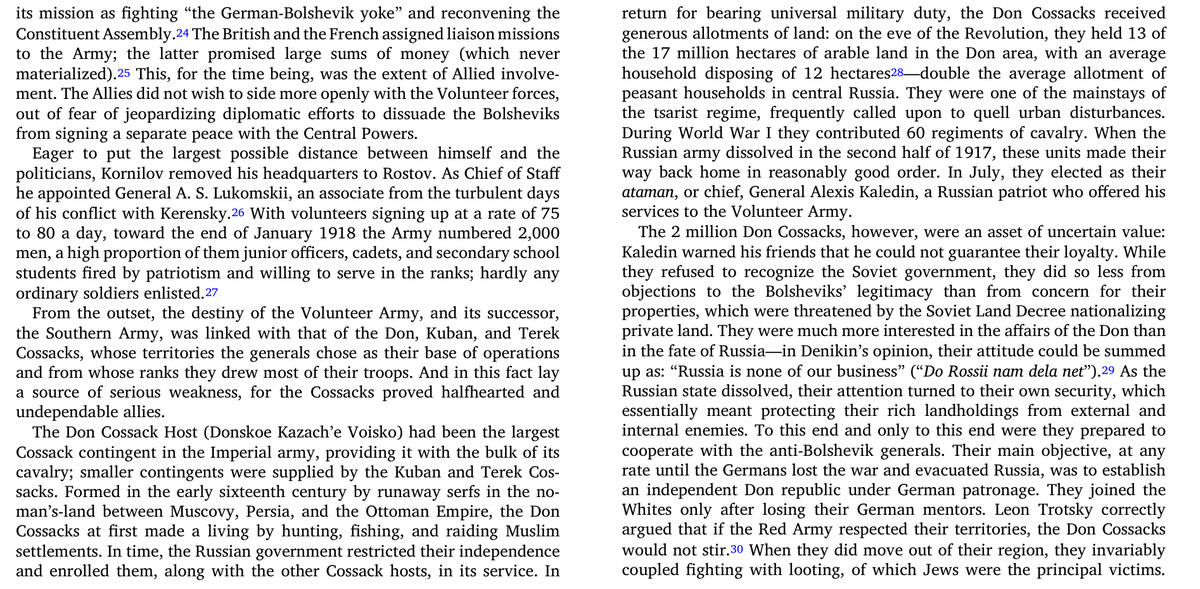
The Eastern Front (Siberia) was started by the Czechs; multiple Siberian govts popped up, fought each other, and collapsed, before Admiral Kolchak was unwillingly placed in charge.

In the crucial early months of the Civil War, the *only* significant military force the Bolsheviks had were the Latvian Rifles. If a *single* division-sized patriotic Russian unit had remained intact, the Bolsheviks probably would've lost quickly.


Allies mostly backed the Whites to try to reopen the Eastern Front of WW1, and forced various Siberian governments together.

Denikin, in command of the volunteer army, had the opportunity to try to capture Tsaritsyn and link up with Kolchak, the official leader of the Whites and the one with the most territory/Allied support. But he chose to secure his rear, and the Whites were defeated in detail.


The SRs (the most popular socialist group in Russia) and Mensheviks dithered on whether to support the Bolsheviks, but generally chose them over the Whites. The Bolsheviks repaid the favor by purging them.


Most of the new Red Army officer corps was composed of old Tsarist officers. After the Reds won, most of them were purged.

Trotsky wasn't much of a general, but he could resolve disputes between different Red factions and bolster troop morale.

The Reds used mass executions, including of family members, to try to stop desertions from the Red Army, but it didn't work very well.

There was no concerted Allied intervention. The French propped up the Poles, the Japanese tried to annex the Russian Far East, and the Americans sent in troops to stop the Japanese. Only the British really intervened in the Russian Civil War itself.


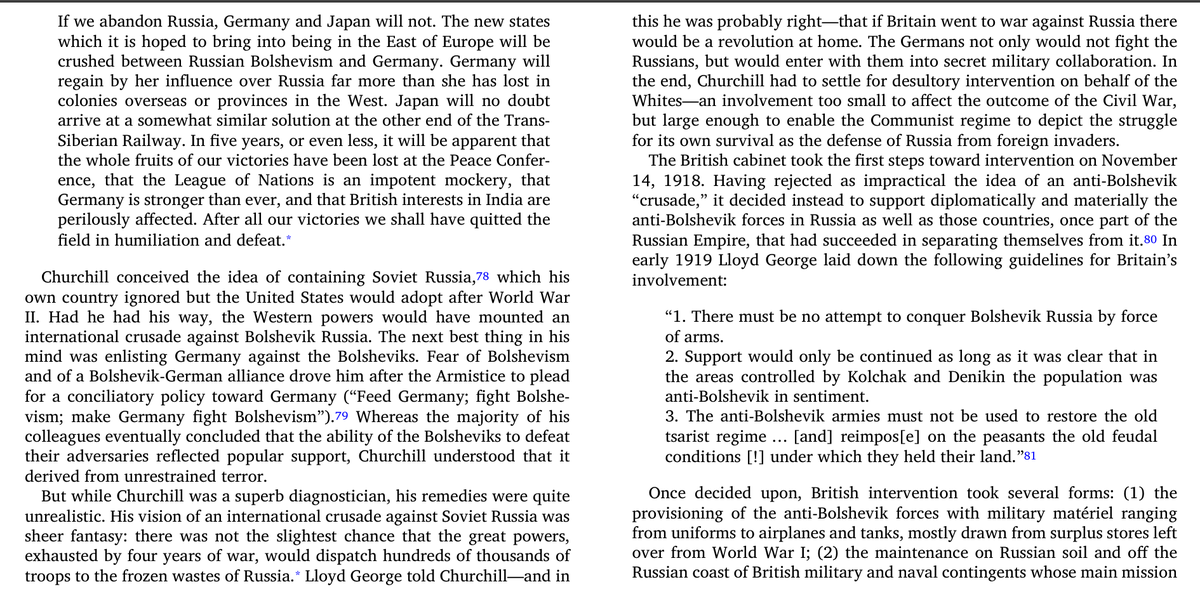
Lenin thought there would be concerted capitalist intervention, but most Allied leaders just wanted to stop the war or were sympathetic to the Reds. Only Winston Churchill (who doesn't get enough credit) understood how dangerous Bolshevism was.
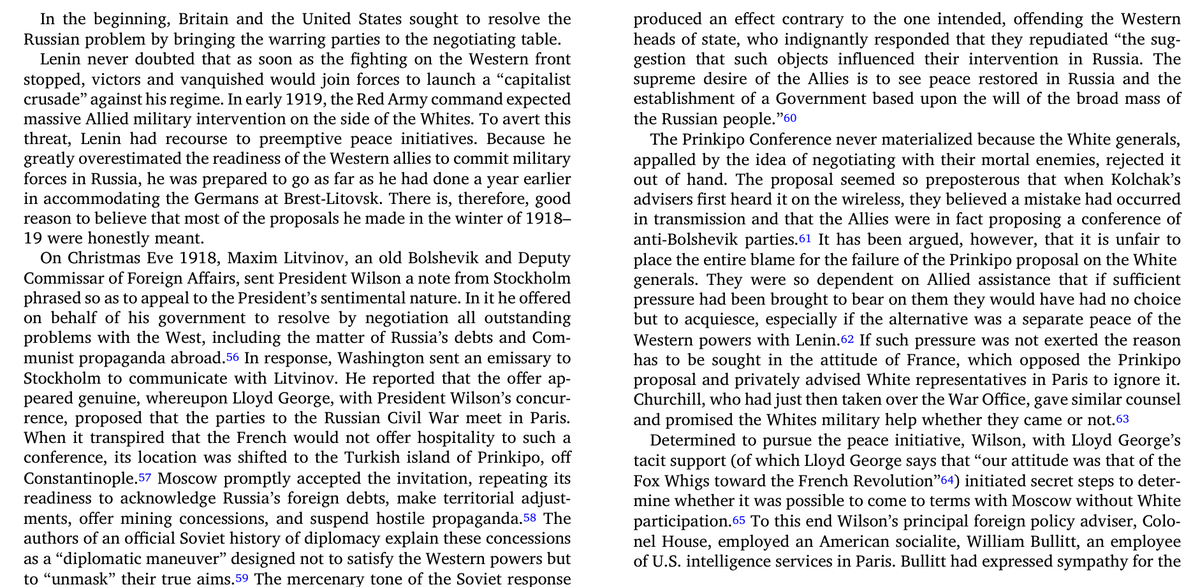


Only Churchill really wanted an anti-Bolshevik crusade.
Kolchak, with the Czechs and British logistical support, did very well until March 1919, and was nearly recognized by the Allies as legitimate ruler of Russia, which would've gained him far more support (cf Finland, Poland, Baltics). But they dithered, and he lost.


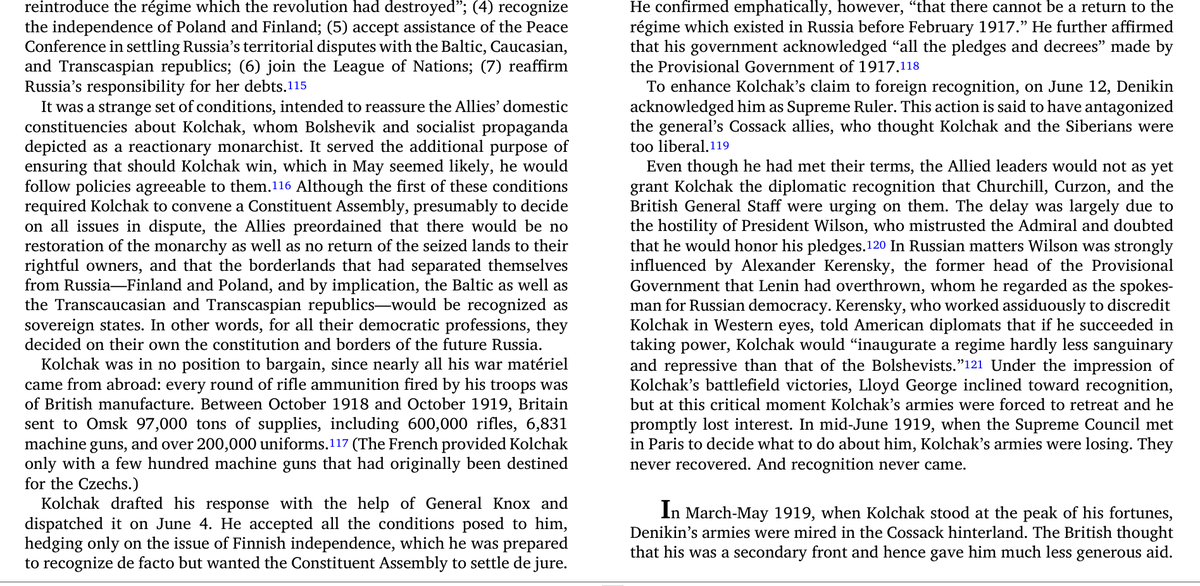
One of the biggest problems the Whites had: they didn't see themselves as the Russian govt, only the army, and so couldn't recognize the independence of Russian borderlands. This probably lost them the war when Poland signed a truce with the Reds during Denikin's drive on Moscow.


The Bolsheviks gained Polish cooperation by promising them whatever borders they wanted in exchange for a truce. Of course, they reneged as soon as the Whites were out of the picture and Stalin eventually conquered and enslaved Poland for decades.

This is one of the advantages of a centralized command; the Reds could make and break deals (with Makhno, with the SRs, with Poland and Finland and the Baltics, with the Allies, etc) at will with the Central Committee's decision. The Whites couldn't do that.
One of the biggest lessons of the RCW: Never, ever sign a deal with the Bolsheviks. The Whites and Churchill understood this; no one else did and pretty much all of them (most of Bolsheviks themselves included) wound up shot, starved, or enslaved for their troubles.
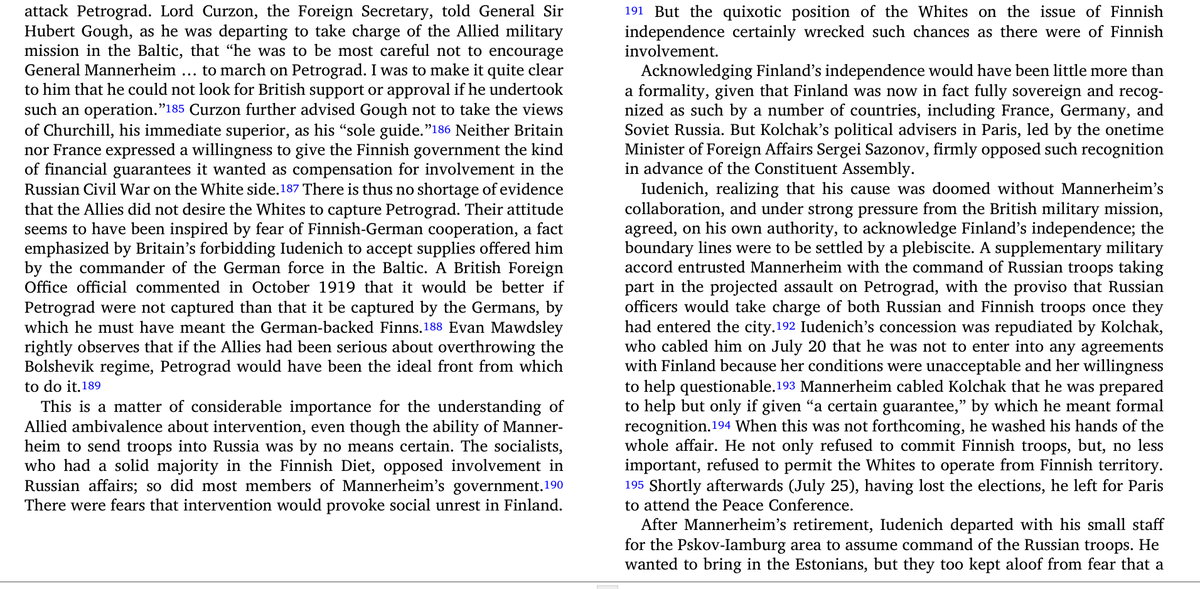
Similarly, Iudenich, another White general, moved from Estonia with UK naval support and threatened Petrogad, advancing against a Red force 5x his size. But he could not recognize Finnish independence (no authority), and the Finns left him hanging before he could take the city.

The Baltics seized the opportunity to negotiate with the Reds for independence in exchange for basically ending the northwestern front of the Civil War. No prizes for guessing what happened to them 20 years later.

Makhno's anarchist Blacks were one of the minor factions of the war. They fought both sides, but cut Denikin's supply lines at a crucial moment during the drive for Moscow. For their service, Trotsky exterminated them after the Whites were beaten (well deserved).

After Kolchak's defeat, the Brits throttled back aid for the Whites, right when Denikin was closest to victory, citing the expense. Churchill claimed most of the expense was sunk-cost military surplus anyways (very familiar to Ukraine War supply debates today).

Three big lessons from the RCW:
1) Never, ever sign a deal with the Commies.
2) A smidge more patriotism from the Russian masses would've saved them from Communism. Political apathy: good in WW1, awful here.
3) Multiple ways the Whites could have won; history is very contingent.
1) Never, ever sign a deal with the Commies.
2) A smidge more patriotism from the Russian masses would've saved them from Communism. Political apathy: good in WW1, awful here.
3) Multiple ways the Whites could have won; history is very contingent.


• • •
Missing some Tweet in this thread? You can try to
force a refresh