Lent marks Christ's 40 days in the Judaean Desert, where he's confronted by Satan.
Their clash is an epic philosophical showdown, and a masterclass in beating temptation.
Here's how it unfolds — and how to crush temptation yourself... (thread) 🧵
Their clash is an epic philosophical showdown, and a masterclass in beating temptation.
Here's how it unfolds — and how to crush temptation yourself... (thread) 🧵

Christ's battle with temptation isn't only that — it's a battle for the soul of all humanity.
Satan tempts Jesus to:
• Make bread from stones to end his hunger
• Jump from a pinnacle to prove his divinity
• Bow to Satan and rule the world in return
Satan tempts Jesus to:
• Make bread from stones to end his hunger
• Jump from a pinnacle to prove his divinity
• Bow to Satan and rule the world in return

But Jesus proves himself at each turn by flatly denying Satan.
The story is only brief in the Gospels, but John Milton's "Paradise Regained" expands it, exposing the nature of temptation — and how to destroy it for good.
The story is only brief in the Gospels, but John Milton's "Paradise Regained" expands it, exposing the nature of temptation — and how to destroy it for good.

In Milton's prequel, Paradise Lost, Satan corrupts Adam and Eve by appealing to Man's original sin: pride.
Repeating this, thinks Satan, will be straightforward, for Jesus is merely human...
Repeating this, thinks Satan, will be straightforward, for Jesus is merely human...

After 40 days in the wilderness without food, Satan confronts Jesus and tempts him to transform stones into bread.
There's a lesson here already: temptation greets us in our most vulnerable moments.
There's a lesson here already: temptation greets us in our most vulnerable moments.
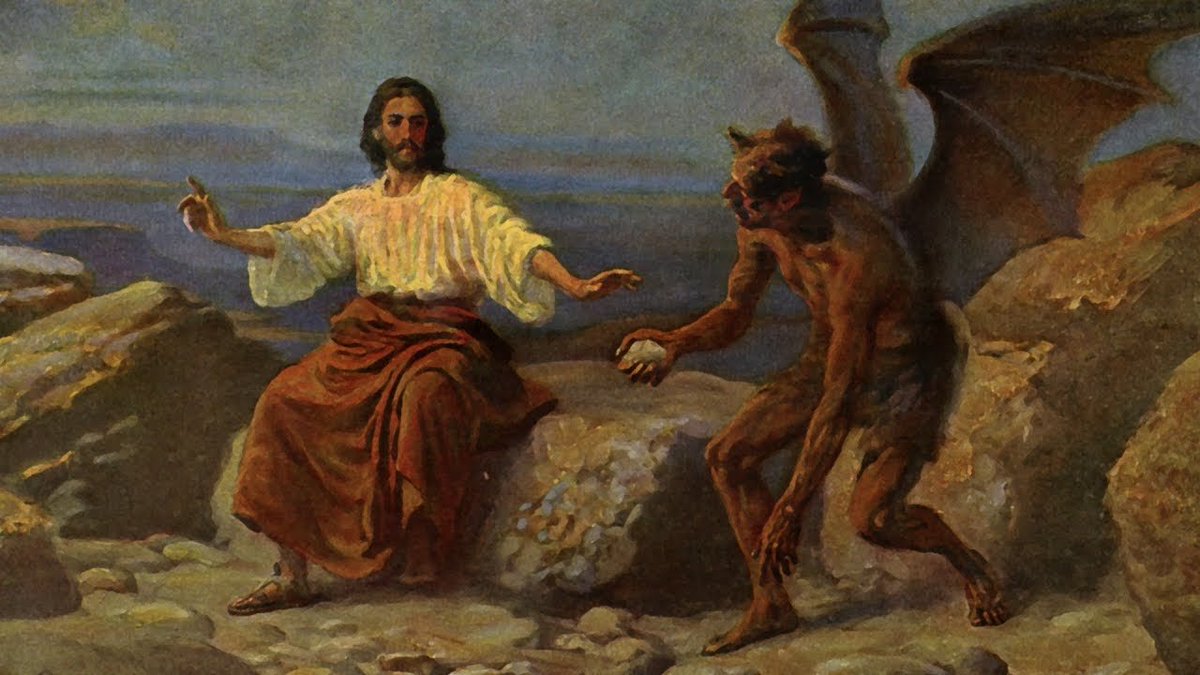
A conversation then follows in which Christ dismantles each of Satan's temptations through moral reasoning, and Milton's insight lies therein:
Temptation itself is not sin, but the opportunity for virtue...
Temptation itself is not sin, but the opportunity for virtue...

Christ responds first with the virtue of temperance, resisting bodily desires for the sake of higher principles:
"Man lives not by bread only, but each word
Proceeding from the mouth of God"
"Man lives not by bread only, but each word
Proceeding from the mouth of God"

When it's clear that Jesus won't respond to bodily needs, Satan changes tactic, offering him worldly fame.
How can the prophesied King go without fame and acclaim to rule his people by?
How can the prophesied King go without fame and acclaim to rule his people by?

Christ's response is simple: become king of your own spirit and no external validation will tempt you.
"Yet he who reigns within himself, and rules
Passions, desires, and fears, is more a king."
"Yet he who reigns within himself, and rules
Passions, desires, and fears, is more a king."

Satan then offers Christ dominion over all the kingdoms of Earth, urging him to take action as did the great rulers of history.
If Christ is meant to rule, then surely it is through action, not prophecy...
If Christ is meant to rule, then surely it is through action, not prophecy...

Christ responds with pride's ultimate counter: humility.
“For what is glory but a blaze of fame”
His kingdom will not come about by assertion of will, but by waiting patiently on a higher plan...
“For what is glory but a blaze of fame”
His kingdom will not come about by assertion of will, but by waiting patiently on a higher plan...

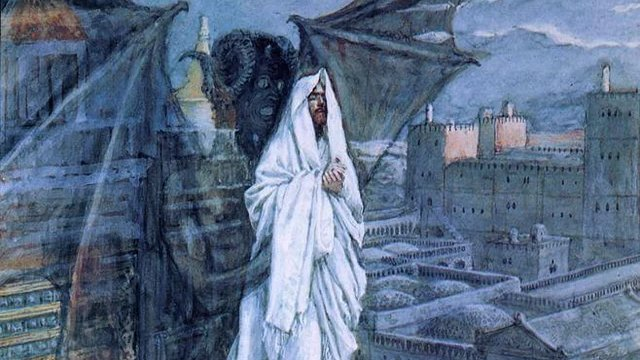
Boiling with frustration, Satan brings Christ to the pinnacle of the temple in Jerusalem.
Demanding to know what's special about him, he insists that he "Cast thyself down", and force angelic intervention to save him (as is written in Psalms).
Demanding to know what's special about him, he insists that he "Cast thyself down", and force angelic intervention to save him (as is written in Psalms).

Christ's response: “Also it is written, ‘Tempt not the Lord thy God.’”
He will indeed be recognized for what he is — but through service, not spectacle.
He will indeed be recognized for what he is — but through service, not spectacle.
Notice, in all this, that Satan never calls Jesus to any obvious evils.
He's called to use his intellect for worldly fame, or take dominion of Earth so he might rule it justly — fundamental "goods", but twisted into prideful actions.
He's called to use his intellect for worldly fame, or take dominion of Earth so he might rule it justly — fundamental "goods", but twisted into prideful actions.
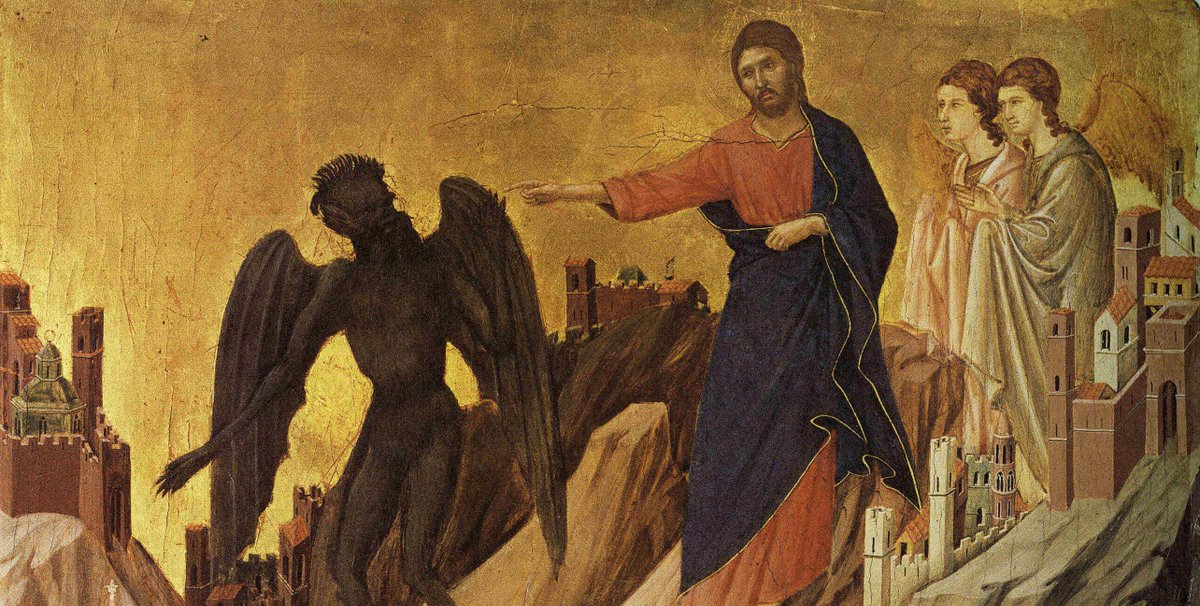
That's the main lesson on the subtlety of temptation.
The most dangerous vices aren't invitations to outright evil, but little corruptions here and there that chip away at our higher calling...
The most dangerous vices aren't invitations to outright evil, but little corruptions here and there that chip away at our higher calling...

Milton's showdown tackles more than just the nature of temptation, but the nature of Christ's divinity itself.
How can Jesus be entirely sinless, yet susceptible to temptation?
How can Jesus be entirely sinless, yet susceptible to temptation?

The answer, it seems, is that Christ is both fully God and fully *man*.
Jesus really did feel genuine human temptation, hunger, ambition, and the desire for recognition.
Jesus really did feel genuine human temptation, hunger, ambition, and the desire for recognition.

He overcame them all, not through miracles, but through reason, faith and virtue.
Christ’s victory in the desert was the perfection of *human* virtues that we can all put into practice.
Christ’s victory in the desert was the perfection of *human* virtues that we can all put into practice.

Eve lost in paradise; Christ won in the wilderness.
It's not the place or struggle that matters, but each and every choice we make...
It's not the place or struggle that matters, but each and every choice we make...

We go much deeper on Milton's epics in our free newsletter.
Do NOT miss tomorrow's email.
120,000+ people read it: art, history and culture 👇
culture-critic.com/welcome
Do NOT miss tomorrow's email.
120,000+ people read it: art, history and culture 👇
culture-critic.com/welcome
• • •
Missing some Tweet in this thread? You can try to
force a refresh