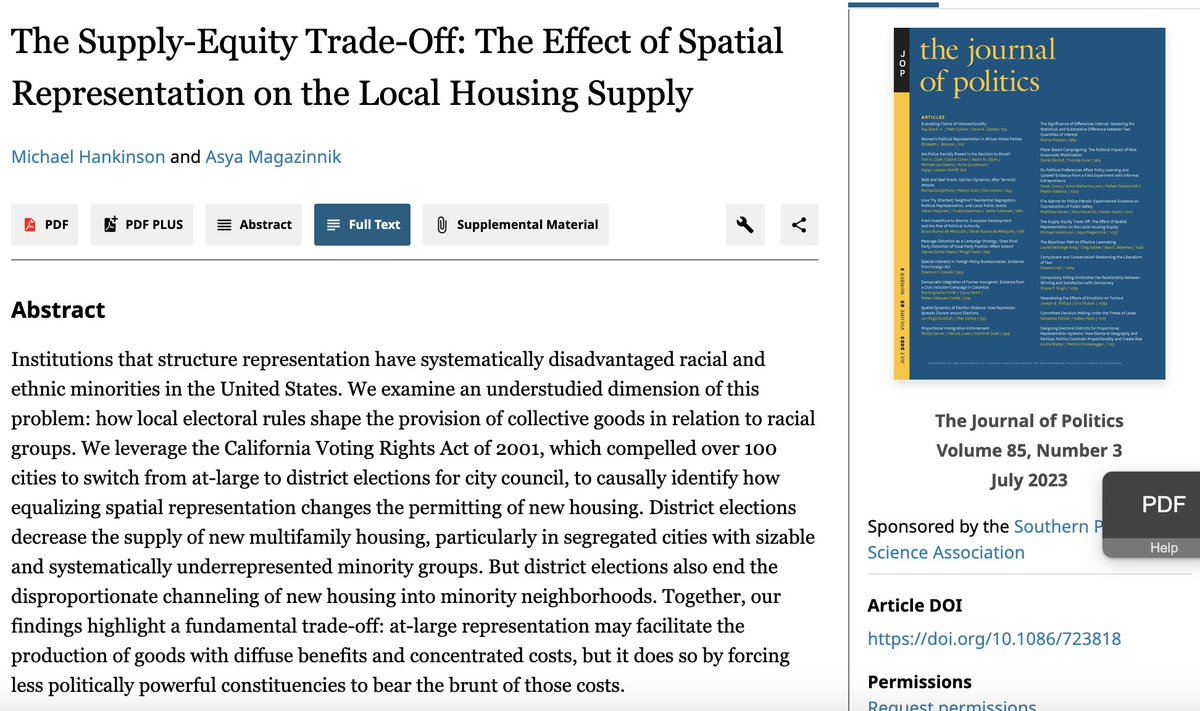
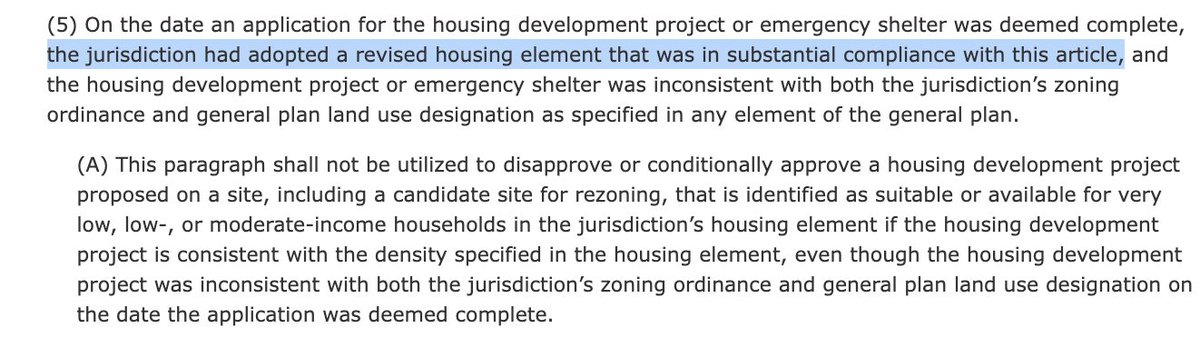
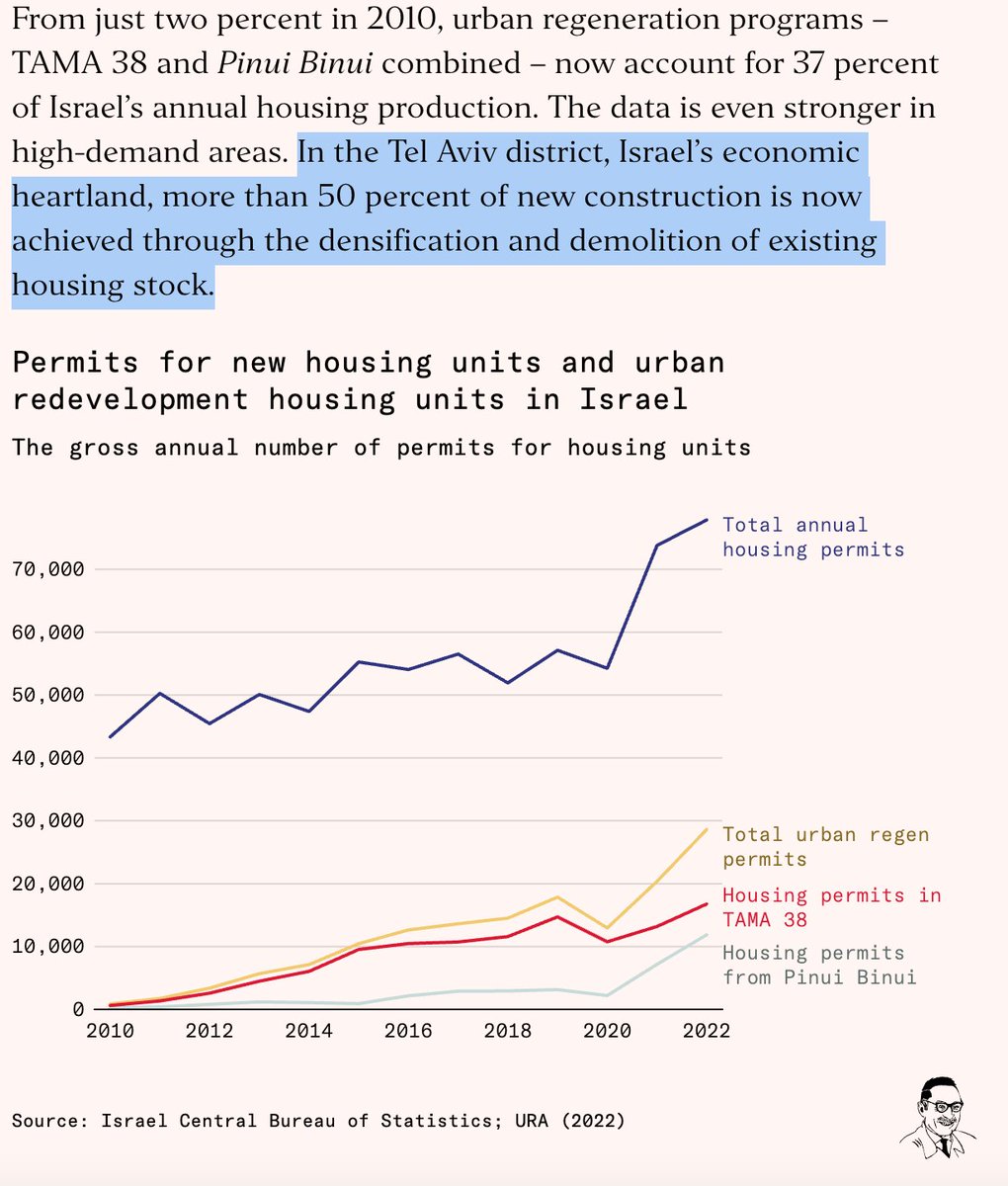
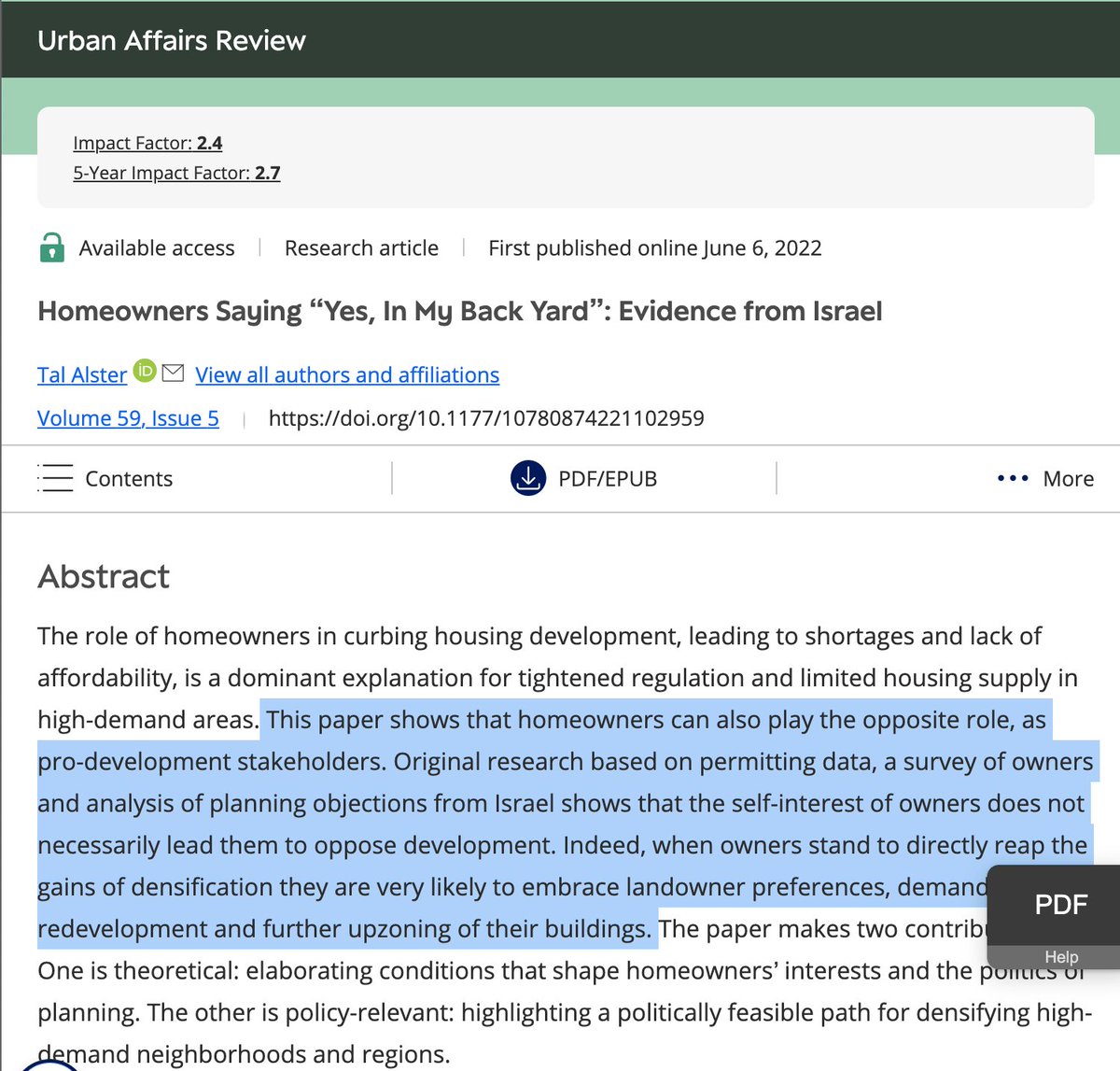
It's exciting to see the public-intellectual drumbeat around "Abundance" manifest in this year's crop of California housing bills.
They're far more ambitious--and promising--than anything I've seen previously. 🧵/17
They're far more ambitious--and promising--than anything I've seen previously. 🧵/17


#1: CEQA reform that's broad, deep, and clean.
@Scott_Wiener's SB 607:
- authorizes admin mapping of good-for-infill areas & greatly simplifies CEQA review of housing in those areas (in line with the recommendations of this...
/2
leginfo.legislature.ca.gov/faces/billNavC…
@Scott_Wiener's SB 607:
- authorizes admin mapping of good-for-infill areas & greatly simplifies CEQA review of housing in those areas (in line with the recommendations of this...
/2
leginfo.legislature.ca.gov/faces/billNavC…
paper, papers.ssrn.com/sol3/papers.cf…, and this @CALittleHoover report, lhc.ca.gov/report/califor…)
- limits the administrative record in all CEQA cases, which will simplify & speed litigation
- limits scope of enviro study for projects that nearly qualify for an exemption
/3
- limits the administrative record in all CEQA cases, which will simplify & speed litigation
- limits scope of enviro study for projects that nearly qualify for an exemption
/3
- may make it easier for lead agencies to defend a finding of no significant impact, i.e., a decision not to prepare an EIR (this part still needs some wordsmithing, I think)
/4
/4

#2: An end to the permitting monopoly.
@ChrisWardCA's AB 258 allows builders of small housing projects (1-10 units) to get their permits from a licensed engineer if city doesn't approve or deny the project in 30 days.
/5
@ChrisWardCA's AB 258 allows builders of small housing projects (1-10 units) to get their permits from a licensed engineer if city doesn't approve or deny the project in 30 days.
/5
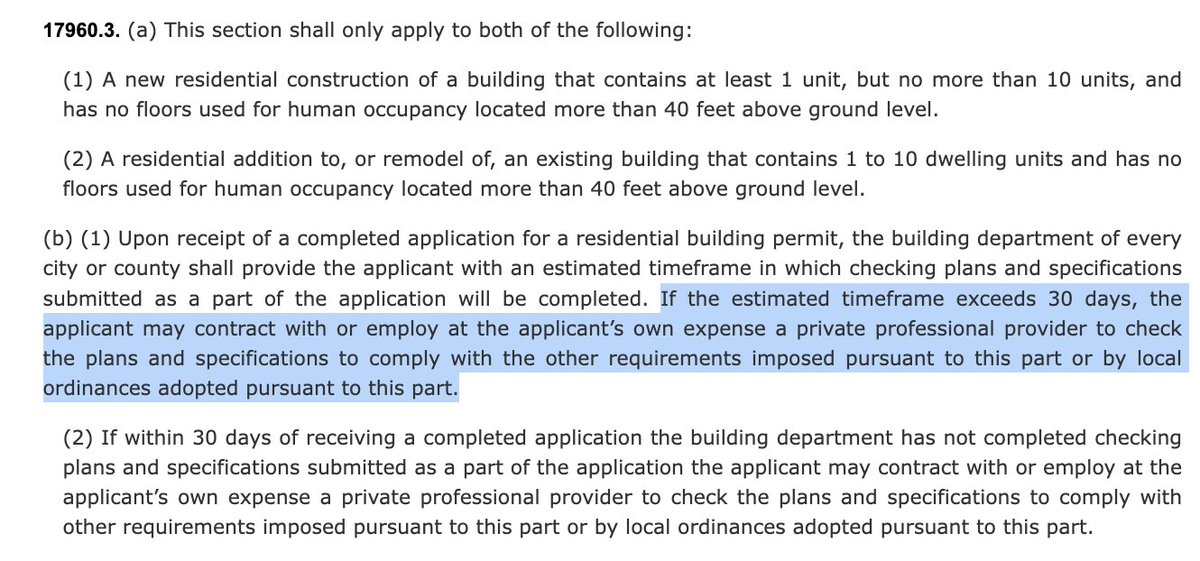
This is a critical backstop for state ADU law, the small-lot subdivision law, and the lot-split/duplex law.
Many "little guy" builders of such projects don't have the resources to bring an HAA lawsuit, and even if they did, the remedy in an HAA case is not a permit.
/6
Many "little guy" builders of such projects don't have the resources to bring an HAA lawsuit, and even if they did, the remedy in an HAA case is not a permit.
/6
#3: Lot splits & duplexes, for real.
@Scott_Wiener's SB 677 allows 4 homes, each of at least 1750 square feet, to be built on pretty much any single-family-zoned parcel in the state. Irrespective of HOA covenants.
/7
@Scott_Wiener's SB 677 allows 4 homes, each of at least 1750 square feet, to be built on pretty much any single-family-zoned parcel in the state. Irrespective of HOA covenants.
/7
https://x.com/CSElmendorf/status/1893191951375089961
#4: Upzoning near fixed transit, for real.
@Scott_Wiener's SB 79 set minimum densities, FAR & heights that cities must allow within 1/4 and 1/2 mile of transit stops.
"The best first-draft upzoning bill ever proposed in California," per @CohenSite
/8
@Scott_Wiener's SB 79 set minimum densities, FAR & heights that cities must allow within 1/4 and 1/2 mile of transit stops.
"The best first-draft upzoning bill ever proposed in California," per @CohenSite
/8
https://x.com/CohenSite/status/1897680769943736323
#5: Defanging faux "historic districts."
@QuirkSilvaCA's AB 1061 cuts the landmark loophole out of CA's lot-split/duplex law.
Individual landmarked properties would still be protected, but cities couldn't just circle a big swath of the map and call it "landmarked."
/9
@QuirkSilvaCA's AB 1061 cuts the landmark loophole out of CA's lot-split/duplex law.
Individual landmarked properties would still be protected, but cities couldn't just circle a big swath of the map and call it "landmarked."
/9
I wish AB 1061 went further (e.g., by addressing historic resources under CEQA), and I'm a bit concerned that cities may be recreate landmark districts by landmarking each property in the area, but at a minimum, the bill is a good start.
/10
/10
#6. The Mother of All Permitting Reform Bills?
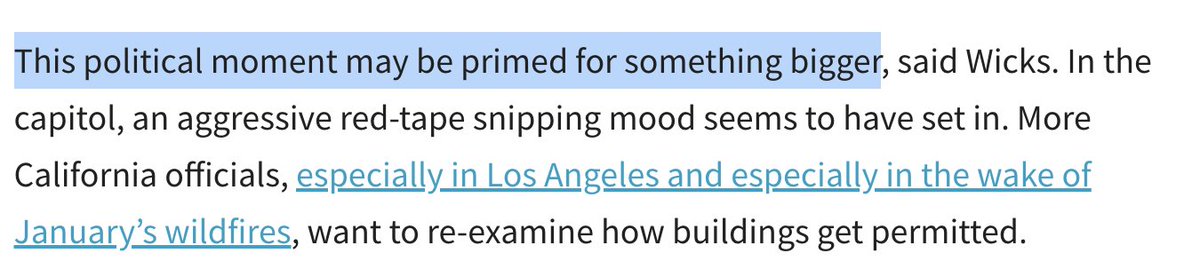
We're still waiting to see what @BuffyWicks's Select Committee on Permitting Reform delivers, but it looks like she will aim high.
"An aggressive red-tape snipping mood seems to have set in." ⤵️
/11 calmatters.org/housing/2025/0…
We're still waiting to see what @BuffyWicks's Select Committee on Permitting Reform delivers, but it looks like she will aim high.
"An aggressive red-tape snipping mood seems to have set in." ⤵️
/11 calmatters.org/housing/2025/0…
The bills in this 🧵have some important things in common.
- They don't require developers to set aside money-losing affordable units as the price of admissionn.
- They don't require developers to comply with costly labor rules as the price of admission.
/12
- They don't require developers to set aside money-losing affordable units as the price of admissionn.
- They don't require developers to comply with costly labor rules as the price of admission.
/12
- They don't have self-defeating Yeoman Developer owner-occupancy requirements.
So they might actually deliver a lot of new housing!
/13
So they might actually deliver a lot of new housing!
/13
Or, they might be crushed by a tidal wave of opposition.
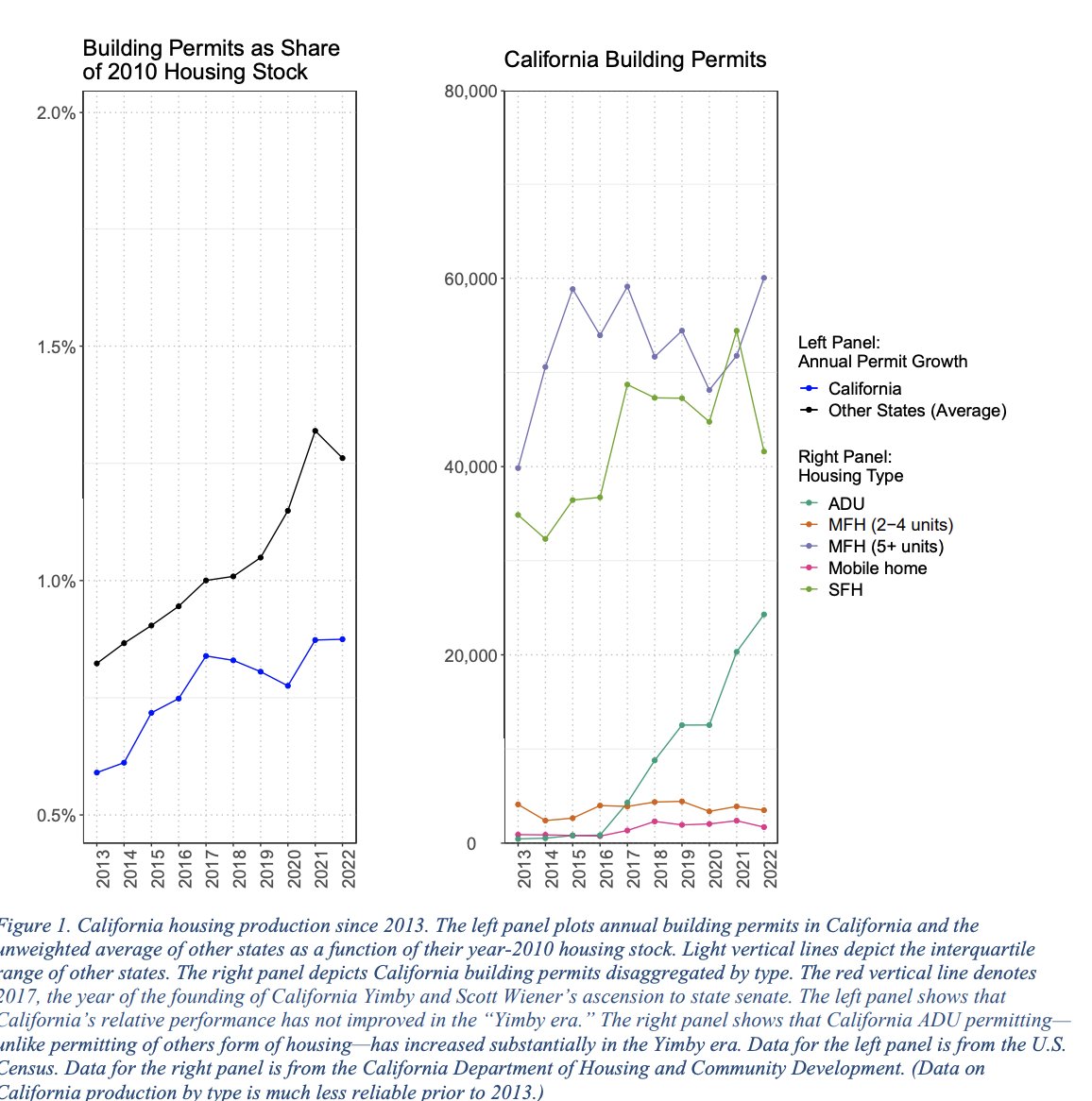
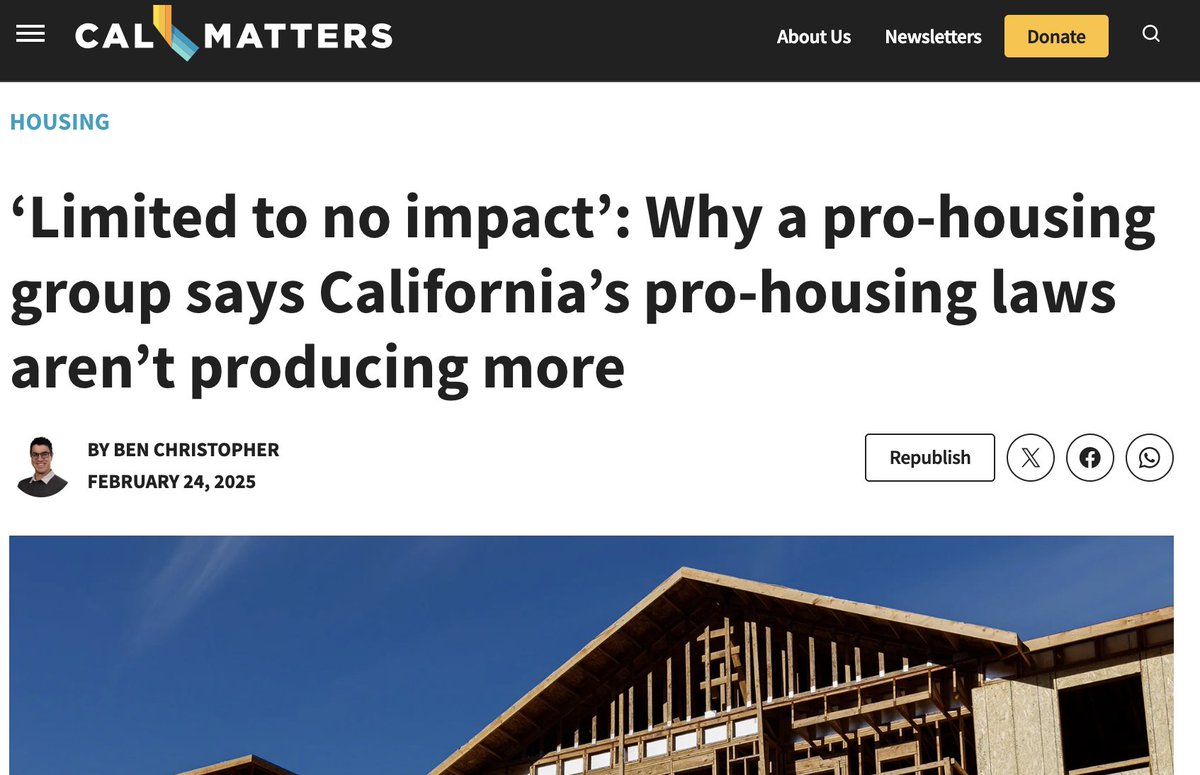
In previous years, the CA leg has (mostly) insisted that it's "prohousing" reforms be topped with a heavy dollop of anti-development bagel toppings.
/14
papers.ssrn.com/sol3/papers.cf…
In previous years, the CA leg has (mostly) insisted that it's "prohousing" reforms be topped with a heavy dollop of anti-development bagel toppings.
/14
papers.ssrn.com/sol3/papers.cf…

The results have been disappointing, even a little embarrassing, save for ADUs.
/15
yimbylaw.org/law-journal/ca…
/15
yimbylaw.org/law-journal/ca…
Thankfully, California's housing leaders have raised the ante in a major way.
Now it falls to @GavinNewsom, @CASpeakerRivas & @ilike_mike to whip the votes & bring these bills to fruition.
Can they do it? Stay tuned!
/end
Now it falls to @GavinNewsom, @CASpeakerRivas & @ilike_mike to whip the votes & bring these bills to fruition.
Can they do it? Stay tuned!
/end
@GavinNewsom @CASpeakerRivas @ilike_mike @threadreaderapp unroll
• • •
Missing some Tweet in this thread? You can try to
force a refresh