Lea Alhilali, MD Profile picture
Mar 16 13 tweets 5 min read Read on X
1/Remembering spinal fracture classifications is back breaking work!

A thread to review the scoring system for thoracic & lumbar fractures—“TLICS” to the cool kids! Image
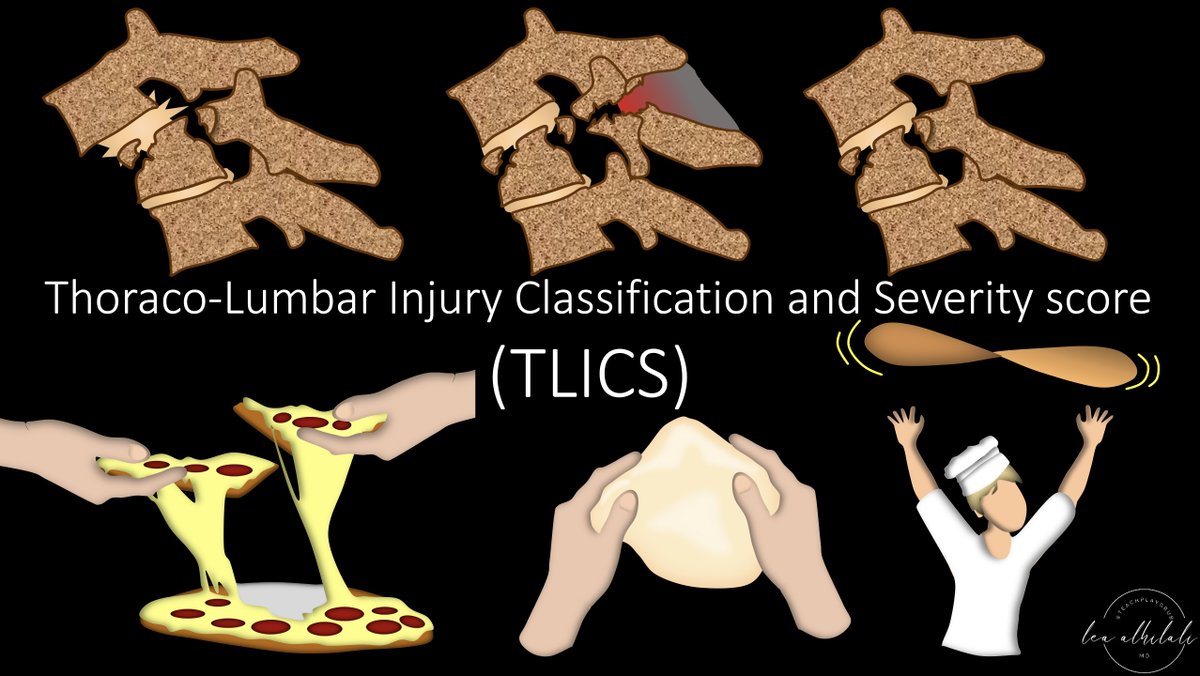
2/TLICS scores a fx on (1) morphology & (2) posterior ligamentous complex injury

Let's start w/morphology

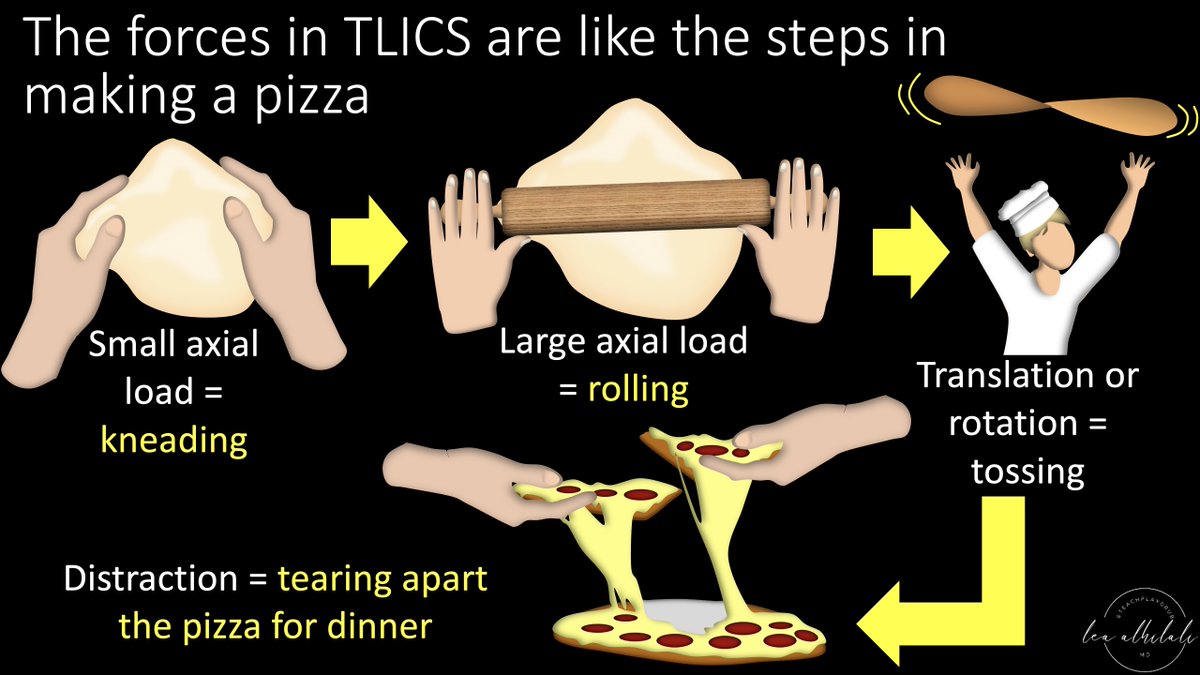
TLICS scores severity like the steps to make & eat a pizza:

Mild compression (kneading), strong compression (rolling), rotation (tossing), & distraction (tearing in) Image
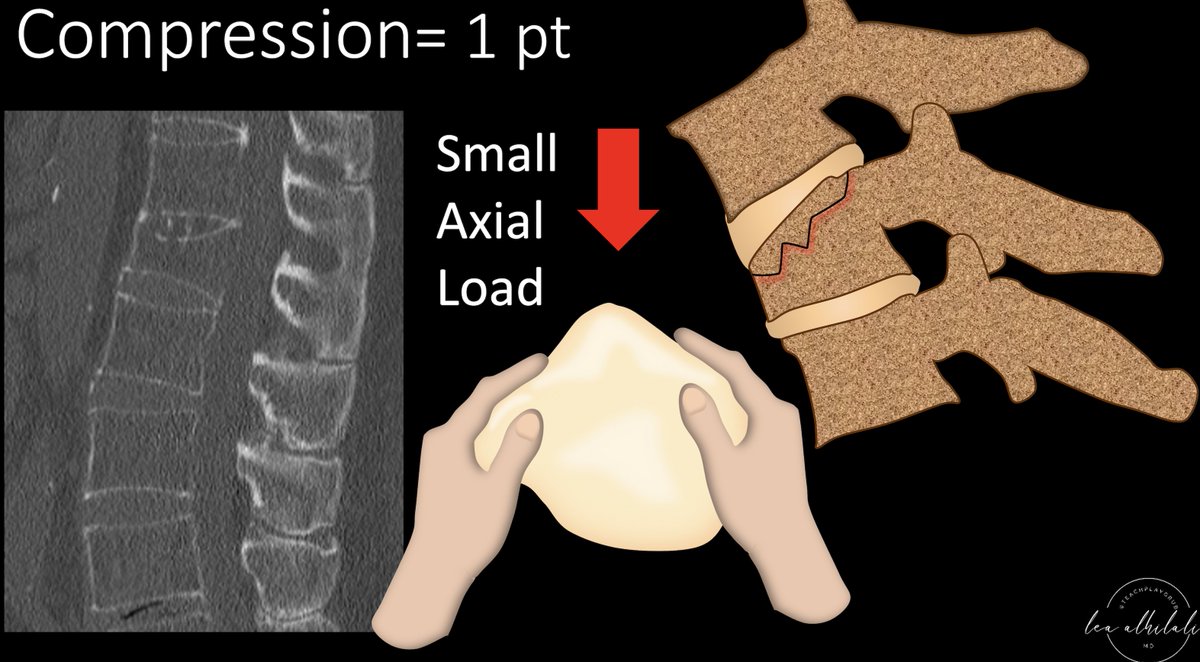
3/At the most mild, w/only mild axial loading, you get the simplest fx, a compression fx—like a simple long bone fx--worth 1 pt.

This is like when you just start to kneading the dough. There's pressure, but not as much as with a rolling pin! Image
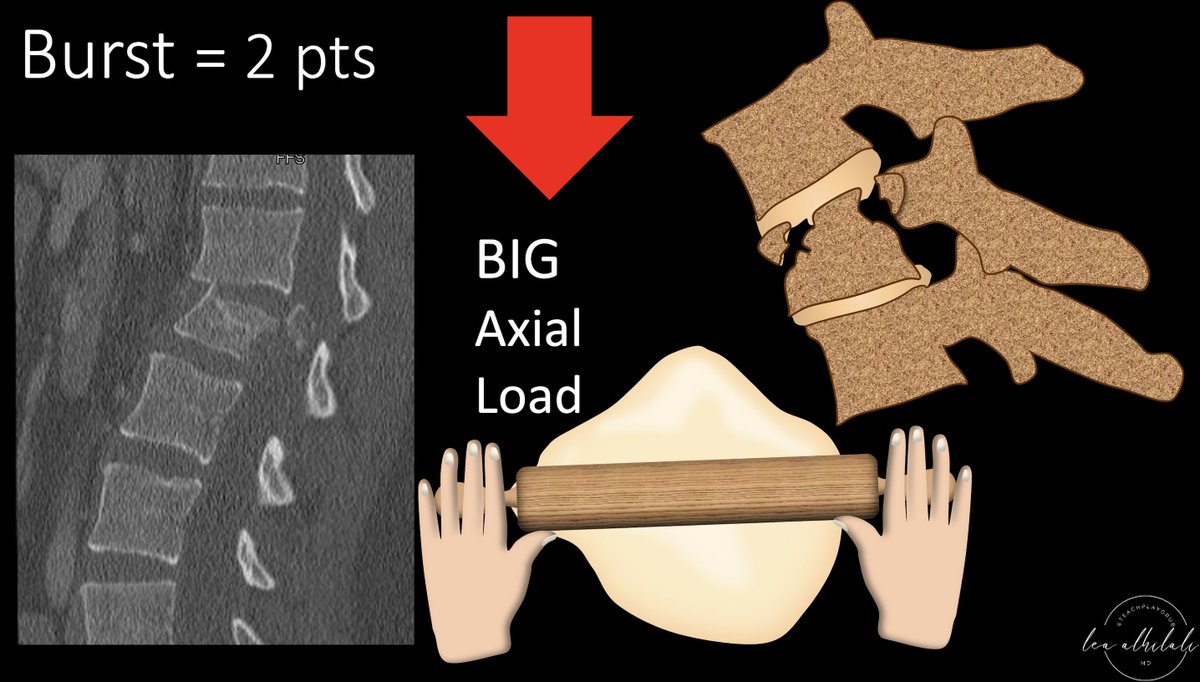
4/As the axial force grows, this becomes a burst fx with retropulsion of the posterior vertebral body—just as greater force causes more comminution in long bone fxs.

This is like moving up from your hands to the rolling pin. A burst is worth 2 points. Image
5/If the force is shearing, you rip the connection between the vertebral bodies—it's is the equivalent of pulling on a long bone & causing its dislocation from its joint or connection with another bone

This is like when you throw the pizza up into the air. This is worth 3 points Image
6/Similar to shear forces, distracting forces rip the vertebral bodies apart

But rather than sliding forward or back, vertebral bodies are pulled up or down, resulting in a vertical gap between the vertebrae.

It is like tearing the pizza apart to eat it. It is worth 4 points. Image
7/This summarizes the TLICS scoring for fracture morphology

The higher the number, the greater the force and injury to the spine—ranging from simple compression fxs worth only 1 point to where the spine is literally ripped apart—a distraction injury, worth 4 points. Image
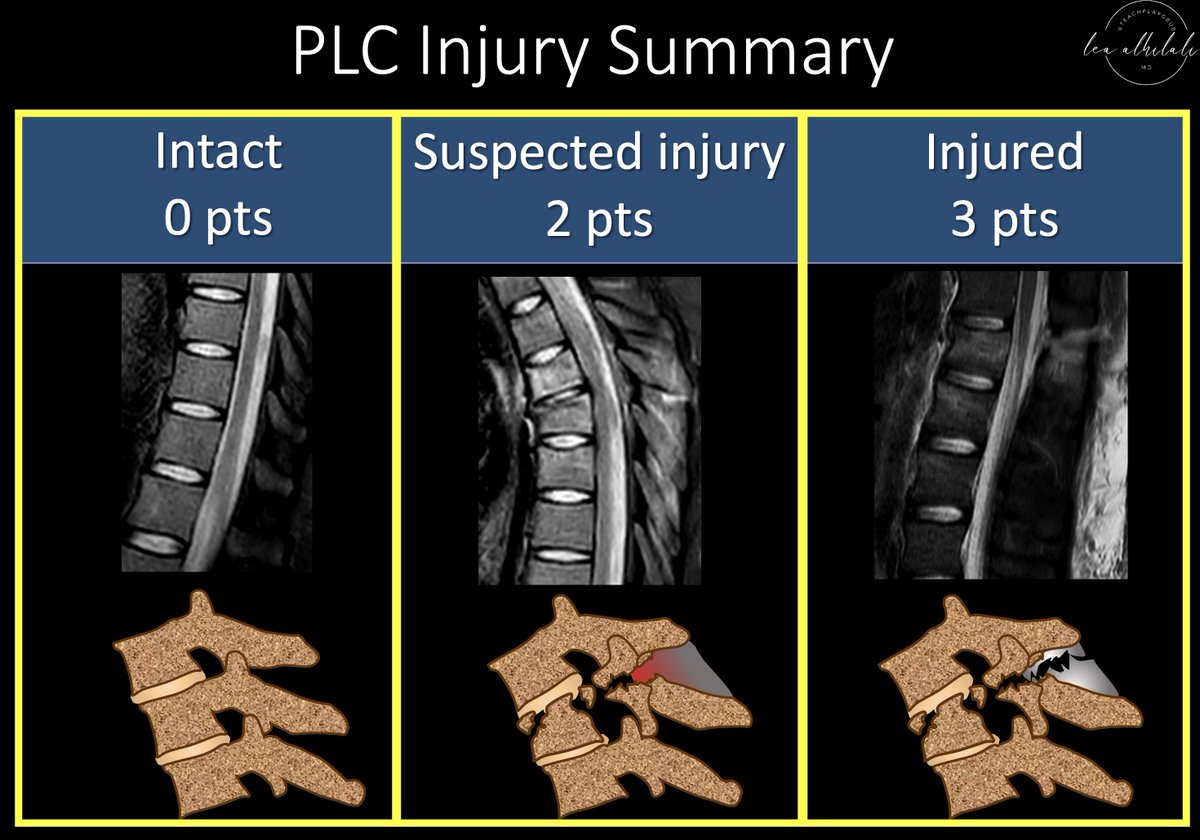
8/The next TLICS imaging finding is the integrity of the PLC

If it is intact, you get 0 pts. If you needed a thread for that, well…I can’t help you much

If there is edema, but no true rupture on MRI, that is worth 2 pts

True disruption on MRI is worth 3 pts. Image
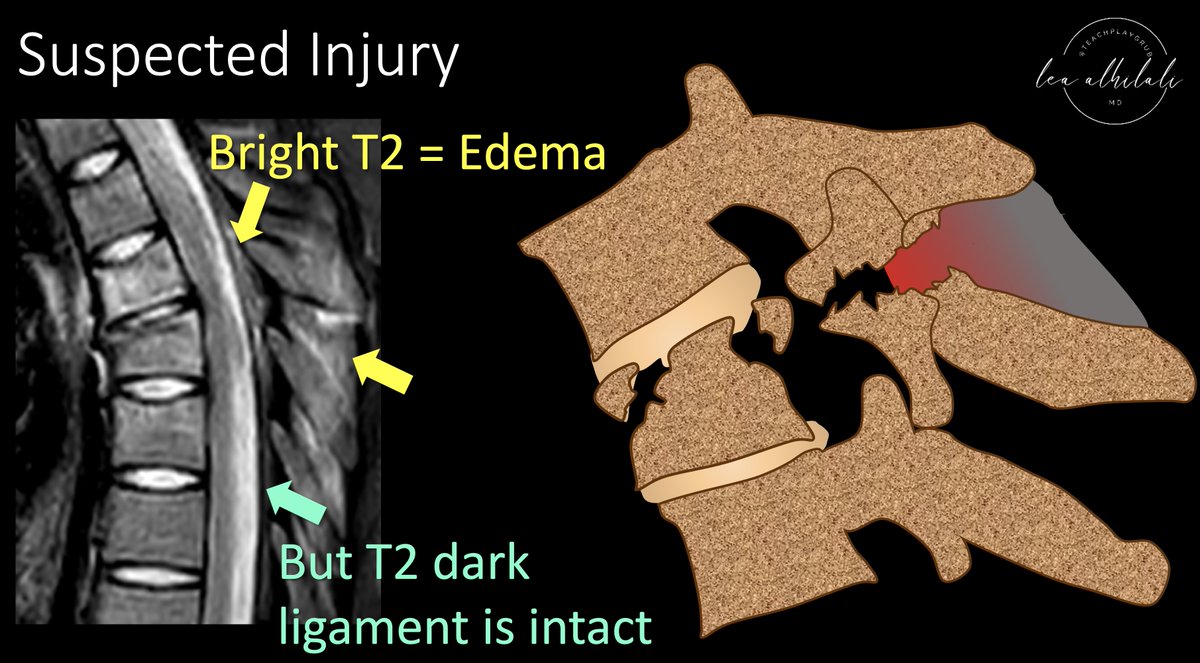
9/The difference between suspected injury & injured is like the difference of seeing smoke & suspecting fire (you see edema on MR & suspect injury) and actually seeing the fire (seeing the ligamentous tear as disruption of the T2 dark line of the ligament on MR). Image
10/ Here is an example of suspected injury—edema is seen in the posterior ligamentous complex, but the T2 dark lines that are the ligaments themselves appear intact. This is worth 2 pts Image
11/If you can find a true disruption or gap in the T2 dark line of the ligament, that is considered truly disrupted and worth 3 points. Image
12/Here is the summary of the scoring for PLC injury in TLICS. Edema is suspicious, but only a true gap is considered injured. Image
13/So now you know how to score imaging findings in thoracolumbar fxs--I hope that takes a load off your back!

Remember, it's as easy as pizza pie! Image

• • •

Missing some Tweet in this thread? You can try to force a refresh

 

Keep Current with Lea Alhilali, MD

Lea Alhilali, MD Profile picture

Stay in touch and get notified when new unrolls are available from this author!

Read all threads

This Thread may be Removed Anytime!

PDF

Twitter may remove this content at anytime! Save it as PDF for later use!

Try unrolling a thread yourself!

how to unroll video
  1. Follow @ThreadReaderApp to mention us!

  2. From a Twitter thread mention us with a keyword "unroll"
@threadreaderapp unroll

Practice here first or read more on our help page!

More from @teachplaygrub

Mar 14
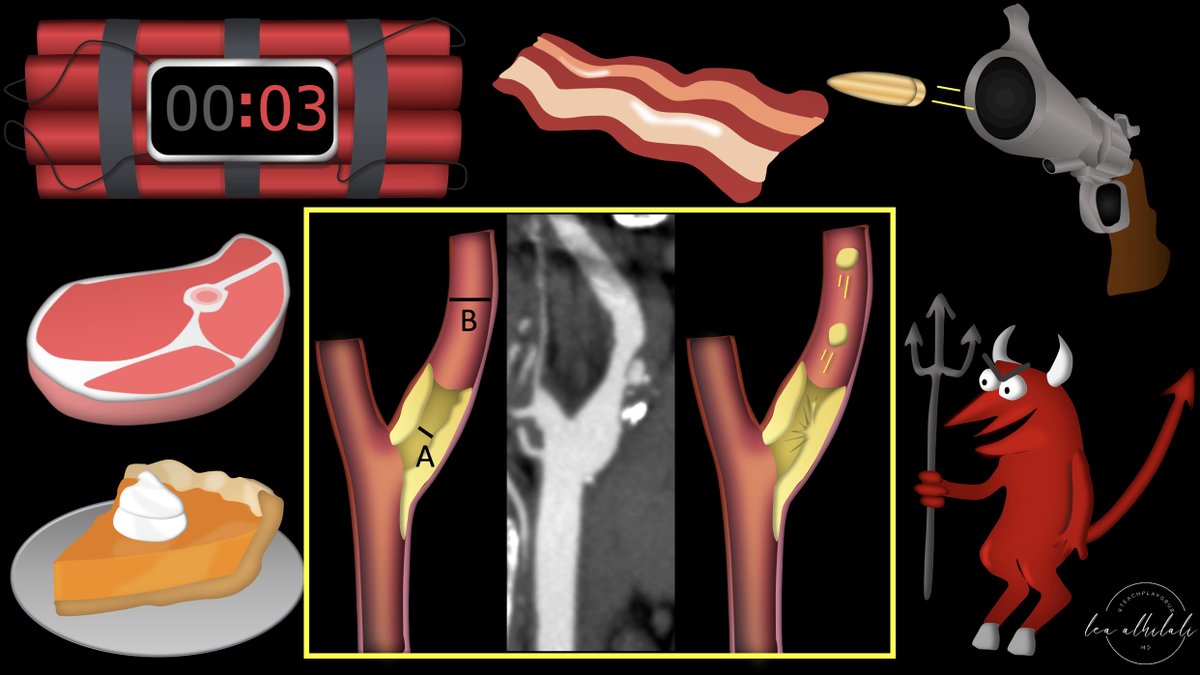
1/The 90s called & wants its carotid imaging back!

It’s been 30 years--why are you still just quoting NASCET?

Do you feel vulnerable when it comes to identifying plaque vulnerability?

Here’s a thread to help you identify high risk plaques with carotid plaque imaging Image
2/Everyone knows the NASCET criteria:

If the patient is symptomatic & the greatest stenosis from the plaque is >70% of the diameter of normal distal lumen, patient will likely benefit from carotid endarterectomy.

But that doesn’t mean the remaining patients are just fine! Image
3/Yes, carotid plaques resulting in high grade stenosis are high risk.

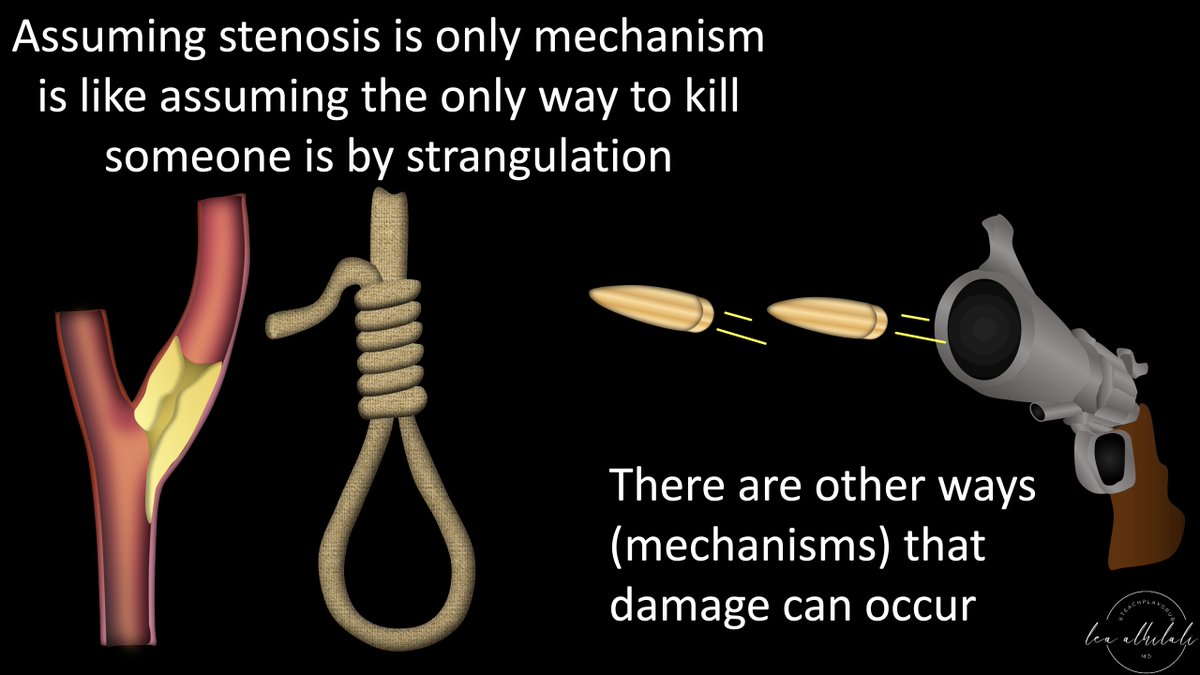
But assuming that stenosis is the only mechanism by which a carotid plaque is high risk is like assuming that the only way to kill someone is by strangulation. Image
Read 25 tweets
Mar 12
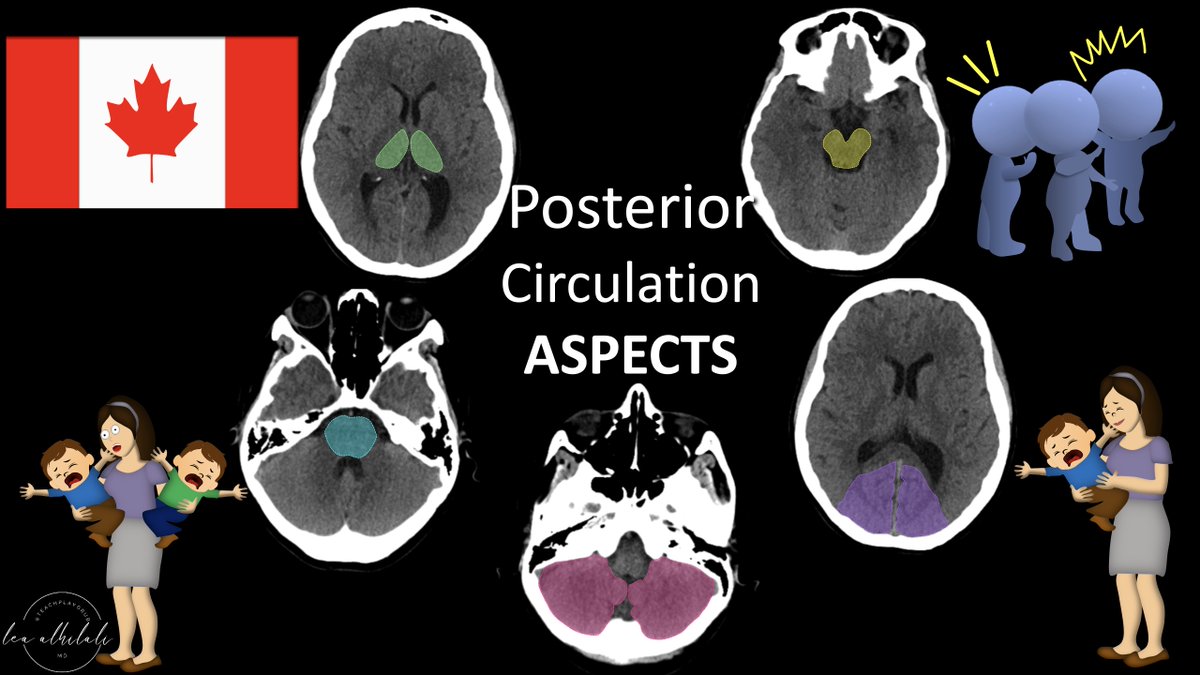
1/Do you know all the aspects of, well, ASPECTS?

Many know the anterior circulation stroke scoring system—but posterior circulation (pc) ASPECTS is often left behind

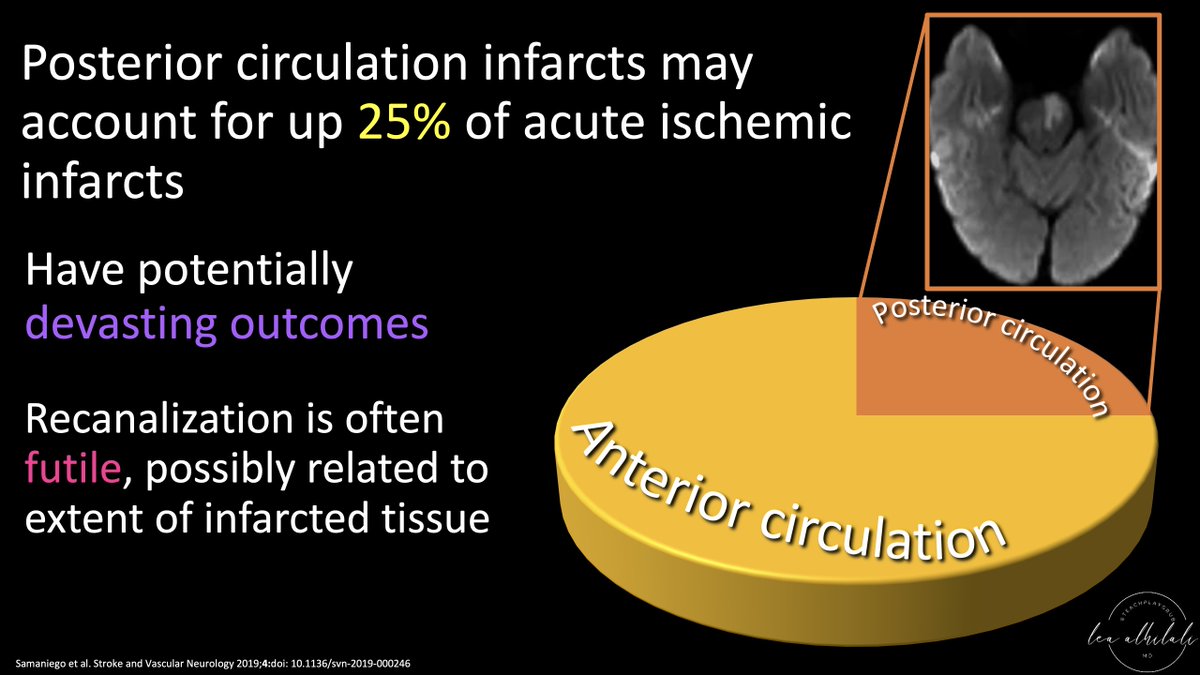
25% of infarcts are posterior circulation

Do you know pc-ASPECTS?!

Here’s how to remember pc-ASPECTS! Image
2/Many know anterior circulation ASPECTS.

It uses a 10-point scoring system to semi-quantitation the amount of the MCA territory infarcted on non-contrast head CT

If you need a review: here’s my thread on ASPECTS: Image
3/But it’s only useful for the anterior circulation.

Posterior circulation accounts for ~25% of infarcts.

Even w/recanalization, many of these pts do poorly bc of the extent of already infarcted tissue.

So there’s a need to quantitate the amount of infarcted tissue in these ptsImage
Read 12 tweets
Mar 10
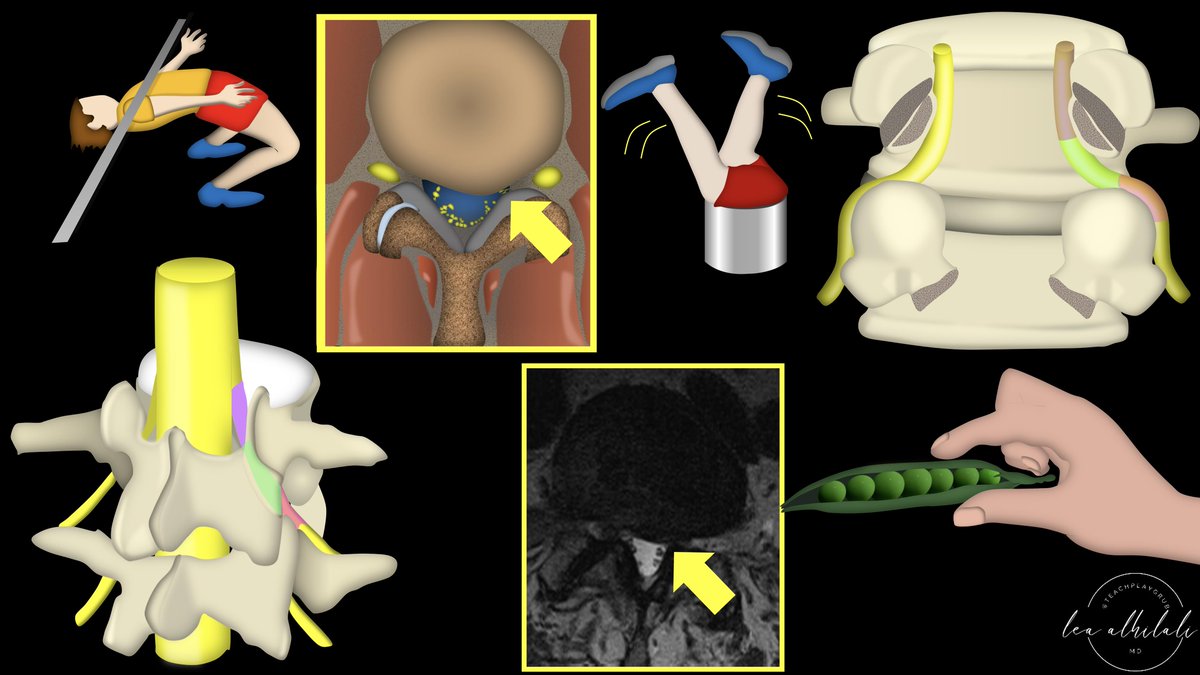
1/I always say you can tell a bad read on a spine MR if it doesn’t talk about lateral recesses.

What will I think when I see your read? Do you rate lateral recess stenosis?

Here’s a thread on lateral recess anatomy & a grading system for lateral recess stenosis Image
2/First anatomy.

Thecal sac is like a highway, carrying the nerve roots down the lumbar spine.

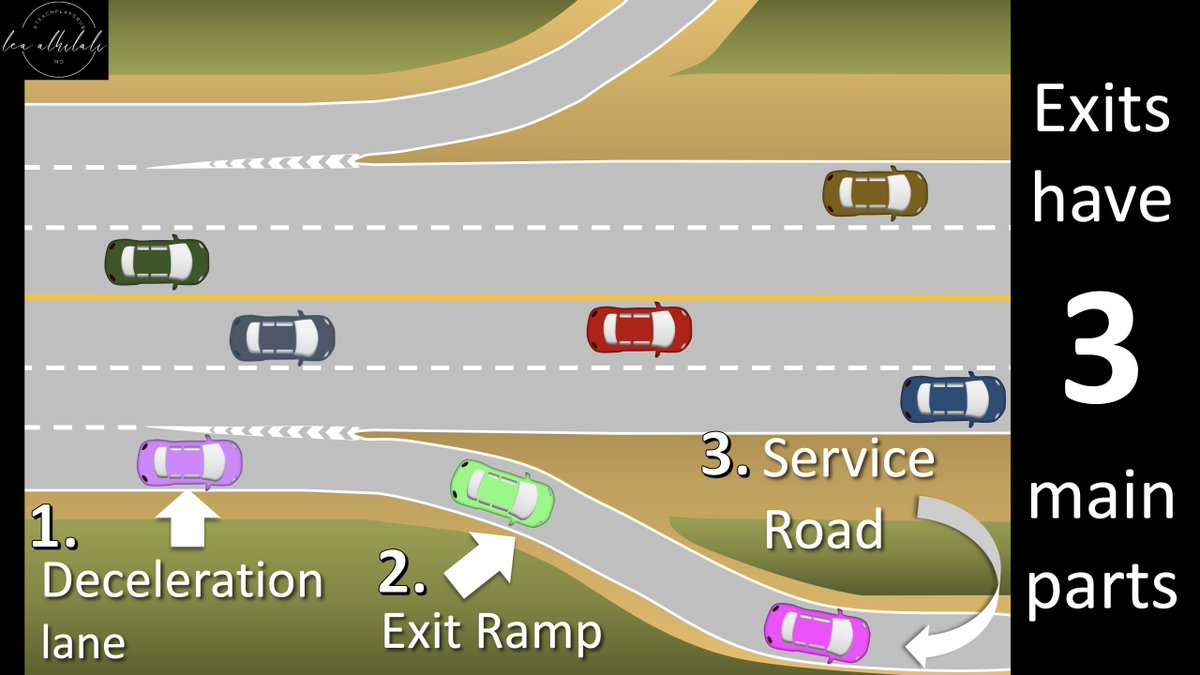
Lateral recess is part of the lateral lumbar canal, which is essentially the exit for spinal nerve roots to get off the thecal sac highway & head out into the rest of the body Image
3/Exits have 3 main parts.

First is the deceleration lane, where the car slows down as it starts the process of exiting.

Then there is the off ramp itself, and this leads into the service road which takes the car to the roads that it needs to get to its destination Image
Read 21 tweets
Mar 3
1/Does PTERYGOPALATINE FOSSA anatomy feel as confusing as its spelling?

Does it seem to have as many openings as letters in its name?

Are you pterrified of the pterygopalatine fossa (PPF)?

Let this thread on PPF anatomy help you out. Image
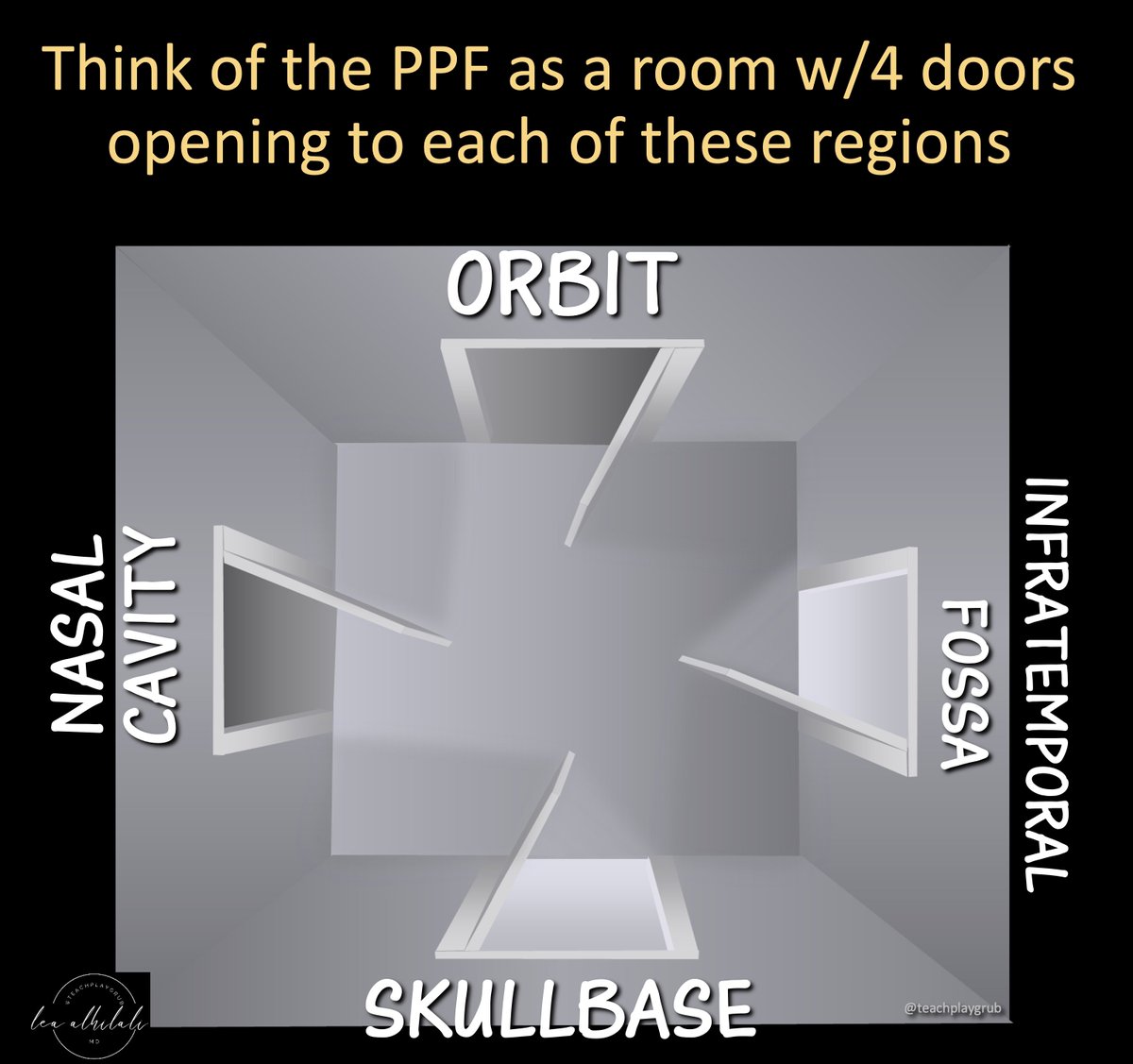
2/The PPF is a crossroads between the skullbase & the extracranial head and neck

There are 4 main regions that meet here:

(1) Skullbase itself posteriorly, (2) nasal cavity medially, (3) infratemporal fossa laterally, and (4) orbit anteriorly. Image
3/At its most basic, you can think of the PPF as a room with 4 doors opening to each of these regions: one posteriorly to the skullbase, one medially to the nasal cavity, one laterally to the infratemporal fossa, and one anteriorly to the orbit Image
Read 18 tweets
Feb 28
1/Feel like a fish out of water when it comes to water on the brain?

Read on for this month’s @Radiographics summary of what you need to know about hydrocephalus!!


@cookyscan1 @RadG_editor #RGphx doi.org/10.1148/rg.240…Image
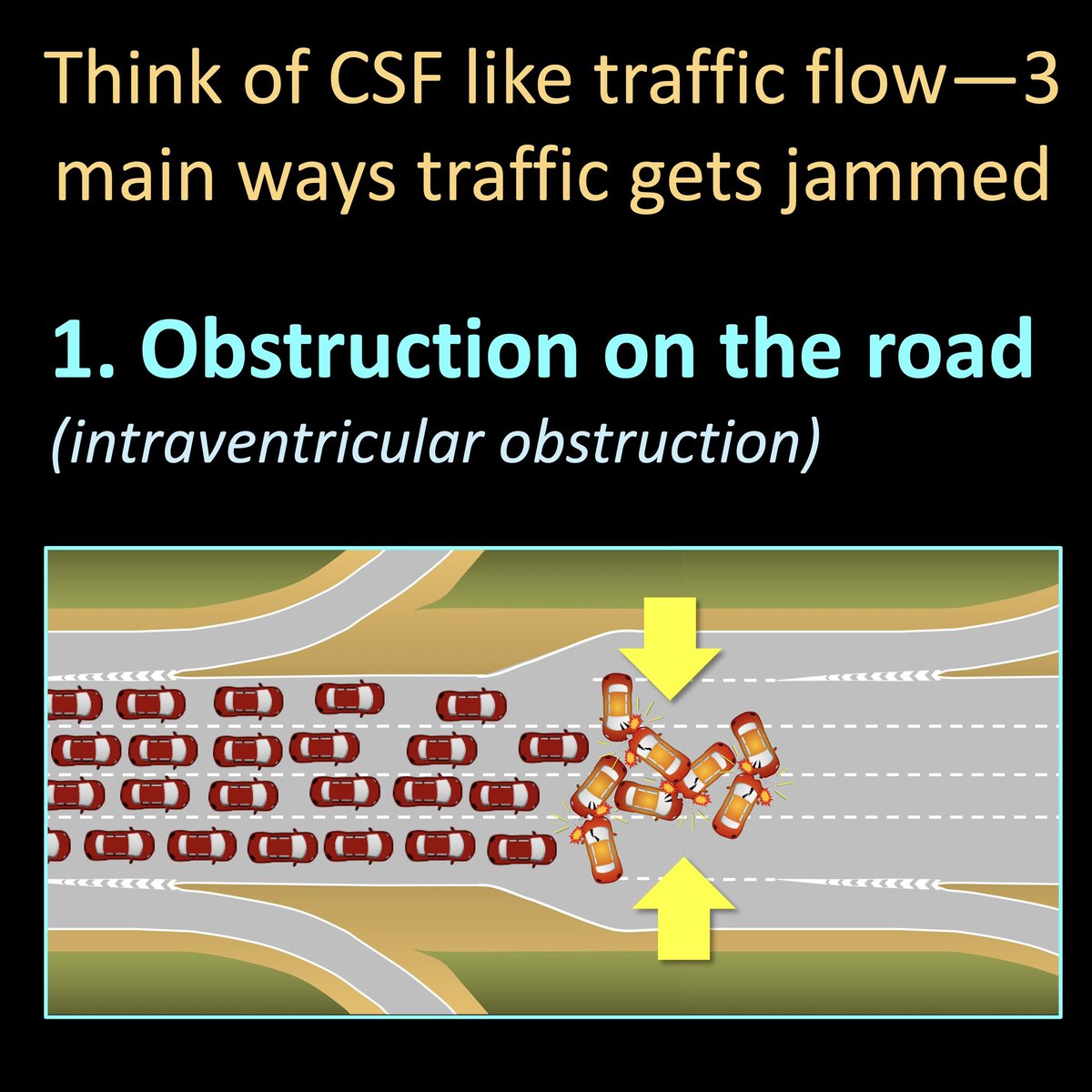
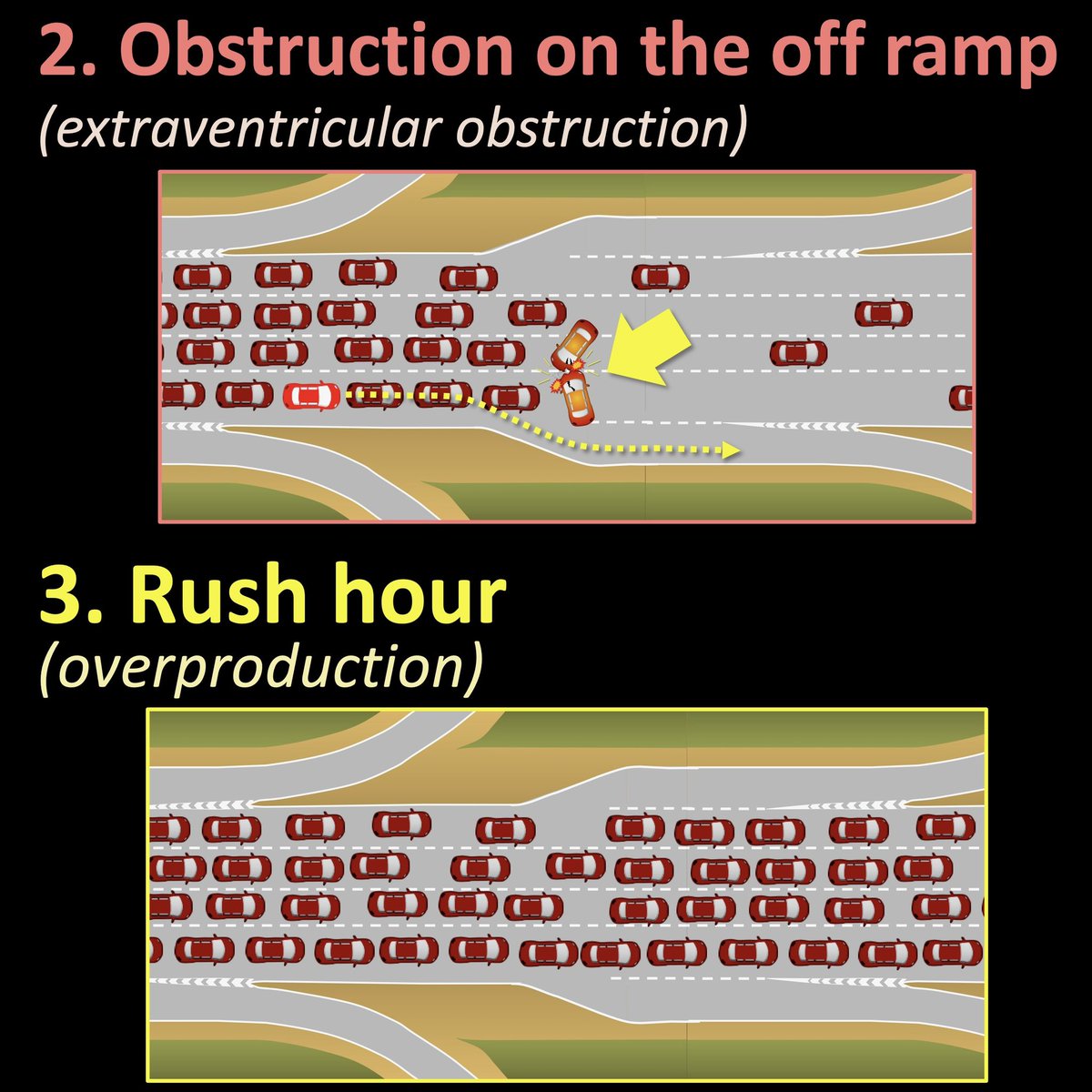
2/To understand hydrocephalus, think of CSF like the flow of traffic

3 main ways traffic backs up:

(1) Obstruction on the road:
For hydrocephalus, this is an obstruction along CSF in the ventricle Image
3/

(2) Obstruction of an off ramp
For hydrocephalus=obstruction at its off ramp into the venous system

(3) Rush hour
For hydrocephalus=over production Image
Read 8 tweets
Feb 27
1/Do scans for dizziness make your head spin?

Need to know what to look for?

Just hear me out!

This month’s @theAJNR SCANtastic will show what to look for:

ajnr.org/content/46/2/3…Image
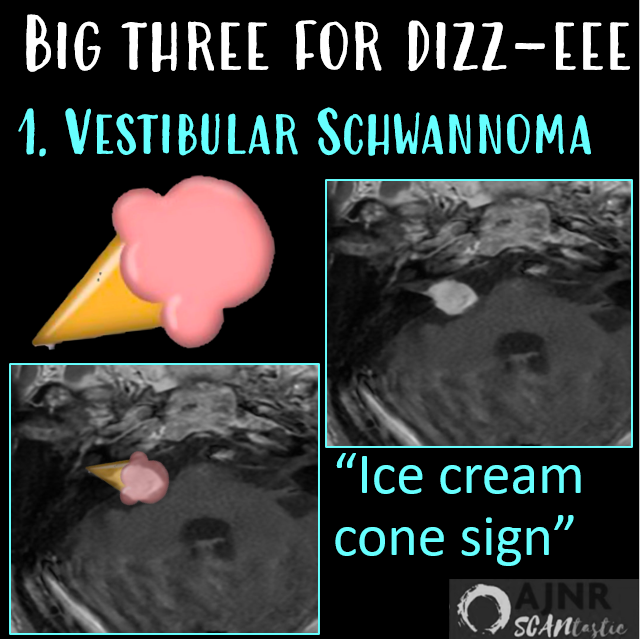
2/I always remember the rhyme of the big three for dizz-ee!

First, are vestibular schwannomas

These give an ice cream cone shape in the internal auditory canal! So scoop up that finding! Image
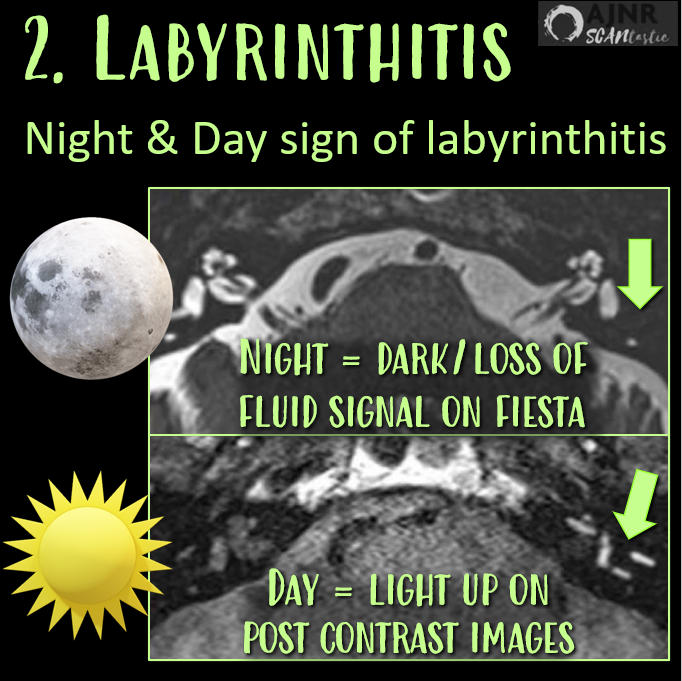
3/Next is labyrinthitis

Labyrinthitis can look like night & day, depending on the timing

Late labyrinthitis is dark—loss of bright fluid signal on FIESTA

Early labyrinthitis is bright—enhances on post-contrast Image
Read 12 tweets

Did Thread Reader help you today?

Support us! We are indie developers!


This site is made by just two indie developers on a laptop doing marketing, support and development! Read more about the story.

Become a Premium Member ($3/month or $30/year) and get exclusive features!

Become Premium

Don't want to be a Premium member but still want to support us?

Make a small donation by buying us coffee ($5) or help with server cost ($10)

Donate via Paypal

Or Donate anonymously using crypto!

Ethereum

0xfe58350B80634f60Fa6Dc149a72b4DFbc17D341E copy

Bitcoin

3ATGMxNzCUFzxpMCHL5sWSt4DVtS8UqXpi copy

Thank you for your support!

Follow Us!

:(