Sur le front sud, l'armée russe 🇷🇺 réactive son offensive à Kamianske et Velika Novosilka, aux 2 extrémités des lignes de défenses
En poussant sur le front de Zaporizhia, l'armée russe a pour objectif d'atteindre les lignes de défenses ukrainiennes🇺🇦
🧵THREAD🧵1/13⬇️(+Belgorod)
En poussant sur le front de Zaporizhia, l'armée russe a pour objectif d'atteindre les lignes de défenses ukrainiennes🇺🇦
🧵THREAD🧵1/13⬇️(+Belgorod)

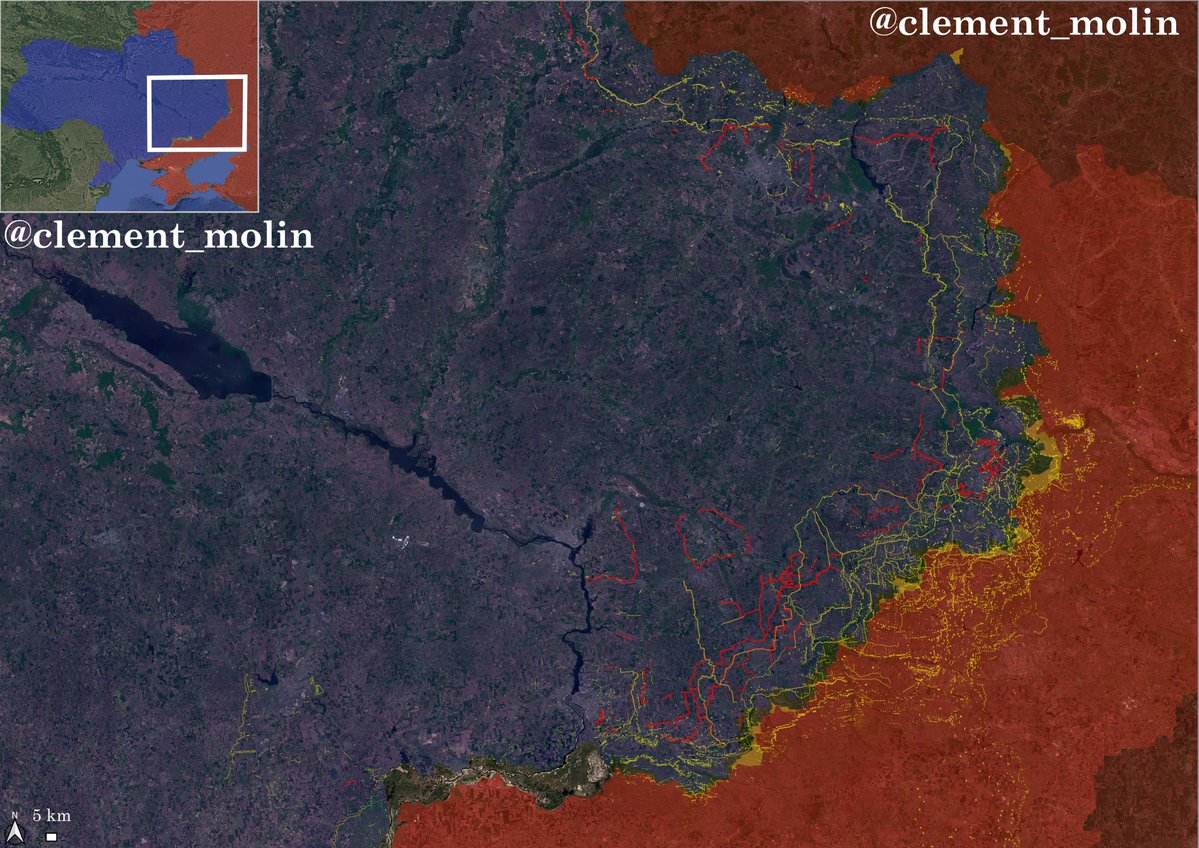
En 2022, les forces armées ukrainiennes ont stoppé l'offensive russe dans l'oblast de Zaporijia sur une ligne composée de 4 petites villes, Kamiansk'e, Orikhiv, Houlialpole et Velika Novosilka.
Depuis, le front n'a presque pas bougé dans le secteur.
Depuis, le front n'a presque pas bougé dans le secteur.

Les forces russes tenteront d'abord d'atteindre la première ligne défensive, avant de progresser vers la seconde, où elles pourront bombarder Zaporijia au MLRS, un objectif important.
En général, la direction ouest de Zaporijia n'est pas très risquée.
En général, la direction ouest de Zaporijia n'est pas très risquée.

En effet, l'armée ukrainienne a eu le temps de préparer des défenses, environ 3 principales faisant face au sud et 3 faisant face à l'est de Zaporizhia.
Les centres urbains sont encore loin du front et plusiuers rivières protègent les lignes de défenses.
Les centres urbains sont encore loin du front et plusiuers rivières protègent les lignes de défenses.

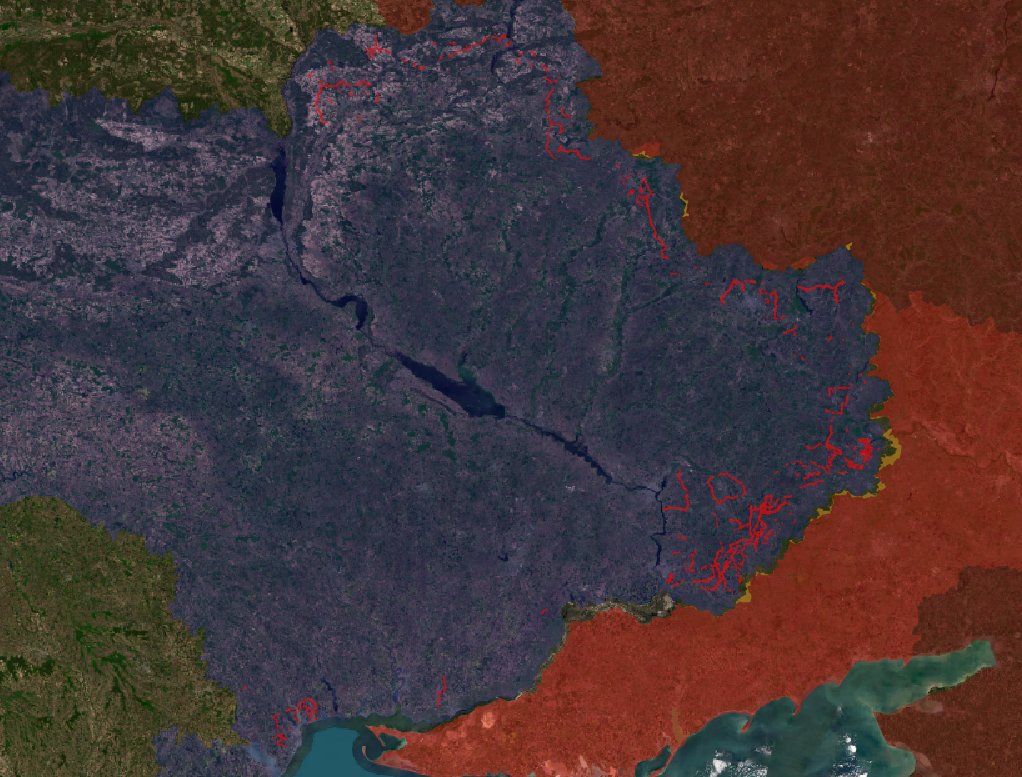
Si on regarde la densité urbaine, on remarque une vallée peuplée au sud de Zaporizhia, tandis que tout le territoire plus à l'est est largement vide, notamment autour de Houlialpole, seul centre urbain du secteur.
Le territoire est maillé par deux lignes de défenses.
Le territoire est maillé par deux lignes de défenses.

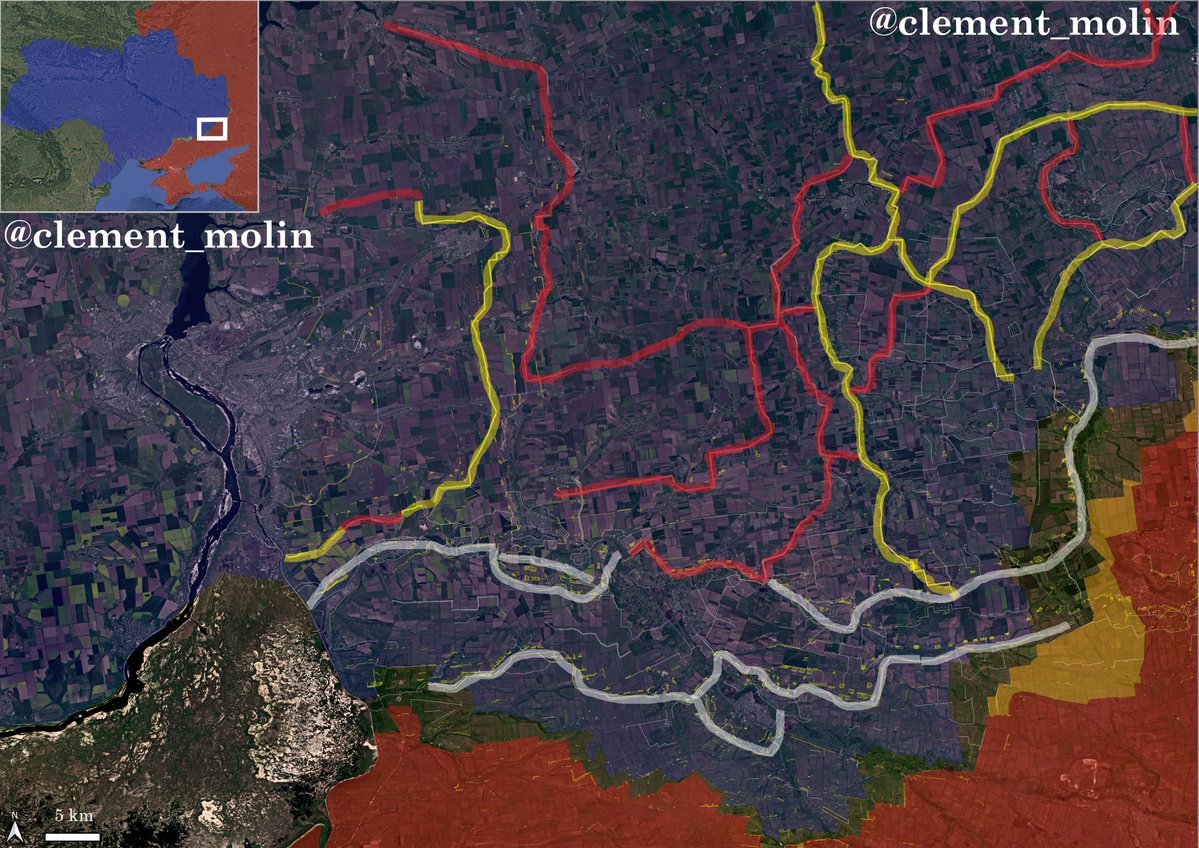
La direction plus à l'ouest, dans l'oblast de Donetsk est plus critique, puisque l'armée russe suit la rivière Mokri Yali depuis Velika Novosilka pour remonter à la jonction de 3 rivières, à l'arrière des lignes de défenses ukrainiennes.

Les forces russes remontent vers le nord, dépassant la partie de la première ligne de défense non terminée (comme d'habitude) et qui est tombée rapidement, atteignant désormais la seconde ligne.
Les ukrainiens préparent une nouvelle ligne à l'ouest.
Les ukrainiens préparent une nouvelle ligne à l'ouest.

Ainsi, l'armée russe tente d'atteindre les principales lignes de défenses dans la région, il est trop tôt pour parler d'une offensive plus large, puisque ce qu'il se passe à l'ouest n'a aucun lien avec ce qu'il se passe à l'est de la direction sud.
Ailleurs sur le front, l'armée ukrainienne tient toujours à Pokrovsk malgré la reprise des assauts russes, assauts qui se poursuivent également sur tout le front de l'est sans progression majeure ces derniers jours, sur les axes de Toretsk, Tchasiv Yar, Siversk, Lyman et Borova.
L'armée ukrainienne a presque quitté l'oblast de Koursk, maintenant une importante force à la frontière face à l'incursion russe.
Mais aujourd'hui, c'est à Belgorod, quelques kilomètres plus au sud que l'armée ukrainienne repasse à l'attaque...
Mais aujourd'hui, c'est à Belgorod, quelques kilomètres plus au sud que l'armée ukrainienne repasse à l'attaque...
On peut évidemment questionner l'intérêt d'une telle offensive alors que ces hommes seraient utiles à l'est.
L'idée est la continuité de Koursk, obliger la Russie à déployer de manière permanente plus d'hommes sur la frontière, faisant de celle-ci une ligne de front.
L'idée est la continuité de Koursk, obliger la Russie à déployer de manière permanente plus d'hommes sur la frontière, faisant de celle-ci une ligne de front.


Forcément, ces attaques provoquent des pertes matérielles et humaines sans obtenir de larges résultats, mais forçant une pression générale sur tout le front.
Je continuerai à suivre et analyser la situation à Belgorod, Koursk et ailleurs sur le front, notamment avec des mouvements intéressants sur différents fronts.
• • •
Missing some Tweet in this thread? You can try to
force a refresh