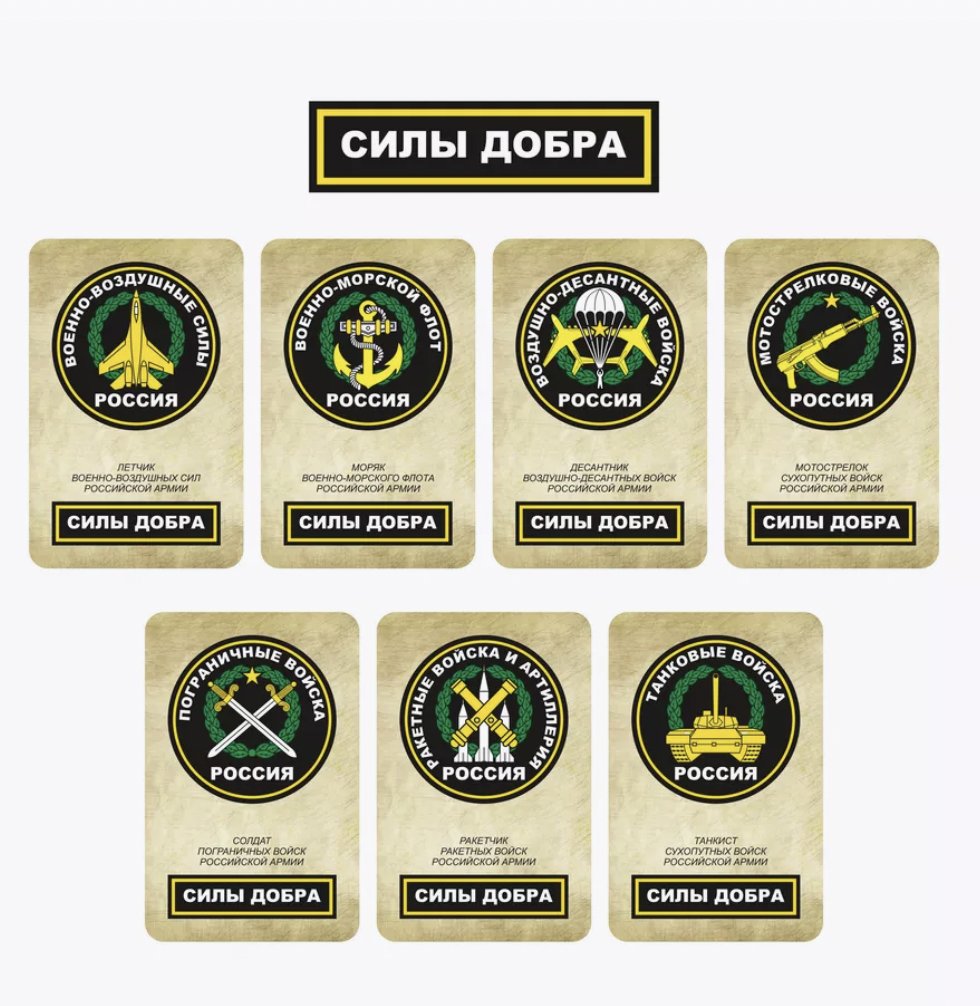
1/ Russian companies are creating 'patriotic' board games based on the Ukraine war, such as a version of Monopoly where the squares are Ukrainian targets instead of streets, or a game where players hold cards representing the forces of "good" (Russia) and "darkness" (NATO). ⬇️
2/ The Russian online store Wildberries is selling a number of board games with themes referencing the war in Ukraine, such as 'Special Operation on the Outskirts'. The game is based on Monopoly, with the usual streets replaced by 8 cities and 14 strategic locations in Ukraine.
3/ These include Donetsk, Luhansk, Kyiv, Kharkiv, and Odesa, as well as strategic targets such as the Crimean Bridge, the Azovstal steel plant in Mariupol, and the Kakhovka Dam. According to the manufacturers:
4/ "The game immerses you in a world where the eastern cities welcome the liberators, and the central and western cities have succumbed to enemy propaganda, which makes their liberation a real challenge. Each of your decisions is a step towards victory or defeat."
5/ It requires the player to "manage a single currency, build bridges, restore infrastructure and supply battalions with resources" and comes with banknotes depicting Vladimir Putin, General Sergey Surovikin and Russian foreign minister Sergei Lavrov.
6/ 'Dobble Z' is a version of the popular British picture-matching card game Dobble, themed around patriotic Russian symbols. The player has to match symbols on the cards (such as the Kremlin, tank, AK-47, map of Crimea, etc).
7/ The manufacturer says: "This patriotic game has everything that is close to Russian people - birch trees, traditions, great people, sights and more." It recommends the game for "a noisy group, a birthday, Russia Day and any other holiday."
8/ 'I Serve The Fatherland' appears to be based on the Hasbro game Guess Who? – it operates similarly, with players asking questions to identify which cards the other players are holding. These are divided into "forces of good" (Russian) and "forces of darkness" (America/NATO).
9/ Video game developers are also getting in on the act. The Moscow-based Studio SPN is developing 'Squad 22: ZOV', a tactical action game produced with the aid of the Main Military-Political Directorate of the Armed Forces of the Russian Federation.
10/ The GVPU VS RF is the organisation within the Russian Ministry of Defence that is responsible for instilling ideological loyalty to the regime within the military. It directs the work of the armed forces' political officers (zampolits) to politically indoctrinate servicemen.
11/ The game offers players the opportunity to play through four scenarios: "Battle for Mariupol", "Donbass Spring", "Repulse of the Ukrainian Counteroffensive" and "Battle for Avdiivka".
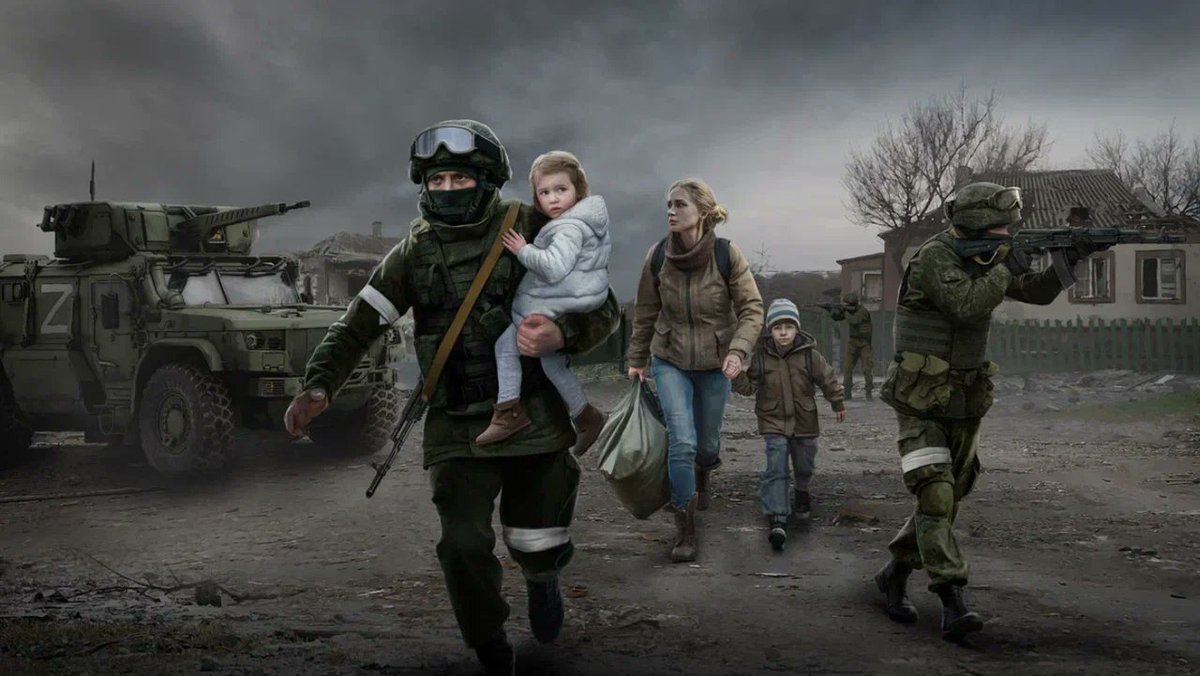
12/ It was "created in active cooperation with active fighters, veterans and heroes of the Special Military Operation, including visiting the sites of real events and reconstructing battles." It portrays Russian soldiers, rather inaccurately, as heroic defenders of civilians.
13/ It remains to be seen whether these games will be any more commercially successful than Russian movies about the war, which have been dismally unpopular. The 2023 film 'Witness' was a huge flop, costing 70-200 million rubles but making only 15 million at the box office. /end
1/ Russian warbloggers are continuing to provide examples of how Telegram is used for frontline battlefield communications, to refute the claim of presidential spokesman Dmitri Peskov that such a thing is "not possible to imagine". ⬇️
2/ Platon Mamadov provides two detailed examples:
"Example number one:
Aerial reconnaissance of Unit N spotted a Ukrainian self-propelled gun in a shelter in the middle of town N."
3/ "Five minutes after the discovery, the target's coordinates and a detailed video were uploaded to a special secret chat group read by all drone operators, scouts, and artillerymen in that sector of the front.
1/ Russian soldiers overwhelmingly prefer to use Telegram for tactical communications despite the Russian army having its own dedicated military messengers. The reason isn't complex – the military's own alternatives are unreliable and difficult to use. ⬇️
2/ 'Vault No. 8' explains the problem:
"The Telegram slowdown is particularly nasty because Telegram is used for communication on the front lines.
Military messengers have been around since I wrote about this, but... Guess what you have to do to get a firmware-ready smartphone?
3/ "That's right! Buy it [with your own money] and send it in for a firmware update. On top of that, one of the military messengers periodically crashes like crazy, and the phone has to be sent in for a [periodic] firmware update, which takes at least a couple of weeks.
1/ The Russian government's throttling of Telegram has deprived the Russian army of a huge repository of information for its soldiers' professional development and a key source of essential technical advice and instruction, as Russian warbloggers explain. ⬇️
2/ 'Kiba's Signalman's Diary' explains:
3/ "Telegram alone has been the only place where self-organised closed chats and knowledge bases on communications, in demand by the military at the moment, were quickly created and developed, independent of decisions and initiatives from above.
1/ Russian warbloggers are outraged at the Russian government's view that blocking Telegram is no big deal for frontline troops. They say it's a catastrophe heaped on the disaster of losing Starlink and that anyone who says Telegram isn't needed is talking "complete bullshit". ⬇️
2/ Dmitri Peskov, Vladimir Putin's spokesman, says: "I don't think it's possible to imagine frontline communications being provided via Telegram or some other messenger. It's difficult and impossible to imagine such a thing."
3/ However, it is very much a thing, as warbloggers have been pointing out furiously. 'Callsign Bruce' provides an example of how it is used to avoid friendly fire incidents:
"I'll give you a real-life example from one of the directions."
1/ Life after Starlink is proving to be difficult and frustrating for the Russian army. Russian warbloggers appear to be going through the stages of grief, expressing anger and alarm at the crisis and concern that Ukraine will exploit it. One anticipates "24/7 fucking". ⬇️
2/ Further instances of price-gouging are being reported, with the cost of US-made Ubiquiti WiFi bridges – illegally imported into Russia – doubling overnight. 'Strong Word' complains:
3/ "Elon is certainly a real jerk. But we have some real assholes in the rear who decided to ride the wave and make money off their own soldiers. Wi-Fi bridges instantly doubled in price. It's maddening, some are spilling blood, and others are making a living off of it."
1/ What can Russian soldiers do with thousands of useless Starlink terminals? One Russian warblogger has some humorous suggestions. ⬇️
2/ 'BKGB Casuar' writes:
"Here are 10 ways to use a broken terminal in the Special Military Operation zone:
3/ "1. Butt Kick.
The ground in the trench is cold and damp, and Elon Musk's plastic is warm and high-tech. Use it as an elite seat. Now you're not just a soldier in the mud, but a cyberpunk on a throne, whose butt is protected from moisture by American technology.




