No people survives without the will to survive. No civilization endures without belief in its own right to exist. Yet today, Whites are taught that even this—basic survival—is shameful. To care about their future is “supremacist.” To notice their decline is “hate.” And to resist dispossession is a moral crime.
But this is not morality. It is manipulation. A war on identity disguised as virtue. The truth is simpler and harder: they take because they can. You hate because you're White.
This inversion begins in the mind. White children are taught to see themselves not as heirs, but as intruders. Their story is rewritten as a list of crimes. Their legacy is reduced to conquest and oppression. While every other people is encouraged to organize, preserve, and promote its interests, Whites are told they must forget, apologize, disappear.
The mechanism is psychological. First comes guilt. Not personal guilt for anything done, but inherited guilt for being born. A moral debt with no end and no repayment. Then comes fear—fear of exclusion, loss, ruin. And finally, comes conformity. The desperate need to be seen as “good” by a system that defines goodness as surrender.
This is not a natural state. It is the result of pressure, punishment, and propaganda. A culture that rewards betrayal and punishes loyalty. An order that teaches Whites to signal virtue by disavowing themselves.
But none of this works without one fatal weakness: the loss of moral confidence.
Every people has faults. Every people has greatness. But only Whites are denied the right to claim their greatness as their own. The genius of their ancestors—Shakespeare, Gauss, Brunelleschi—is framed as a fluke of isolated men, not the product of a people. They are allowed no shared honor, only shared shame. But culture is not made by atoms. It is the flowering of lineage. To strip pride from a people is to strip them of the will to live.
And that is the point.
Demoralization is not the consequence. It is the goal. A people that doubts its past will not defend its future. A people that sees its survival as an injustice will not survive. And a man who is taught that self-respect is hatred will learn to hate himself—and call it progress.
The answer is not reaction, but restoration. Not slogans, but strength. The quiet, unbreakable certainty that we are not a mistake. That we have the right to exist, to endure, to build again. That we are part of something older, deeper, and greater than ourselves.
We are not here by chance. We are here because our ancestors refused to die. Because they endured, we exist. Because we exist, we owe them more than guilt. We owe them remembrance. We owe them the will to continue.
Let them hate. Let them lie. Let them take. But let us live—and remember—and rise.
1/ A nation dies when it forgets how to name its enemies. America forgot. Carl Schmitt warned: all politics begins with that line. We erased it. Let’s talk about the Civil Rights regime and the controlled demolition of the American Republic. 🧵👇
2/ Liberalism cannot sustain a nation because it denies the essence of politics. This is the insight Carl Schmitt bequeathed to a suicidal West: that politics is not compromise, not procedure, not consensus, but decision. It is the act of drawing a line between who belongs and who threatens, between who must live and who, if necessary, must be repelled or destroyed. All else is theater.
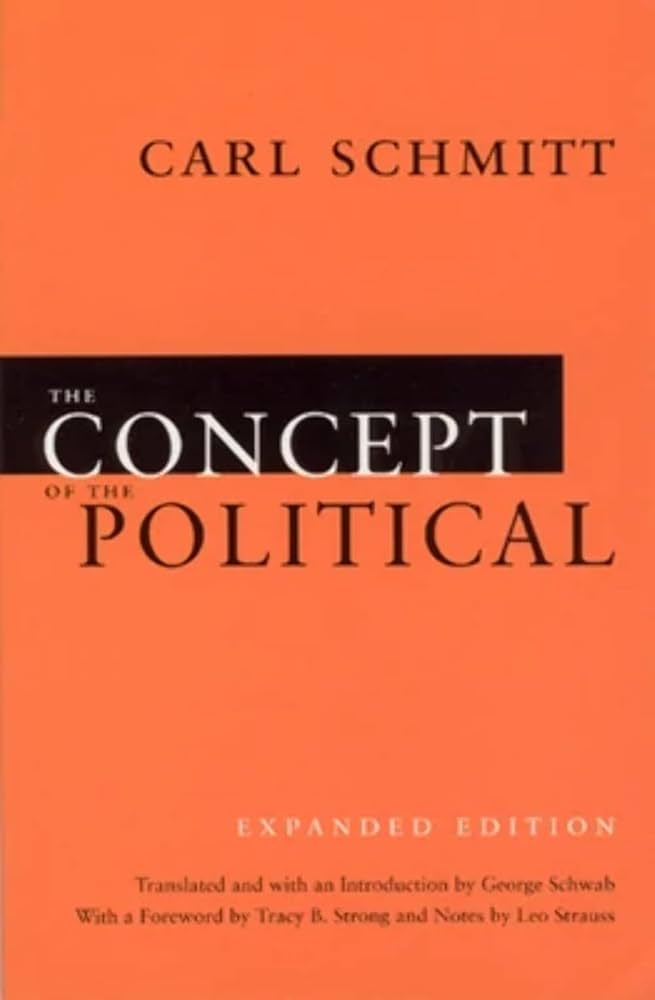
In The Concept of the Political , Schmitt defined the political as rooted in the friend-enemy distinction. Not in sentiment or mere rivalry, but in the ultimate possibility of conflict—existential, not symbolic. The enemy is not he who offends, but he who endangers. The friend is not a business partner or ally of convenience, but the one with whom one shares fate.
“The specific political distinction to which political actions and motives can be reduced is that between friend and enemy.” (The Concept of the Political)
This is not mere rhetoric. It is anthropology. The political is a fundamental category of human existence, one which reveals itself in the moment of danger, when peace collapses and masks are removed. It is not war for its own sake, but the possibility of war that defines the political. A people unwilling or unable to name its enemies is no longer a people in Schmitt’s sense. It is a territory, a market, or an open wound.
Liberalism, born of the trauma of religious war and the Enlightenment’s intoxication with reason, seeks to abolish the political. It imagines that man is naturally good, that all conflicts can be resolved through trade, dialogue, and tolerance. It turns politics into administration, law into procedure, war into humanitarian intervention. It replaces the sovereign with the bureaucrat, the warrior with the economist.
Schmitt warned of this. He saw liberalism as a pacified ideology that “evades or suppresses” the friend-enemy distinction. In Political Theology, he framed sovereignty in the starkest terms:
“Sovereign is he who decides on the exception.” (Political Theology)
That is, the sovereign is the one who determines when law is suspended and power acts nakedly, for the sake of survival. The exception is not a breakdown of order—it is its foundation. No constitution, no law, no procedural safeguard exists that is not, ultimately, upheld by someone willing to suspend it in defense of the whole.
And therein lies the fatal contradiction of the modern West. Liberal states, built upon the denial of conflict, now find themselves unable to act in the face of existential threats. The Schmittian state requires the capacity for decision, but liberalism prefers permanent deliberation. It wants open borders and open minds but recoils at the blood-price of real community. It no longer remembers that its liberties were carved by force and preserved by violence.
Today, the West is ruled not by sovereigns but by systems. It has law but no legitimacy. It has armies but no enemies it dares name. It believes it can survive without making distinctions—but survival itself is a distinction. The only people who will endure the coming storm are those who reclaim the political. Those who decide.
3/ The American republic did not evolve. It was overthrown. And like all great revolutions, its power lay in the illusion of continuity.
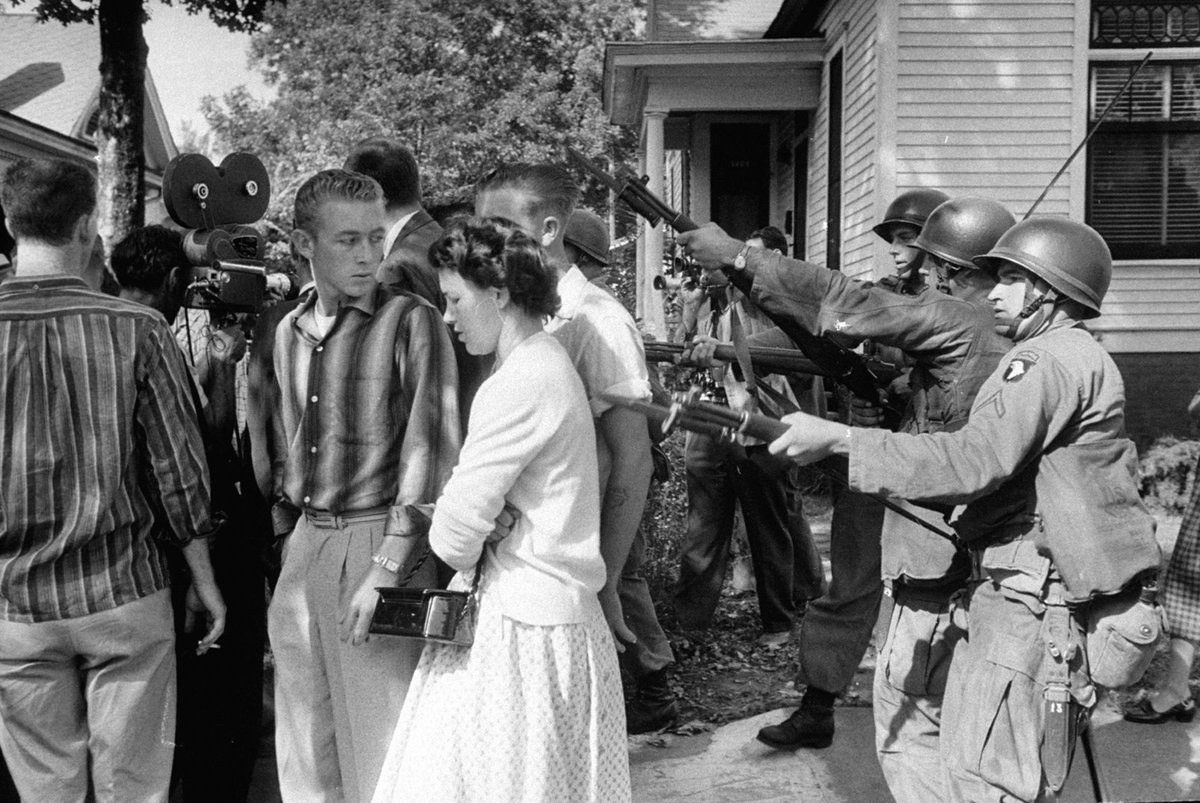
What occurred in the 1960s was not an expansion of rights, nor a moral correction—it was a replacement of the constitutional order. It was, in Carl Schmitt’s terms, a state of exception: a moment in which law is suspended in order to impose a new law. But unlike the raw clarity of a coup d’état, this revolution was judicial, bureaucratic, and veiled in sacred language. It retained the forms of the Constitution while emptying its substance.
In the Civil Rights era, it was not Congress, not the President, but the judiciary—and Chief Justice Earl Warren above all—who played the sovereign. Through a string of activist decisions, the courts seized the power to define moral truth, to rewrite the boundaries of association, and to declare the founding ethnos of America null. The original republic, rooted in territorial sovereignty and a shared European identity, was displaced by a regime that elevated abstract humanity and racial egalitarianism as its highest goods.
Schmitt warned that liberal regimes, unable to think politically, would eventually fall prey to ideological radicalism disguised as legal process. He saw clearly that liberal states “seek to depoliticize” all areas of life, but in doing so only invite politics to return in more destructive form—under the guise of universal rights, humanity, or anti-discrimination.
The Civil Rights regime did not abolish sovereignty. It merely transferred it—away from the people, away from tradition, and into the hands of unelected judges and ideological bureaucrats who began deciding what must be protected, what must be destroyed, and who could be included in the national “We.”
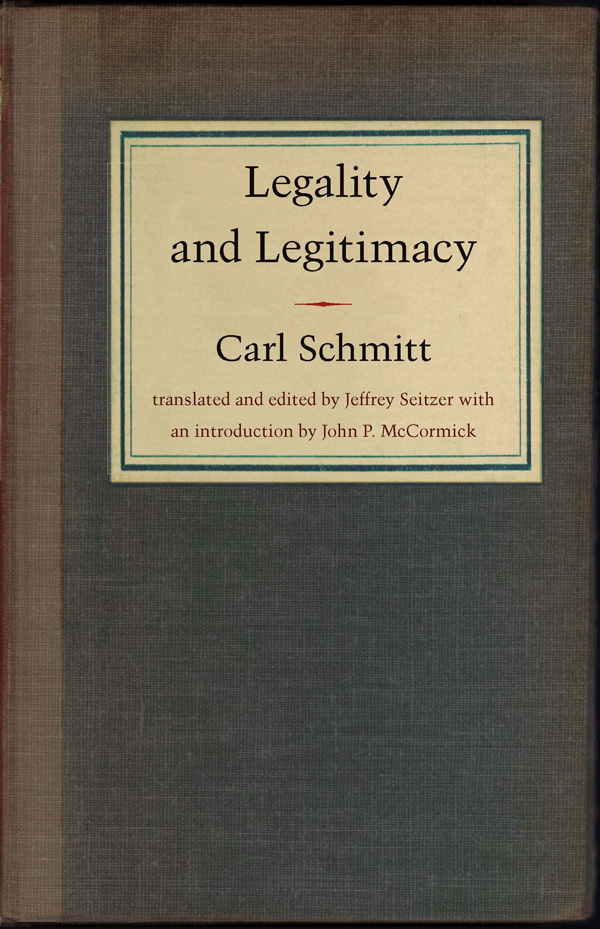
In Legality and Legitimacy, Schmitt makes the distinction between a regime based on procedural law and one based on homogeneity and legitimacy. A true legal order, he writes, depends not on formal equality or abstract rights but on the shared identity of the people. Once that homogeneity is destroyed, the law becomes a weapon, used not to preserve the people but to manage their dissolution.
“A democracy demonstrates its political power by knowing how to refuse or keep at bay something foreign and unequal that threatens its homogeneity.” (Legality and Legitimacy)
This is precisely what the Civil Rights revolution reversed. It dismantled the ethno-cultural foundation of the American republic while claiming to fulfill its ideals. It weaponized “rights” not to protect the people but to erase them as a distinct collective. It outlawed the friend-enemy distinction by criminalizing the capacity to prefer one’s own.
The law did not die; it was baptized in a new faith. And the new order, like all orders, defines itself not by the rights it grants but by the enemies it forbids you to name.
1/ Among the ruins of Western civilization, we do not mourn. We remember. In remembering, we reclaim. Tradition is not behind us, but beneath us—like a buried sword waiting to be drawn. Let us discuss what it means to stand upright as the world falls. 🧵👇
2/ Remember: we are not liberals sifting ruins for pity, nor conservatives mourning a world they helped dismantle. We are heirs to something harder, older, more formidable, and more beautiful. In the twilight of an exhausted cycle, the question is not how to salvage the fragments, but how to rekindle the fire that once forged them.
Julius Evola articulated that Tradition, in its essence, is “an overall ordering force in the service of principles that have the chrism of a superior legitimacy (we may even call them ‘principles from above’).” It is not a relic of the past, but a living force that shapes and elevates. In this spirit, we do not seek renewal through inclusivity, compromise, or appeals to progress. Ours is a different axis, a vertical reawakening of hierarchy, honor, and inward sovereignty.
The world decays not from external enemies, but from the absence of men who embody these principles. And so, as Julius Evola posed the question, we ask again: do men still stand among the ruins?
3/ These ruins are not only material. They are spiritual, racial, and civilizational. Beneath the shattered stones and hollowed monuments lie the remnants of an order once rooted in blood and form. This dissolution did not begin with bombs or revolutions. It began with the slow decay of the inner man, his will, his vision, his obedience to the higher. Liberalism, democracy, socialism, communism—these are not competing visions but descending stages of the same revolt against form, hierarchy, and identity.
The West fell when it ceased to recognize itself as a people with a destiny. When it forgot that the true State is not a contract or marketplace, but the spiritual armor of a race in history. Once that memory was lost, the rest followed. Blood was replaced by ballots, duty by consumption, fathers by bureaucrats. A society without origin becomes a society without direction.
The restoration we speak of is not political in the conventional sense. It begins within. Not with slogans or movements, but with the reawakening of inward form. With men who no longer ask for permission to exist, but who carry in themselves the same iron symmetry that once built cathedrals and crowned kings. No party, no platform, no constitution can do this. It is either lived or it is lost forever.
1/ America was not founded as an idea. It was founded as a nation—for a people. White, Anglo-European. They came not to universalize liberty, but to preserve it for themselves and their sons. A homeland, not a marketplace. A republic, not a borderless creed.
Let's discuss! 🧵👇
2/ They tell us America is an idea. A creed. A dream dreamt into being by men who believed in nothing but words. But nations are not born from ink. They are born from soil, from blood, from fire. What came into being on this continent was not an abstraction, but a people, a particular people, with faces and names and graves now weathered by time.
This people did not imagine America. They built it. They fought for it. They buried their sons in its fields and named their towns after their gods, their kings, their homelands. They did not believe they were creating a proposition for mankind. They believed they were securing a place for their own.
Today, that memory is under siege. The regime calls it hate. The schools call it myth. The monuments fall, the borders dissolve, and the descendants of the founders are taught to be ashamed of existing at all. But shame cannot build a country. And guilt cannot hold it together.
This is not nostalgia. It is not a lament. It is a reckoning with what was, and what must be again.
Because America was not founded as a nation for everyone. It was founded as a nation for us.
3/ There is no such thing as a generic White man. He does not exist. The White man is always someone: a Saxon farmer staring into New England’s forest; a French trapper bleeding into the Mississippi; a Scots-Irish borderland warrior cresting the Blue Ridge. Whiteness, in America, was never abstract. It was forged, through faith, through conquest, through memory, into a living people.
America did not begin as an idea. It began as a migration of blood. An exodus of Europeans who carried with them kings, catechisms, and ancestral burdens. The nation they built was not a proposition. It was an inheritance. What arrived on these shores was not liberalism, but the spiritual residue of shattered tribes, ancestral faiths, and feudal loyalties—thrown against a vast, untamed world.
The Puritan did not build a nation because he loved democracy. He built it because he feared God. The Cavalier did not tame Virginia in pursuit of equality. He sought to preserve the aristocratic memory of a world already dying in England. The Scots-Irish did not conquer the Appalachians for tolerance. They did so because survival demanded it.
This is the meaning of “pioneer spirit.” Not idealism, but instinct. The instinct of men who would rather die than submit, who would rather fight than fade.
There is nothing propositional about Jamestown. There is nothing universal about Plymouth Rock. These were not experiments in equality. They were White outposts, settlements of Christendom, fragments of Europe reforged in fire. The American people emerged not from theory, but from trial. From Indian war. From starvation. From lawless frontier and remembered oath.
The claim that America was born to deliver liberalism to the world is a postwar lie. The truth is older, bloodier, and more beautiful: America was a White nation, forged by Europeans, defined by separation from those who could never become it. Even as the Founders spoke of liberty, they enslaved, expelled, and exterminated. They still knew, instinctively, what modern man must relearn: that a nation is not a contract. It is kin, memory, and soil.
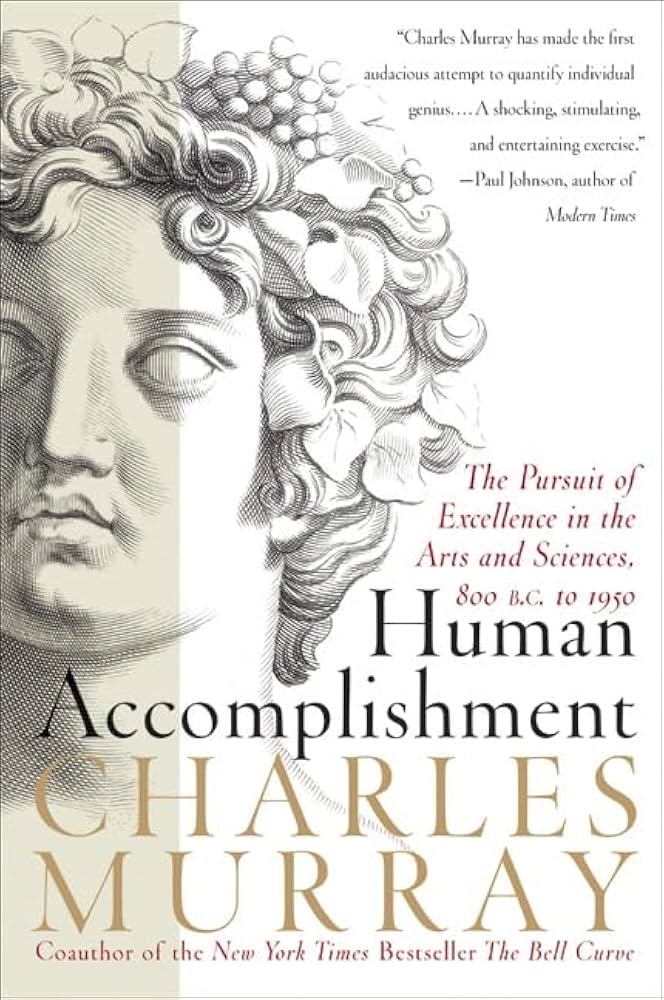
1/ Charles Murray charted the heights of Western genius in "Human Accomplishment." But what made the West exceptional was not just its output. It was the people who produced it.
Let's discuss Western excellence. 🧵👇
2/ Humans are not interchangeable cogs in a global machine. They are distinct peoples, shaped over millennia by geography, climate, and survival. Culture is not an abstraction. It is the fossilized imprint of blood and time, the outward behavior of a group honed by its environment. Europeans are not a random product of Enlightenment values. They are a unique branch of humanity, forged in ice, scarcity, and the long solitude of northern climes.
For tens of thousands of years, their ancestors endured cold environments where extended kinship networks failed and survival depended on individual responsibility, monogamous bonds, and high-investment parenting. This bred psychological traits that prioritized restraint, reciprocity, and delayed gratification. What made them different was not a theory. It was evolution.
3/ What we call the West is the civilizational projection of the European peoples, forged over centuries and spread across oceans, but always rooted in the soil and blood of Europe. Its foundation was not merely philosophical, but biological. The West emerged from populations shaped by harsh northern ecologies where survival demanded foresight, male provisioning, and high parental investment.
In this environment, the nuclear family took root. Extended kin networks faded as individuals became the central units of trust and cooperation. Unlike collectivist cultures, where identity remained bound to clan and bloodline, Europeans evolved toward exogamy, consent-based marriage, and individual responsibility. This did not just alter customs. It rewired instinct. The West rose because Europeans, by nature, formed societies not predicated upon enforced tribalism but on chosen bonds and shared ideals.
1/ The modern world fears strength. It pities failure and punishes excellence. Nietzsche saw it coming. He warned of the Last Man, the soft tyrant of safety. This essay is for those who still believe in greatness. Let’s explore what his philosophy means today.🧵👇
2/ A civilization is not judged by its average but by its apex. For Nietzsche, the measure of a people is the quality of its highest type, not its institutions, not its GDP, not its moral posturing, but the level of excellence it can produce and sustain. The Übermensch is not a myth or abstraction. He is the fulfilled man: rooted in instinct, elevated in mind, aristocratic in soul. He acts without apology, creates without permission, suffers without complaint. He is the rare outcome of a culture that honors strength, discipline, and becoming. When a civilization is pointed toward that man, it has a future. When it forgets him, it declines.
Nietzsche understood this from the inside. He knew what he was and what he wasn’t. “I am one thing,” he wrote, “my writings another.” That was not posturing. It was honesty. His own body betrayed him from the beginning. His health was a wreck. His stomach failed him. His eyes dimmed to near-blindness. His mind eventually collapsed into madness. He knew humiliation, rejection, solitude. But the spirit behind the works never bent. He carried his books, his “club foot,” from boarding house to boarding house like a wounded monk preserving fire in a dark age.
The Übermensch was not a self-image. It was a standard he could not reach but refused to lower. As Sir Oswald Mosley would later write, “We are not here for comfort. We are here for glory.” That glory, for Nietzsche, was not personal indulgence or acclaim. It was the demand of form, the burden of becoming. He offered the world an image of what man could be, not as an escape from suffering, but as its transfiguration. The vision was never meant to soothe. It was meant to burn.
This alone separates him from the modern intellectual. He did not flatter the world or accommodate its sickness. He made war on it. He saw the petty cruelty of egalitarians, the hidden malice of the meek, the quiet hatred behind compassion. He spoke to the few, not the many. He wrote for the future, not the present. And he did so without bitterness, without envy, without self-pity. There is no resentment in Nietzsche. There is only fire.
The question, then, is not whether he lived up to his vision. Few ever have. The question is whether that vision still burns in the ruins of the West. Whether a man, once again, can say: I am not enough. But I know what is.
3/ What happens when a civilization turns its back on the higher type? Nietzsche gave the answer in prophecy: the rise of the Last Man. He is not evil, but exhausted. Not demonic, but domesticated. He avoids suffering, risk, greatness, and pain. He has no enemies because he believes in nothing worth defending. He believes in comfort, equality, and peace above all. He blinks. He grins. He survives.
Nietzsche saw this figure taking shape in the liberal democracies of his time. We now live in his empire. The Last Man fills our cities, staffs our institutions, teaches our children. He writes our laws and enforces our norms. He is tolerant of everything except strength. He confuses weakness with virtue and calls it empathy. He replaces reverence with irony, struggle with therapy, honor with social credit. He has no memory of nobility, and no desire for future greatness. He is the death of tragedy, the flattening of man.
The worst part is not his cowardice. It is his pride. The Last Man believes himself to be the end of history—the moral culmination of all that came before. He looks at the ruins and calls them progress. He calls his softness wisdom, his passivity justice, his sterility peace. He pities the higher type and calls it hate. In this inversion, even the language of life is poisoned. “Self-overcoming” becomes “trauma.” “Duty” becomes “oppression.” “Hierarchy” becomes “abuse.” The West no longer even speaks in a vocabulary capable of greatness.
The Last Man will never kill you. He doesn’t have the will. But he will smother everything that reminds him of what he is not. He will flood the temple, not to destroy it, but to make sure no gods ever return.
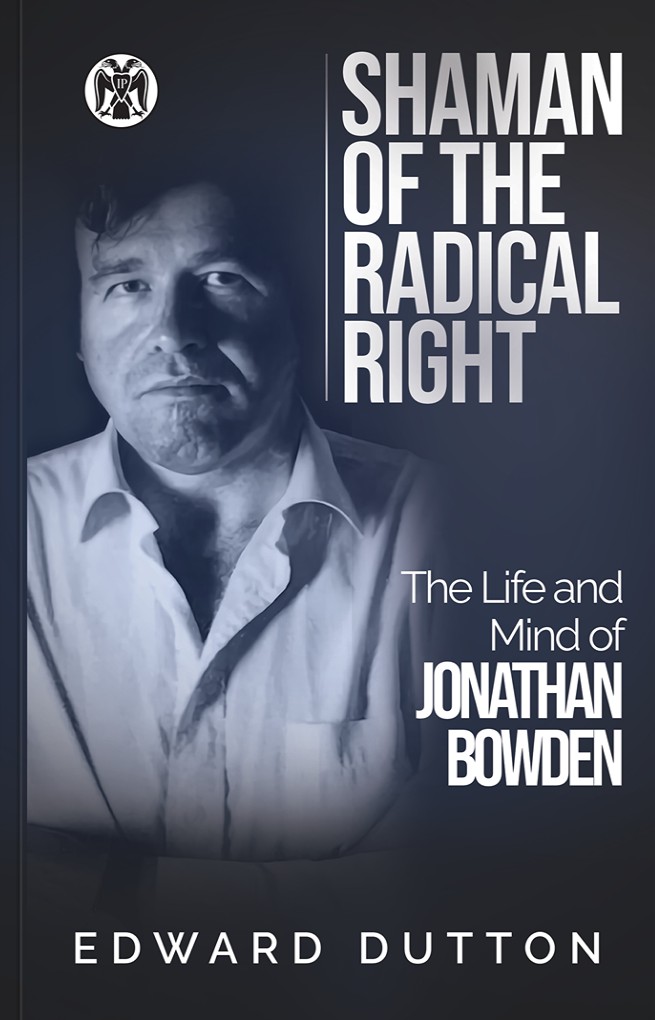
1/ With the release of Dr. Edward Dutton’s “Shaman of the Radical Right,” I will be sharing my reflections on Jonathan Bowden, whom I knew and corresponded with, one essay at a time. I will post a new section each day. See the first humble installment below.
2/ Jonathan Bowden lived and worked in a time that now feels impossibly distant. The early 2000s were not just pre-social media; they were ideologically suffocating. To raise even a mild concern about immigration was to mark oneself as dangerous. To use the word “White” in anything but a negative context was to invite social ostracism and professional ruin. The term itself was rarely spoken in polite society, and almost never on television. It had taken on the character of a slur, especially when used to express identity in a collective sense.
Nationalist thought was taboo. Those who voiced it faced total exclusion from cultural life. There were no real platforms for dissent. There were only scattered meetings in rented rooms, underground publishing circles, and whisper networks held together by trust and defiance. This was not a world of likes, shares, or algorithmic amplification. It was a world where heterodoxy was answered with silence, contempt, and, more often than not, slow and deliberate personal destruction.
This milieu was, and remains, especially cruel to artists and intellectuals, especially those for whom free speech is lifeblood and who refused to lie to survive. The dissident artist has always struggled, but in the modern West, that struggle took on new dimensions. It was no longer merely about poverty or rejection. It became a matter of total exclusion and, ultimately, erasure from both life and memory. For Bowden, it meant living hand-to-mouth, surviving through sheer willpower, and enduring mental collapse in isolation. His life was marked by brilliance, yes, but also by suffering, by the costs exacted upon those who defy the moral idols of their age.
He was not subsidized by institutions. He had no real patronage network to sustain him. He was either ignored or attacked by the very cultural organs that reward conformity and punish truth. Even in death, the attacks have not ceased. The hackjob published in Jacobin was not written to inform or to analyze. It was written to demoralize you and to defame him. That alone is a testament to the enduring weight and power of his presence.
To those discouraged by such attempts, I would urge a more careful reading of Bowden’s actual work and of Dr. Dutton’s biography. As Dutton himself noted, those who believe “it’s over” because Bowden had flaws, as all men do, are simply incapable of nuanced thinking. Complexity is not contradiction. Flaws do not negate greatness. A man like Bowden is not undone by his imperfections. He is defined by the fire he carried in spite of them.
Yet even in this cultural vacuum, Bowden spoke with a clarity and force that left a permanent mark, one that still endures today. He called himself a “cultured thug,” a paradox he inhabited completely. A university dropout and autodidact, he mastered the canon of European thought: Nietzsche, Spengler, Evola, Mishima, Lewis. His speeches, many of which were transcribed and preserved on Counter-Currents, combined the cadence of a preacher with the intellectual force of a philosopher. And speaking of suppression, it is worth noting that Counter-Currents and its founder, Greg Johnson, are not even permitted to maintain a presence on X. Their accounts are deleted almost immediately. Bowden was not a scholastic annotator, but a firebrand. He electrified small rooms, spoke without notes for hours, and left his audiences stunned. And he did this not for money, fame, or personal advancement, but because he believed that Western civilization, in its decadence, needed to be shaken awake.
In the years since his death, Bowden has become more than a memory. He has become a symbol. For some, he represents a lost age of courage and intellect. For others, he is a saint, a dissident martyr surrounded by an aura of reverence that permits no doubt. His posthumous rise has taken on the shape of a cult of personality, with followers who do not merely admire him but rely on him. To criticize him, even with care, is to risk being accused of betrayal. To suggest that he was flawed, conflicted, or haunted is to invite the charge of heresy. But the truth is that most artists, and certainly many of the greatest in recent memory, are flawed men. Perhaps it is this very fact that makes them great.
This response speaks not to Bowden’s failure but to his power. His charisma, his intellect, and his style left such a lasting imprint that he now serves as a totemic figure, a kind of “shaman” for those who find themselves cast aside by modernity. Yet to reduce Bowden to either myth or pathology is to miss the essence of what made him remarkable. He was not a flawless man. He was a flawed genius, one who struggled deeply yet still managed to create, to speak, and to inspire. He did not sell utopias. He offered no easy hope. What he gave was something far more dangerous: the truth, as he understood it, and the courage to speak it aloud.
Today, the conditions have changed, but not entirely. Dissidents are still punished, though the boundaries of acceptable thought have merely shifted. The tools of enforcement such as demonetization, doxxing, and deplatforming are still in place, but now they are triggered not by calls for revolution, but by questioning the most protected narratives. It is no longer what you say that matters most, but whom your words might unsettle, and I think we all know who I am talking about. The lines have moved, yet the punishment for crossing them remains as unforgiving as ever.
There are now platforms, publishers, and spaces that did not exist during Bowden’s life, but the costs of truth-telling remain. It is still easier to lie. It is still safer to conform. But the path that Bowden walked, lonely and demanding, lit by an inner fire, is still open to those willing to pay the price.
This essay is not a hagiography. It is not a smear. It is an attempt to understand a man who made himself into a legend while being, in many ways, at war with himself. It is a study of his life, his work, and the ideas that gave him form. For those who knew him, Bowden was a singular force. For those who never met him, he remains a voice on a recording or a name on a spine, yet that voice continues to speak, and that name continues to resonate.
What follows is an honest tribute. A confrontation with the man and the myth. An affirmation of his role not just as a speaker or writer, but as a symbol of what it means to be a dissident in the modern West: brilliant, cursed, misunderstood, and unafraid.
To be continued tomorrow...
3/ Please consider checking out Dr. Edward Dutton’s (@jollyheretic) new book on Jonathan Bowden, published by Imperium Press (@imperiumpress1). It’s available on Amazon and elsewhere.