NEW: The Harvard Law Review has made DEI the "first priority" of its admissions process. It routinely kills or advances pieces based on the author's race. It even vets articles for racially diverse citations.
And guess what? Editors at the top journal put all this in writing.🧵
And guess what? Editors at the top journal put all this in writing.🧵


We obtained more than four years of documents from the law review, including article evaluations, training materials, and data on the race and gender of journal authors. They reveal a pattern of pervasive race discrimination that could plunge Harvard into even deeper crisis.
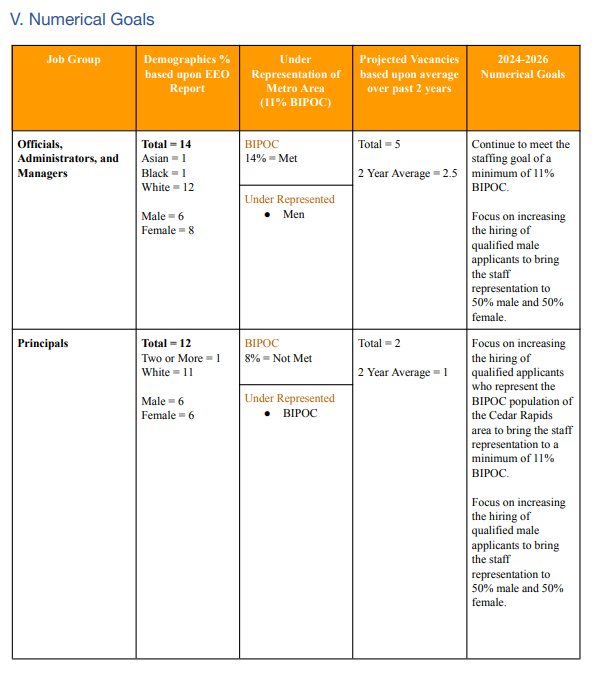
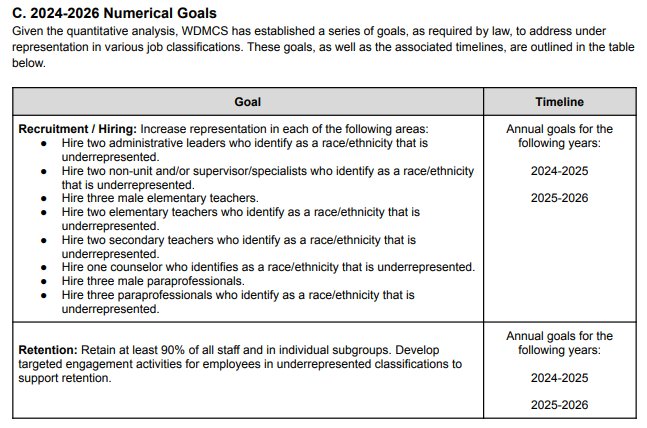
Just over half of journal editors are admitted solely based on academic performance. The rest are chosen by a "holistic review committee" that has made the inclusion of "underrepresented groups"—defined to include race—its "first priority," per a resolution passed in 2021.

The law review has also incorporated race into nearly every stage of its article selection process, which as a matter of policy considers "both substantive and DEI factors."

Editors routinely kill or advance pieces based in part on the race of the author, according to eight different memos reviewed by the Free Beacon, with one editor even referring to an author’s race as a "negative" when recommending that his article be cut from consideration.

"This author is not from an underrepresented background," the editor wrote in the "negatives" section of a 2024 memo. The piece, which concerned criminal procedure and police reform, did not make it into the issue.

Such policies have had a major effect on the demographics of published scholars. Since 2018, according to the journal's data, only one white author has been chosen to write the foreword to the review’s Supreme Court issue, arguably the most prestigious honor in legal academia.

The rest—with the exception of Jamal Greene, who is black—have been minority women.
That pattern is a stark departure from the historical norm. Between 1995 and 2018, the data show, nearly every foreword author was white.
That pattern is a stark departure from the historical norm. Between 1995 and 2018, the data show, nearly every foreword author was white.

The Trump administration has already frozen over $2 billion to Harvard. The documents from the law review could create a new line of attack for the administration as the fight over federal funding escalates and invite litigation from private plaintiffs eager to join the pile-on.
Such plaintiffs would have no shortage of ammunition. The documents show that the Harvard Law Review continued using race after the Supreme Court outlawed affirmative action in June 2023, implementing several DEI measures within the past year.
Just this January, the law review voted down a proposal to make personal statements the only non-academic factor considered in the admissions process for editors, effectively renewing its policy—adopted prior to SFFA—of making race the "first priority" of holistic review.

The most overt use of race comes in the selection process for articles, which includes multiple steps designed to weed out authors based on DEI criteria.
One July 2023 training told editors to consider "DEI values"—including the racial diversity of each article’s citations—when giving pieces a preliminary read.
Articles that make it past that initial screen are subject to even more DEI vetting.
Articles that make it past that initial screen are subject to even more DEI vetting.

Each piece is assigned to an editor who decides whether to recommend it for further consideration. As part of that process, editors write memos to the articles committee laying out each piece’s pros and cons—including, in many cases, the race of the scholar who wrote it.
In at least seven memos obtained by the Free Beacon, editors argued that an author’s minority status counted in favor of publishing their article. "The author is a woman of color," read one 2024 memo. "This meets a lot of our priorities!"

Another memo, from 2022, said that one "pro" of an otherwise weak article was that it had been "written by a woman of color outside of the T14," a reference to the top 14 law schools that dominate legal scholarship.

Still another recommended a piece on the grounds that it would "help advance [the] career" of a "young academic of color on an upward trajectory at UVA."

At least one attorney is already planning to sue Harvard over the law review’s policies. Jonathan Mitchell, the former Texas solicitor general, told the Free Beacon that he is preparing complaints against both Harvard and the law review based in part on the documents.
While the Harvard Law Review is an independent nonprofit and legally distinct from the university, it operates out of a Harvard building, is cleaned by Harvard janitors, and employs only Harvard students as editors.
It is also advised by administrators and professors at Harvard Law School, including the dean, and some student editors are on federal financial aid.
The pending litigation follows a wave of lawsuits against other top schools, including Northwestern and NYU, over the diversity policies of their law journals, as well a separate complaint Mitchell filed against Harvard in 2018 that was based on publicly available information.
Though all three complaints were eventually dismissed, most of the litigation took place before SFFA. And it did not have the benefit of the breadth of materials reviewed by the Beacon, which provide an unusually wide window into the decision-making process of a top law journal.
Take the solicitation process for the foreword to the Supreme Court issue. A list of nominees is typically compiled by 5 people: the EIC, two SCOTUS editors, and one rep from each of the jouranl's two diversity committees, including the "Women, Nonbinary, and Trans Committee."
Armed with more votes than the journal’s top editor, the DEI officials help whittle down the list of nominees. In a section titled "Why should they write the foreword?", one 2024 spreadsheet stated that a professor would be "the first hijabi, Muslim woman to write the Foreword."

Other scholars got points for being "one of few Latino professors in this space" or, in the case of critical race theorist Mari Matsuda, "the first tenured female Asian American law professor in the US."


Eventually, the entire law review votes on the list of finalists. To inform the vote, the foreword committee circulates memos on each of the candidates, taking care in many cases to note their race and gender.
"If selected, Rodríguez would be the third woman of color, and the first Latino/a scholar, to write the Foreword," read a 2020 memo on Yale Law School’s Cristina Rodríguez. She was ultimately chosen as the foreword writer.

This process has had a dramatic effect not only on which scholars are selected but on which topics they address. The 2019 foreword, "Abolition Constitutionalism," discussed how the Reconstruction Amendments could be used to bring about a "society without prisons."
The 2022 foreword, "Race in the Roberts Court," was written by a law professor at UC Berkeley, Khiara Bridges, who had emerged the previous year as an outspoken defender of critical race theory.
The 2023 foreword, by Maggie Blackhawk, was called the "Constitution of American Colonialism."
The choices reflect what some lawyers say is a growing divide between the topics covered in elite law reviews and the actual issues in appellate law.
The choices reflect what some lawyers say is a growing divide between the topics covered in elite law reviews and the actual issues in appellate law.
Advocates rarely consult journals like the Harvard Law Review, said O.H. Skinner, Arizona’s former solicitor general, because the journal's obsession with DEI has led to "ever-more-ridiculous levels of academic myopia" and pushed the most pressing legal questions to the side.
The documents from Harvard "show a journal that no longer seems interested in much beyond their own performative score-keeping amongst categories of diversity," Skinner said. "Actual substance comes second to box-checking in discussions of articles’ worth."
That kind of box-checking was on full display when, in 2024, some editors were debating who should be invited to reply to a piece about police reform.
"Four of the five people raised in this message are white men, which I find concerning," one editor wrote in Slack.
"Four of the five people raised in this message are white men, which I find concerning," one editor wrote in Slack.

In a separate exchange, an editor implied that a piece should be subject to expedited review because the author was a minority. "POC author," the editor wrote in Slack. "We should send for [review] tonight if we want to move on this."

Mitchell plans to argue that the journal’s article selection process violates Section 1981, the law banning race discrimination in contracting, as well as Title VI and Title IX, which ban race and sex discrimination, respectively, at schools receiving federal aid.
"It doesn’t matter whether the Harvard Law Review is legally distinct from Harvard University," Mitchell said. "The students on the Law Review receive federal financial aid, and that subjects the Law Review to the anti-discrimination rules of Title VI and Title IX."
Whether Harvard itself can be held liable for the law review’s behavior is a more complicated question. It would depend, in part, on the exact relationship between the law school and the law review, which says on its tax forms that it is "functionally integrated" with Harvard.

The law review has also adopted several policies that, while not racially discriminatory, seem designed to ensure that editors toe the party line. One resolution passed in 2023 called for "Indigenous inclusive citation practices."

Another required officers to "make a good-faith effort to encourage use of pronouns" and "include pronouns in self-introductions," adding that "very few editors engage in the standard practice of using their pronouns in conversation."

Tldr: The Harvard Law Review has made race an integral part of its selection process for both editors and articles.
The discrimination is brazen and overt. And it could open a new front in the administration's war on Harvard.
Read the full story here: freebeacon.com/campus/exclusi…
The discrimination is brazen and overt. And it could open a new front in the administration's war on Harvard.
Read the full story here: freebeacon.com/campus/exclusi…
• • •
Missing some Tweet in this thread? You can try to
force a refresh