The Mafia is undoubtedly cool.
It makes for good TV and good movies, and some even argue that it makes for economic growth, that it 'greases the wheels'.
But I've never believed this theory, and I think there's considerable evidence against it🧵
It makes for good TV and good movies, and some even argue that it makes for economic growth, that it 'greases the wheels'.
But I've never believed this theory, and I think there's considerable evidence against it🧵

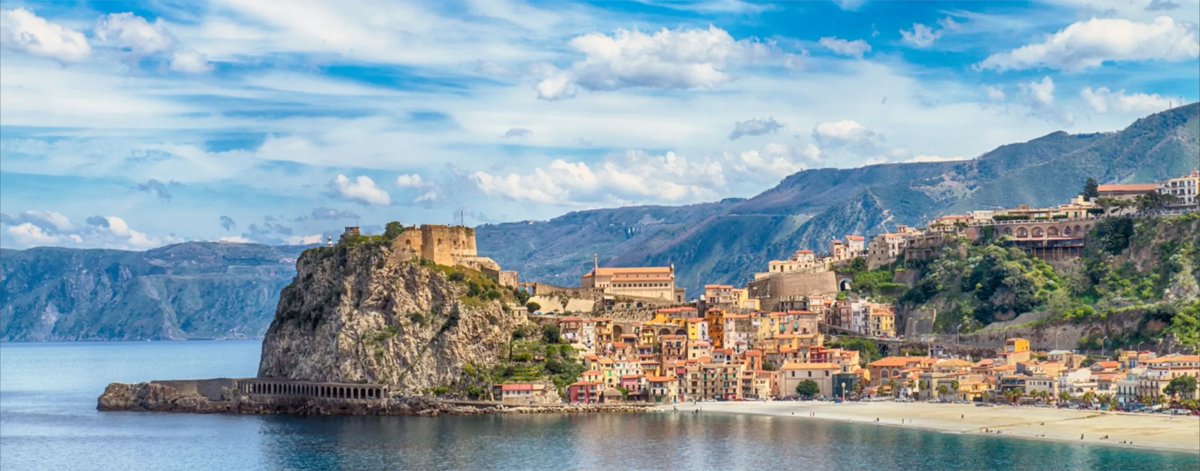
Italy is the homeland of the Mafia, and though they've tried everything to get rid of them, they're still around.
Check this date out: They're still doing anti-Mafia stings in 2025!
Check this date out: They're still doing anti-Mafia stings in 2025!

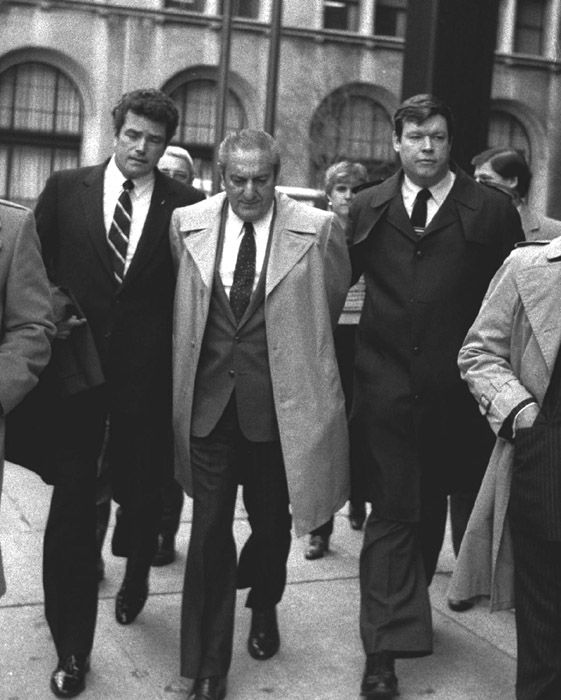
We are quite literally approaching 100 years of the Italian state engaging in mass campaigns to contain and crush the Mafia.
In June of 1924, Mussolini tasked Cesare Mori with eradicating them, and though he did a lot and thought he'd win, he did not.
Cent'Anni!
In June of 1924, Mussolini tasked Cesare Mori with eradicating them, and though he did a lot and thought he'd win, he did not.
Cent'Anni!

Nowadays, one of the main tools the Italian central government uses to stop the Mafia is the "CCD", or City Council Dismissal.
These involve dismissing everyone in a local government if any of them are believed to be involved with the government.
Then, state officials take over
These involve dismissing everyone in a local government if any of them are believed to be involved with the government.
Then, state officials take over
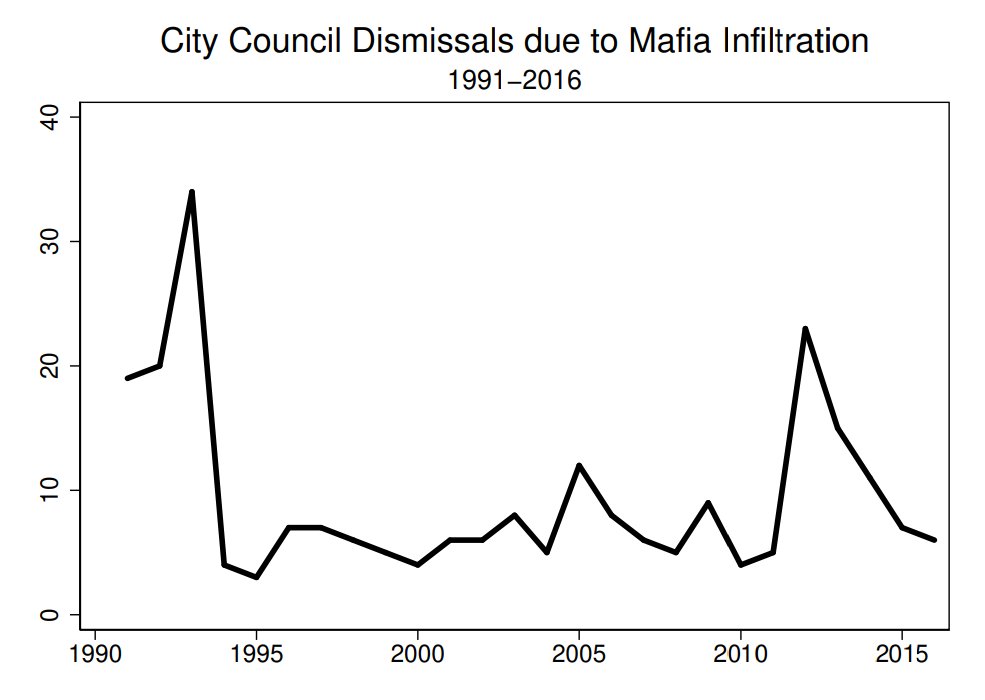
The Italian government has been doing these dismissals since 1991, and between then and 2016, they conducted a total of 245 of these.
That means that 245 places had their city councils, mayors, etc. dismissed and replaced by the state's people for a period of two years each.
That means that 245 places had their city councils, mayors, etc. dismissed and replaced by the state's people for a period of two years each.
When the policy went into effect, the government clearly had a bunch of towns in mind for purging their governments of Mafia influence.
The government also had to do another wave of CCDs after the Great Financial Crisis, as the Mafia has re-asserted itself.
The government also had to do another wave of CCDs after the Great Financial Crisis, as the Mafia has re-asserted itself.
The wonderful thing these CCDs allow is for an analysis of the effects of the Mafia on local economies through difference-in-differences based on simple matching
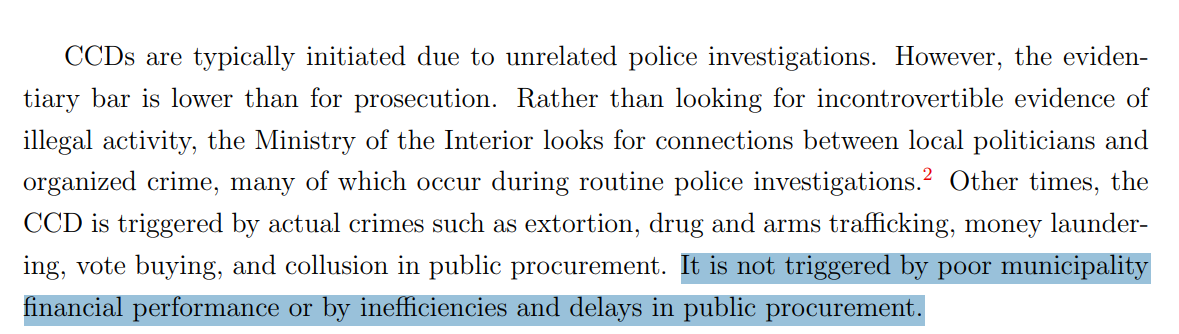
How? Because CCDs cannot be initiated with poor economic activity as the reason, only for other reasons!
How? Because CCDs cannot be initiated with poor economic activity as the reason, only for other reasons!
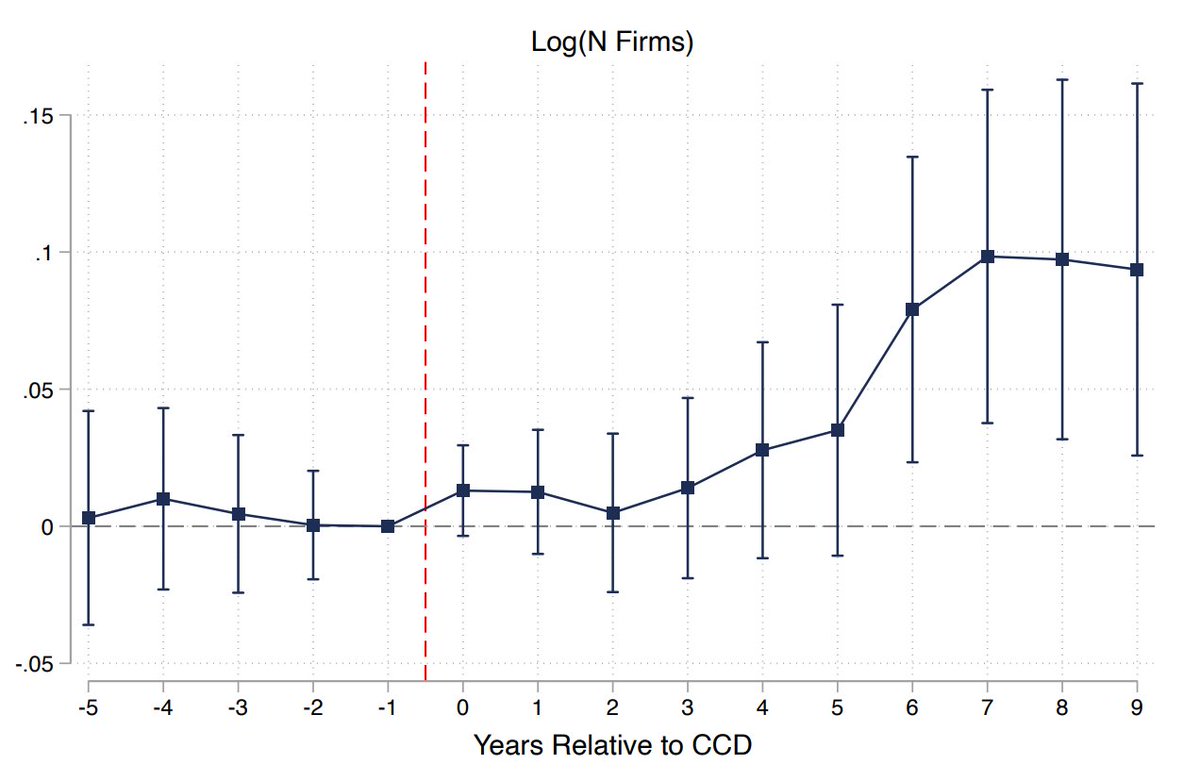
After the CCD takes place, affected municipalities don't seem to do much better right away.
But then it ends after two years and elections happen, whereafter employment starts to rise in the affected municipality.
But then it ends after two years and elections happen, whereafter employment starts to rise in the affected municipality.

With similar timing, the number of new firms starts to rise.
Clearly, kicking out corrupt city councils seems to do something for local economic activity, and that something is good!
Clearly, kicking out corrupt city councils seems to do something for local economic activity, and that something is good!
But, CCDs can be initiated for reasons besides Mafia suspicions.
But here's the kicker: When the CCD is not about the mafia, we don't see these beneficial effects!
It's clearly the mob holding local economies back.
But here's the kicker: When the CCD is not about the mafia, we don't see these beneficial effects!
It's clearly the mob holding local economies back.

But, at the same time, the total amount of wages paid in affected municipalities was only slightly boosted, while the average wage level fell.
What's going on?
What's going on?
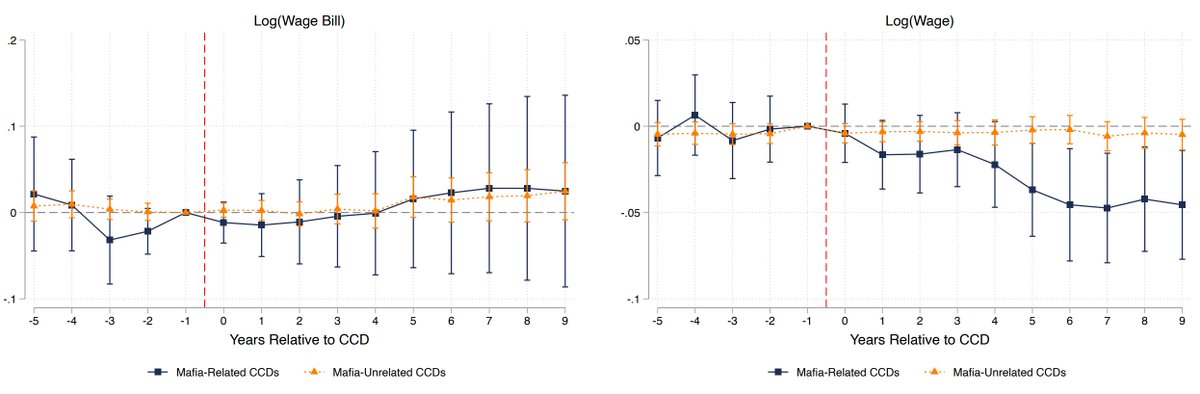
The answer is compositional:
Incumbent workers' wages don't go down, but young workers who would have otherwise been tempted into crime or working under the table in Mafia-managed businesses like trash disposal instead became gainfully employed, without anyone losing out.
Incumbent workers' wages don't go down, but young workers who would have otherwise been tempted into crime or working under the table in Mafia-managed businesses like trash disposal instead became gainfully employed, without anyone losing out.
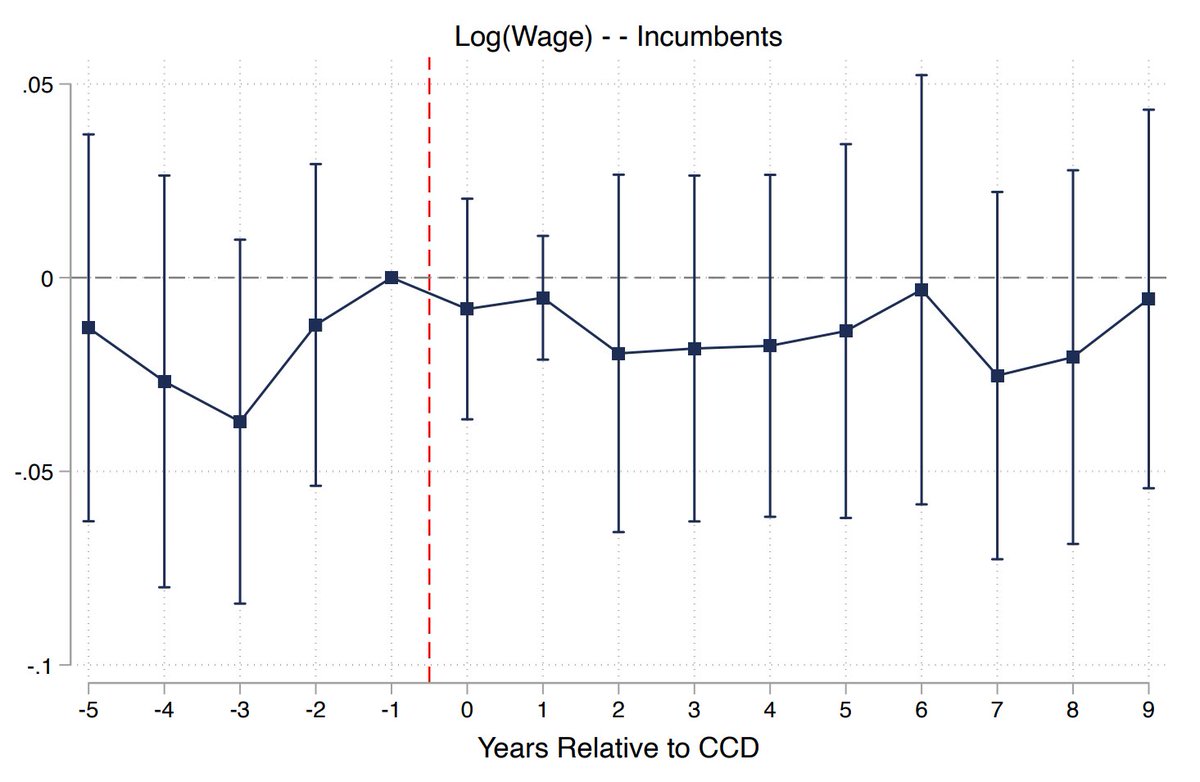
An added benefit is that driving the mafia out of one town leads to more employment, firms popping up, and total wages paid increasing in nearby (<20km) communities.
Driving out the Mafia in one place affects all those nearby as well!
Driving out the Mafia in one place affects all those nearby as well!

Other work has looked at crimes and found that these dismissals don't really seem to threaten the popular Mafia crimes like murder and extortion, but they do lead to reduced petty theft
This was chalked up to high media attention, high levels of formal deterrence, and civicness
This was chalked up to high media attention, high levels of formal deterrence, and civicness

But the effect could just as easily go through the labor market route, because young and rowdy people get employed more often after CCDs.
One of the mechanisms that facilitates that success might be turnover in the town's officials after the CCD ends.
One of the mechanisms that facilitates that success might be turnover in the town's officials after the CCD ends.
After CCDs conclude and elections come back, the town officials in the cases of Mafia-related CCDs tend to be more educated, younger, more female, and newer to politics.
Additionally, they tend to be less connected to the private sector, and incumbent mayors lose big.
Additionally, they tend to be less connected to the private sector, and incumbent mayors lose big.

The case, then, seems open and shut, right?
I'm tempted to say "Yes", but there is one notable benefit to the Mafia.
Remember when I said the Mafia re-emerged after the Great Financial Crisis? Well, they grew so much because they became creditors during the downturn.
I'm tempted to say "Yes", but there is one notable benefit to the Mafia.
Remember when I said the Mafia re-emerged after the Great Financial Crisis? Well, they grew so much because they became creditors during the downturn.

Local areas with greater Mafia presence actually saw lots of investment in legitimate businesses by the Mafia.
These helped businesses to stay afloat... but is that worth it? You become indebted to the Mafia. They might be doing well by your community, but someone has to pay.
These helped businesses to stay afloat... but is that worth it? You become indebted to the Mafia. They might be doing well by your community, but someone has to pay.

So this is my case:
Attacking the power of the mob in local governments helps local economies and it helps young people avoid getting tangled up in criminal activity.
Yes, the Mafia can "help out" by offering credit during a crash, but the government should be doing that!
Attacking the power of the mob in local governments helps local economies and it helps young people avoid getting tangled up in criminal activity.
Yes, the Mafia can "help out" by offering credit during a crash, but the government should be doing that!
So, on net, is the Mafia greasing the wheels? Are they helping out?
God no.
They destroy communities with drugs and they compel helpless locals to go along with it, and even assist them if they're owed money. They kill people, and they do, on net, hurt the economy.
God no.
They destroy communities with drugs and they compel helpless locals to go along with it, and even assist them if they're owed money. They kill people, and they do, on net, hurt the economy.
This generalizes outside Italy
Remember when the longshoremen threatened to go on strike? They're also run by the mob
They are not helping you, they are hurting America, and they're doing so to such a huge degree that wheel greasing elsewhere could probably never make up for it
Remember when the longshoremen threatened to go on strike? They're also run by the mob
They are not helping you, they are hurting America, and they're doing so to such a huge degree that wheel greasing elsewhere could probably never make up for it

The world would be a better place if every mobster killed a gangster and got hanged for it.
Sources:
globalinitiative.net/analysis/paler…
aeaweb.org/articles?id=10…
link.springer.com/article/10.100…
papers.ssrn.com/sol3/papers.cf…
direct.mit.edu/rest/article-a…
cremieux.xyz/p/just-pay-the…
Sources:
globalinitiative.net/analysis/paler…
aeaweb.org/articles?id=10…
link.springer.com/article/10.100…
papers.ssrn.com/sol3/papers.cf…
direct.mit.edu/rest/article-a…
cremieux.xyz/p/just-pay-the…
• • •
Missing some Tweet in this thread? You can try to
force a refresh