1/ For years, the pattern has held. A White person makes a comment, sometimes crude, sometimes merely unfashionable. A video is clipped, stripped of context, and cast into the digital coliseum. The crowd demands penance. Doxing follows. Then come the sponsors, the employers, the journalists. The result is always the same: apology, groveling, ruin.
This is not justice, it never was. It is a moral spectacle, a purification ritual for the postmodern West, where the cleansing agent is White submission. The apology is not meant to be accepted, but to affirm the guilt of the group. The goal is not reconciliation, but re-education, humiliation, silence.
But this time, with the case of Shiloh Hendrix, the script cracked. Her personal details were posted online. She received death threats. Her children were targeted. And yet, she did not capitulate. She did not appear on camera with quivering voice and downcast eyes. She launched a fundraiser.
And White people responded.
Not the media, not the institutions, not the credentialed class, but ordinary White people. Tens of thousands poured in to support her. The platform, GiveSendGo—not GoFundMe, which routinely bans dissidents—reported over $250,000 raised in days. These were not donations. These are the stirrings of something new. Each dollar said, “We see what you are doing, and we are done pretending.”
This is more than a defense of one woman. It is a rejection of the moral framework that made her a target. The Hendrix affair is not the first of its kind. But it is one of the first to end differently. No apology. No resignation. No collapse. Instead: resistance. And that, more than anything else, signals a shift.
The ritual is breaking. And with it, the spell of White guilt.
This is not justice, it never was. It is a moral spectacle, a purification ritual for the postmodern West, where the cleansing agent is White submission. The apology is not meant to be accepted, but to affirm the guilt of the group. The goal is not reconciliation, but re-education, humiliation, silence.
But this time, with the case of Shiloh Hendrix, the script cracked. Her personal details were posted online. She received death threats. Her children were targeted. And yet, she did not capitulate. She did not appear on camera with quivering voice and downcast eyes. She launched a fundraiser.
And White people responded.
Not the media, not the institutions, not the credentialed class, but ordinary White people. Tens of thousands poured in to support her. The platform, GiveSendGo—not GoFundMe, which routinely bans dissidents—reported over $250,000 raised in days. These were not donations. These are the stirrings of something new. Each dollar said, “We see what you are doing, and we are done pretending.”
This is more than a defense of one woman. It is a rejection of the moral framework that made her a target. The Hendrix affair is not the first of its kind. But it is one of the first to end differently. No apology. No resignation. No collapse. Instead: resistance. And that, more than anything else, signals a shift.
The ritual is breaking. And with it, the spell of White guilt.

2/ White guilt was never a natural sentiment; no people naturally hate themselves or push for their own demographic extinction. It did not emerge organically from conscience or history. It was manufactured, ritualized, and weaponized. It was imposed from above by alien elites who seized control of the institutions of education, media, and culture, and rewrote morality to make one group, the White population, the permanent villain in its own homeland.
From the youngest age, White children are taught to associate their identity with conquest, slavery, cruelty, and destruction. They are told to dissociate from their own heritage, to feel shame for the achievements of their ancestors, to distrust their instincts, and to question the legitimacy of their very existence. They are instructed to love all others, but never themselves.
This is not ethics. It is psychological warfare.
And like all systems built on repression, it only works if it remains unquestioned. The moment it is challenged, seriously, openly, defiantly, it begins to fall apart. The power of White guilt lies in silence, not argument. Once someone says aloud, “I do not feel guilty,” the illusion weakens for everyone else.
That is what the Hendrix fundraiser represents. Not a defense of one person, but a refusal to obey the narrative. It is one thing to quietly disagree with the orthodoxy. It is another to act on that disagreement. The act of giving money in defiance of the media’s command is a political gesture far more radical than voting. It is an act of moral rejection. And tens of thousands just performed it.
This would have been unthinkable a decade ago. Even five years ago, the weight of institutional guilt still compelled submission. But something has changed. The spell is weakening. The repetition no longer works. The words no longer bind. The system still speaks in the language of shame, but fewer and fewer are listening.
The idea that Whites must apologize for existing is no longer sacred. It is simply absurd. And once absurdity is exposed, mockery follows. Then rejection. Then reversal.
We are witnessing the early stages of that reversal.
From the youngest age, White children are taught to associate their identity with conquest, slavery, cruelty, and destruction. They are told to dissociate from their own heritage, to feel shame for the achievements of their ancestors, to distrust their instincts, and to question the legitimacy of their very existence. They are instructed to love all others, but never themselves.
This is not ethics. It is psychological warfare.
And like all systems built on repression, it only works if it remains unquestioned. The moment it is challenged, seriously, openly, defiantly, it begins to fall apart. The power of White guilt lies in silence, not argument. Once someone says aloud, “I do not feel guilty,” the illusion weakens for everyone else.
That is what the Hendrix fundraiser represents. Not a defense of one person, but a refusal to obey the narrative. It is one thing to quietly disagree with the orthodoxy. It is another to act on that disagreement. The act of giving money in defiance of the media’s command is a political gesture far more radical than voting. It is an act of moral rejection. And tens of thousands just performed it.
This would have been unthinkable a decade ago. Even five years ago, the weight of institutional guilt still compelled submission. But something has changed. The spell is weakening. The repetition no longer works. The words no longer bind. The system still speaks in the language of shame, but fewer and fewer are listening.
The idea that Whites must apologize for existing is no longer sacred. It is simply absurd. And once absurdity is exposed, mockery follows. Then rejection. Then reversal.
We are witnessing the early stages of that reversal.

3/ When guilt dies, politics begins. The moral paralysis ends. The silence breaks. And what replaces it is not chaos, but clarity. Once Whites stop apologizing for who they are, they begin to ask the forbidden questions. Who benefits from our shame? Who profits from our dispossession? Why are we the only people on Earth forbidden to speak in our own name?
White identity politics is the answer to those questions.
It is not supremacy. It is not hatred. It is not a call to dominate others. It is simply the political expression of collective interest. Every other group has it. Every other group is allowed it. Only Whites are told that to speak as a group is to commit a crime. But the spell is fading, and with it, the power of that prohibition.
Once the guilt disappears, it becomes obvious. We are a people. We have a shared past, a shared destiny, a right to exist and a right to continue existing. We are not just individuals with private lives. We are part of a greater whole. And like all peoples, we have interests that must be protected.
This is why White identity politics is inevitable. In any multiracial society, politics becomes tribal. Interests diverge. Groups form. Coalitions compete. The only people told to sit out this contest are Whites. The only people who believe they can remain neutral are those still under the spell.
But neutrality is a luxury of those not under attack. That time is over. Every institution in the West now operates openly against the long-term interests of Whites. From immigration to education to media representation to the redefinition of national identity, every policy moves in one direction, toward our reduction, our silencing, our replacement.
To oppose this is not extremism. It is survival. It is not radical to defend what every group defends by instinct. It is only considered radical because the system has criminalized our normality.
But that is changing. Each time someone like Hendrix refuses to collapse, each time the crowd responds with support instead of shame, the political ground shifts. The taboo weakens. The future opens.
What comes next is not a return to the past, but the forging of something new, an explicit, unapologetic, and moral politics of White identity.
White identity politics is the answer to those questions.
It is not supremacy. It is not hatred. It is not a call to dominate others. It is simply the political expression of collective interest. Every other group has it. Every other group is allowed it. Only Whites are told that to speak as a group is to commit a crime. But the spell is fading, and with it, the power of that prohibition.
Once the guilt disappears, it becomes obvious. We are a people. We have a shared past, a shared destiny, a right to exist and a right to continue existing. We are not just individuals with private lives. We are part of a greater whole. And like all peoples, we have interests that must be protected.
This is why White identity politics is inevitable. In any multiracial society, politics becomes tribal. Interests diverge. Groups form. Coalitions compete. The only people told to sit out this contest are Whites. The only people who believe they can remain neutral are those still under the spell.
But neutrality is a luxury of those not under attack. That time is over. Every institution in the West now operates openly against the long-term interests of Whites. From immigration to education to media representation to the redefinition of national identity, every policy moves in one direction, toward our reduction, our silencing, our replacement.
To oppose this is not extremism. It is survival. It is not radical to defend what every group defends by instinct. It is only considered radical because the system has criminalized our normality.
But that is changing. Each time someone like Hendrix refuses to collapse, each time the crowd responds with support instead of shame, the political ground shifts. The taboo weakens. The future opens.
What comes next is not a return to the past, but the forging of something new, an explicit, unapologetic, and moral politics of White identity.

4/ What happened with Shiloh Hendrix is not an isolated moment. It is part of a larger pattern, one that grows stronger with each passing year. In case after case, when Whites are smeared, vilified, or threatened, the response is no longer retreat. It is support. It is solidarity. It is an instinctive, growing resolve to take our own side.
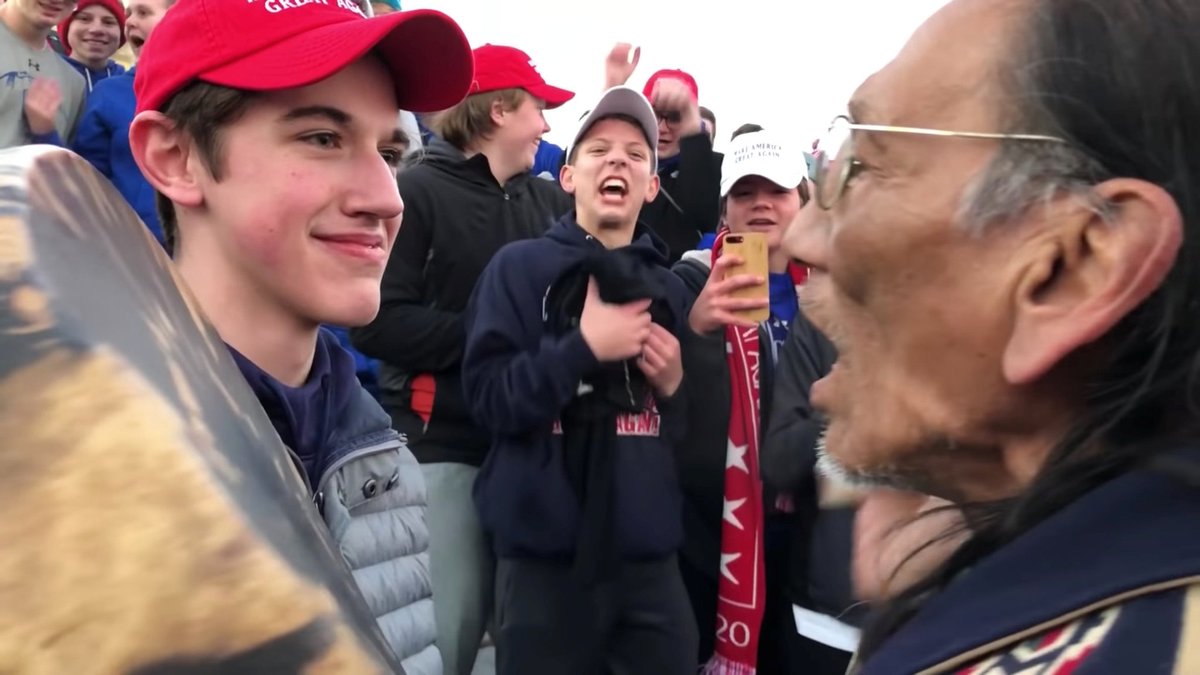
We saw it with the Covington boys, when a group of Catholic school students were slandered across every major news outlet for a crime they did not commit. The footage was selectively edited, the truth buried, the children’s faces splashed across the internet as villains of the week. And yet the response was not surrender. It was a legal counterstrike and eventual vindication.
We saw it with Kyle Rittenhouse, who was hunted across every media platform as a domestic terrorist, despite clear video evidence of self-defense. He was doxed, threatened, and prosecuted. But millions supported him. Donations poured in. The truth won in court, and more importantly, it won in the minds of countless Americans who saw what the system really is.
We saw it again when corporate giants like Bud Light and Target made open mockery of the cultural and sexual values of the American heartland. The response was not just outrage, it was organized, economic retaliation. Boycotts worked. Stocks dropped. Executives panicked.
In every case, something important happened. Whites, once atomized and demoralized, began to show signs of collective nerve. They acted in defense of their own, even if they could not always articulate why. They stopped backing down. They stopped assuming they were guilty. They started pushing back.
This is the slow emergence of White political consciousness. Not yet unified, not yet fully articulate, but undeniably present. It no longer takes manifestos or movements to activate it. A single slandered face, a single act of defiance, is enough. And each time it happens, the reflex strengthens.
These reactions are not driven by ideology. They are driven by instinct, tribal, ancestral, moral. They are not about hate. They are about loyalty. They are about fairness. They are about survival.
What we are witnessing is not a backlash. It is an awakening.
We saw it with the Covington boys, when a group of Catholic school students were slandered across every major news outlet for a crime they did not commit. The footage was selectively edited, the truth buried, the children’s faces splashed across the internet as villains of the week. And yet the response was not surrender. It was a legal counterstrike and eventual vindication.
We saw it with Kyle Rittenhouse, who was hunted across every media platform as a domestic terrorist, despite clear video evidence of self-defense. He was doxed, threatened, and prosecuted. But millions supported him. Donations poured in. The truth won in court, and more importantly, it won in the minds of countless Americans who saw what the system really is.
We saw it again when corporate giants like Bud Light and Target made open mockery of the cultural and sexual values of the American heartland. The response was not just outrage, it was organized, economic retaliation. Boycotts worked. Stocks dropped. Executives panicked.
In every case, something important happened. Whites, once atomized and demoralized, began to show signs of collective nerve. They acted in defense of their own, even if they could not always articulate why. They stopped backing down. They stopped assuming they were guilty. They started pushing back.
This is the slow emergence of White political consciousness. Not yet unified, not yet fully articulate, but undeniably present. It no longer takes manifestos or movements to activate it. A single slandered face, a single act of defiance, is enough. And each time it happens, the reflex strengthens.
These reactions are not driven by ideology. They are driven by instinct, tribal, ancestral, moral. They are not about hate. They are about loyalty. They are about fairness. They are about survival.
What we are witnessing is not a backlash. It is an awakening.
5/ White identity politics is not just strategic. It is not merely a reaction to demographic decline or institutional hostility. It is rooted in something deeper, something moral. At its heart is the principle that every people has the right to exist, the right to continuity, the right to its own space in the world.
To say that Whites have collective interests is not to deny the same of others. It is to affirm the most basic moral symmetry. What is legitimate for everyone else is legitimate for us. No more, no less.
Love of one’s own is not a sin. It is the foundation of every functioning society. It begins in the family. No decent father loves the neighbor’s child more than his own. No sane mother sacrifices her child’s future for the approval of strangers. What is natural at the familial level is no less natural at the national or civilizational level.
The same moral instinct that binds a parent to a child also binds a people to its heritage. To defend your nation, your culture, your memory, is not selfish. It is sacred.
And yet this basic moral code has been inverted. We are told that to love our own is exclusionary, that to preserve our culture is oppressive, that to secure our future is an act of violence. But only White people are told this. No one lectures the Chinese about ethnonational continuity. No one tells Africans that tribal loyalty is backward. No one scolds Jews for preserving their identity. The taboo is selective. The double standard is absolute.
That is why the system is unsustainable. It demands that Whites abandon instincts that every other group is allowed to honor. It demands that we surrender the very morality we are told to uphold.
But real morality does not require self-abolition. Real morality is rooted in order, loyalty, and the defense of one’s own. The deeper we dig, the more clearly we see, White identity politics is not a threat to moral order. It is a return to it.
To say that Whites have collective interests is not to deny the same of others. It is to affirm the most basic moral symmetry. What is legitimate for everyone else is legitimate for us. No more, no less.
Love of one’s own is not a sin. It is the foundation of every functioning society. It begins in the family. No decent father loves the neighbor’s child more than his own. No sane mother sacrifices her child’s future for the approval of strangers. What is natural at the familial level is no less natural at the national or civilizational level.
The same moral instinct that binds a parent to a child also binds a people to its heritage. To defend your nation, your culture, your memory, is not selfish. It is sacred.
And yet this basic moral code has been inverted. We are told that to love our own is exclusionary, that to preserve our culture is oppressive, that to secure our future is an act of violence. But only White people are told this. No one lectures the Chinese about ethnonational continuity. No one tells Africans that tribal loyalty is backward. No one scolds Jews for preserving their identity. The taboo is selective. The double standard is absolute.
That is why the system is unsustainable. It demands that Whites abandon instincts that every other group is allowed to honor. It demands that we surrender the very morality we are told to uphold.
But real morality does not require self-abolition. Real morality is rooted in order, loyalty, and the defense of one’s own. The deeper we dig, the more clearly we see, White identity politics is not a threat to moral order. It is a return to it.
6/ White guilt is dying. The institutions still speak its language, but the people no longer believe. The slogans ring hollow. The shame has worn thin. More and more, the system demands apology and receives only silence. Or resistance. Or laughter.
What rises in its place is not bitterness. It is clarity.
White identity is legitimate. White interests are real. White survival is non-negotiable. These are not radical claims. They are foundational truths, long suppressed, now returning to the surface. No society can endure without some form of identity. No people can endure without some form of pride.
This is not about nostalgia. It is not about restoring the world of yesterday. That world is gone. What remains is the task of building something new, something rooted in memory but aimed at the future. A politics not of apology, but of affirmation. Not of resentment, but of renewal.
The rise of White identity politics is not a threat to others. It is a restoration of balance. It is the correction of a moral distortion that demanded one people dissolve itself for the comfort of all others. That era is ending.
And the signs are everywhere. In every boycott. In every defiant fundraiser. In every quiet conversation that dares to name what cannot be named. There is a growing majority, not yet organized, not yet fully conscious, but already forming.
The next political realignment will not be between Left and Right. It will be between those who kneel and those who stand. And we are learning to stand.
We do not ask permission. We do not beg for place. We are not going anywhere.
The future belongs to those who know who they are.
What rises in its place is not bitterness. It is clarity.
White identity is legitimate. White interests are real. White survival is non-negotiable. These are not radical claims. They are foundational truths, long suppressed, now returning to the surface. No society can endure without some form of identity. No people can endure without some form of pride.
This is not about nostalgia. It is not about restoring the world of yesterday. That world is gone. What remains is the task of building something new, something rooted in memory but aimed at the future. A politics not of apology, but of affirmation. Not of resentment, but of renewal.
The rise of White identity politics is not a threat to others. It is a restoration of balance. It is the correction of a moral distortion that demanded one people dissolve itself for the comfort of all others. That era is ending.
And the signs are everywhere. In every boycott. In every defiant fundraiser. In every quiet conversation that dares to name what cannot be named. There is a growing majority, not yet organized, not yet fully conscious, but already forming.
The next political realignment will not be between Left and Right. It will be between those who kneel and those who stand. And we are learning to stand.
We do not ask permission. We do not beg for place. We are not going anywhere.
The future belongs to those who know who they are.

8/ An Interrelated Essay:
You cannot care for nature while condemning the only people who ever made it sacred.
You cannot fight for animals while erasing the civilization that protected them first.
You cannot care for nature while condemning the only people who ever made it sacred.
You cannot fight for animals while erasing the civilization that protected them first.
https://x.com/CCrowley100/status/1918394707291598883
• • •
Missing some Tweet in this thread? You can try to
force a refresh