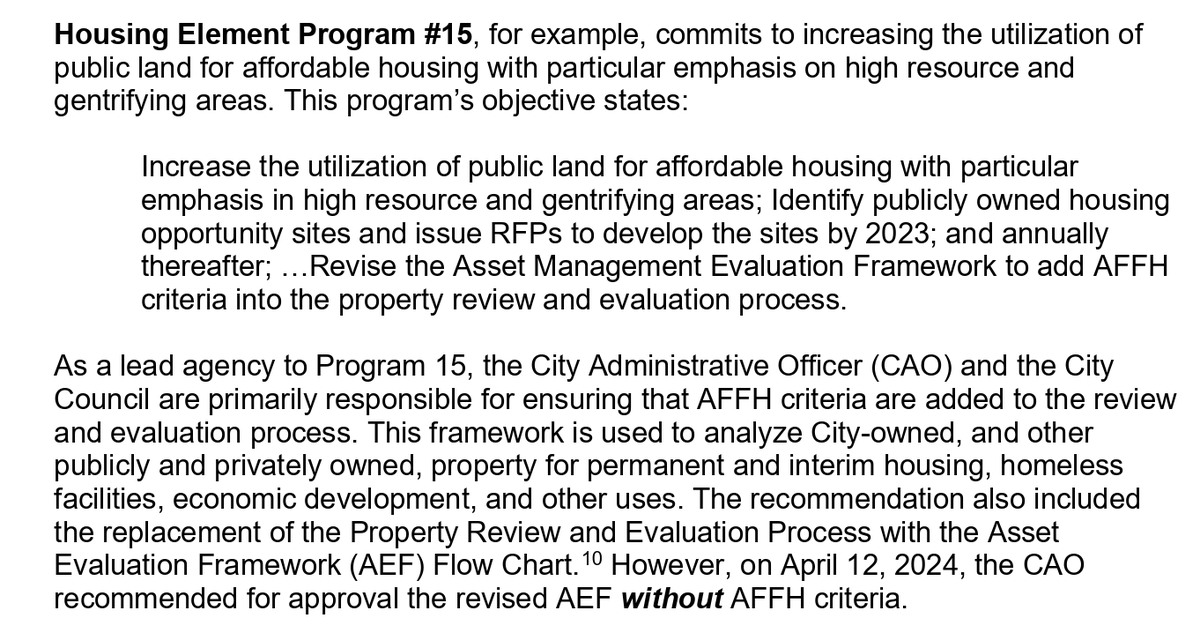
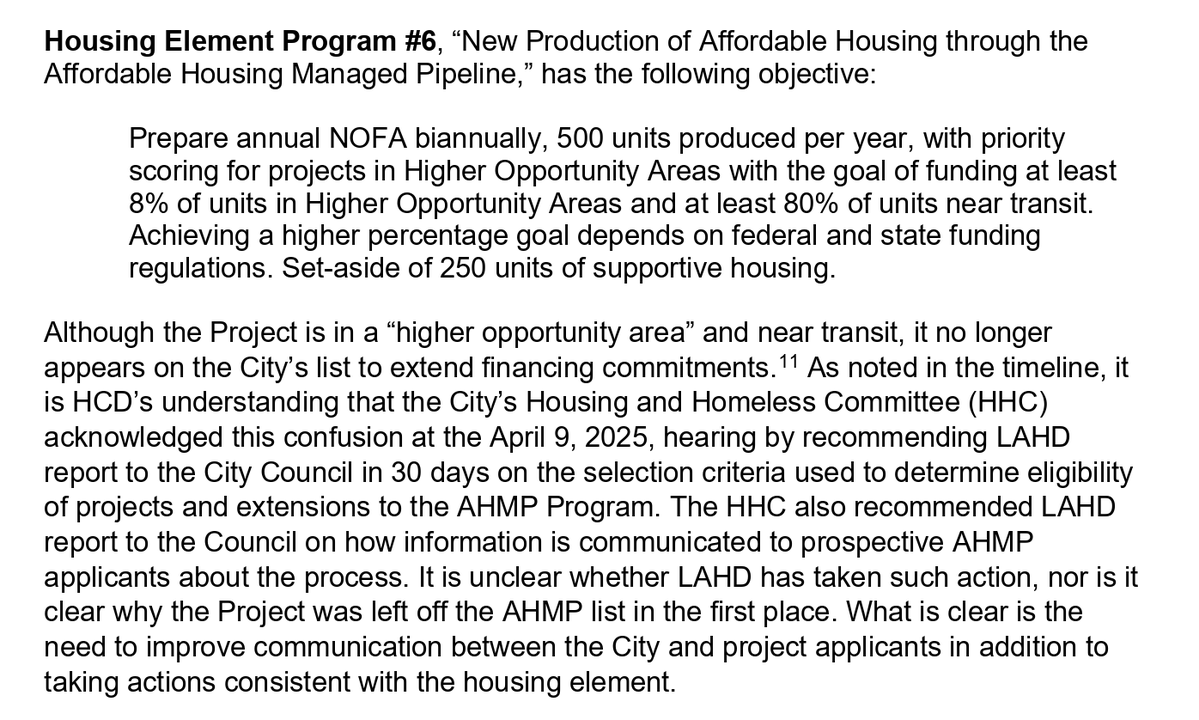
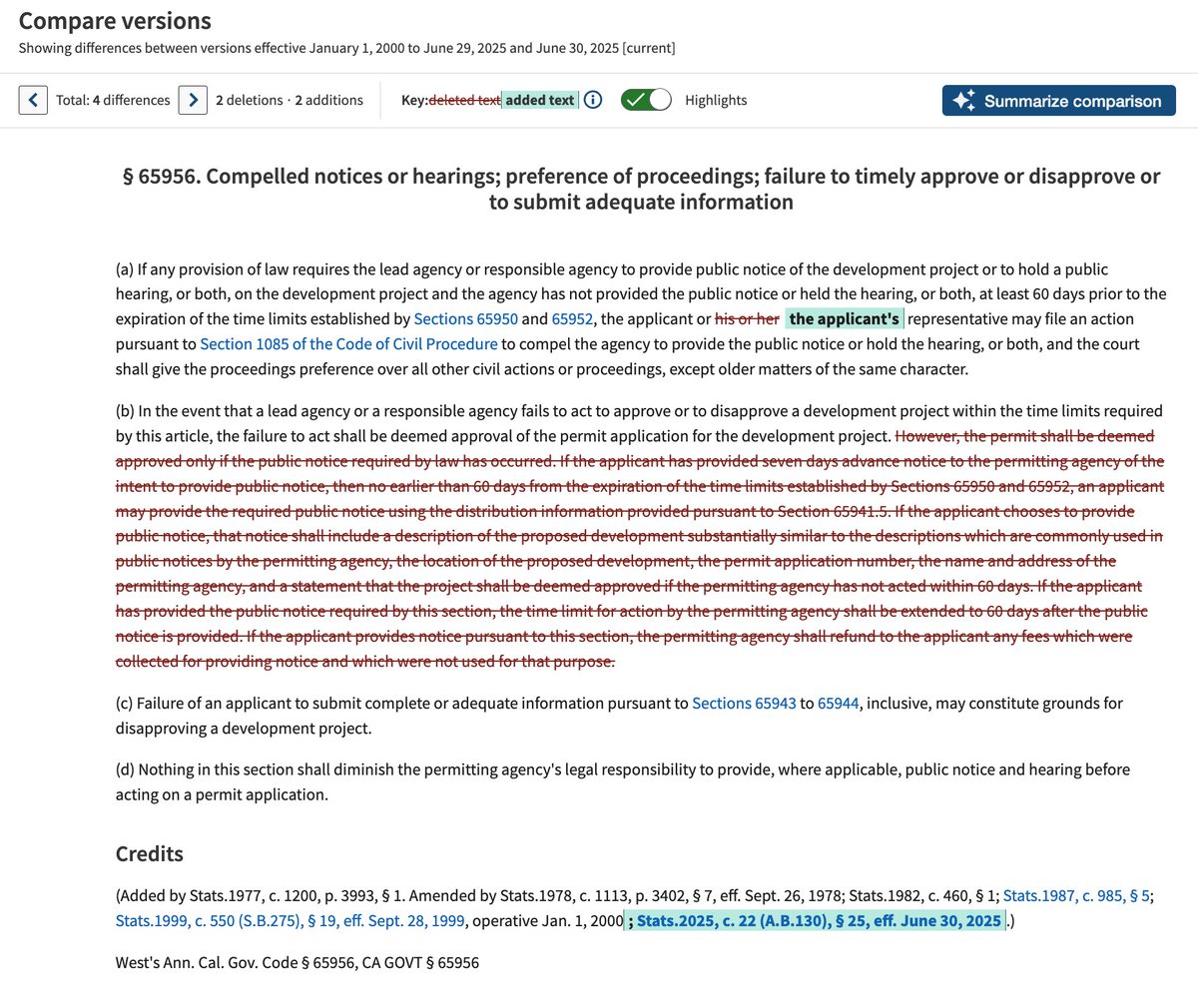
After reading @GaneshSitaraman & Chris Serkin's "Post-Neoliberal Housing Policy" alongside @ezraklein's interview of @ZephyrTeachout & @saikatc, I think I'm finally starting to understand the crux of the Left's vehement reaction to Abundance.
🧵/22
🧵/22
https://twitter.com/GaneshSitaraman/status/1915422845632422071


Each camp offers a diagnosis of the Democratic Party's predicament + a way out. I'd summarize it thus:
- Team Abundance: Improve blue-state governance. Attract new residents. Make voters elsewhere want their state (and nation!) to be more like California, New York, Illinois.
/2
- Team Abundance: Improve blue-state governance. Attract new residents. Make voters elsewhere want their state (and nation!) to be more like California, New York, Illinois.
/2

Do it by centralizing power in state executives; increasing technocratic capacity in execs & legislatures; and fomenting a culture of outcome-oriented, evidence-based problem solving.
/3
/3


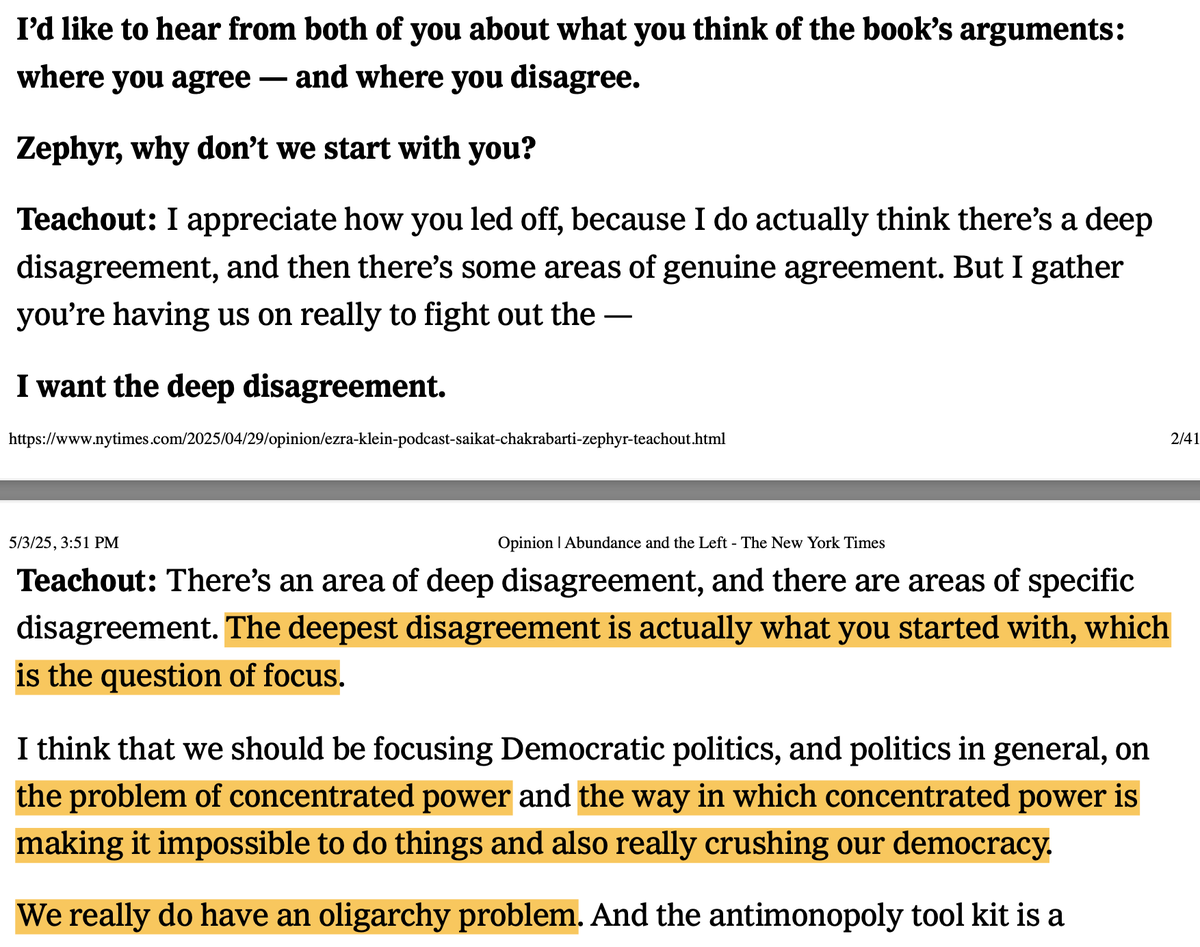
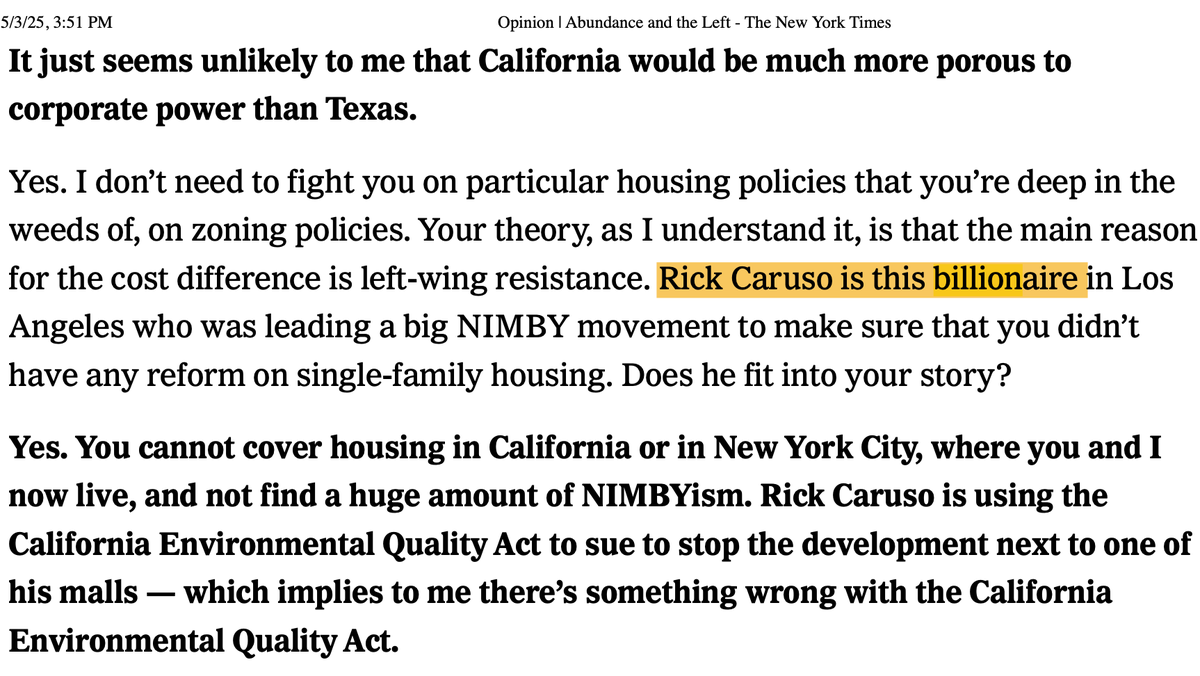
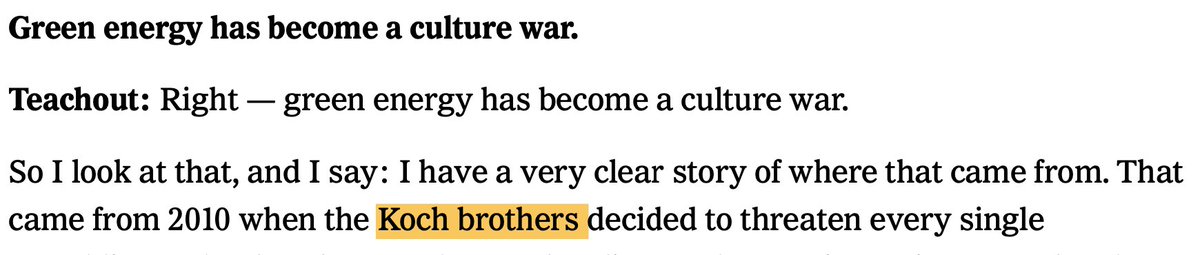
For Team Teachout, the way forward is much simpler: defund the billionaires.
Everything else is secondary to reducing the number of very rich individuals and firms in our society.
Her answer to just about every question from Ezra was "Billionaires suck."
/4
Everything else is secondary to reducing the number of very rich individuals and firms in our society.
Her answer to just about every question from Ezra was "Billionaires suck."
/4

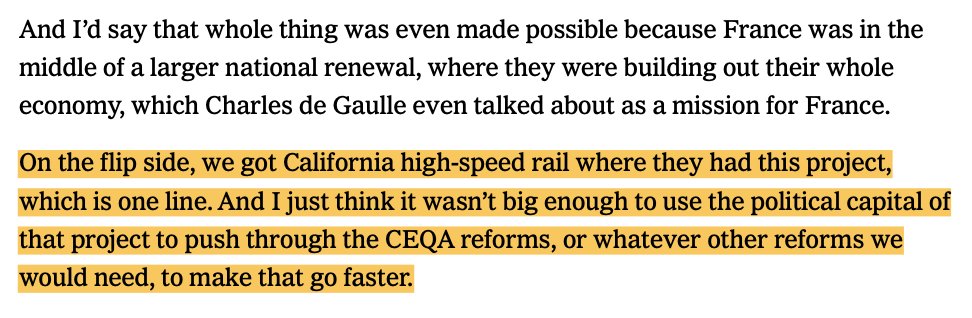
For Team Chakrabarti, the answer is, "Go bigger!"
Don't try to build high-speed rail from SF to LA. Make it a national network instead. Don't try to increase housing supply or green energy as much as Texas has. Transform every housing and energy market, all at once.
/5
Don't try to build high-speed rail from SF to LA. Make it a national network instead. Don't try to increase housing supply or green energy as much as Texas has. Transform every housing and energy market, all at once.
/5
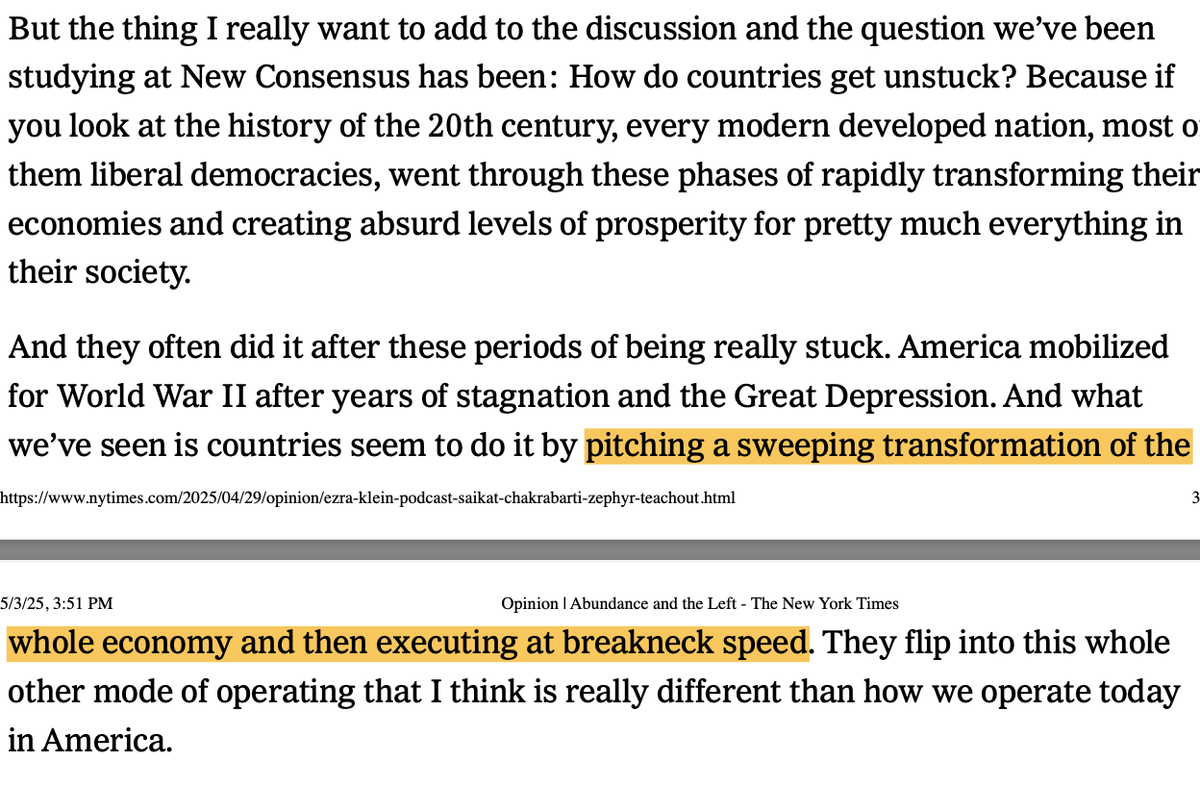
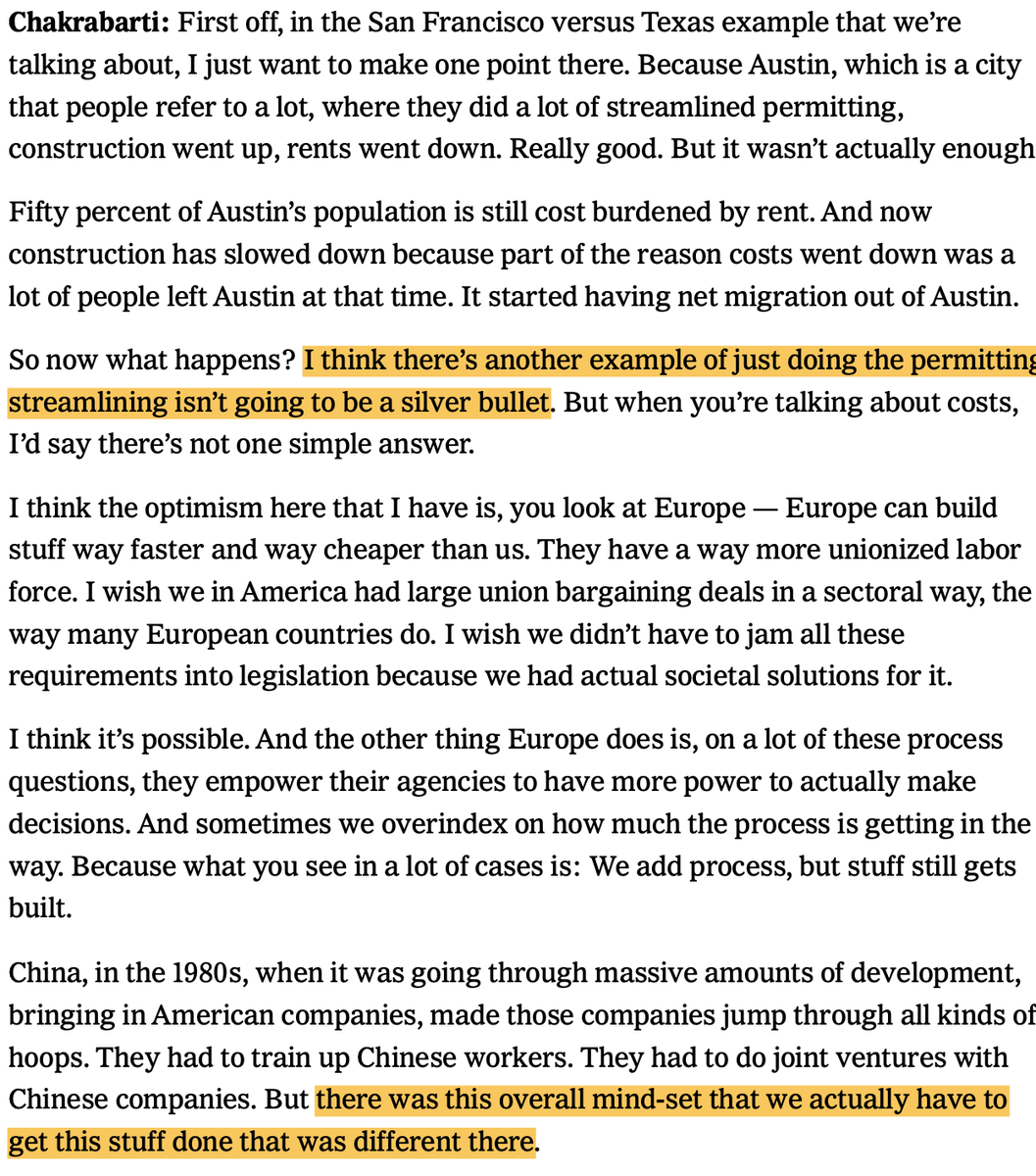
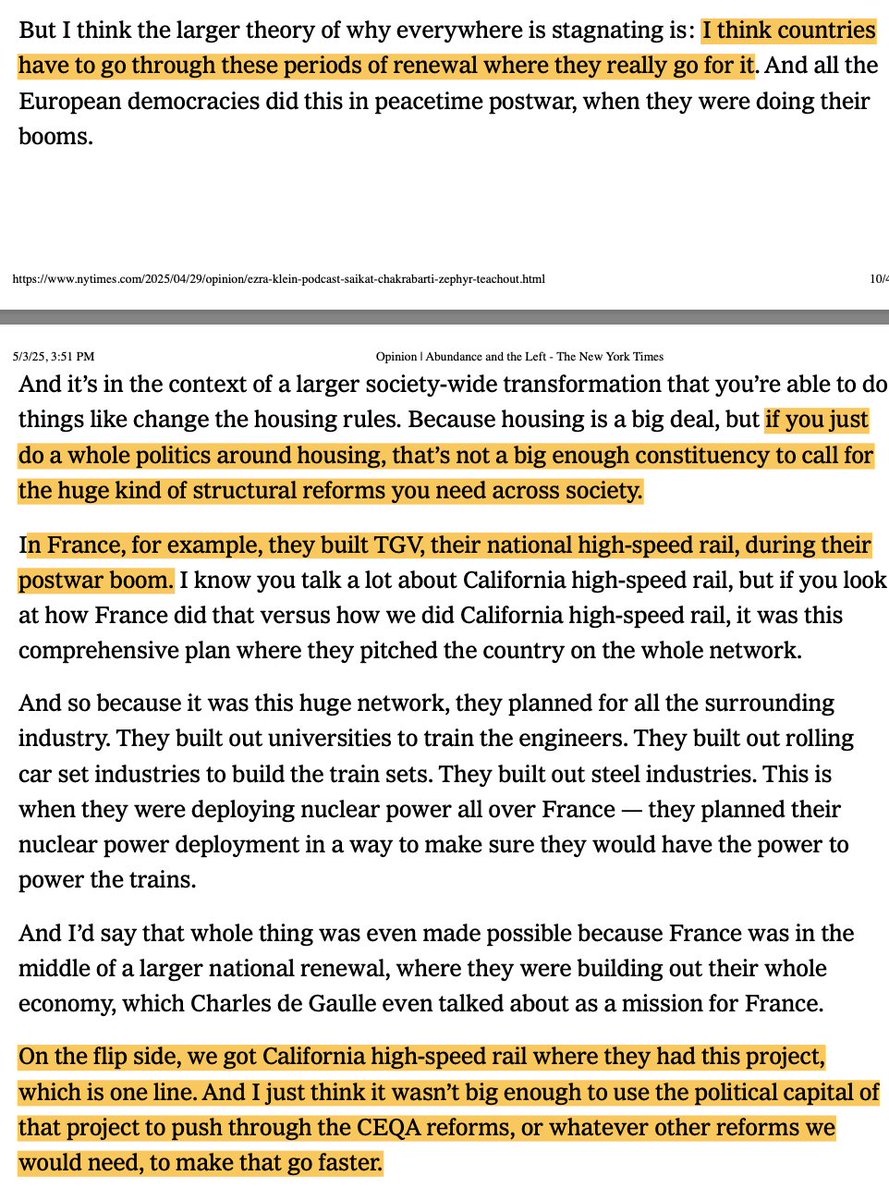
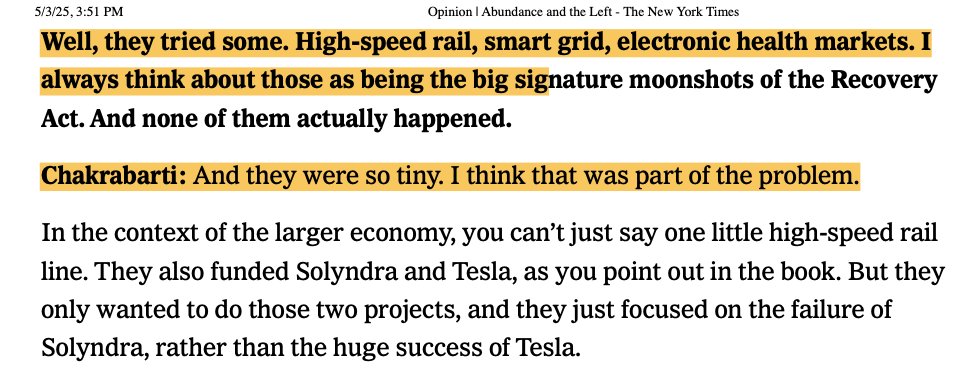
If the Dems go big, he argues, problems of implementation & interest-group politics will just melt away as a new culture of national renewal takes root.
/6
/6

So, different prescriptions--but what explains the vehemence of the screeds against Abundance?
For the defund-the-billionaires crew, I think the root issue is that their political agenda ***depends on the cultivation of zero-sum thinking in the mass public.***
/7
For the defund-the-billionaires crew, I think the root issue is that their political agenda ***depends on the cultivation of zero-sum thinking in the mass public.***
/7
To rally the masses behind defunding (decapitating?) billionaires, you need to persuade folks that billionaires get rich by ripping you off.
There's a fixed pie, and the more the billionaires grab, the less there is for you.
/8
There's a fixed pie, and the more the billionaires grab, the less there is for you.
/8
For many on Team Teachout, Trump is probably seen as a useful idiot. Yes, he's authoritarian. Yes, he picked the wrong demon (foreigners, not billionaires).
But at least he's out there every day reminding ordinary Americans that *someone* is f*cking them over.
/9
But at least he's out there every day reminding ordinary Americans that *someone* is f*cking them over.
/9
Abundance, by contrast, is positive sum.
- More new home for rich people -> more vacant existing homes for folks lower on the ladder.
- More clean energy & transmission -> lower prices for everyone
- New cures for cancer -> longer lives for all
/10
- More new home for rich people -> more vacant existing homes for folks lower on the ladder.
- More clean energy & transmission -> lower prices for everyone
- New cures for cancer -> longer lives for all
/10

Worse yet, the empiricism of the Abundance camp sometimes leads to conclusions like, "Bigger firms invest more in R&D, so maybe we could increase construction productivity by facilitating entry by big firms."
Very bad for demonization.
/11nber.org/papers/w33188
Very bad for demonization.
/11nber.org/papers/w33188
Abundance's threat to Team Chakrabarti ("Go Big!") is not quite as straightforward.
He seems to think we're nearly on the cusp of Going Big, so an in-the-weeds diagnosis of blue-state misgovernance would be a distraction, at best.
/12
He seems to think we're nearly on the cusp of Going Big, so an in-the-weeds diagnosis of blue-state misgovernance would be a distraction, at best.
/12
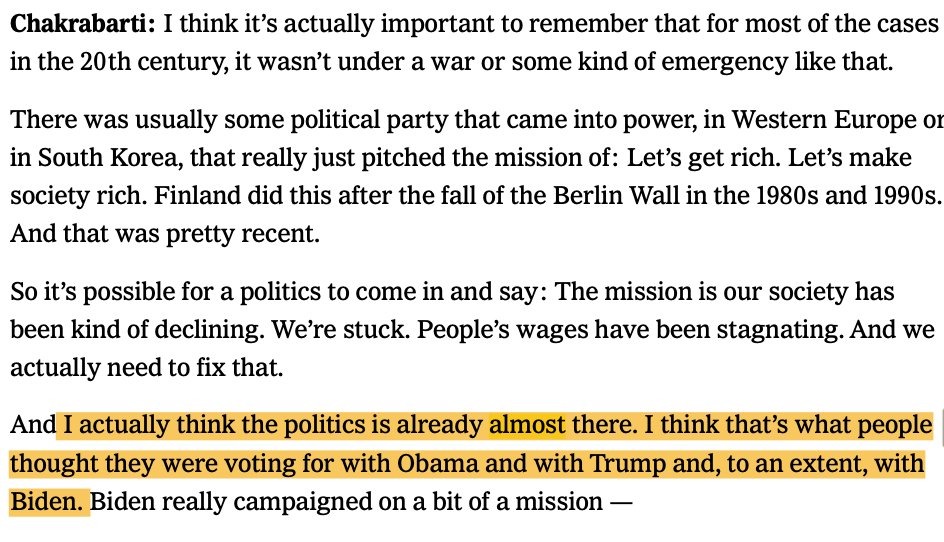
More subtly, a diagnosis that highlights *failings* of government regulation and spending programs (zoning, public housing, high speed rail) may sap Democrats, or the mass public, of the confidence they need to Go Big.
This kind of thinking really comes through in...
/13
This kind of thinking really comes through in...
/13
Sitaraman & Serkin's "Post-Neoliberal Housing Policy."
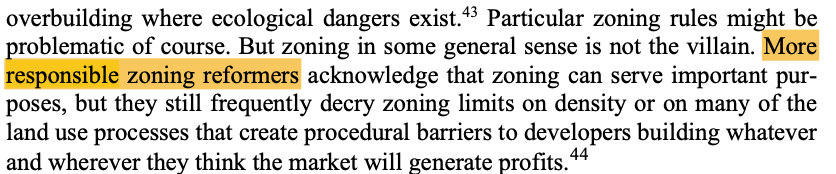
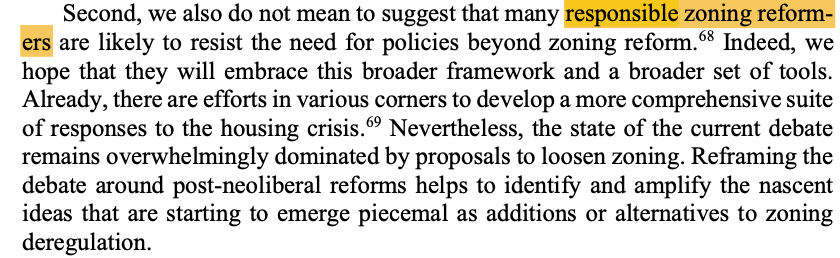
They are at pains to distinguish "responsible" from "irresponsible" zoning reformers.
/14
They are at pains to distinguish "responsible" from "irresponsible" zoning reformers.
/14

What's the difference?
A responsible zoning reformer doesn't talk about the subject w/o emphasizing that robust market-shaping regulations are Always Very Important.
An irresponsible one makes friends, even allies, w/ libertarians.
/15
A responsible zoning reformer doesn't talk about the subject w/o emphasizing that robust market-shaping regulations are Always Very Important.
An irresponsible one makes friends, even allies, w/ libertarians.
/15
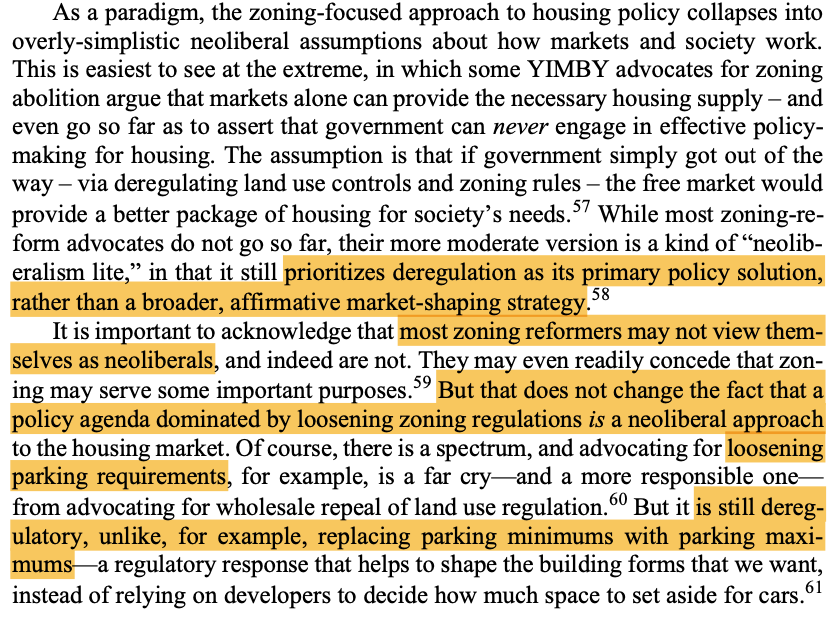
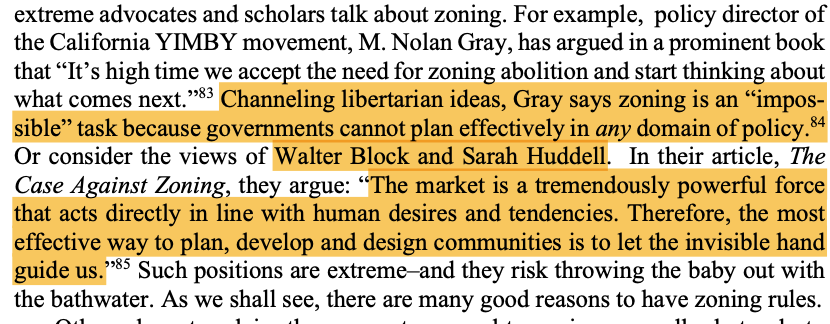
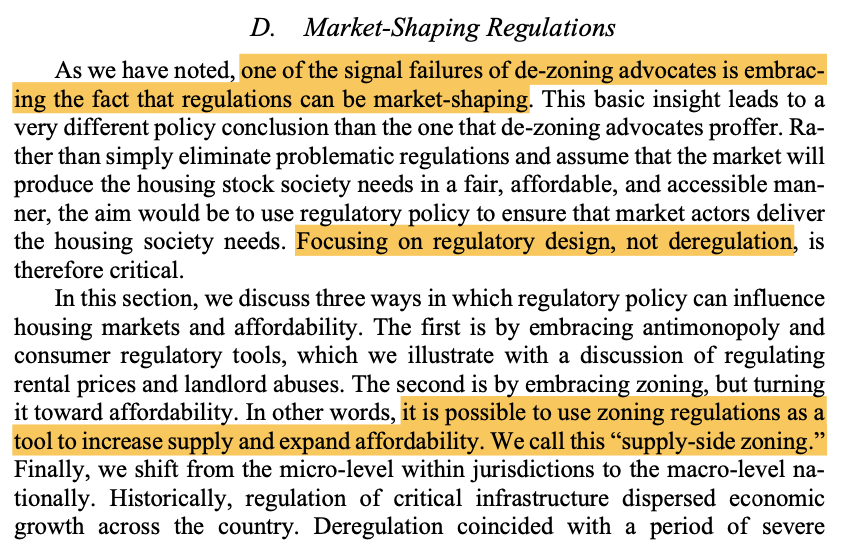
The main concern seems to be that Abundance types might legitimate the "neoliberal" idea that government programs sometimes stumble, or that free markets sometimes deliver the goods, sowing the winds of Reaganism.
Teachout echoes this concern.
/16
Teachout echoes this concern.
/16
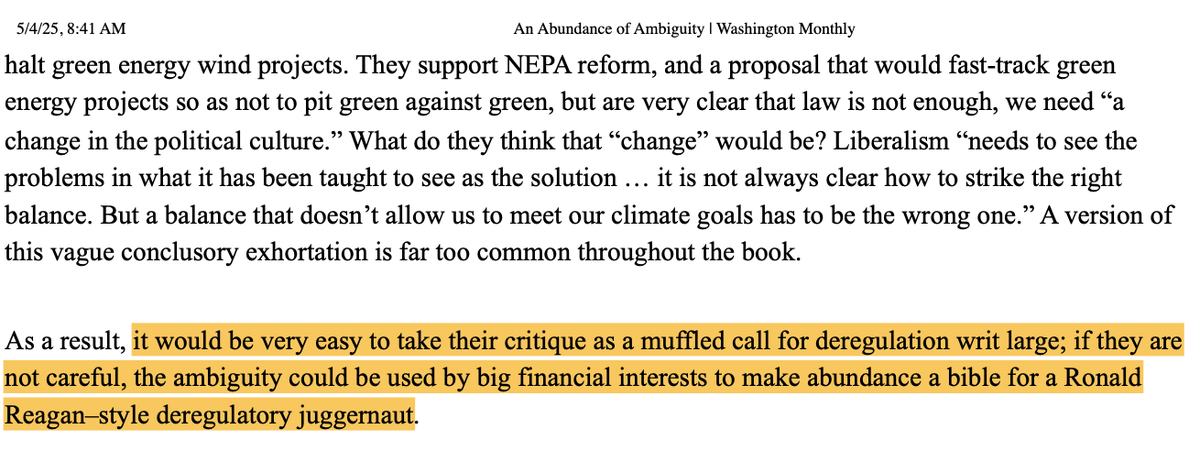
Tellingly, Sitaraman & Serkin present their post-neoliberal prescriptions as "design concepts," not as operational, testable, or proven-effective policies.
Because the point is to *speak* about policy in the right way.
/17
Because the point is to *speak* about policy in the right way.
/17

Honestly, the only through line I saw in their grab bag of proposals is a kind of progressive politesse.
Policies are (presumptively) good if they entail strong regulation and lots of gov't spending, and/or if they're promoted "responsibly" by a post-neoliberal analyst.
/18
Policies are (presumptively) good if they entail strong regulation and lots of gov't spending, and/or if they're promoted "responsibly" by a post-neoliberal analyst.
/18
Policies are (almost certainly) bad if they're endorsed by avowed neoliberals.
/19
/19
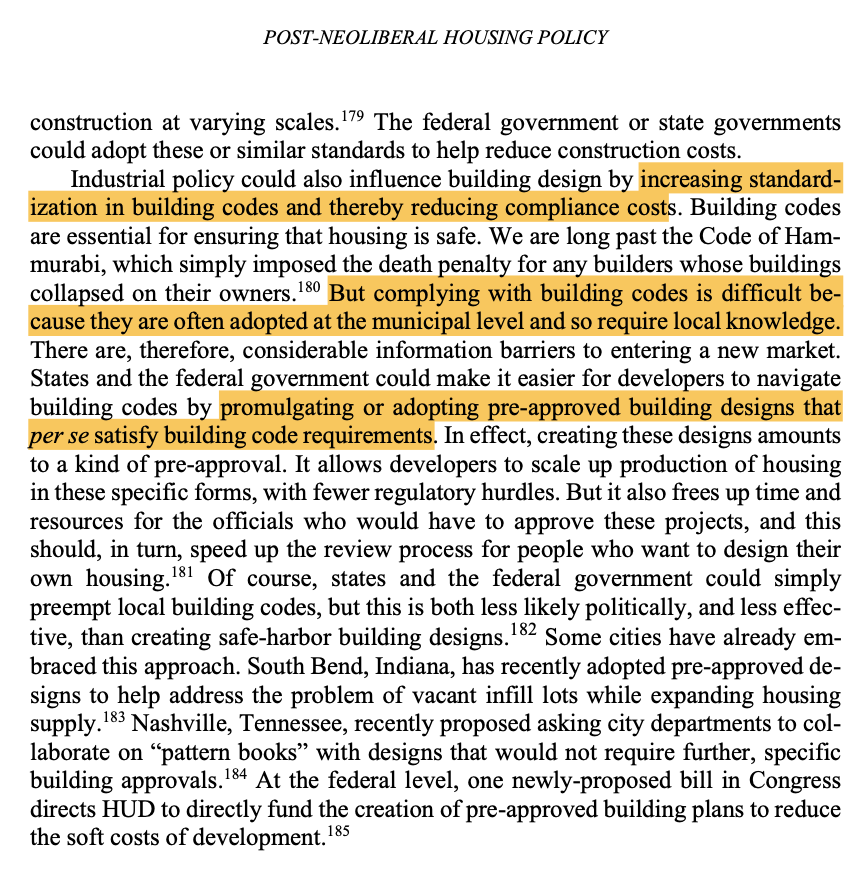
How else to explain Sitaraman & Serkin's call for standardization of building codes, which mirrors almost exactly @ProfSchleich & @RickHills2's case for standardizing zoning?
It's post-neoliberal (great!) coming from S&S, but neoliberal (very bad!) coming from H&S.
/20
It's post-neoliberal (great!) coming from S&S, but neoliberal (very bad!) coming from H&S.
/20
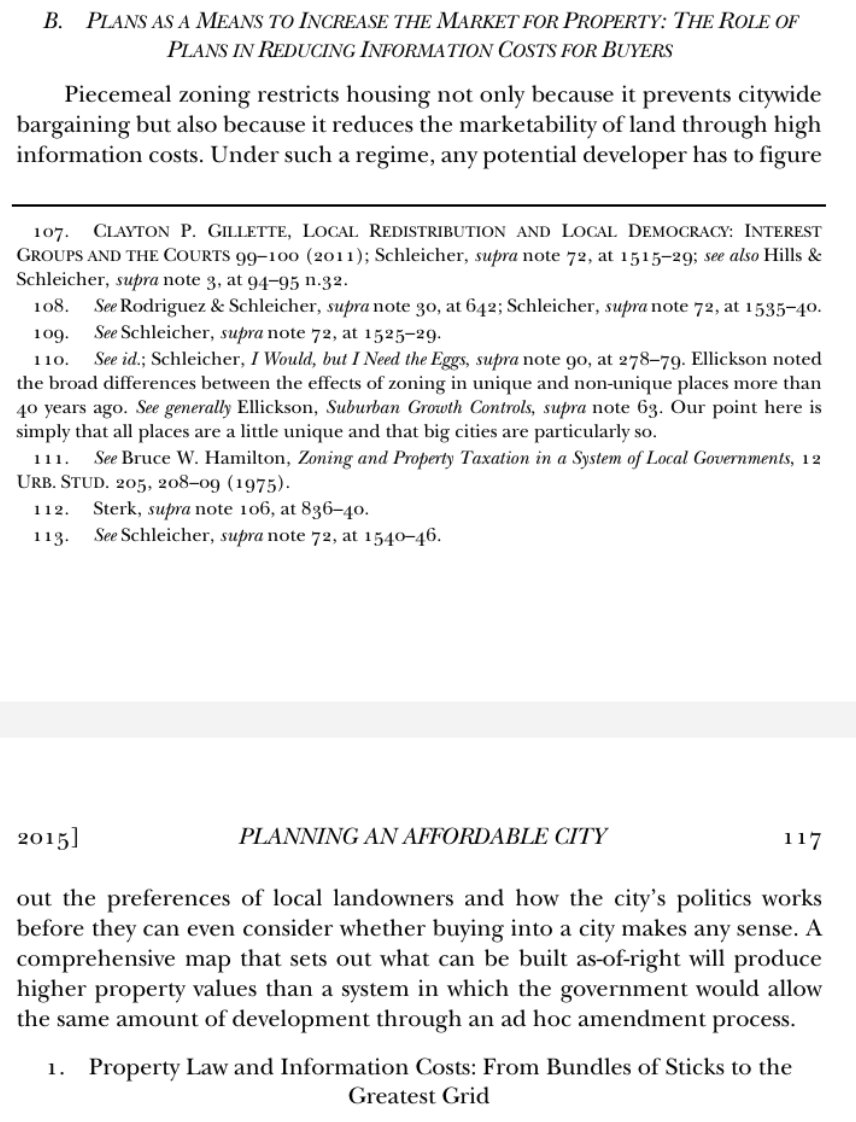
What's missing from the paper is any attempt to engage with the actual making of "Post Neoliberal Housing Policy."
(On which see ⤵️.)
/21
x.com/CSElmendorf/st…
papers.ssrn.com/sol3/papers.cf…
(On which see ⤵️.)
/21
x.com/CSElmendorf/st…
papers.ssrn.com/sol3/papers.cf…
Presumably b/c telling that story, like studying the actual consequences of public policies, might sap the confidence of post-neoliberal idealists who (now) think they just need to Go Big!
/end
/end
@threadreaderapp unroll
• • •
Missing some Tweet in this thread? You can try to
force a refresh