When King George VI and Queen Elizabeth arrived in Canada on May 17, 1939, one of the biggest events in Canadian history began.
This is the story of the 1939 Royal Tour of Canada.
Listen to my episode about it here 👇
🧵1/15 pdst.fm/e/chtbl.com/tr…
This is the story of the 1939 Royal Tour of Canada.
Listen to my episode about it here 👇
🧵1/15 pdst.fm/e/chtbl.com/tr…

Prior to 1939, various members of the Royal Family had visited Canada but no reigning monarch had ever done so.
The idea for a Royal Tour was started by Governor General Lord Tweedsmuir who saw it as something that could foster Canadian identity.
🧵2/15
The idea for a Royal Tour was started by Governor General Lord Tweedsmuir who saw it as something that could foster Canadian identity.
🧵2/15

At the coronation of King George VI in 1937, Prime Minister William Lyon Mackenzie King consulted the monarch about a possible tour of Canada. He told the King it would bolster trans-Atlantic support for Britain in the event of war.
🧵3/15
🧵3/15

There were plans for the tour to happen in 1938 but after the death of Queen Elizabeth's mother, the Countess of Strathmore and Kinghorne on June 23, 1938, it was put on hold for a year.
On May 17, 1939, the Royal Couple arrived on the Empress of Australia.
🧵4/15
On May 17, 1939, the Royal Couple arrived on the Empress of Australia.
🧵4/15
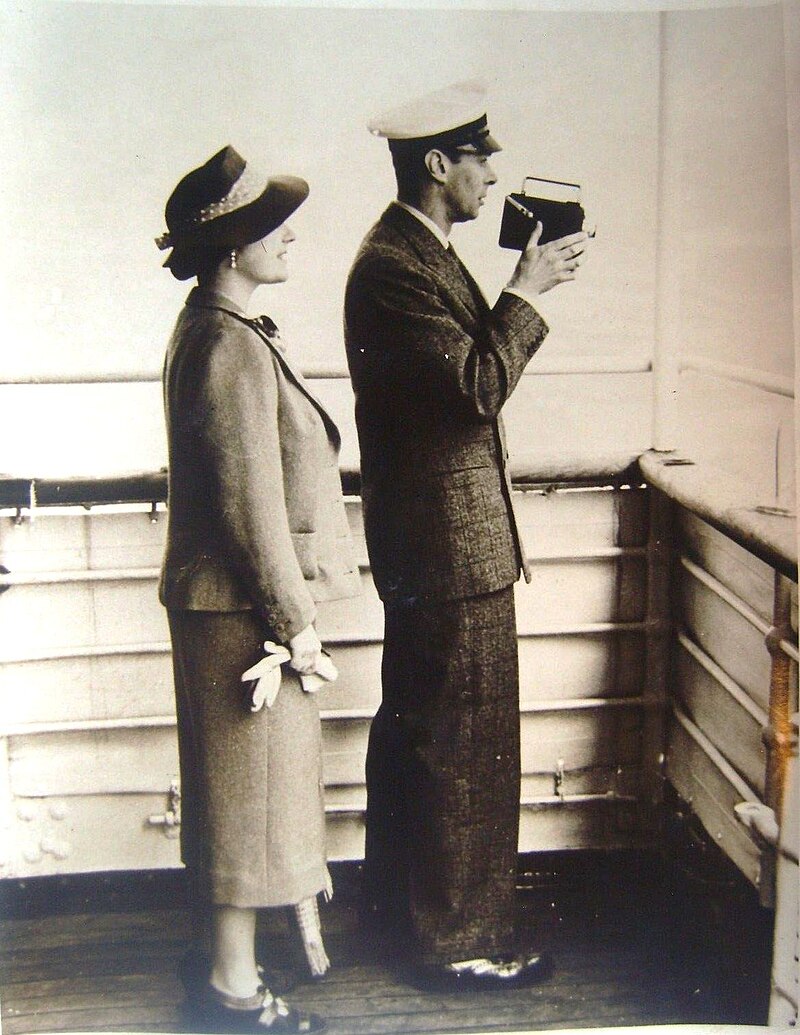
Upon their arrival in Canada, the couple were greeted by enthusiastic crowds in Quebec City, Trois-Rivieres and Montreal. King George VI addressed the crowds in French. He also held audience in the Legislative Council chamber of the Parliament Building.
🧵5/15
🧵5/15

When the Royal Couple arrived in Ottawa on May 20, Queen Elizabeth laid the cornerstone of the new Supreme Court of Canada building. King George VI also dedicated the National War Memorial in front of 10,000 war veterans. The couple then walked amongst the crowd.
🧵6/15
🧵6/15

The couple then went to Parliament where King George VI gave Royal Assent to nine bills. A parade was also held in the city to celebrate the Royal Couple.
The Royal Couple spent two days in Ottawa and then went to Toronto where they attended the King's Plate.
🧵7/15
The Royal Couple spent two days in Ottawa and then went to Toronto where they attended the King's Plate.
🧵7/15

They dedicated Coronation Park, Queen Elizabeth Way and the Rainbow Bridge at Niagara Falls. They also dedicated various monuments including stone pillars on the Henley Bridge in St. Catharines.
After this, they began their westward journey across Canada.
🧵8/15
After this, they began their westward journey across Canada.
🧵8/15

When The Royal Couple reached Winnipeg, 100,000 people greeted them despite heavy rain. The King also made his longest address to the British Empire at Government House in the city.
The journey continued through Saskatchewan and Alberta to a break in Banff.
🧵9/15
The journey continued through Saskatchewan and Alberta to a break in Banff.
🧵9/15

The King and Queen stayed at the Banff Springs Hotel for a couple days to rest. At one point, they took a walk alone together for a break from the constant crowds and people around them.
The journey continued on through British Columbia to Vancouver and Victoria.
🧵10/15
The journey continued on through British Columbia to Vancouver and Victoria.
🧵10/15
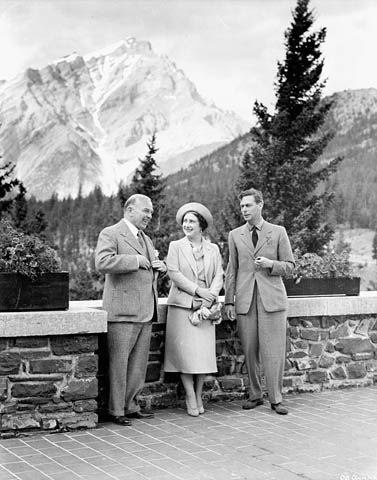
On the train journey east, the Royal Couple reached Edmonton on June 2 where 200,000 people welcomed them. Along the newly-named Kingsway, 70,000 people sat in grandstands.
On June 3, 150,000 came out to see the couple arrive in Saskatoon.
🧵11/15
On June 3, 150,000 came out to see the couple arrive in Saskatoon.
🧵11/15
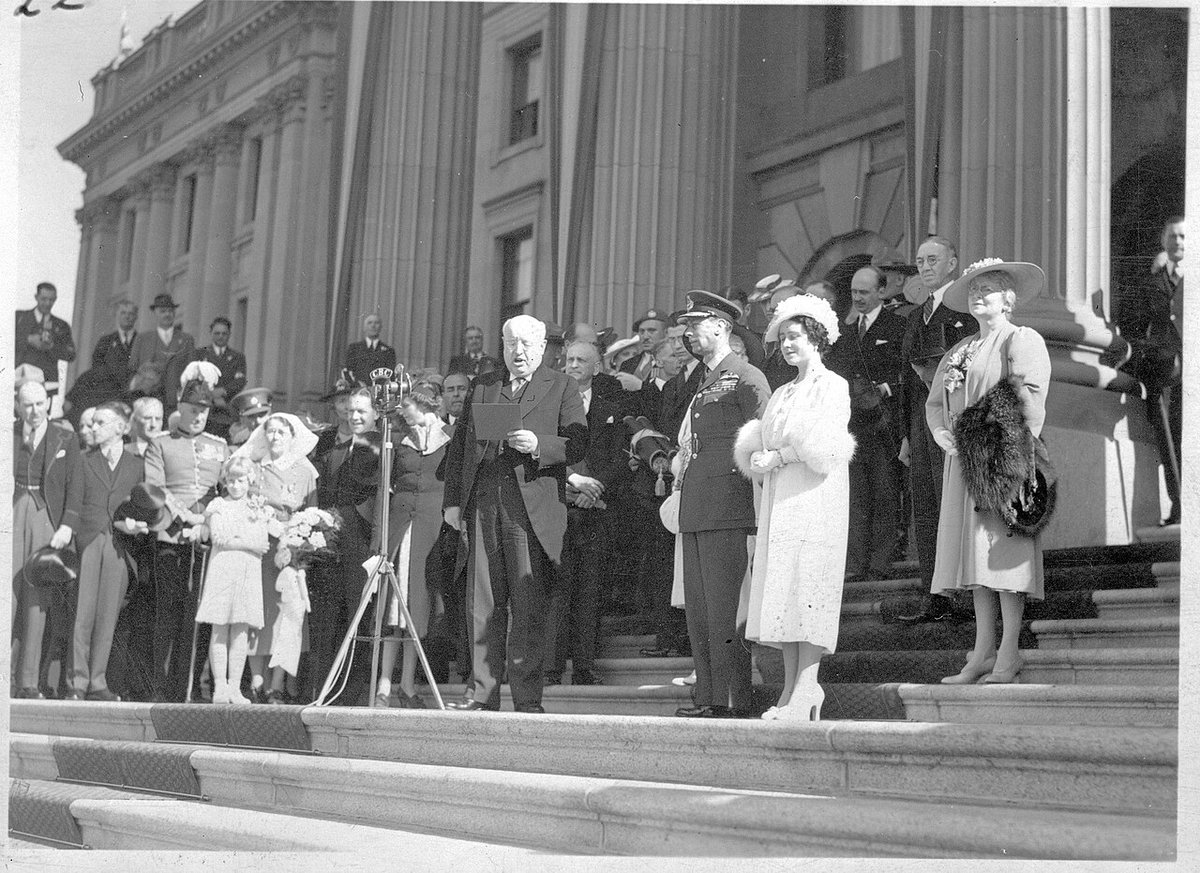
At 10 p.m. on June 3, the couple reached Melville, SK. The town of 3,000 swelled to 60,000 and was one of the largest communities in the province for a few hours. I will have a post about this in a couple weeks.
From June 7 to 12, the couple visited the United States.
🧵12/15
From June 7 to 12, the couple visited the United States.
🧵12/15
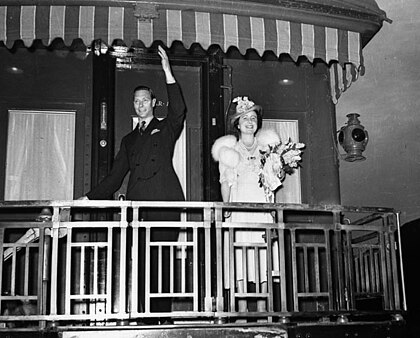
The couple then returned to Canada and toured Atlantic Provinces from June 12 to 15. A farewell luncheon was held in Halifax and then the couple boarded RMS Empress of Britain to do a separate tour of Newfoundland. After that, the couple returned to England.
🧵13/15
🧵13/15
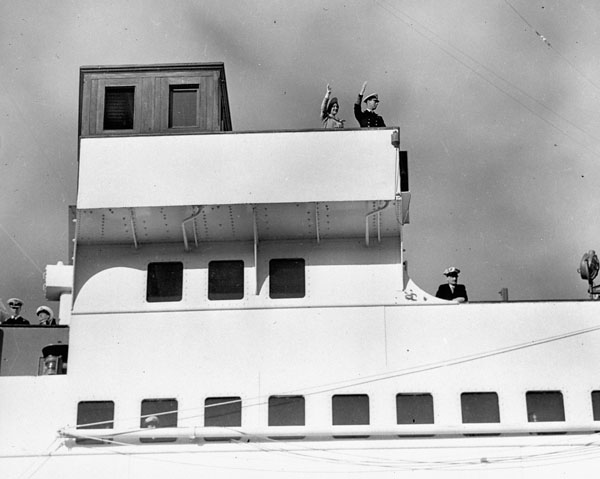
The Royal Couple said the tour was one of their happiest memories. While King George VI never returned, Queen Elizabeth did many times.
Their daughter, Queen Elizabeth II, did 22 official tours of Canada.
Learn more in my Deep Dive 👇
🧵14/15canadaehx.com/2022/01/01/the…
Their daughter, Queen Elizabeth II, did 22 official tours of Canada.
Learn more in my Deep Dive 👇
🧵14/15canadaehx.com/2022/01/01/the…
I hope you enjoyed that look at the 1939 Royal Tour.
If you enjoy my Canadian history content, you can support my work with a donation at 👇
*sources in next post*
🧵15/15buymeacoffee.com/craigu
If you enjoy my Canadian history content, you can support my work with a donation at 👇
*sources in next post*
🧵15/15buymeacoffee.com/craigu

• • •
Missing some Tweet in this thread? You can try to
force a refresh