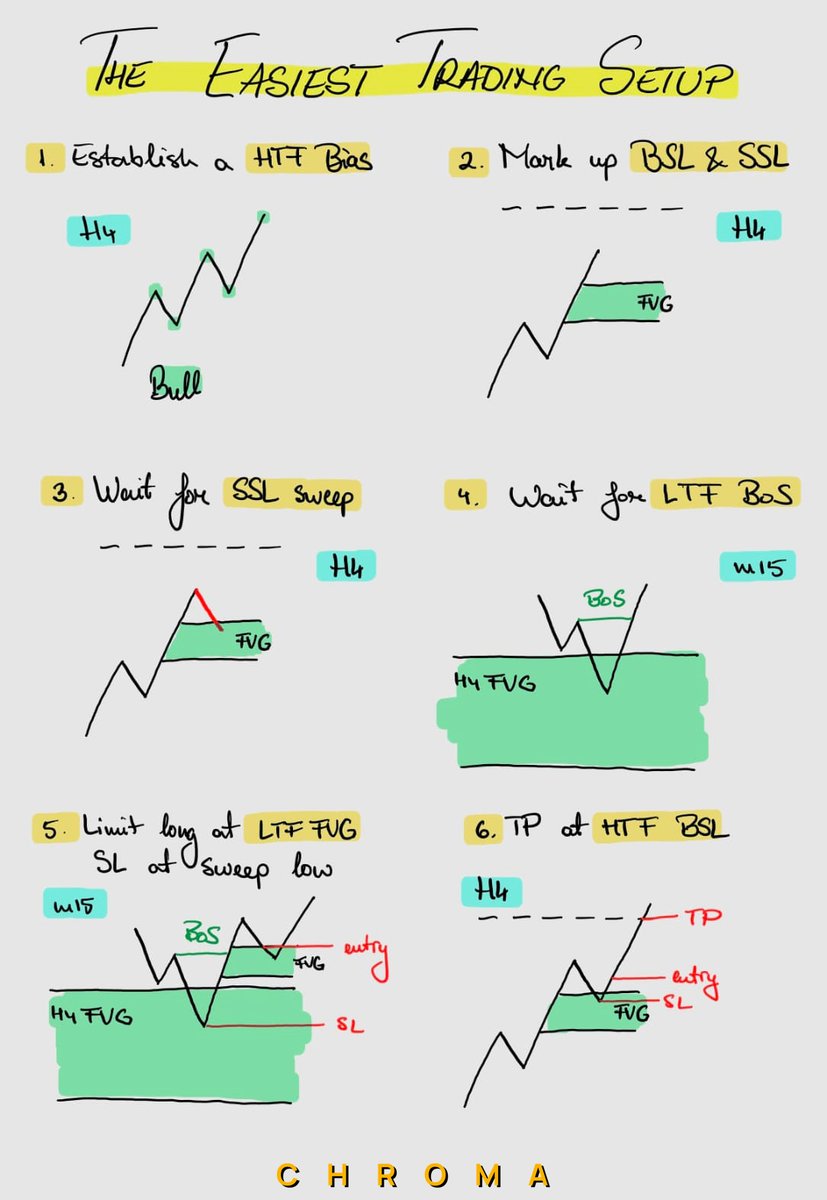
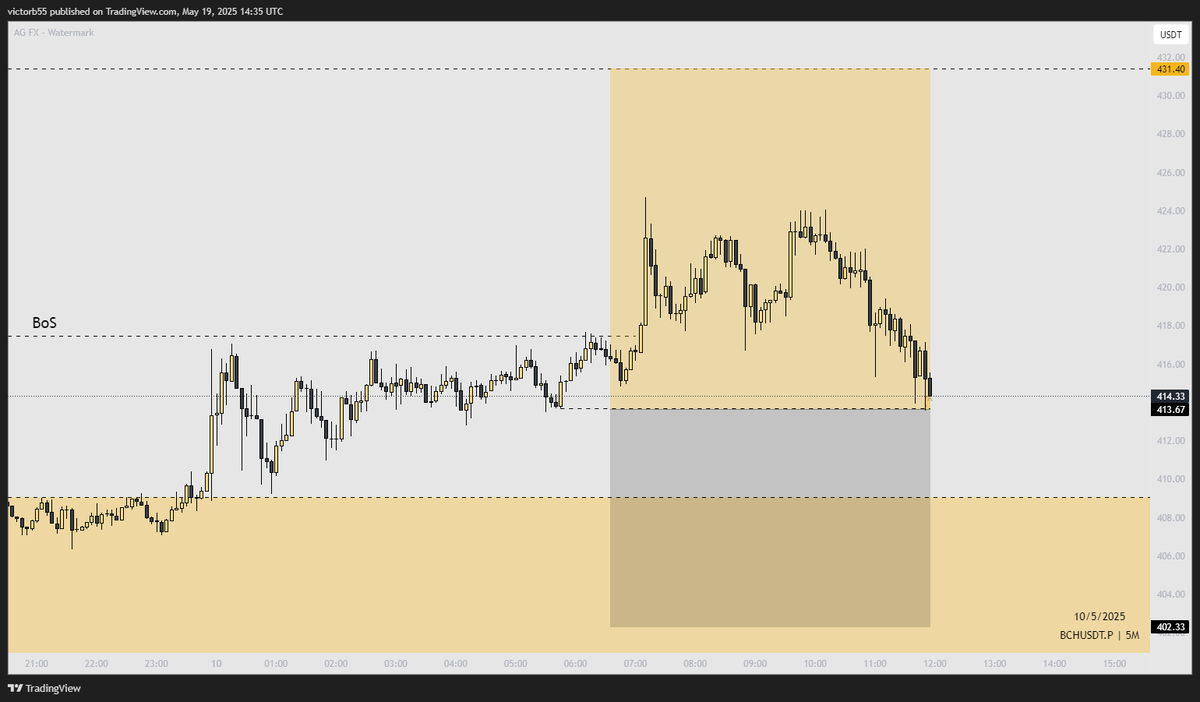
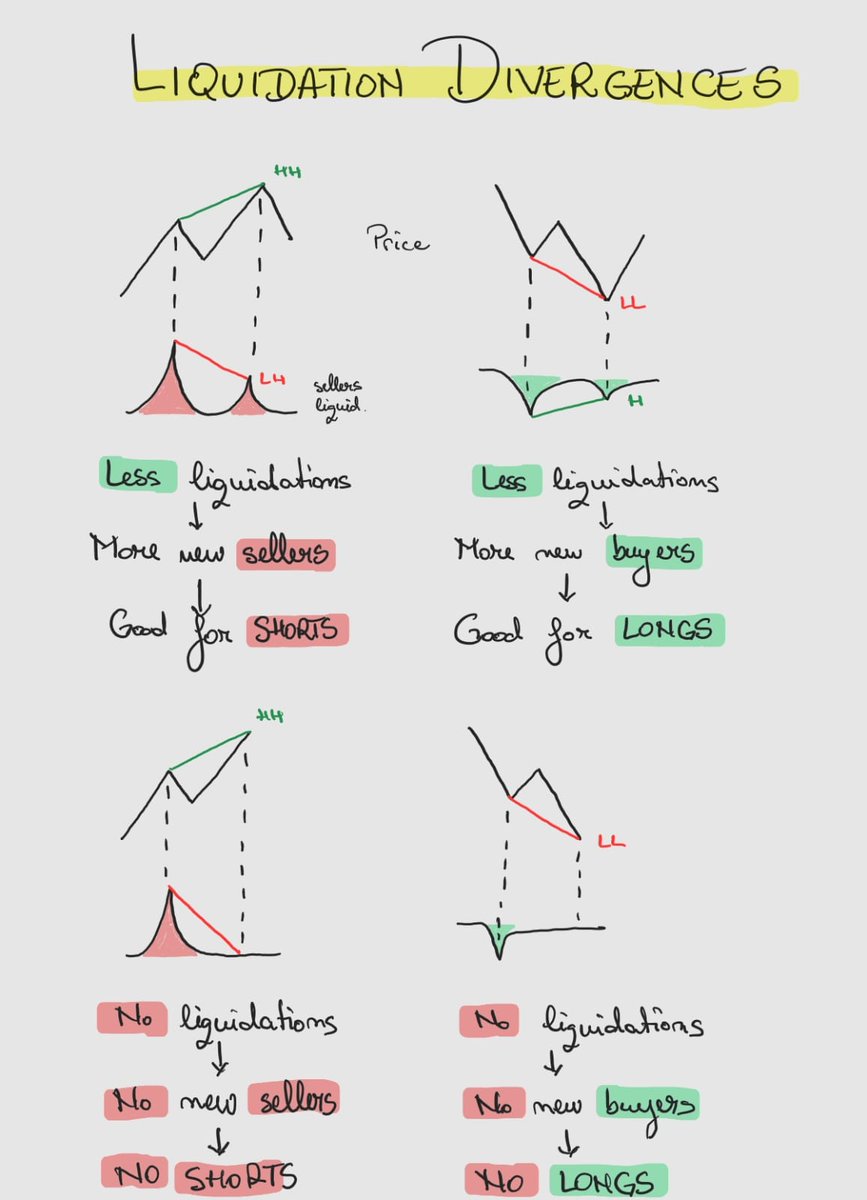
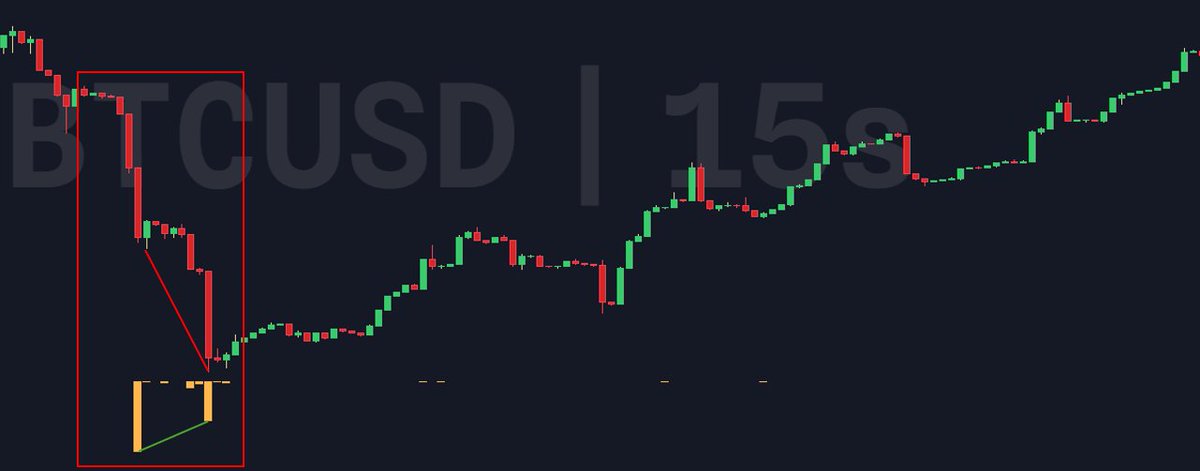
Step-by-step guide on how to create a trading model from scratch, all in a single thread 🧵
Step 1
Make a list of all the things you have learned and seen other people use successfully
Choose 10 out of them that make sense to use together:
- liquidity concepts
- orderflow concepts
- lagging indicators, etc
You should also know how to trade them, of course
Step 2
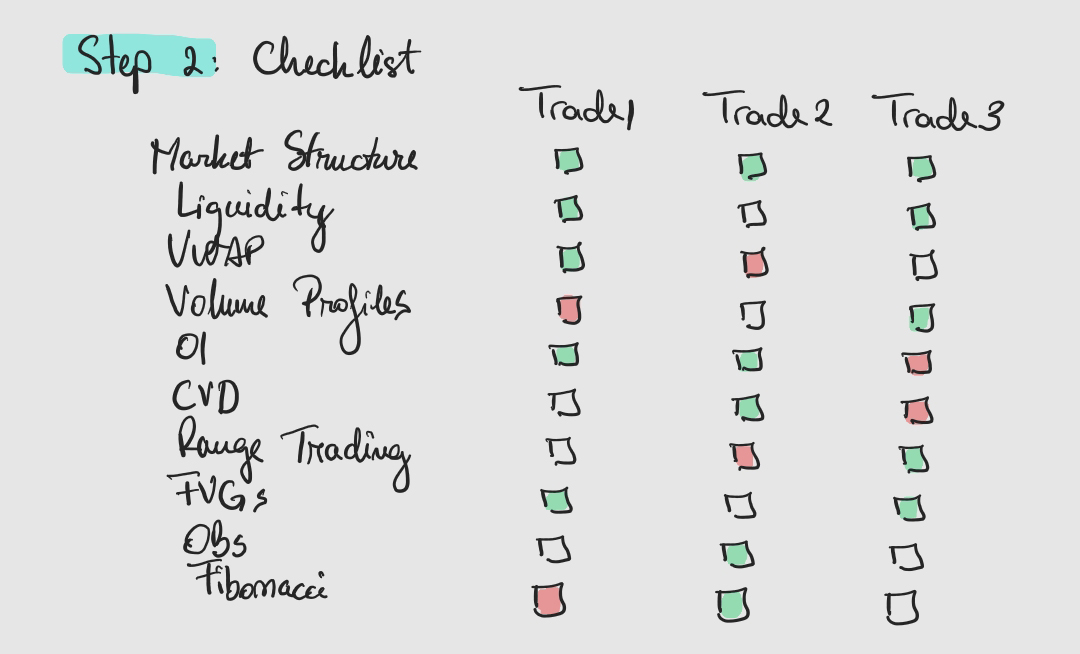
Create a checklist with all 10 components
Only take trades that have at least 5 components present
Mark the components that made you take the trade with a green box, those that spoke against your trade with a red box, leave those that didn't appear blank
Most people suck at trading when price is ranging, calling it "bad market conditions" and "ugly chop"
I however love trading ranges and so will you after reading this thread about the 4 possible trades when price is ranging
First and foremost, you should not look for any trades while price is inside the range
The only moment when you should look for trades is when price is either at range highs or at range lows - no diddle in the middle
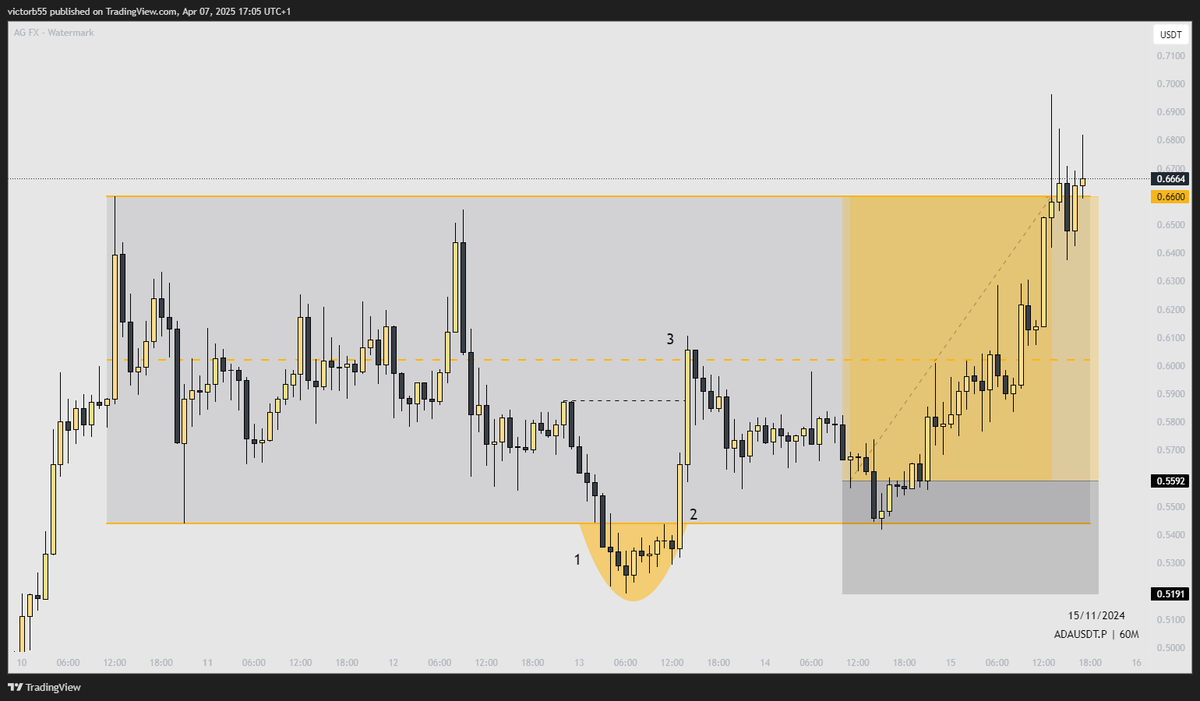
1. Bullish deviation
Price sweeps range lows
Range lows DON'T act as resistance, price rejoins the range
Price makes a HIGHER HIGH inside the range, making a BoS in the process
Part 2 of my educational series where I discuss ways to spot a reversal after price sweeps liquidity. This is something that maybe some of you have not heard about, but it's my most used reversal confirmation this year.
A thread 🧵
Normally, a bearish FVG should act as resistance. A bullish FVG should act as support.
However, if price trades through the FVG on the first try, it flips its function. A bullish FVG becomes a bearish iFVG (resistance) and a bearish FVG becomes a bullish iFVG (support).
As with BoS, there are 2 important things to focus on:
1. Context
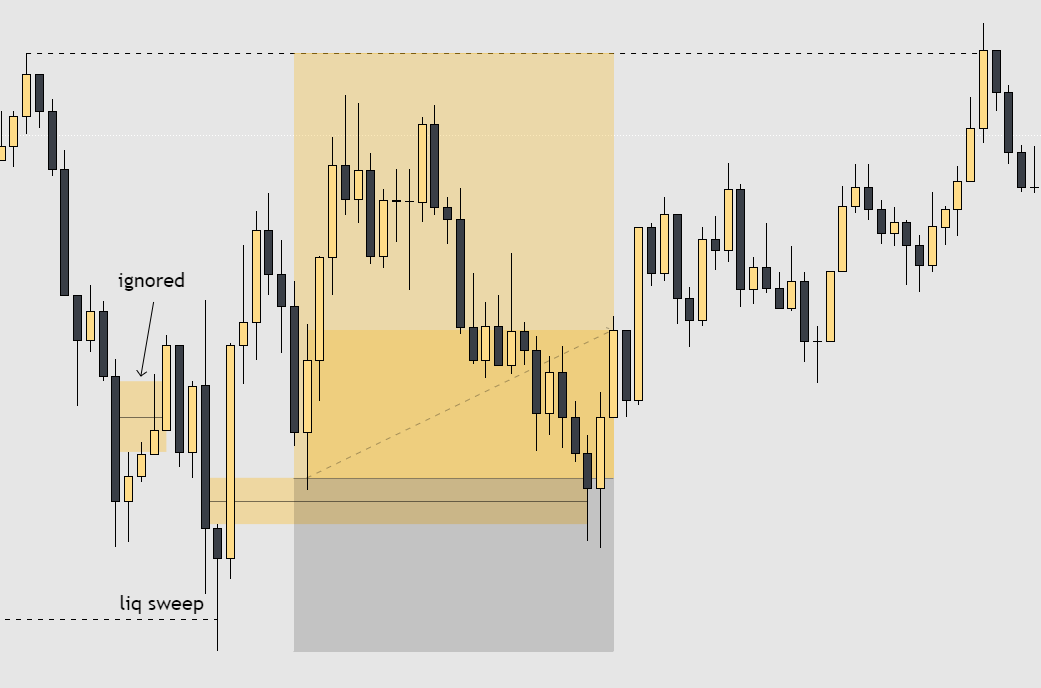
Of course, price needs to sweep liquidity before you even consider looking for reversals. Take this example of an m5 iFVG which I used for a long, after ignoring the first one because price did not sweep anything
What they are, how to spot them and how to trade them.
A thread 🧵
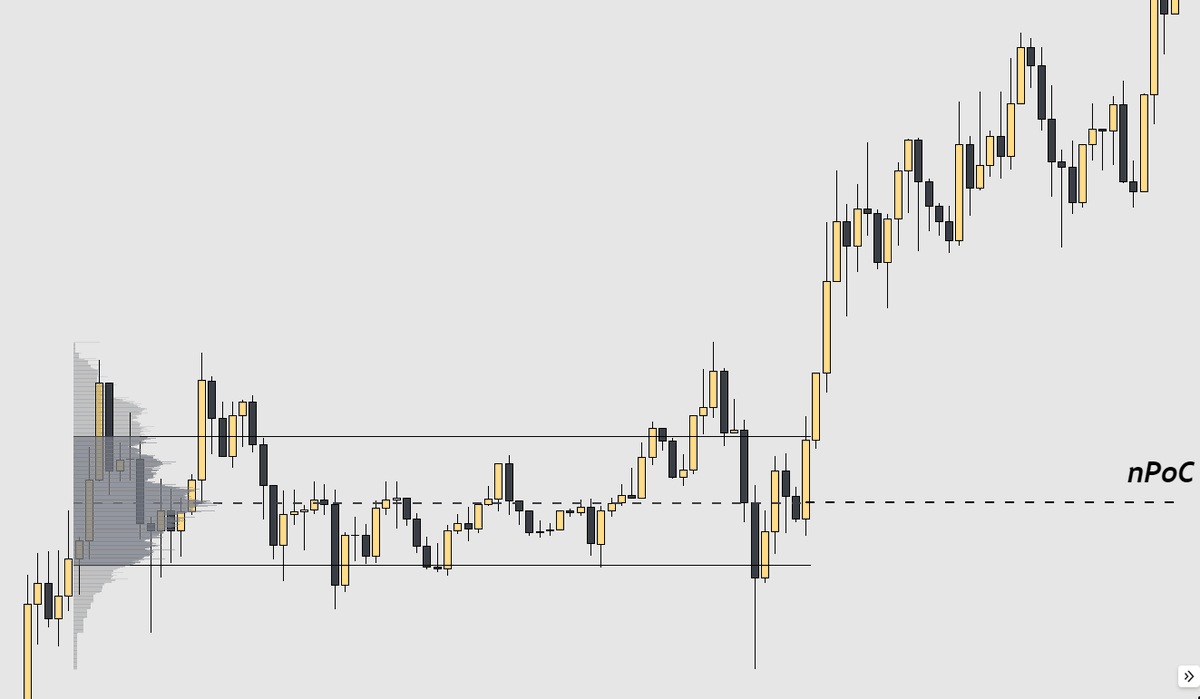
What is a PoC?
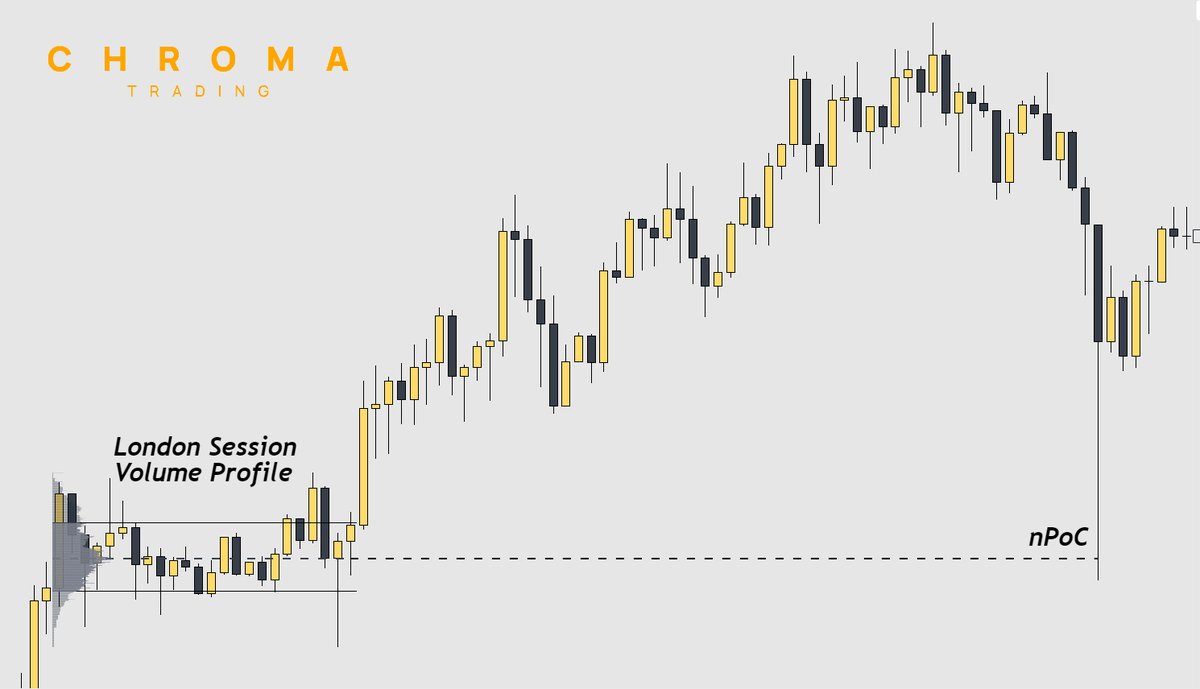
A Point of Control (PoC) is the level of the Volume Profile where the most volume was traded.
In case you don't know, the Volume Profile shows how much volume was traded at each level during a period of time / market range.
What is an nPoC?
Once price exits a Value Area, its PoC becomes a naked PoC (nPoC).
It was once a level where price was balanced, sellers and buyers were equally strong and the most volume was traded at that level, but now price has moved to new levels.
Pair trading is an underrated tool to profit in volatile, but uncertain market conditions. This is an introduction to this type of trading.
🧵
What is pair trading?
Typically, you trade the price of a cryptocurrency against the dollar: $BTC / $USDT, $ETH / $USDT and so on
Pair trading refers to trading one cryptocurrency against the other: $ETH / $BTC for example
How to pair trade?
A pair trade can be achieved in multiple ways:
- long one coin and short the other one, on perp
- if you already hold the coin you want to short, swap some of it for the other
- long one coin on spot and short the other without leverage