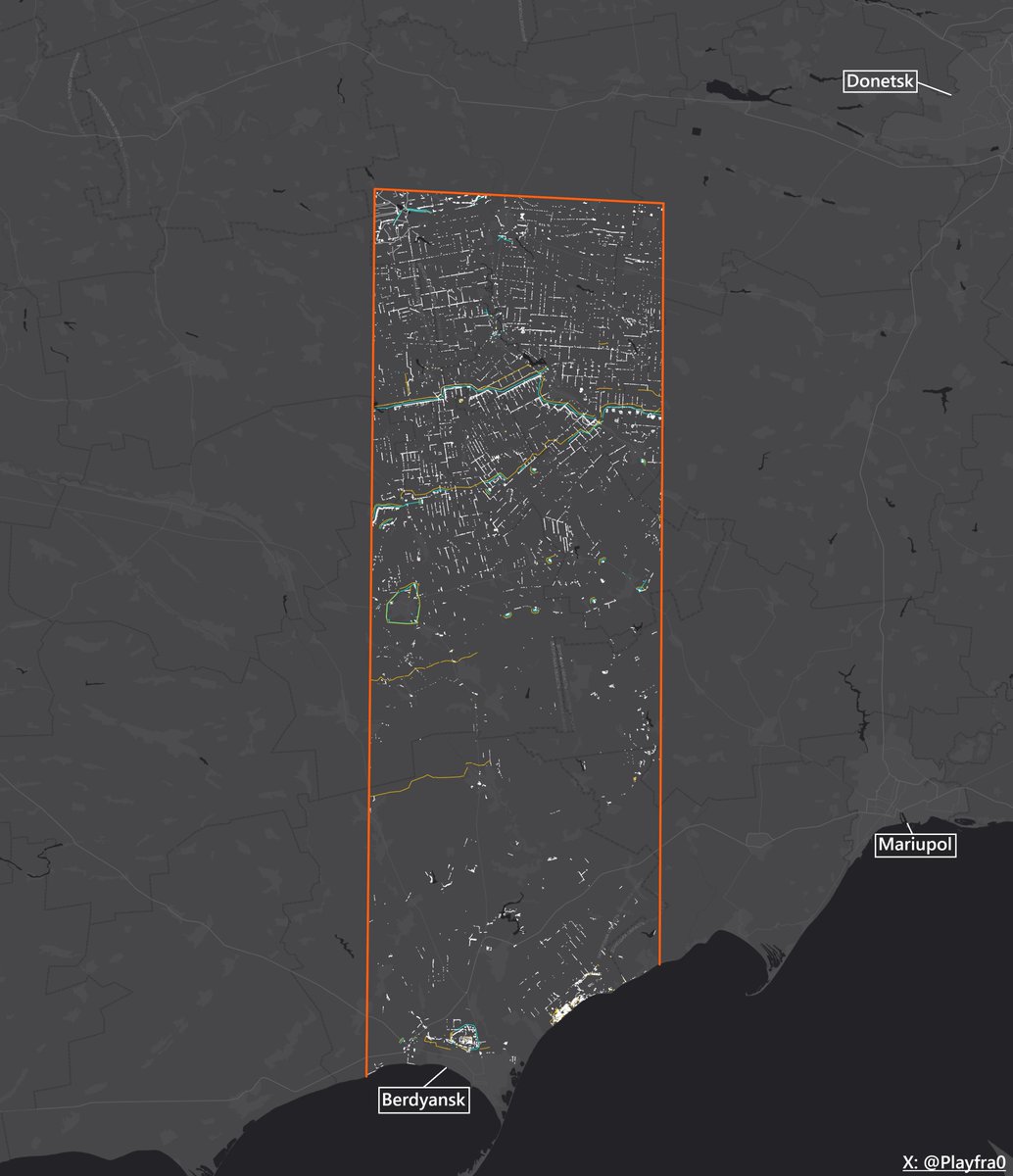
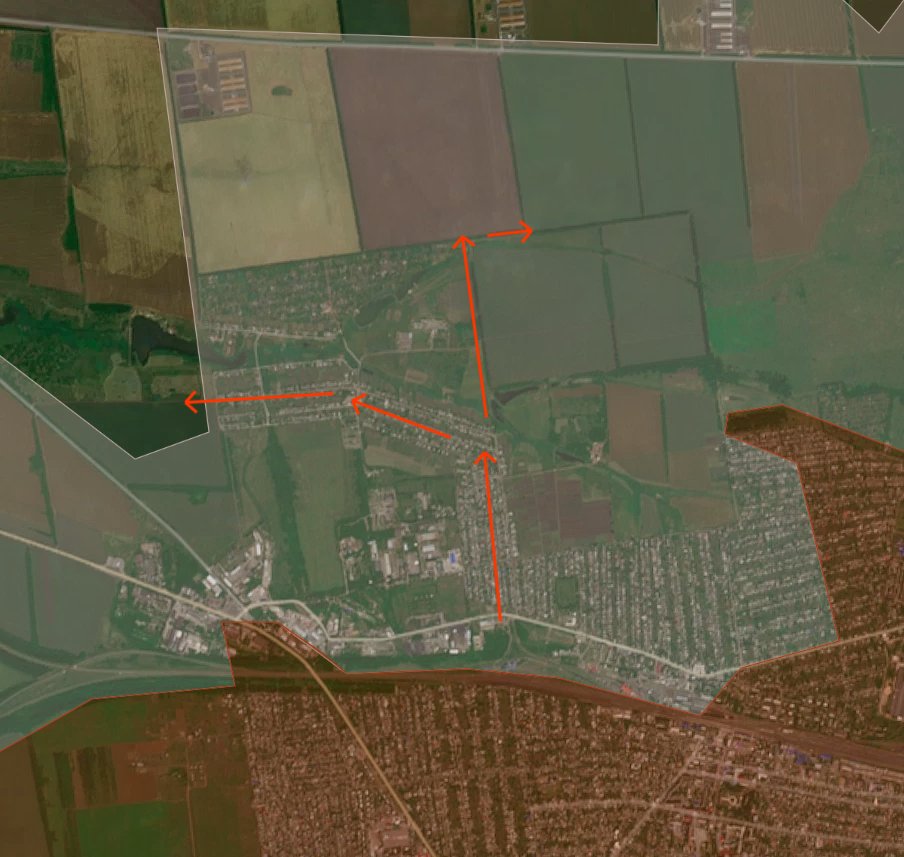
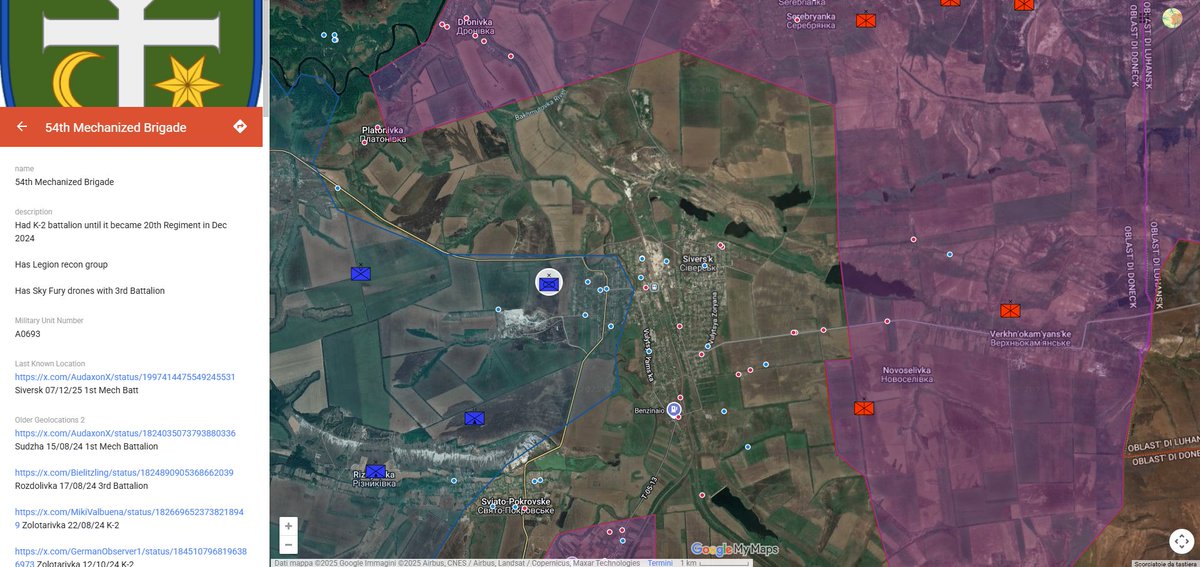
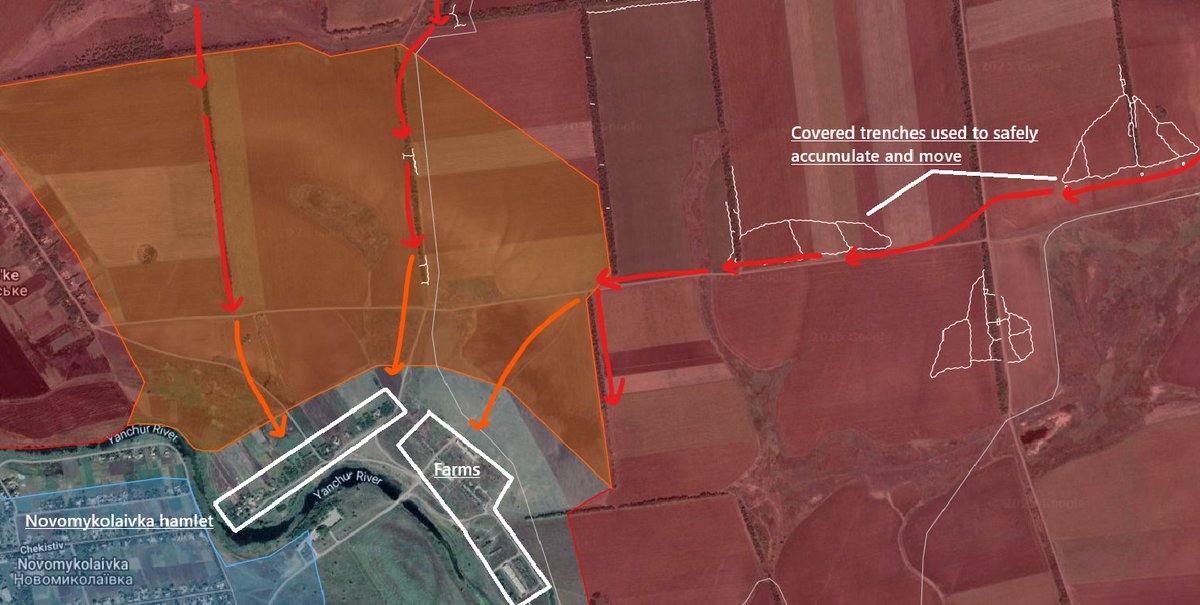
Against renewed #Russian 🇷🇺 attack efforts, #Ukraine 🇺🇦 has not been idle, and is currently building the New Donbas Line, which stretches from #Kharkiv city to #VilnePole (#Zaporizhzhia), and which is the fruit of years of drone war experience and, finally, error correction.
In some sections, it's already capable of withstanding full-force #Russian attacks.
🧵Thread🧵 1/⬇️
In some sections, it's already capable of withstanding full-force #Russian attacks.
🧵Thread🧵 1/⬇️

2/🧵
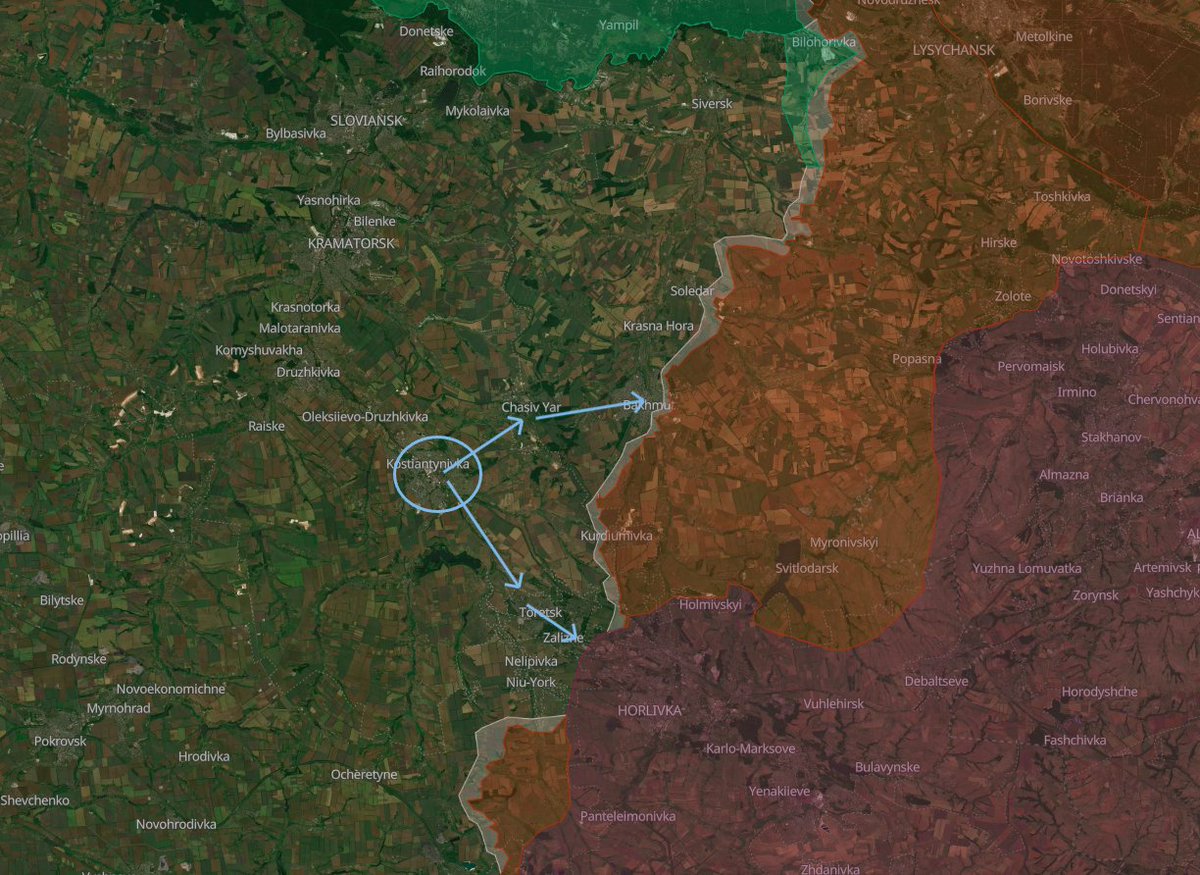
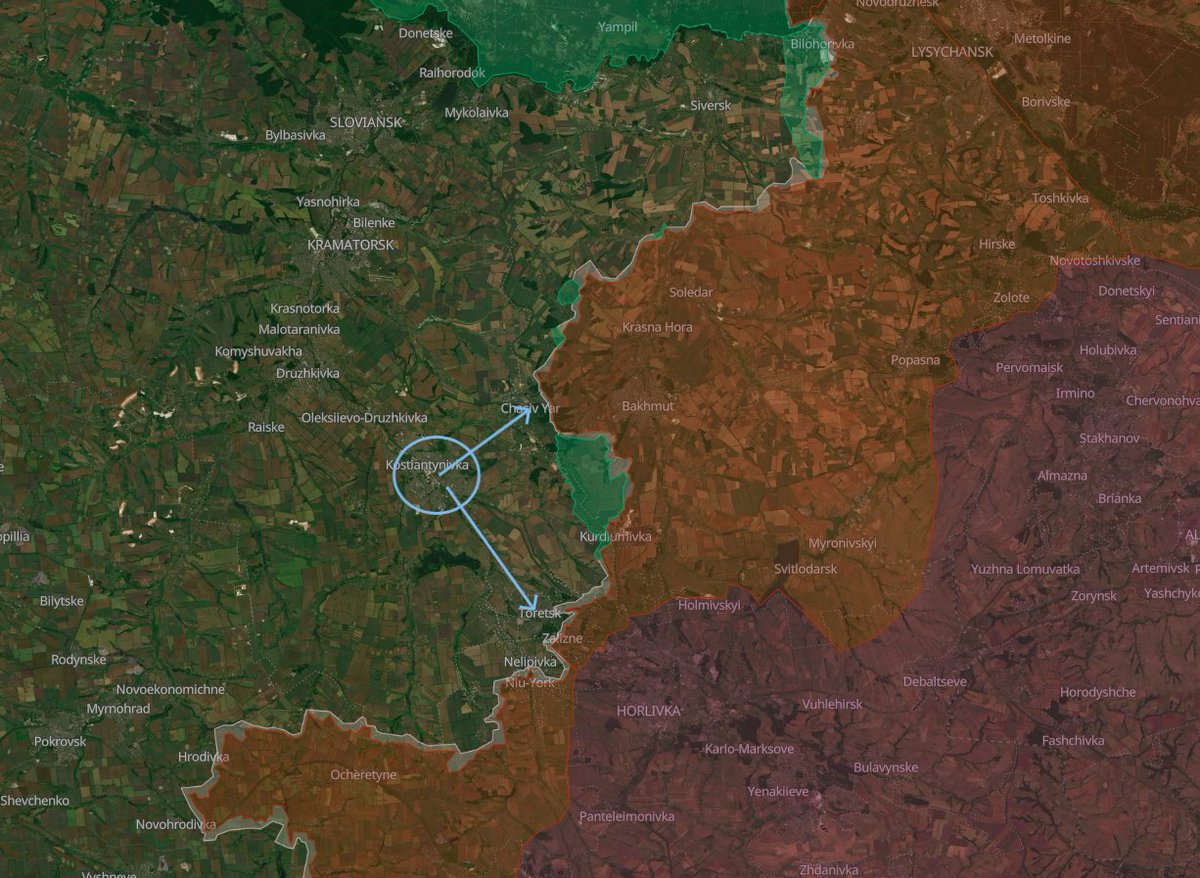
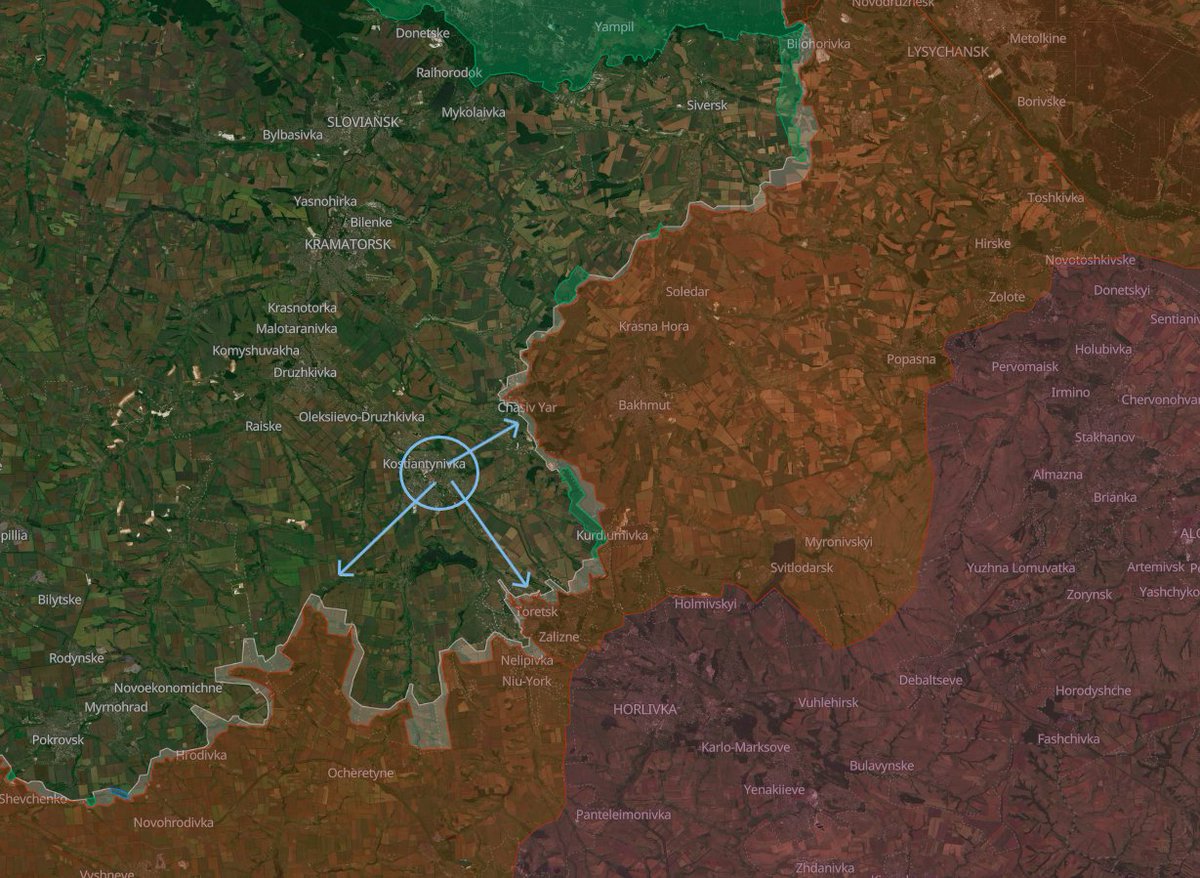
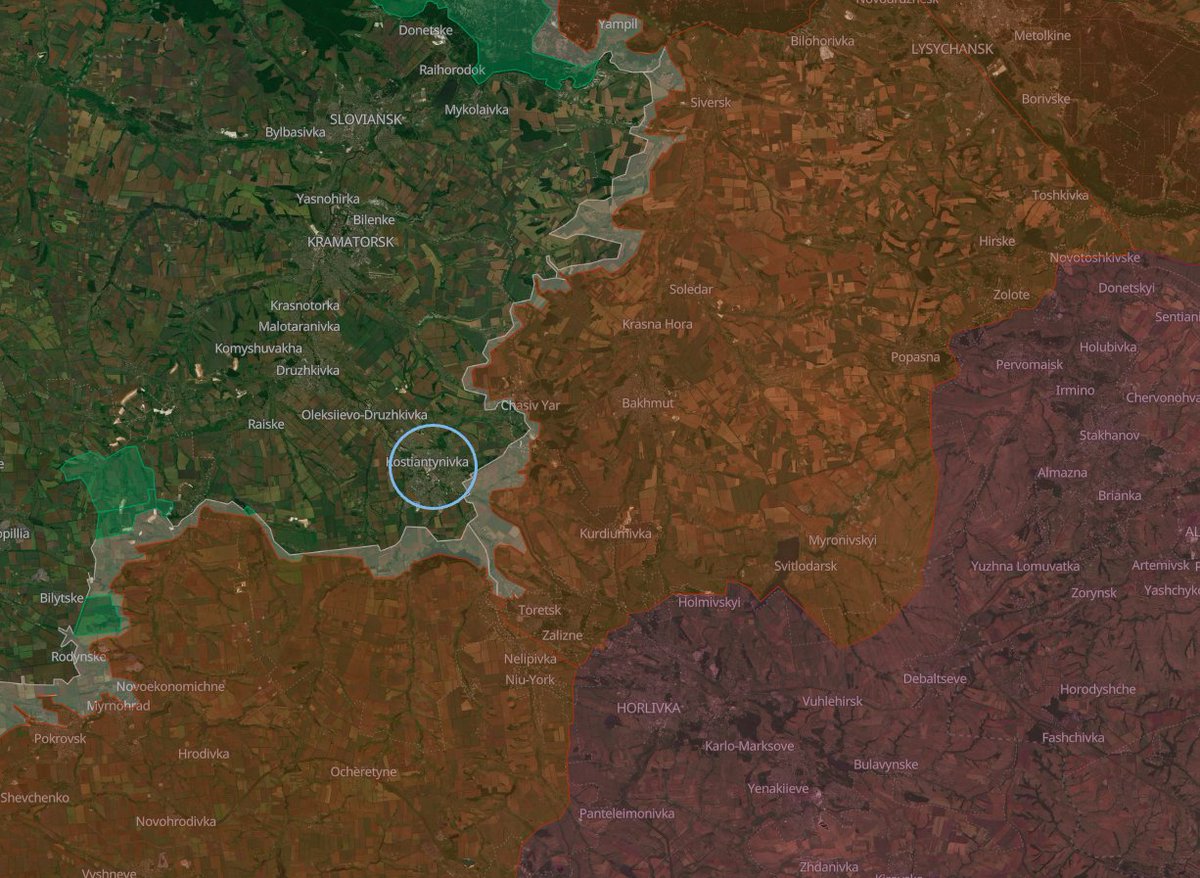
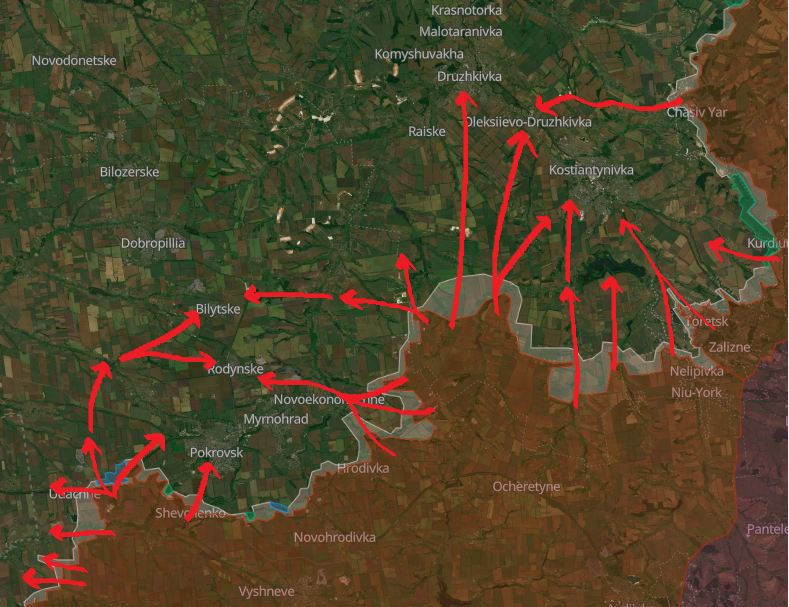
After 1.5 years of total offensive on much of Ukraine's territory, Russia is seemingly not intending to decrease the pace of their assaults, and on the contrary are renewing offensive actions on the South Donetsk, Novopavlivka, Kostyantynivka, Siversk, Lyman and Sumy.
In contrast, though, the Ukrainians have not been watching and sleeping all this time, and have brought big reinforcements in the critical Kostyantynivka direction, and, focus of this thread, have been digging a brand new Donbas Line.
After 1.5 years of total offensive on much of Ukraine's territory, Russia is seemingly not intending to decrease the pace of their assaults, and on the contrary are renewing offensive actions on the South Donetsk, Novopavlivka, Kostyantynivka, Siversk, Lyman and Sumy.
In contrast, though, the Ukrainians have not been watching and sleeping all this time, and have brought big reinforcements in the critical Kostyantynivka direction, and, focus of this thread, have been digging a brand new Donbas Line.

3/🧵
The first parts of this line were constructed back in early March, and the Ukrainians have been building and reinforcing non-stop since then.
We trench mappers call it the New Donbas Line because it covers a massive 350 km: from Kharkiv city itself to Pechenihy east, to Shevchenkove west of Kupyansk and all the way down to Izyum, then west of Kramatorsk, Slovyansk, at Zolotyi Kolodiaz, north of Dobropillia, Slovyanka, Mezhova, Havrylivka and, finally, Vilne Pole in Zaporizhzhia Oblast.
The first parts of this line were constructed back in early March, and the Ukrainians have been building and reinforcing non-stop since then.
We trench mappers call it the New Donbas Line because it covers a massive 350 km: from Kharkiv city itself to Pechenihy east, to Shevchenkove west of Kupyansk and all the way down to Izyum, then west of Kramatorsk, Slovyansk, at Zolotyi Kolodiaz, north of Dobropillia, Slovyanka, Mezhova, Havrylivka and, finally, Vilne Pole in Zaporizhzhia Oblast.
4/🧵
Let's talk technical: what's it composed of?
Well, not so fast. It depends on the sections we're considering.
Some sections, like down at Vilne Pole and Havrylivka, only feature a singular anti-tank ditch or dragon's teeth line, while the Zolotyi Kolodiaz - Izyum - Pechenihy section is by far the strongest one: 3 anti-tank ditches, a dragon's teeth line behind, and a barbed wire line in front.
Let's talk technical: what's it composed of?
Well, not so fast. It depends on the sections we're considering.
Some sections, like down at Vilne Pole and Havrylivka, only feature a singular anti-tank ditch or dragon's teeth line, while the Zolotyi Kolodiaz - Izyum - Pechenihy section is by far the strongest one: 3 anti-tank ditches, a dragon's teeth line behind, and a barbed wire line in front.
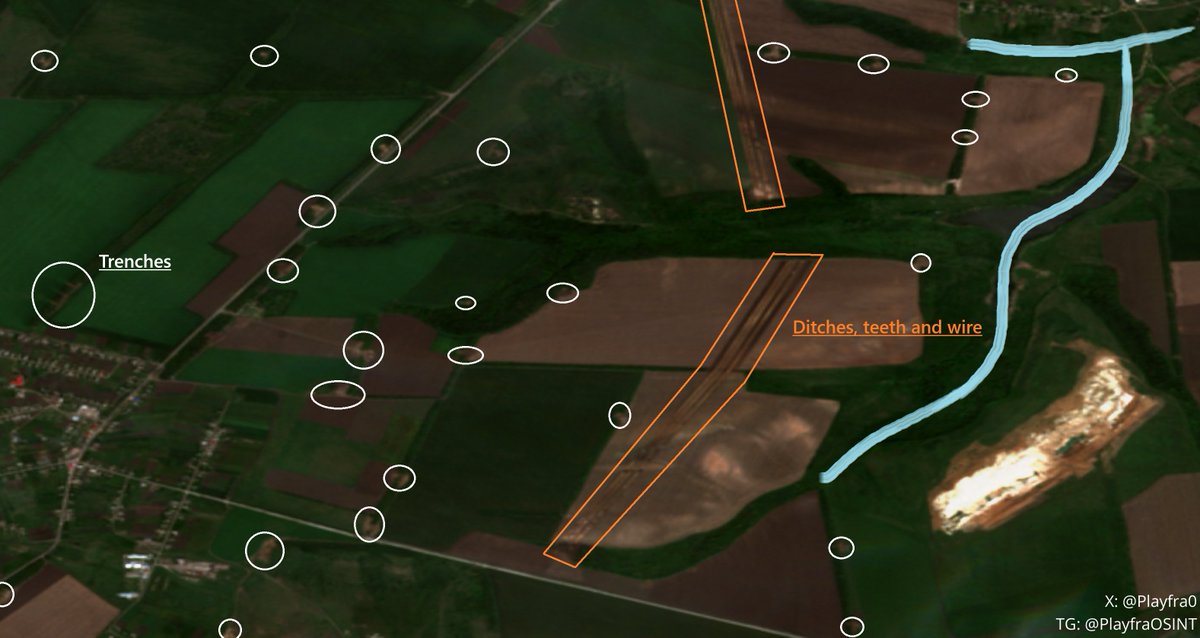
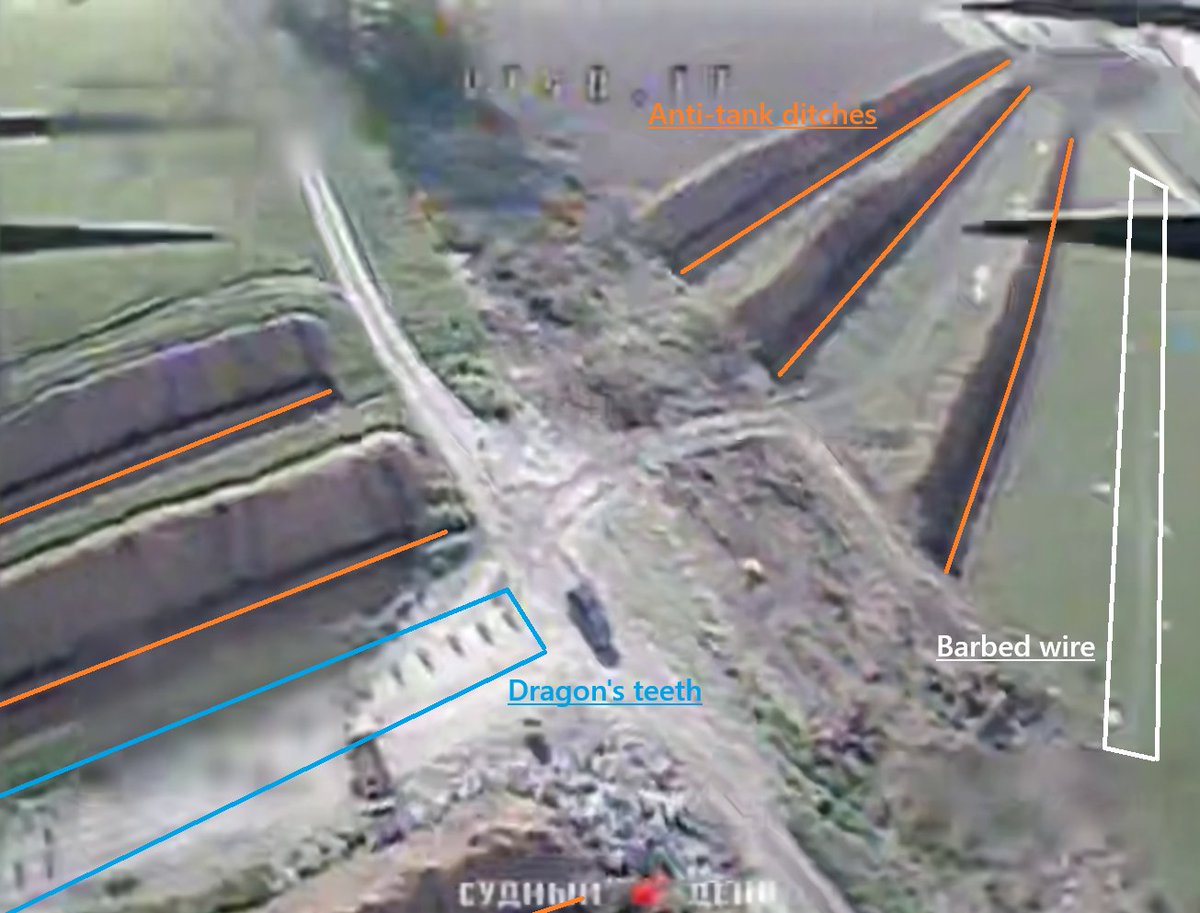
5/🧵
The New Donbas Line, though, has a couple of characteristics common to every part of it:
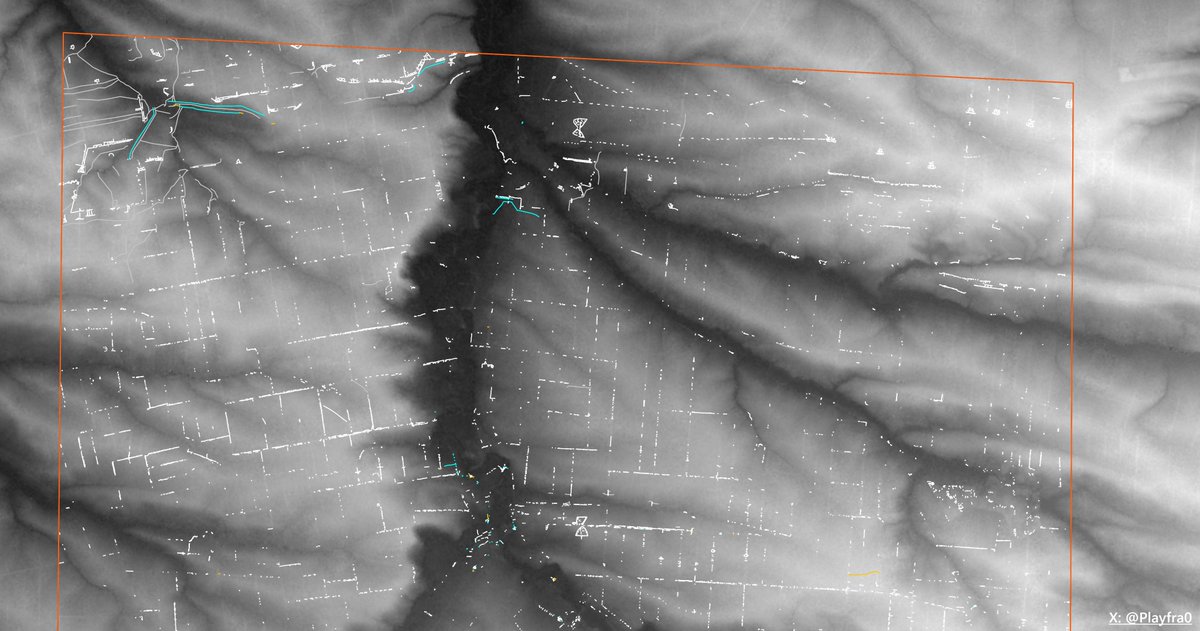
1. The defensive line itself is built on positions that make sense to defend. That is, behind rivers, on dominant hills and on topographical chokepoints. Moreover, it's anchored by "urban pins". In the case of the photo, Izyum and Shevchenkove.
The New Donbas Line, though, has a couple of characteristics common to every part of it:
1. The defensive line itself is built on positions that make sense to defend. That is, behind rivers, on dominant hills and on topographical chokepoints. Moreover, it's anchored by "urban pins". In the case of the photo, Izyum and Shevchenkove.
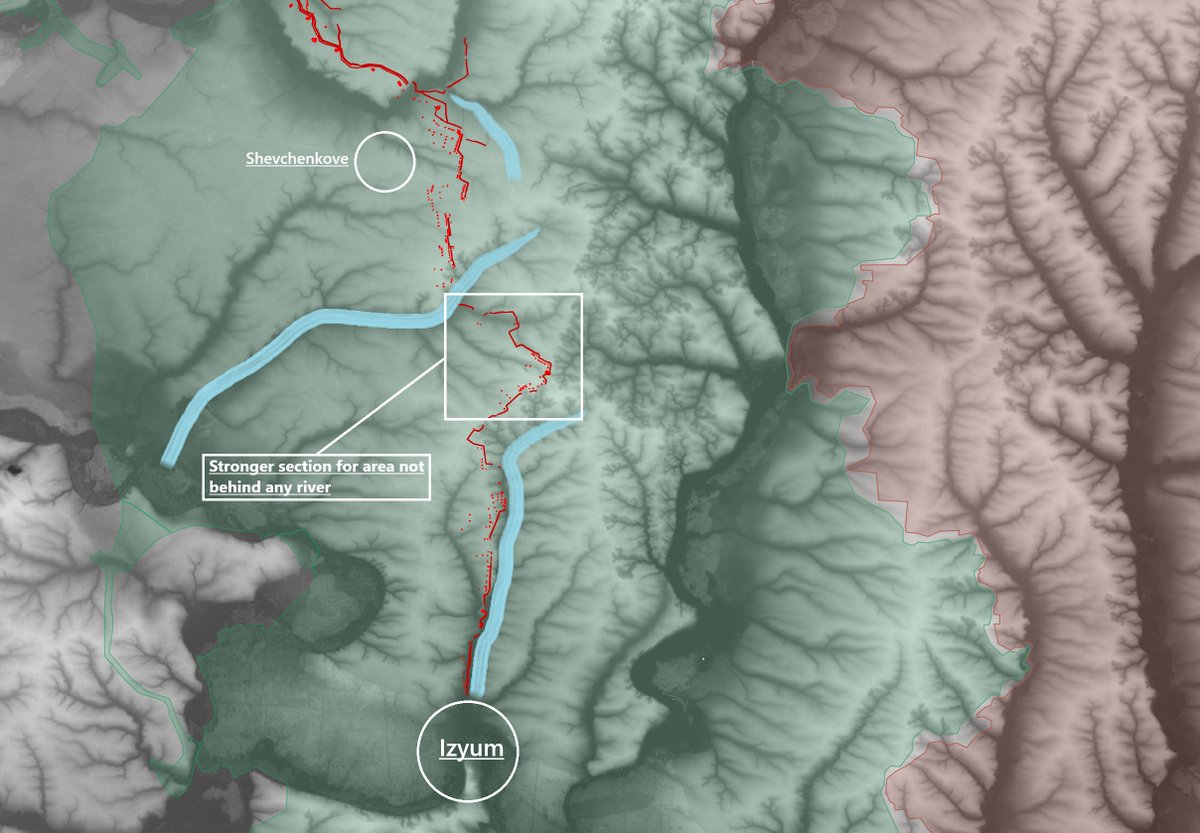
6/🧵
2. The independence of the singular defensive positions.
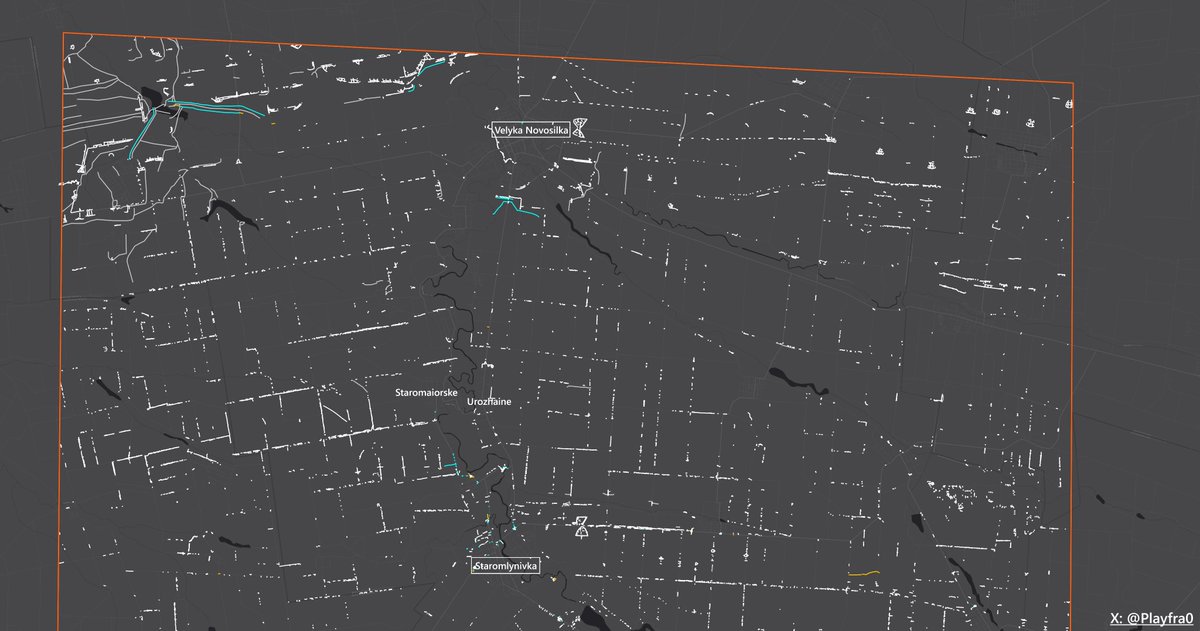
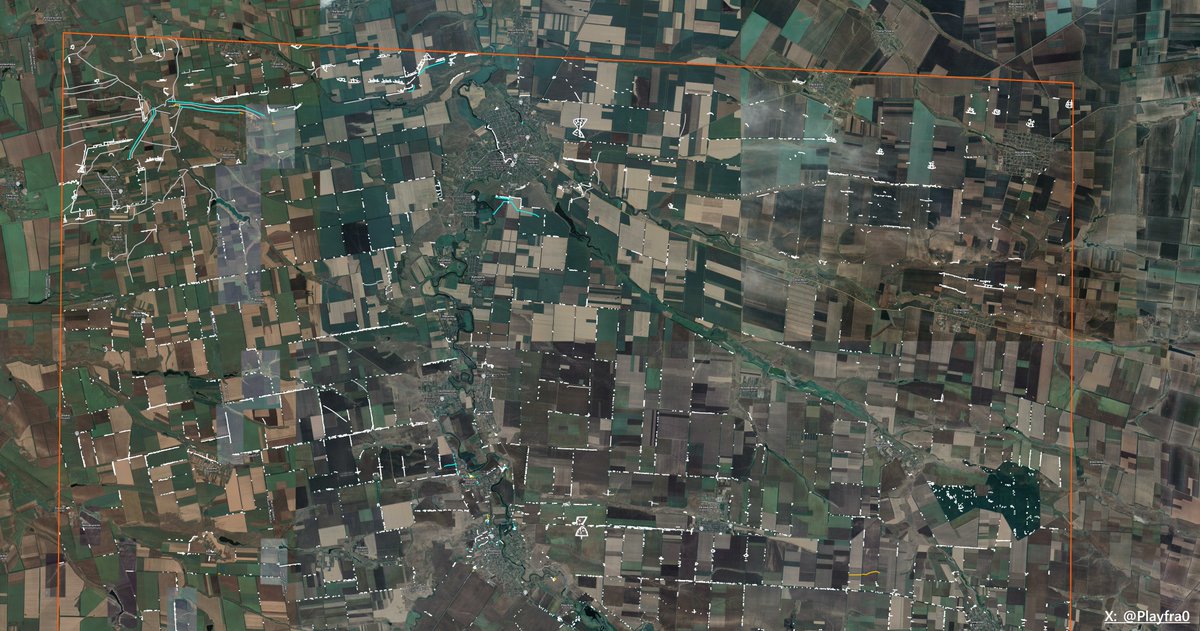
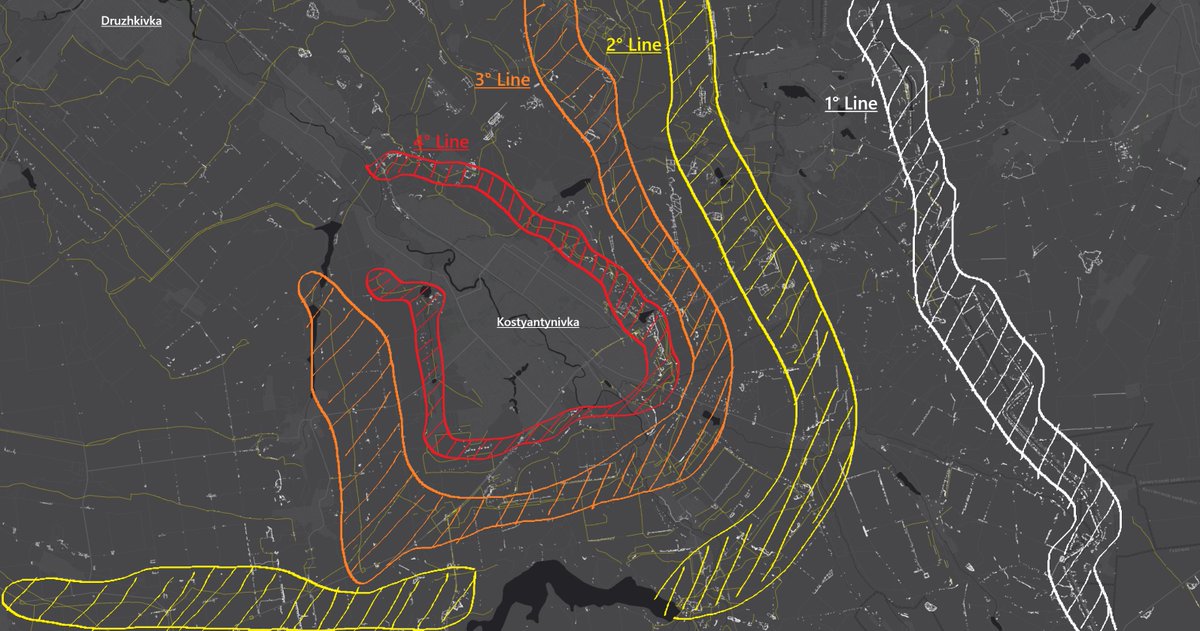
In the New Donbas Line, there are no massive trench rings that, if captured, cause the collapse and outflanking of the whole defensive line. There are, instead, hundreds of 60 meter long T-shaped systems that are independent from each other and can still provide circular resistance if the neighbouring systems were to be captured.
To further help this mechanic, the Ukrainians adopted a defense-in-depth and attrition tactic, building rows of small trench systems extending not only to cover the length of the line, but also several kilometers behind. This way they hope to exhaust Russian tactical offensive potential and gain time.
Furthermore, the Russians will be forced to capture every single trench system before moving further, complicating even more their advancements.
2. The independence of the singular defensive positions.
In the New Donbas Line, there are no massive trench rings that, if captured, cause the collapse and outflanking of the whole defensive line. There are, instead, hundreds of 60 meter long T-shaped systems that are independent from each other and can still provide circular resistance if the neighbouring systems were to be captured.
To further help this mechanic, the Ukrainians adopted a defense-in-depth and attrition tactic, building rows of small trench systems extending not only to cover the length of the line, but also several kilometers behind. This way they hope to exhaust Russian tactical offensive potential and gain time.
Furthermore, the Russians will be forced to capture every single trench system before moving further, complicating even more their advancements.
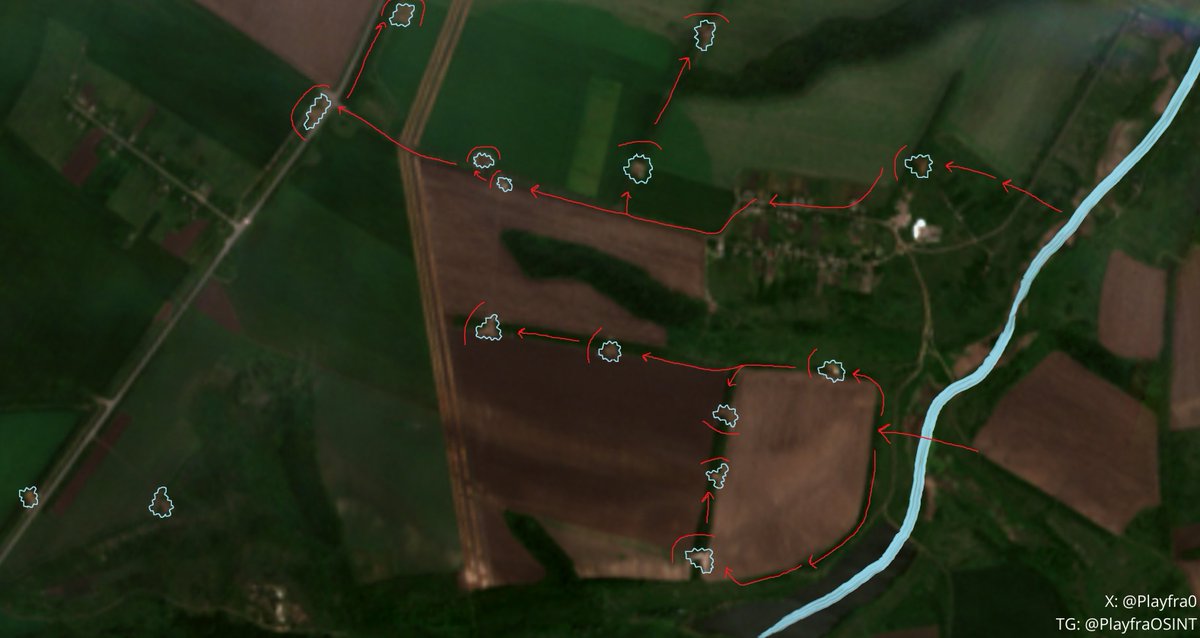
7/🧵
In general, the Ukrainians have learned from their past mistakes, and are applying, for one of the first times, their experience correctly when it comes to building fortifications.
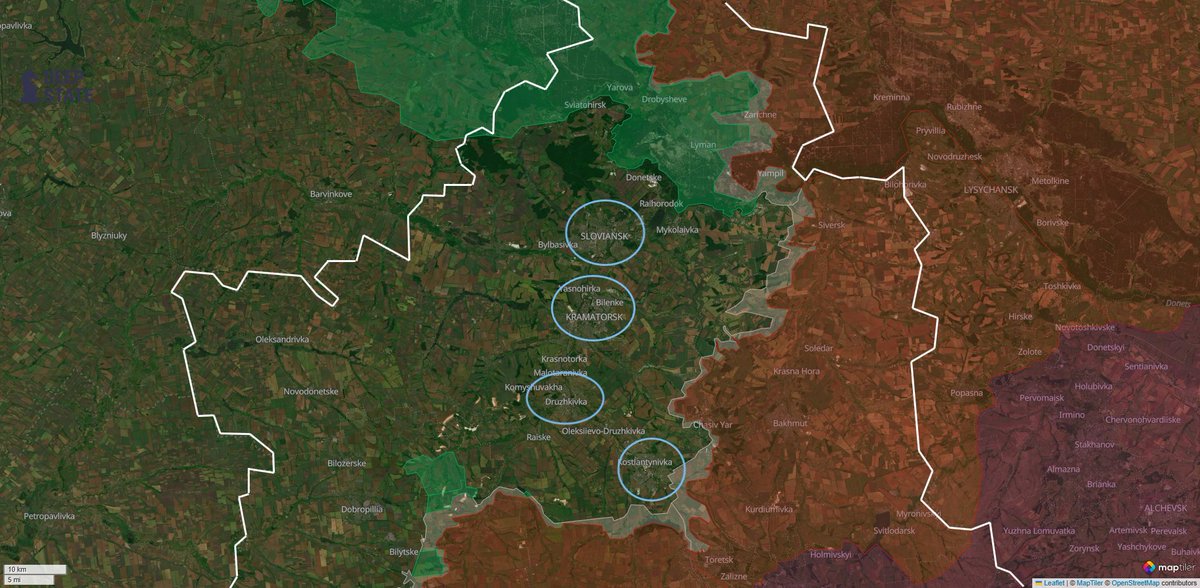
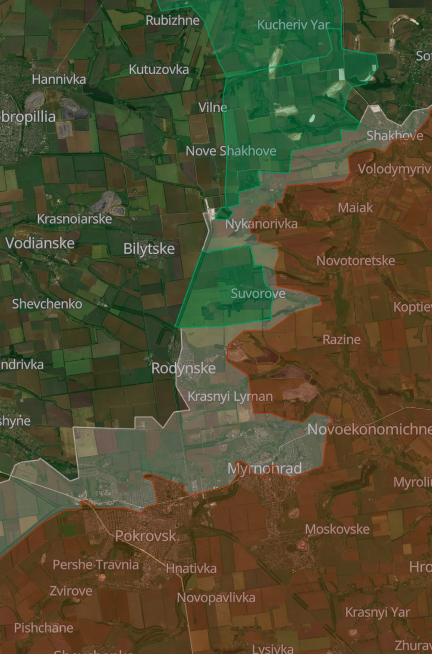
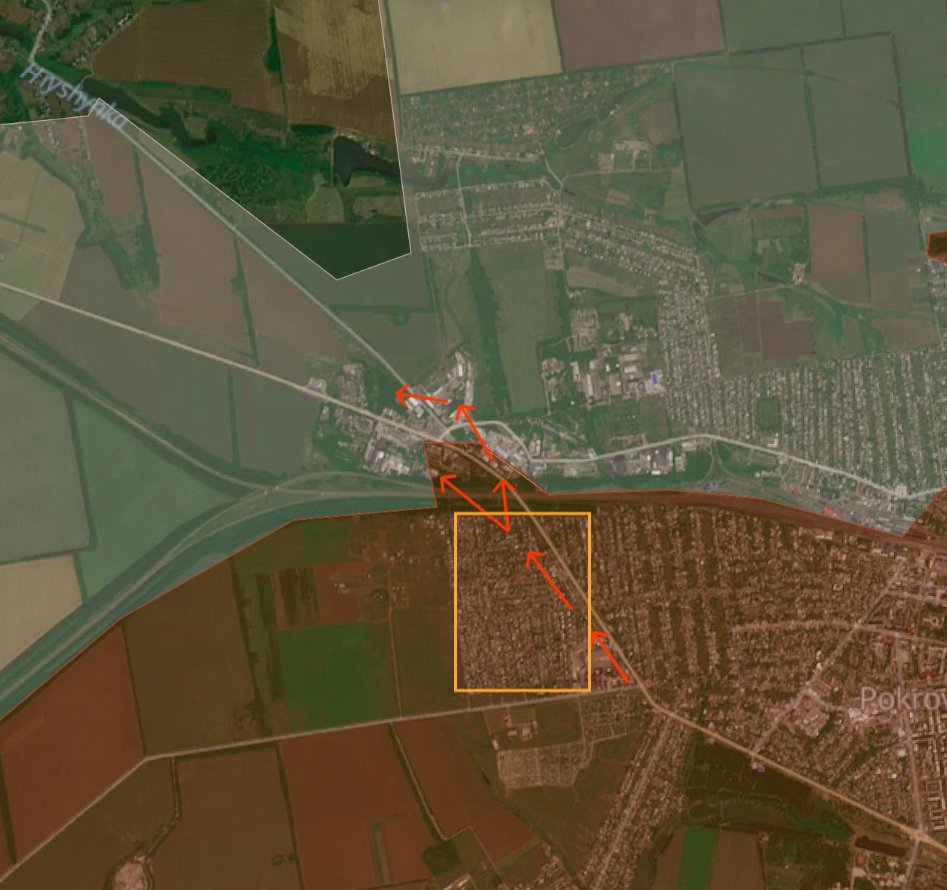
We can note, too, how they're planning in advance for the worst-case scenario. That is, losing Pokrovsk, Dobropillia, Kramatorsk, Slovyansk, and Kostyantynivka.
In this position, this is the most correct and safest thing to do. If these bastions fall, the Russian advance into central Ukraine will be much, much faster, because of the lack of big urban centers and prevalence of rural areas, but with the New Donbas Line Ukraine accounted for this and started responsibly fixing this problem artificially.
If there was a thing I would really like to know they did in these trench systems, is that they dug a sufficient number of dugouts for every system and covered them completely.
In general, the Ukrainians have learned from their past mistakes, and are applying, for one of the first times, their experience correctly when it comes to building fortifications.
We can note, too, how they're planning in advance for the worst-case scenario. That is, losing Pokrovsk, Dobropillia, Kramatorsk, Slovyansk, and Kostyantynivka.
In this position, this is the most correct and safest thing to do. If these bastions fall, the Russian advance into central Ukraine will be much, much faster, because of the lack of big urban centers and prevalence of rural areas, but with the New Donbas Line Ukraine accounted for this and started responsibly fixing this problem artificially.
If there was a thing I would really like to know they did in these trench systems, is that they dug a sufficient number of dugouts for every system and covered them completely.
8/🧵
Unfortunately, Russia's upgrades to their FPV drone technology, especially in their ranges, has significantly complicated logistics and building, and pushed the "rear" much further back.
This means that if a month or two ago the Ukrainians could keep upgrading their fortifications almost to the last moment before the Russians closed in enough, now they have to account for this and need to start building further back than anticipated.
About exactly this FPV problem, Ukraine is in ABSOLUTE NEED of placing anti-drone nets on the roads leading to the defensive positions of the New Donbas line.
Maginot line with no supply is as good as a field dugout. How can the Ukrainian command hope to defend positions without being able to bring fresh reinforcements, ammo and food to them? You think leaving it empty will scare the Russians?
Unfortunately, Russia's upgrades to their FPV drone technology, especially in their ranges, has significantly complicated logistics and building, and pushed the "rear" much further back.
This means that if a month or two ago the Ukrainians could keep upgrading their fortifications almost to the last moment before the Russians closed in enough, now they have to account for this and need to start building further back than anticipated.
About exactly this FPV problem, Ukraine is in ABSOLUTE NEED of placing anti-drone nets on the roads leading to the defensive positions of the New Donbas line.
Maginot line with no supply is as good as a field dugout. How can the Ukrainian command hope to defend positions without being able to bring fresh reinforcements, ammo and food to them? You think leaving it empty will scare the Russians?
9/🧵
In conclusion, I think Ukraine has taken the right road, but still needs to solve some extremely pressing issues. If I had to list them in order of importance:
#1: Anti-drone netting and supply protection
#2: Command reforms at all levels of the chain
#3: Manpower and fortifications
My opinion is that it is possible to defend with little fortifications (I like to use the example of Stepove, north of Avdiivka, in Winter 2023-2024), but it's not possible to defend lacking supplies and organization.
I still call on the Ukrainian command to immediately address these issues, because many great opportunities to efficiently restrain Russia have been lost exactly because of these.
In conclusion, I think Ukraine has taken the right road, but still needs to solve some extremely pressing issues. If I had to list them in order of importance:
#1: Anti-drone netting and supply protection
#2: Command reforms at all levels of the chain
#3: Manpower and fortifications
My opinion is that it is possible to defend with little fortifications (I like to use the example of Stepove, north of Avdiivka, in Winter 2023-2024), but it's not possible to defend lacking supplies and organization.
I still call on the Ukrainian command to immediately address these issues, because many great opportunities to efficiently restrain Russia have been lost exactly because of these.
10/🧵
And that's about it for this (short) thread. Thanks for your attention!
These types of analyses take us trench mappers a ton of time and energy, so if you liked this thread and you learned something new today, I would really appreciate a repost and a follow!
And as always, have a great rest of the day 👋
Oh, and join my Telegram channel! t.me/PlayfraOSINT
And that's about it for this (short) thread. Thanks for your attention!
These types of analyses take us trench mappers a ton of time and energy, so if you liked this thread and you learned something new today, I would really appreciate a repost and a follow!
And as always, have a great rest of the day 👋
Oh, and join my Telegram channel! t.me/PlayfraOSINT
• • •
Missing some Tweet in this thread? You can try to
force a refresh