A new version of the Equal Treatment Bench Book is out. Definite improvements to Chapter 12 "Trans People". 

The new version is to be found here.
judiciary.uk/wp-content/upl…
judiciary.uk/wp-content/upl…
This is just a quick read-through, not a line-by-line comparison with the previous version, so we may comment on things that are not new.
There is a clear acknowledgment here that biological sex is a thing, and (by implication) everyone is either male or female. In other words, the ETBB rejects gender identity theory and acknowledges material reality.

That's refreshing, because judges have a great tendency to insist that they're not "picking sides" in the debate between gender identity theory and belief in reality, otherwise known as "gender critical".
But of course courts and tribunals must always pick the side of truth and reality: it's literally their job.
And that after all is what the SC did in finding that for the purposes of the EqA, it is biological sex that matters.

"Non binary" isn't legally meaningful.

This is obviously right.

This is obviously right.

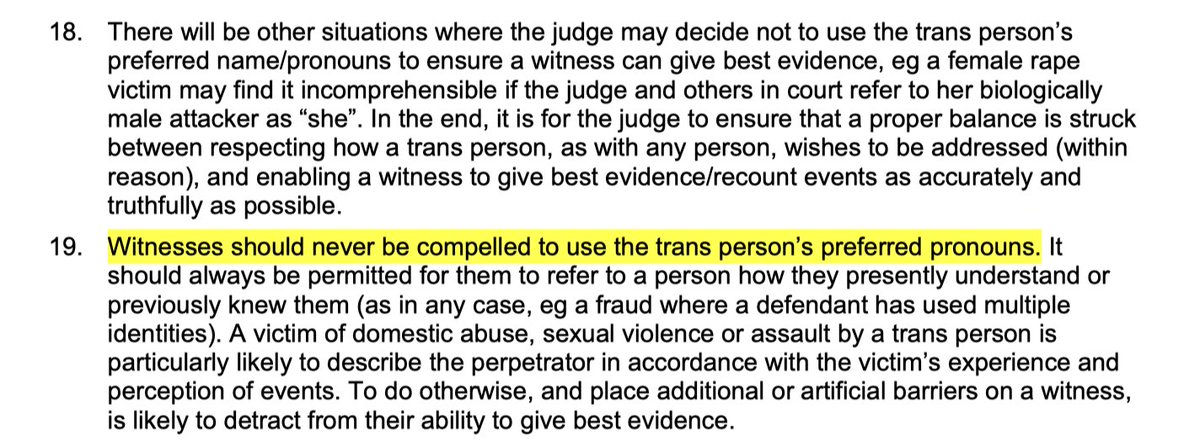
This is good so far as it goes, but judges should not pay lip-service to gender identity theory by using "preferred pronouns" in any case in which conflict between gender identity theory and reality is in issue.

More on pronouns. Still the "default" assumption that it may often be appropriate or polite to use wrong-sex pronouns, but progress at least towards a recognition that other people have relevant rights.
• • •
Missing some Tweet in this thread? You can try to
force a refresh