Five years ago, the world watched America erupt over the death of George Floyd.
The left called it the “summer of love.”
What followed was anything but.
It was chaos. It was violence. It was destruction.
And, according to Victor Davis Hanson, the entire movement was built on a lie—a psychological operation powerful enough to divide a nation and destabilize its foundation.
Only now, half a decade later, are we beginning to see it clearly and reckon with the wreckage it left behind.
🧵 THREAD
The left called it the “summer of love.”
What followed was anything but.
It was chaos. It was violence. It was destruction.
And, according to Victor Davis Hanson, the entire movement was built on a lie—a psychological operation powerful enough to divide a nation and destabilize its foundation.
Only now, half a decade later, are we beginning to see it clearly and reckon with the wreckage it left behind.
🧵 THREAD
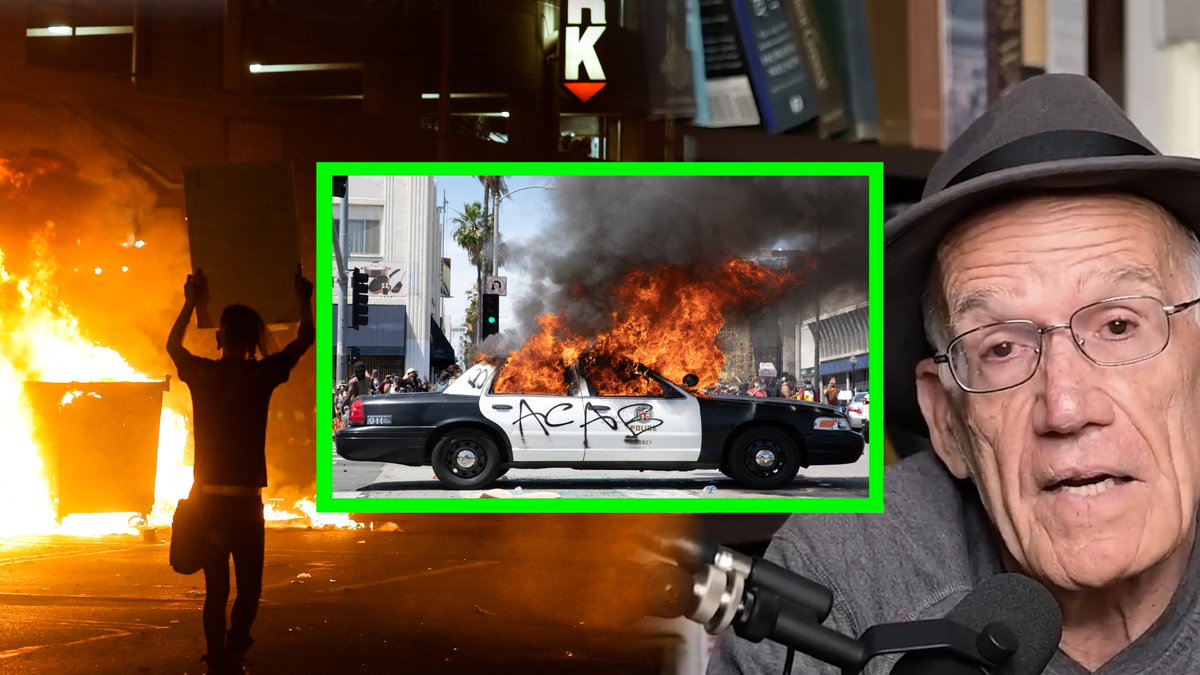
Victor Davis Hanson opened with a sober reflection: it’s now been five years since the death of George Floyd—a moment that reshaped America’s conversations around race, crime, and justice.
“This week was the fifth anniversary, May 25th of 2020, of the tragic death of George Floyd,” he said.
It may feel recent, but a half-decade has passed. And according to Hanson, what followed in the wake of that tragedy wasn’t healing—it was devastation.
“Almost everything that has transpired after that in terms of racial relations has been disastrous,” he said.
Only now, he believes, are we beginning to look back with a clearer head and ask the questions no one dared ask at the time.
“Maybe at the end of five years, we can look back with a little bit more circumspection and see what actually happened.”
“This week was the fifth anniversary, May 25th of 2020, of the tragic death of George Floyd,” he said.
It may feel recent, but a half-decade has passed. And according to Hanson, what followed in the wake of that tragedy wasn’t healing—it was devastation.
“Almost everything that has transpired after that in terms of racial relations has been disastrous,” he said.
Only now, he believes, are we beginning to look back with a clearer head and ask the questions no one dared ask at the time.
“Maybe at the end of five years, we can look back with a little bit more circumspection and see what actually happened.”
That reassessment begins with George Floyd himself—not the symbol, but the man.
Hanson challenged the media’s portrayal of Floyd as a saintly martyr, urging people to look at the full context of what happened.
“George Floyd was a career felon,” he said plainly.
At the time of his death, Floyd was attempting to use a counterfeit bill and was reportedly under the influence of powerful narcotics—possibly fentanyl.
He also had a heart condition and may have been suffering from complications related to COVID.
“One of his prior felonies was putting a gun to a woman’s belly in a home invasion,” Hanson noted.
The situation that escalated into tragedy began with a routine police response.
“When he tried to pass this counterfeit bill, the store owner called the Minneapolis police. They tried to arrest him. He resisted arrest. He was a very big man.”
Derek Chauvin, the officer who restrained Floyd, used a controversial tactic that had been authorized by the department—placing a knee on the neck to subdue a suspect.
“Officer Chauvin, who was supposedly an expert in techniques that were institutionalized by the Minneapolis Police Department, unfortunately put his knee on George Floyd’s neck.”
The autopsies offered conflicting views—one pointed to the knee as the cause of death, another suggested it wasn’t the only factor.
But the truth was quickly sidelined by the power of a single image.
“The expression on Officer Chauvin’s face was frozen into eternity,” Hanson said.
“And that sparked the idea that he was a white policeman conducting a typical murder of an unarmed black suspect.”
Hanson challenged the media’s portrayal of Floyd as a saintly martyr, urging people to look at the full context of what happened.
“George Floyd was a career felon,” he said plainly.
At the time of his death, Floyd was attempting to use a counterfeit bill and was reportedly under the influence of powerful narcotics—possibly fentanyl.
He also had a heart condition and may have been suffering from complications related to COVID.
“One of his prior felonies was putting a gun to a woman’s belly in a home invasion,” Hanson noted.
The situation that escalated into tragedy began with a routine police response.
“When he tried to pass this counterfeit bill, the store owner called the Minneapolis police. They tried to arrest him. He resisted arrest. He was a very big man.”
Derek Chauvin, the officer who restrained Floyd, used a controversial tactic that had been authorized by the department—placing a knee on the neck to subdue a suspect.
“Officer Chauvin, who was supposedly an expert in techniques that were institutionalized by the Minneapolis Police Department, unfortunately put his knee on George Floyd’s neck.”
The autopsies offered conflicting views—one pointed to the knee as the cause of death, another suggested it wasn’t the only factor.
But the truth was quickly sidelined by the power of a single image.
“The expression on Officer Chauvin’s face was frozen into eternity,” Hanson said.
“And that sparked the idea that he was a white policeman conducting a typical murder of an unarmed black suspect.”
Before we roll the next clip: if you’re not following me, you’re missing out on critical updates.
Hit the bell 🔔 to stay sharp and informed.
→ @VigilantFox
Now, back to the story you came for.
Hit the bell 🔔 to stay sharp and informed.
→ @VigilantFox
Now, back to the story you came for.

That image, and the assumptions it carried, ignited months of chaos across the country.
“What followed was near mayhem,” Hanson recalled.
“Officer Chauvin… was sentenced to 20 years.”
But the fallout went far beyond a courtroom.
“This huge riot” wasn’t just a single event—it stretched across the entire summer.
From late May through September, American cities burned.
“Kamala Harris said it wasn’t going to stop, nor should it stop. It’s going to keep going to Election Day.”
Billions in damage followed.
A police precinct in Minneapolis was reduced to ash.
A federal courthouse was torched.
St. John’s Church, just across from the White House, was set on fire.
And at one point, a mob tried to breach the White House grounds.
But Hanson said the unrest wasn’t just physical—it was psychological.
With most of the country still under COVID lockdowns, people were glued to their screens, absorbing the narrative without real-world context.
“People had been in a lockdown… isolated in their own home with no human interaction,” he said.
“And this is their news was from the television.”
“What followed was near mayhem,” Hanson recalled.
“Officer Chauvin… was sentenced to 20 years.”
But the fallout went far beyond a courtroom.
“This huge riot” wasn’t just a single event—it stretched across the entire summer.
From late May through September, American cities burned.
“Kamala Harris said it wasn’t going to stop, nor should it stop. It’s going to keep going to Election Day.”
Billions in damage followed.
A police precinct in Minneapolis was reduced to ash.
A federal courthouse was torched.
St. John’s Church, just across from the White House, was set on fire.
And at one point, a mob tried to breach the White House grounds.
But Hanson said the unrest wasn’t just physical—it was psychological.
With most of the country still under COVID lockdowns, people were glued to their screens, absorbing the narrative without real-world context.
“People had been in a lockdown… isolated in their own home with no human interaction,” he said.
“And this is their news was from the television.”
The most damaging part, Hanson argued, was the lie at the heart of the outrage—that unarmed black men were being systematically hunted by police.
“George Floyd was iconic or emblematic of young black men… being killed unarmed by the police,” Hanson said. “That was not true.”
Even The Washington Post acknowledged the numbers didn’t support the claim.
“That year there were only 18 black males who were stopped by the police in the entire population of 340 million people. This year, there were only 10!”
Considering that 11 to 12 million people are stopped by police each year, the data just didn’t line up with the narrative.
But that didn’t stop a new ideology from taking root—one that redefined racism itself.
“Professor Kendi and professor D’Angelo… created this idea of systemic racism, and you had to be racist in an anti-racist fashion,” he said.
“The only way to deal with systemic racism was to be pro-black.”
The results were devastating.
“What followed then was a defunding of the police,” Hanson said. “It caused a huge spike in crime—I think 20,000 murders in 2020.”
Meanwhile, Black Lives Matter raised millions, only for the organization to collapse under the weight of scandal.
“The architects of that movement have ensconced with the money,” Hanson said. “They have nice homes, but it’s an inert group.”
Universities followed suit with their own brand of social justice performance—gutting merit-based admissions and enforcing loyalty to DEI initiatives.
“They dropped the SAT. They dropped the comparative ranking of high school GPAs. They dropped meritocracy.”
And if you didn’t actively prove your allegiance to DEI, you didn’t get hired.
“The universities went into something we could call repertory admissions.”
“George Floyd was iconic or emblematic of young black men… being killed unarmed by the police,” Hanson said. “That was not true.”
Even The Washington Post acknowledged the numbers didn’t support the claim.
“That year there were only 18 black males who were stopped by the police in the entire population of 340 million people. This year, there were only 10!”
Considering that 11 to 12 million people are stopped by police each year, the data just didn’t line up with the narrative.
But that didn’t stop a new ideology from taking root—one that redefined racism itself.
“Professor Kendi and professor D’Angelo… created this idea of systemic racism, and you had to be racist in an anti-racist fashion,” he said.
“The only way to deal with systemic racism was to be pro-black.”
The results were devastating.
“What followed then was a defunding of the police,” Hanson said. “It caused a huge spike in crime—I think 20,000 murders in 2020.”
Meanwhile, Black Lives Matter raised millions, only for the organization to collapse under the weight of scandal.
“The architects of that movement have ensconced with the money,” Hanson said. “They have nice homes, but it’s an inert group.”
Universities followed suit with their own brand of social justice performance—gutting merit-based admissions and enforcing loyalty to DEI initiatives.
“They dropped the SAT. They dropped the comparative ranking of high school GPAs. They dropped meritocracy.”
And if you didn’t actively prove your allegiance to DEI, you didn’t get hired.
“The universities went into something we could call repertory admissions.”
Five years later, Hanson said, the country is finally beginning to ask what it all really achieved.
“Looking back at all the damage of the downtowns in America—many of them were destroyed. Today, they have not recovered.”
Race relations are worse. Public trust is fractured. And the very institutions that rushed to virtue-signal have been discredited.
“Look at the universities who were chastised by the Supreme Court for using race in a racist fashion in admission. They've been discredited.”
“And the people who capitalized on the death of George Floyd are, for the most part, discredited.”
Now, Hanson believes, the country is starting to sober up.
“We're trying to come to a conclusion,” he said. “Why in the world did we go completely collectively insane?”
The lockdowns, he argued, did more harm than the virus itself.
The idea of defunding police has proven to be a dangerous fantasy.
And the so-called anti-racism movement squandered nearly all the goodwill it once had.
“Professor Kendi… went through $45 million [at] Boston University for an anti-racist center. And apparently the money was squandered.”
“So we’re getting back to the idea that when you use race in any fashion for bias or preference—it’s racist.”
“Looking back at all the damage of the downtowns in America—many of them were destroyed. Today, they have not recovered.”
Race relations are worse. Public trust is fractured. And the very institutions that rushed to virtue-signal have been discredited.
“Look at the universities who were chastised by the Supreme Court for using race in a racist fashion in admission. They've been discredited.”
“And the people who capitalized on the death of George Floyd are, for the most part, discredited.”
Now, Hanson believes, the country is starting to sober up.
“We're trying to come to a conclusion,” he said. “Why in the world did we go completely collectively insane?”
The lockdowns, he argued, did more harm than the virus itself.
The idea of defunding police has proven to be a dangerous fantasy.
And the so-called anti-racism movement squandered nearly all the goodwill it once had.
“Professor Kendi… went through $45 million [at] Boston University for an anti-racist center. And apparently the money was squandered.”
“So we’re getting back to the idea that when you use race in any fashion for bias or preference—it’s racist.”
Watch the full episode of The @DailySignal with @VDHanson here:
https://x.com/DailySignal/status/1928557027309269384
@DailySignal @VDHanson Thanks for reading. For more stories the mainstream won’t touch, follow me on 𝕏.
—> @VigilantFox
Looking for something else to read?
Elon Musk Declares 'DOGE Influence Will Only Grow Stronger' in White House Farewell
—> @VigilantFox
Looking for something else to read?
Elon Musk Declares 'DOGE Influence Will Only Grow Stronger' in White House Farewell
https://x.com/VigilantFox/status/1928554756072681874
• • •
Missing some Tweet in this thread? You can try to
force a refresh