
This is where media lies come to die.
Karoline Leavitt has proven once again that she’s the wall fake narratives crash into.
Today’s White House press briefing was a quiet demolition of everything the corporate press tried to spin.
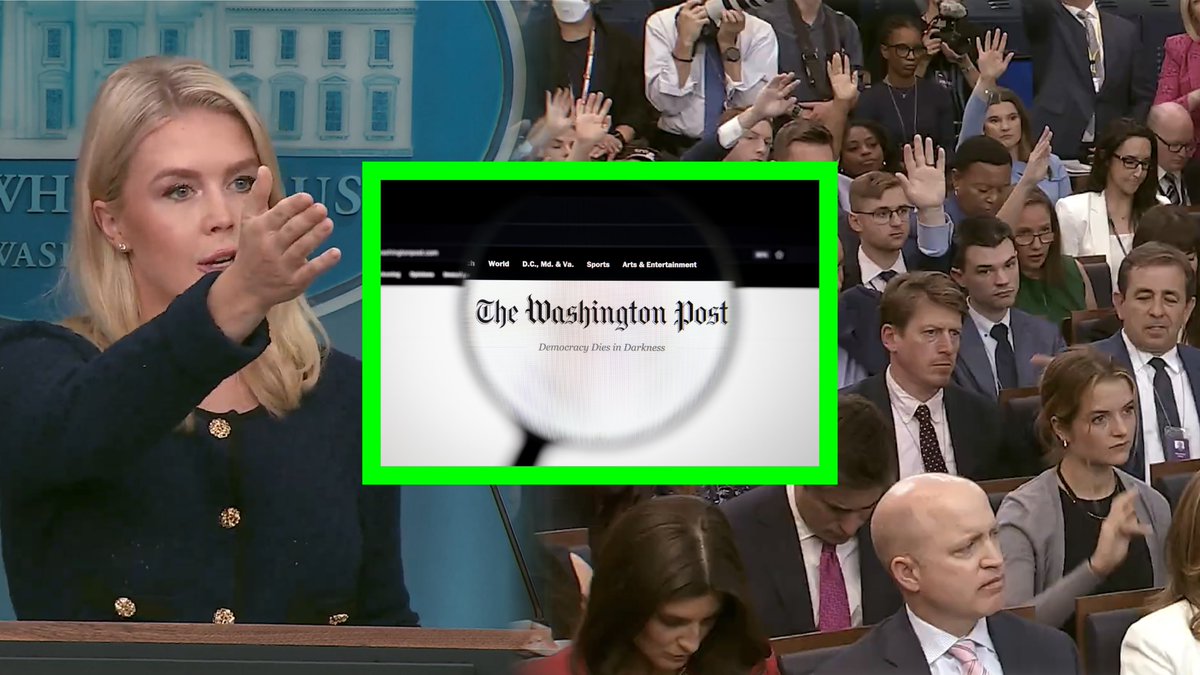
And what she said about Jeff Bezos’ Washington Post might have him reaching for the damage control phone.
🧵 THREAD
Karoline Leavitt has proven once again that she’s the wall fake narratives crash into.
Today’s White House press briefing was a quiet demolition of everything the corporate press tried to spin.
And what she said about Jeff Bezos’ Washington Post might have him reaching for the damage control phone.
🧵 THREAD

📍 Don’t forget to bookmark this thread. No administration has ever been this committed to shutting down media lies in real time.
Let’s break it down—clip by clip.
Let’s break it down—clip by clip.
Karoline Leavitt didn’t wait for the media to set the tone—she fired the first shot.
Before a single question was asked, she went straight after The Washington Post for what she called a dishonest and manipulative headline on the fentanyl crisis.
Their headline: “The mysterious drop in fentanyl seizures on the U.S.-Mexico border.”
Leavitt called it what it was: spin.
“How is this mysterious?” she asked.
“There is no mystery about why there is a decrease in fentanyl coming into the United States!”
She pointed directly to the administration’s border policies and cooperation with Mexico as the reason for the decline.
“This administration’s strong border policies are the reason there has been a decrease in fentanyl trafficking,” she said.
“His strengthened relationship with Mexican President Sheinbaum and all of the measures he has been taking to deter illegal human and drug trafficking at our United States southern border is the reason for plummeting fentanyl seizures at the U.S. Border.”
But the issue wasn’t just the headline.
It was what Leavitt described as intentional narrative engineering.
“This is clearly trying to intentionally manipulate the minds of Americans, and I think the American people understand why there has been fentanyl drop.”
And when the Post ignored the administration’s full explanation?
“Our office responded to this inquiry, we provided a whole host of the reasons that fentanyl seizures have dropped at the southern border, and The Washington Post refused to run them,” she said.
“And that’s despicable.”
Before a single question was asked, she went straight after The Washington Post for what she called a dishonest and manipulative headline on the fentanyl crisis.
Their headline: “The mysterious drop in fentanyl seizures on the U.S.-Mexico border.”
Leavitt called it what it was: spin.
“How is this mysterious?” she asked.
“There is no mystery about why there is a decrease in fentanyl coming into the United States!”
She pointed directly to the administration’s border policies and cooperation with Mexico as the reason for the decline.
“This administration’s strong border policies are the reason there has been a decrease in fentanyl trafficking,” she said.
“His strengthened relationship with Mexican President Sheinbaum and all of the measures he has been taking to deter illegal human and drug trafficking at our United States southern border is the reason for plummeting fentanyl seizures at the U.S. Border.”
But the issue wasn’t just the headline.
It was what Leavitt described as intentional narrative engineering.
“This is clearly trying to intentionally manipulate the minds of Americans, and I think the American people understand why there has been fentanyl drop.”
And when the Post ignored the administration’s full explanation?
“Our office responded to this inquiry, we provided a whole host of the reasons that fentanyl seizures have dropped at the southern border, and The Washington Post refused to run them,” she said.
“And that’s despicable.”
Yes, it is a real headline from the Washington Post and it still has yet to be corrected. washingtonpost.com/world/2025/05/…
Before we roll the next clip: if you’re not following me, you’re missing out on critical updates.
Hit the bell 🔔 to stay sharp and informed.
→ @VigilantFox
Now, back to the story you came for.
Hit the bell 🔔 to stay sharp and informed.
→ @VigilantFox
Now, back to the story you came for.

The narrative spinning didn’t stop there.
The moment the floor opened to reporters, NBC’s Kelly O’Donnell tried to launch her network’s storyline—claiming that Trump’s federal workforce cuts could jeopardize disaster response during hurricane season.
Leavitt saw right through it.
“FEMA is taking this seriously,” she said.
“Kristi Noem and the FEMA leadership are all over this.”
She wasn’t just defending policy—she was calling out the press for what she saw as sloppy, agenda-driven reporting.
“Some of the media reporting we’ve seen has been sloppy and irresponsible.”
Then she cut straight to the principle behind the administration’s approach.
“The president isn’t going to enable states to make bad decisions and then come begging for bailouts with federal tax dollars.”
When O’Donnell tried to follow up by scolding FEMA over a past joke, Leavitt shut it down.
“It’s serious business, Kelly, and I’m not going to engage in such fodder with a question like that.”
A clean takedown, delivered without blinking.
The moment the floor opened to reporters, NBC’s Kelly O’Donnell tried to launch her network’s storyline—claiming that Trump’s federal workforce cuts could jeopardize disaster response during hurricane season.
Leavitt saw right through it.
“FEMA is taking this seriously,” she said.
“Kristi Noem and the FEMA leadership are all over this.”
She wasn’t just defending policy—she was calling out the press for what she saw as sloppy, agenda-driven reporting.
“Some of the media reporting we’ve seen has been sloppy and irresponsible.”
Then she cut straight to the principle behind the administration’s approach.
“The president isn’t going to enable states to make bad decisions and then come begging for bailouts with federal tax dollars.”
When O’Donnell tried to follow up by scolding FEMA over a past joke, Leavitt shut it down.
“It’s serious business, Kelly, and I’m not going to engage in such fodder with a question like that.”
A clean takedown, delivered without blinking.
It was a rough afternoon for Kelly and NBC.

The next attempt came from a reporter pressing Leavitt on reports of Israeli forces firing on Palestinians in Gaza.
It was an obvious setup—another opportunity for the media to paint the administration as either complicit or indifferent, even for something happening beyond American borders.
“There are now reports that Israeli forces are firing on Palestinians trying to get aid from the Gaza Humanitarian Foundation,” the reporter said.
“Is this administration aware of this? And what is being done to address this situation?”
Leavitt immediately flipped through her notes, she was ready and she had the receipts.
She responded by turning the media narrative on its head—reminding the press that some sources don’t deserve automatic trust.
“The administration is aware of those reports and we are currently looking into the veracity of them, because unfortunately unlike some in the media, we don’t take the word of Hamas with total truth.”
Then she laid out a brutal example of how media outlets had already run with unverified—and ultimately false—claims.
“We like to look into it when they speak, unlike the BBC, who had multiple headlines: they wrote ‘Israeli tank kills 26,’ ‘Israeli tank kills 21,’ ‘Israeli gunfire kills 31,’ ‘Red Cross says 21 people were killed in an aid incident’—and oh wait, they had to correct and take down their ENTIRE story.”
She paused, then added:
“Saying we reviewed the footage and couldn’t find any evidence of anything. Oh, okay!”
Leavitt used the moment to drive home a point not just about this story—but about media behavior more broadly.
“So we are going to look into reports before we confirm them from this podium and before we take action.”
And she had a final message for those pushing falsehoods:
“I suggest that journalists who actually care about truth do the same to reduce the amount of misinformation that’s going around the globe on this front.”
It was an obvious setup—another opportunity for the media to paint the administration as either complicit or indifferent, even for something happening beyond American borders.
“There are now reports that Israeli forces are firing on Palestinians trying to get aid from the Gaza Humanitarian Foundation,” the reporter said.
“Is this administration aware of this? And what is being done to address this situation?”
Leavitt immediately flipped through her notes, she was ready and she had the receipts.
She responded by turning the media narrative on its head—reminding the press that some sources don’t deserve automatic trust.
“The administration is aware of those reports and we are currently looking into the veracity of them, because unfortunately unlike some in the media, we don’t take the word of Hamas with total truth.”
Then she laid out a brutal example of how media outlets had already run with unverified—and ultimately false—claims.
“We like to look into it when they speak, unlike the BBC, who had multiple headlines: they wrote ‘Israeli tank kills 26,’ ‘Israeli tank kills 21,’ ‘Israeli gunfire kills 31,’ ‘Red Cross says 21 people were killed in an aid incident’—and oh wait, they had to correct and take down their ENTIRE story.”
She paused, then added:
“Saying we reviewed the footage and couldn’t find any evidence of anything. Oh, okay!”
Leavitt used the moment to drive home a point not just about this story—but about media behavior more broadly.
“So we are going to look into reports before we confirm them from this podium and before we take action.”
And she had a final message for those pushing falsehoods:
“I suggest that journalists who actually care about truth do the same to reduce the amount of misinformation that’s going around the globe on this front.”
By the time one of the final questions came, the pattern was clear: media narratives built on shaky foundations—each one torn down piece by piece.
This time, it was the MAHA report.
Of course the media had a duty to discredit RFK Jr. next.
A reporter suggested the report wasn’t just suffering from “formatting issues” but included citations that didn’t exist or failed to support its conclusions.
She was trying to trap Leavitt based on comments she made last week, but Leavitt had heard it all before.
“I just wanted to follow up on your statement last week regarding the MAHA report,” the reporter said.
“You said, ‘I understand there were some formatting issues that are being addressed and the report will be updated.’”
“It was,” Leavitt replied.
The reporter pressed: “When you said formatting errors, is that what you meant?”
Her answer was concise—and pointed.
“Yeah, that’s what I was talking about. There were formatting errors. Those were corrected by the appropriate policy teams at the White House, and a new report was issued.”
Then she smiled and delivered the closer.
“So EXACTLY what I said took place.”
No spin. No drama. Just another narrative dismantled, brick by brick.
This time, it was the MAHA report.
Of course the media had a duty to discredit RFK Jr. next.
A reporter suggested the report wasn’t just suffering from “formatting issues” but included citations that didn’t exist or failed to support its conclusions.
She was trying to trap Leavitt based on comments she made last week, but Leavitt had heard it all before.
“I just wanted to follow up on your statement last week regarding the MAHA report,” the reporter said.
“You said, ‘I understand there were some formatting issues that are being addressed and the report will be updated.’”
“It was,” Leavitt replied.
The reporter pressed: “When you said formatting errors, is that what you meant?”
Her answer was concise—and pointed.
“Yeah, that’s what I was talking about. There were formatting errors. Those were corrected by the appropriate policy teams at the White House, and a new report was issued.”
Then she smiled and delivered the closer.
“So EXACTLY what I said took place.”
No spin. No drama. Just another narrative dismantled, brick by brick.
Just as the briefing was about to wrap, a reporter took one last swing—accusing the president of hurting business by hiking tariffs on steel and aluminum.
“You’ve got U.S. business leaders begging for certainties. Why did the president suddenly decide to hike tariffs again?”
Leavitt fired back:
“You also have U.S. business leaders begging to meet with this president and begging to come to the White House to talk to him.”
Then she flipped the narrative entirely—this wasn’t about CEOs.
It was about the forgotten American worker.
“They know he’s the negotiator-in-chief, making good deals on behalf of the American worker—and the steelworker in particular.”
Leavitt was reminding the room who this administration is actually fighting for.
She spoke not as a strategist but as a witness.
“I was at that speech in Pennsylvania on Friday. There were 2,000 steelworkers and their families in the room. Many of them in hard hats.”
One worker pulled her aside backstage.
“He told me this is the greatest thing that’s happened to that community in 60 years.”
And she drove the message home:
“If not for this president, that steel plant would’ve shut down. Those jobs would be gone. He saved that company. He saved those jobs. And he’s saving that community.”
This was reckoning on truth.
“You’ve got U.S. business leaders begging for certainties. Why did the president suddenly decide to hike tariffs again?”
Leavitt fired back:
“You also have U.S. business leaders begging to meet with this president and begging to come to the White House to talk to him.”
Then she flipped the narrative entirely—this wasn’t about CEOs.
It was about the forgotten American worker.
“They know he’s the negotiator-in-chief, making good deals on behalf of the American worker—and the steelworker in particular.”
Leavitt was reminding the room who this administration is actually fighting for.
She spoke not as a strategist but as a witness.
“I was at that speech in Pennsylvania on Friday. There were 2,000 steelworkers and their families in the room. Many of them in hard hats.”
One worker pulled her aside backstage.
“He told me this is the greatest thing that’s happened to that community in 60 years.”
And she drove the message home:
“If not for this president, that steel plant would’ve shut down. Those jobs would be gone. He saved that company. He saved those jobs. And he’s saving that community.”
This was reckoning on truth.
SUMMARY:
• Leavitt blasted the Post for calling the drop in fentanyl seizures “mysterious,” calling it dishonest spin. She revealed the administration had provided a full explanation crediting Trump’s border policy—and the Post refused to print it.
• When NBC claimed Trump’s workforce cuts could hurt hurricane response, Leavitt fired back: “FEMA is taking this seriously.” She added that Kristi Noem and FEMA leadership were fully engaged, and accused NBC of sloppy, agenda-driven reporting.
• Kelly O’Donnell (NBC News) tried to revive the FEMA angle with a snide reference to a past joke. Leavitt shut it down instantly: “It’s serious business, Kelly, and I’m not going to engage in such fodder.”
• Leavitt responded to Gaza-related claims by saying the administration doesn’t take Hamas at its word—“unlike some in the media.” She then revealed the BBC ran multiple false headlines blaming Israel, only to retract the entire story after no evidence was found.
• A reporter tried to corner her on alleged citation issues in the RFK-linked MAHA report. Leavitt confirmed there were only formatting errors, they were fixed, and snapped: “Exactly what I said took place.”
• When asked if tariffs hurt business, Leavitt said CEOs were begging to meet with Trump. Then she told a story about a Pennsylvania steelworker who said Trump’s actions were “the greatest thing to happen to our community in 60 years.”
• Leavitt blasted the Post for calling the drop in fentanyl seizures “mysterious,” calling it dishonest spin. She revealed the administration had provided a full explanation crediting Trump’s border policy—and the Post refused to print it.
• When NBC claimed Trump’s workforce cuts could hurt hurricane response, Leavitt fired back: “FEMA is taking this seriously.” She added that Kristi Noem and FEMA leadership were fully engaged, and accused NBC of sloppy, agenda-driven reporting.
• Kelly O’Donnell (NBC News) tried to revive the FEMA angle with a snide reference to a past joke. Leavitt shut it down instantly: “It’s serious business, Kelly, and I’m not going to engage in such fodder.”
• Leavitt responded to Gaza-related claims by saying the administration doesn’t take Hamas at its word—“unlike some in the media.” She then revealed the BBC ran multiple false headlines blaming Israel, only to retract the entire story after no evidence was found.
• A reporter tried to corner her on alleged citation issues in the RFK-linked MAHA report. Leavitt confirmed there were only formatting errors, they were fixed, and snapped: “Exactly what I said took place.”
• When asked if tariffs hurt business, Leavitt said CEOs were begging to meet with Trump. Then she told a story about a Pennsylvania steelworker who said Trump’s actions were “the greatest thing to happen to our community in 60 years.”
• • •
Missing some Tweet in this thread? You can try to
force a refresh






