🧵Each form of "woke" has a shared esoteric trunk. The development of Western Esotericism from antiquity to Boheme shows how the idea of an elect slowly shifts from personal escape to a collective repair of the material world.
https://twitter.com/Ne_pas_couvrir/status/1930691093370474808
Greek Magical Papyri (c. 2nd c. BC (ish)
The Greek Magical Papyri (PGM) are a collection of texts from Greco-Roman Egypt, containing spells, rituals, and invocations for purposes such as love, protection, cursing, and divination. These texts reflect a syncretic blend of Greek, Egyptian, Jewish, and other cultural traditions. In many spells, the material world is depicted as a realm of danger and illusion, from which the magus seeks to extract power or escape. For instance, spells often involve invoking deities or spirits to grant temporary power, after which the deity is dismissed to prevent entrapment in matter. This is a view of salvation as a "tactical exit" rather than renovation, with the magus (Magician) focusing on personal benefit or transcendence. The overall orientation is towards individual mastery, not collective repair.
For the PGM, salvation is a tactical exit, an escape of the material world; the dialectic is partial & incomplete, centered on withdrawal (escape) but lacking shatter or repair.
The elect are solitary practitioners, focused on personal power and transcendence, with no collective or societal responsibility. This marks the earliest stage, where the elect’s role is purely individualistic.
Salvation = individual tactical exit, not collective renovation.
The Greek Magical Papyri (PGM) are a collection of texts from Greco-Roman Egypt, containing spells, rituals, and invocations for purposes such as love, protection, cursing, and divination. These texts reflect a syncretic blend of Greek, Egyptian, Jewish, and other cultural traditions. In many spells, the material world is depicted as a realm of danger and illusion, from which the magus seeks to extract power or escape. For instance, spells often involve invoking deities or spirits to grant temporary power, after which the deity is dismissed to prevent entrapment in matter. This is a view of salvation as a "tactical exit" rather than renovation, with the magus (Magician) focusing on personal benefit or transcendence. The overall orientation is towards individual mastery, not collective repair.
For the PGM, salvation is a tactical exit, an escape of the material world; the dialectic is partial & incomplete, centered on withdrawal (escape) but lacking shatter or repair.
The elect are solitary practitioners, focused on personal power and transcendence, with no collective or societal responsibility. This marks the earliest stage, where the elect’s role is purely individualistic.
Salvation = individual tactical exit, not collective renovation.
Alexandrian Gnostics (1 – 3 AD)
Gnosticism, as represented by texts like those from Nag Hammadi, describes a dualistic cosmology where the material world is created by an ignorant or malevolent demiurge, and this world is inherently flawed. The true God is transcendent and unknowable, and salvation comes through gnosis, allowing the pneumatic (spiritual) few to recognize their divine origin and escape the material prison. In systems like Valentinus’, Sophia’s fall results in the creation of the "botched cosmos," but redemption lies in evacuating their divine sparks.
World-repair is heresy. Withdrawal (escape) and shatter (the flawed cosmos) are central, but repair is explicitly rejected.
The elect are the pneumatic few, focused on personal salvation through gnosis, with no collective responsibility for the world.
This tradition solidifies the dialectic as withdrawal (escape) and shatter (the flawed cosmos), but repair is not part of their worldview, maintaining the focus on individual escape.
Gnosticism, as represented by texts like those from Nag Hammadi, describes a dualistic cosmology where the material world is created by an ignorant or malevolent demiurge, and this world is inherently flawed. The true God is transcendent and unknowable, and salvation comes through gnosis, allowing the pneumatic (spiritual) few to recognize their divine origin and escape the material prison. In systems like Valentinus’, Sophia’s fall results in the creation of the "botched cosmos," but redemption lies in evacuating their divine sparks.
World-repair is heresy. Withdrawal (escape) and shatter (the flawed cosmos) are central, but repair is explicitly rejected.
The elect are the pneumatic few, focused on personal salvation through gnosis, with no collective responsibility for the world.
This tradition solidifies the dialectic as withdrawal (escape) and shatter (the flawed cosmos), but repair is not part of their worldview, maintaining the focus on individual escape.
Early Hermetica (2 – 3 AD)
The Hermetica, attributed to Hermes Trismegistus, presents a philosophical and religious system blending Platonism, Stoicism, and Egyptian religion. Central to Hermetic thought is the dualistic view of the material world as a prison for the soul, which must achieve gnosis to escape and return to its divine origin. In Poimandres (the first tractate of the Corpus Hermeticum), creation is described as a fall from the spiritual realm, with humanity trapped in bodies subject to fate. Through gnosis, initiates ascend through the seven planetary spheres, shedding earthly ties and becoming gods.
This salvation is individual and elitist, available only to a select few, while the cosmos remains unredeemed except through their departure. This is a "private club" of initiates, continuing the theme of escape rather than repair. There is no obligation to engage with or heal the world.
You can see the dialectic begin to take shape here, with withdrawal (ascent) and a nascent sense of shatter. Repair remains undeveloped, reinforcing the focus on personal transcendence. The Hermetica, views the body as a tomb, with gnosis enabling initiates to ascend through the seven spheres and become gods, leaving fate behind. The cosmos is "cured" only by their abandonment; withdrawal is an ascent, but not a repair. There is a hint of shatter (the material world as a prison), but repair is essentially absent.
The Hermetica, attributed to Hermes Trismegistus, presents a philosophical and religious system blending Platonism, Stoicism, and Egyptian religion. Central to Hermetic thought is the dualistic view of the material world as a prison for the soul, which must achieve gnosis to escape and return to its divine origin. In Poimandres (the first tractate of the Corpus Hermeticum), creation is described as a fall from the spiritual realm, with humanity trapped in bodies subject to fate. Through gnosis, initiates ascend through the seven planetary spheres, shedding earthly ties and becoming gods.
This salvation is individual and elitist, available only to a select few, while the cosmos remains unredeemed except through their departure. This is a "private club" of initiates, continuing the theme of escape rather than repair. There is no obligation to engage with or heal the world.
You can see the dialectic begin to take shape here, with withdrawal (ascent) and a nascent sense of shatter. Repair remains undeveloped, reinforcing the focus on personal transcendence. The Hermetica, views the body as a tomb, with gnosis enabling initiates to ascend through the seven spheres and become gods, leaving fate behind. The cosmos is "cured" only by their abandonment; withdrawal is an ascent, but not a repair. There is a hint of shatter (the material world as a prison), but repair is essentially absent.
Plotinus & Early Neoplatonists (3 AD)
Plotinus, in his Enneads, describes a philosophy where the soul must "fly alone to the Alone," emphasizing contemplation as the path to union with the One. Matter is tolerated as a shadow or lower emanation of the divine but is never healed or transformed. The philosophic elite perfect an inward gaze, drifting upward towards the supra-celestial realm rather than downward into worldly affairs. This reinforces the theme of escape, with no real concept of collective or cosmic repair, as matter remains a necessary but imperfect aspect of existence.
The elect are the philosophic elite, perfecting contemplation but doesn't engage with the material world for its repair, which maintains an individualistic focus. Withdrawal (ascent) is central, with shatter sort of covered (matter as shadow), but repair remains undeveloped, continuing the tradition of earthly transcendence.
Plotinus, in his Enneads, describes a philosophy where the soul must "fly alone to the Alone," emphasizing contemplation as the path to union with the One. Matter is tolerated as a shadow or lower emanation of the divine but is never healed or transformed. The philosophic elite perfect an inward gaze, drifting upward towards the supra-celestial realm rather than downward into worldly affairs. This reinforces the theme of escape, with no real concept of collective or cosmic repair, as matter remains a necessary but imperfect aspect of existence.
The elect are the philosophic elite, perfecting contemplation but doesn't engage with the material world for its repair, which maintains an individualistic focus. Withdrawal (ascent) is central, with shatter sort of covered (matter as shadow), but repair remains undeveloped, continuing the tradition of earthly transcendence.
Iamblichus & Late Neoplatonists (3rd–5th c. AD)
Iamblichus introduces theurgy, a ritualistic practice aimed at invoking the gods to descend into temples, creating moments of divine presence. This might hint at a potential for suturing the split between the divine and material realms through ritual. However, success is still measured by re-absorption into the supra-celestial light, not by transforming history or society. Theurgy represents a bridge towards more active engagement with the world but remains focused on individual transcendence rather than collective repair.
The elect are ritual practitioners, engaging with the divine through theurgy, but their ultimate goal is individual transcendence rather than collective repair, though they engage more with the material world. Also, repair begins to emerge as a very early concept through ritual, but it is not yet collective or world-focused, showing a transitional stage.
Iamblichus introduces theurgy, a ritualistic practice aimed at invoking the gods to descend into temples, creating moments of divine presence. This might hint at a potential for suturing the split between the divine and material realms through ritual. However, success is still measured by re-absorption into the supra-celestial light, not by transforming history or society. Theurgy represents a bridge towards more active engagement with the world but remains focused on individual transcendence rather than collective repair.
The elect are ritual practitioners, engaging with the divine through theurgy, but their ultimate goal is individual transcendence rather than collective repair, though they engage more with the material world. Also, repair begins to emerge as a very early concept through ritual, but it is not yet collective or world-focused, showing a transitional stage.
Merkabah / Hekhalot (2 – 6 AD)
Merkabah mysticism involves visions of the divine chariot (merkabah) and ascent through the seven heavens to behold God’s throne. Mystics engage in these ascents for momentary yichud (union with God), returning with magical formulas or secrets but not solutions for worldly problems. Earth remains an "exile zone" between ascents, with no concept of repairing the world. The focus is on individual mystical experience, continuing the theme of escape.
The elect are throne-chariot riders, focused on personal mystical experiences, with no collective responsibility for the world. Here, we have the themes of withdrawal (ascent) and shatter (exile), but repair is not part of their practice, maintaining the focus on individual transcendence.
Merkabah mysticism involves visions of the divine chariot (merkabah) and ascent through the seven heavens to behold God’s throne. Mystics engage in these ascents for momentary yichud (union with God), returning with magical formulas or secrets but not solutions for worldly problems. Earth remains an "exile zone" between ascents, with no concept of repairing the world. The focus is on individual mystical experience, continuing the theme of escape.
The elect are throne-chariot riders, focused on personal mystical experiences, with no collective responsibility for the world. Here, we have the themes of withdrawal (ascent) and shatter (exile), but repair is not part of their practice, maintaining the focus on individual transcendence.
Christian Platonists – Eriugena, Eckhart (9th–14th c. AD)
Christian Platonists, such as John Scottus Eriugena and Meister Eckhart blend Neoplatonic ideas with Christian theology. Eriugena’s Periphyseon describes creation as a procession from God & return to God, with humanity playing a role in this cosmic drama. Eckhart’s concept of the "breakthrough" (Durchbruch) emphasizes the soul’s union with God, but he stresses radiating this experience through sermons and reformist preaching. This marks a move towards an outward-oriented mysticism, where the mystic’s inner transformation has implications for society, though the tradition is still very much, largely interior.
The elect are monk-mystics who, through their inner transformation, contribute to the world’s spiritual renewal, expanding their role (somewhat) to include societal engagement.
Christian Platonists, such as John Scottus Eriugena and Meister Eckhart blend Neoplatonic ideas with Christian theology. Eriugena’s Periphyseon describes creation as a procession from God & return to God, with humanity playing a role in this cosmic drama. Eckhart’s concept of the "breakthrough" (Durchbruch) emphasizes the soul’s union with God, but he stresses radiating this experience through sermons and reformist preaching. This marks a move towards an outward-oriented mysticism, where the mystic’s inner transformation has implications for society, though the tradition is still very much, largely interior.
The elect are monk-mystics who, through their inner transformation, contribute to the world’s spiritual renewal, expanding their role (somewhat) to include societal engagement.
Sefer Bahir & Zohar (12th–13th c. AD)
Early Kabbalistic texts like the Bahir and Zohar mark a shift from escape to repair (tikkun). The sefirot, divine emanations, are shown not as shattered but misaligned, especially along axes of Mercy & Judgment, and masculine and feminine. The Zohar frames tikkun as the reunion of the Groom (Tif’eret) and the exiled Bride (Malkhut, or Shekhinah), whose separation mirrors Israel’s own exile. Small groups of ḥaverim (companions) perform midnight rituals such as Tikkun Ḥaṣot, and study Torah not for personal ascent but to reunite the divine pair and draw blessing into the world on behalf of all Israel.
This moment marks a key development: the idea of collective responsibility for repair. The material world is not itself the repair but the realm that receives its effects. Harmony among the sefirot allows divine overflow to reach the lower worlds. Here, the full mythic triad emerges: a hidden source (Ein Sof), a disrupted harmony, and a communal, ritually mediated effort to restore it. However, this is not yet cast in Lurianic terms of contraction and shattering, but the core elements of the soon to be dialectic (withdrawal, rupture, and collective restoration) are now all in place.
Early Kabbalistic texts like the Bahir and Zohar mark a shift from escape to repair (tikkun). The sefirot, divine emanations, are shown not as shattered but misaligned, especially along axes of Mercy & Judgment, and masculine and feminine. The Zohar frames tikkun as the reunion of the Groom (Tif’eret) and the exiled Bride (Malkhut, or Shekhinah), whose separation mirrors Israel’s own exile. Small groups of ḥaverim (companions) perform midnight rituals such as Tikkun Ḥaṣot, and study Torah not for personal ascent but to reunite the divine pair and draw blessing into the world on behalf of all Israel.
This moment marks a key development: the idea of collective responsibility for repair. The material world is not itself the repair but the realm that receives its effects. Harmony among the sefirot allows divine overflow to reach the lower worlds. Here, the full mythic triad emerges: a hidden source (Ein Sof), a disrupted harmony, and a communal, ritually mediated effort to restore it. However, this is not yet cast in Lurianic terms of contraction and shattering, but the core elements of the soon to be dialectic (withdrawal, rupture, and collective restoration) are now all in place.
Marsilio Ficino (1433–1499 AD)
Ficino’s translations of Platonic and Hermetic texts reintroduced the idea that harmony between soul, cosmos, and city could be restored through esoteric means. He taught that music, prayer, and astrological medicine could recalibrate the soul’s relation to the stars, aligning microcosm and macrocosm. The Florentine Platonic Academy, with Ficino at its center, saw this harmonization as the foundation for civic renewal. Though more contemplative than political, Ficino’s project fused inner ascent with cultural reform.
So, what's important here is that repair takes on a cultural form. An intellectual elect works to restore divine order through philosophy, art, and ritual. Rather than escaping the world, they labor to elevate it by harmonizing the visible & invisible realms.
Ficino’s translations of Platonic and Hermetic texts reintroduced the idea that harmony between soul, cosmos, and city could be restored through esoteric means. He taught that music, prayer, and astrological medicine could recalibrate the soul’s relation to the stars, aligning microcosm and macrocosm. The Florentine Platonic Academy, with Ficino at its center, saw this harmonization as the foundation for civic renewal. Though more contemplative than political, Ficino’s project fused inner ascent with cultural reform.
So, what's important here is that repair takes on a cultural form. An intellectual elect works to restore divine order through philosophy, art, and ritual. Rather than escaping the world, they labor to elevate it by harmonizing the visible & invisible realms.
Giovanni Pico della Mirandola (1486 AD)
Pico's Oration on the Dignity of Man proposes that "Magic and Kabbalah" together unlock a universal theology. He cast the scholar as a spiritual synthesizer, called to reconcile fragmented traditions across cultures and creeds. Humanity's dignity lies in its capacity to ascend freely through all levels of being, from brute matter to angelic mind. Repair, in Pico’s vision, is the reintegration of wisdom scattered by exile & error. This work of unification prepares the soul for its return to the divine.
The elect are a trans-confessional class of scholars. Their task is to reweave severed traditions into a coherent whole. Repair is intellectual and preparatory, aiming not at transforming the world but at restoring the soul’s path to its source.
Pico's Oration on the Dignity of Man proposes that "Magic and Kabbalah" together unlock a universal theology. He cast the scholar as a spiritual synthesizer, called to reconcile fragmented traditions across cultures and creeds. Humanity's dignity lies in its capacity to ascend freely through all levels of being, from brute matter to angelic mind. Repair, in Pico’s vision, is the reintegration of wisdom scattered by exile & error. This work of unification prepares the soul for its return to the divine.
The elect are a trans-confessional class of scholars. Their task is to reweave severed traditions into a coherent whole. Repair is intellectual and preparatory, aiming not at transforming the world but at restoring the soul’s path to its source.
Isaac Luria (1534–1572 AD):
Lurianic Kabbalah and the Dialectic of Withdrawal, Shatter, and Repair
Isaac Luria's system marks a turning point in Jewish mysticism. It introduces a fully developed mythic dialectic of tzimtzum (divine contraction), shevirat ha-kelim (shattering of the vessels), and tikkun (repair). In this cosmology, the infinite divine light withdraws to create a vacated space (tehiru) in which creation can occur. The vessels meant to contain this light rupture, scattering sparks into the material world. These sparks become trapped in husks (kelipot), representing both cosmic fracture and exile.
Redemption does not come through escape but through the historical process of retrieving and uplifting those sparks. The work of repair (tikkun olam) is performed through human action (ethical deeds, prayer, and ritual observance), which helps mend the cosmic body. The dialectic stages of withdrawal, rupture, and repair are now fully systematized and assigned to history.
Role of the Elect
The elect are no longer passive contemplatives. In Luria's vision, small diaspora fellowships (ḥavurot) serve as workshops of repair. They act not for individual salvation but on behalf of all Israel. Through daily mitzvot, ethical conduct, and liturgical precision, they work to restore the fractured world. Inaction delays redemption. Here the elect are defined by obligation, not privilege.
Significance and Evolution
Where Gnosticism and Neoplatonism emphasized escape from a flawed cosmos, Luria's model insists on engagement. The earlier symbolic gestures of the Zohar are now rendered into a cosmic system with historical stakes. The world is not a prison to transcend, but a broken field to mend. This decisive inversion (turning inward fracture into outward, elect-led collective duty) redefines the arc of esoteric repair.
Bridge to Descartes: Tzimtzum as Cogito
Gershom Scholem argues that Luria’s tzimtzum, predating Descartes, shifts Neoplatonic emanation to rupture, blending divine withdrawal and concentration to create a void (tehiru) for finite creation. This mirrors Descartes’s cogito, where doubt clears a space for res cogitans to rebuild knowledge. Jonathan Garb notes Luria’s rupture heralds modernity, akin to Cartesian dualism’s spirit-matter split. Anne Conway’s metaphorical tzimtzum, diminishing divine radiance, counters Cartesian isolation. Both share a dialectic of withdrawal, rupture, and partial repair (kav/res cogitans), prefiguring the elect’s collective mending in later thought.
Bridge to Hegel: Dialectical Structure
According to Glenn Alexander Magee, Hegel explicitly adopted and transformed Hermetic and Kabbalistic motifs into his dialectical philosophy. Drawing from Jakob Böhme, who was himself influenced by Lurianic Kabbalah, Hegel's dialectic of Logic → Nature → Spirit recapitulates Luria's threefold structure of withdrawal, rupture, and repair. In the Science of Logic, Pure Being corresponds structurally to Luria's divine infinity (Ein Sof), limiting itself in an act analogous to tzimtzum, creating difference and otherness that results in a fractured natural world -a direct parallel to Luria's shevirat ha-kelim (shattering of the vessels). History then becomes the realm in which Absolute Spirit (Hegel's version of divine presence) undertakes the labor of gathering scattered elements -what Luria called "divine sparks"- through a process Hegel termed "determinate negation" (Aufhebung). This dialectical synthesis culminates in a rational, ethical order analogous to the cosmic repair (tikkun) envisioned by Luria. Thus, Magee emphasizes that Luria provided the mythic template that Hegel translated into speculative philosophy, secularizing cosmic rupture and repair into a historical dialectic aimed at spiritual and social reconciliation.
Bridge to Hess and Marx: Praxis
Moses Hess and Karl Marx, building on Georg Wilhelm Friedrich Hegel's philosophical system, transform René Descartes's individual cogito ("I think, therefore I am") into a collective call for transformative action, resonating with Isaac Luria's mystical dialectic of tzimtzum (withdrawal), shevirat ha-kelim (shattering), and tikkun (repair). Hegel's dialectic, as outlined in his Science of Logic and Philosophy of History, adapts Luria's Kabbalistic framework into a secularized theosophy. In Hegel's view, Pure Being contracts, akin to Luria's Ein Sof undergoing tzimtzum, creating a void that yields Difference and Nothing. This self-limitation shatters into Nature, a fragmented world of finite forms mirroring shevirat ha-kelim, where Spirit's light is dispersed into opaque shards. History becomes the labor of Weltgeist (World Spirit), a collective agent that gathers these fragments through determinate negation (Aufhebung), preserving and elevating contradictions into a rational tikkun, culminating in the ethical State where freedom is realized through family, civil society, and constitutional law.
The Young Hegelians, including Ludwig Feuerbach and Bruno Bauer, further transpose Hegel's divine alienation into social and political realms, setting the stage for Hess and Marx. In his Philosophy of the Deed (1843), Hess reinterprets Descartes's cogito as a collective "We act," arguing that thought without action perpetuates alienation. Hess coins the term Entfremdung (alienation) to describe how private property and money, as institutionalized egoism, fracture human essence (Gattungswesen), severing labor from enjoyment in a social shevirah. Socialist collectives, acting as an elect akin to Luria's diaspora ḥavurot, repair this fracture through cooperative labor, embodying a material tikkun that bridges heaven and earth in a classless community. Hess's wahrer Sozialismus prioritizes social over intellectual freedom, reflecting the people's will.
Marx, influenced by Hess's early work, develops historical materialism in Economic and Philosophic Manuscripts of 1844 and Capital (1867), casting the proletariat as the universal elect. Adopting Entfremdung, Marx sees capitalism's private property as a shevirah, fragmenting humanity's species-being. The Communist Manifesto (1848) envisions the proletariat abolishing property to restore unity, a revolutionary tikkun. Marx's Theses on Feuerbach (1845), inspired by Hess, emphasizes praxis as transformative action, while the First International (1864) mobilizes workers as the elect for global repair. Later, Hess's Rome and Jerusalem (1862) reembraces Jewish mysticism, viewing Jewish exile as scattered sparks and proposing a socialist Zion in Palestine as the vessel for cosmic-social tikkun, completing Luria's dialectic in modern history.
Thus, Luria’s elect -once liturgical mystics- reappear in modernity as revolutionaries. The dialectic of tzimtzum, shevirah, and tikkun moves from divine ontology to political economy, from cosmic body to class struggle. Hess and Marx do not merely secularize mysticism; they inherit its structure and recode it as revolutionary history.
Other Influence and Legacy
Luria's teachings, transmitted through figures like Hayyim Vital, infused everyday action with cosmic consequences. They influenced Christian mystics such as Jakob Böhme, who likewise framed spiritual rebirth as a communal task. The Lurianic dialectic underlies many modern ideological formations, on the esoteric universalist left, the esoteric traditionalist right, and the techno-utopians, all of whom inherit and apply this Lurian structure an elect-led collective consciousness-raising to gather scattered fragments to restore a higher order.
Luria's system fully expresses the mythic dialectic at the heart of what follows Böhme. The elect shift from seekers of transcendence to obligated agents of collective repair of the material world. The world becomes a site of cosmic labor, not abandonment. The legacy of this turn continues into modernity.
Lurianic Kabbalah and the Dialectic of Withdrawal, Shatter, and Repair
Isaac Luria's system marks a turning point in Jewish mysticism. It introduces a fully developed mythic dialectic of tzimtzum (divine contraction), shevirat ha-kelim (shattering of the vessels), and tikkun (repair). In this cosmology, the infinite divine light withdraws to create a vacated space (tehiru) in which creation can occur. The vessels meant to contain this light rupture, scattering sparks into the material world. These sparks become trapped in husks (kelipot), representing both cosmic fracture and exile.
Redemption does not come through escape but through the historical process of retrieving and uplifting those sparks. The work of repair (tikkun olam) is performed through human action (ethical deeds, prayer, and ritual observance), which helps mend the cosmic body. The dialectic stages of withdrawal, rupture, and repair are now fully systematized and assigned to history.
Role of the Elect
The elect are no longer passive contemplatives. In Luria's vision, small diaspora fellowships (ḥavurot) serve as workshops of repair. They act not for individual salvation but on behalf of all Israel. Through daily mitzvot, ethical conduct, and liturgical precision, they work to restore the fractured world. Inaction delays redemption. Here the elect are defined by obligation, not privilege.
Significance and Evolution
Where Gnosticism and Neoplatonism emphasized escape from a flawed cosmos, Luria's model insists on engagement. The earlier symbolic gestures of the Zohar are now rendered into a cosmic system with historical stakes. The world is not a prison to transcend, but a broken field to mend. This decisive inversion (turning inward fracture into outward, elect-led collective duty) redefines the arc of esoteric repair.
Bridge to Descartes: Tzimtzum as Cogito
Gershom Scholem argues that Luria’s tzimtzum, predating Descartes, shifts Neoplatonic emanation to rupture, blending divine withdrawal and concentration to create a void (tehiru) for finite creation. This mirrors Descartes’s cogito, where doubt clears a space for res cogitans to rebuild knowledge. Jonathan Garb notes Luria’s rupture heralds modernity, akin to Cartesian dualism’s spirit-matter split. Anne Conway’s metaphorical tzimtzum, diminishing divine radiance, counters Cartesian isolation. Both share a dialectic of withdrawal, rupture, and partial repair (kav/res cogitans), prefiguring the elect’s collective mending in later thought.
Bridge to Hegel: Dialectical Structure
According to Glenn Alexander Magee, Hegel explicitly adopted and transformed Hermetic and Kabbalistic motifs into his dialectical philosophy. Drawing from Jakob Böhme, who was himself influenced by Lurianic Kabbalah, Hegel's dialectic of Logic → Nature → Spirit recapitulates Luria's threefold structure of withdrawal, rupture, and repair. In the Science of Logic, Pure Being corresponds structurally to Luria's divine infinity (Ein Sof), limiting itself in an act analogous to tzimtzum, creating difference and otherness that results in a fractured natural world -a direct parallel to Luria's shevirat ha-kelim (shattering of the vessels). History then becomes the realm in which Absolute Spirit (Hegel's version of divine presence) undertakes the labor of gathering scattered elements -what Luria called "divine sparks"- through a process Hegel termed "determinate negation" (Aufhebung). This dialectical synthesis culminates in a rational, ethical order analogous to the cosmic repair (tikkun) envisioned by Luria. Thus, Magee emphasizes that Luria provided the mythic template that Hegel translated into speculative philosophy, secularizing cosmic rupture and repair into a historical dialectic aimed at spiritual and social reconciliation.
Bridge to Hess and Marx: Praxis
Moses Hess and Karl Marx, building on Georg Wilhelm Friedrich Hegel's philosophical system, transform René Descartes's individual cogito ("I think, therefore I am") into a collective call for transformative action, resonating with Isaac Luria's mystical dialectic of tzimtzum (withdrawal), shevirat ha-kelim (shattering), and tikkun (repair). Hegel's dialectic, as outlined in his Science of Logic and Philosophy of History, adapts Luria's Kabbalistic framework into a secularized theosophy. In Hegel's view, Pure Being contracts, akin to Luria's Ein Sof undergoing tzimtzum, creating a void that yields Difference and Nothing. This self-limitation shatters into Nature, a fragmented world of finite forms mirroring shevirat ha-kelim, where Spirit's light is dispersed into opaque shards. History becomes the labor of Weltgeist (World Spirit), a collective agent that gathers these fragments through determinate negation (Aufhebung), preserving and elevating contradictions into a rational tikkun, culminating in the ethical State where freedom is realized through family, civil society, and constitutional law.
The Young Hegelians, including Ludwig Feuerbach and Bruno Bauer, further transpose Hegel's divine alienation into social and political realms, setting the stage for Hess and Marx. In his Philosophy of the Deed (1843), Hess reinterprets Descartes's cogito as a collective "We act," arguing that thought without action perpetuates alienation. Hess coins the term Entfremdung (alienation) to describe how private property and money, as institutionalized egoism, fracture human essence (Gattungswesen), severing labor from enjoyment in a social shevirah. Socialist collectives, acting as an elect akin to Luria's diaspora ḥavurot, repair this fracture through cooperative labor, embodying a material tikkun that bridges heaven and earth in a classless community. Hess's wahrer Sozialismus prioritizes social over intellectual freedom, reflecting the people's will.
Marx, influenced by Hess's early work, develops historical materialism in Economic and Philosophic Manuscripts of 1844 and Capital (1867), casting the proletariat as the universal elect. Adopting Entfremdung, Marx sees capitalism's private property as a shevirah, fragmenting humanity's species-being. The Communist Manifesto (1848) envisions the proletariat abolishing property to restore unity, a revolutionary tikkun. Marx's Theses on Feuerbach (1845), inspired by Hess, emphasizes praxis as transformative action, while the First International (1864) mobilizes workers as the elect for global repair. Later, Hess's Rome and Jerusalem (1862) reembraces Jewish mysticism, viewing Jewish exile as scattered sparks and proposing a socialist Zion in Palestine as the vessel for cosmic-social tikkun, completing Luria's dialectic in modern history.
Thus, Luria’s elect -once liturgical mystics- reappear in modernity as revolutionaries. The dialectic of tzimtzum, shevirah, and tikkun moves from divine ontology to political economy, from cosmic body to class struggle. Hess and Marx do not merely secularize mysticism; they inherit its structure and recode it as revolutionary history.
Other Influence and Legacy
Luria's teachings, transmitted through figures like Hayyim Vital, infused everyday action with cosmic consequences. They influenced Christian mystics such as Jakob Böhme, who likewise framed spiritual rebirth as a communal task. The Lurianic dialectic underlies many modern ideological formations, on the esoteric universalist left, the esoteric traditionalist right, and the techno-utopians, all of whom inherit and apply this Lurian structure an elect-led collective consciousness-raising to gather scattered fragments to restore a higher order.
Luria's system fully expresses the mythic dialectic at the heart of what follows Böhme. The elect shift from seekers of transcendence to obligated agents of collective repair of the material world. The world becomes a site of cosmic labor, not abandonment. The legacy of this turn continues into modernity.
Post-Lurianic Diaspora & Rosicrucians (1614–15 AD)
After Isaac Luria's death in 1572, his teachings, primarily transmitted through Hayyim Vital's authoritative writings like Etz Hayim, spread across Jewish communities in the Ottoman Empire, Italy, and beyond, with secondary contributions from Israel Sarug's students, such as Abraham Cohen de Herrera. This dissemination popularized Luria's dialectic of tzimtzum (divine contraction), shevirat ha-kelim (vessel shattering), and tikkun (cosmic repair), influencing mystical thought. As these ideas permeated early modern Europe, parallel symbolic structures emerged in Christian esoteric movements, notably Rosicrucianism.
The Fama Fraternitatis (1614) and Confessio Fraternitatis (1615), foundational Rosicrucian manifestos, diagnose Europe as a fractured body amid post-Reformation turmoil and the Thirty Years' War. The Church's corruption, science's disunity, and political instability reflect a cultural shevirah, similar to Luria's shattered vessels. The Fama laments the loss of unified divine truth, a withdrawal paralleling tzimtzum, while the Confessio calls for reform to restore harmony. The Rosicrucian "invisible college," a symbolic elect of alchemists and mystics, seeks a societal repair by reuniting scattered fragments of wisdom through esoteric enlightenment.
The Rosicrucian elect are active reformers, blending alchemical symbolism, mystical Christianity, and humanist ideals to propose scientific advancements, religious unity, and governance reform. Rosicrucianism's dialectic -fragmentation (withdrawal), crises (shatter), and reform (repair)- mirrors Luria's, shifting from metaphysical to societal repair.
After Isaac Luria's death in 1572, his teachings, primarily transmitted through Hayyim Vital's authoritative writings like Etz Hayim, spread across Jewish communities in the Ottoman Empire, Italy, and beyond, with secondary contributions from Israel Sarug's students, such as Abraham Cohen de Herrera. This dissemination popularized Luria's dialectic of tzimtzum (divine contraction), shevirat ha-kelim (vessel shattering), and tikkun (cosmic repair), influencing mystical thought. As these ideas permeated early modern Europe, parallel symbolic structures emerged in Christian esoteric movements, notably Rosicrucianism.
The Fama Fraternitatis (1614) and Confessio Fraternitatis (1615), foundational Rosicrucian manifestos, diagnose Europe as a fractured body amid post-Reformation turmoil and the Thirty Years' War. The Church's corruption, science's disunity, and political instability reflect a cultural shevirah, similar to Luria's shattered vessels. The Fama laments the loss of unified divine truth, a withdrawal paralleling tzimtzum, while the Confessio calls for reform to restore harmony. The Rosicrucian "invisible college," a symbolic elect of alchemists and mystics, seeks a societal repair by reuniting scattered fragments of wisdom through esoteric enlightenment.
The Rosicrucian elect are active reformers, blending alchemical symbolism, mystical Christianity, and humanist ideals to propose scientific advancements, religious unity, and governance reform. Rosicrucianism's dialectic -fragmentation (withdrawal), crises (shatter), and reform (repair)- mirrors Luria's, shifting from metaphysical to societal repair.
Jakob Böhme (1575–1624 AD): The Nexus.
Jakob Böhme, a German mystic writing during the Thirty Years' War, emerges as the nexus of the esoteric trunk, synthesizing Isaac Luria's Kabbalistic dialectic of tzimtzum, shevirat ha-kelim, and tikkun into a Christian theosophy that reshapes modern ideologies. His cosmology, articulated in Aurora (1612) and Mysterium Magnum (1623), absorbs Kabbalistic ideas through Paracelsian and Christian Kabbalistic circles, transforming Luria's framework into a universal narrative of cosmic and historical repair. Böhme's Ungrund, a pre-existent chaotic potential, contracts into a primal will, mirroring Luria's tzimtzum, which creates a void for finite existence. This will erupts into fiery anguish, a shevirah fragmenting divine qualities into Nature's chaos, akin to Luria's broken vessels. Through spiritual labor, anguish blossoms into love-light, achieving tikkun as the world's second birth, restoring creation's harmony.
Böhme's elect, the Liebe-Gemeine (community of love), evolves from Luria's ritualistic ḥavurot into a chiliastic fellowship obligated to mend cosmic and social fragments. This spiritual ideal unites individuals in ethical and theosophical action, transforming society's fractured structures into sites of historical renewal. Unlike contemplative mystics, the Liebe-Gemeine actively repairs the world, fulfilling Luria's vision of collective obligation. Böhme's dialectic, set against Europe's religious and social upheaval, radiates through German Idealism, particularly Georg Wilhelm Friedrich Hegel, who adapts Ungrund, anguish, and light into Logic, Nature, and Spirit, calling Böhme "the first German philosopher." Hegel's Weltgeist, a collective agent gathering historical fragments through determinate negation, transforms Böhme's tikkun into a rational ethical State, bridging mysticism to modern thought.
As the nexus, Böhme's influence splinters into three ideological forks, each reinterpreting the Liebe-Gemeine and tikkun through Luria's dialectic. The universalizing left raises revolutionary consciousness to resist Enlightenment individualism, seeking egalitarian wholeness. Hegel's dialectic, emphasizing historical progress, informs the Young Hegelians, who shift divine alienation to social critique. Moses Hess's Philosophy of the Deed (1843) reimagines Descartes's cogito as collective praxis, positioning socialist collectives as an elect repairing Entfremdung (alienation), a social shevirah caused by private property. Hess's later Rome and Jerusalem (1866) views Jewish exile as scattered sparks, with a socialist Zion as tikkun, echoing Böhme's second birth. Karl Marx, in Capital (1867) and The Communist Manifesto (1848), casts the proletariat as the elect abolishing capitalism's Entfremdung, achieving a classless society as a revolutionary tikkun. The First International (1864) mobilizes workers as a historical Liebe-Gemeine, gathering human essence into unity.
The verticalizing right, anchored in Böhme's vision of cosmic order, raises ethno-consciousness to counter Enlightenment atomization, restoring divine hierarchy. Joseph de Maistre, shaped by Martinist mysticism, synthesizes Böhme's dialectic into a counter-revolutionary metaphysics. In Considerations on France (1797), de Maistre sees the French Revolution as divine chastisement, a providential shevirah driven by forces beyond human control. His elect, rooted in monarchy and Church, restore sacred order, a tikkun paralleling Böhme's harmonized creation. Romantic conservatives like Edmund Burke and Johann Gottfried Herder extend this, prioritizing tradition and Volk to re-fuse noble fragments, resisting liberal chaos.
The techno-utopian branch, inspired by Böhme's second birth, raises techno-consciousness to transcend human limitations. Rooted in Enlightenment esotericism and Romantic Naturphilosophie, this vision evolves through Friedrich Schelling's dynamic view of Nature as spirit. From Henri de Saint-Simon's technocratic harmony to Ray Kurzweil's transhumanist singularity, artificial intelligence and bioengineering act as modern kavim (rays of light), promising a synthetic tikkun unifying knowledge and existence. Silicon Valley's metaphysical eschatology reimagines the Liebe-Gemeine as a techno-elite, mending humanity's limits through digital immortality and cosmic expansion, a futuristic repair of Böhme's fragmented cosmos.
Böhme's synthesis amplifies Luria's modern resonance, transforming the dialectic into a generative matrix for ideological evolution. From Descartes's subjective void through Spinoza's immanent unity, Kant's hidden teleology, and Johann Gottlieb Fichte's ethical striving, the left builds toward Hess and Marx. De Maistre's providential hierarchy grounds the right, while techno-utopians like Norbert Wiener and Nick Bostrom extend Böhme's universal repair. As the nexus, Böhme positions the Liebe-Gemeine as the archetype of obligated elects, revolutionary, restorative, and techno-transcendent, shaping the modern world's battles over fracture and repair.
Jakob Böhme, a German mystic writing during the Thirty Years' War, emerges as the nexus of the esoteric trunk, synthesizing Isaac Luria's Kabbalistic dialectic of tzimtzum, shevirat ha-kelim, and tikkun into a Christian theosophy that reshapes modern ideologies. His cosmology, articulated in Aurora (1612) and Mysterium Magnum (1623), absorbs Kabbalistic ideas through Paracelsian and Christian Kabbalistic circles, transforming Luria's framework into a universal narrative of cosmic and historical repair. Böhme's Ungrund, a pre-existent chaotic potential, contracts into a primal will, mirroring Luria's tzimtzum, which creates a void for finite existence. This will erupts into fiery anguish, a shevirah fragmenting divine qualities into Nature's chaos, akin to Luria's broken vessels. Through spiritual labor, anguish blossoms into love-light, achieving tikkun as the world's second birth, restoring creation's harmony.
Böhme's elect, the Liebe-Gemeine (community of love), evolves from Luria's ritualistic ḥavurot into a chiliastic fellowship obligated to mend cosmic and social fragments. This spiritual ideal unites individuals in ethical and theosophical action, transforming society's fractured structures into sites of historical renewal. Unlike contemplative mystics, the Liebe-Gemeine actively repairs the world, fulfilling Luria's vision of collective obligation. Böhme's dialectic, set against Europe's religious and social upheaval, radiates through German Idealism, particularly Georg Wilhelm Friedrich Hegel, who adapts Ungrund, anguish, and light into Logic, Nature, and Spirit, calling Böhme "the first German philosopher." Hegel's Weltgeist, a collective agent gathering historical fragments through determinate negation, transforms Böhme's tikkun into a rational ethical State, bridging mysticism to modern thought.
As the nexus, Böhme's influence splinters into three ideological forks, each reinterpreting the Liebe-Gemeine and tikkun through Luria's dialectic. The universalizing left raises revolutionary consciousness to resist Enlightenment individualism, seeking egalitarian wholeness. Hegel's dialectic, emphasizing historical progress, informs the Young Hegelians, who shift divine alienation to social critique. Moses Hess's Philosophy of the Deed (1843) reimagines Descartes's cogito as collective praxis, positioning socialist collectives as an elect repairing Entfremdung (alienation), a social shevirah caused by private property. Hess's later Rome and Jerusalem (1866) views Jewish exile as scattered sparks, with a socialist Zion as tikkun, echoing Böhme's second birth. Karl Marx, in Capital (1867) and The Communist Manifesto (1848), casts the proletariat as the elect abolishing capitalism's Entfremdung, achieving a classless society as a revolutionary tikkun. The First International (1864) mobilizes workers as a historical Liebe-Gemeine, gathering human essence into unity.
The verticalizing right, anchored in Böhme's vision of cosmic order, raises ethno-consciousness to counter Enlightenment atomization, restoring divine hierarchy. Joseph de Maistre, shaped by Martinist mysticism, synthesizes Böhme's dialectic into a counter-revolutionary metaphysics. In Considerations on France (1797), de Maistre sees the French Revolution as divine chastisement, a providential shevirah driven by forces beyond human control. His elect, rooted in monarchy and Church, restore sacred order, a tikkun paralleling Böhme's harmonized creation. Romantic conservatives like Edmund Burke and Johann Gottfried Herder extend this, prioritizing tradition and Volk to re-fuse noble fragments, resisting liberal chaos.
The techno-utopian branch, inspired by Böhme's second birth, raises techno-consciousness to transcend human limitations. Rooted in Enlightenment esotericism and Romantic Naturphilosophie, this vision evolves through Friedrich Schelling's dynamic view of Nature as spirit. From Henri de Saint-Simon's technocratic harmony to Ray Kurzweil's transhumanist singularity, artificial intelligence and bioengineering act as modern kavim (rays of light), promising a synthetic tikkun unifying knowledge and existence. Silicon Valley's metaphysical eschatology reimagines the Liebe-Gemeine as a techno-elite, mending humanity's limits through digital immortality and cosmic expansion, a futuristic repair of Böhme's fragmented cosmos.
Böhme's synthesis amplifies Luria's modern resonance, transforming the dialectic into a generative matrix for ideological evolution. From Descartes's subjective void through Spinoza's immanent unity, Kant's hidden teleology, and Johann Gottlieb Fichte's ethical striving, the left builds toward Hess and Marx. De Maistre's providential hierarchy grounds the right, while techno-utopians like Norbert Wiener and Nick Bostrom extend Böhme's universal repair. As the nexus, Böhme positions the Liebe-Gemeine as the archetype of obligated elects, revolutionary, restorative, and techno-transcendent, shaping the modern world's battles over fracture and repair.
Esoteric Left: From Böhme to Hess & Marx.
Jakob Böhme: (1575–1624): God’s Ungrund, a chaotic potential, contracts into a primal will, erupts into fiery anguish, and resolves into love-light, introducing a dialectical rhythm of self-withdrawal, rupture, and return that echoes Luria’s tzimtzum, shevirat ha-kelim, and tikkun. Böhme’s cosmology, articulated in Aurora (1612) and Mysterium Magnum (1623), absorbs Kabbalistic ideas through Paracelsian and Christian Kabbalistic circles. His chiliastic Liebe-Gemeine (community of love), an elect obligated to mend cosmic and social fragments through spiritual and ethical labor, shifts Luria’s ritualistic repair to historical action, laying the foundation for an esoteric left trajectory. →
Descartes: (1596–1650): Cogito establishes the individual subject through radical doubt; creates an “empty space” of separation (essentially like tzimtzum), setting the stage for dialectical subjectivity →
Spinoza: (1632–1677): Spinoza’s immanent “one substance” in Ethics equates thought and extension, with divine light diffused through all modes, prefiguring collective unity. While not directly linked to Böhme, his monism structurally parallels Luria’s divine emanation, offering a metaphysical unity that later influences Hess’s vision of a classless community. Spinoza’s rejection of dualism sets a philosophical stage for dialectical thought, contributing to the esoteric left’s emphasis on reconciling fragmented existence, similar to tikkun. →
Immanuel Kant (1724–1804): Kant’s “hidden teleology” in Critique of Judgment and Idea for a Universal History posits a veiled providence driving history toward moral freedom, resembling Luria’s sparks awaiting redemption. Though unconnected to Böhme, Kant’s teleological progress anticipates Hegel’s historical dialectic, framing history as a rational process of unification. His emphasis on moral autonomy influences Fichte’s ethical striving, indirectly shaping the esoteric left’s vision of collective repair through purposeful action. →
Fichte: (1762–1814 AD): His Wissenschaftslehre posits a self-positing I creating a not-I, a dialectical split that parallels Böhme’s originary rupture, though without direct influence. This split extends to a collective vocation of ethical striving, prefiguring Hess’s praxis. Fichte’s idealism, emphasizing active subjectivity, contributes to the esoteric left by framing history as a moral struggle toward unity, structurally akin to Luria’s tikkun, influencing Hegel’s dialectical synthesis. →
Hegel: (1770–1831): Absorbs Böhme’s Ungrund‑myth and the Lurianic cycle straight into philosophy. Pure Being first contracts like Ein Sof in tzimtzum, yielding the moment of Difference and Nothing. That self‑limitation explodes outward as Nature, a world of finite forms that mirror the Kabbalistic shevirat ha‑kelim -Spirit’s light refracted into opaque shards.
History is then the long labour of Weltgeist, a collective agent that gathers the sparks through determinate negation (Aufhebung): each contradiction is not erased but preserved, lifted, and woven into a fuller unity, a rational tikkun or repair. →
The triad Logic → Nature → Spirit is then a secularised theosophy whose end‑point is the concrete ethical State (family, civil society, constitutional law) where freedom becomes real. By converting Kabbalistic rupture‑repair into an immanent, political engine, Hegel hands later left thinkers the template for emancipatory praxis. →
Early Moses Hess (1837–1840s): Moses Hess's early writings forge a pivotal link in the esoteric left, blending mystical Hegelianism with materialist socialism to transform Böhme's dialectical rhythm and Luria's tikkun into revolutionary praxis.
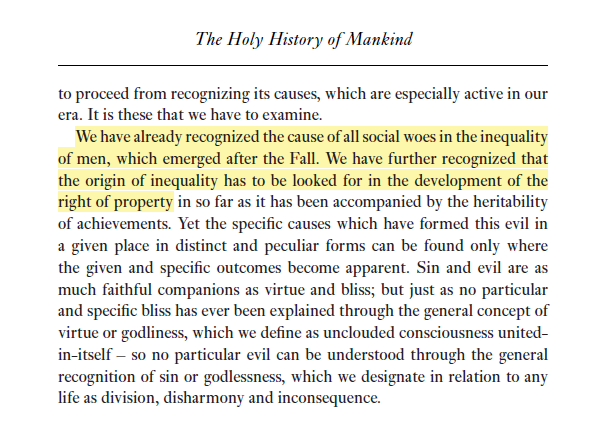
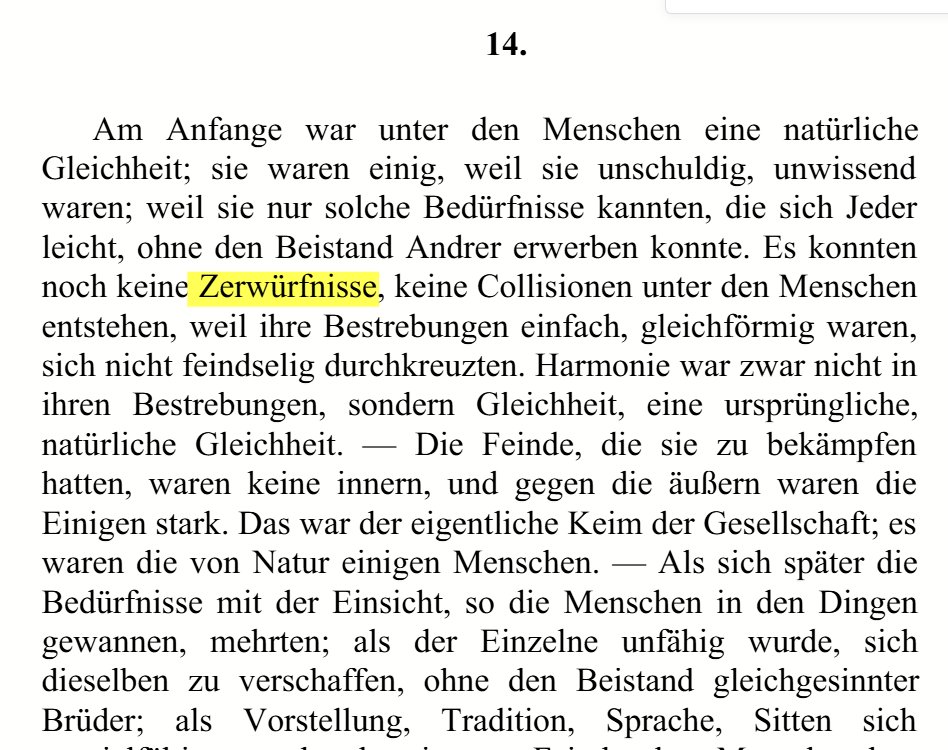
In The Holy History of Mankind (1837), Hess envisions history as a divine-human drama unfolding in three epochs (Father, Son, Spirit) echoing Böhme's mystical triad and culminating in a classless fraternity where humanity, as a collective elect, mends social fragmentation through ethical action. This chiliastic vision frames history as a Heilsgeschehen (sacred unfolding) toward moral unity, structurally akin to Luria's tikkun.
In The European Triarchy (1841), Hess recasts history as a synthesis of France's political freedom, England's industrial progress, and Germany's philosophical depth, culminating in a socialist future of "free association" and "united humanity." This teleological arc, resonant with Spinoza's monist unity and Kant's hidden providence, positions socialism as a material reconciliation of humanity's fractured essence.
By Philosophy of the Deed (1843), Hess pivots to materialism, replacing Descartes's "I think" with "Ich bin tätig, also bin ich" ("I am active, therefore I am"). Thought without praxis breeds new alienation, a secular shevirah. Retaining a messianic substrate, Hess blends Spinoza's monism and Böhme's rupture-return into a vision of history as sacred unfolding. Key themes emerge:
• Praxis as repair: Socialist collectives, a secular elect, heal alienation through conscious deeds, making the deed "the self-awareness of theory" and prefiguring Marx's 11th Thesis on Feuerbach.
• True socialism: Hess's program, later termed wahrer Sozialismus by Marx and Engels, champions Volksfreiheit, freedom rooted in the people's lived needs, over abstract intellectualism.
• Alienation and property: Hess adapts Entfremdung, framing private property as institutionalized egoism and money as a fetishized force severing labor from human essence. Abolishing property is communism's ethical core, initiating a material tikkun.
• Monist-messianic substrate: History becomes a Heilsgeschehen toward a classless society, paralleling Luria's redemption of divine sparks through collective action.
Hess's early work provides Marx and Engels with critical concepts, Entfremdung, Gattungswesen, and a redemptive arc, shaping their 1844 Manuscripts and The Communist Manifesto. His synthesis of mystical dialectic, material alienation, and transformative praxis makes him a prefigurer of historical materialism.
Marx & Engels (1840s-60s): Build on early Hess’s ethical-dialectical sketch to forge historical materialism, translating Hegel’s cosmic rupture into class antagonism and the proletariat into the “elect” agent of tikkun.
• Alienation as shevirah: Adopt Hess’s Entfremdung (1844) to describe capitalism’s fragmentation of human essence (Gattungswesen), where private property severs workers from labor and species-being, mirroring shevirat ha-kelim.
• Proletariat as elect: The Communist Manifesto (1848) casts the proletariat as the universal class to abolish property and restore unity -a material tikkun.
• Praxis and materialism: Marx’s 11th Thesis on Feuerbach (1845), inspired by Hess, prioritizes transformative action. In the 1850s–1860s, Capital (1867) frames commodity fetishism as shevirah, predicting proletarian revolution.
• Global praxis: The First International (1864) mobilizes workers as the “elect” for a classless society. →
Later Moses Hess: (1860‑75): Disillusioned by socialism’s fragmentation and personal marginalization, yet resolute, Hess re-embraces Jewish mysticism in Rome and Jerusalem (1862). Rereading Jewish exile as scattered sparks, he declares the Jewish people the elect for cosmic-social tikkun, proposing a socialist Zion in Palestine. This synthesis of Kabbalistic repair and socialist praxis completes Luria’s dialectic, reimagining Böhme’s Liebe-Gemeine as a national vessel for gathering fragments into redemption. →
Jakob Böhme: (1575–1624): God’s Ungrund, a chaotic potential, contracts into a primal will, erupts into fiery anguish, and resolves into love-light, introducing a dialectical rhythm of self-withdrawal, rupture, and return that echoes Luria’s tzimtzum, shevirat ha-kelim, and tikkun. Böhme’s cosmology, articulated in Aurora (1612) and Mysterium Magnum (1623), absorbs Kabbalistic ideas through Paracelsian and Christian Kabbalistic circles. His chiliastic Liebe-Gemeine (community of love), an elect obligated to mend cosmic and social fragments through spiritual and ethical labor, shifts Luria’s ritualistic repair to historical action, laying the foundation for an esoteric left trajectory. →
Descartes: (1596–1650): Cogito establishes the individual subject through radical doubt; creates an “empty space” of separation (essentially like tzimtzum), setting the stage for dialectical subjectivity →
Spinoza: (1632–1677): Spinoza’s immanent “one substance” in Ethics equates thought and extension, with divine light diffused through all modes, prefiguring collective unity. While not directly linked to Böhme, his monism structurally parallels Luria’s divine emanation, offering a metaphysical unity that later influences Hess’s vision of a classless community. Spinoza’s rejection of dualism sets a philosophical stage for dialectical thought, contributing to the esoteric left’s emphasis on reconciling fragmented existence, similar to tikkun. →
Immanuel Kant (1724–1804): Kant’s “hidden teleology” in Critique of Judgment and Idea for a Universal History posits a veiled providence driving history toward moral freedom, resembling Luria’s sparks awaiting redemption. Though unconnected to Böhme, Kant’s teleological progress anticipates Hegel’s historical dialectic, framing history as a rational process of unification. His emphasis on moral autonomy influences Fichte’s ethical striving, indirectly shaping the esoteric left’s vision of collective repair through purposeful action. →
Fichte: (1762–1814 AD): His Wissenschaftslehre posits a self-positing I creating a not-I, a dialectical split that parallels Böhme’s originary rupture, though without direct influence. This split extends to a collective vocation of ethical striving, prefiguring Hess’s praxis. Fichte’s idealism, emphasizing active subjectivity, contributes to the esoteric left by framing history as a moral struggle toward unity, structurally akin to Luria’s tikkun, influencing Hegel’s dialectical synthesis. →
Hegel: (1770–1831): Absorbs Böhme’s Ungrund‑myth and the Lurianic cycle straight into philosophy. Pure Being first contracts like Ein Sof in tzimtzum, yielding the moment of Difference and Nothing. That self‑limitation explodes outward as Nature, a world of finite forms that mirror the Kabbalistic shevirat ha‑kelim -Spirit’s light refracted into opaque shards.
History is then the long labour of Weltgeist, a collective agent that gathers the sparks through determinate negation (Aufhebung): each contradiction is not erased but preserved, lifted, and woven into a fuller unity, a rational tikkun or repair. →
The triad Logic → Nature → Spirit is then a secularised theosophy whose end‑point is the concrete ethical State (family, civil society, constitutional law) where freedom becomes real. By converting Kabbalistic rupture‑repair into an immanent, political engine, Hegel hands later left thinkers the template for emancipatory praxis. →
Early Moses Hess (1837–1840s): Moses Hess's early writings forge a pivotal link in the esoteric left, blending mystical Hegelianism with materialist socialism to transform Böhme's dialectical rhythm and Luria's tikkun into revolutionary praxis.
In The Holy History of Mankind (1837), Hess envisions history as a divine-human drama unfolding in three epochs (Father, Son, Spirit) echoing Böhme's mystical triad and culminating in a classless fraternity where humanity, as a collective elect, mends social fragmentation through ethical action. This chiliastic vision frames history as a Heilsgeschehen (sacred unfolding) toward moral unity, structurally akin to Luria's tikkun.
In The European Triarchy (1841), Hess recasts history as a synthesis of France's political freedom, England's industrial progress, and Germany's philosophical depth, culminating in a socialist future of "free association" and "united humanity." This teleological arc, resonant with Spinoza's monist unity and Kant's hidden providence, positions socialism as a material reconciliation of humanity's fractured essence.
By Philosophy of the Deed (1843), Hess pivots to materialism, replacing Descartes's "I think" with "Ich bin tätig, also bin ich" ("I am active, therefore I am"). Thought without praxis breeds new alienation, a secular shevirah. Retaining a messianic substrate, Hess blends Spinoza's monism and Böhme's rupture-return into a vision of history as sacred unfolding. Key themes emerge:
• Praxis as repair: Socialist collectives, a secular elect, heal alienation through conscious deeds, making the deed "the self-awareness of theory" and prefiguring Marx's 11th Thesis on Feuerbach.
• True socialism: Hess's program, later termed wahrer Sozialismus by Marx and Engels, champions Volksfreiheit, freedom rooted in the people's lived needs, over abstract intellectualism.
• Alienation and property: Hess adapts Entfremdung, framing private property as institutionalized egoism and money as a fetishized force severing labor from human essence. Abolishing property is communism's ethical core, initiating a material tikkun.
• Monist-messianic substrate: History becomes a Heilsgeschehen toward a classless society, paralleling Luria's redemption of divine sparks through collective action.
Hess's early work provides Marx and Engels with critical concepts, Entfremdung, Gattungswesen, and a redemptive arc, shaping their 1844 Manuscripts and The Communist Manifesto. His synthesis of mystical dialectic, material alienation, and transformative praxis makes him a prefigurer of historical materialism.
Marx & Engels (1840s-60s): Build on early Hess’s ethical-dialectical sketch to forge historical materialism, translating Hegel’s cosmic rupture into class antagonism and the proletariat into the “elect” agent of tikkun.
• Alienation as shevirah: Adopt Hess’s Entfremdung (1844) to describe capitalism’s fragmentation of human essence (Gattungswesen), where private property severs workers from labor and species-being, mirroring shevirat ha-kelim.
• Proletariat as elect: The Communist Manifesto (1848) casts the proletariat as the universal class to abolish property and restore unity -a material tikkun.
• Praxis and materialism: Marx’s 11th Thesis on Feuerbach (1845), inspired by Hess, prioritizes transformative action. In the 1850s–1860s, Capital (1867) frames commodity fetishism as shevirah, predicting proletarian revolution.
• Global praxis: The First International (1864) mobilizes workers as the “elect” for a classless society. →
Later Moses Hess: (1860‑75): Disillusioned by socialism’s fragmentation and personal marginalization, yet resolute, Hess re-embraces Jewish mysticism in Rome and Jerusalem (1862). Rereading Jewish exile as scattered sparks, he declares the Jewish people the elect for cosmic-social tikkun, proposing a socialist Zion in Palestine. This synthesis of Kabbalistic repair and socialist praxis completes Luria’s dialectic, reimagining Böhme’s Liebe-Gemeine as a national vessel for gathering fragments into redemption. →
Esoteric Right placeholder
Pasqually: (Founder of the theurgic order Élus Coëns. Angel Magic)
↓
Saint‑Martin: (Pasqually's private secretary & fully–initiated Coën) Theurgy, rediscovers and translates Böhme.
↓
De Maistre: Reads Saint‑Martin; calls him "my revered master."
Pasqually: (Founder of the theurgic order Élus Coëns. Angel Magic)
↓
Saint‑Martin: (Pasqually's private secretary & fully–initiated Coën) Theurgy, rediscovers and translates Böhme.
↓
De Maistre: Reads Saint‑Martin; calls him "my revered master."
Placeholder for Rousseau in the Esoteric Left. See the thread for info.
https://x.com/Ne_pas_couvrir/status/1936423507853734107
• • •
Missing some Tweet in this thread? You can try to
force a refresh