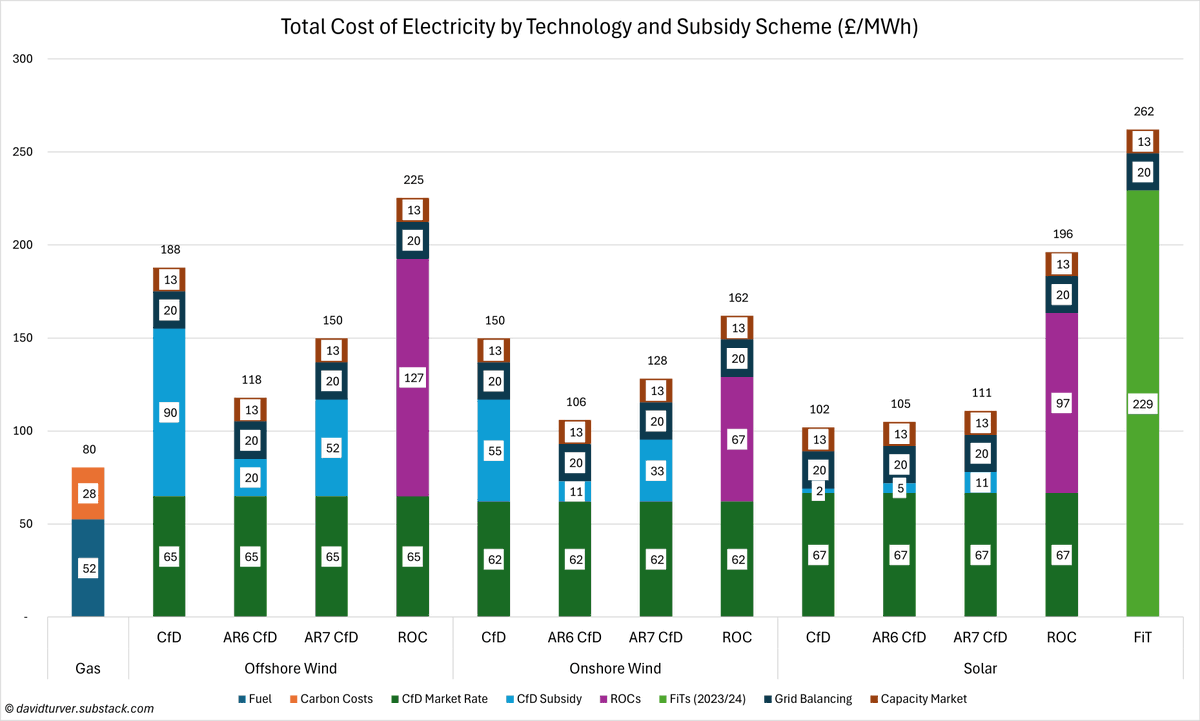
Late last month, the CCC released their Methodology Report that gave a little more insight into their thinking, or lack thereof, when they produced the 7th Carbon Budget. How did they get it so wrong. A thread 🧵(1/n)
First up, they assume even lower costs for fixed-bottom offshore wind than the Government's woeful Generation Cost report from 2023. The CCC's assumed costs for 2030 are less than half the value of contract awards in last year's AR6 auction. (2/n)
Floating offshore wind is even more expensive and being offered £245/MWh in AR7, some six times more than the CCC's estimate for 2030 delivery. Worse, the CCC shows a declining cost trend, whereas recent auctions have shown an upward trend in prices (3/n)
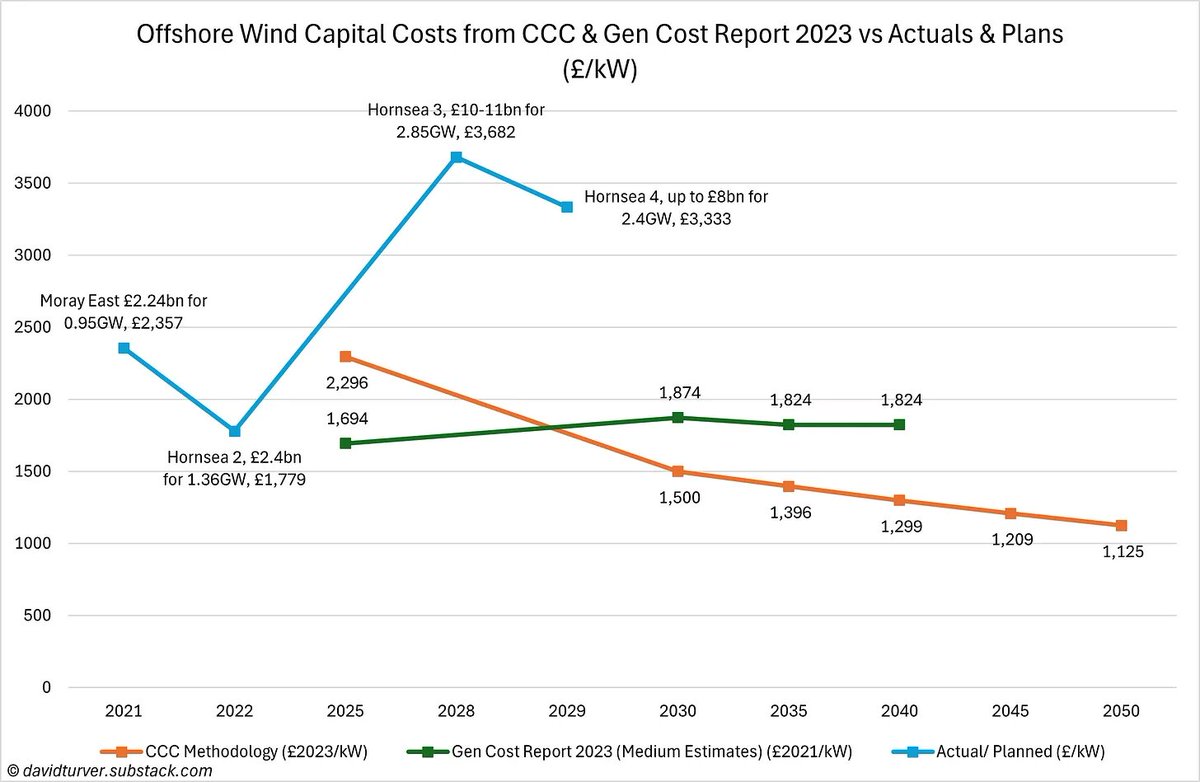
The CCC made heroic assumptions about the capital expenditure. They have capex falling from £2,296/kW this year to just £1,125/kW in 2050. But Hornsea 3 is expected to cost almost £3,700/kW and Hornsea 4 was cancelled as uneconomic costing at least £3,333/kW (4/n)
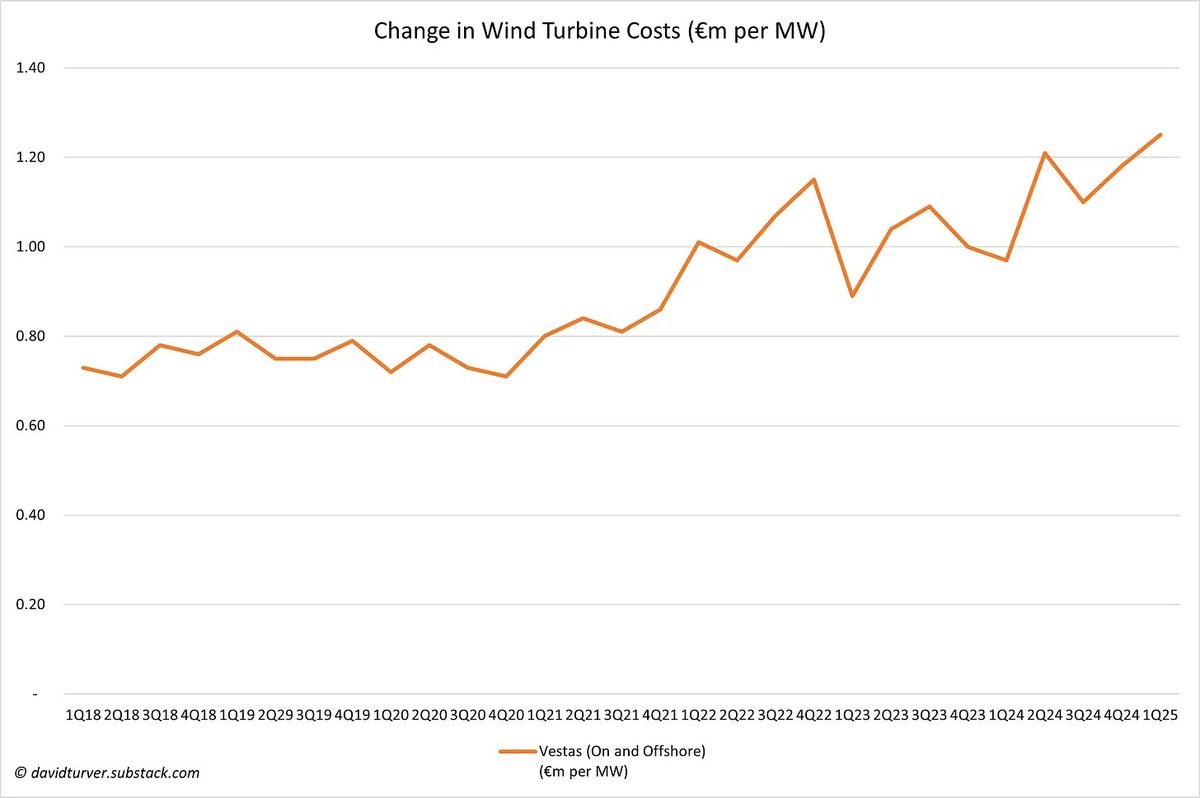
The CCC's forecasts make even less sense when you consider that Vestas turbine prices have risen some 76% since 4Q20 and the trend is still up. New orders were taken at €1.25m/MW in 1Q25 as an average across onshore and offshore (5/n)
On initial capex, load factor, asset life and cost of capital, the Climate Change Committee is making wildly optimistic assumptions that give a fake and misleading view of the costs of their Net Zero plans (6/n)
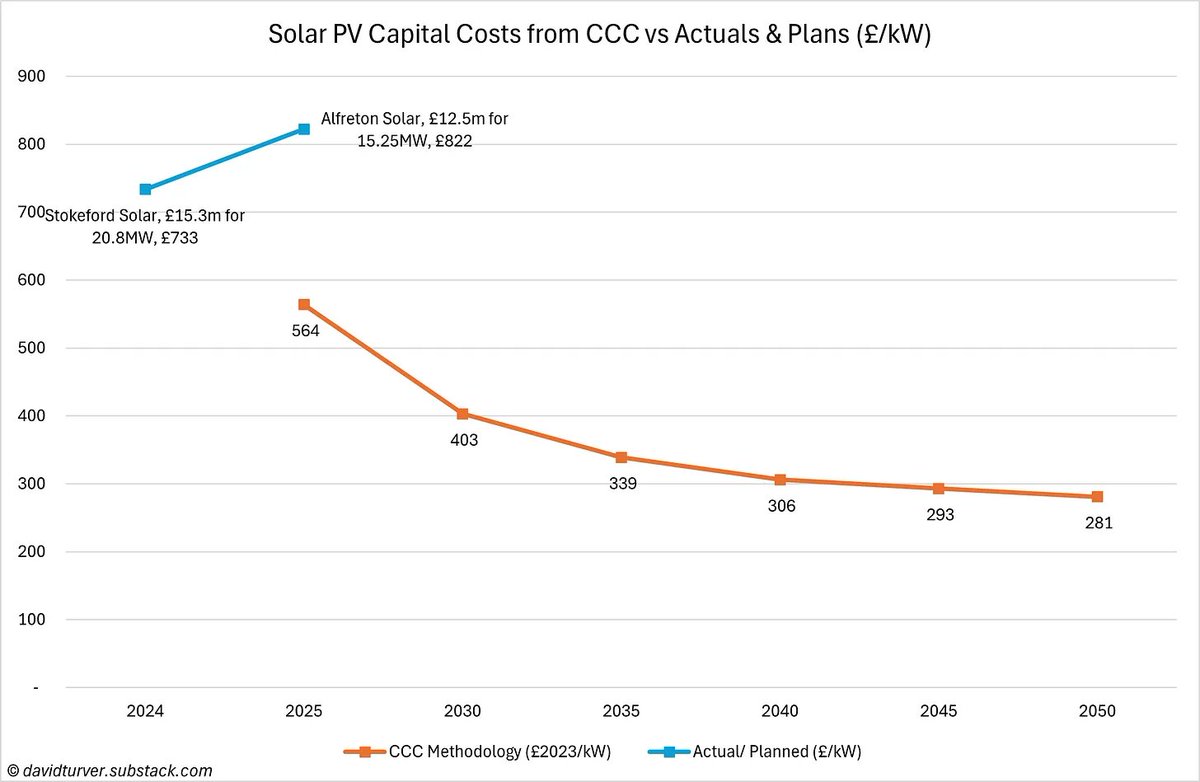
The CCC made a similar error about the cost of solar power, with their estimate of solar power costs for 2030 falling to less than half the contract price awarded in last year's AR6 (7/n)
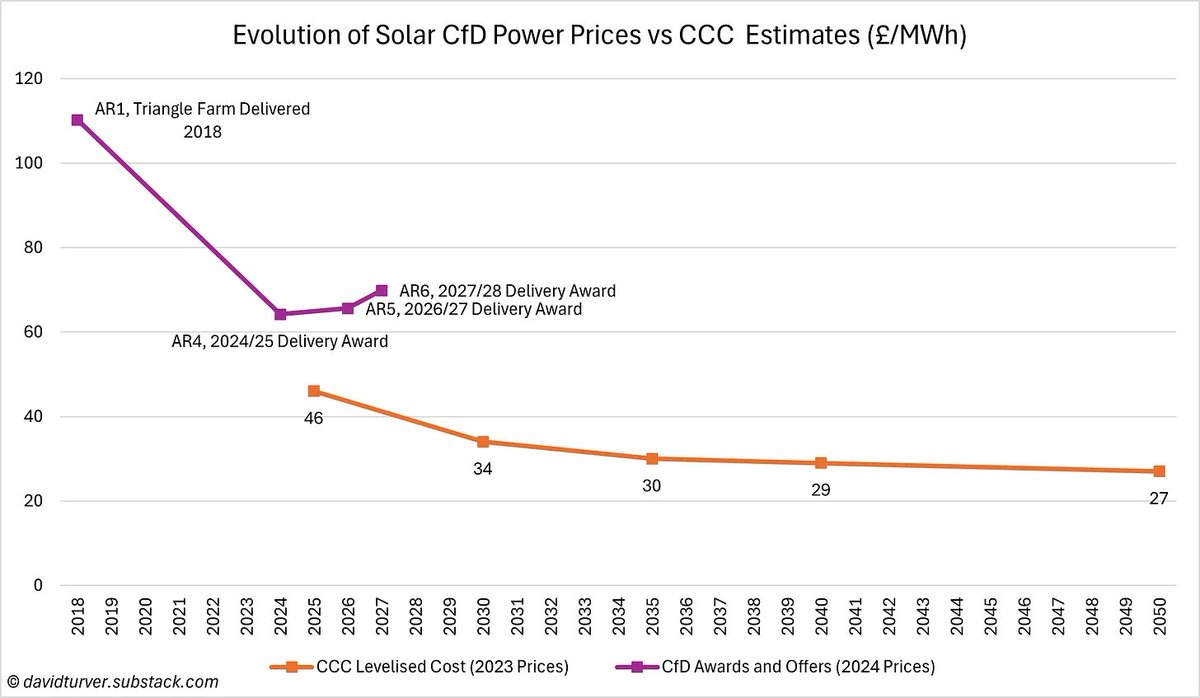
Alfreton and Stokeford solar farms were awarded contracts in AR4 and activated their CfDs earlier this year. Their accounts up to end 2023 show both had already spent much more than the CCC's estimate of the cost of solar for 2025 delivery (8/n)
The CCC Methodology report does not even come up with a cost for onshore wind, despite their plan calling for capacity to more than double by 2050. (9/n)
The CCC have dramatically underestimated the costs of offshore wind &solar and omitted the costs of onshore wind making their overall cost estimates simply junk. They are worth less than the paper they are written on. (10/n)
The CCC have fallen woefully short of the level of competence that we have a right to expect from public bodies making recommendations about spending our money. The Seventh Carbon Budget is the result of either institutional incompetence or wilful negligence (11/n)
The CCC should be forced to scrap their advice and start again (12/n)
If you enjoyed this thread please like and share. You can sign up for free to read the full article on the link below (13/13). open.substack.com/pub/davidturve…
Hi @threadreaderapp unroll please.
• • •
Missing some Tweet in this thread? You can try to
force a refresh

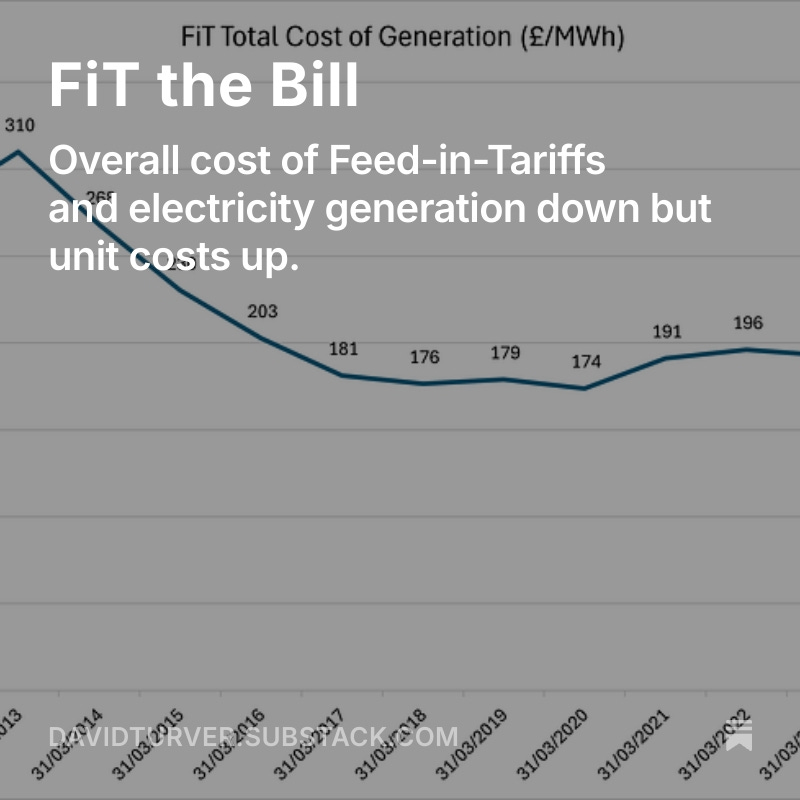
The data is in, so now we know how much the Feed-in-Tariff (FiT) scheme cost us in 2024/25. A thread 🧵(1/n)
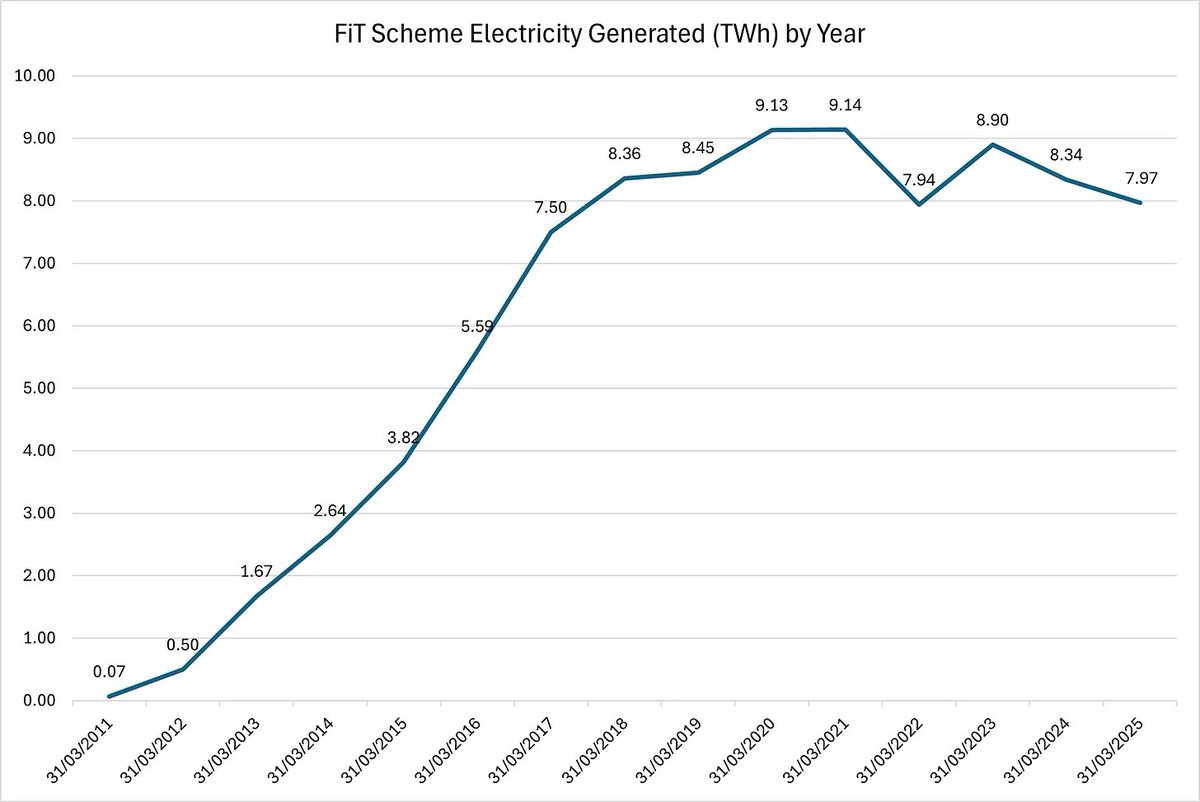
First, overall generation under the scheme was down on the year at just under 8TWh. It is beginning to look like a downtrend has been in place since 2020/21 (2/n)
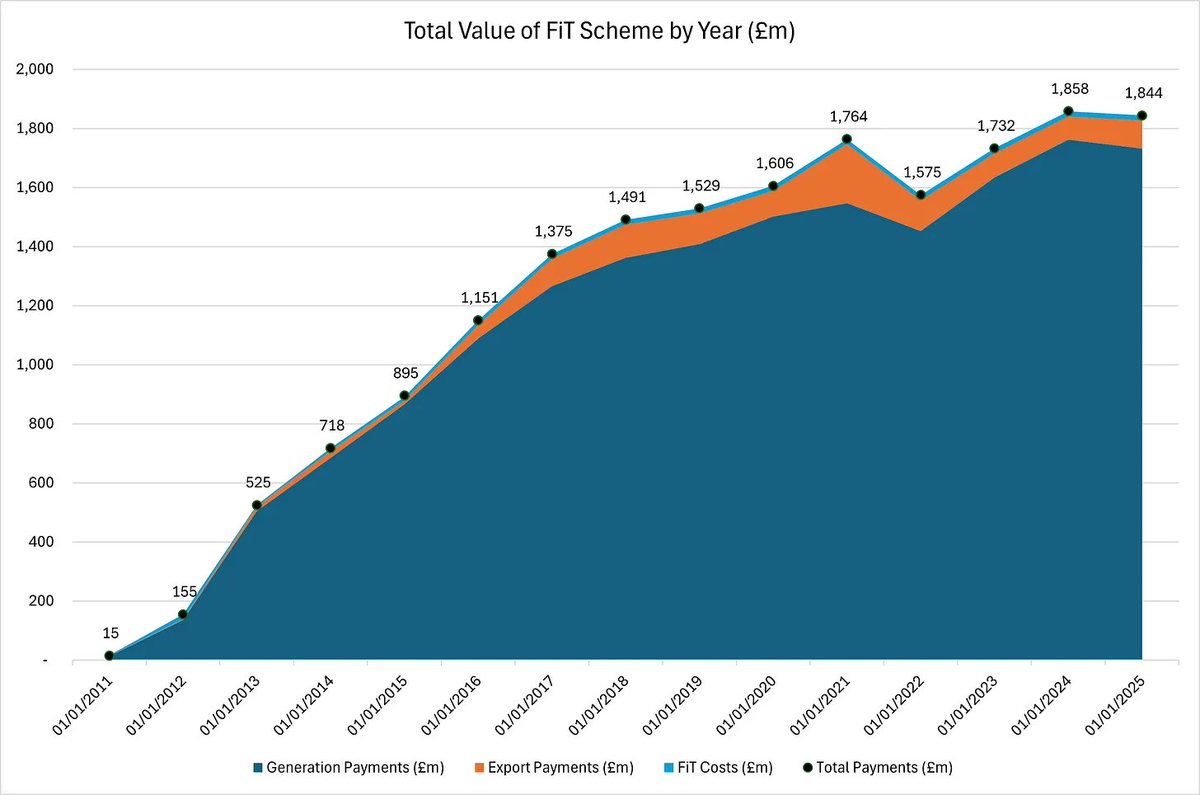
The total cost of the scheme fell slightly too to £1.84bn (3/n)
If NESO cannot produce a complete set of energy scenarios and we can't rely on the costs, then what is the point of NESO. A thread (1/n)
Many green blobbers have got very huffy about my report for the IEA looking into the various estimates of the cost of Net Zero (2/n) iea.org.uk/publications/t…
Fulminator-in-chief was @ret_ward who even went even went so far as to write to the @iealondon and demand the report was withdrawn (3/n)
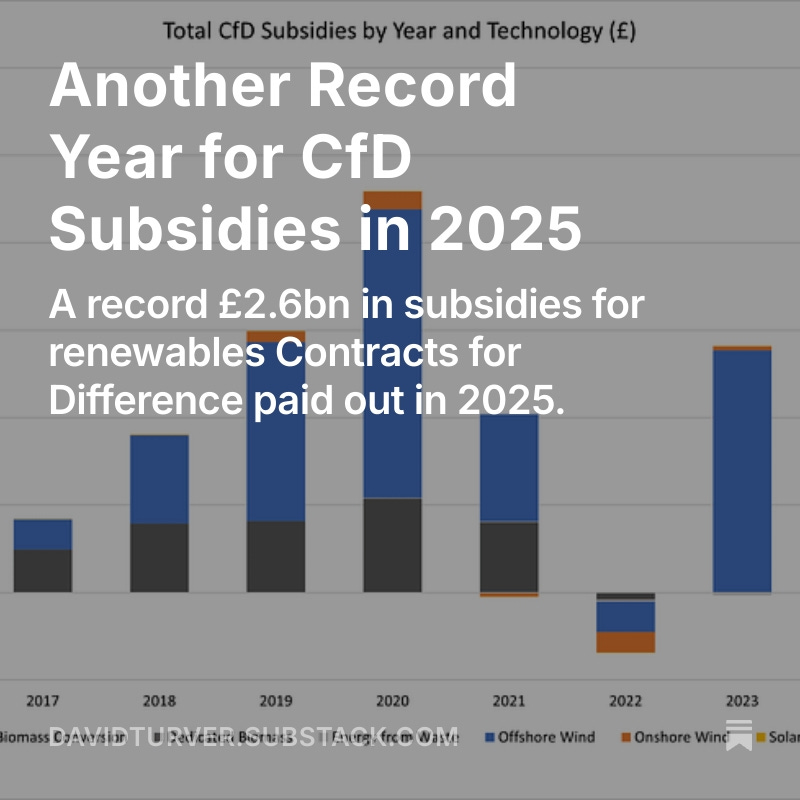
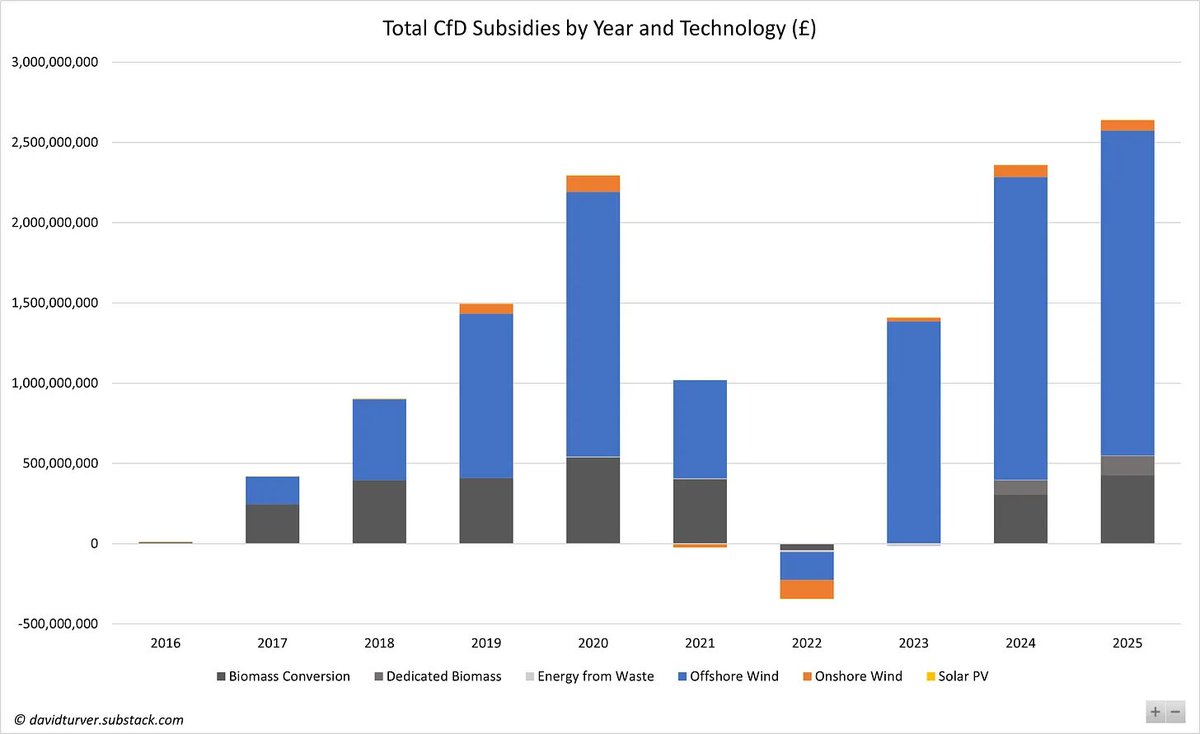
Another record year for CfD subsidies with £2.6bn paid out to renewables generators. Where does all the money go? A thread 🧵(1/n)
2025 was a record year, with £2.6bn paid out, up from £2.4bn in 2024. Offshore wind took the lion's share of over £2bn, with tree-burning taking £428m, dedicated biomass £118m. Onshore wind took 67m and solar £0.1m. (2/n)
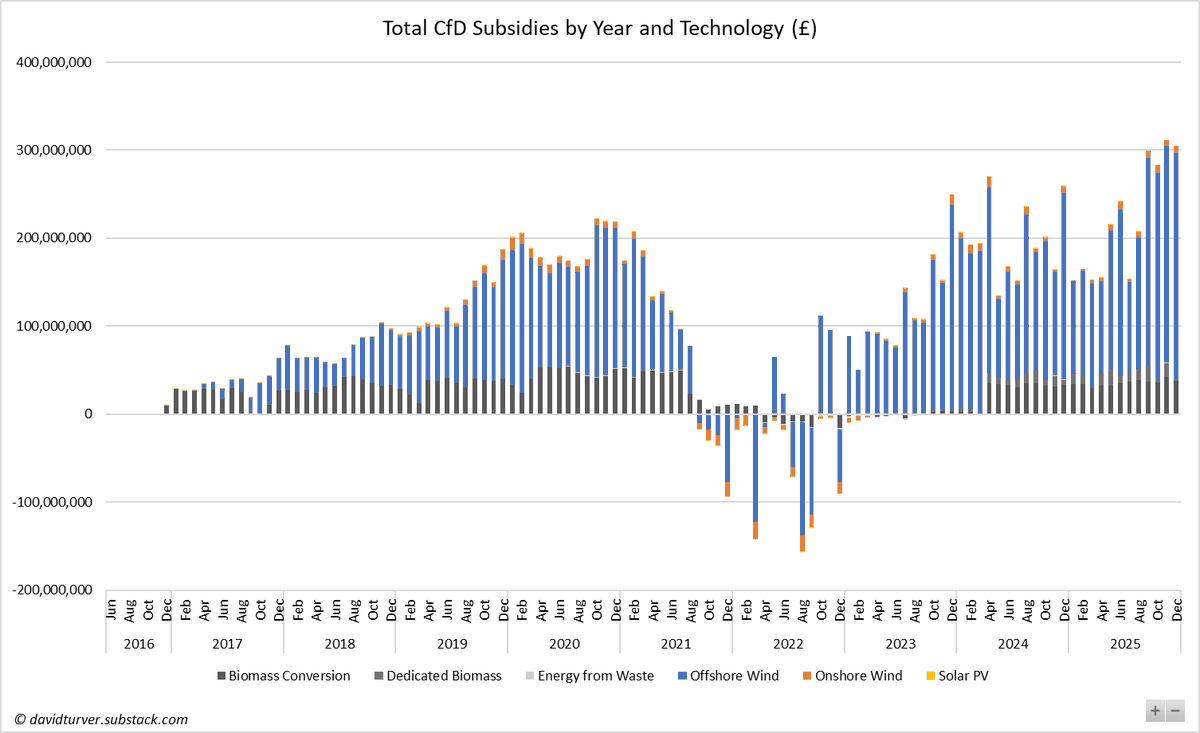
September to December 2025 were also the top 4 subsidy months on record, with November 2025 being the highest month taking £311m. (3/n)
Yesterday's AR7 results show that Miliband, NESO and the CCC are gaslighting the nation. AR7 is locking in index-linked high electricity prices for decades. A thread 🧵(1/n)
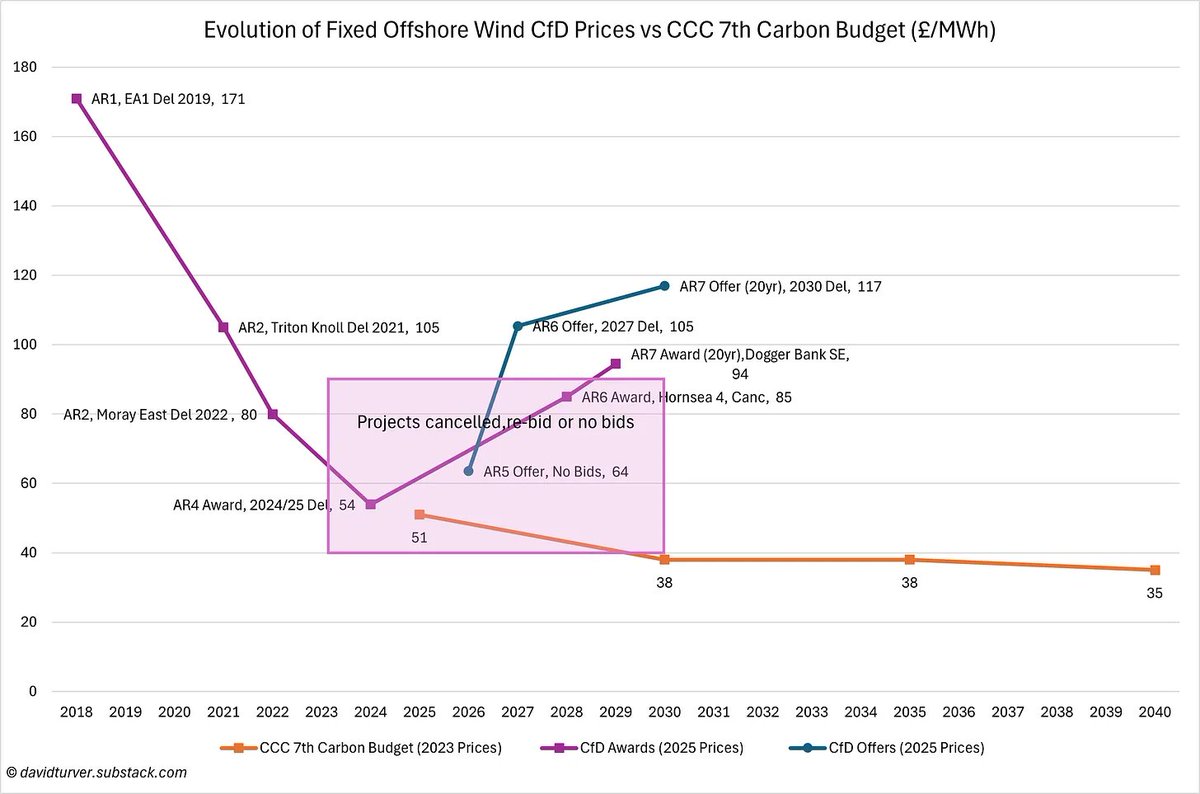
So, what happened? A total of 8.4GW of offshore wind was awarded contracts. Of this 8.2GW was fixed-bottom at an average of £91/MWh in 2024 prices, with 0.2GW of floating at £216/MWh. But these prices show the price of offshore wind is rising (2/n)
AR7's 20-year index-linked contracts are only about £9/MWh above AR6's Hornsea 4 15-year contract that was cancelled as uneconomic. However, on a like for like basis AR7 would probably have cost about £105/MWh (3/n)
Alastair and Rory caught telling porkies about solar power while shilling for lossmaking Fuse Energy. When facts and truth are ignored, The Rest is Propaganda. A thread 🧵 (1/n)
The central claim of their clip was that solar is a “very cheap and affordable way to generate electricity”. But in the UK at least, that claim is manifestly untrue. Solar is in fact very expensive (2/n)
We subsidise solar in 3 ways. The basic cost of solar from feed-in-tariffs is £229/MWh for 2024/25. To that we must add £33/MWh for grid balancing and backup costs, giving a total of £282/MWh, or >3X gas-fired electricity including carbon costs (3/n)
It's the end of the year, so time to to take a light-hearted view of the past 12 months of our energy policy pantomime. A thread (1/n)
As it's Christmas, the season of goodwill, we should begin with the Prince Charming, Snow White and Cinderella of energy policy, namely Richard Tice, Kemi Badenoch and Claire Coutinho who together have collapsed the cosy consensus supporting Net Zero (2/n)
But our panto also includes Widow Twankey Ed Miliband and his sidekick Chris “Wishee Washee” Stark who keep repeating the mantra that energy bills will come down, but the audience roar back “Oh no they won’t”. (3/n)