We often hear of knights in shining armor but tonight, I’ll tell you about the Black Prince.
He had his first victory at 16, left alone by his father to stand and fight.
He became a hard man, chivalrous leader and devoted husband. 'Tis about a boy that won his spurs..🧵⤵️
He had his first victory at 16, left alone by his father to stand and fight.
He became a hard man, chivalrous leader and devoted husband. 'Tis about a boy that won his spurs..🧵⤵️
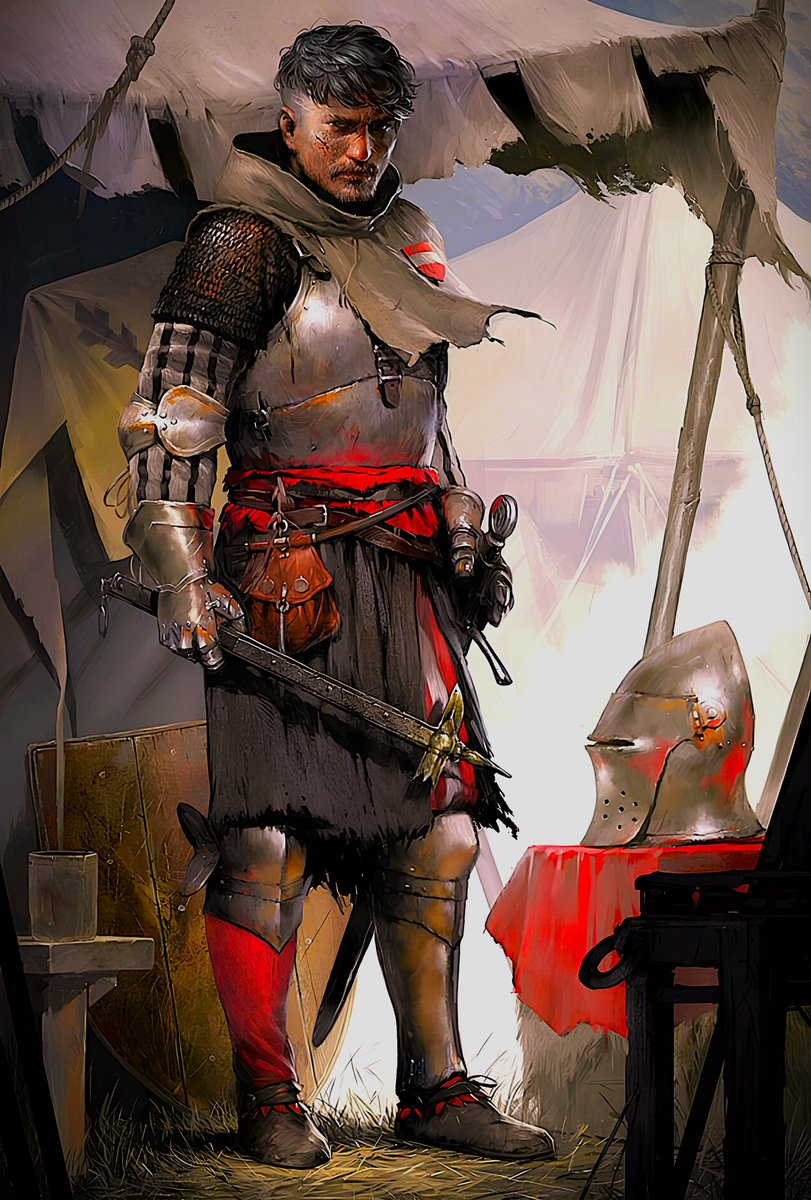
Edward of Woodstock, born in 1330, was the eldest son of King Edward III of England and heir to the throne.
Known as the Black Prince, he was a central figure in the Hundred Years’ War, a commander whose victories made him a legend; a man who fought for something greater than himself: his nation and family.
This was when England was becoming Great.
Known as the Black Prince, he was a central figure in the Hundred Years’ War, a commander whose victories made him a legend; a man who fought for something greater than himself: his nation and family.
This was when England was becoming Great.

His life was defined by battlefield triumphs, a commitment to chivalric ideals, and moments of harshness that revealed a complex character.
This is the story of a man who shaped an era through courage, skill, and contradictions.
This is the story of a man who shaped an era through courage, skill, and contradictions.

Edward was born at Woodstock Palace and raised with the expectation of greatness. Made Prince of Wales at 13 in 1343, he was trained in warfare and the chivalric code—honor, loyalty, and respect for worthy foes.
His first test came at 16 during the Battle of Crécy in 1346, a major clash in the Hundred Years’ War. Edward III placed his son in charge of the vanguard, a risky move for an untested youth.
His first test came at 16 during the Battle of Crécy in 1346, a major clash in the Hundred Years’ War. Edward III placed his son in charge of the vanguard, a risky move for an untested youth.
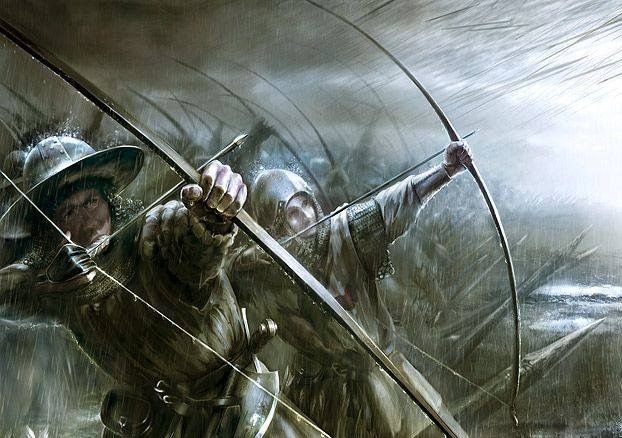
The Hundred Years’ War (1337–1453) was a series of conflicts between England and France, driven by dynastic disputes, territorial ambitions, and economic tensions. By the time Edward entered the fray in 1346, the war had been raging for nearly a decade.
The war began when King Edward III of England, the Black Prince’s father, claimed the French throne in 1337. After the death of Charles IV of France in 1328, the French crown passed to Philip VI of Valois, as the Capetian line ended.
Edward III, through his mother Isabella (daughter of Philip IV of France), argued he had a stronger claim. The French rejected this, citing Salic law, which barred inheritance through the female line, setting the stage for conflict.
The war began when King Edward III of England, the Black Prince’s father, claimed the French throne in 1337. After the death of Charles IV of France in 1328, the French crown passed to Philip VI of Valois, as the Capetian line ended.
Edward III, through his mother Isabella (daughter of Philip IV of France), argued he had a stronger claim. The French rejected this, citing Salic law, which barred inheritance through the female line, setting the stage for conflict.
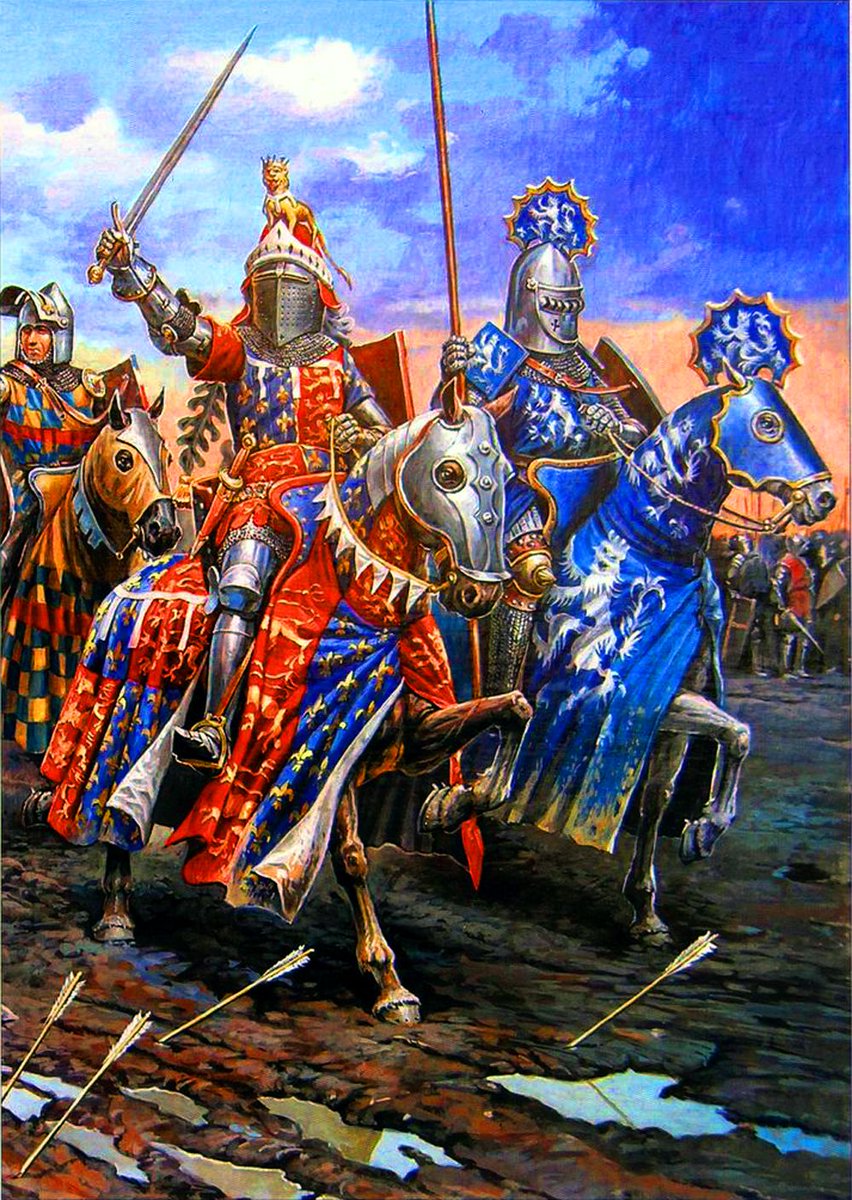
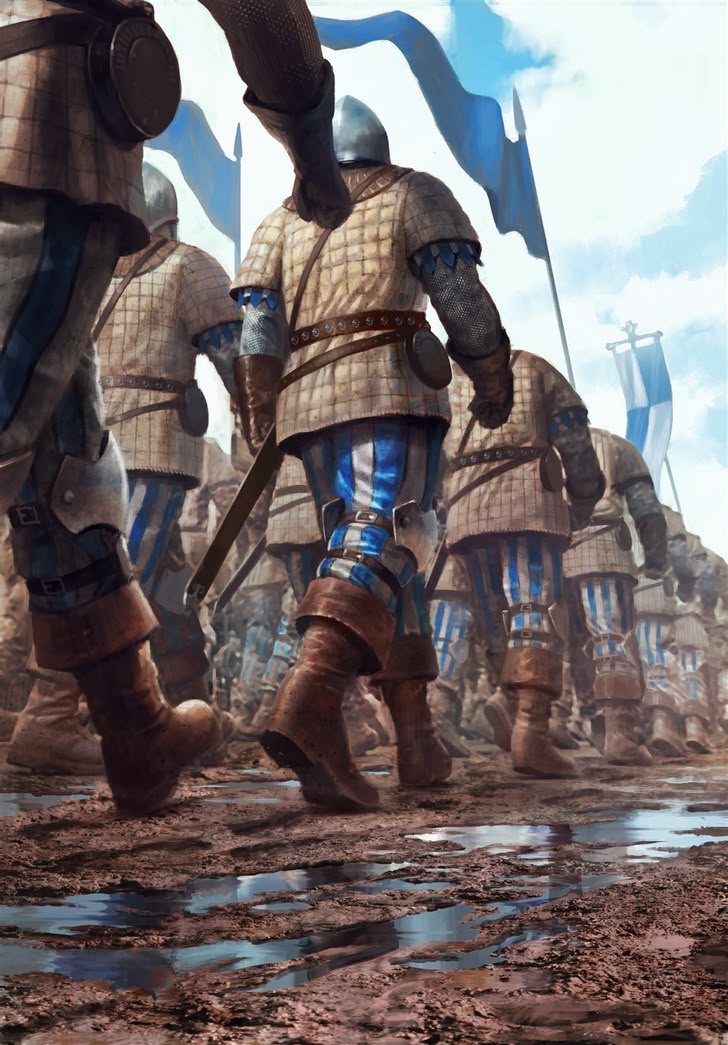
In July 1346, Edward III landed in Normandy with an army of about 12,000–15,000, including his son Edward, the Black Prince.
The campaign leading to Crécy was a turning point, and the 16-year-old prince’s involvement marked his entry into the war.
Edward III’s plan was a chevauchée to ravage northern France, draw Philip VI into battle, and assert his claim to the French crown.
The campaign leading to Crécy was a turning point, and the 16-year-old prince’s involvement marked his entry into the war.
Edward III’s plan was a chevauchée to ravage northern France, draw Philip VI into battle, and assert his claim to the French crown.

The campaign began with the sacking of Caen, a brutal raid that shocked France. As the English marched north, burning towns and crops, Philip VI assembled a larger army (20,000–30,000, including feudal levies and Genoese crossbowmen) to intercept them.
By late August, the English, low on supplies and pursued, reached Crécy in Ponthieu, northern France. Edward III chose this site for its defensive advantages, aiming to halt Philip’s advance and assert his claim to the French throne.
For young Edward, it was a chance to prove himself in his first major battle, under immense pressure as heir.
By late August, the English, low on supplies and pursued, reached Crécy in Ponthieu, northern France. Edward III chose this site for its defensive advantages, aiming to halt Philip’s advance and assert his claim to the French throne.
For young Edward, it was a chance to prove himself in his first major battle, under immense pressure as heir.
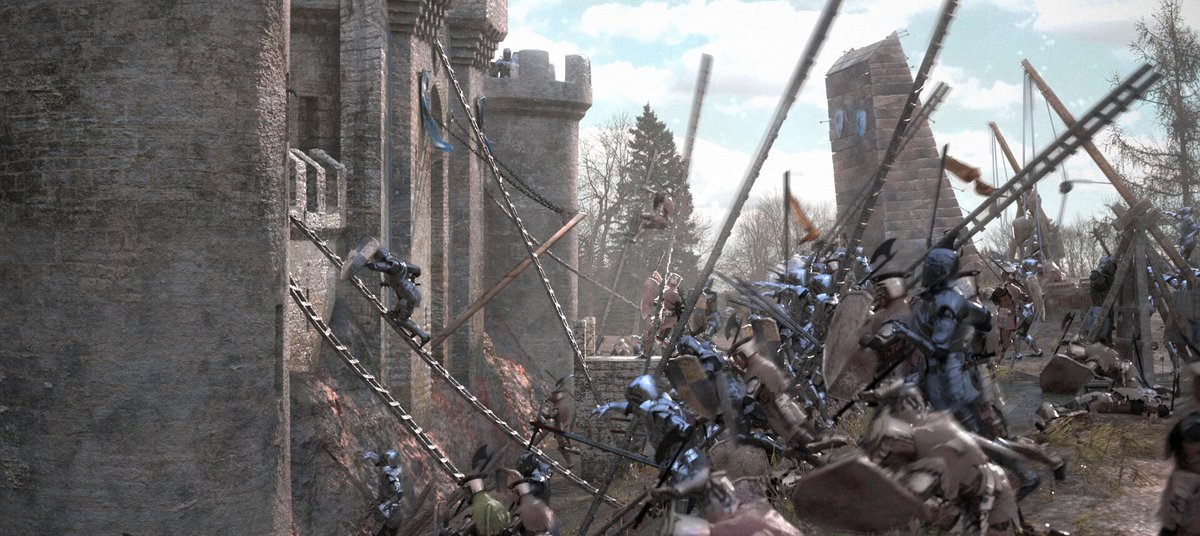

Philip VI aimed to crush the English in open battle. France’s reliance on heavily armored knights and crossbowmen contrasted with England’s disciplined longbowmen and dismounted men-at-arms, setting the stage for a tactical mismatch.
Crécy’s terrain favored the English. Edward III positioned his army on a gentle ridge between Crécy and Wadicourt, with a slope, hedges, and woods protecting their flanks. The army was divided into three divisions:
Vanguard: Led by Edward, the Black Prince, aged 16, with about 4,000 men, including longbowmen, dismounted men-at-arms, and experienced commanders like the Earls of Warwick and Northampton to guide him.
Center: Commanded by Edward III, overseeing the battle from a windmill vantage point.
Rear: Led by the Earl of Arundel, serving as a reserve.
Crécy’s terrain favored the English. Edward III positioned his army on a gentle ridge between Crécy and Wadicourt, with a slope, hedges, and woods protecting their flanks. The army was divided into three divisions:
Vanguard: Led by Edward, the Black Prince, aged 16, with about 4,000 men, including longbowmen, dismounted men-at-arms, and experienced commanders like the Earls of Warwick and Northampton to guide him.
Center: Commanded by Edward III, overseeing the battle from a windmill vantage point.
Rear: Led by the Earl of Arundel, serving as a reserve.
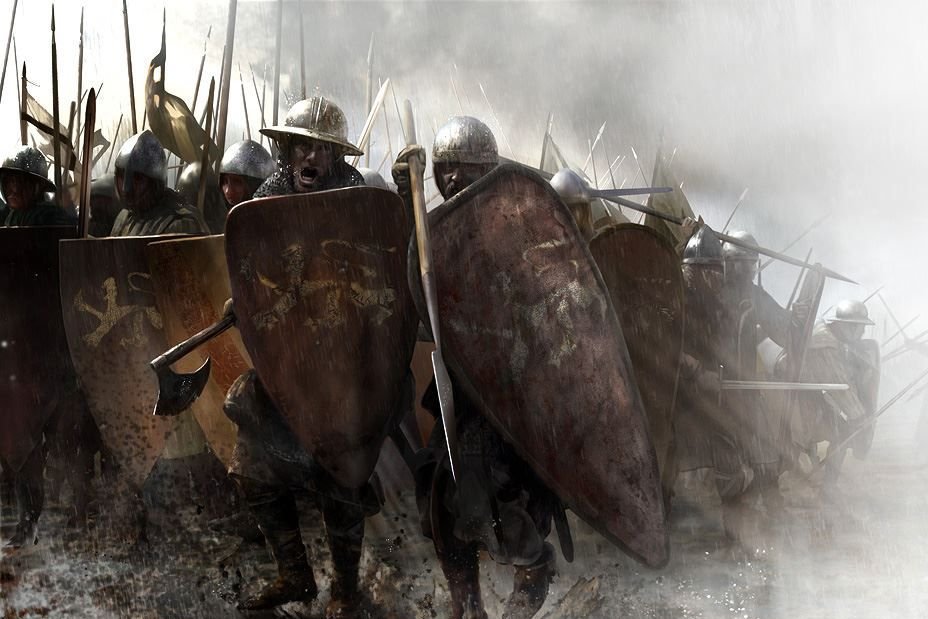
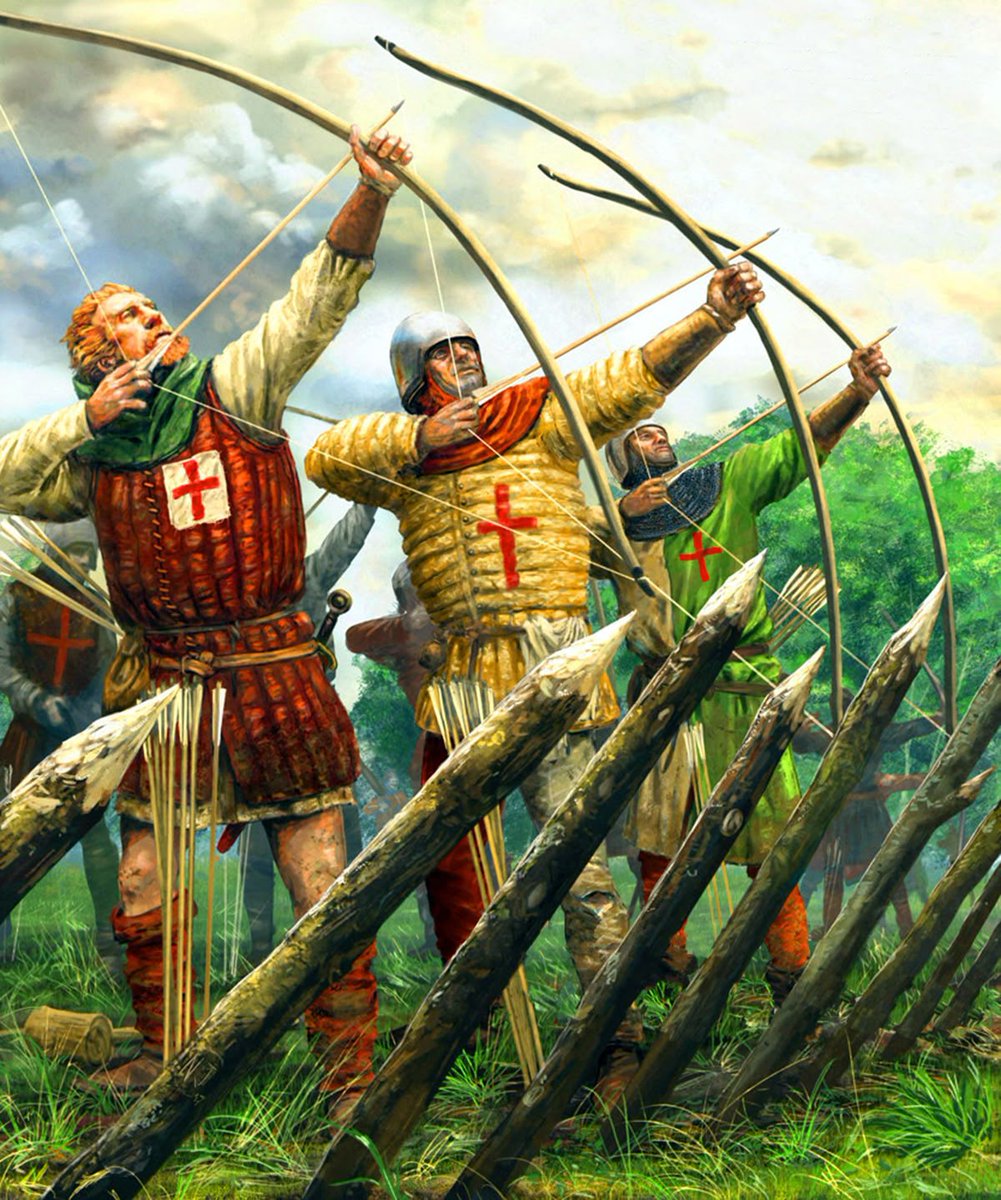
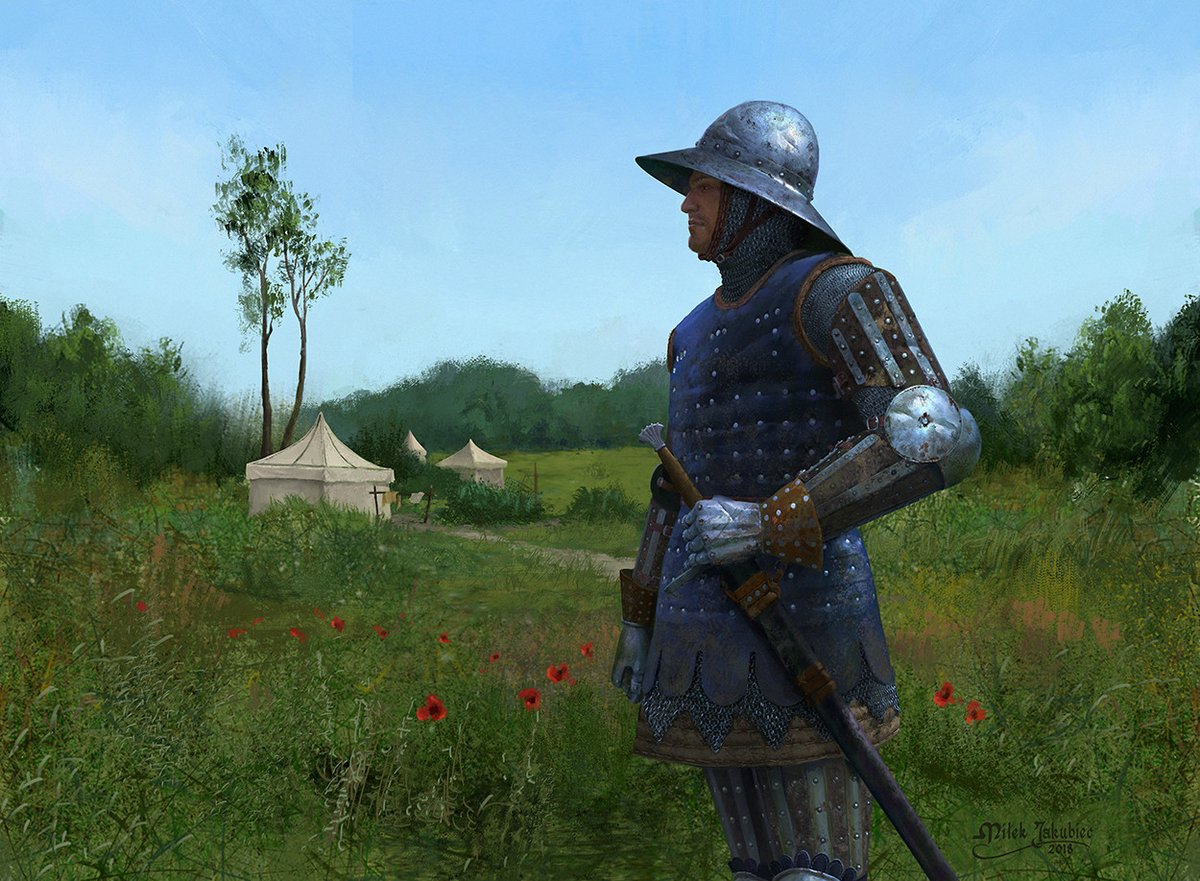
The English deployed in a defensive formation, with longbowmen on the wings and dismounted knights and men-at-arms in the center, a tactic honed in earlier campaigns.
Pits and stakes were dug to disrupt cavalry charges, and the longbowmen—armed with powerful yew bows capable of firing 10–12 arrows per minute—were key to breaking French assaults. Edward III’s strategy was to withstand Philip’s larger force, relying on discipline and missile superiority.
Pits and stakes were dug to disrupt cavalry charges, and the longbowmen—armed with powerful yew bows capable of firing 10–12 arrows per minute—were key to breaking French assaults. Edward III’s strategy was to withstand Philip’s larger force, relying on discipline and missile superiority.

The French army, arriving late on August 26 after a long march, was disorganized. Philip VI, pressured by his nobles’ eagerness to fight, ignored advice to delay.
His force included heavily armored knights, feudal levies, and 6,000 Genoese crossbowmen, whose slower-firing weapons were less effective in wet conditions (rain had softened their bowstrings).
His force included heavily armored knights, feudal levies, and 6,000 Genoese crossbowmen, whose slower-firing weapons were less effective in wet conditions (rain had softened their bowstrings).
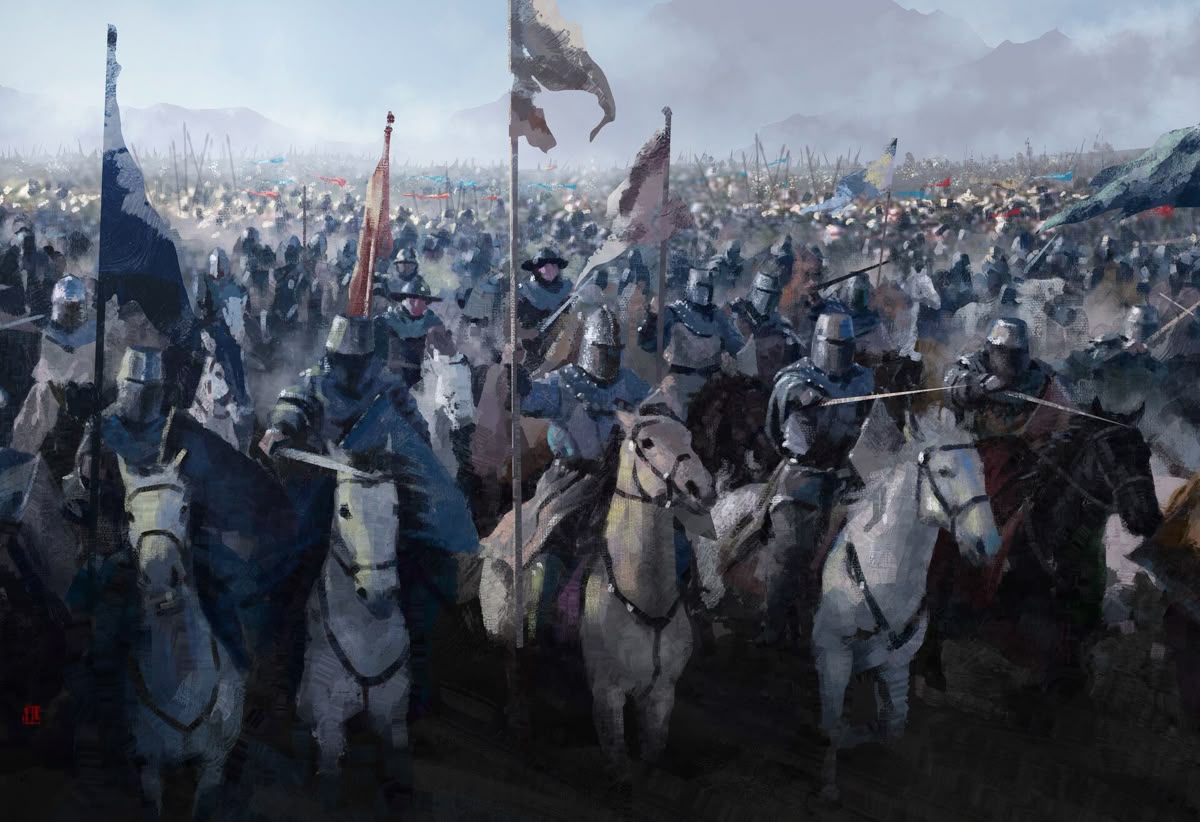
Around late afternoon, Philip ordered his Genoese crossbowmen to advance, hoping to soften the English lines. Exhausted and hampered by wet bowstrings, they loosed a few volleys but were outmatched by the English longbowmen, whose rapid fire decimated them.
Froissart notes the Genoese fled in panic, enraging French knights who rode them down, adding to the chaos.
Froissart notes the Genoese fled in panic, enraging French knights who rode them down, adding to the chaos.
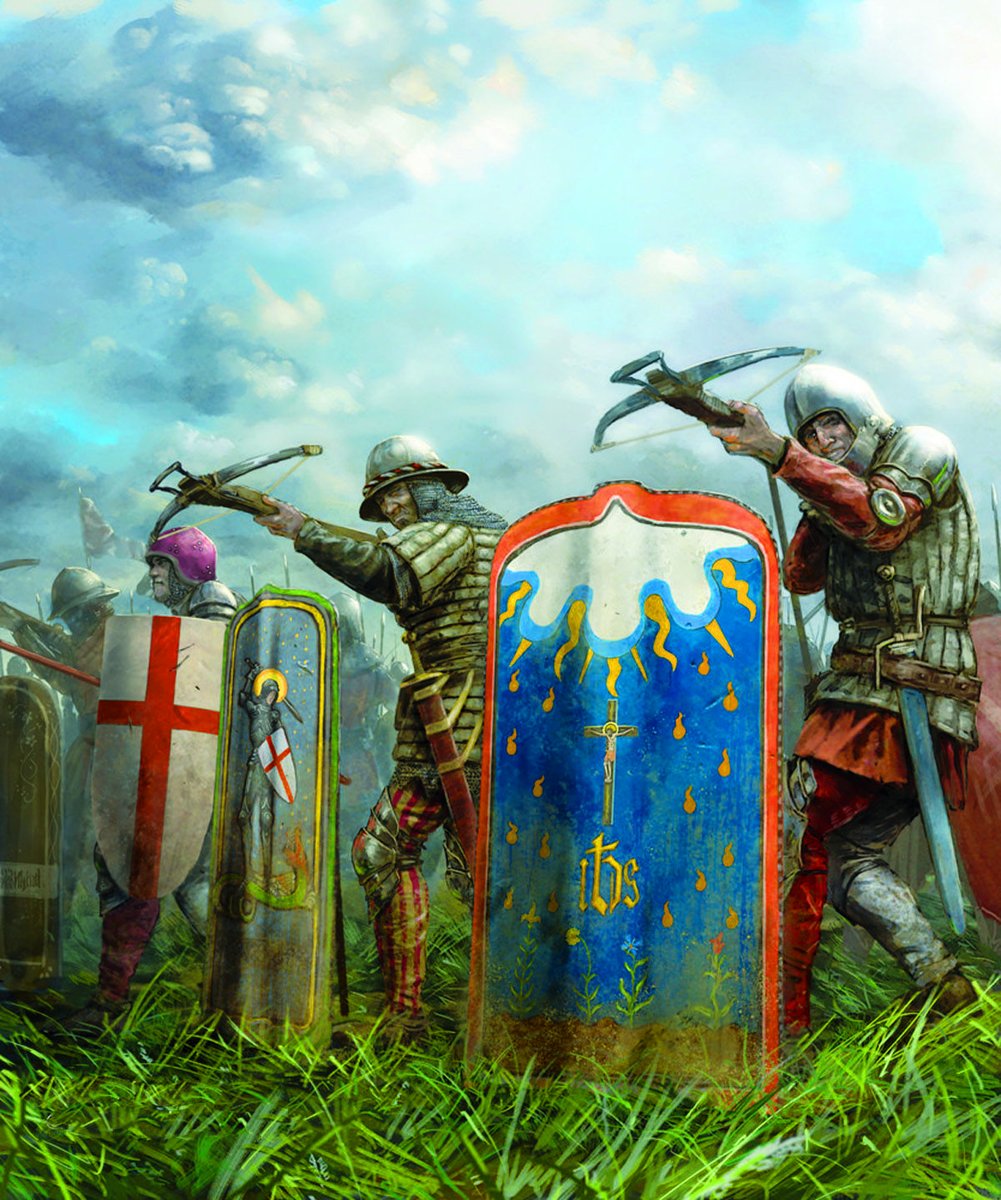
The French knights, eager for glory, launched repeated cavalry charges against the English lines, particularly targeting Edward’s division.
The longbowmen’s arrows, tipped with bodkin points, pierced armor and unhorsed knights, creating piles of dead and wounded that disrupted later waves. Sumption estimates 15–16 French charges, each repelled with heavy losses.
The longbowmen’s arrows, tipped with bodkin points, pierced armor and unhorsed knights, creating piles of dead and wounded that disrupted later waves. Sumption estimates 15–16 French charges, each repelled with heavy losses.

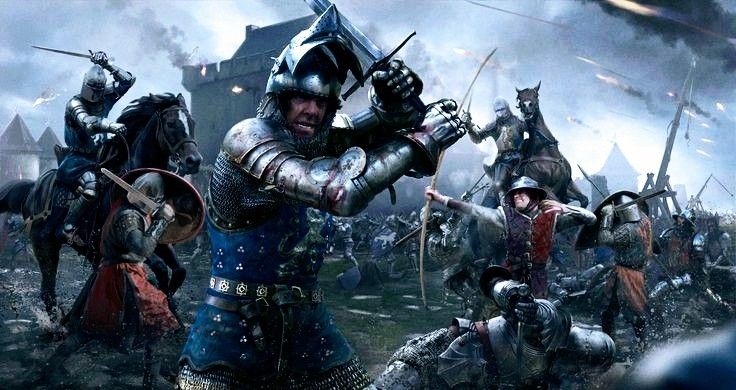
Edward, fighting dismounted with his men-at-arms, faced intense pressure as the waves of French nobility crushed on his position. Imagine this: a prince fighting from the very front lines, on foot, shoulder to shoulder with his men.
Froissart recounts a moment when his line wavered, prompting messengers to seek aid from Edward III. The king’s reply: “Let the boy win his spurs”
HOW FKING BADASS IS THIS?!?
Froissart recounts a moment when his line wavered, prompting messengers to seek aid from Edward III. The king’s reply: “Let the boy win his spurs”
HOW FKING BADASS IS THIS?!?
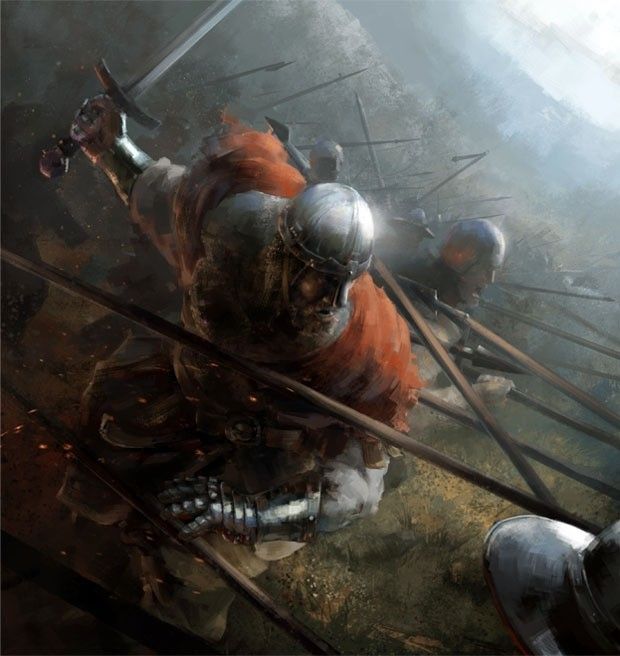
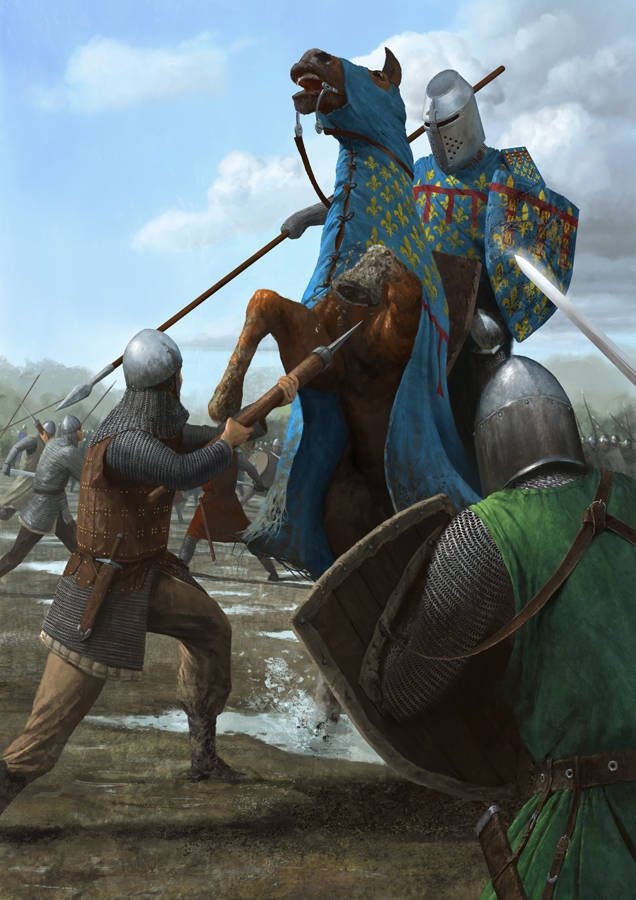
As dusk fell, the French attacks faltered. Edward III, observing from the windmill, ordered a counterattack. The English, still disciplined, advanced, routing the disorganized French.
Philip VI fled, and his army collapsed, leaving thousands dead, including nobles like the Count of Alençon and the blind King John of Bohemia, whose heroic but futile charge became legendary.
Philip VI fled, and his army collapsed, leaving thousands dead, including nobles like the Count of Alençon and the blind King John of Bohemia, whose heroic but futile charge became legendary.

Edward had held his ground. The English longbowmen, firing deadly volleys, disrupted the French charges, while Edward led from the front, sword in hand, rallying his troops.
By day’s end, the French were routed, their nobility decimated. Edward emerged not just as a prince but as a proven warrior. Chronicler Jean Froissart describes him fighting with courage, earning respect from allies and foes.
By day’s end, the French were routed, their nobility decimated. Edward emerged not just as a prince but as a proven warrior. Chronicler Jean Froissart describes him fighting with courage, earning respect from allies and foes.
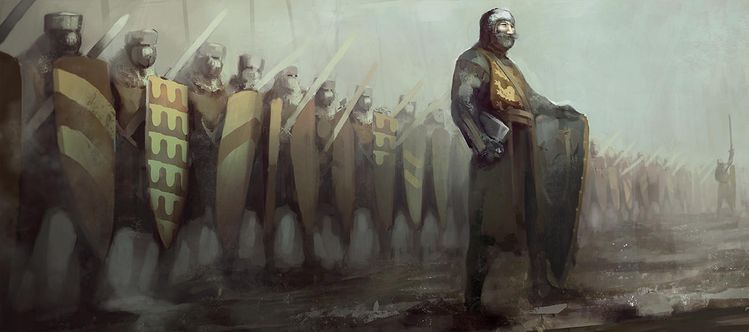

His leadership under fire, though supported by veterans, proved his mettle. The English suffered minimal losses (100–300, per modern estimates), while French casualties numbered 2,000–4,000 knights and up to 10,000 total (Sumption).

Edward, now 26 and Prince of Aquitaine, was tasked with leading a chevauchée—a raiding campaign—from Gascony into central France to disrupt French resources and assert English dominance.
In 1355, he led 6,000–8,000 men, including Gascon allies, through Languedoc, burning towns and crops.
In 1356, he launched another raid, moving north from Bordeaux toward the Loire Valley. His force, roughly 6,000 strong (longbowmen, dismounted men-at-arms, and Gascon knights), was smaller but mobile and experienced.
In 1355, he led 6,000–8,000 men, including Gascon allies, through Languedoc, burning towns and crops.
In 1356, he launched another raid, moving north from Bordeaux toward the Loire Valley. His force, roughly 6,000 strong (longbowmen, dismounted men-at-arms, and Gascon knights), was smaller but mobile and experienced.

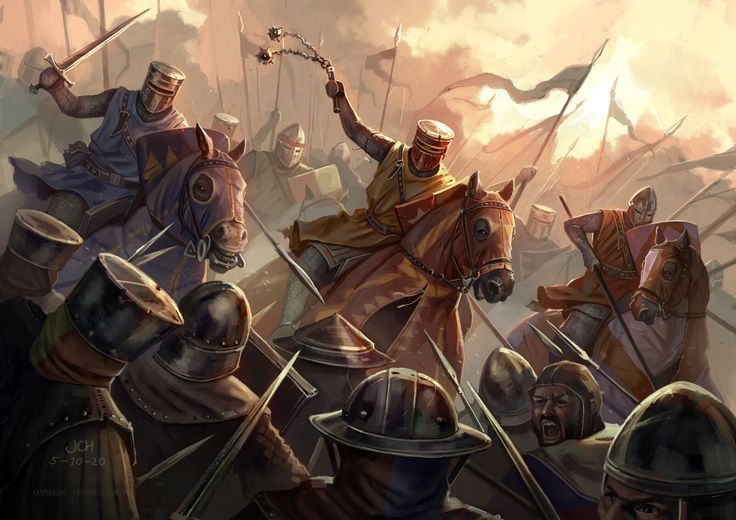
King John II, determined to crush the English, assembled a large army—estimated at 15,000–20,000, including knights, levies, and Genoese crossbowmen—and pursued Edward.
By mid-September, the English, laden with plunder and low on supplies, were near Poitiers, seeking to retreat to Bordeaux. John’s army caught up, forcing Edward to negotiate.
Talks failed, as John demanded Edward’s surrender, which the prince, confident in his troops and terrain, refused.
On September 19, battle was joined near Poitiers (often called the Battle of Nouaillé-Maupertuis in French sources), in a landscape ideal for Edward’s defensive tactics.
By mid-September, the English, laden with plunder and low on supplies, were near Poitiers, seeking to retreat to Bordeaux. John’s army caught up, forcing Edward to negotiate.
Talks failed, as John demanded Edward’s surrender, which the prince, confident in his troops and terrain, refused.
On September 19, battle was joined near Poitiers (often called the Battle of Nouaillé-Maupertuis in French sources), in a landscape ideal for Edward’s defensive tactics.
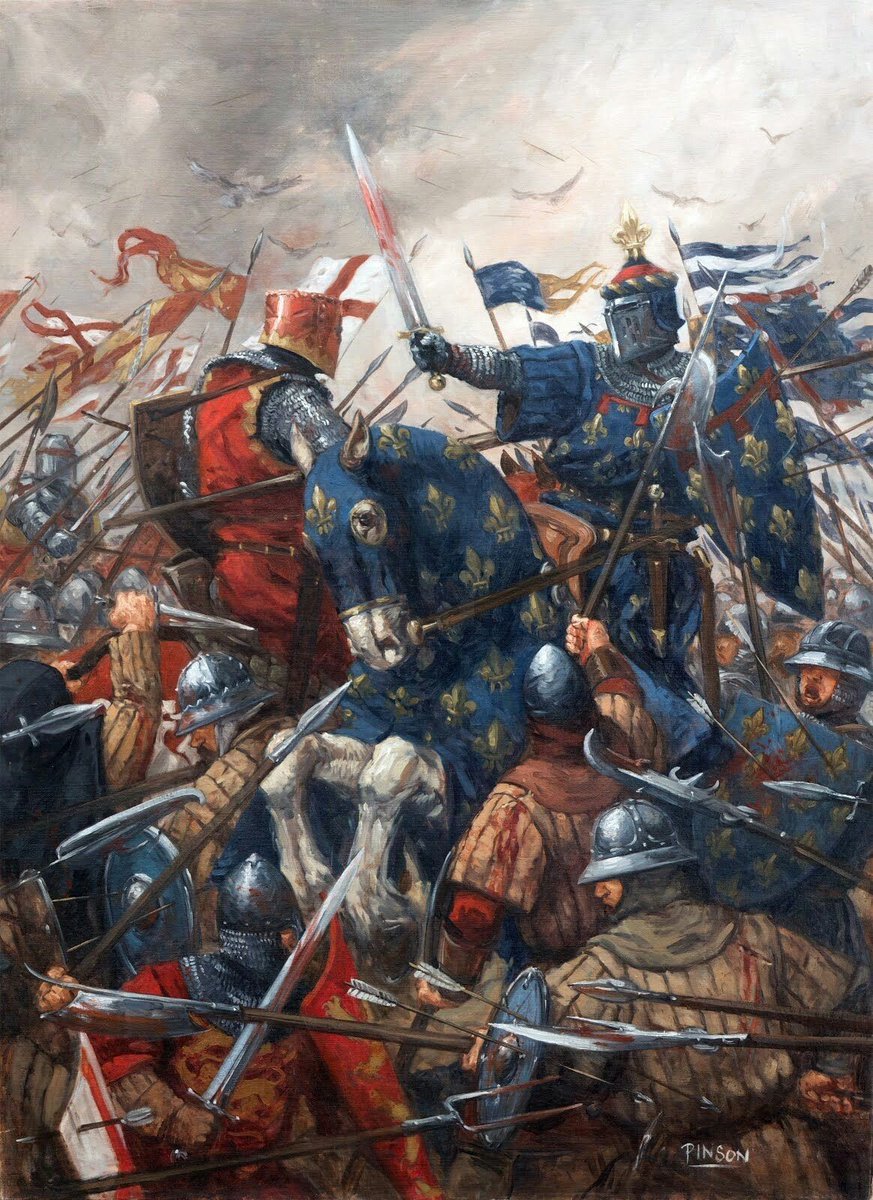
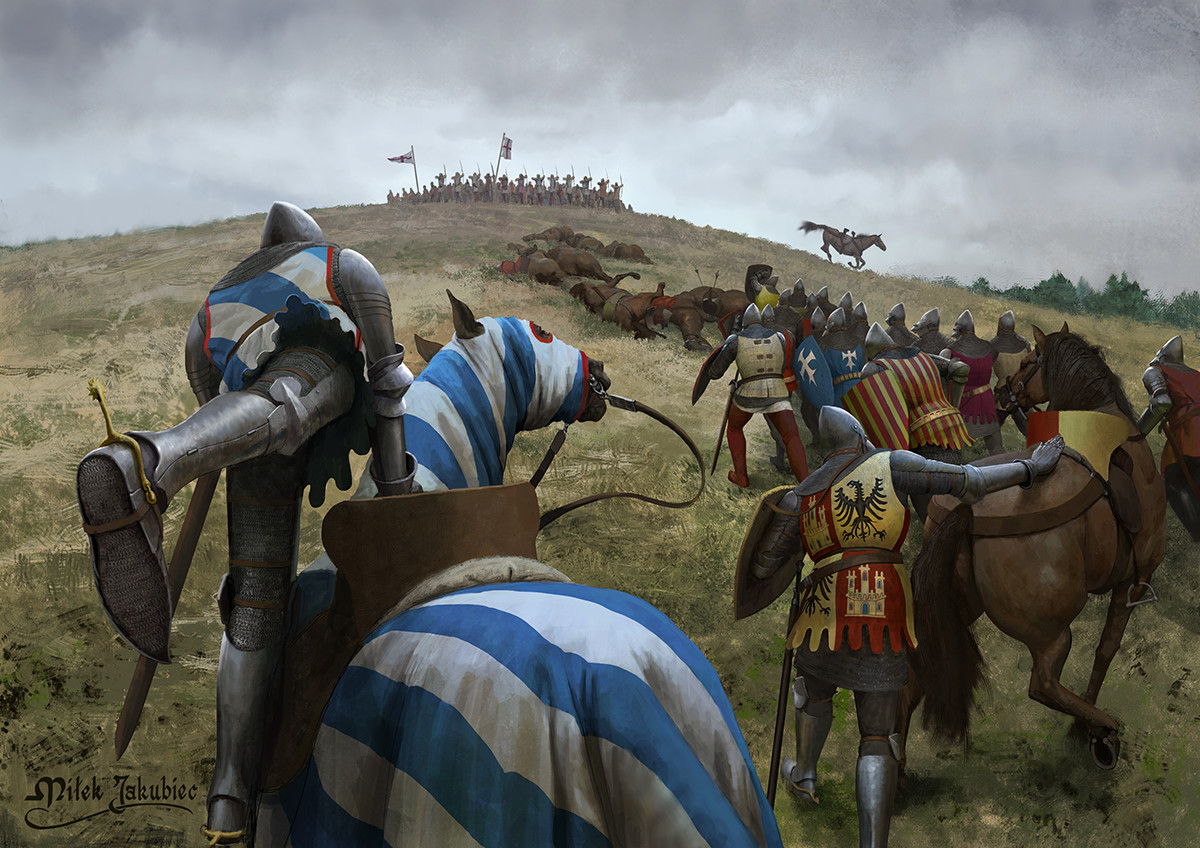
The English deployed dismounted, with longbowmen on the wings, protected by natural obstacles and stakes. A narrow lane, flanked by hedges, funneled French attacks, amplifying the longbow’s effectiveness. Edward’s strategy, refined since Crécy, relied on withstanding initial assaults and exploiting French disarray with a counterattack.
His force was outnumbered nearly three to one, but his experience at Crécy and faith in his men gave him confidence. Froissart notes Edward’s speech to his troops, urging them to fight for honor and survival, a testament to his ability to inspire.
His force was outnumbered nearly three to one, but his experience at Crécy and faith in his men gave him confidence. Froissart notes Edward’s speech to his troops, urging them to fight for honor and survival, a testament to his ability to inspire.


John committed his main force, led by his brother, Philip of Orléans, and then himself. The French knights, dismounted but heavily armored, advanced uphill through arrow storms.
Edward, commanding the main body, positioned his men to maximize the terrain’s advantage. Longbowmen, firing at close range, caused devastating casualties, while dismounted men-at-arms repelled French charges.
Edward, commanding the main body, positioned his men to maximize the terrain’s advantage. Longbowmen, firing at close range, caused devastating casualties, while dismounted men-at-arms repelled French charges.
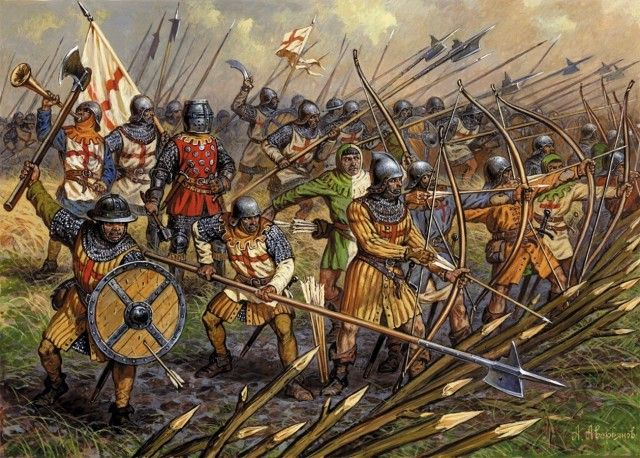
Froissart describes Edward as a commanding presence, moving among his troops, directing archers, and steadying wavering lines. His leadership prevented a rout, even as French numbers pressed hard. The English held their ground for hours, exhausting the French.
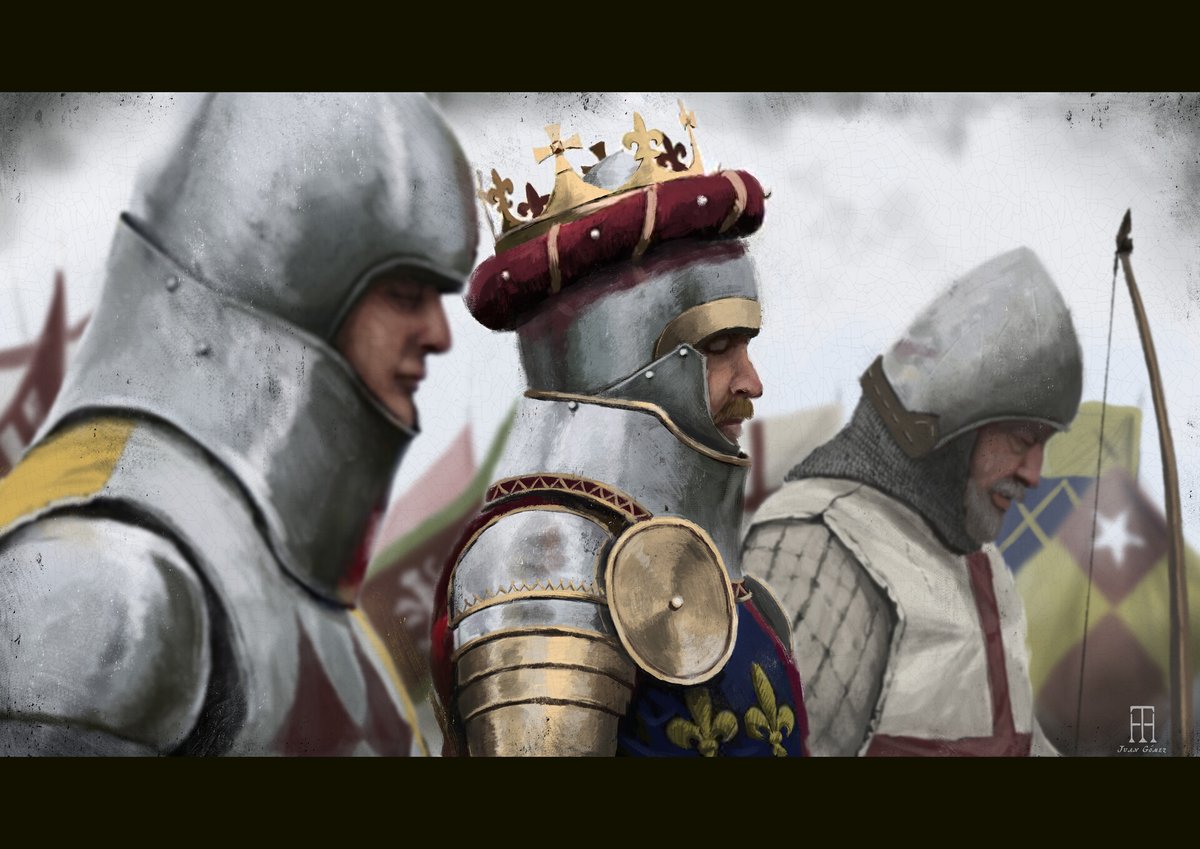
As French cohesion faltered, Edward seized the moment. He ordered a flanking maneuver led by Captal de Buch, whose cavalry, hidden in woods, charged the French rear.
Simultaneously, Edward led a frontal counterattack, his men-at-arms and archers advancing in unison. The French, caught in a pincer, collapsed.
Simultaneously, Edward led a frontal counterattack, his men-at-arms and archers advancing in unison. The French, caught in a pincer, collapsed.

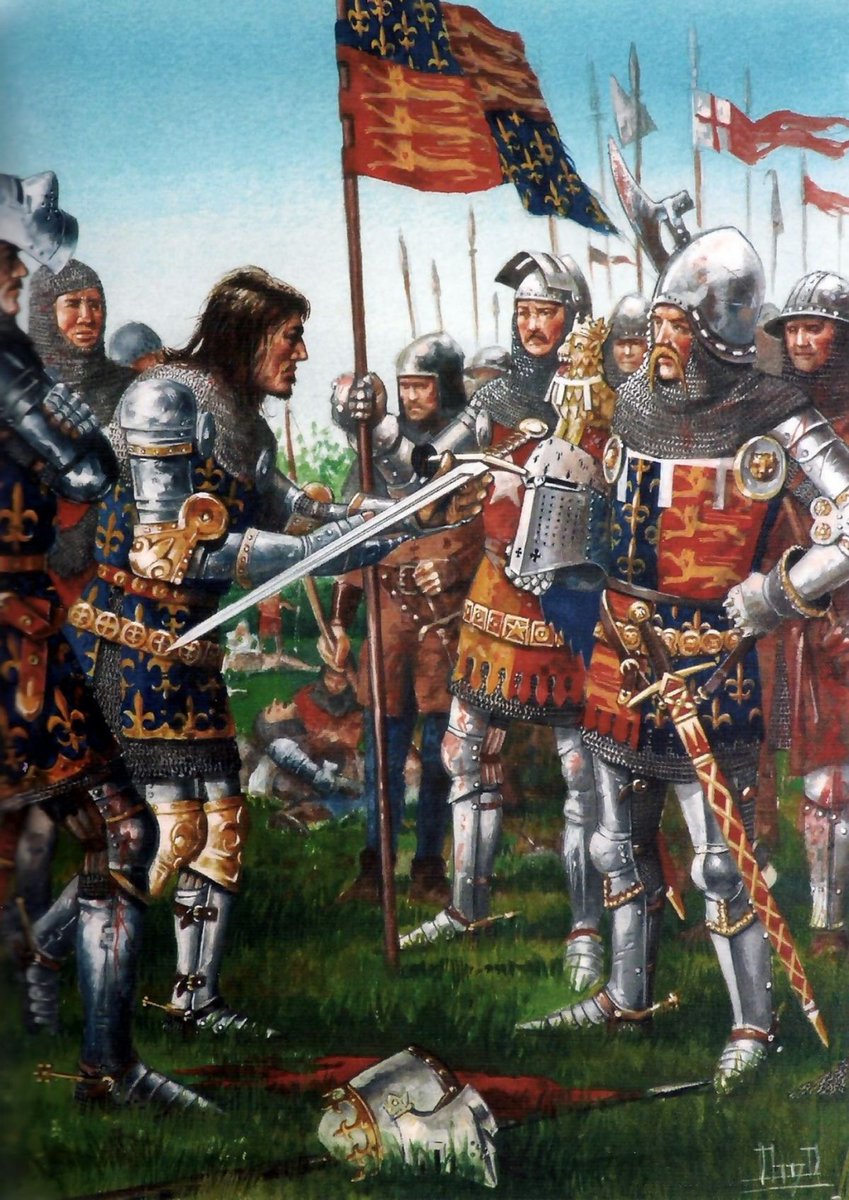
The victory was stunning: not only did Edward defeat the French, but he captured King John II, a prize that strengthened England’s position in the war. That evening, Edward showed his chivalric side, hosting John at dinner and treating him with respect, as Froissart notes.
He praised the French king’s bravery, serving him personally, a gesture that won admiration across Europe. Poitiers was Edward’s masterpiece, showcasing his tactical brilliance and ability to inspire loyalty.
He praised the French king’s bravery, serving him personally, a gesture that won admiration across Europe. Poitiers was Edward’s masterpiece, showcasing his tactical brilliance and ability to inspire loyalty.
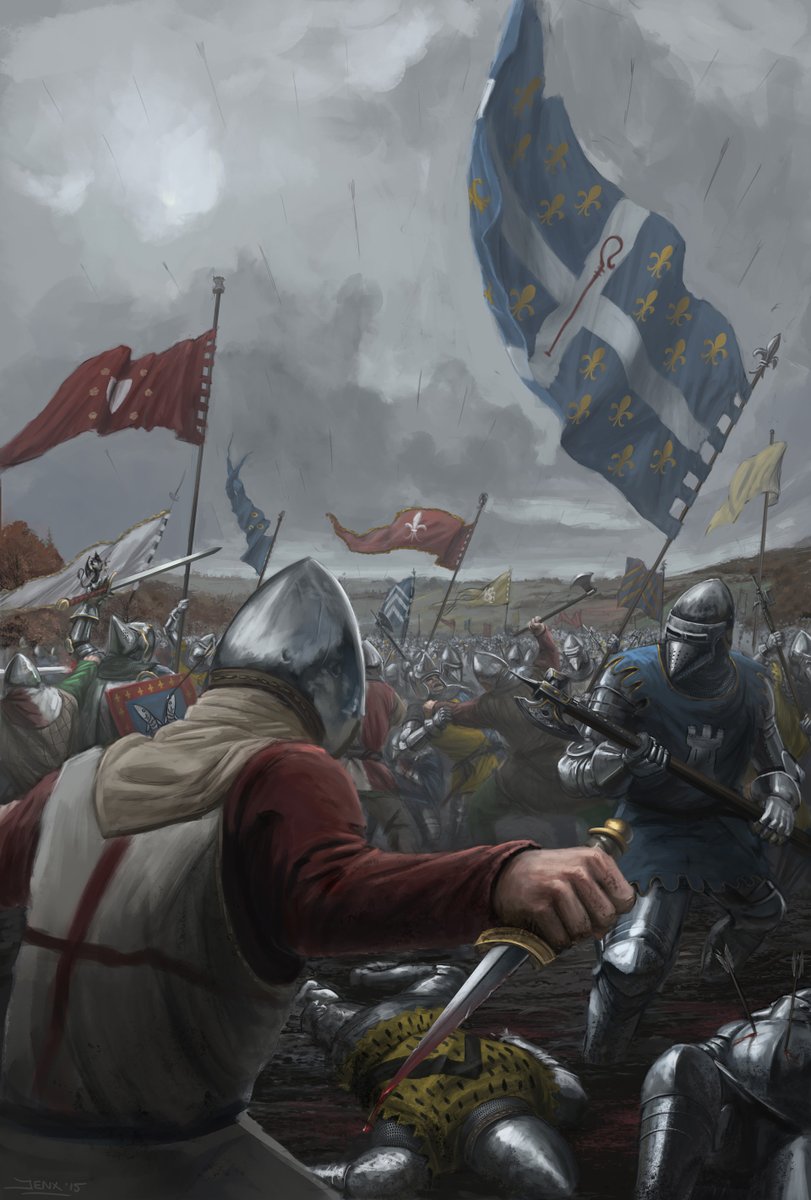
Edward’s court in Aquitaine, based in Bordeaux, reflected his chivalric ideals. He hosted tournaments, feasted with allies, and maintained a dazzling household. But his rule wasn’t flawless.
Heavy taxes to fund his campaigns and lifestyle stirred resentment among the Gascons, hinting at the challenges of governing. Edward was a knight, but also a prince with hard choices to make, and his ambition sometimes strained his ideals.
Heavy taxes to fund his campaigns and lifestyle stirred resentment among the Gascons, hinting at the challenges of governing. Edward was a knight, but also a prince with hard choices to make, and his ambition sometimes strained his ideals.

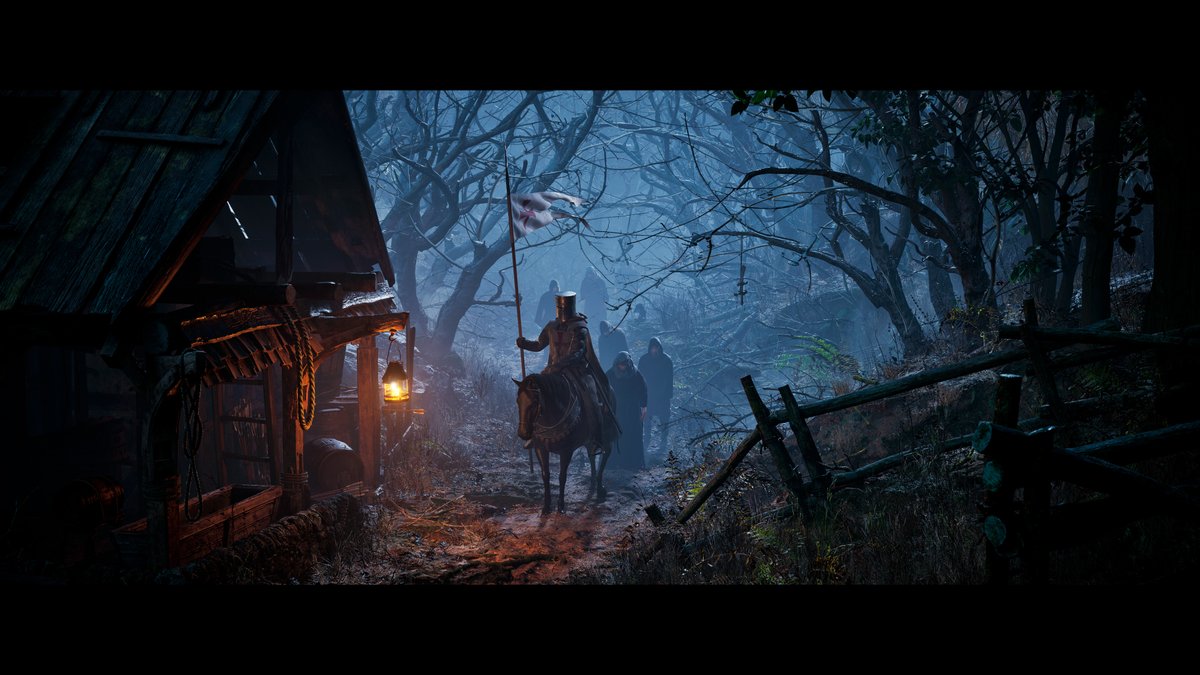
Edward’s legend took a darker turn in 1370 at Limoges. By then, his health was failing, likely from dysentery or a similar illness, forcing him to lead from a litter. When Limoges, a city under his control, defected to the French, Edward saw it as a betrayal. He marched to retake it, and after a brief siege, the city fell. What followed was brutal.
Edward ordered a massacre, and historical accounts, like the Chronique des règnes de Jean II et Charles V, estimate around 3,000 civilians were killed. Froissart downplays the slaughter, but other sources confirm the scale of the violence.
Edward ordered a massacre, and historical accounts, like the Chronique des règnes de Jean II et Charles V, estimate around 3,000 civilians were killed. Froissart downplays the slaughter, but other sources confirm the scale of the violence.

This act shocked even Edward’s allies. The chivalric prince who dined with a captured king now appeared as a merciless warlord.
Was it rage at disloyalty? A need to send a message to other rebellious cities? Or the frustration of a sick man losing his grip on power? Whatever the reason, Limoges damaged Edward’s reputation.
It showed a side of him that war had hardened—a leader who could be as ruthless as he was noble. For all his adherence to chivalry, Edward was a product of his time, where mercy often gave way to necessity.
Was it rage at disloyalty? A need to send a message to other rebellious cities? Or the frustration of a sick man losing his grip on power? Whatever the reason, Limoges damaged Edward’s reputation.
It showed a side of him that war had hardened—a leader who could be as ruthless as he was noble. For all his adherence to chivalry, Edward was a product of his time, where mercy often gave way to necessity.
Edward’s personal life offered a counterpoint to his warrior’s existence. In 1361, he married Joan of Kent, a woman known as the “Fair Maid” for her beauty and charm.
Their marriage was unusual—a love match rather than a political alliance. Joan, previously married twice, brought a touch of scandal, but Edward’s devotion to her was clear.
They had two sons, Edward (who died young) and Richard, who became Richard II. In Bordeaux, their court was a hub of culture, with music, feasts, and knightly displays, as described in contemporary records. Joan gave Edward stability, a refuge from the demands of war and rule.
Their marriage was unusual—a love match rather than a political alliance. Joan, previously married twice, brought a touch of scandal, but Edward’s devotion to her was clear.
They had two sons, Edward (who died young) and Richard, who became Richard II. In Bordeaux, their court was a hub of culture, with music, feasts, and knightly displays, as described in contemporary records. Joan gave Edward stability, a refuge from the demands of war and rule.


Yet even this couldn’t shield him from decline. By 1371, illness forced Edward to leave Aquitaine and return to England. His health worsened, and he spent his final years in pain, unable to lead as he once had. He died on June 8, 1376, at 46, just a year before his father.
His tomb in Canterbury Cathedral, with its armored effigy and sword, remains a testament to his life. The epitaph he chose reflects his awareness of mortality:
“Such as thou art, so once was I.”
His tomb in Canterbury Cathedral, with its armored effigy and sword, remains a testament to his life. The epitaph he chose reflects his awareness of mortality:
“Such as thou art, so once was I.”
Such was the fate of such a promising Prince and leader; life can be ironic and tragic. England probably lost a great king.
His character was a blend of strengths and contradictions. He lived for honor, yet war demanded harshness. He loved Joan deeply, yet his duties kept him from her side.
But isn't this the story of every man? Especially for those that fight for something greater than themselves.
The “Black Prince” nickname, not used in his lifetime, likely came from French chroniclers or later tales of his dark armor or fearsome deeds. It captures the duality of a man both admired and feared.
His character was a blend of strengths and contradictions. He lived for honor, yet war demanded harshness. He loved Joan deeply, yet his duties kept him from her side.
But isn't this the story of every man? Especially for those that fight for something greater than themselves.
The “Black Prince” nickname, not used in his lifetime, likely came from French chroniclers or later tales of his dark armor or fearsome deeds. It captures the duality of a man both admired and feared.

Edward’s legacy is complex. He strengthened England’s claim to French lands and set the stage for his son’s reign.
His victories are studied for their brilliance, but Limoges reminds us of war’s cost. In his time, he was a hero, a knight whose name echoed in courts and camps.
His victories are studied for their brilliance, but Limoges reminds us of war’s cost. In his time, he was a hero, a knight whose name echoed in courts and camps.
• • •
Missing some Tweet in this thread? You can try to
force a refresh