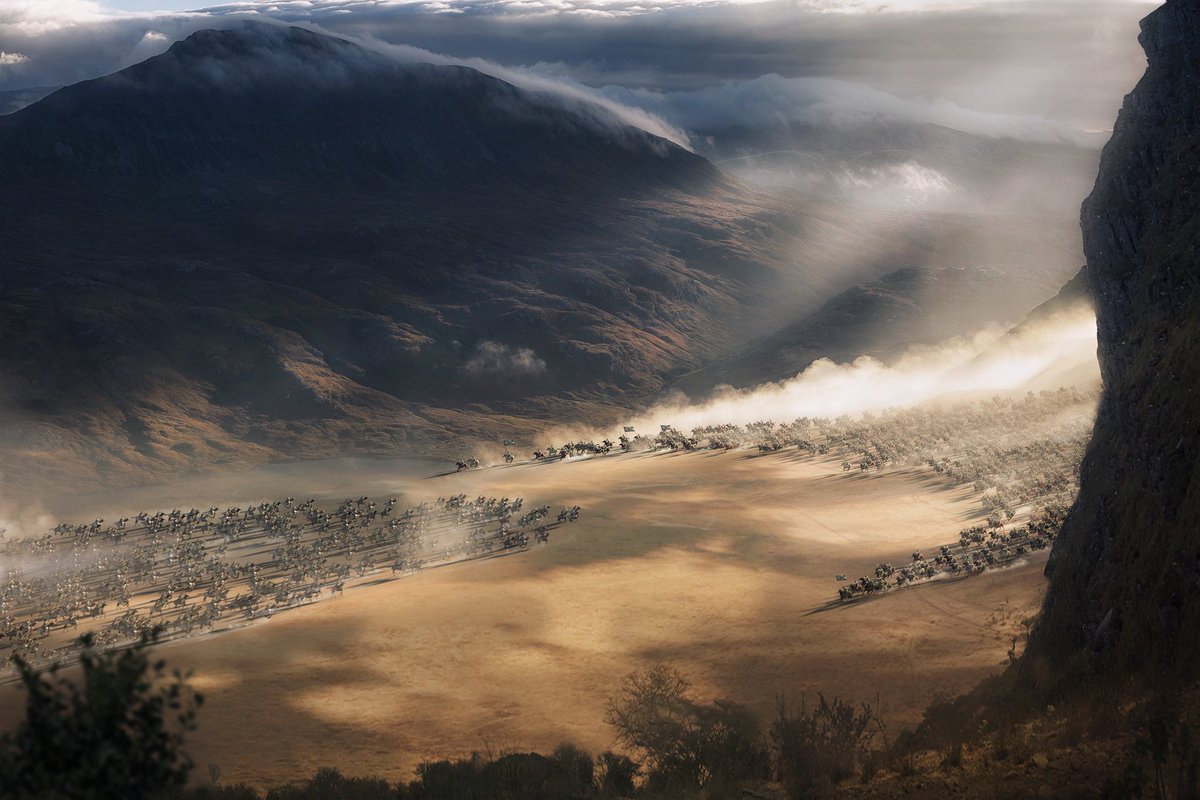
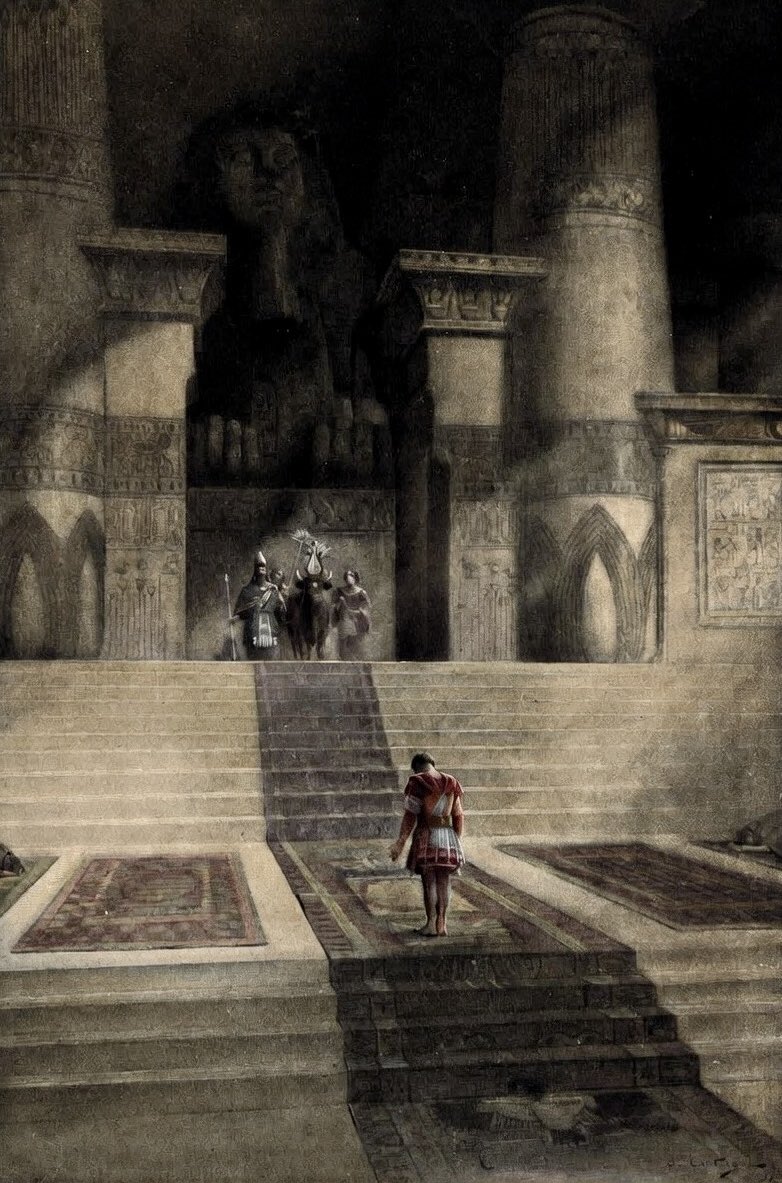
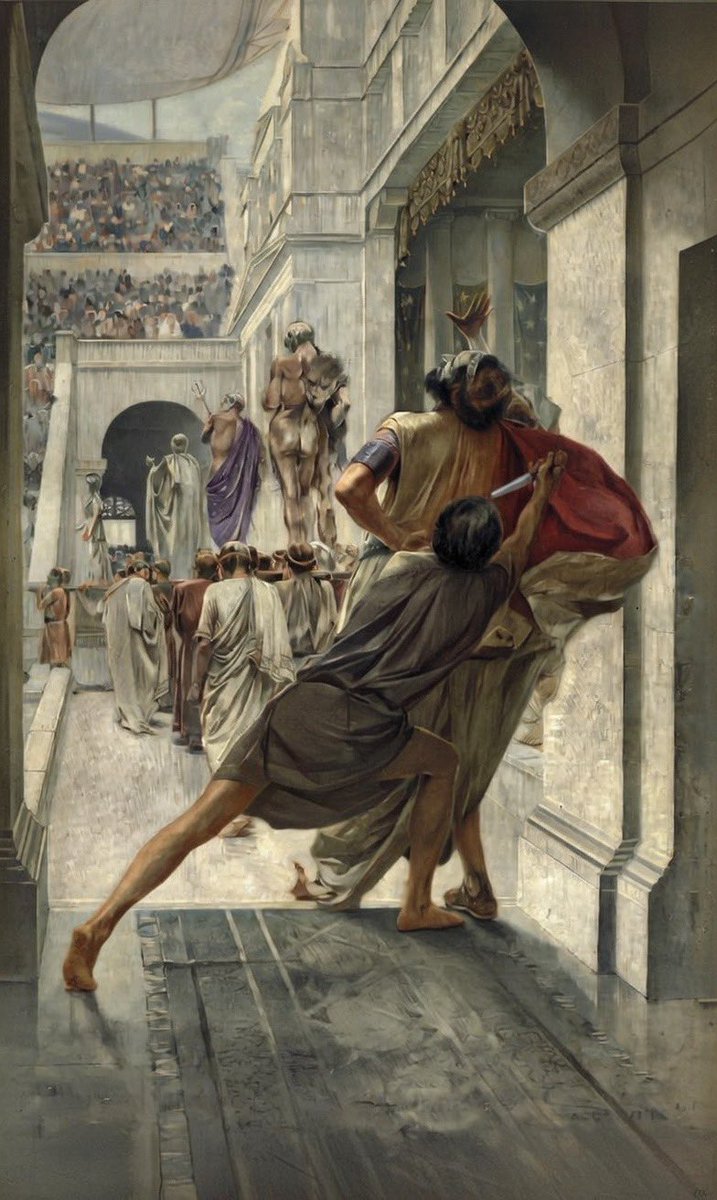
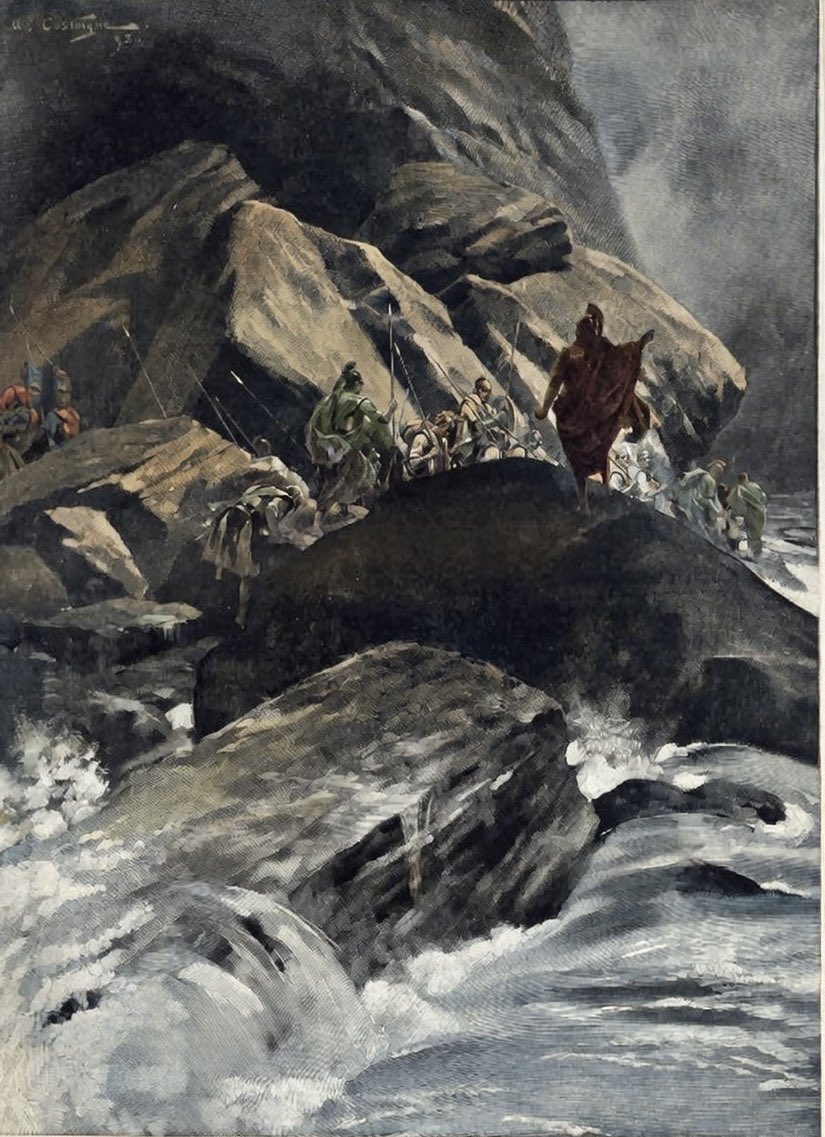
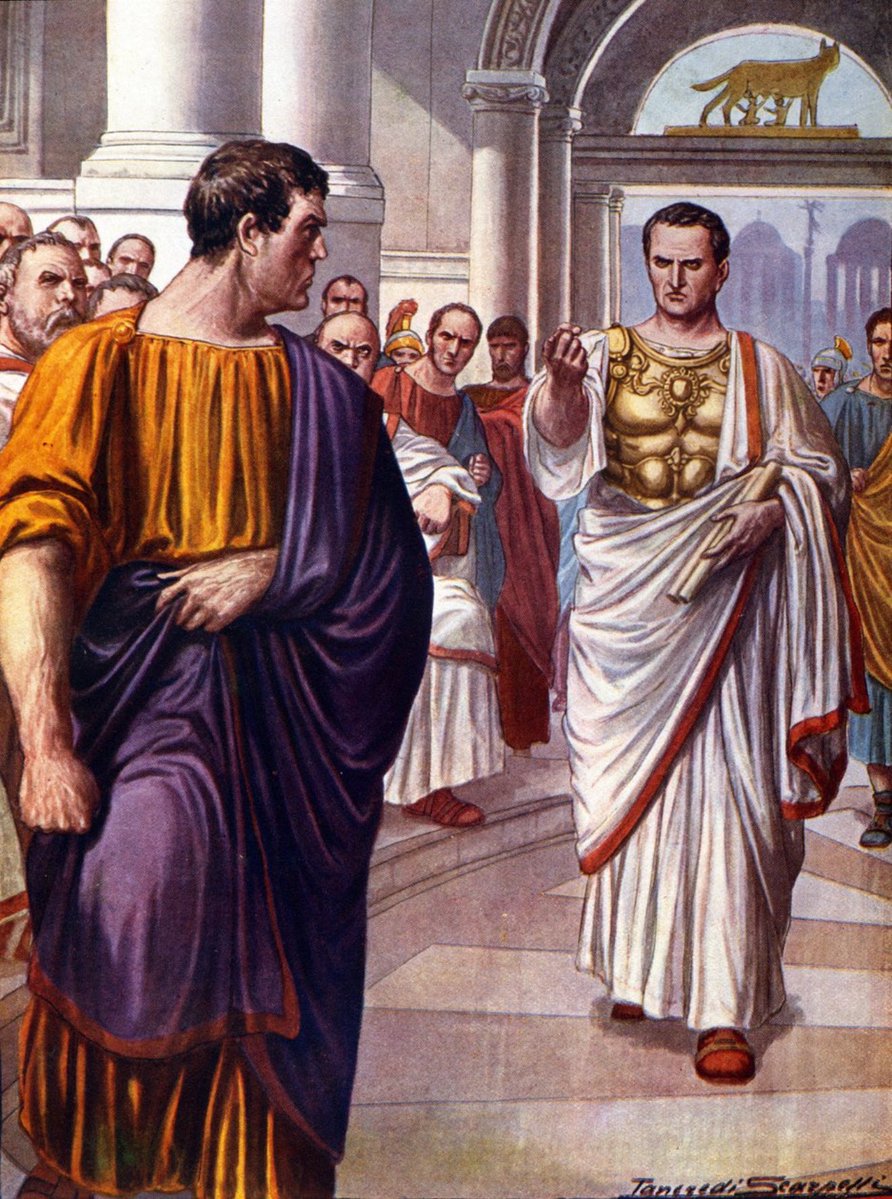
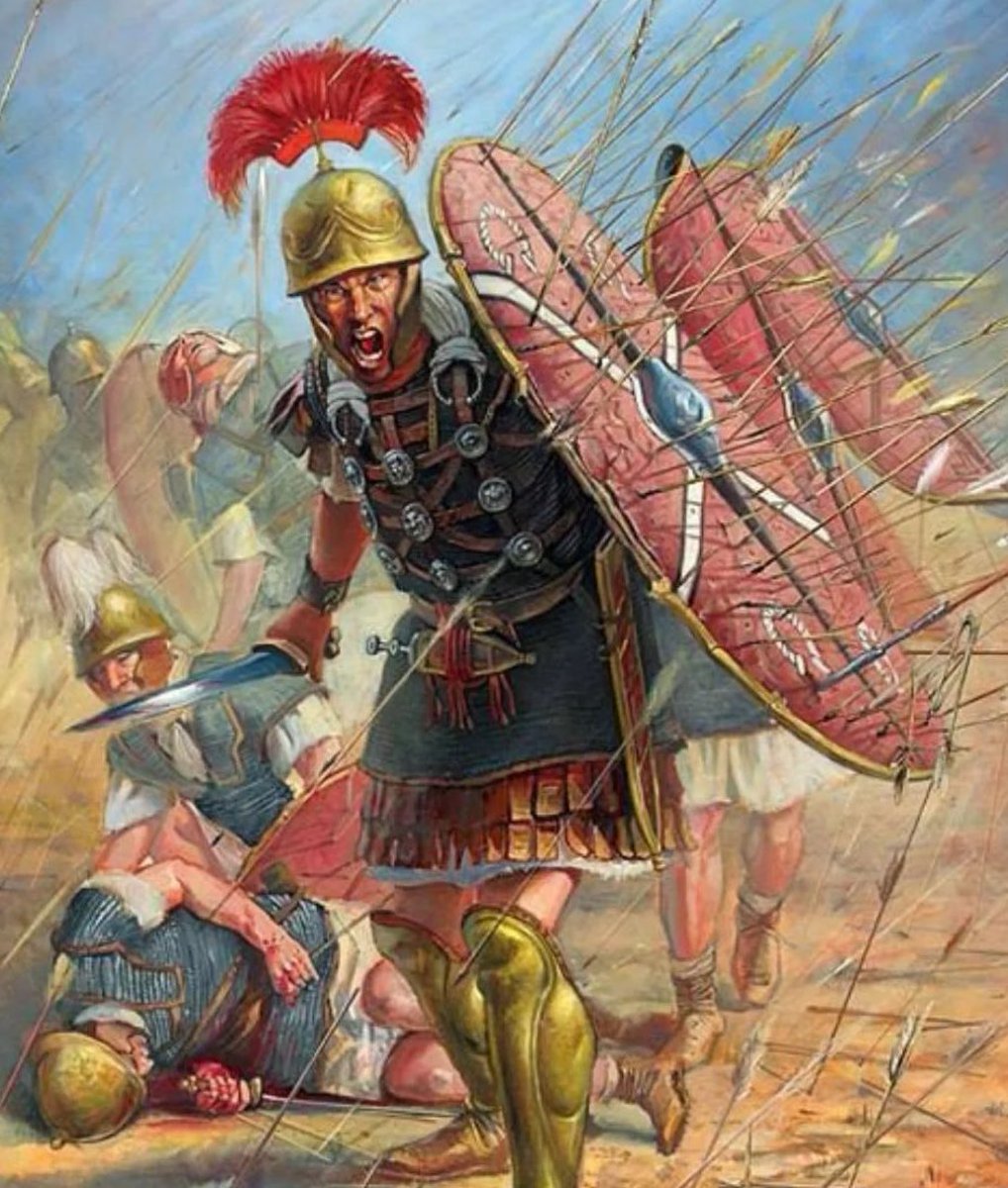
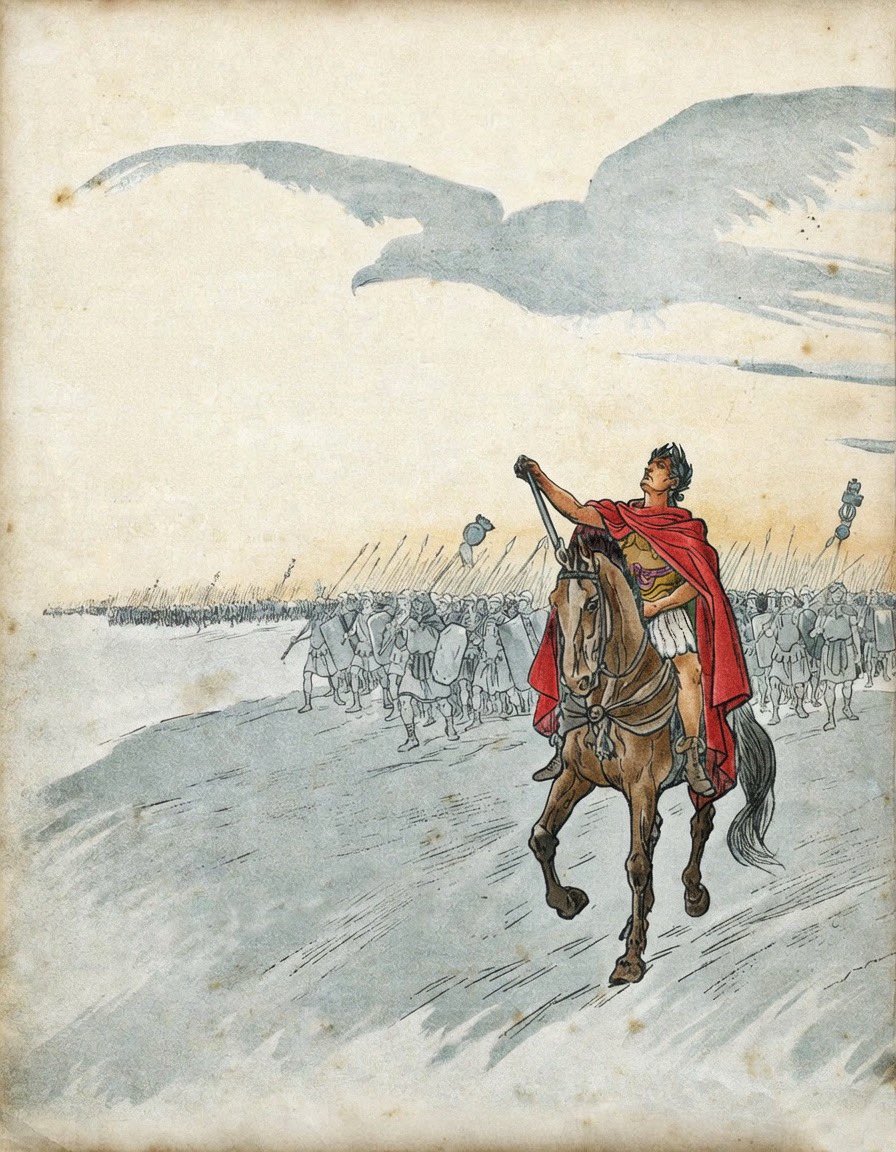
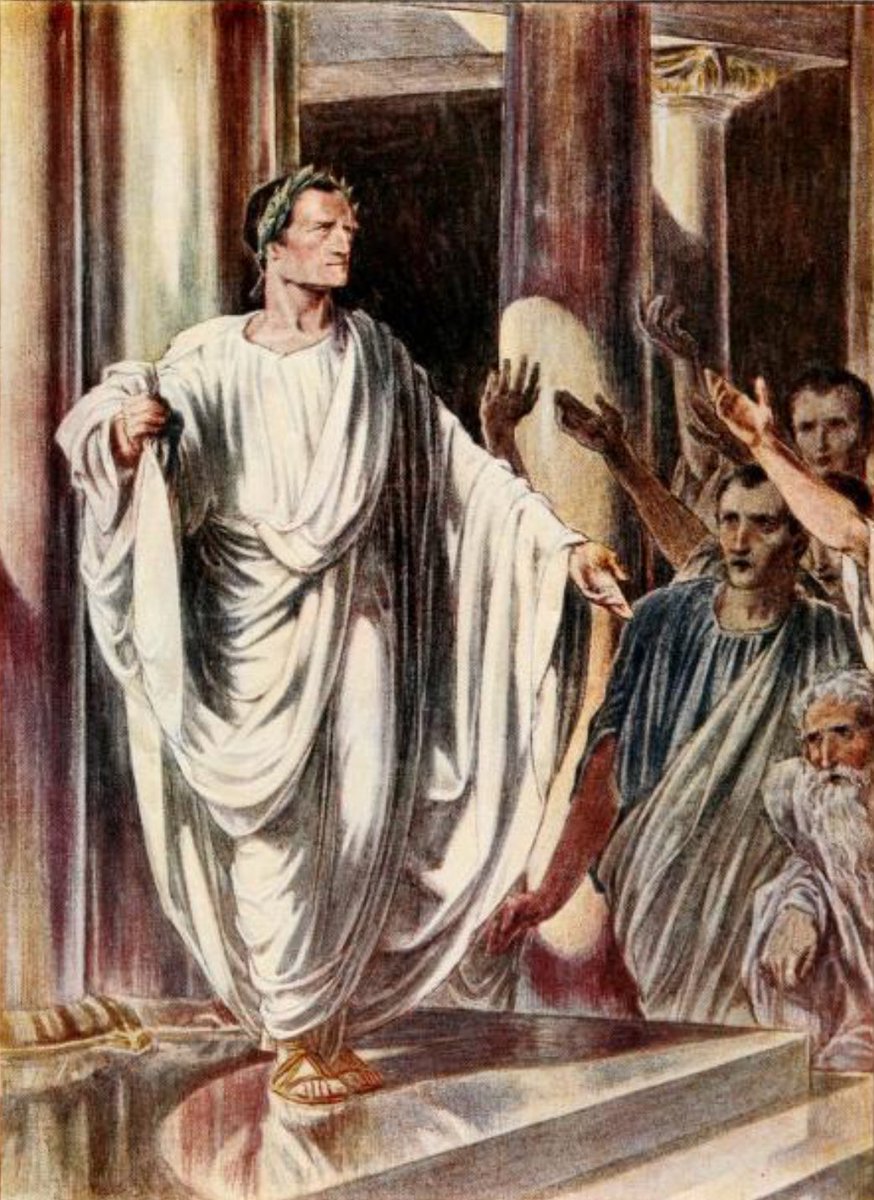
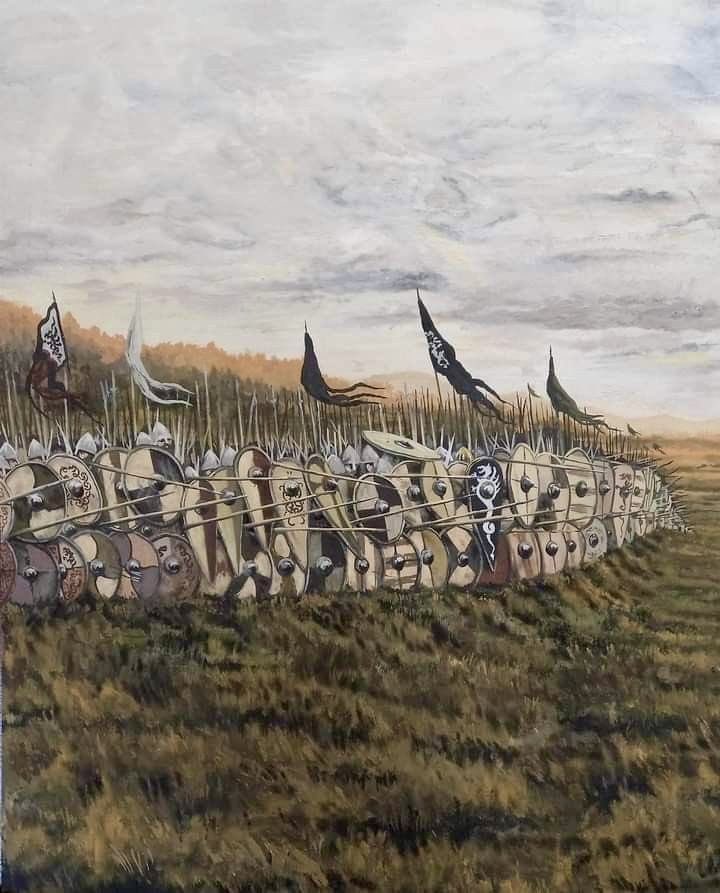
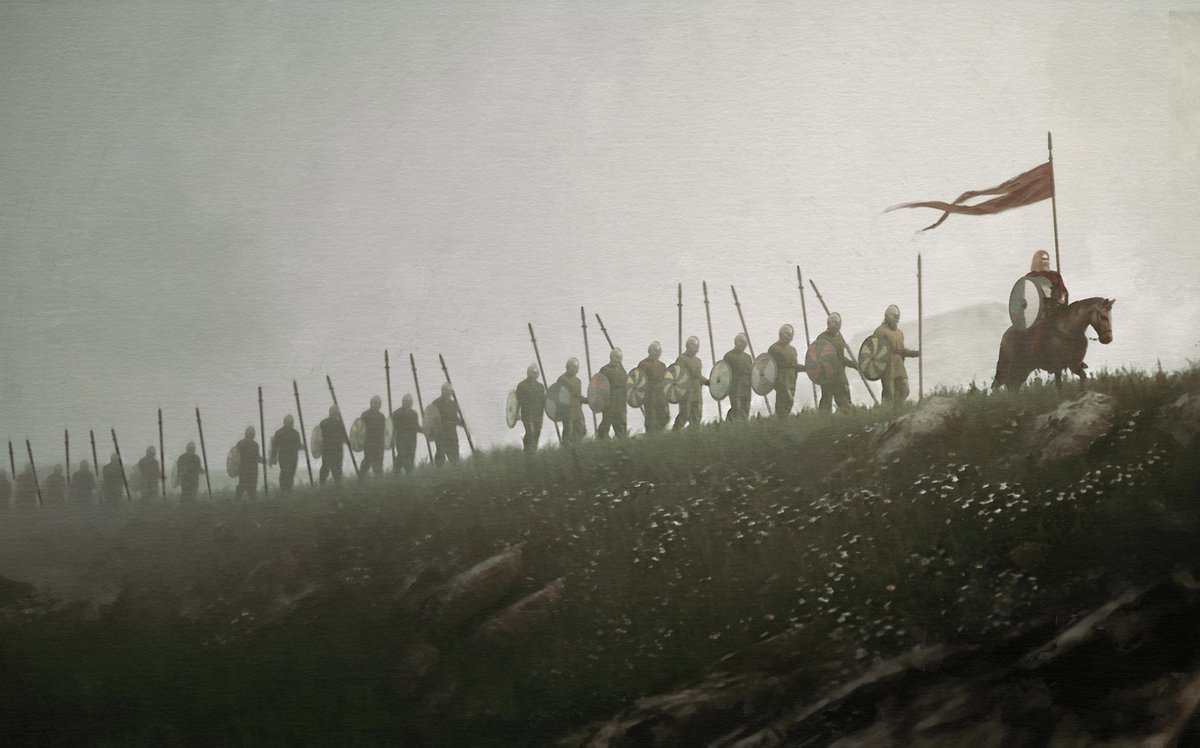
John Tzimiskes snuck into Constantinople and seized power by decapitating the emperor.
In his six years as emperor, he crushed the Rus, conquered the Bulgars, and submitted the cities of the Muslim East with no one being able to stand in his way!
[Thread]🧵
In his six years as emperor, he crushed the Rus, conquered the Bulgars, and submitted the cities of the Muslim East with no one being able to stand in his way!
[Thread]🧵

Iōánnēs ho Tzimiskēs was born in AD 925 in the east Roman Empire to the Kourkouas family.
Several of his relatives, including his uncle Nikephoros Phokas, were important commanders of the near constant border warfare with the Muslim emirates on the eastern border.
Tzimiskes was described as being short, but muscular and handsome.
Several of his relatives, including his uncle Nikephoros Phokas, were important commanders of the near constant border warfare with the Muslim emirates on the eastern border.
Tzimiskes was described as being short, but muscular and handsome.

• War •
Tzimiskes became a prominent military commander in his youth.
In 958 he led an army to Mayyafariqin and Amida when he was set upon by the Arab general Naja whom he soundly defeated. Tzimiskes destroyed most of the army.
Then the eunuch Basil Lekapenos arrived with reinforcements and the two armies besieged Samosata before destroying a relief army sent by the Emir of Aleppo, Sayf Al-Dawla.
In 962 he joined his uncle Nikephoros Phokas in the invasion of Aleppo where they briefly seized the city. Tzimiskes defeated a force under the Muslim general Naja who fled to join the emir who marched on Aleppo, but was also defeated and chased to the Euphrates by Tzimiskes.
Tzimiskes became a prominent military commander in his youth.
In 958 he led an army to Mayyafariqin and Amida when he was set upon by the Arab general Naja whom he soundly defeated. Tzimiskes destroyed most of the army.
Then the eunuch Basil Lekapenos arrived with reinforcements and the two armies besieged Samosata before destroying a relief army sent by the Emir of Aleppo, Sayf Al-Dawla.
In 962 he joined his uncle Nikephoros Phokas in the invasion of Aleppo where they briefly seized the city. Tzimiskes defeated a force under the Muslim general Naja who fled to join the emir who marched on Aleppo, but was also defeated and chased to the Euphrates by Tzimiskes.

• The White Death •
In AD 963, the emperor Romanos II died and left behind two sons aged five and three.
Nikephoros Phokas decided to take power, ruling as regent and co-emperor of the two young boys, the future emperors Basil II and Constantine VIII.
To demonstrate that he bore no ill-will to the boys, he married their mother Theophano and merged his family with the imperial family.
Tzimiskes had been the principle backer of his uncle in these matters.
In AD 963, the emperor Romanos II died and left behind two sons aged five and three.
Nikephoros Phokas decided to take power, ruling as regent and co-emperor of the two young boys, the future emperors Basil II and Constantine VIII.
To demonstrate that he bore no ill-will to the boys, he married their mother Theophano and merged his family with the imperial family.
Tzimiskes had been the principle backer of his uncle in these matters.
• The Mountain of Blood •
The Muslim rulers of the east took advantage of the distraction caused by the new emperor’s assumption of power and decided to raid into imperial territory.
The emperor decided that the time had come to complete the reconquest of Cilicia for the empire, and sent Tzimiskes at the head of an army to Adana.
Tzimiskes defeated a joint army of the Cilician cities and when the 5000 strong remnants of that army made a last stand on a nearby hill, Tzimiskes massacred them all.
Their blood flowed down the hillside and was called the Mountain of Blood thereafter.
The Muslim rulers of the east took advantage of the distraction caused by the new emperor’s assumption of power and decided to raid into imperial territory.
The emperor decided that the time had come to complete the reconquest of Cilicia for the empire, and sent Tzimiskes at the head of an army to Adana.
Tzimiskes defeated a joint army of the Cilician cities and when the 5000 strong remnants of that army made a last stand on a nearby hill, Tzimiskes massacred them all.
Their blood flowed down the hillside and was called the Mountain of Blood thereafter.
Tzimiskes besieged Mospouestia but had to withdraw after seven days due to famine in the area, but burned the suburbs of Mospouestia, Adana, and Tarsos on his way home and sent a message that he was coming back to kill them all.
In 965 the Emperor Nikephoros Phokas returned to the east and he and Tzimiskes attacked Mopsouestia while Leon Phokas attacked Tarsos. Both cities fell and Cilicia was back in the empire.
Later Muslim writers attribute a quote from a message to the emir of Aleppo to Phokas:
‘nothing is left in your thughur except ashes’ and Muslim chroniclers claimed that Phokas turned a mosque there into a stable.
In 965 the Emperor Nikephoros Phokas returned to the east and he and Tzimiskes attacked Mopsouestia while Leon Phokas attacked Tarsos. Both cities fell and Cilicia was back in the empire.
Later Muslim writers attribute a quote from a message to the emir of Aleppo to Phokas:
‘nothing is left in your thughur except ashes’ and Muslim chroniclers claimed that Phokas turned a mosque there into a stable.

• Betrayal •
Nikephoros Phokas had been a popular and revered soldier, described by one writer as ‘the general of invincible Rome, a king by nature, a bringer-of-victories, in fact’, but he was a deeply unpopular emperor.
He enraged the people of Constantinople when he built a new wall around the palace.
He then suspected the loyalties of Tzimiskes and had him stripped of his command and banished.
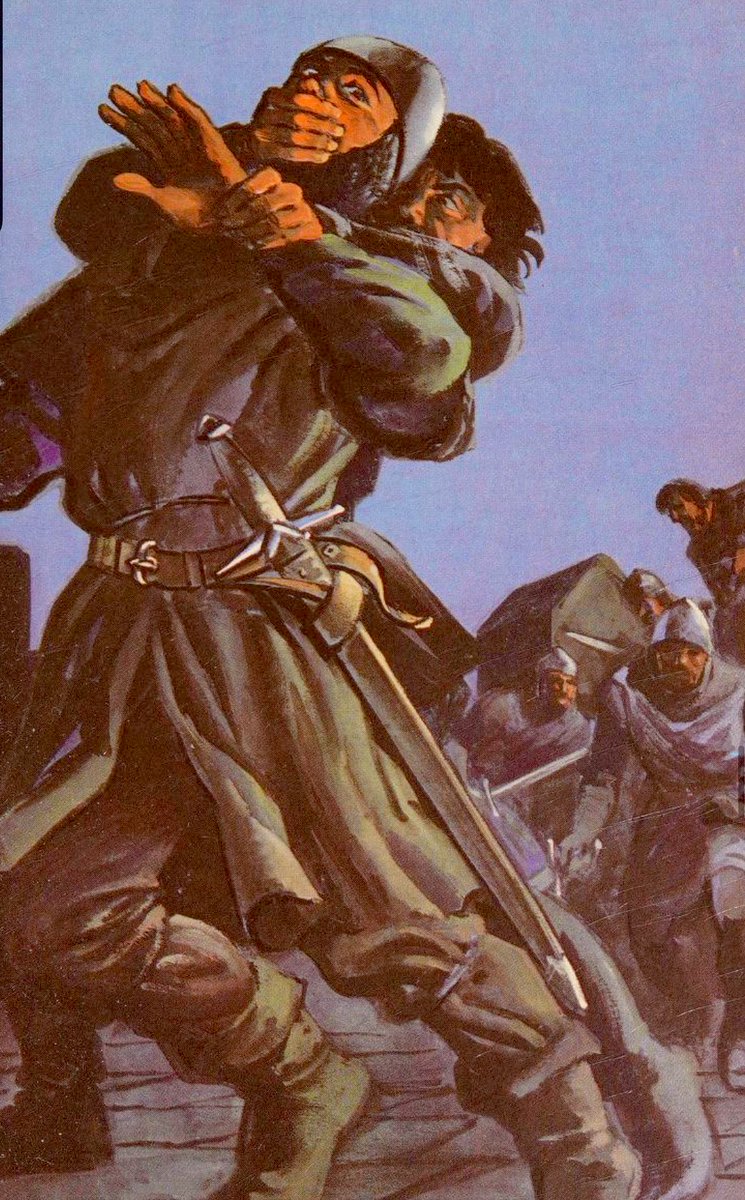
In response, a plot was formed which saw Tzimiskes and some fellow conspirators lifted up into the walls of the palace in a basket before making their way to the emperor’s apartments and decapitating him.
The palace guards were stunned into submission when Phokas’ head was lifted displayed to them.
Nikephoros Phokas had been a popular and revered soldier, described by one writer as ‘the general of invincible Rome, a king by nature, a bringer-of-victories, in fact’, but he was a deeply unpopular emperor.
He enraged the people of Constantinople when he built a new wall around the palace.
He then suspected the loyalties of Tzimiskes and had him stripped of his command and banished.
In response, a plot was formed which saw Tzimiskes and some fellow conspirators lifted up into the walls of the palace in a basket before making their way to the emperor’s apartments and decapitating him.
The palace guards were stunned into submission when Phokas’ head was lifted displayed to them.
John Tzimiskes was crowned as emperor on Christmas Day AD 969.
The dowager empress Theophanu was used as a scapegoat in the coup and banished to a monastery.
The accusations seemed to have stuck and a later poem stated that ‘she wanted the cake’ but that ‘the men with shrivelled cocks and gaping arseholes’ (the prominent court eunuchs instrumental in the plot) paraded the empress on a mule.
In truth she was unlikely to have been involved and probably preferred the older and childless Phokas, who had respected the rights of her sons, to Tzimiskes.
Upon becoming emperor, Tzimiskes gave away half his property to neighbouring farmers and used the other half to endow a monastery.
The dowager empress Theophanu was used as a scapegoat in the coup and banished to a monastery.
The accusations seemed to have stuck and a later poem stated that ‘she wanted the cake’ but that ‘the men with shrivelled cocks and gaping arseholes’ (the prominent court eunuchs instrumental in the plot) paraded the empress on a mule.
In truth she was unlikely to have been involved and probably preferred the older and childless Phokas, who had respected the rights of her sons, to Tzimiskes.
Upon becoming emperor, Tzimiskes gave away half his property to neighbouring farmers and used the other half to endow a monastery.

• The Rus and Bulgars •
By 969 the Rus leader Syatoslav had invaded the Bulgars, capturing both their capital and their Tsar, Boris II.
Syatoslav had allied with the Magyars and Pechenegs and had even brought many of the Bulgars to his side to face to empire.
It was most definitely not in the empire’s interests to have the pagan Rus, who had recently been raiding them by sea, bordering them by land.
Tzimiskes tried to persuade Syatoslav to depart and turn back but he refused.
By 969 the Rus leader Syatoslav had invaded the Bulgars, capturing both their capital and their Tsar, Boris II.
Syatoslav had allied with the Magyars and Pechenegs and had even brought many of the Bulgars to his side to face to empire.
It was most definitely not in the empire’s interests to have the pagan Rus, who had recently been raiding them by sea, bordering them by land.
Tzimiskes tried to persuade Syatoslav to depart and turn back but he refused.

When the Rus did invade, Bardas Skleros was sent with some of the eastern forces and harried the Rus, winning a modest victory.
Tzimiskes was then distracted by a rebellion among disaffected members of the Phokas family, but this was easily quelled.
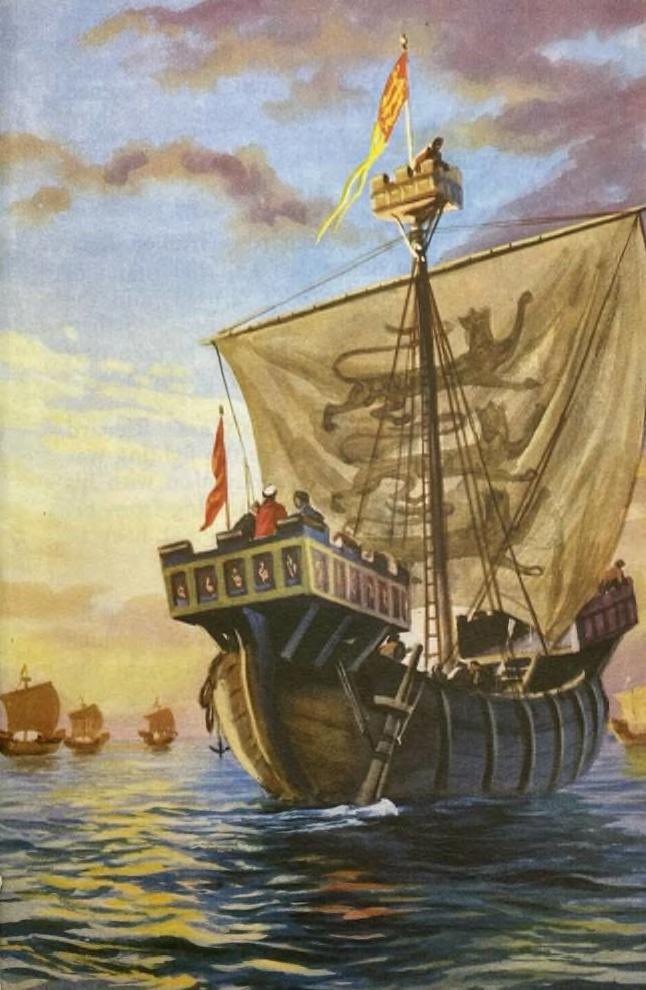
In 971, Tzimiskes sent a fleet to blockade the mouth of the Danube while he marched on Preslav and defeated the Rus army there!
The Rus fled inside Preslav so Tzimiskes took the city and then set fire to the palace to smoke out the remnants of the Rus forces seeking refuge there.
Tzimiskes was then distracted by a rebellion among disaffected members of the Phokas family, but this was easily quelled.
In 971, Tzimiskes sent a fleet to blockade the mouth of the Danube while he marched on Preslav and defeated the Rus army there!
The Rus fled inside Preslav so Tzimiskes took the city and then set fire to the palace to smoke out the remnants of the Rus forces seeking refuge there.

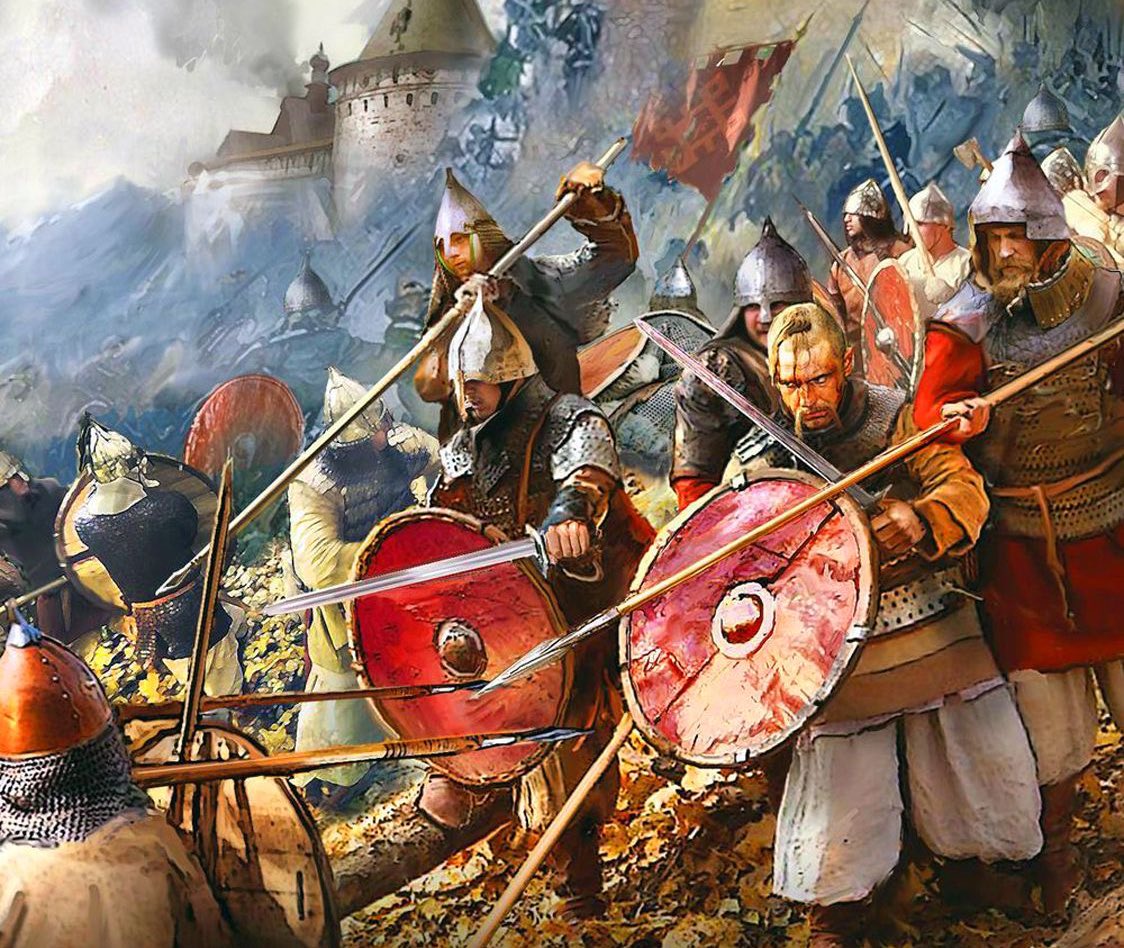
The emperor then marched north, capturing cities on the way, and met the Rus at Dorystolon.
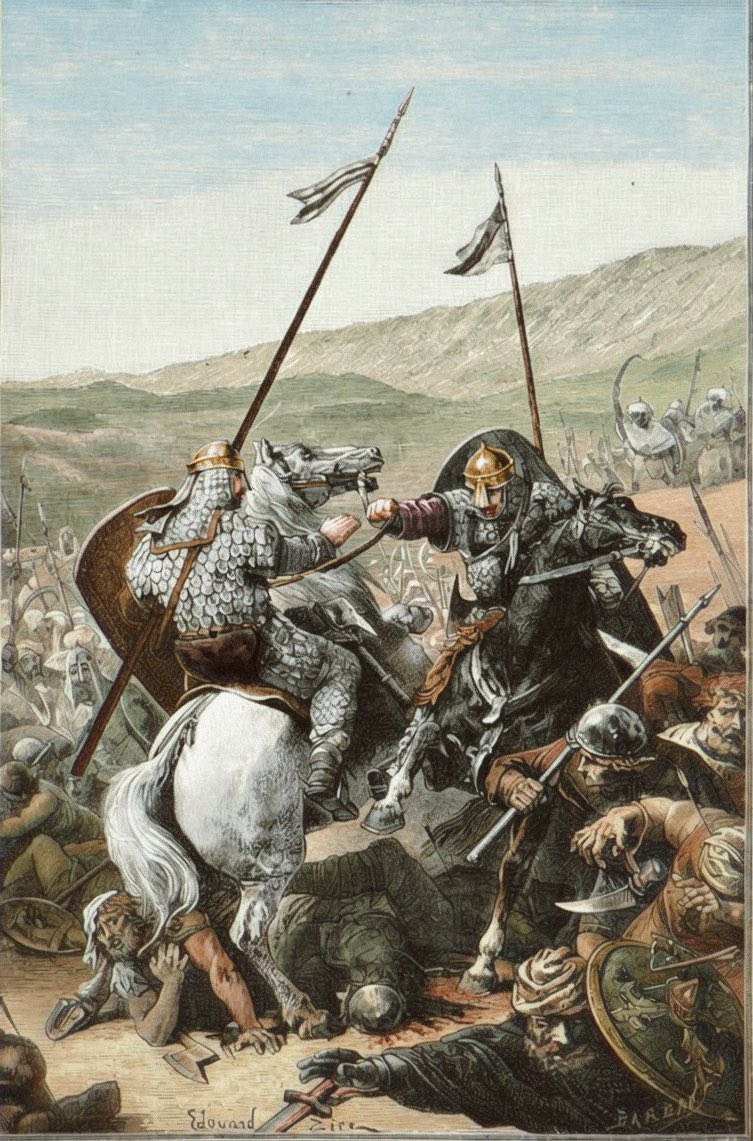
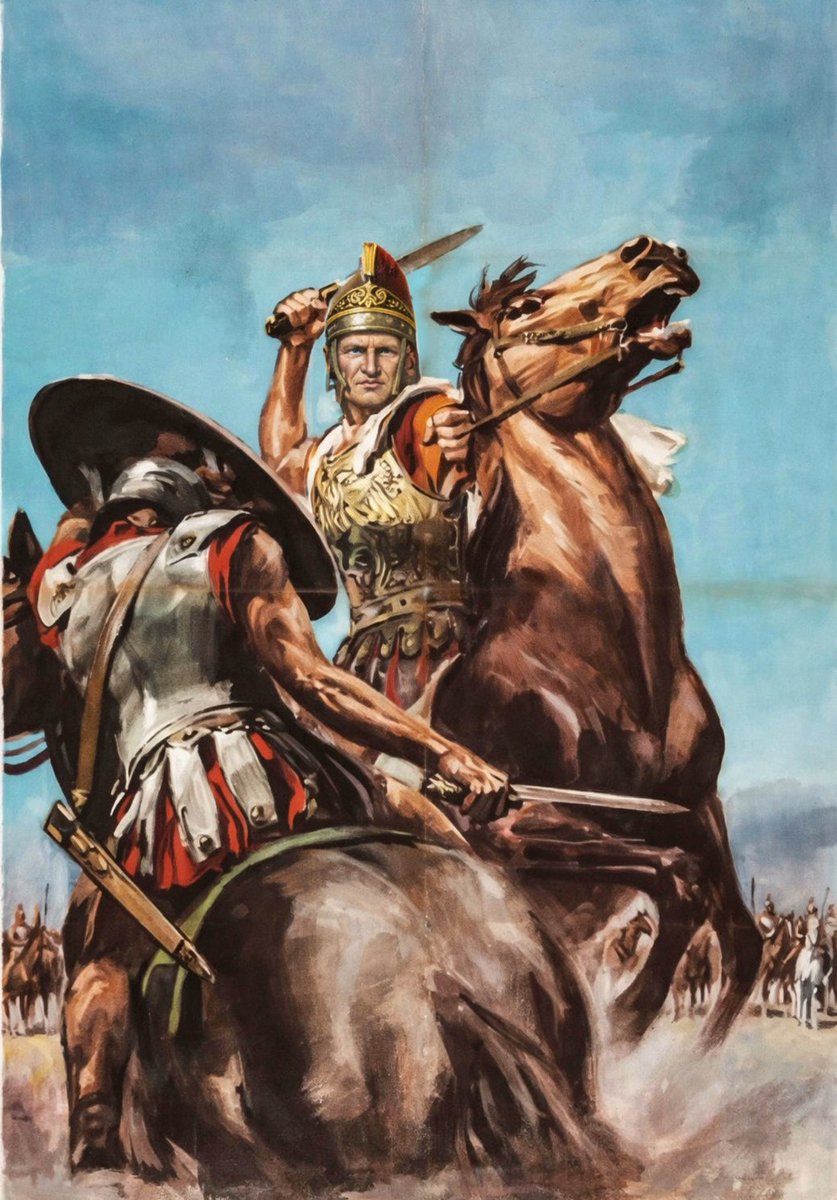
The battle was hard fought and gave rise to the moment of heroism by Anemas, the son of the last emir of Crete who fought in Tzimiskes’ bodyguard:
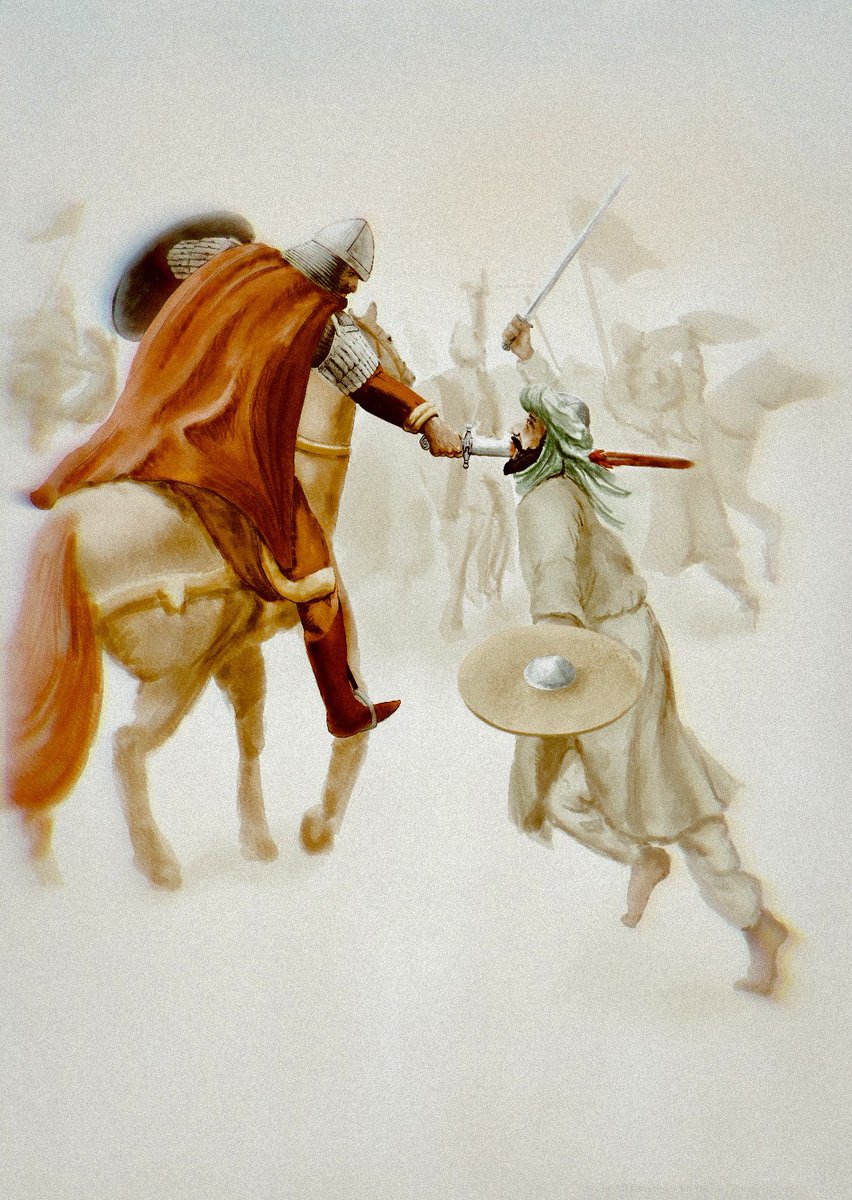
‘Anemas was incited by his innate prowess, and drew his sword which was hanging at his side and turned his horse, and goaded it with his spurs and headed toward Ikmor. And he overtook him and struck him in the neck; and the Scythian’s head and right arm were severed and dashed to the ground. As he fell, a cry mingled with lamentation arose from the Scythians; and the Romans attacked them.’
The Romans won the day and the Rus fled inside Dorystolon and a siege commenced.
The battle was hard fought and gave rise to the moment of heroism by Anemas, the son of the last emir of Crete who fought in Tzimiskes’ bodyguard:
‘Anemas was incited by his innate prowess, and drew his sword which was hanging at his side and turned his horse, and goaded it with his spurs and headed toward Ikmor. And he overtook him and struck him in the neck; and the Scythian’s head and right arm were severed and dashed to the ground. As he fell, a cry mingled with lamentation arose from the Scythians; and the Romans attacked them.’
The Romans won the day and the Rus fled inside Dorystolon and a siege commenced.

While siege engines battered the city, the defenders ran out of food, and their sorties were defeated one by one.
One final battle commenced when the Rus amassed their forces and broke out of the city.
They were defeated again, and tragically when brave Anemas tried to repeat his heroism from the prior battle, he died.
One final battle commenced when the Rus amassed their forces and broke out of the city.
They were defeated again, and tragically when brave Anemas tried to repeat his heroism from the prior battle, he died.
Syatoslav sued for peace and a meeting was arranged between him and Tzimiskes:
‘After the treaties were arranged, Syatoslav asked to come and speak with the emperor. And the Emperor came without delay on horseback to the bank of the Istros, clad in armor ornamented with gold, accompanied by a vast squadron of armed horsemen adorned with gold. Syatoslav arrived sailing along the river in a Scythian light boat, grasping an oar and rowing with his companions’
The Rus swore never to attack the Romans and were given food and freedom to leave. On their way home, they were attached by the Pechenegs raiders and Syatoslav was killed.
‘After the treaties were arranged, Syatoslav asked to come and speak with the emperor. And the Emperor came without delay on horseback to the bank of the Istros, clad in armor ornamented with gold, accompanied by a vast squadron of armed horsemen adorned with gold. Syatoslav arrived sailing along the river in a Scythian light boat, grasping an oar and rowing with his companions’
The Rus swore never to attack the Romans and were given food and freedom to leave. On their way home, they were attached by the Pechenegs raiders and Syatoslav was killed.

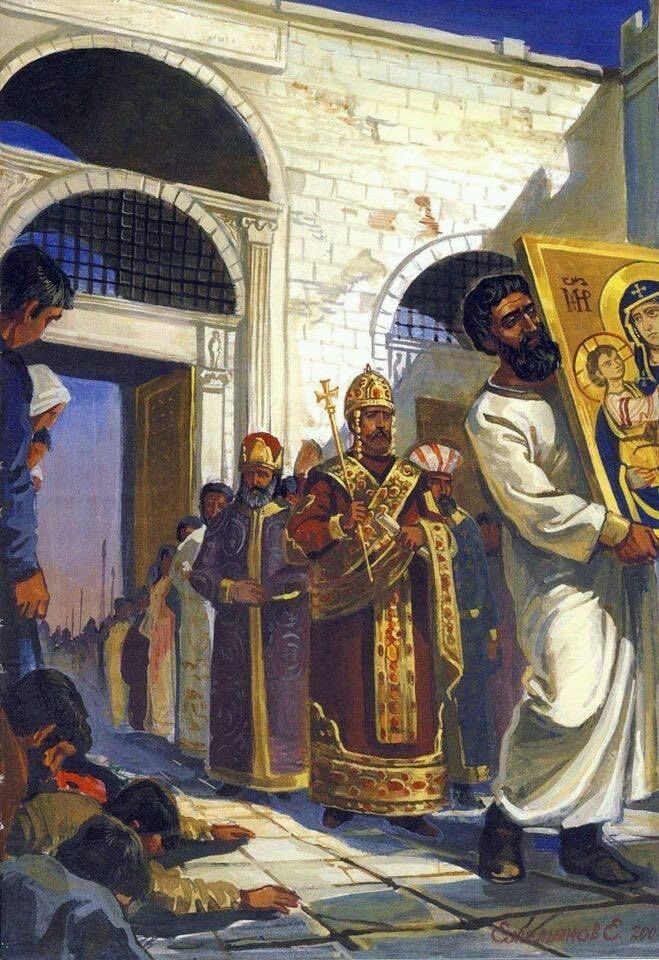
In Constantinople Tzimiskes celebrated a Triumph but yielded his place on the chariot to an icon of Mary, and humbly walked alongside it.
Also featured were Boris and the Bulgarian royal family. Boris was officially divested of his imperial regalia and his lands were officially annexed.
Also featured were Boris and the Bulgarian royal family. Boris was officially divested of his imperial regalia and his lands were officially annexed.

• To The East •
The death of the emir of Aleppo meant that Syria was vulnerable to attack. Aleppo itself had already been reduced to client status.
At this point, the Fatimids had just conquered Egypt and decided to intervene in Syria.
In 979 they sent an army under Ja’far to secure Palestine and Damascus before attacking Roman-held Antioch.
The death of the emir of Aleppo meant that Syria was vulnerable to attack. Aleppo itself had already been reduced to client status.
At this point, the Fatimids had just conquered Egypt and decided to intervene in Syria.
In 979 they sent an army under Ja’far to secure Palestine and Damascus before attacking Roman-held Antioch.

Tzimiskes immediately sent an army to defeat Ja’far and the Fatimids were then pushed out of Syria when they were defeated by the Qarmatians, a rival Muslim power.
In 971 he banned the export of arms and lumber to the Muslims and required the Venetians to do the same, in preparation for his own excursion.
In 971 he banned the export of arms and lumber to the Muslims and required the Venetians to do the same, in preparation for his own excursion.

In 972 he attacked!
He left Melitene in September and invaded Mesopotamia, capturing Nisibis in October.
He plundered, burned and massacred while refusing to leave until Abu Taghlib, the Hamdanid emir of Mosul, paid tribute.
Then he moved to Mayyafariqin but withdrew when he failed to take the city. He left orders for his eastern commanders to continue what by now was the standard procedure: raid, burn, and extort.
He left Melitene in September and invaded Mesopotamia, capturing Nisibis in October.
He plundered, burned and massacred while refusing to leave until Abu Taghlib, the Hamdanid emir of Mosul, paid tribute.
Then he moved to Mayyafariqin but withdrew when he failed to take the city. He left orders for his eastern commanders to continue what by now was the standard procedure: raid, burn, and extort.

In 975 Tzimiskes marched to the east again.
He headed for Baalbeck (Heliopolis) which he captured after defeating Alp Takin, the general who had control of Damascus.
He then moved to Damascus which submitted and offered a large payment.
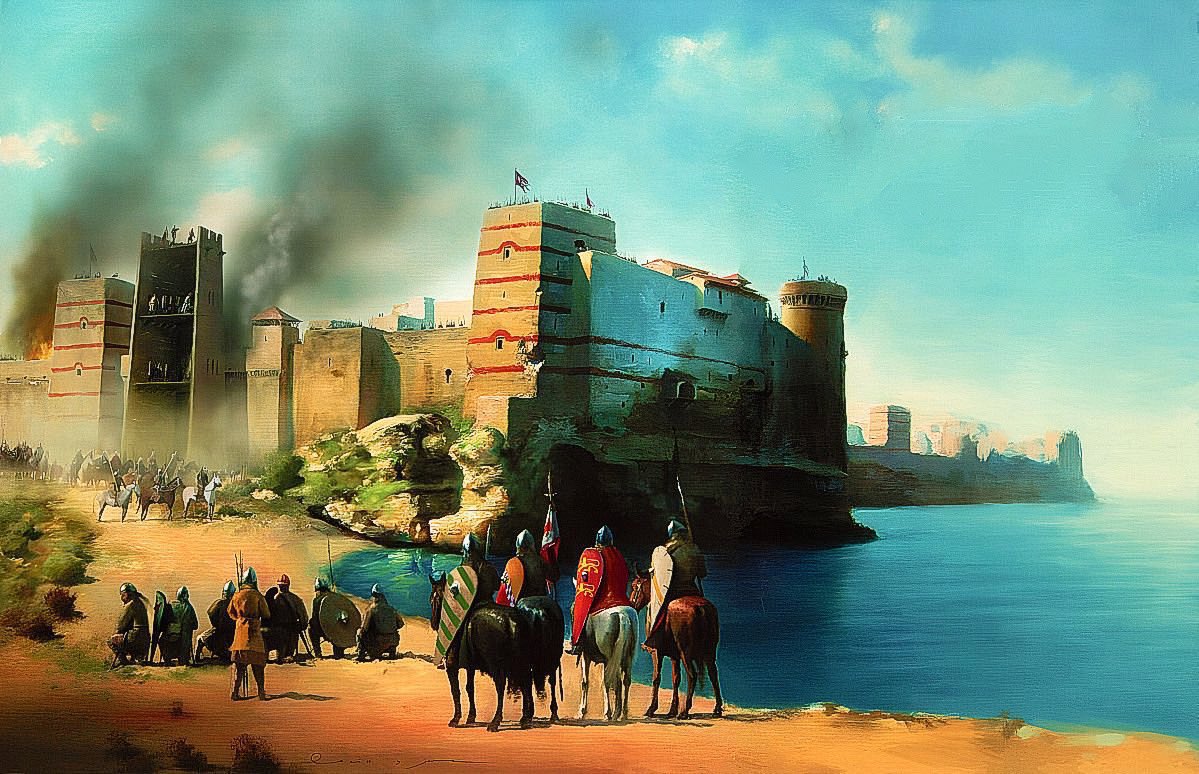
The emperor then moved to besiege Beirut, capturing forts on the way. The leaders of Sidon came to him at the siege of Beirut to offer submission. Then Beirut surrendered.
Tzimiskes took Byblos but failed to take Tripolis but plundered and burned the area around it before returning home.
His campaign, which involved very few battles, demonstrated the strength of the empire and the weakness of the Muslim states in the Levant.
He headed for Baalbeck (Heliopolis) which he captured after defeating Alp Takin, the general who had control of Damascus.
He then moved to Damascus which submitted and offered a large payment.
The emperor then moved to besiege Beirut, capturing forts on the way. The leaders of Sidon came to him at the siege of Beirut to offer submission. Then Beirut surrendered.
Tzimiskes took Byblos but failed to take Tripolis but plundered and burned the area around it before returning home.
His campaign, which involved very few battles, demonstrated the strength of the empire and the weakness of the Muslim states in the Levant.
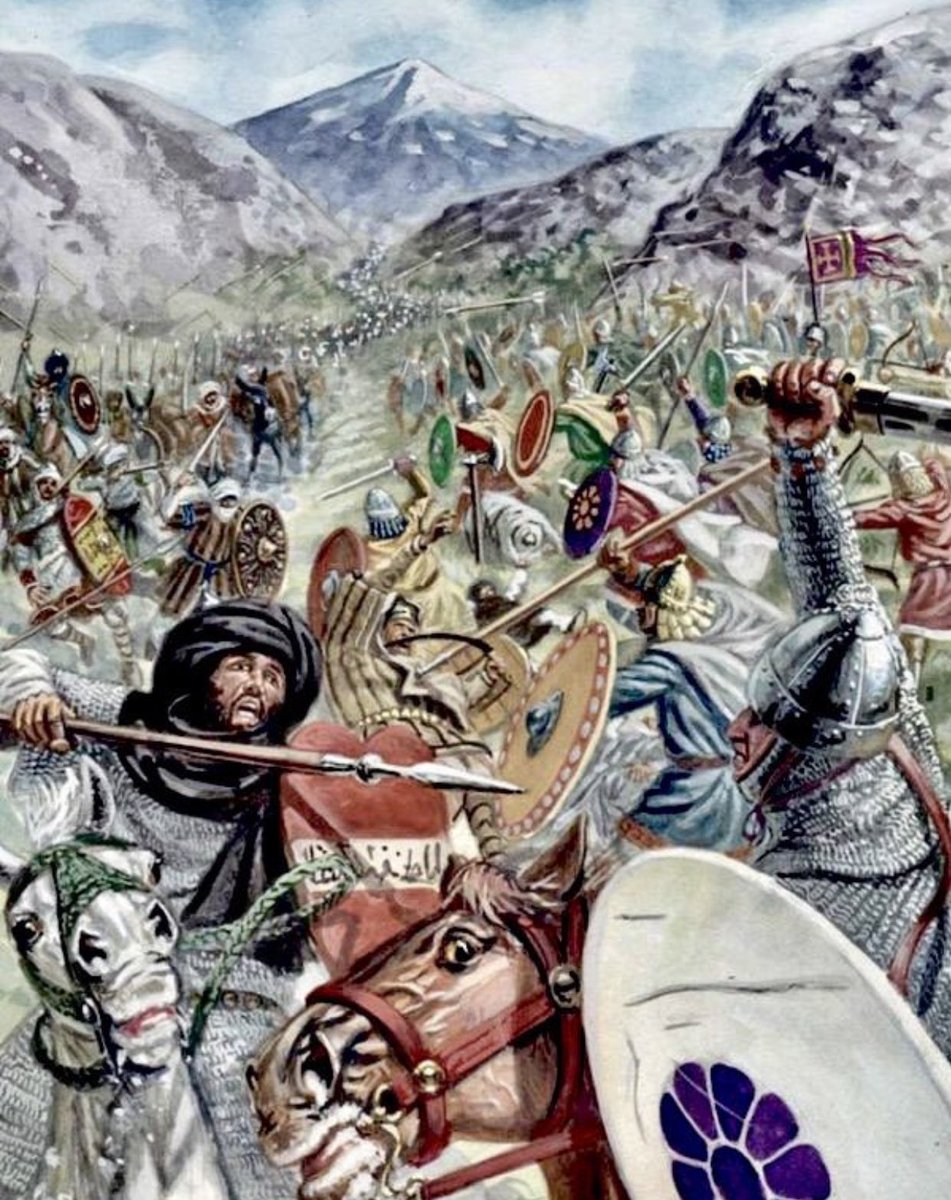
In January 976 he arrived in Constantinople barely able to breathe and died on the 11th. The cause of his sudden sickness is unknown.
He had ruled for six years, submitted the Bulgars, the Rus, and many great cities of the east.
His reign is a testament to both his own might and the resurgence of the Roman Empire in the 10th century, which had gone from paying off Muslim armies to invading unopposed at-will and demanding submission and tribute.
He was 51 years old, and was succeeded by the young Basil II, later known as the Bulgar Slayer.
He was one of the boldest men of all of history!
He had ruled for six years, submitted the Bulgars, the Rus, and many great cities of the east.
His reign is a testament to both his own might and the resurgence of the Roman Empire in the 10th century, which had gone from paying off Muslim armies to invading unopposed at-will and demanding submission and tribute.
He was 51 years old, and was succeeded by the young Basil II, later known as the Bulgar Slayer.
He was one of the boldest men of all of history!

• • •
Missing some Tweet in this thread? You can try to
force a refresh