Excerpts from "Downfall: The End of the Imperial Japanese Empire." (1999) 

Unconditional surrender was publicly adopted as a war goal in Jan 1943, with the idea of preventing WWIII, as many Germans, including Hitler, thought Germany had not been beaten militarily in WWI and as such wanted to fight WWII. This caused trouble later.


(My opinion, not in the book, is that demanding true unconditional surrender was a mistake. Eisenhower wanted to publicly guarantee law, order, and property, because many German units resisted to the end out of fear. Since the US was going to respect those, should have said so.)
One of the issues with actually getting Japan to surrender: the incredible bravery. Per a British officer in Burma, "nearly every Japanese would have had a Congressional Medal [of honor] or a Victoria Cross." Surrenders were rare and often wounded, with many false surrenders.
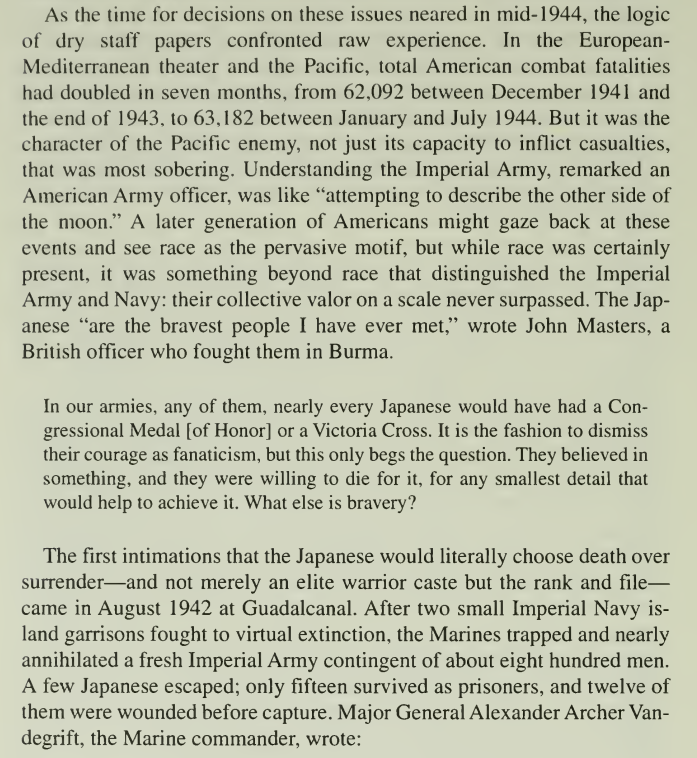
97-98% fatality rates were common in defeated Japanese garrisons in the Pacific. At Saipan, half of the 20,000 Japanese *civilians* present were thought to have committed
suicide, which shocked the Americans (the true number of suicides may have been only 1000).
suicide, which shocked the Americans (the true number of suicides may have been only 1000).
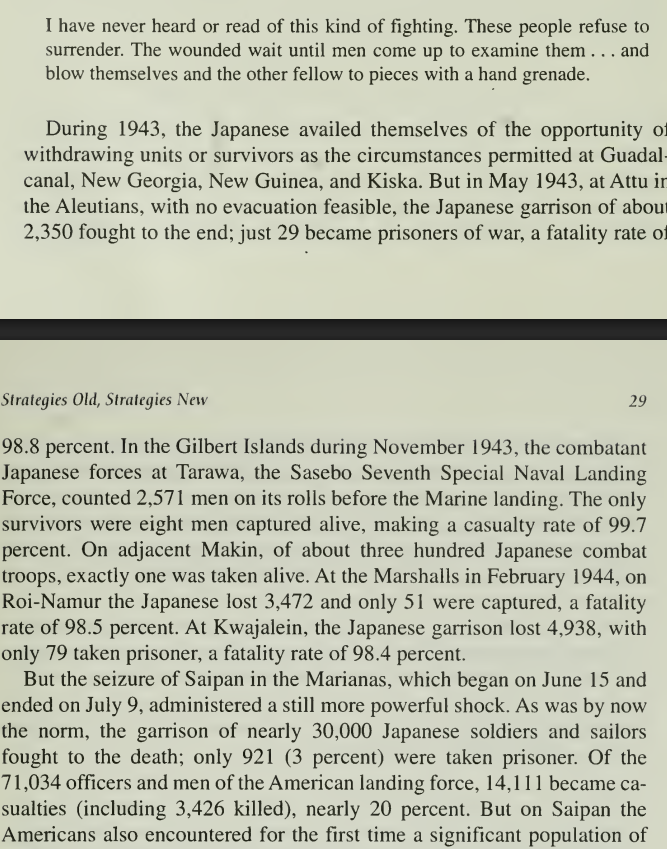

Joint Chiefs estimated 500,000 US combat deaths in the invasion of Japan based on the usual ration for Pacific Island fighting. I think this would have been an underestimate; the Japanese had tens of thousands of kamikazes prepared, which they did not at most Pacific Islands.
Joint Chiefs wanted Soviet entry to make sure the Kwantung Army stayed away from the invasion beaches. Stalin effectively demanded, and got, a reversal of the Russo-Japanese war as his price, though FDR conditioned the Chinese concessions on KMT concurrence.
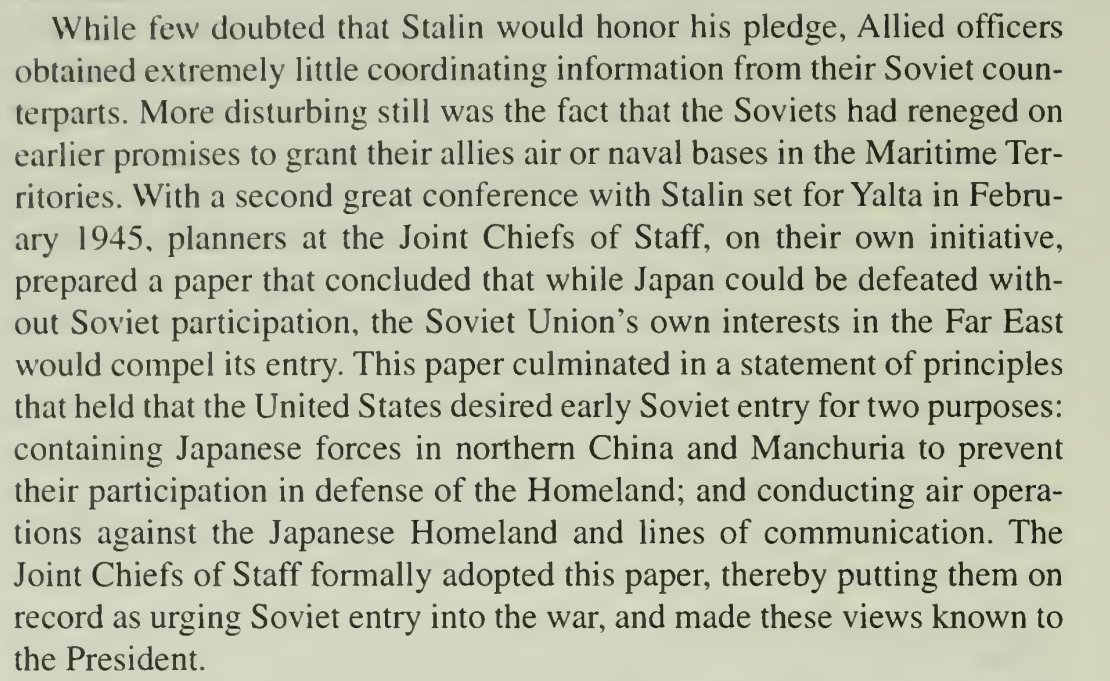
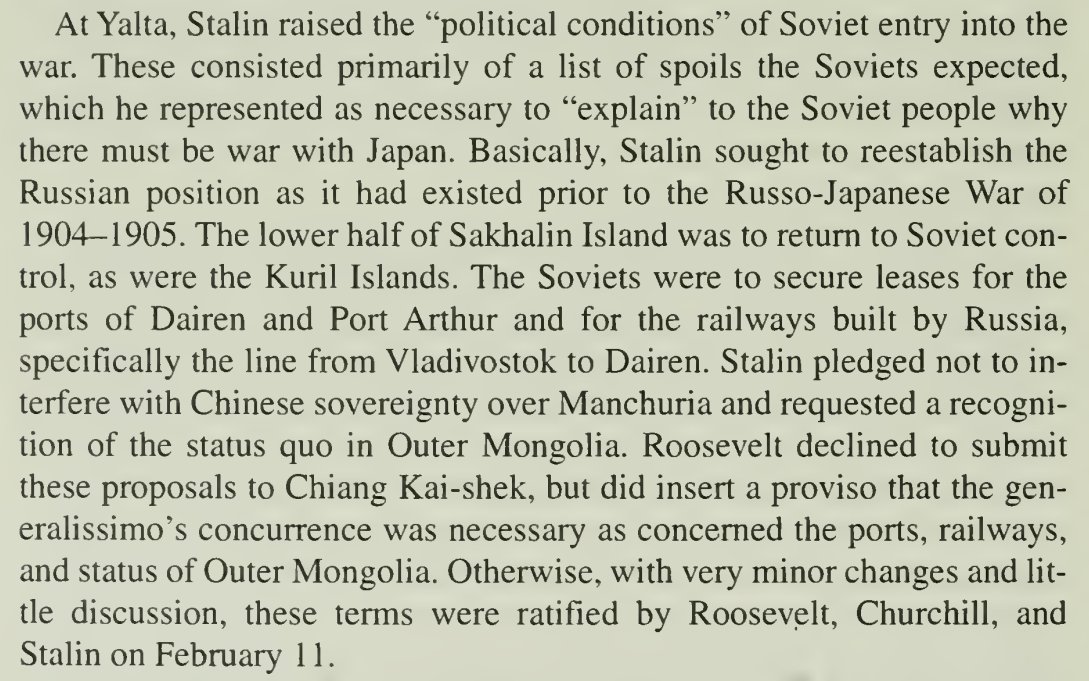
Later, the Joint Chiefs realized they could blockade the Home Islands effectively enough to isolate the Kwantung Army, rendering Soviet assistance unnecessary. They projected the war to end in 1946, either in June (via invasion) or fall (via blockade and bombardment).

Germany and Japan first established the legitimacy of attacking civilians from the air to break morale. Guernica was a mistake (and greatly exaggerated by Republican propaganda), but Warsaw, Rotterdam, and Chungking were not.

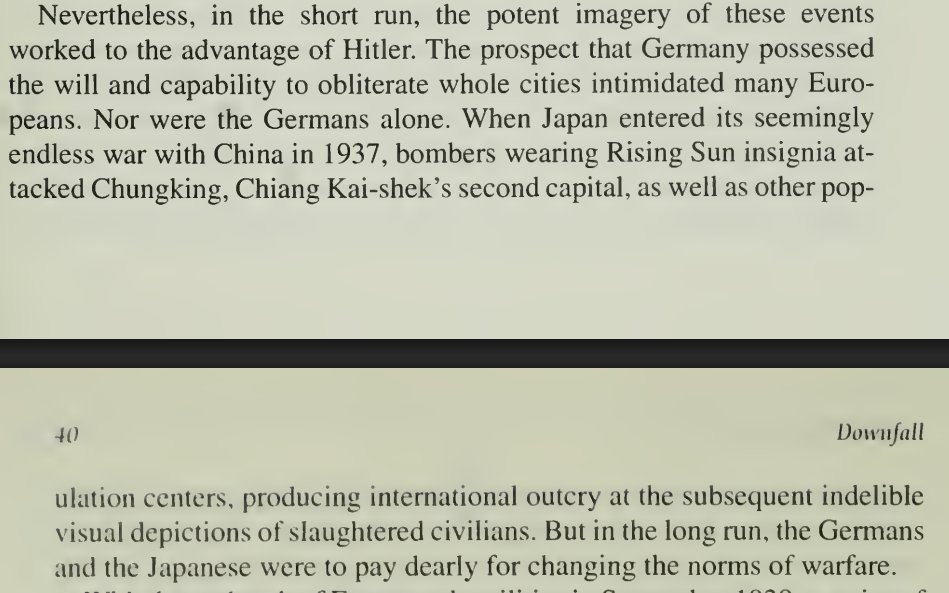
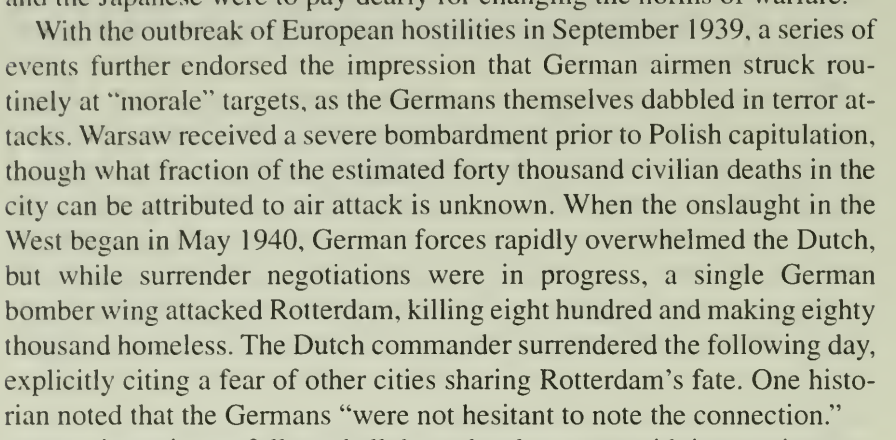
USAAF doctrine was to attack industrial targets, but the extremely high loss rates doing this reliably required led to trading precision for safety. V-attacks on London led to the British seriously planning mass extermination of German cities, but were veto'd by the Americans.
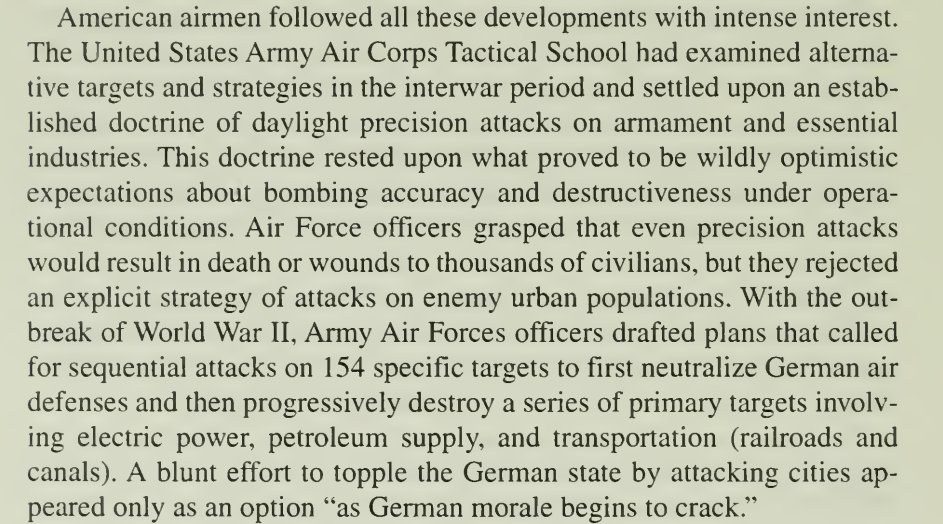
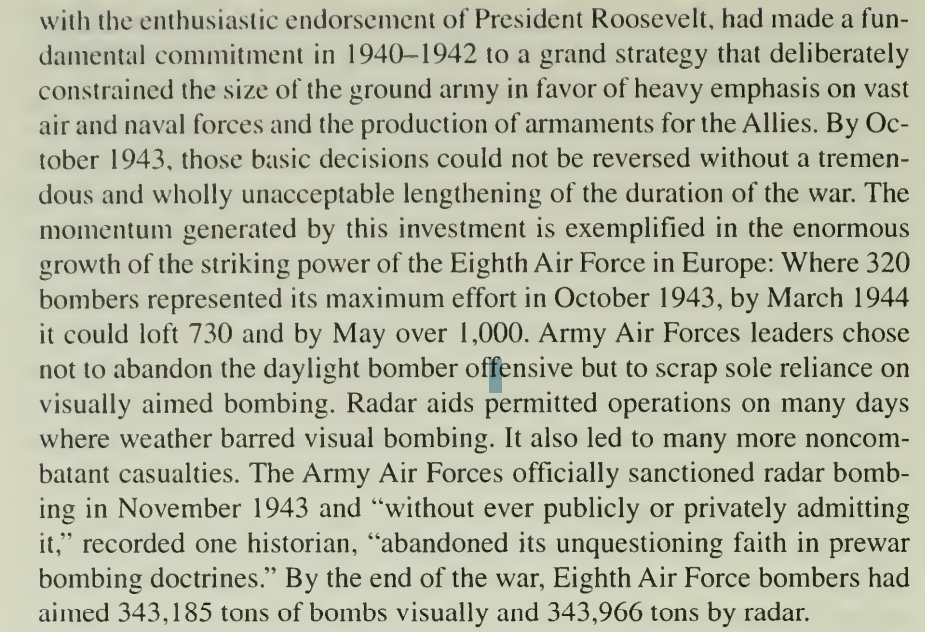
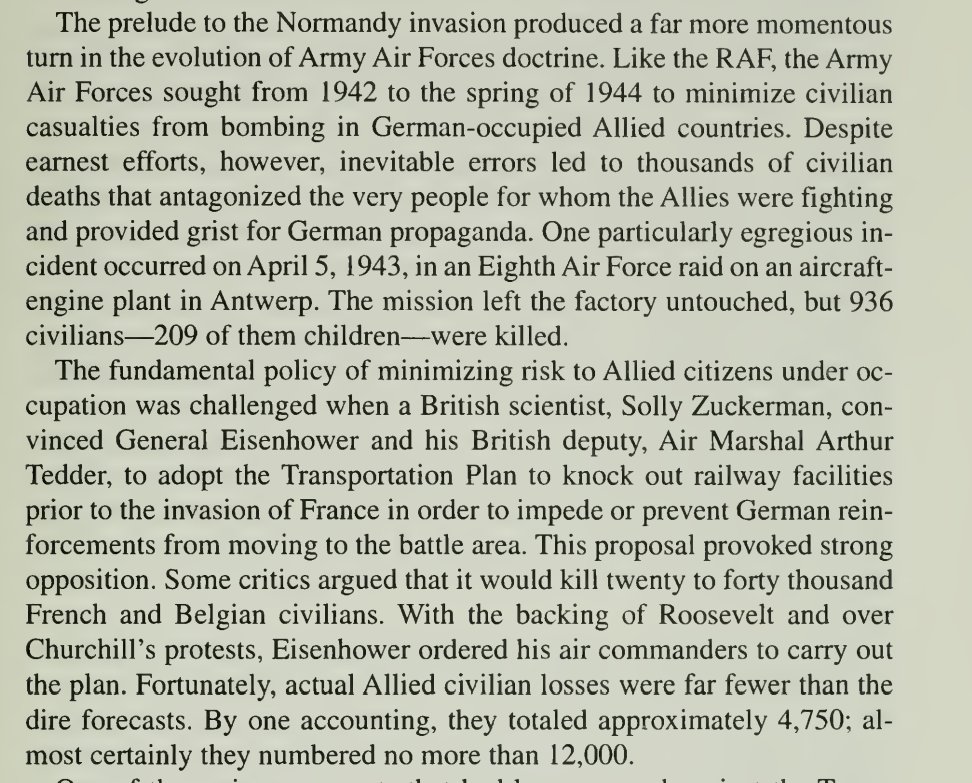
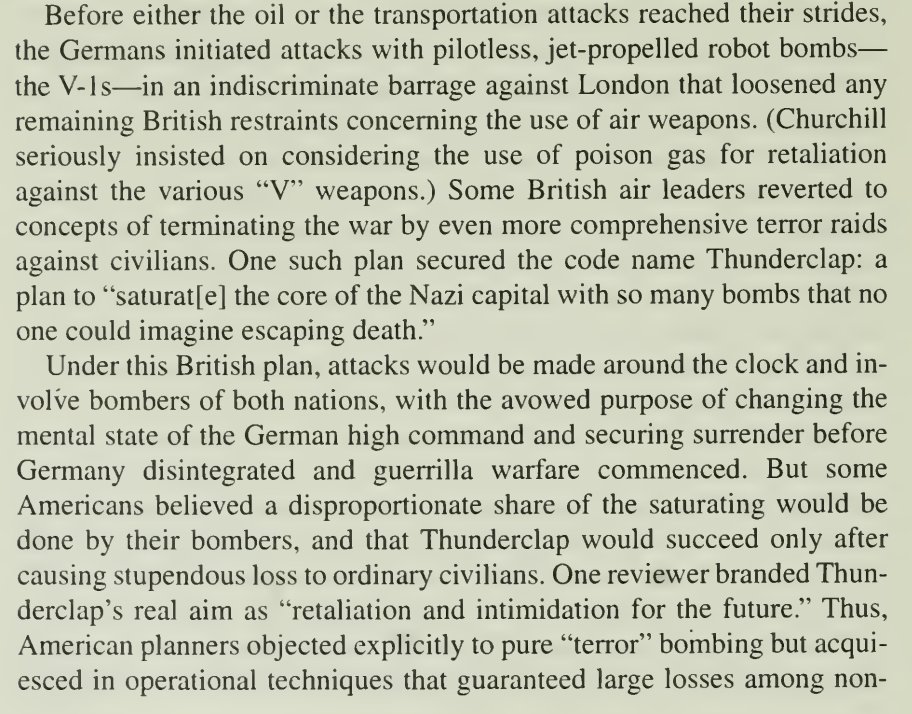
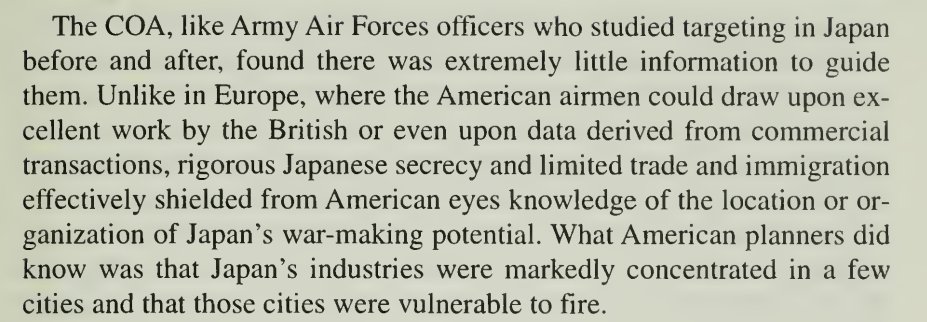
Unlike in Germany, where the British identified countless targets, US knowledge of Japan was very limited, in part because of lack of immigration to Japan. This meant the air force knew targets were concentrated in certain very flammable cities, and not much more.
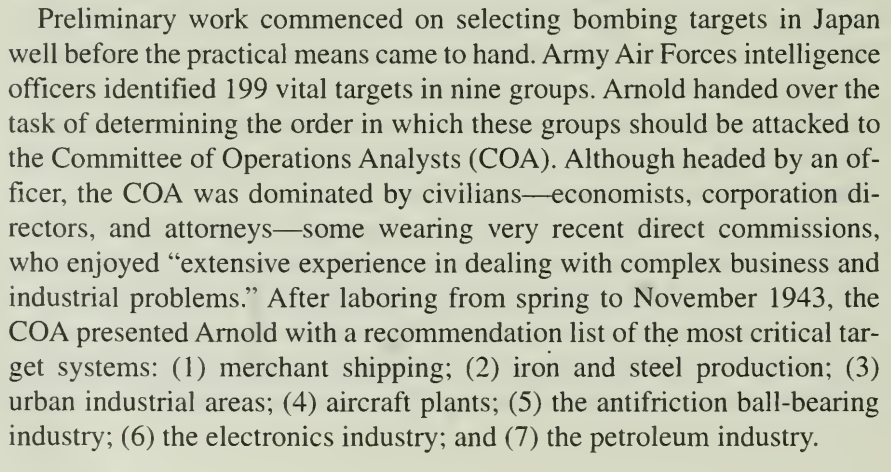

After two months of significant losses and complete ineffectiveness of the (extremely expensive) B-29 force, LeMay decided to switch to incendiary city bombing. The first trial, a small-scale one to support Iwo Jima landings, was extremely successful.

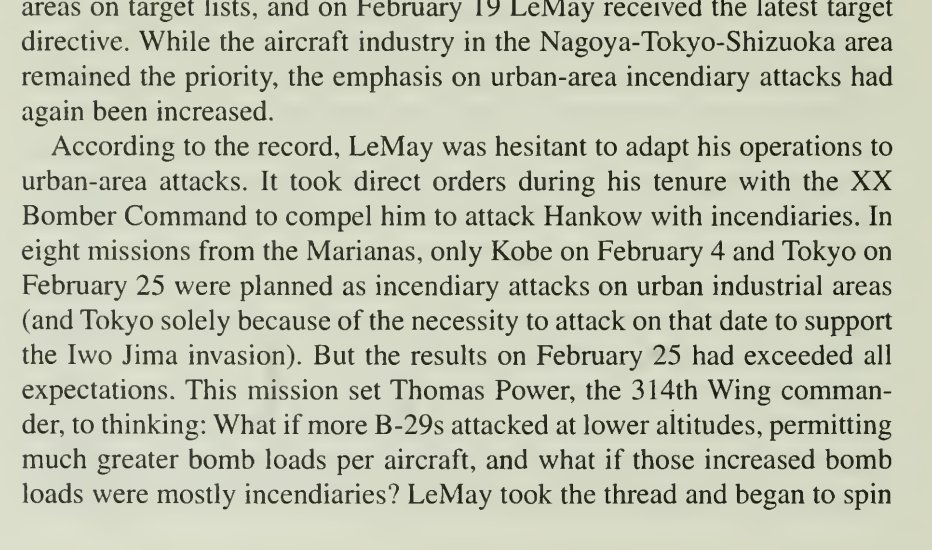
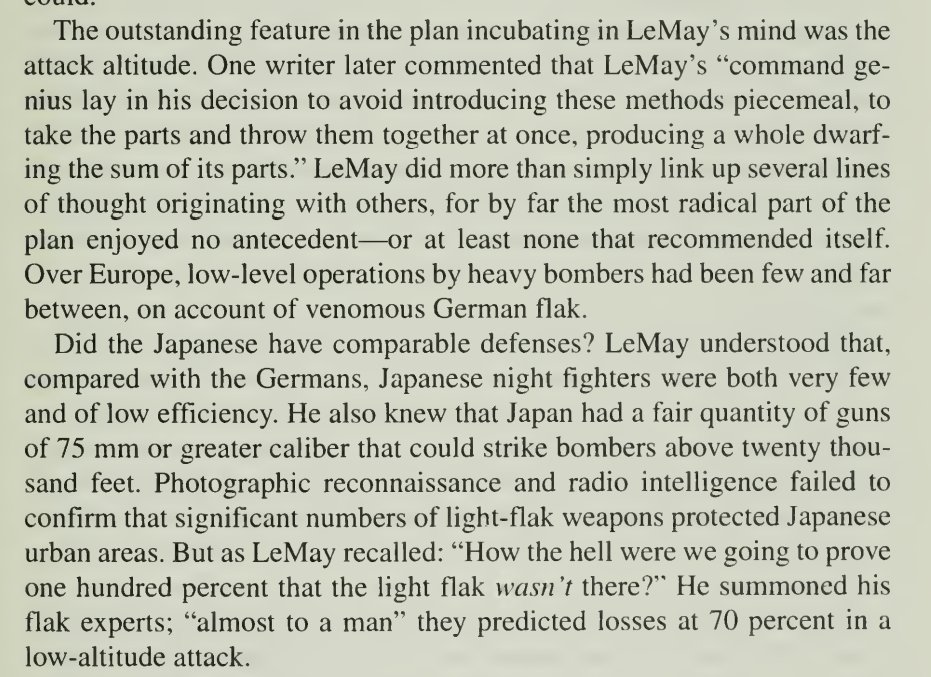
LeMay combined the following insights: Japan had extremely weak night-time defenses vs Germany, which would allow the B-29s to attack at low level and be both more accurate and carry much larger bomb loads at night *and* ditch the heavy defensive armament for more bombs.
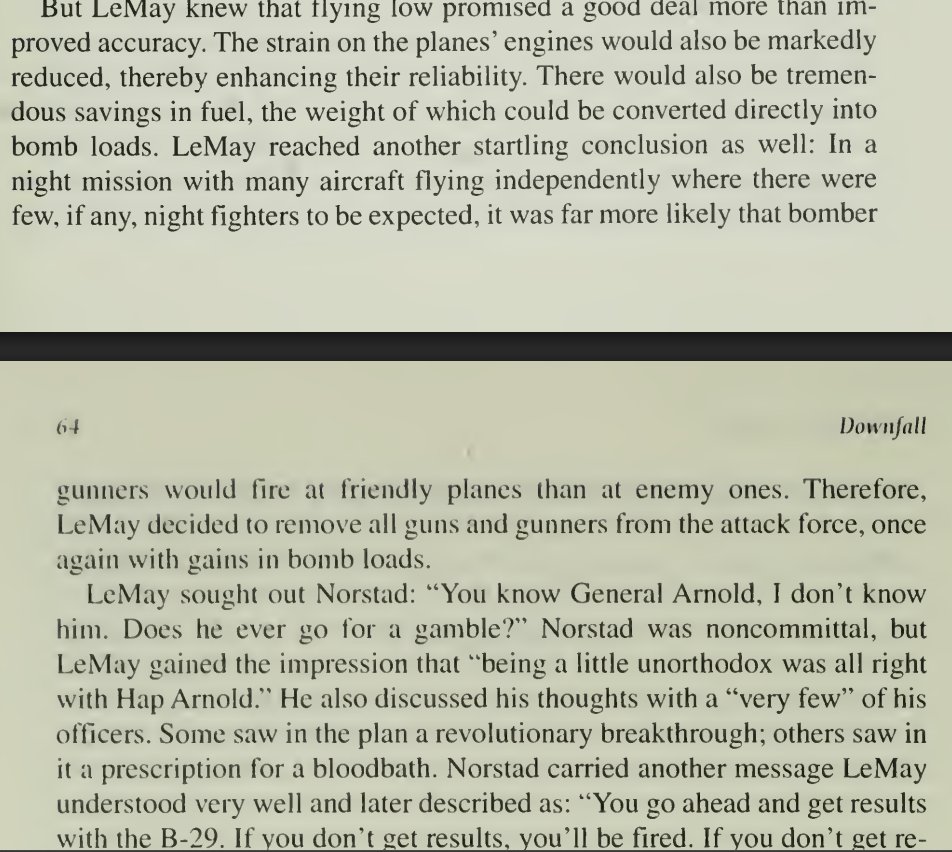
Unlike in Europe, LeMay couldn't lead the missions personally because he knew about the atomic bomb and couldn't risk capture.he
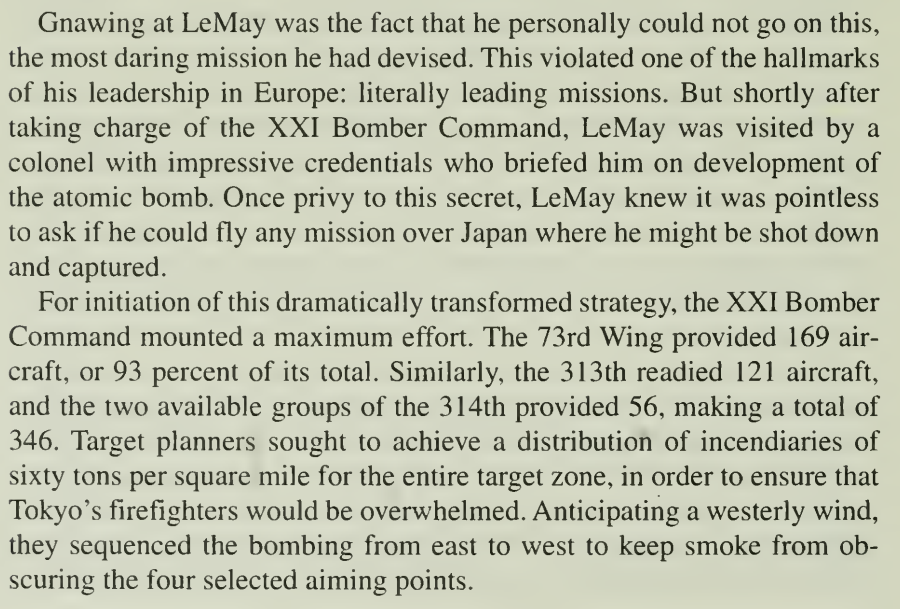
The incendiary city bombing campaign against 6/7 of Japan's biggest cities (Kyoto excepted) was successful, devastating Japan's aircraft industry (and the Emperor's palace, which mattered psychologically) at the cost of 126,762 Japanese civilians.

Still more effective than the incendiary raids was the aerial mining of Japanese ports. Even aside from the Southern Resource Area, 88% of Japanese iron came from the Asian mainland and 2/3-3/4 of internal Home Islands transportation was seaborne. 13K mines were used.


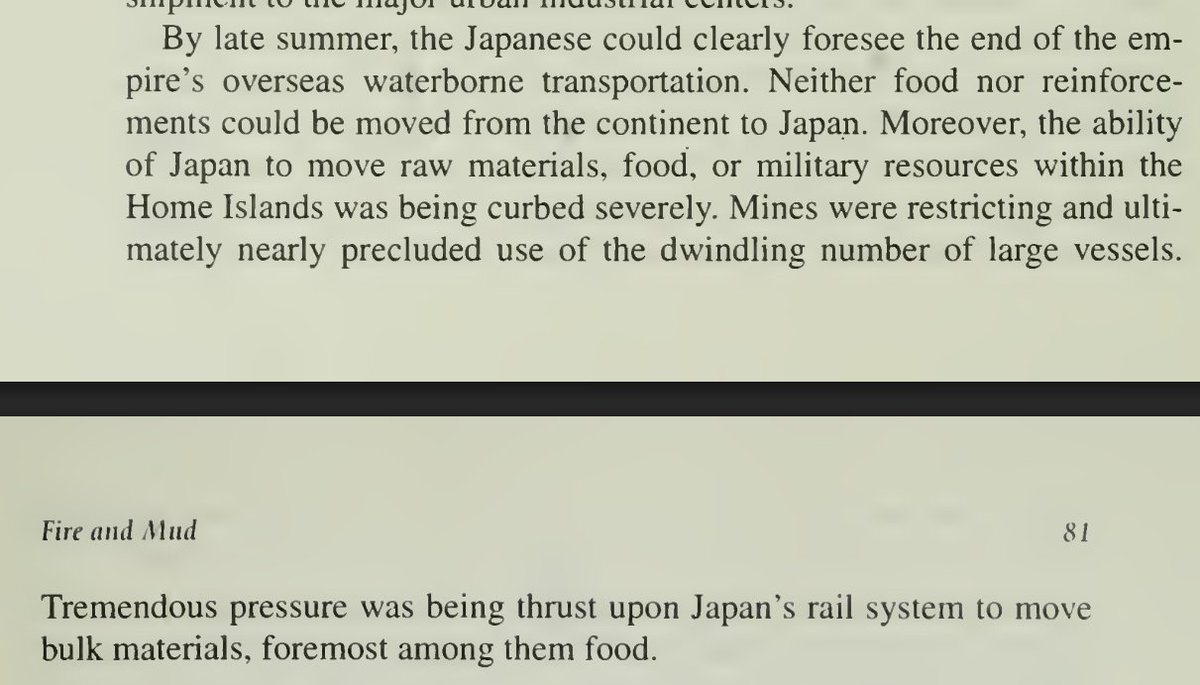
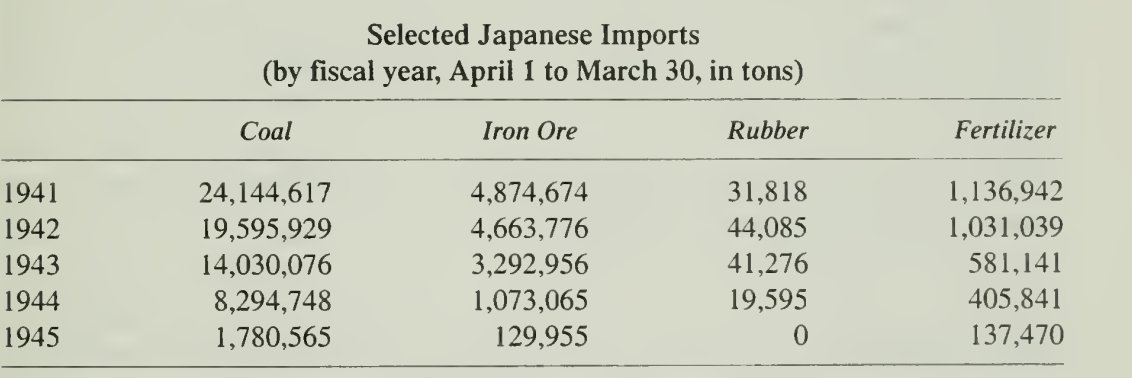
Japanese imports over time. By July 1945, Japanese production was half or less than its 1944 peak in critical areas. Aircraft production in particular, one of the major targets of the incendiary campaign, collapsed.
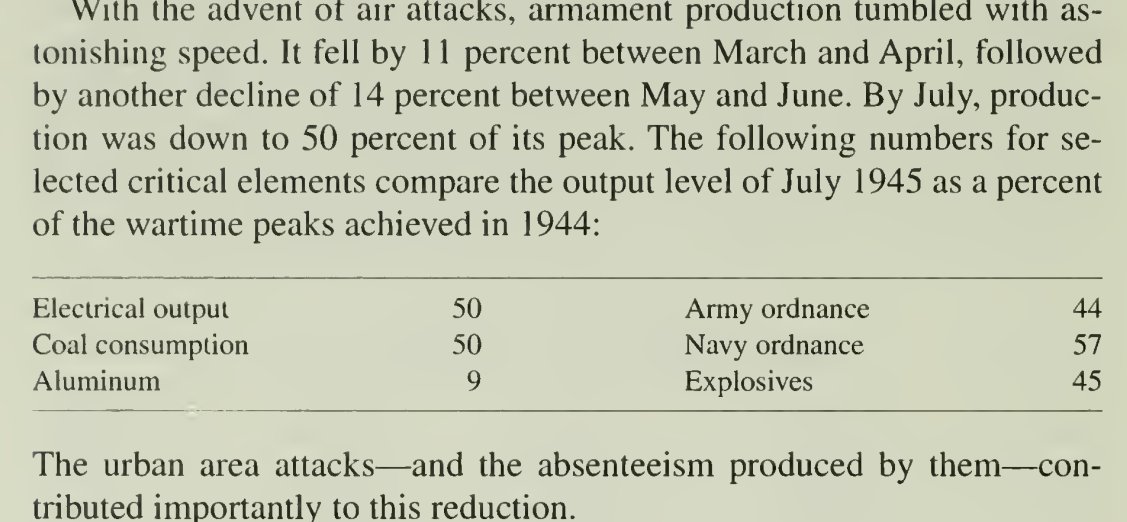

In 1945, Imperial General Headquarters still thought they had a shot. Blockade and bombing or no, they occupied massive territories containing hundreds of millions in Asia, and Japan was awful terrain for mechanized warfare and hence a US invasion.
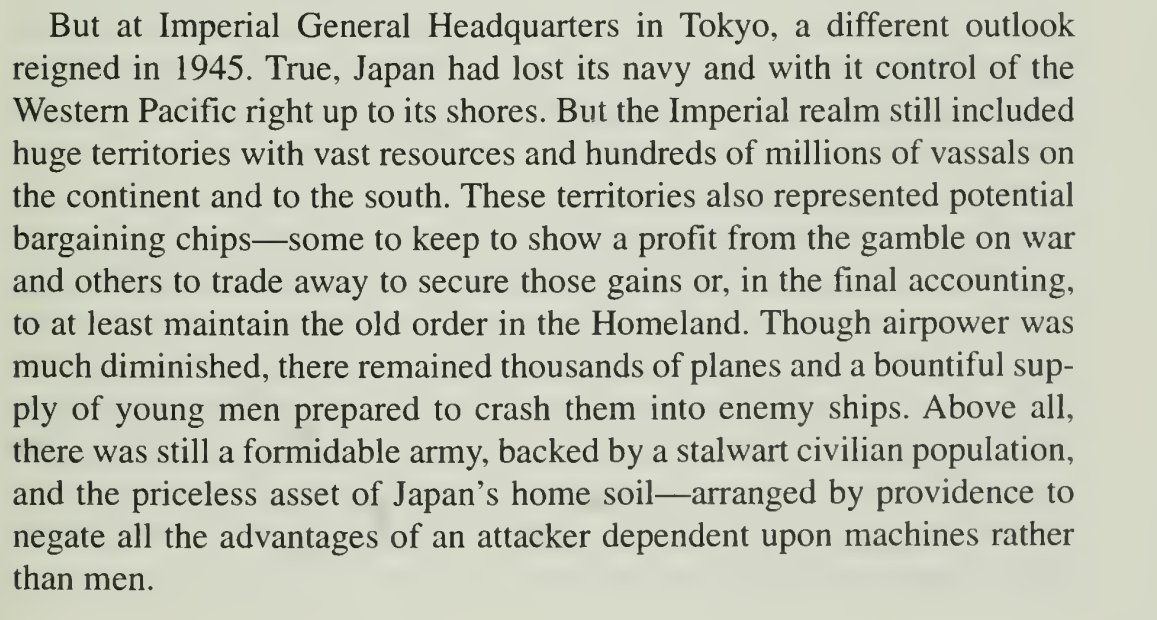

To defend Japan, millions of Japanese were mobilized into the Army in February, with the plan being ~3M defenders.


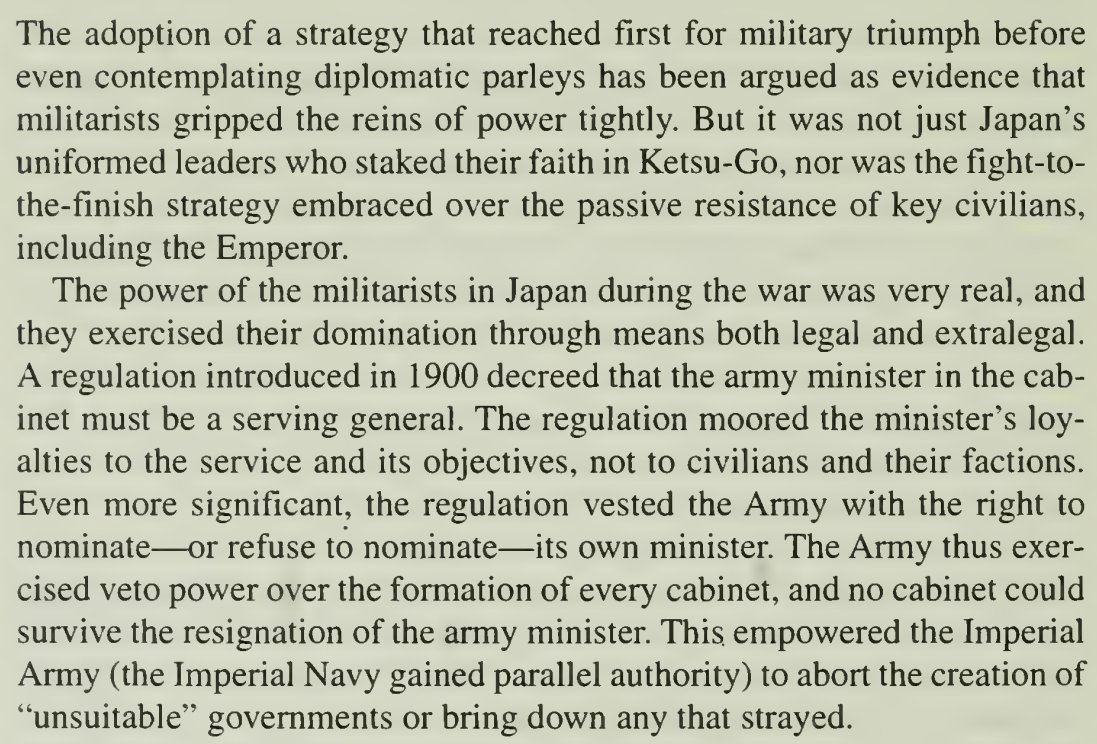
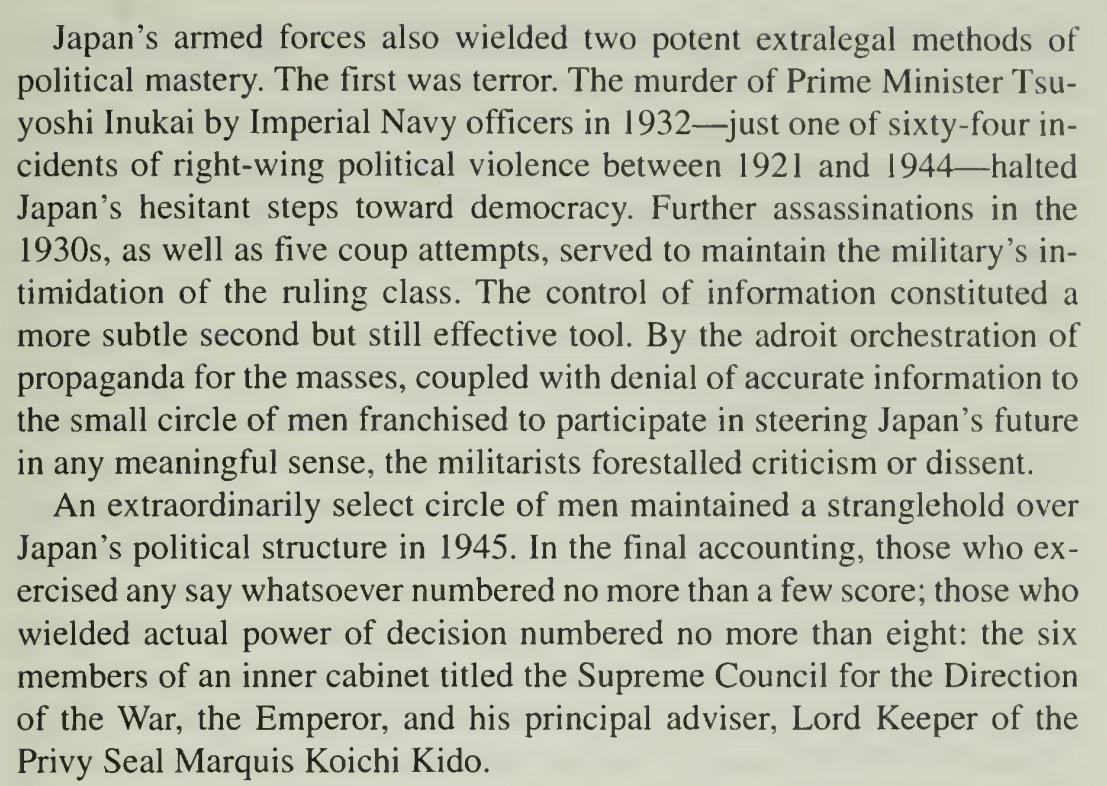
The structure of the Japanese govt let both the Army and Navy collapse civilian govts by refusing to nominate their own minister. They also made heavy use of both assassination and censorship to head off dissent; the total number of people with power in Japan in 1945 was ~8.
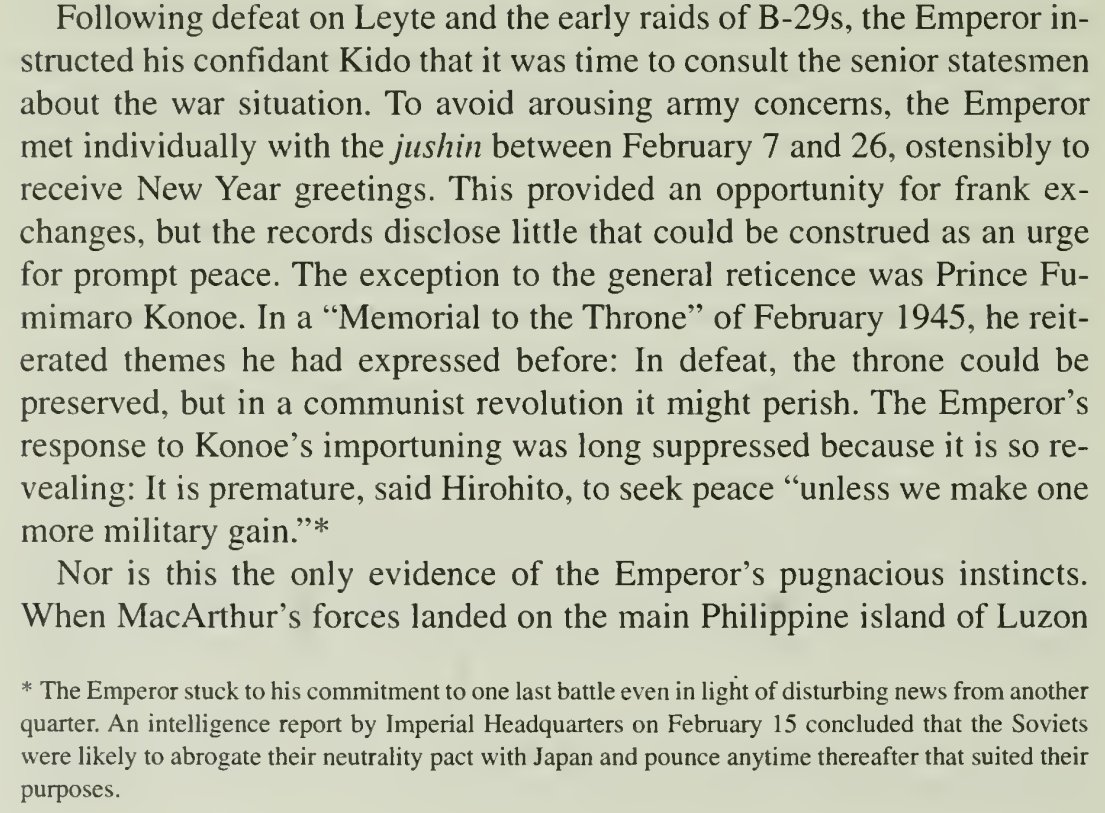
Two schools of thought on why Hirohito took so long to decide to surrender. School 1: he was always in charge, and changed his mind. School 2: he never really had more than symbolic power, like the British monarch. Both wrong. In Feb 1945, he still didn't want peace without a win.

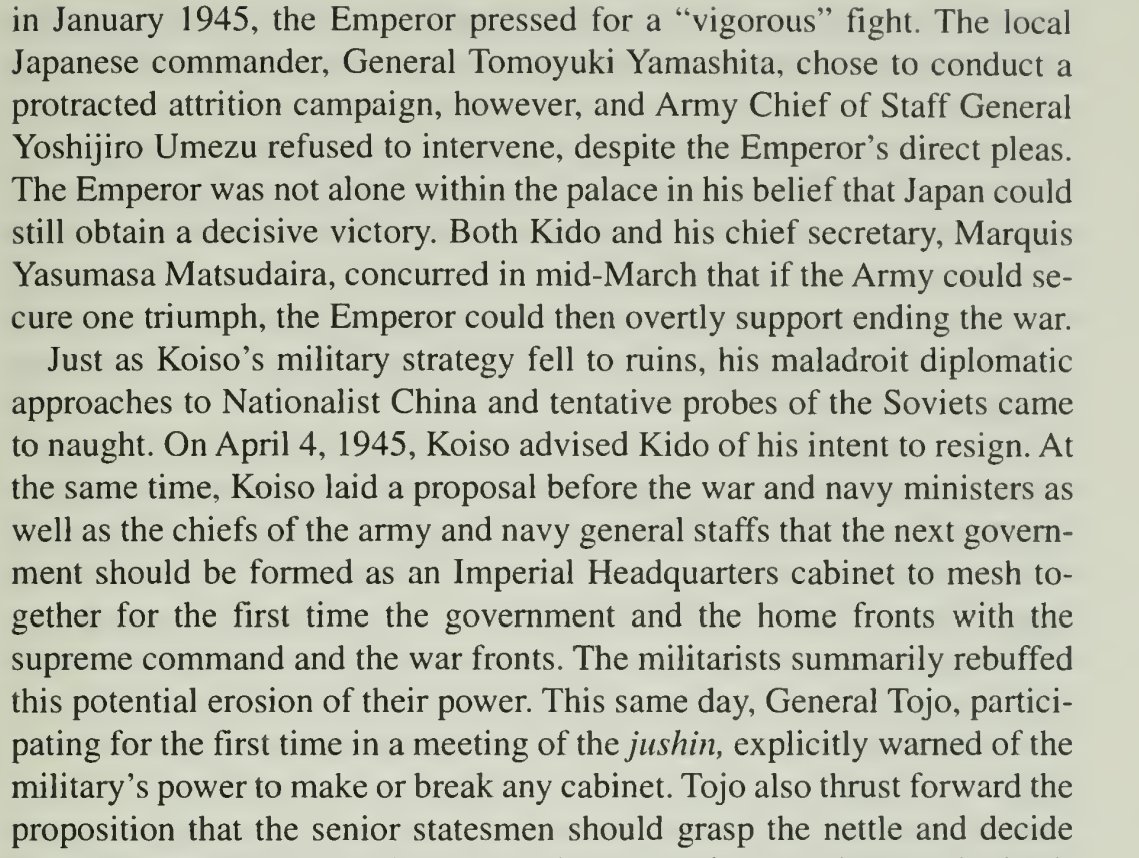
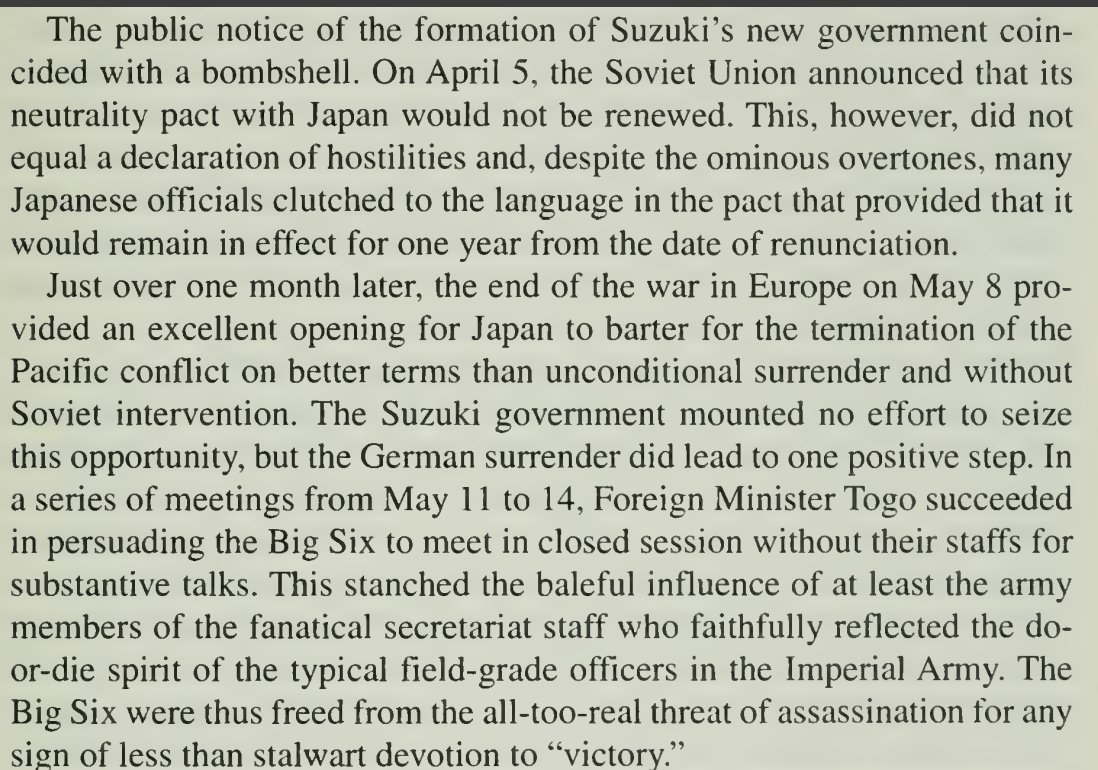
V-E day and the Soviet refusal to renew the nonaggression pact offered a chance to surrender, perhaps with better terms than "unconditional." Suzuki, the Japanese head of govt, didn't try to take it.
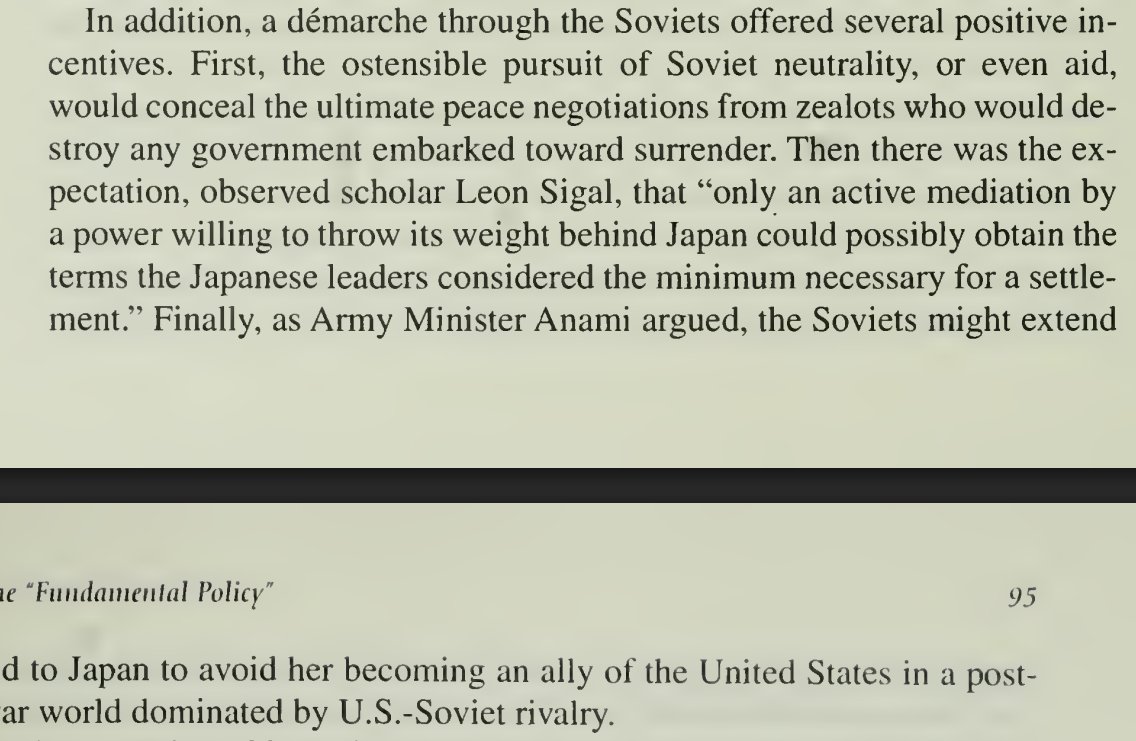
May 1945: the Japanese govt emphasizes they hadn't lost and decided to trust in Soviet mediation. The Pope, the main alternative, was rejected for being too anti-war. Army Minister Anami thought the Soviets might help to keep postwar Japan out of the Western bloc.


June 6 1945: The Japanese govt, including the Emperor, decides to fight to the death, in the hopes that Soviet mediation, occupation of much of Asia, and beating a US invasion could salvage a negotiated peace. Only the foreign minister dissents.

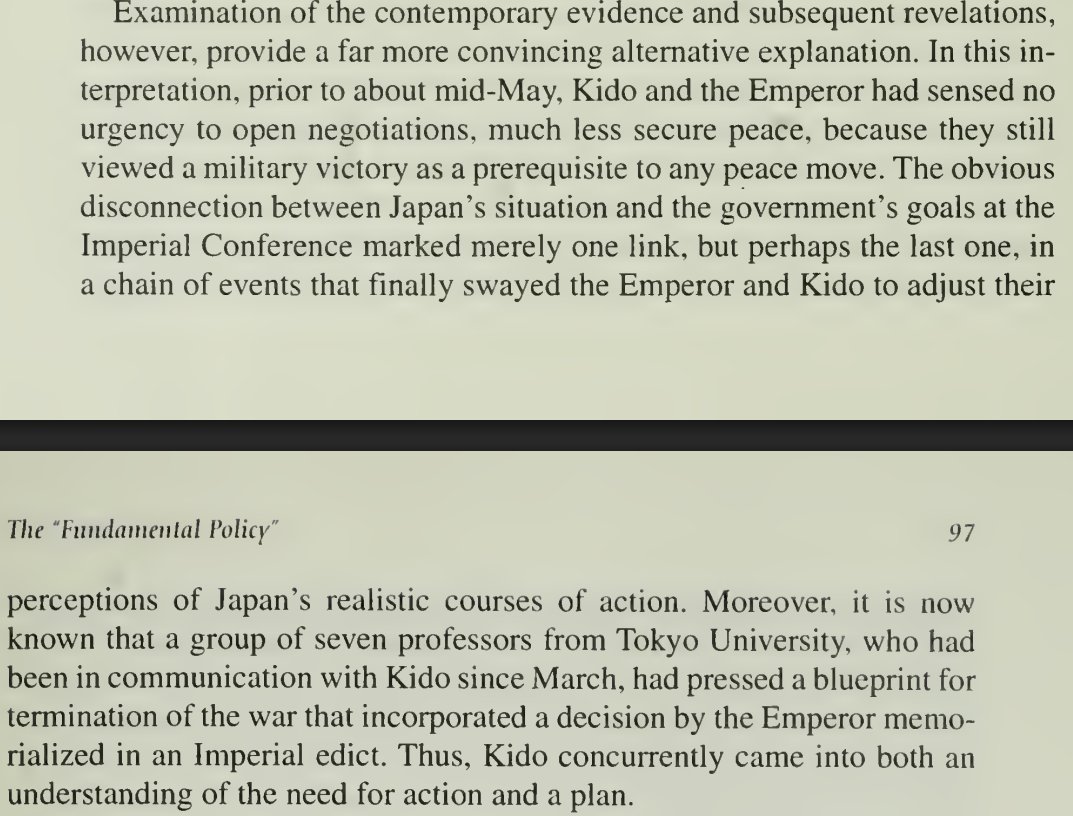
Kido's envisioned peace terms, with imperial approval: disarmament, but no occupation, and independence for all occupied European colonies during the war.

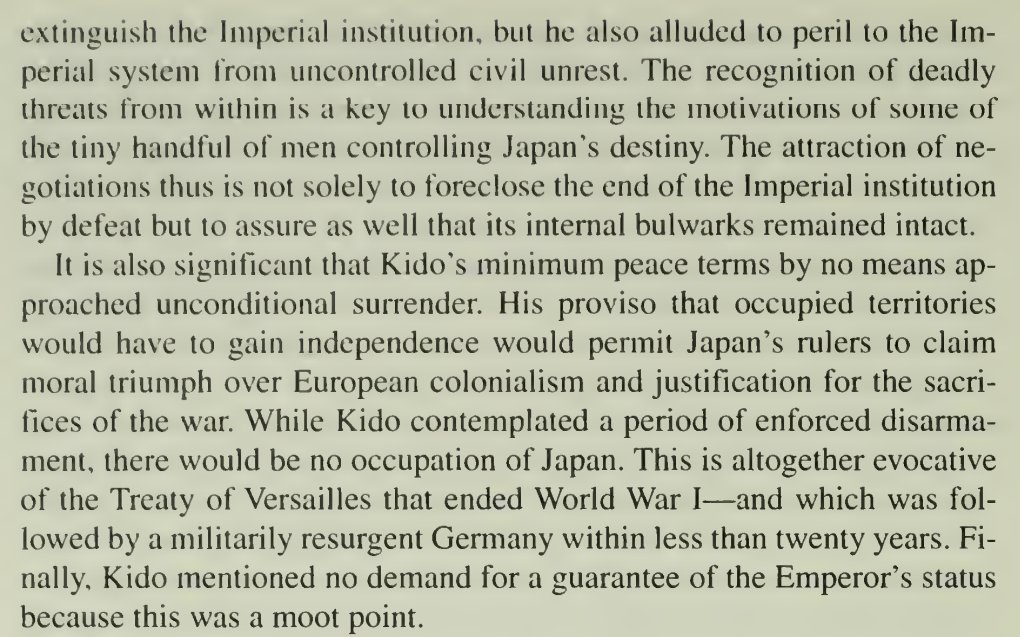
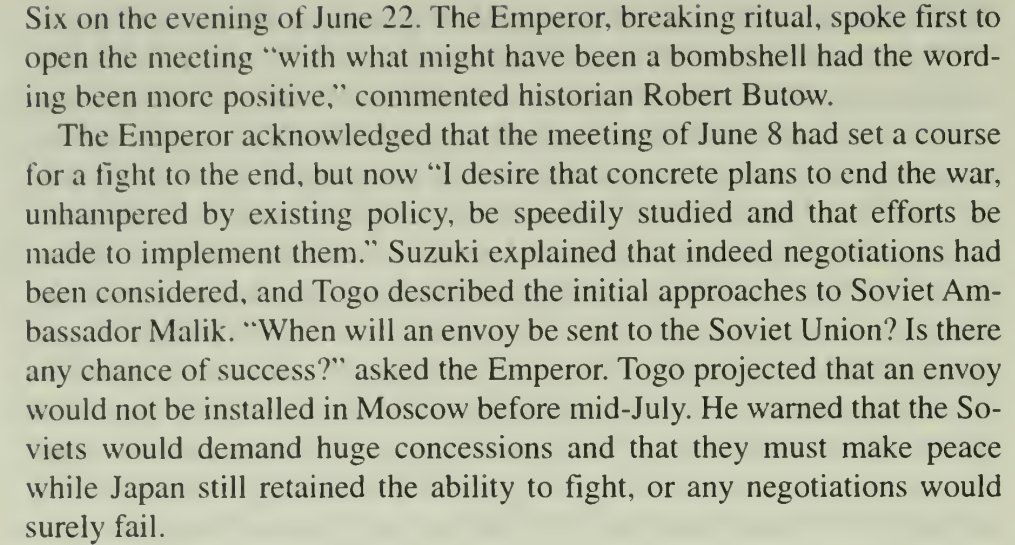
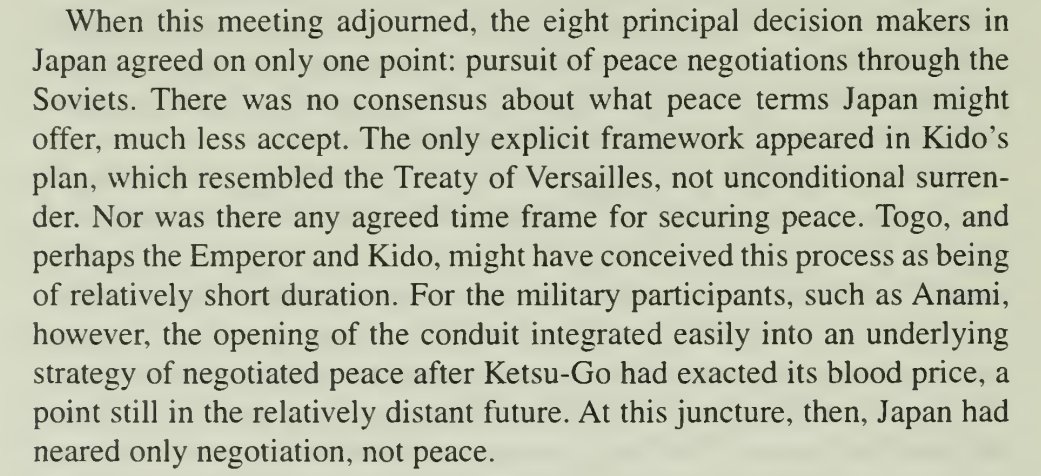
In June, the Emperor moderated, deciding to open negotiations through the USSR without a victory. But that was the only thing the 8 agreed on; the actual terms were in flux, but close to Versailles + decolonization (of European colonies, not Korea/Taiwan).
In the 60s, a [leftist] narrative was built that Japan wanted surrender in 1945, US policymakers knew it from code-breaking, so the nukes weren't needed. None of this was true; the vast majority of decrypts betrayed desire to fight to the end, especially from the dominant IJA.
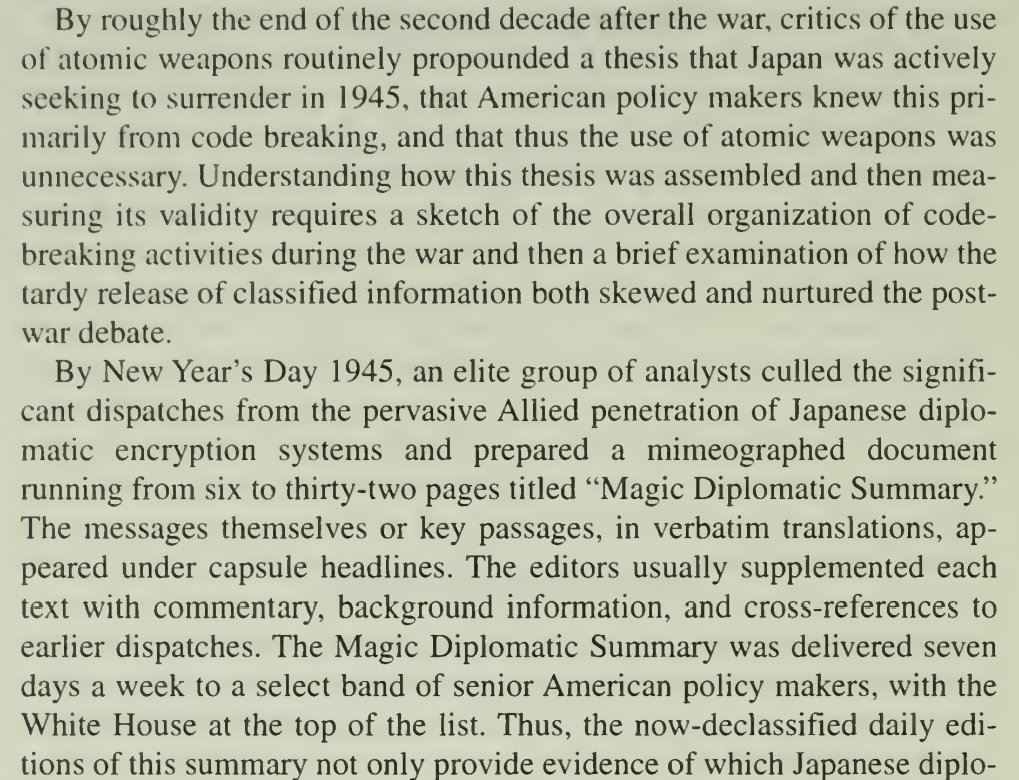


More diplomatic traffic, about the urgency of reaching an accommodation with the USSR and denying any sort of peace negotiations with the US or England. Some diplomats in Europe (Sweden, Switzerland) did want peace, but had no authority to negotiate it.

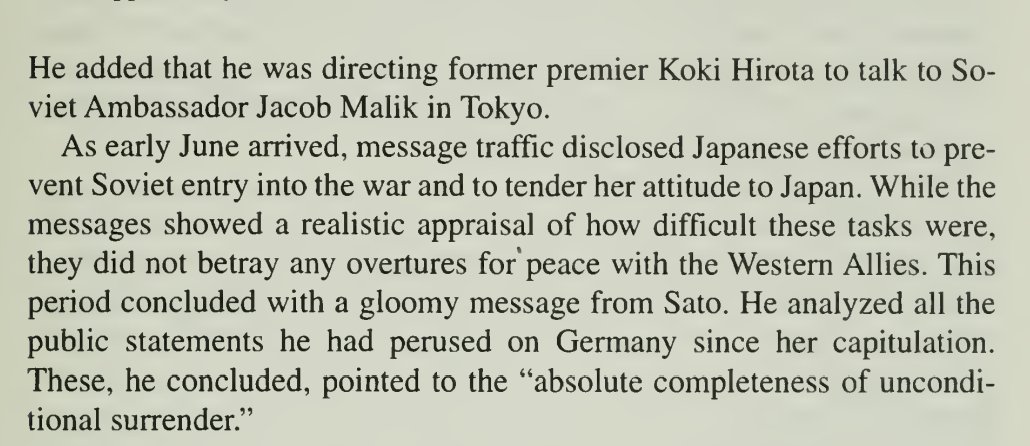
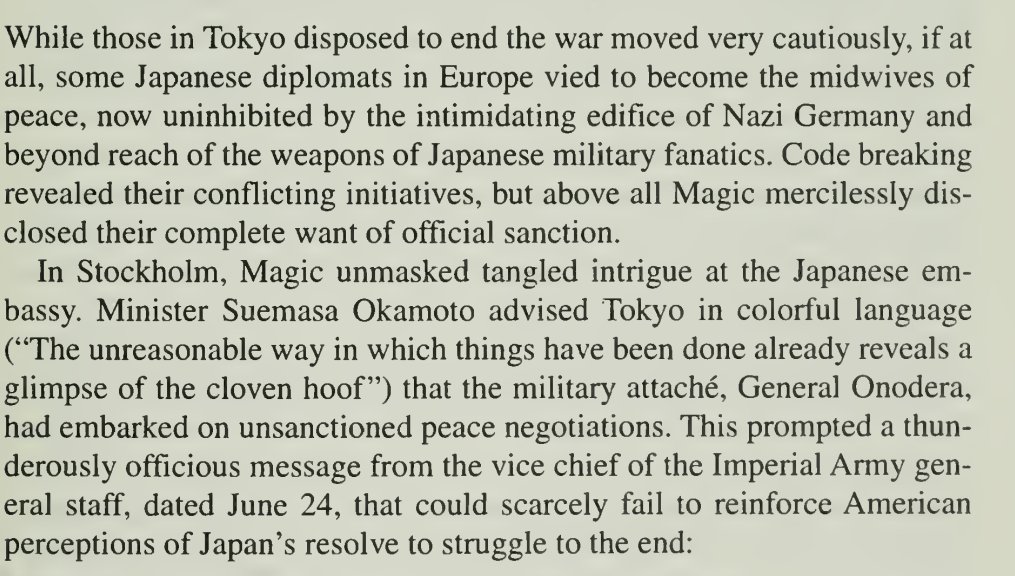
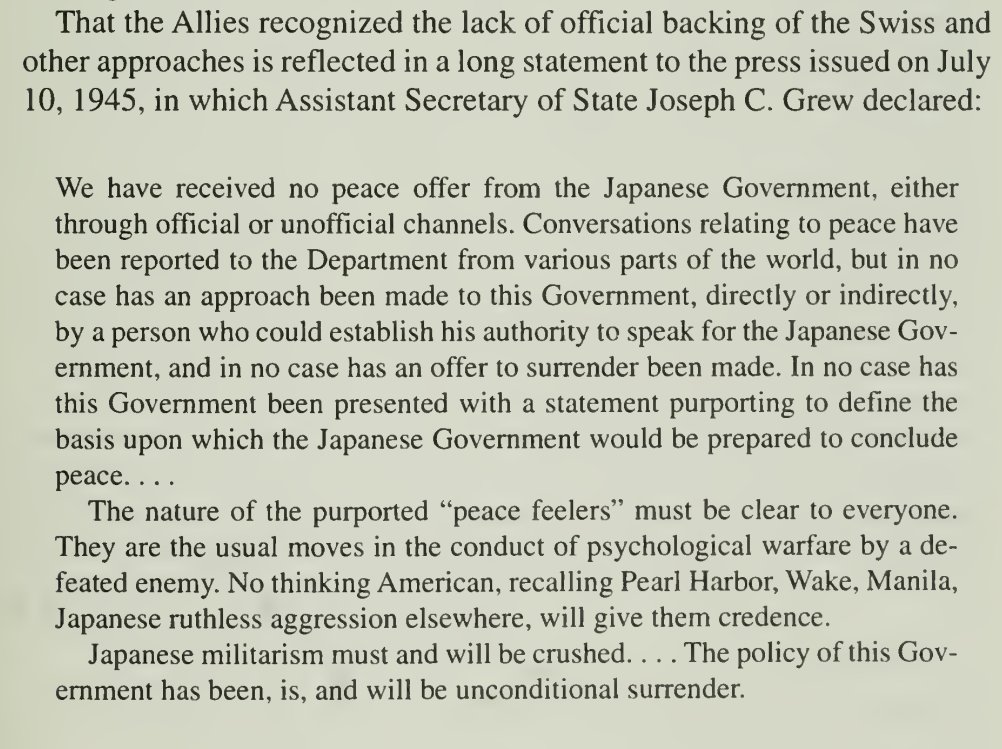
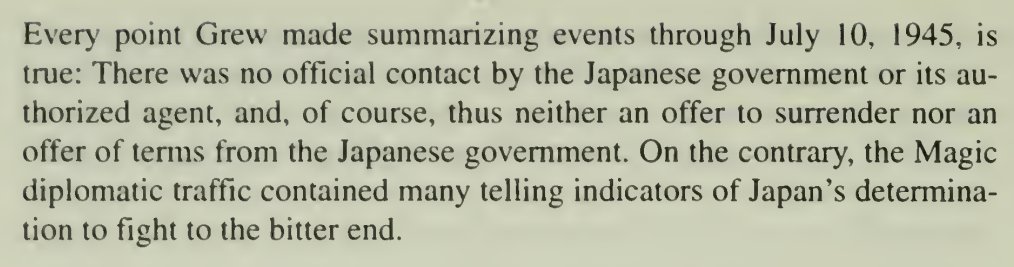
No official contact by the Japanese govt or an authorized agent, and no offer to surrender or even offered terms. Magic decryptions of diplomatic traffic underlined this, and that Japan was determined to fight to the end.
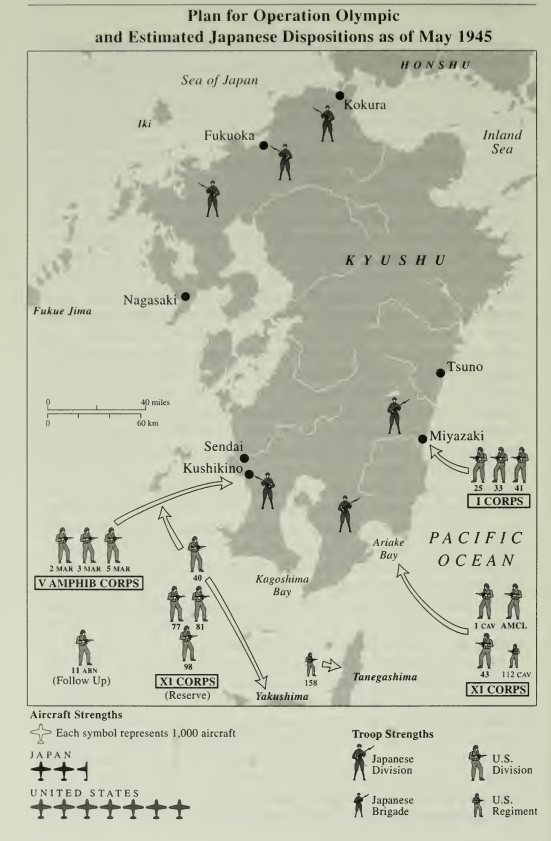
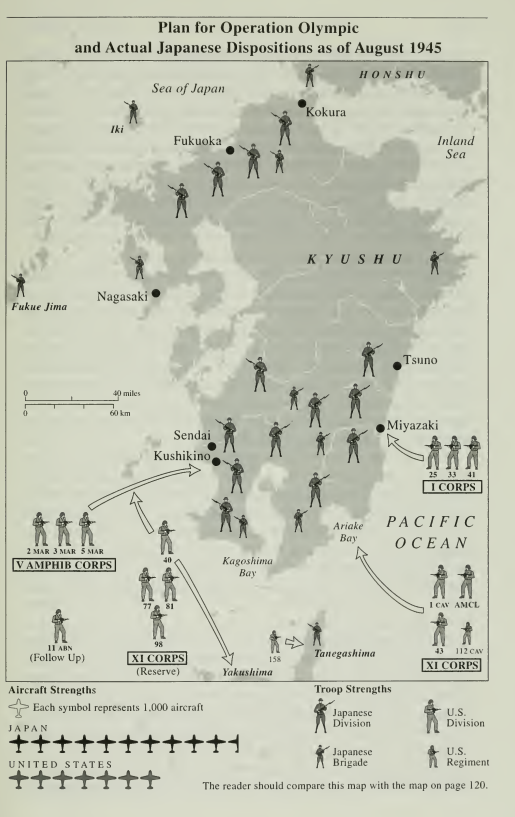
US invasion plans ("Olympic") assumed a max of 2500 aircraft and 6 divisions on Kyushu.

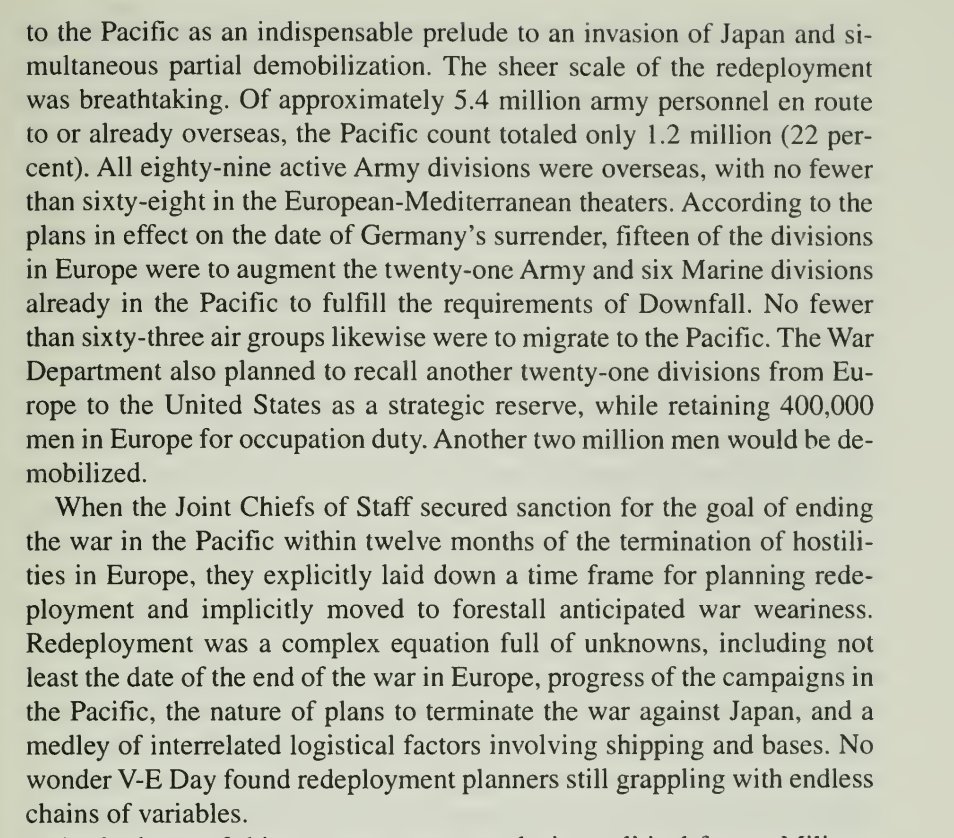
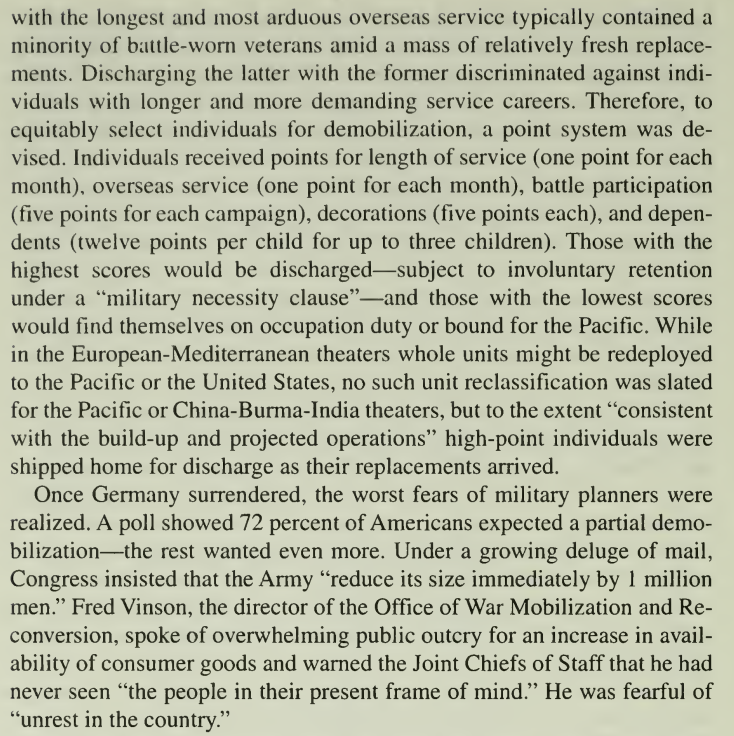
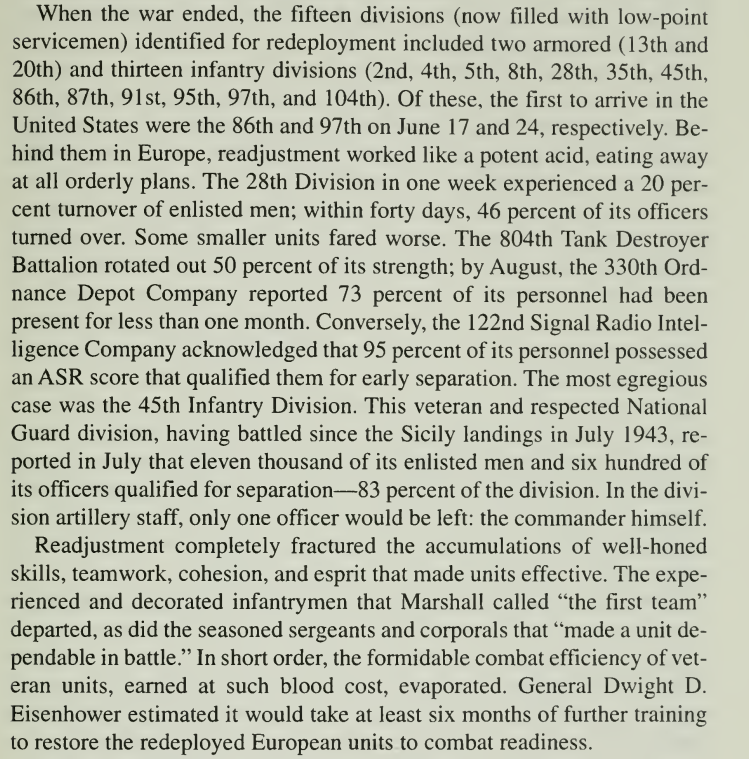
Olympic required enormous quantities of shipping and the redeployment of millions of men from Europe. But public pressure for partial demobilization after V-E day was overwhelming, and the resulting releases (mostly of veterans) destroyed the combat power of European units.
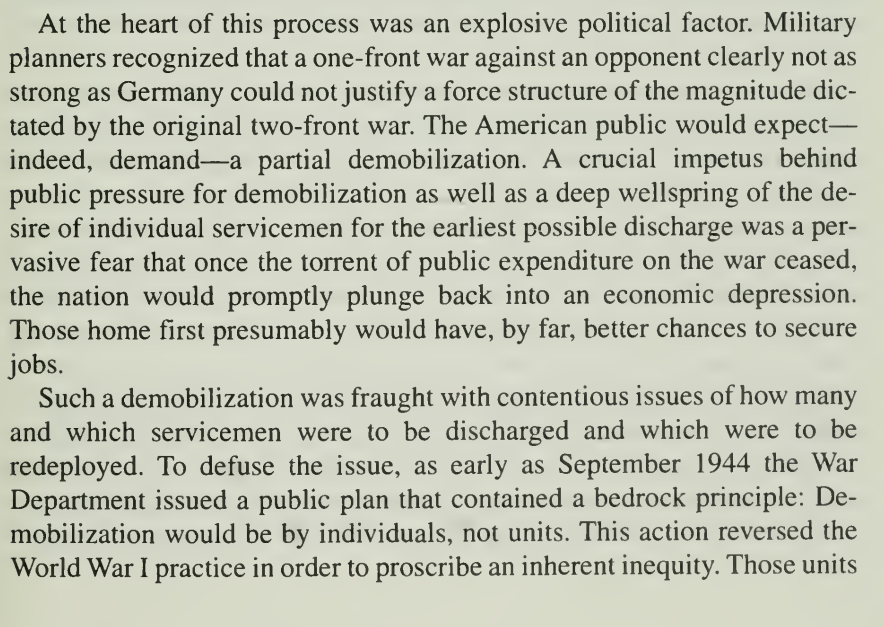
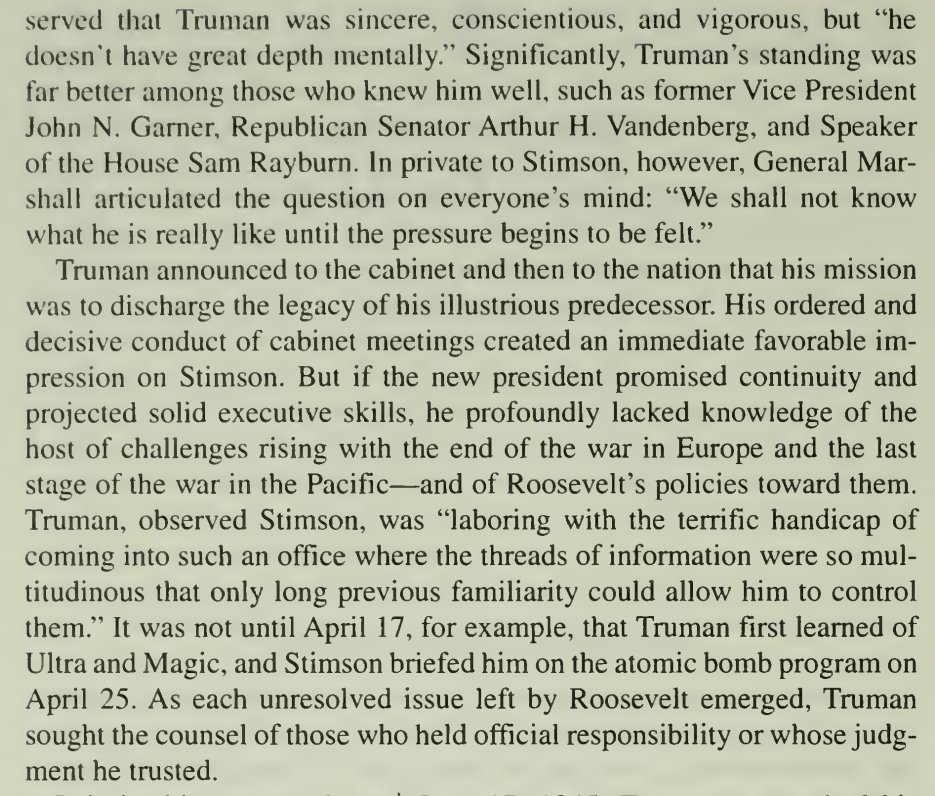
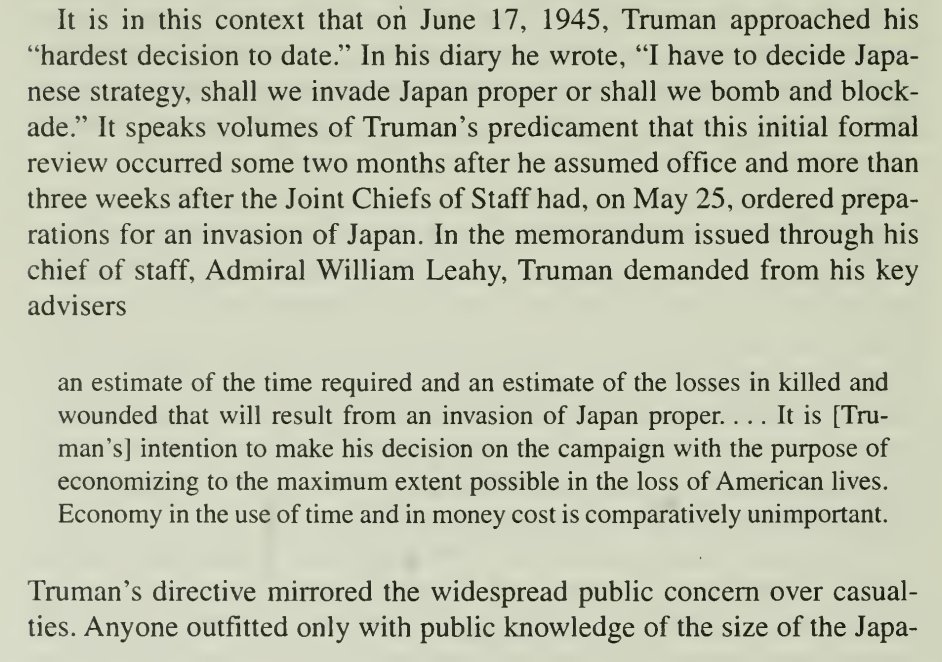
Truman was unprepared to step into Roosevelt's shoes, not knowing about the many, many major projects the US military was doing. He decided to prioritize American lives over money or time.
The Pacific Island battles had been small, but extremely brutal, more than three times more intense than the fighting in Europe. Projected casualties in the ground forces alone would have been ~3x as high as equivalent fighting in Europe.
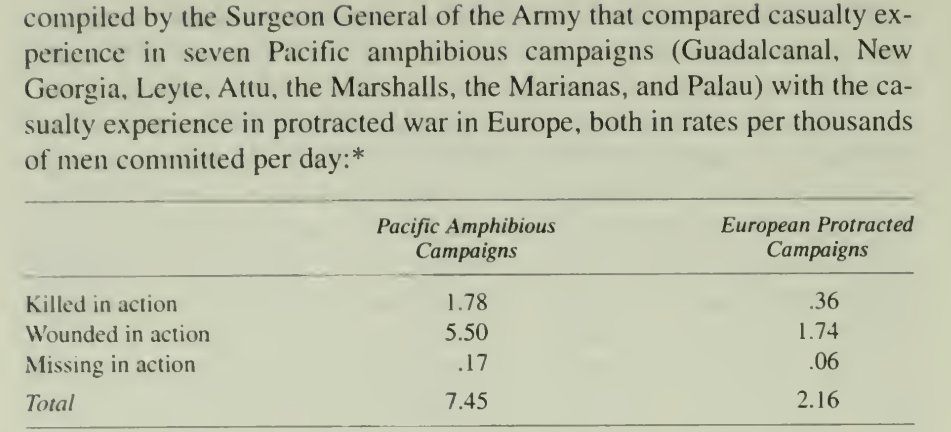

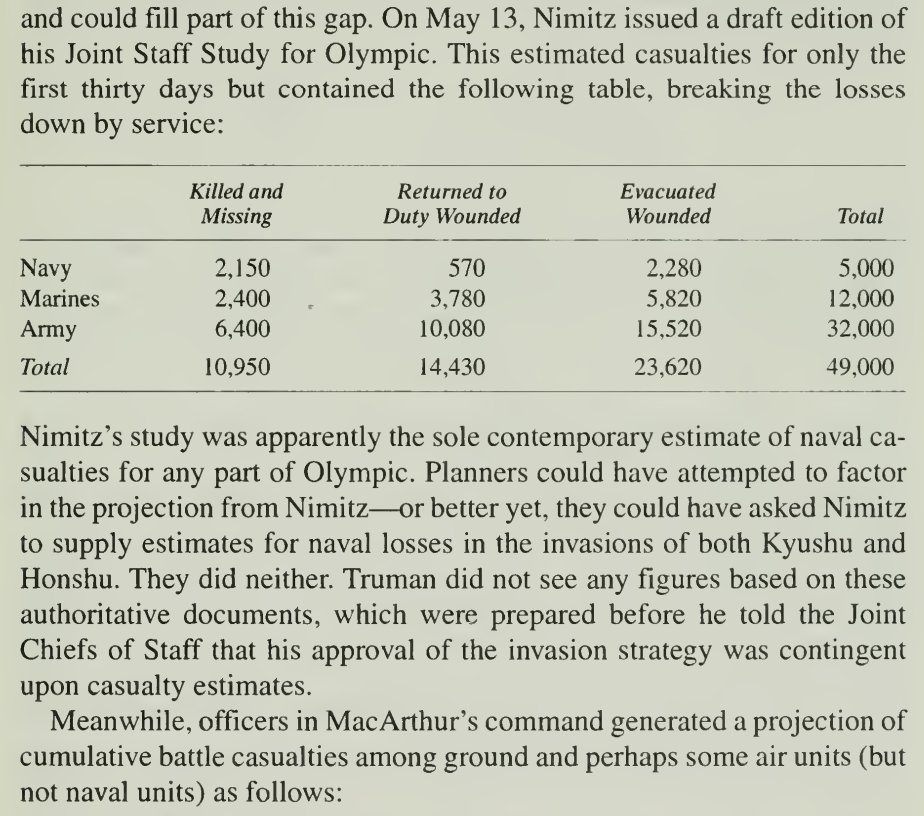
The invasion of Southern Kyushu (Olympic, not expected to end the war) was scheduled for Nov 1. Between Okinawa and Nov 1, the USAAF was responsible for continuing to break down the Japanese industrial economy as much as practicable.

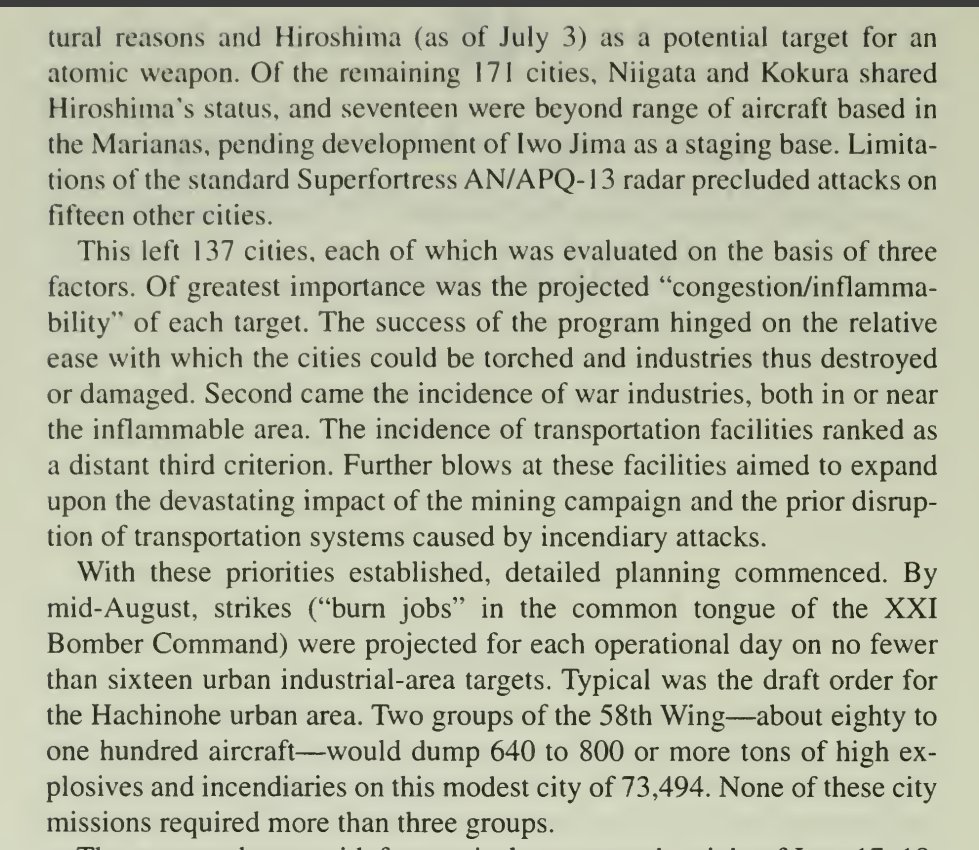
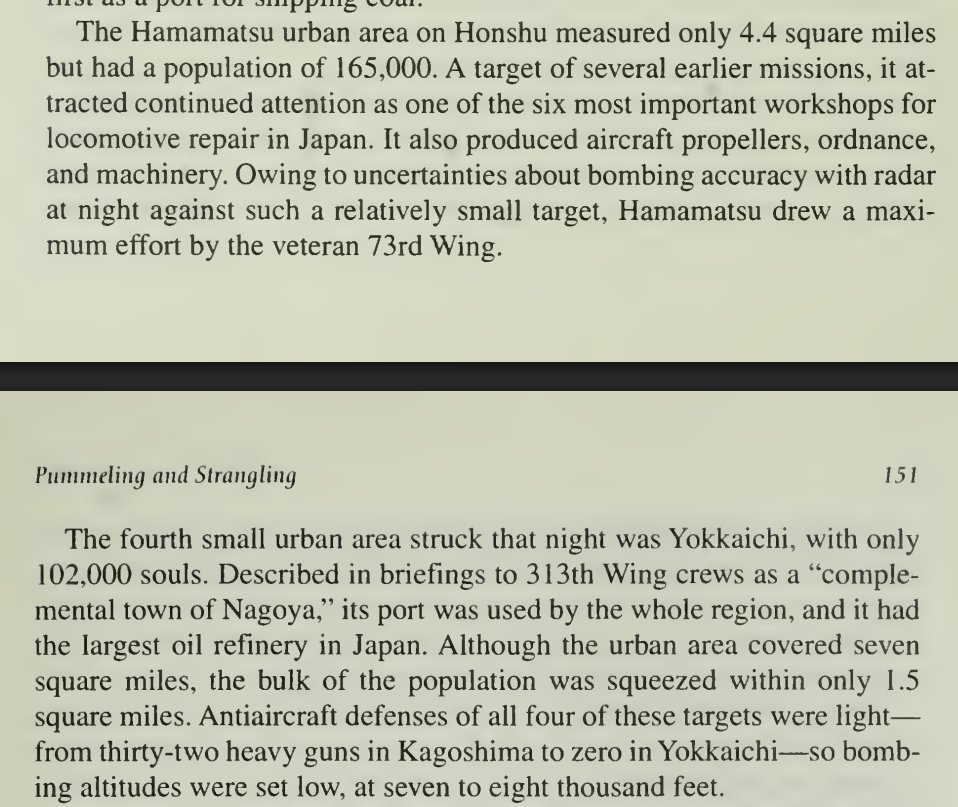

Allied POWs firmly believed they would be killed if Japan was invaded.

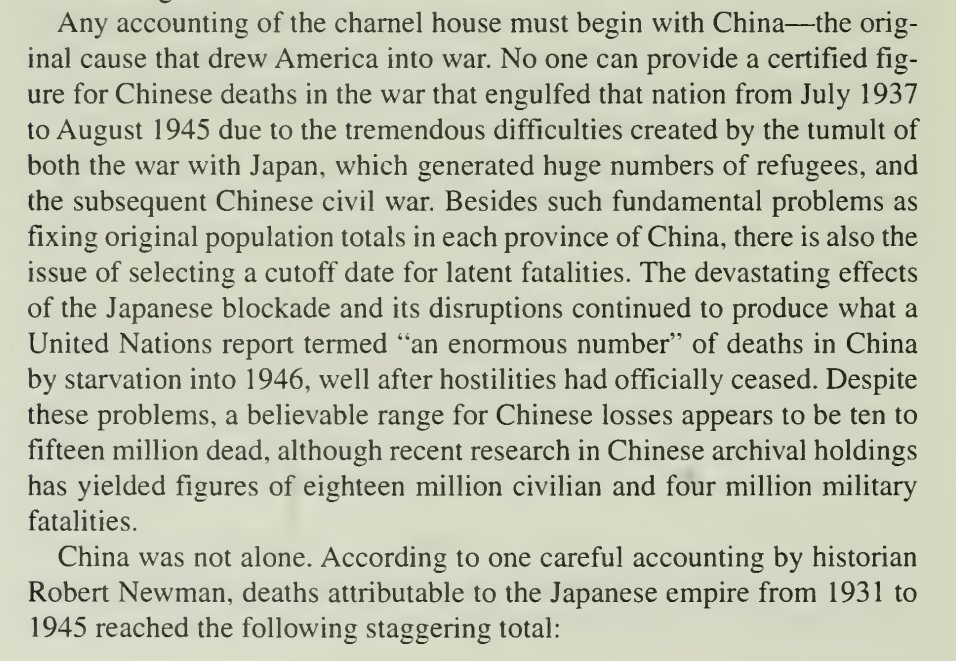
Estimated death tolls of the Japanese Empire. Each month, about 250K more deaths.


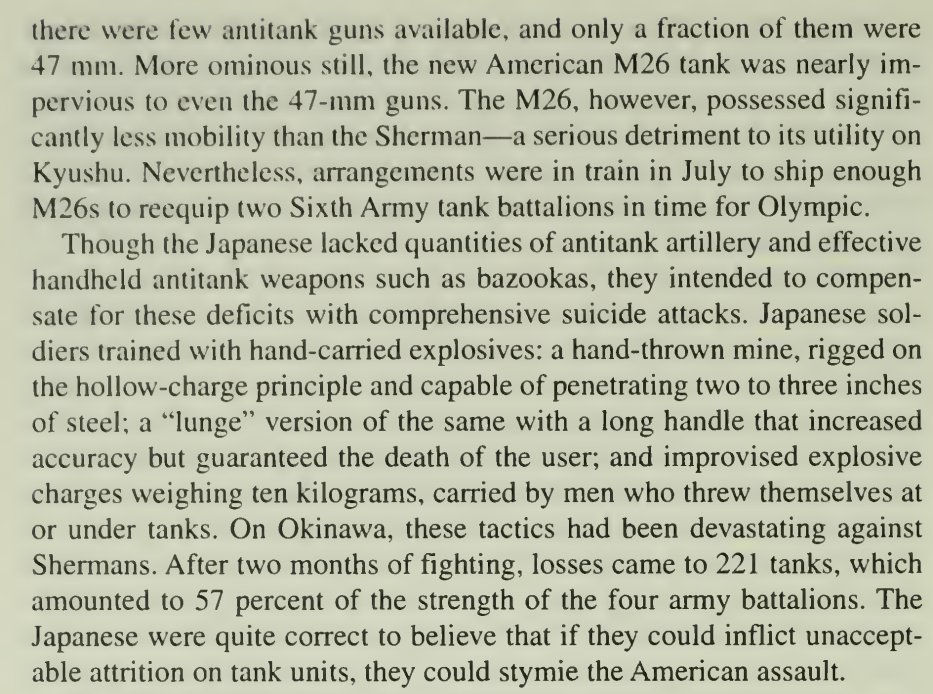
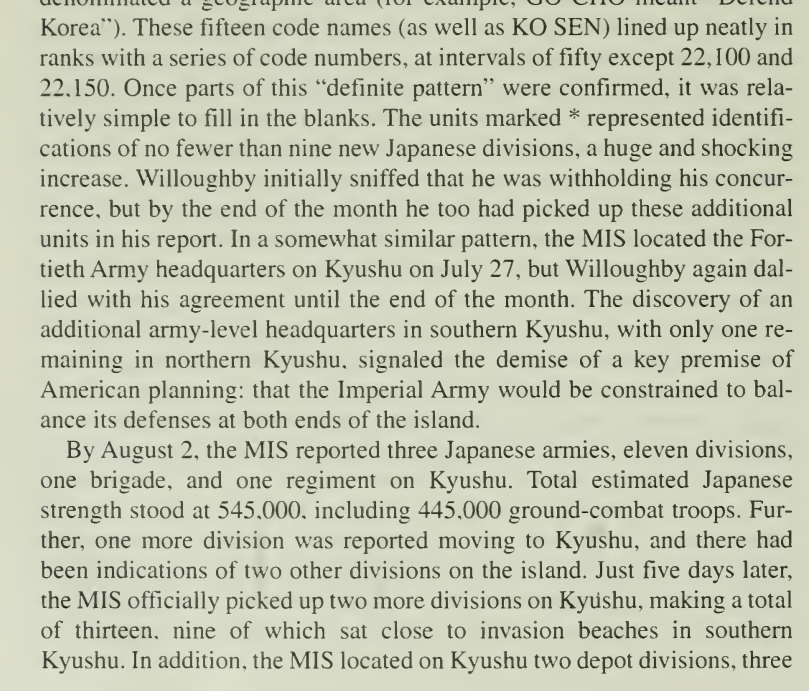
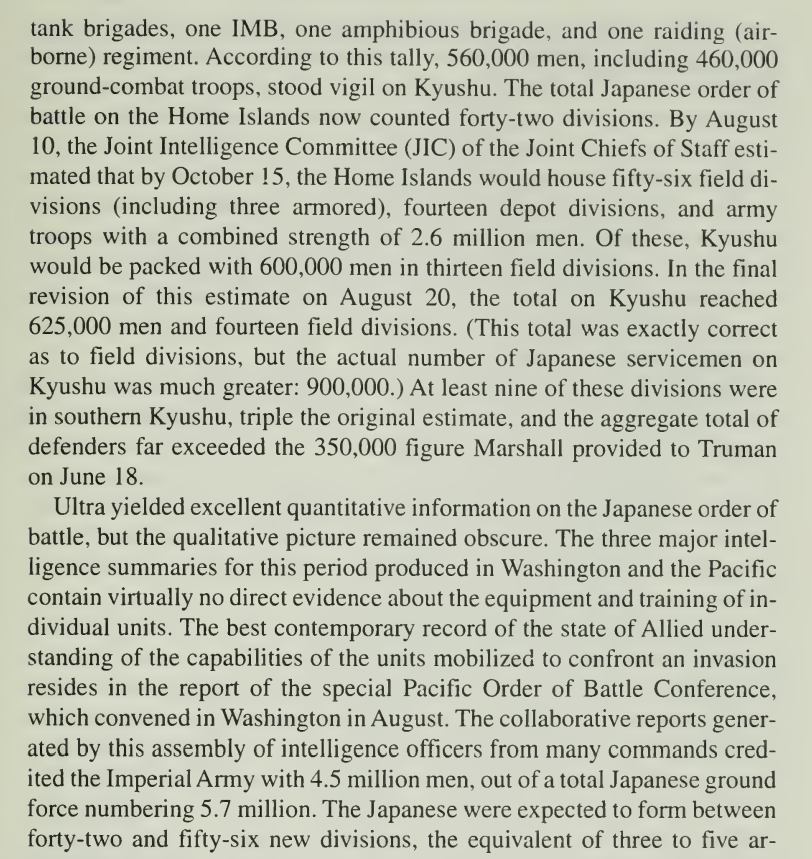
US plans for Olympic severely underestimated Japanese defenses on Kyushu. There were 14 divisions on the island, not 6-8. To compensate for weak anti-tank weaponry, the Japanese planned to use suicide attacks as in Okinawa.

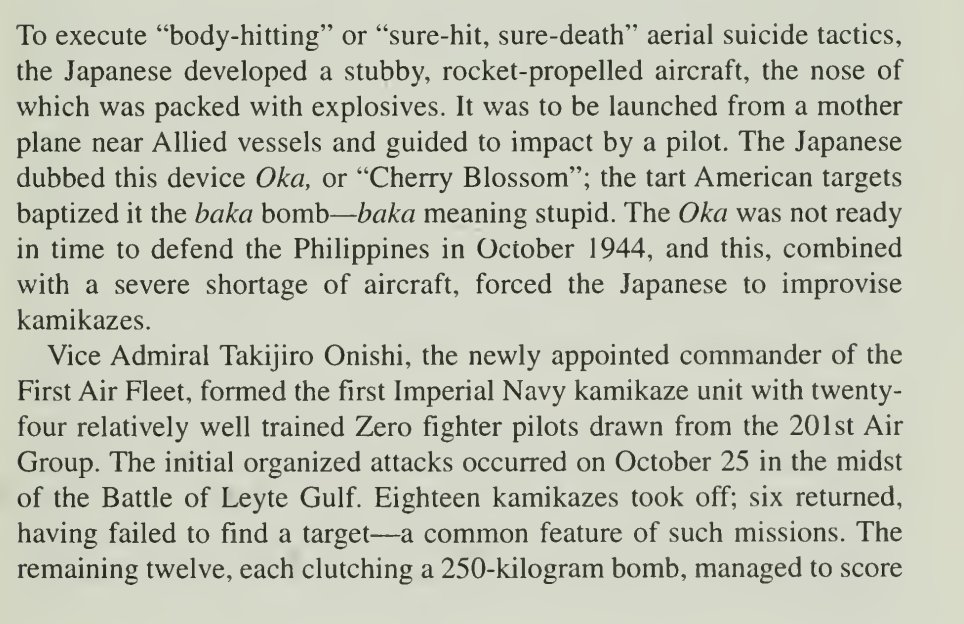
To compensate for industrial and technological inferiority, the Japanese needed an edge. The edge: manned suicide weapons (planes, torpedoes, anti-tank charges). Basically proto-cruise missiles, kamikazes were in fact very effective.


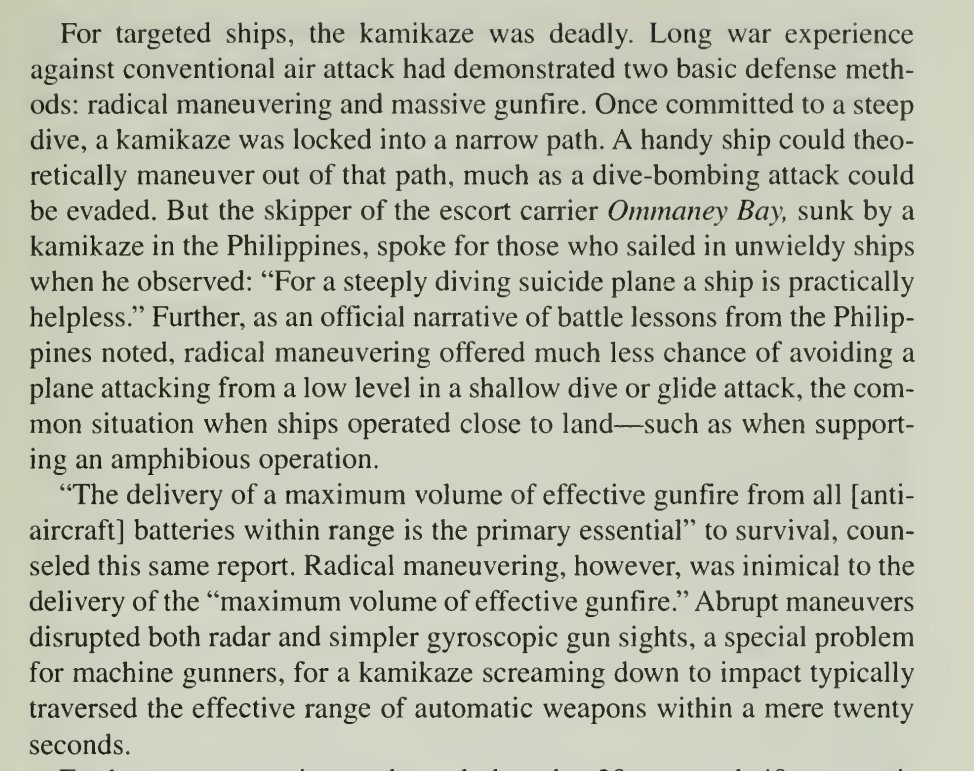
The Japanese plan envisioned as many kamikazes in 3 hours as used in Okinawa in three months, and figured suicide attacks would destroy 1/3 of the Olympic invasion force.
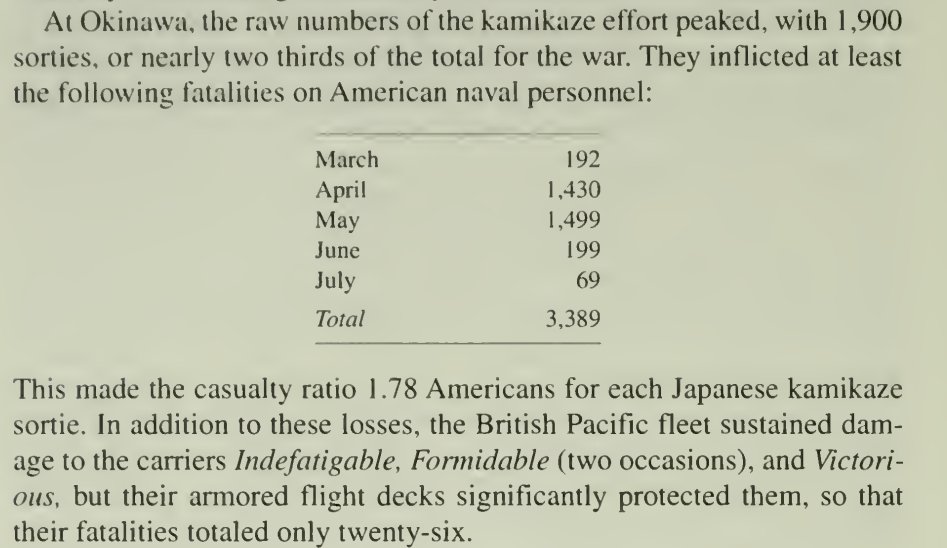


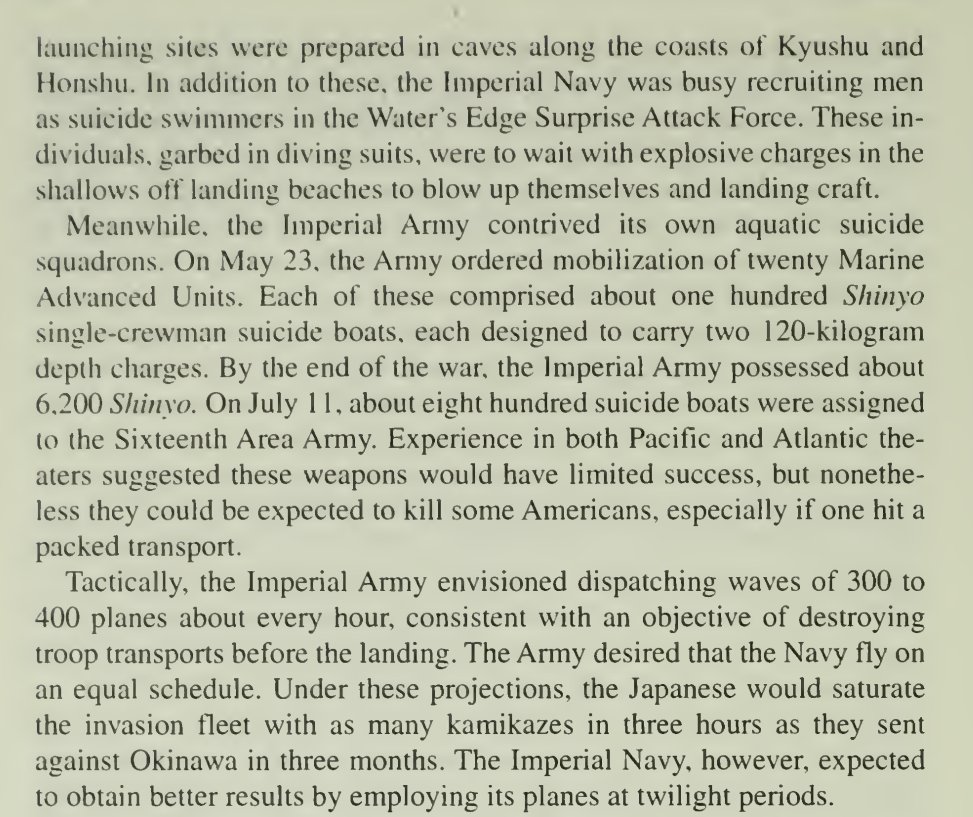
The Army secretly planned to commit *all* planes to kamikaze attacks, unlike what the postwar US survey believed. The Navy probably did as well (not known because the commander went on a kamikaze attack upon receiving surrender orders).


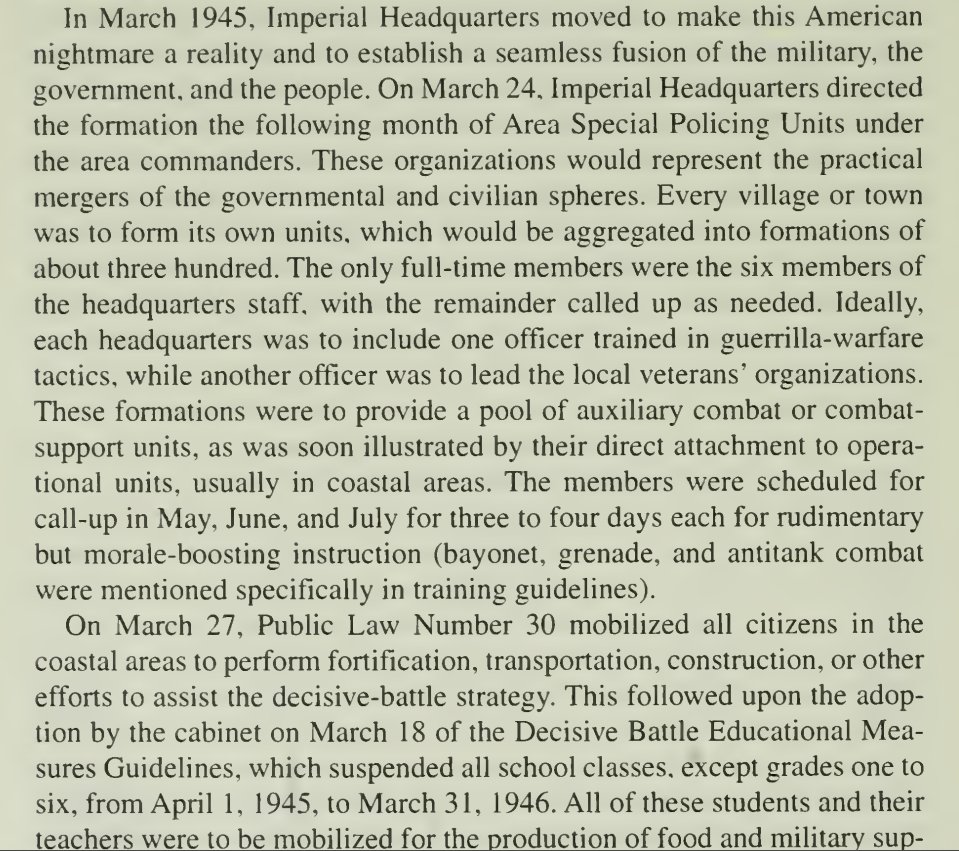
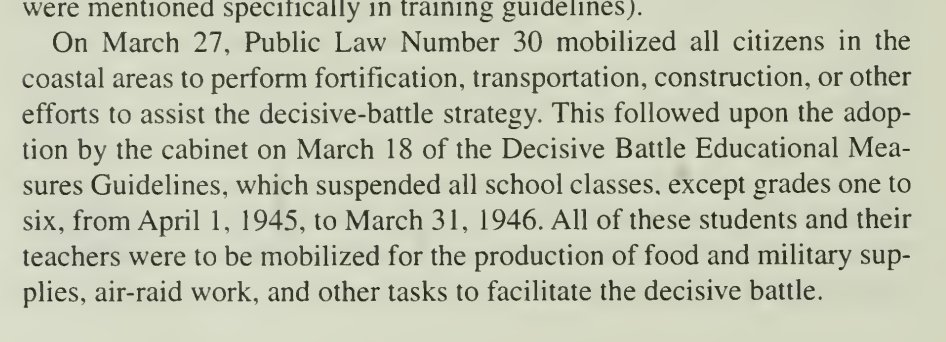
In March 1945, the Imperial Headquarters began to mobilize the entire Japanese civilian population (men 15-60, women 17-40) as combatants, as had happened already in the Philippines. This would have compelled US ground forces to treat all Japanese as threats.


Unlike D-Day, US efforts to fool the Japanese as to the target failed.

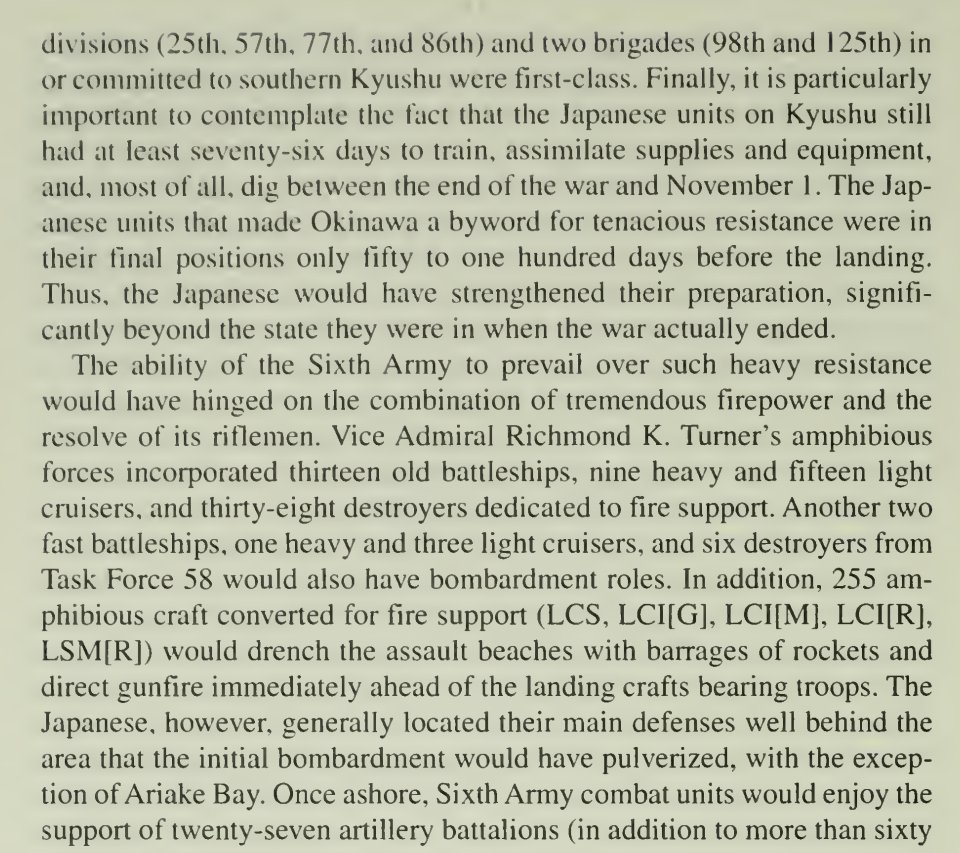
The IJA believed they could repulse the first landing on Kyushu and inflict enough casualties to break American resolve. They might have been right. Eventually, the US Army realized how much stronger the IJA was in Japan, and became less sanguine about Olympic.


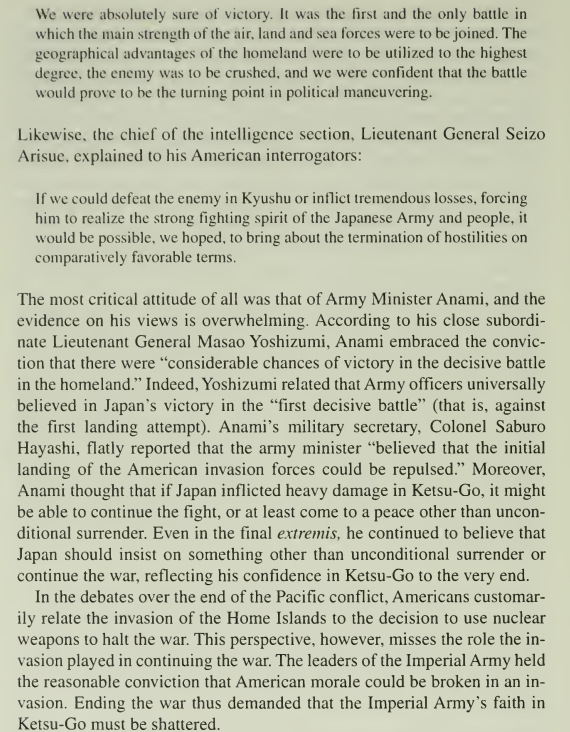
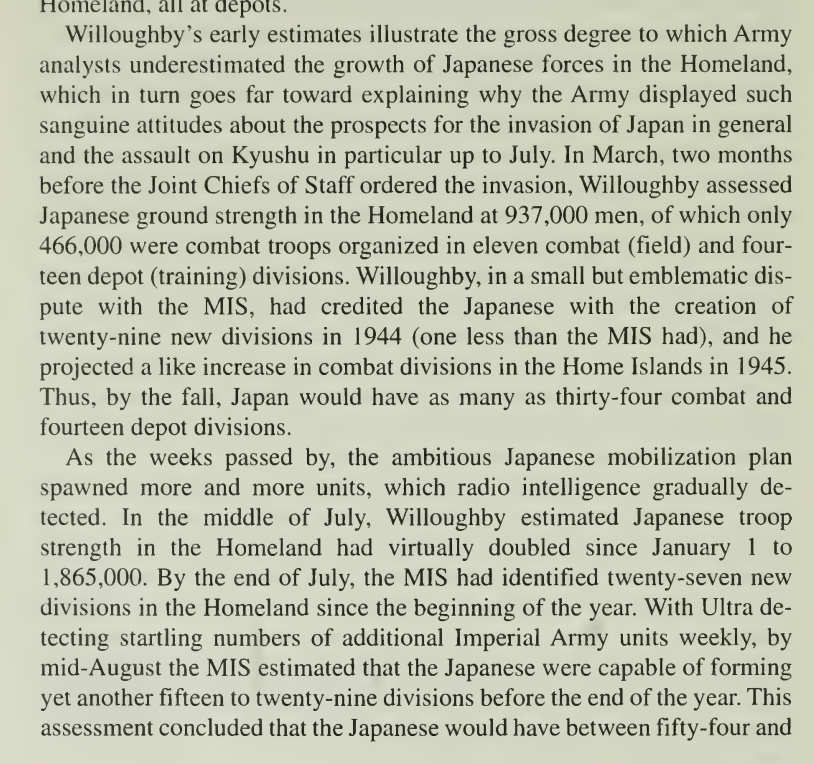
The July/August realization that Japan had 3x as many men and aircraft in Kyushu as planned for strongly reinforced Nimitz's belief that Olympic was a bad idea.

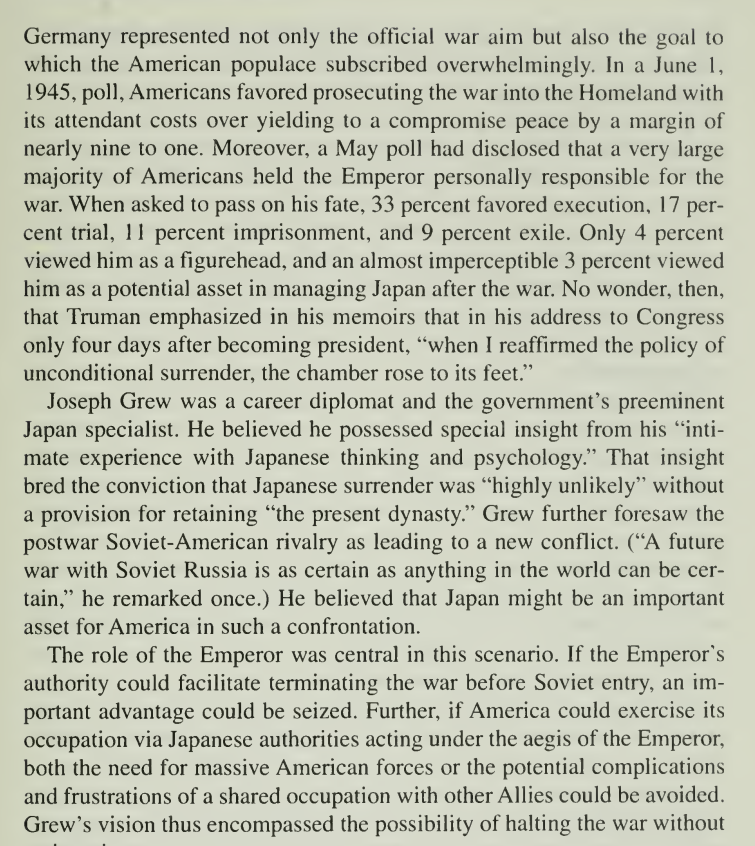
On June 1, 1945, Americans supported fighting until unconditional surrender by a margin of 9:1, and 1/3 wanted to execute the Emperor.

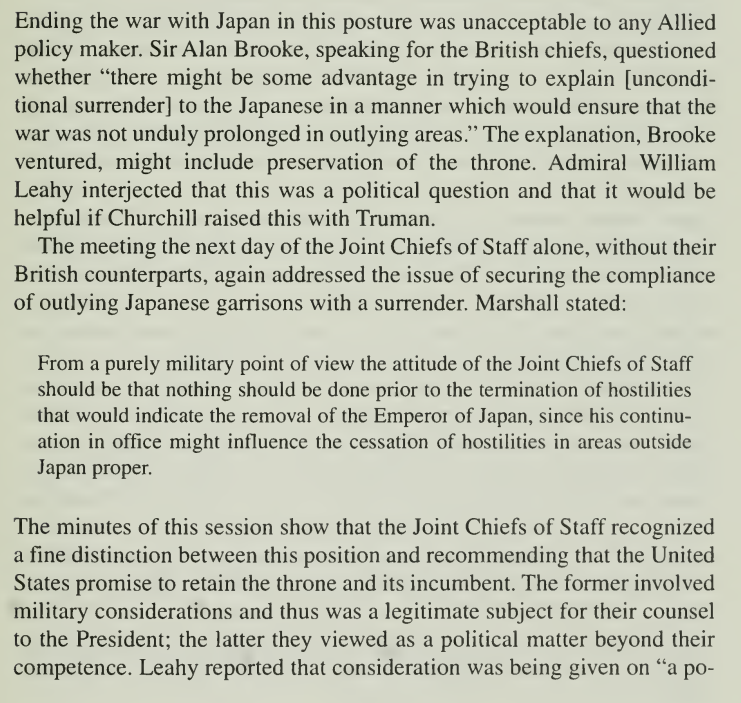
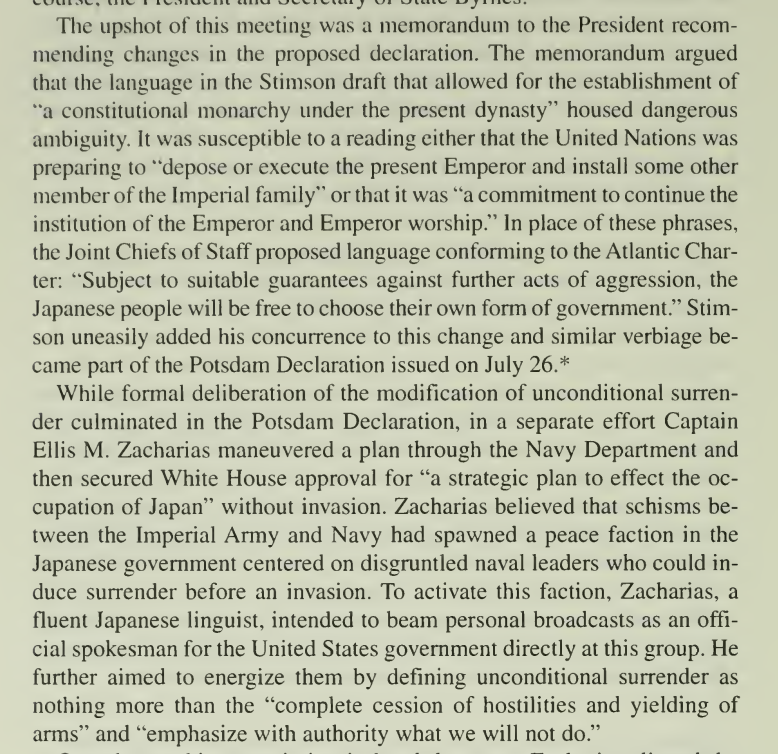
The defeat of Germany led to the realization that Stalin wouldn't permit self-government in E. Europe, with Poland in particular a problem. This made Stalin's desire to occupy part of Japan more worrisome. This led US leaders to contemplate modifying unconditional surrender.
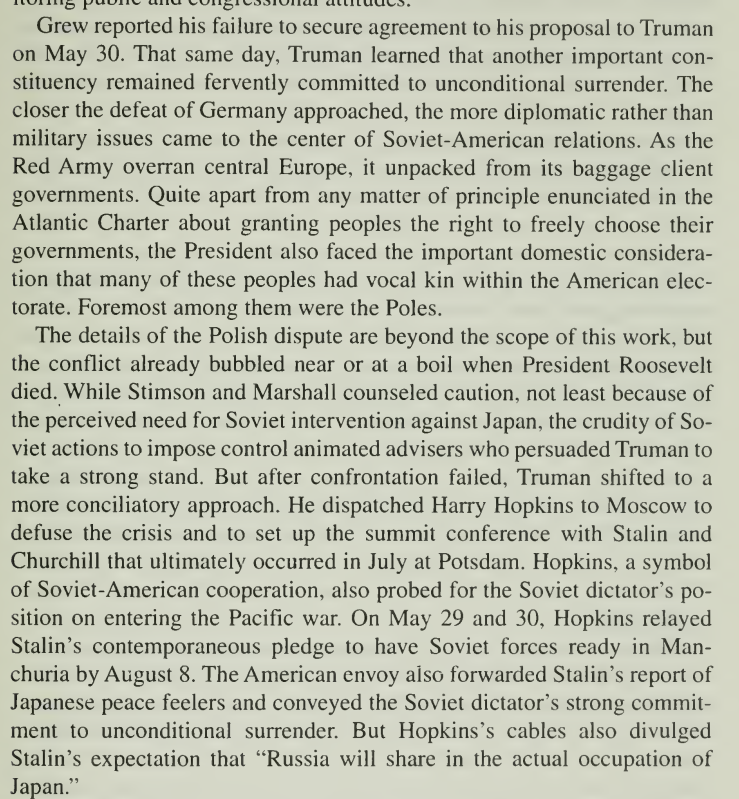
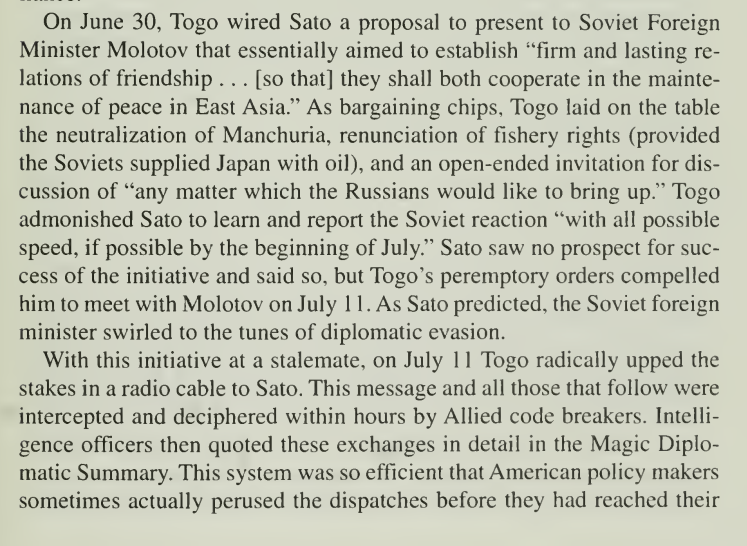
The trouble: Japanese leadership was not interested. They went to Stalin instead, proposing the neutralization of Manchuria and withdrawal from Japans WWII conquests as a bargaining chip.
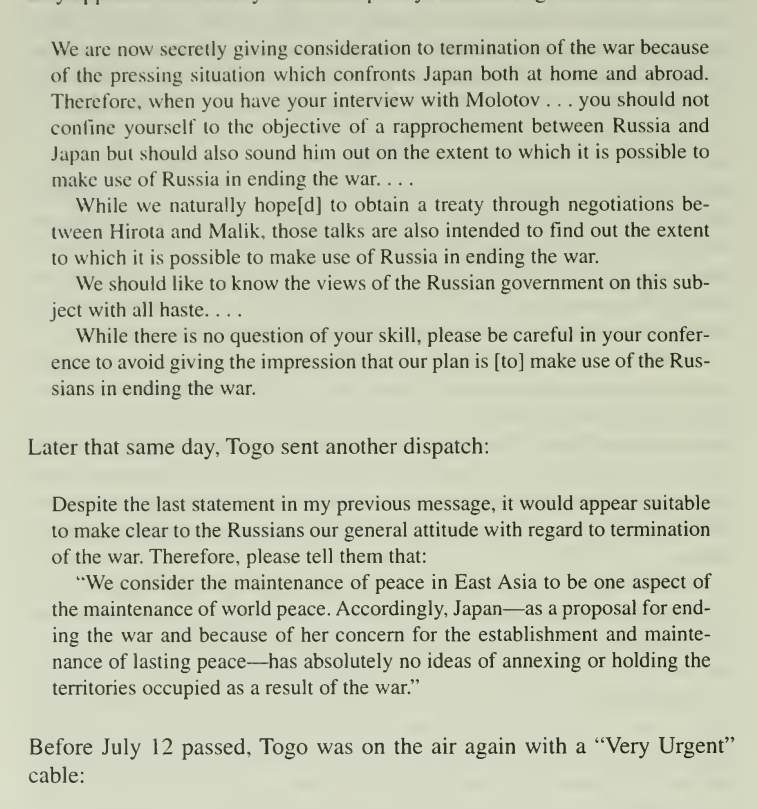


The big Six never agreed on terms for negotiation, just the general principles of "not unconditional surrender under any circumstances" and "seek Soviet mediation."
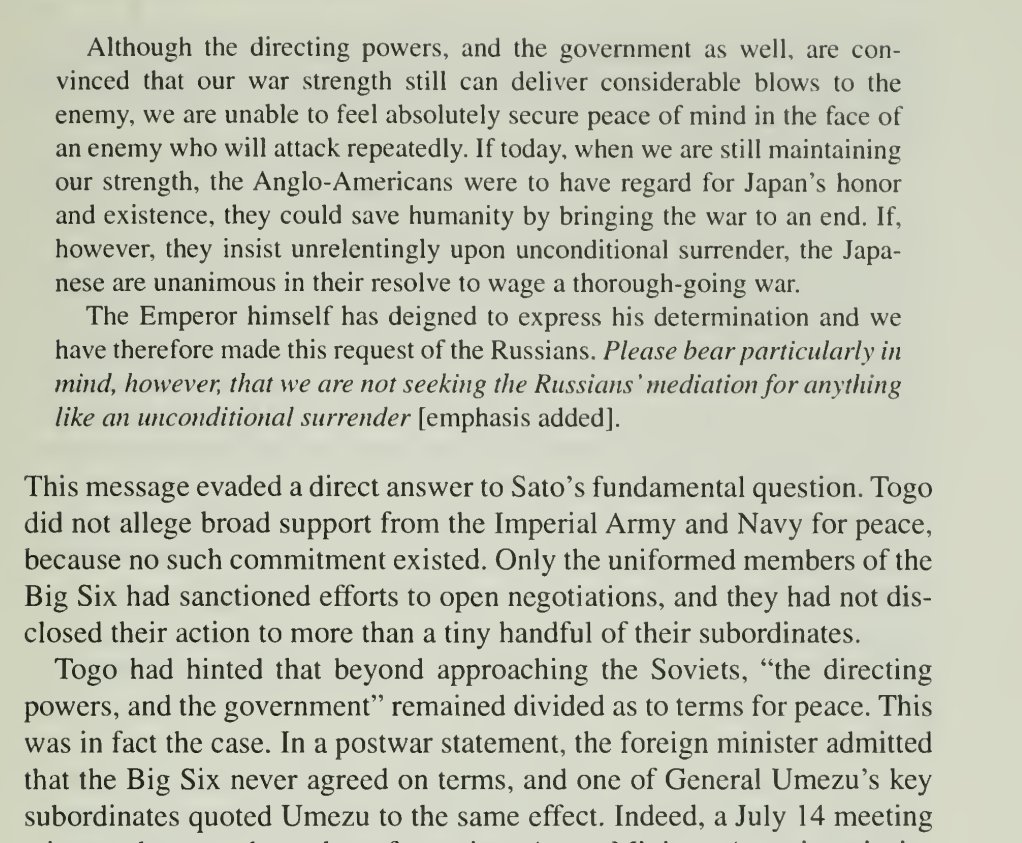
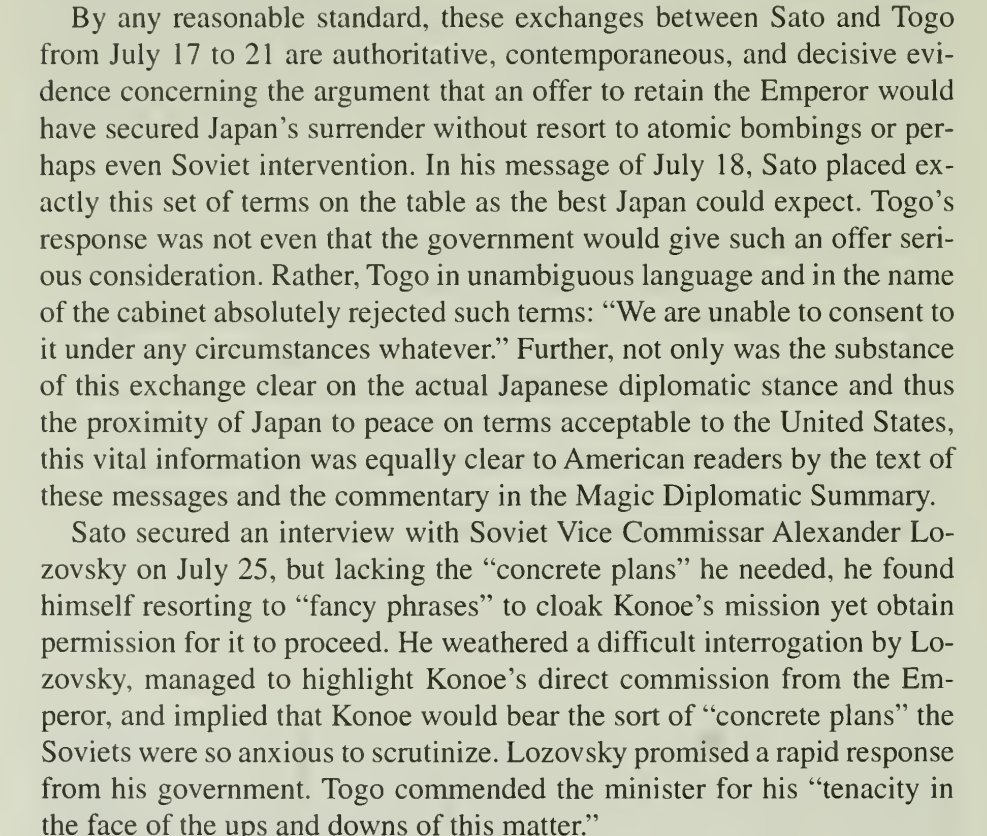
Even Togo, the most peace-minded decisionmaker, rejected "unconditional surrender except for retaining the Emperor." The dominant IJA never even considered it.

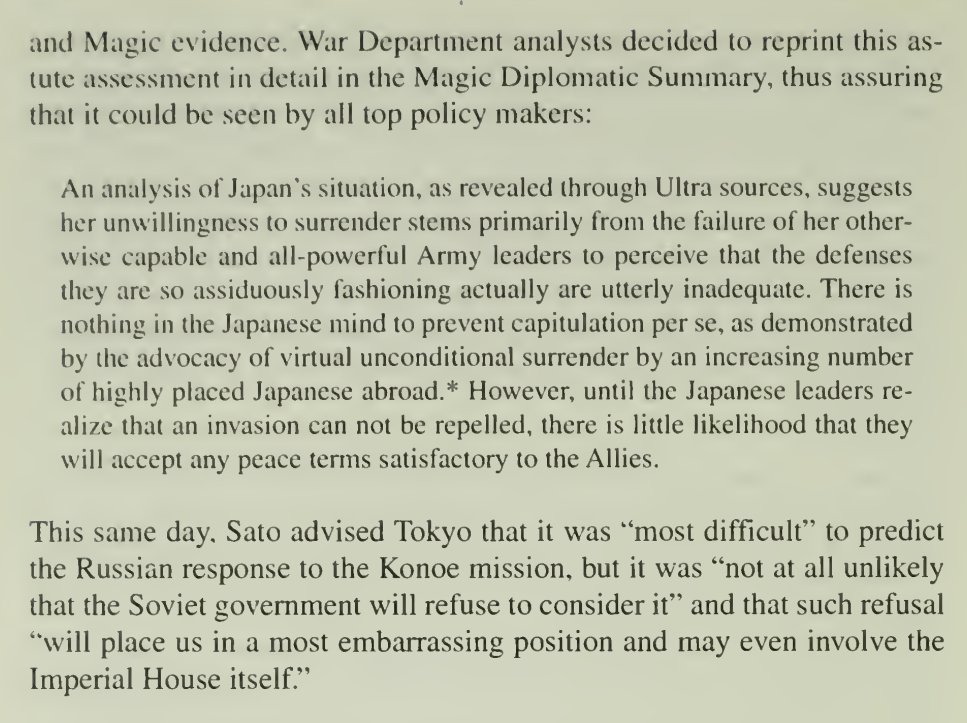
Potsdam Declaration: July 26. Allied terms were disarmament, partial occupation, end of the Japanese Empire outside the Home Islands, and trials of war criminals. Survival of the Japanese race, nation, and industry, as well as freedom of speech/religion/thought were guaranteed.


This was much more generous than the terms of German surrender (zero guarantees), but was publicly rejected by the Japanese govt, despite Togo, the Japanese foreign minister and one of the Six with actual power (and the most pro-peace), wanting to seriously consider it.

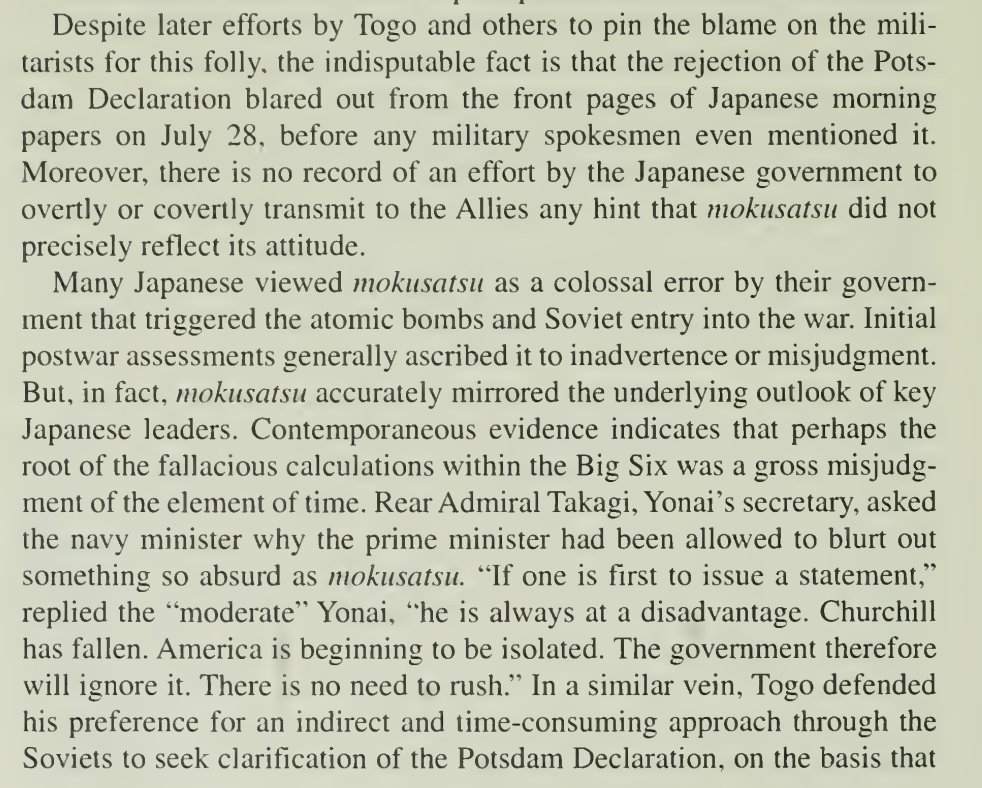
Japan was not near surrender in late July/early August.

The source of the myth that Japan was willing to surrender but for the institution of the Emperor is that Ambassador Sato, who had zero power or authority, proposed that to Foreign Minister Togo, the most pro-peace Japanese leader, who explicitly rejected it.

Before he knew about the bomb, Truman thought the war would last to 1946. He also thought Stalin was "honest, but smart as hell." He was not trying to intimidate the Soviets with the bomb.

Niels Bohr and several other prominent scientists tried to convince Roosevelt to accede to international control of atomic weapons and tell Stalin about them. Roosevelt [wisely] refused.


The IJN response to Hiroshima: the US couldn't possibly have very many bombs and wouldn't use more. The US started publicly announcing conventional strikes. The Emperor directed Togo to end the war ASAP, but again did not give specific terms or accept Potsdam.

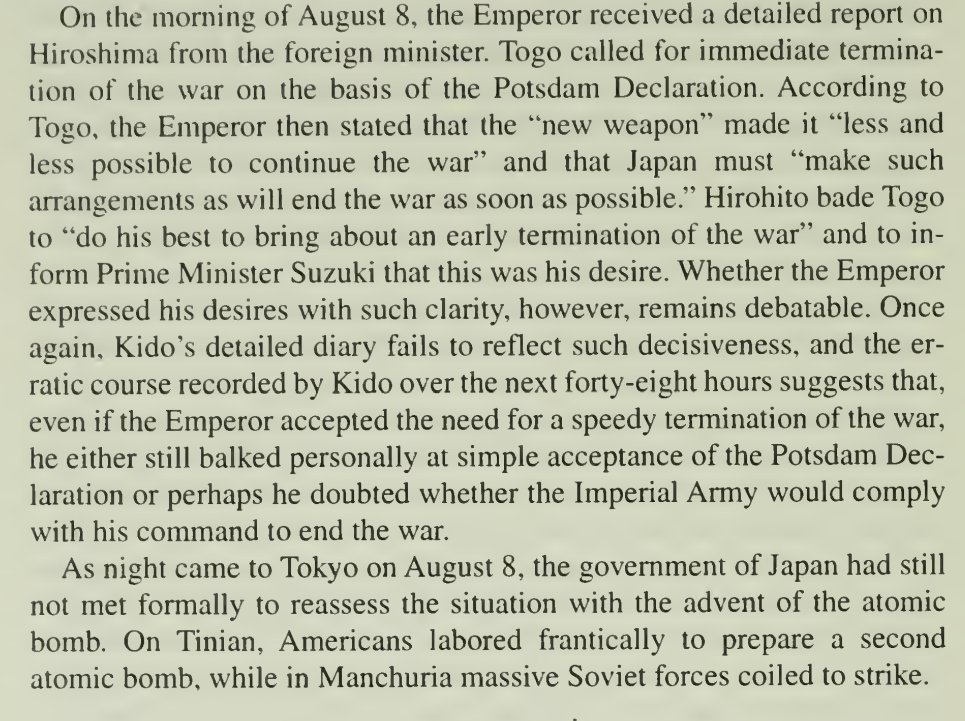
After Hiroshima and the Soviet attack on Manchuria, which destroyed [delusional] hopes for Soviet mediation, the IJA planned to declare martial law in Japan, while civilian leadership wanted to end the war. Nagasaki killed the hope the US wouldn't use more bombs.


The Big Six ruling Japan were evenly split post-Nagasaki. Half wanted to accept Potsdam with the additional condition of preservation of the Imperial Institution, the other half also wanted no occupation, self-disarmament, and Japanese-controlled war crimes trials.

Admiral Toyoda: "we cannot say that final victory is certain, but at the same time we do not believe that we will be positively defeated."

Hirohito then gave his personal sanction to the "one-condition" acceptance of Potsdam (Potsdam + preserving the imperial institution), which was accepted by the Cabinet. But they were still prepared to fight if the one condition was rejected.
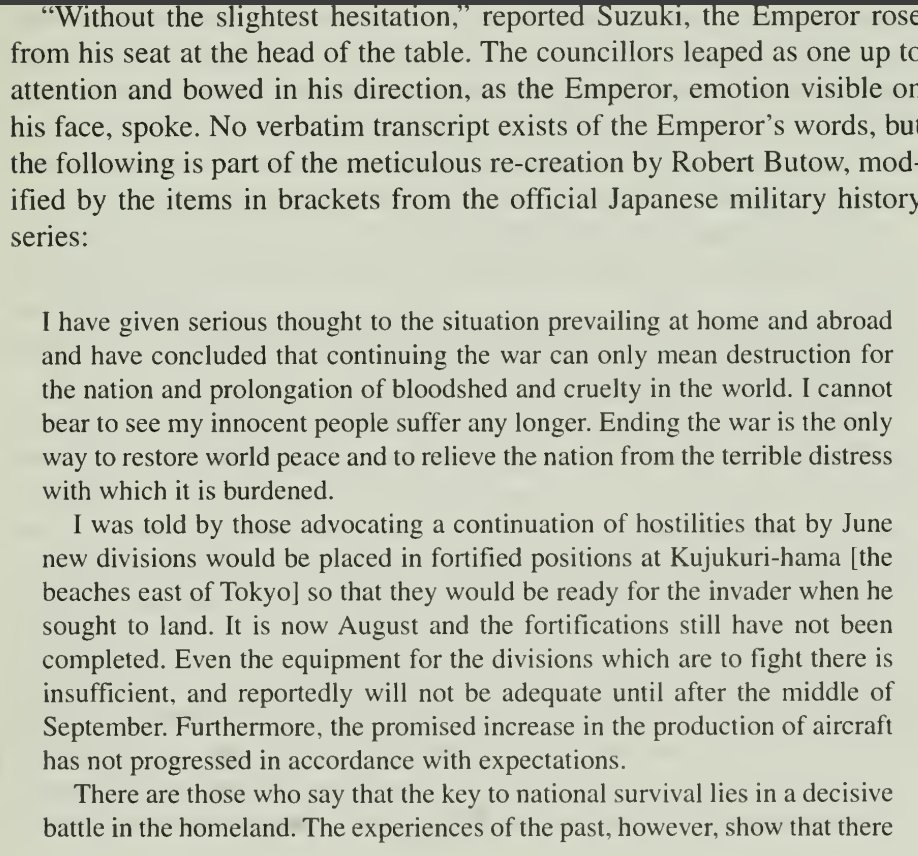

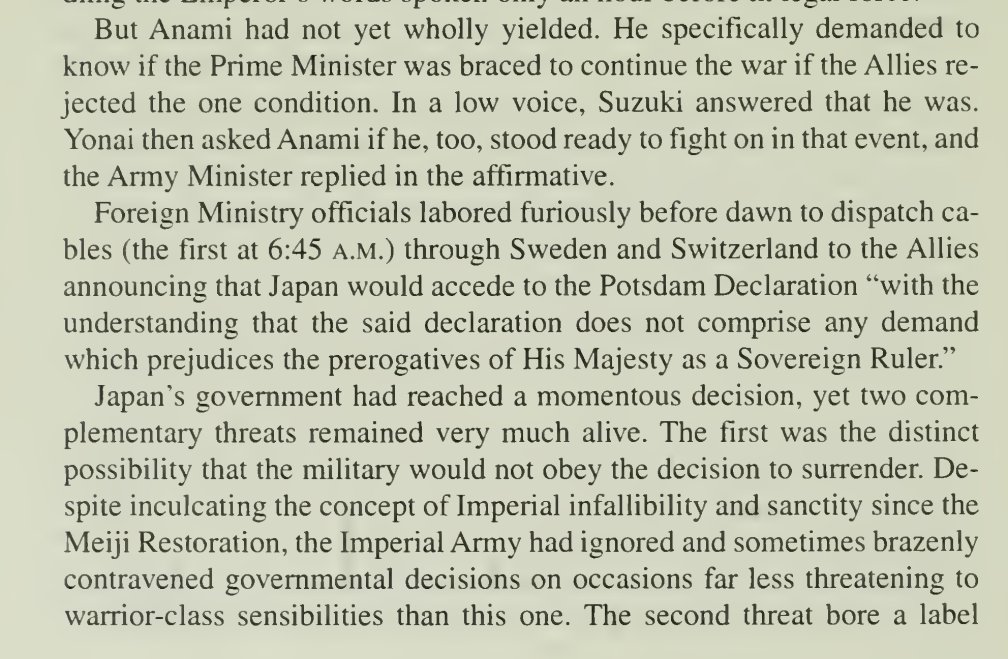
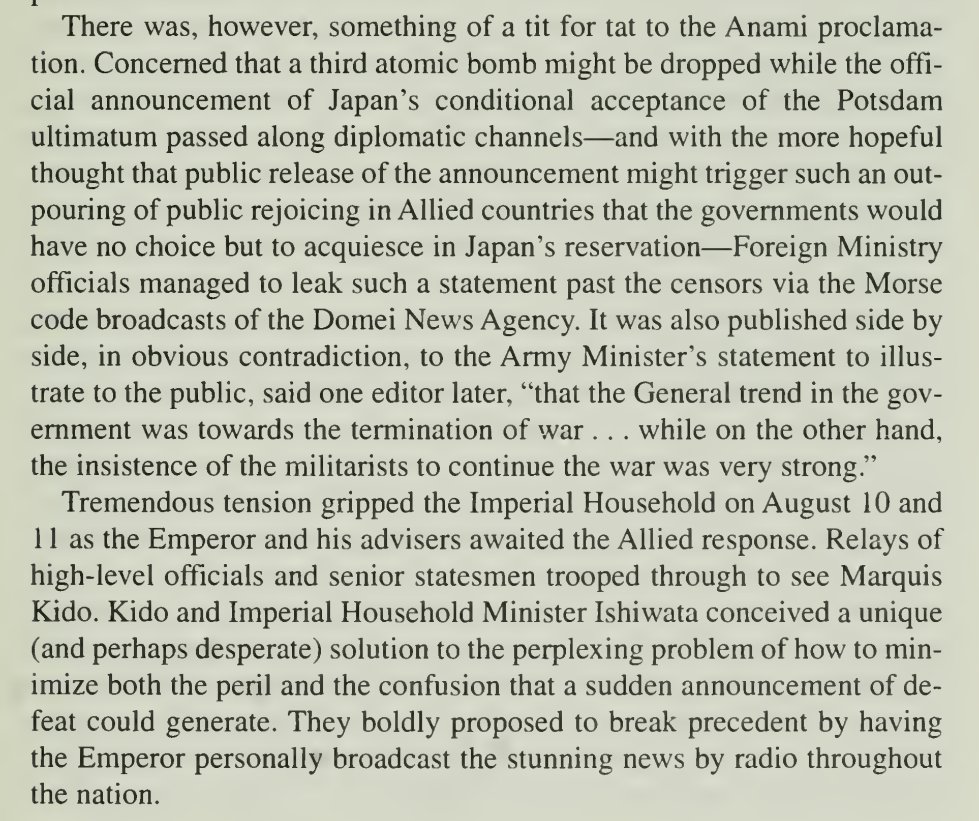
However, the Army published a statement essentially saying Japan would fight on. To avoid getting nuked over this, or while the Cabinet's official position went through diplomatic channels, Togo had the Emperor personally broadcast the surrender declaration.

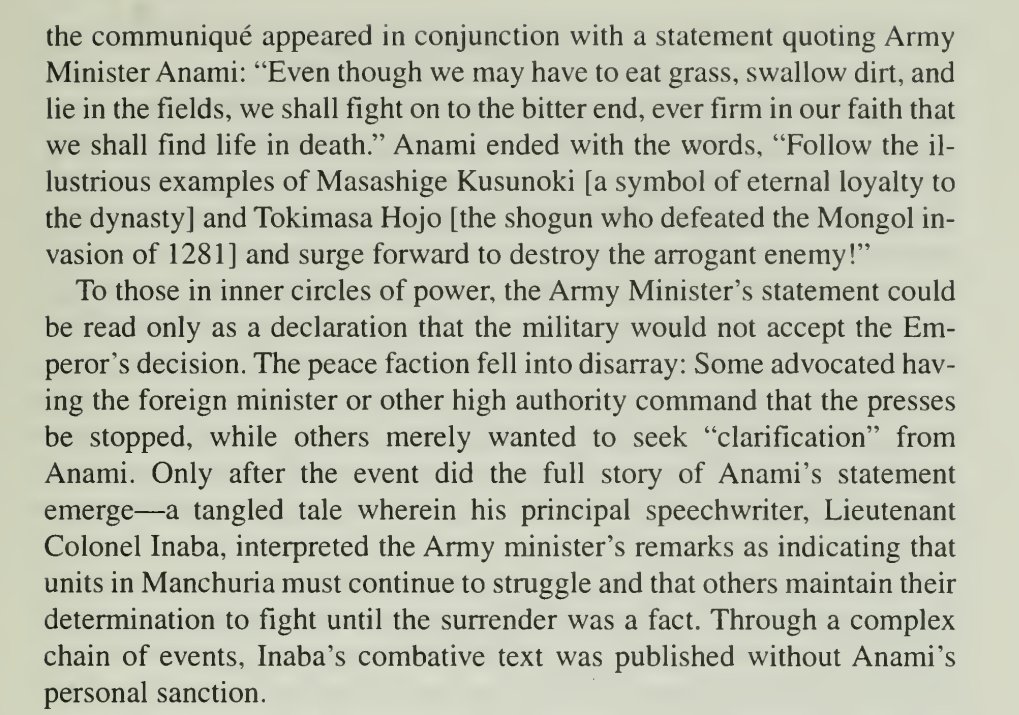

Anami, the Army's cabinet member, wanted to continue the war, and had the power to potentially do so by bringing down the govt. The Emperor's personal intervention was needed to get the armed forces to accept the surrender.


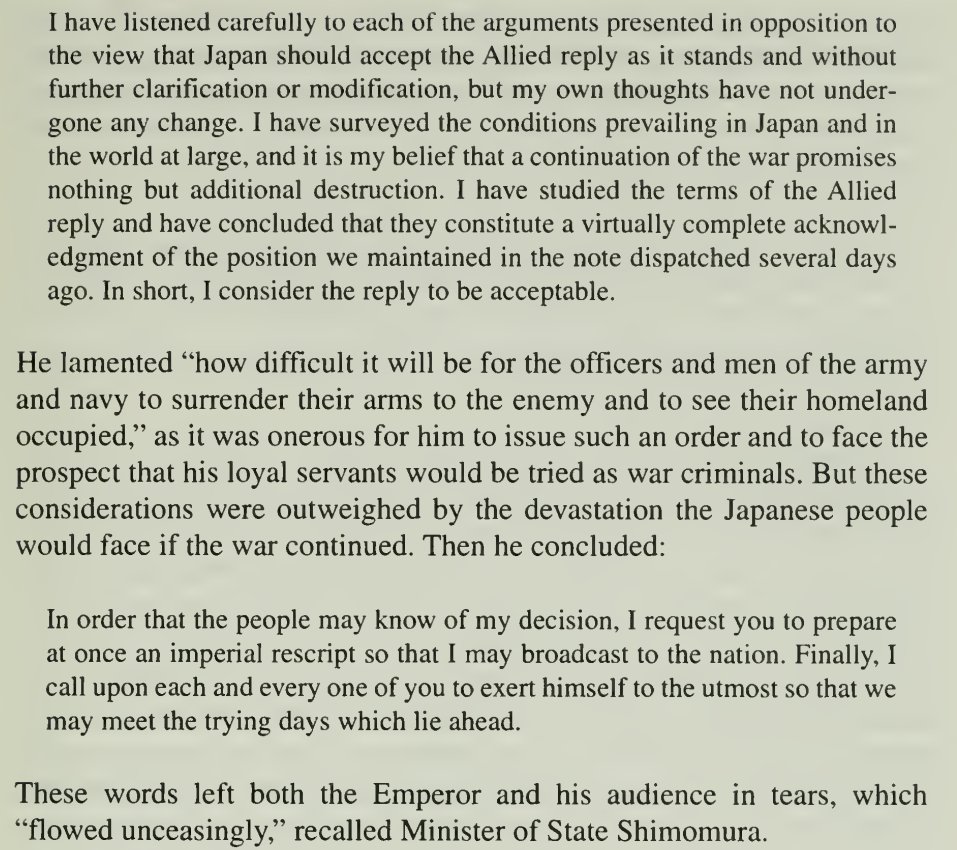

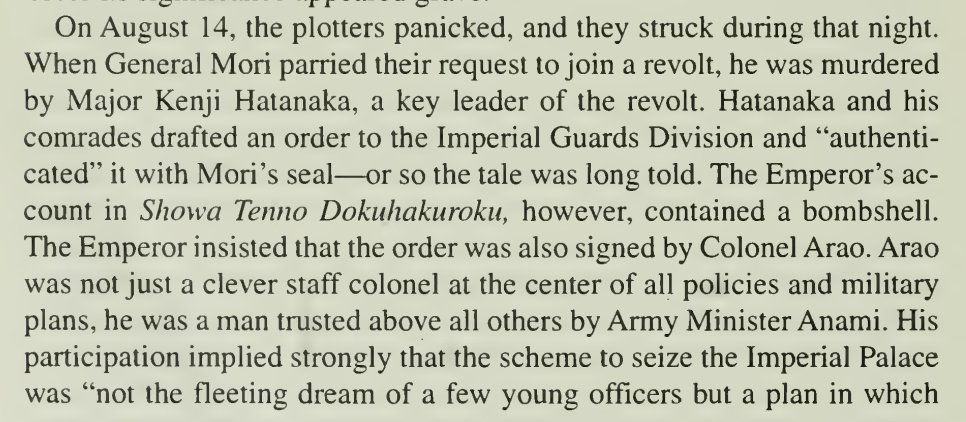
August 14th: attempted coup by junior officers to continue the war, plausibly with the complicity of Anami.

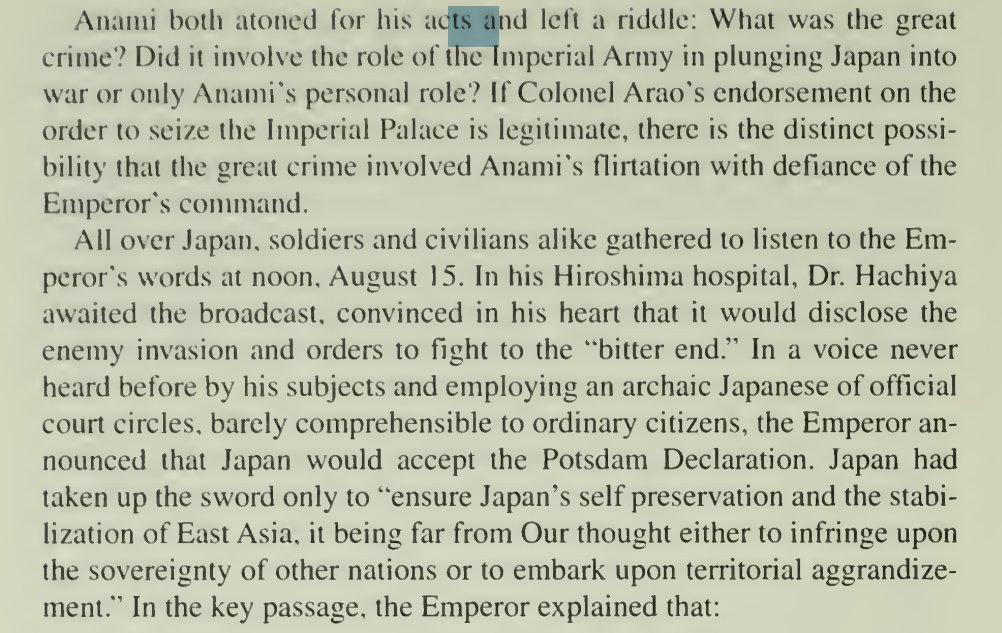
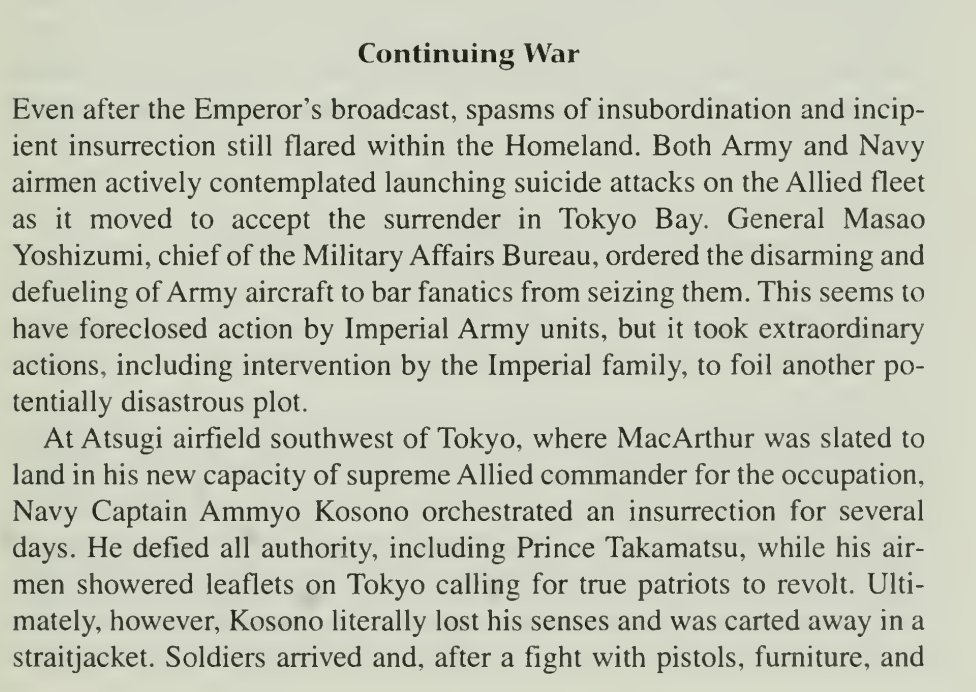
Parts of the military tried to keep fighting after the broadcast.

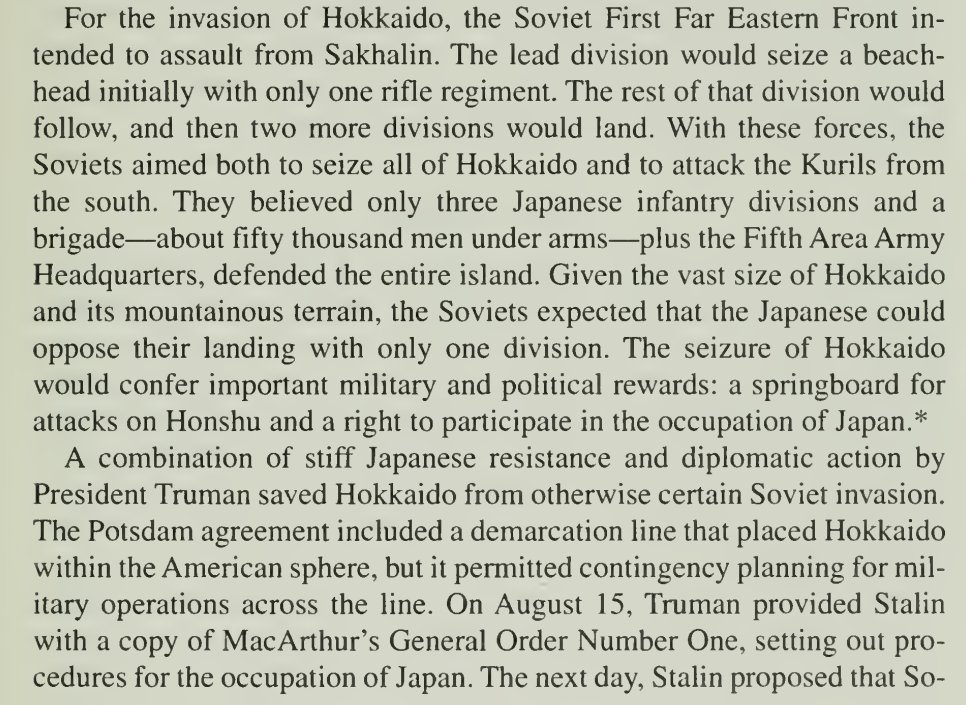
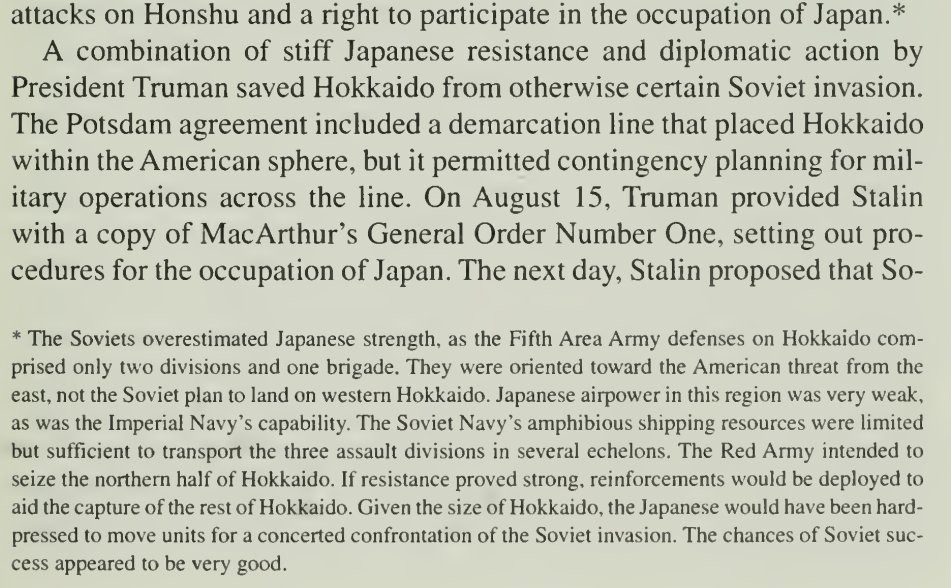
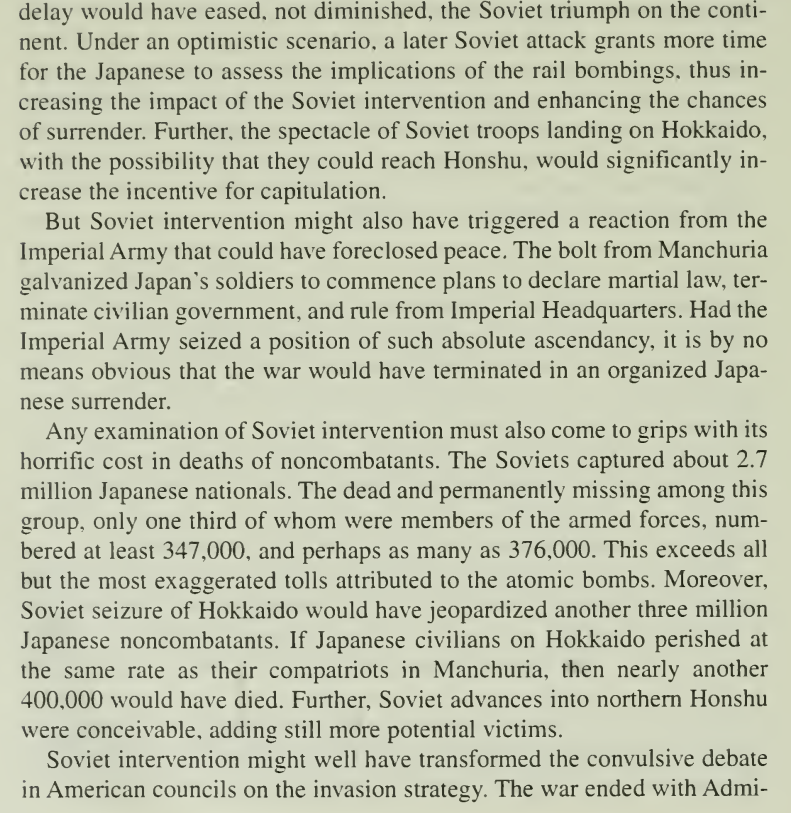
The Soviets wanted to occupy more Japanese territory, invading not only South Sakhalin but also Hokkaido. Truman's intervention, plus Japanese resistance, stopped the latter at the last minute.


The Soviets captured ~2.8M Japanese civilians in Manchuria; about 10% of them died in Soviet captivity.

The male/female nuclear power divide applies to bombs as to reactors.
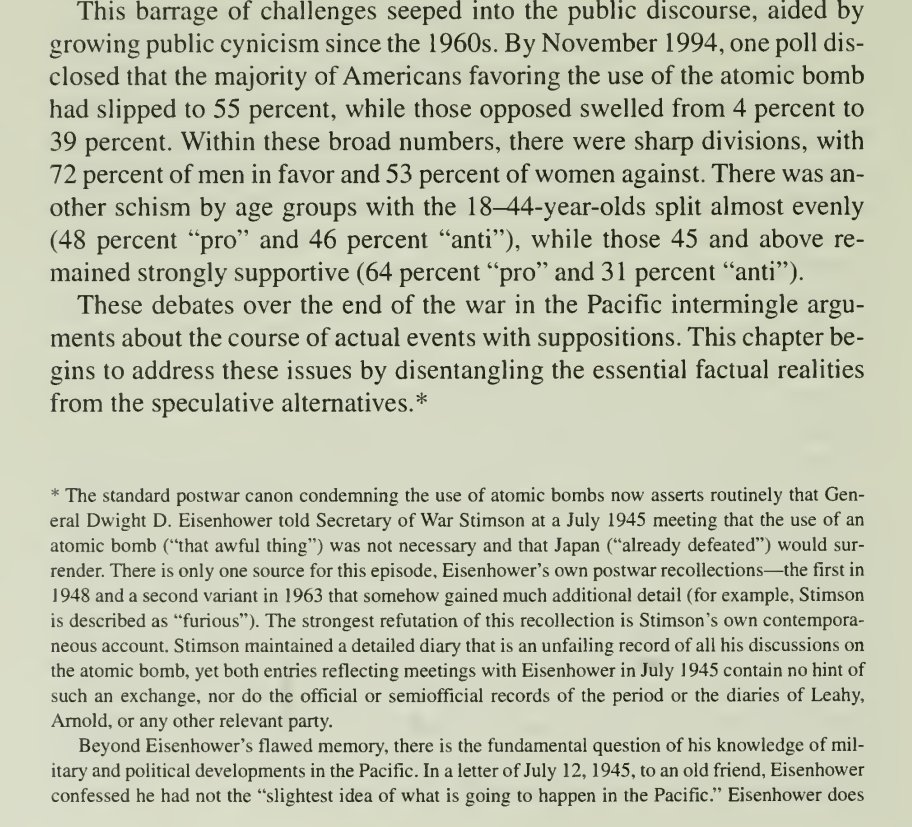
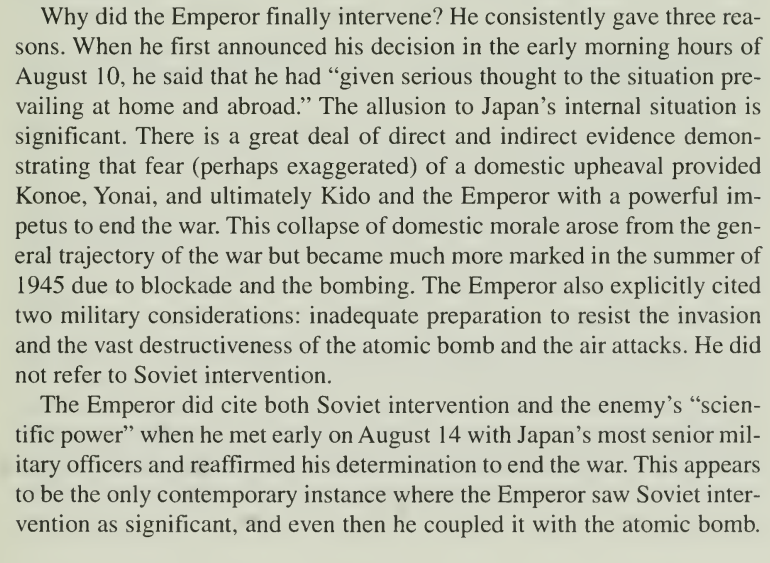
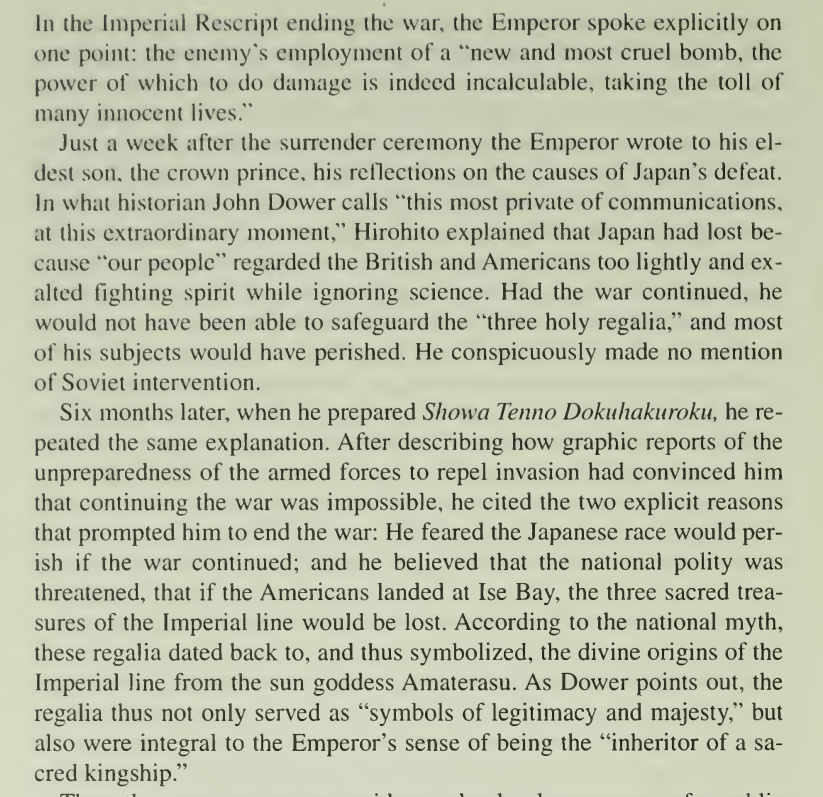
There is no serious doubt that the atomic bombs were necessary to Japanese surrender, that surrender was not seriously contemplated until they dropped, and that the Soviet intervention was either unimportant or less important to the Emperor's decision.


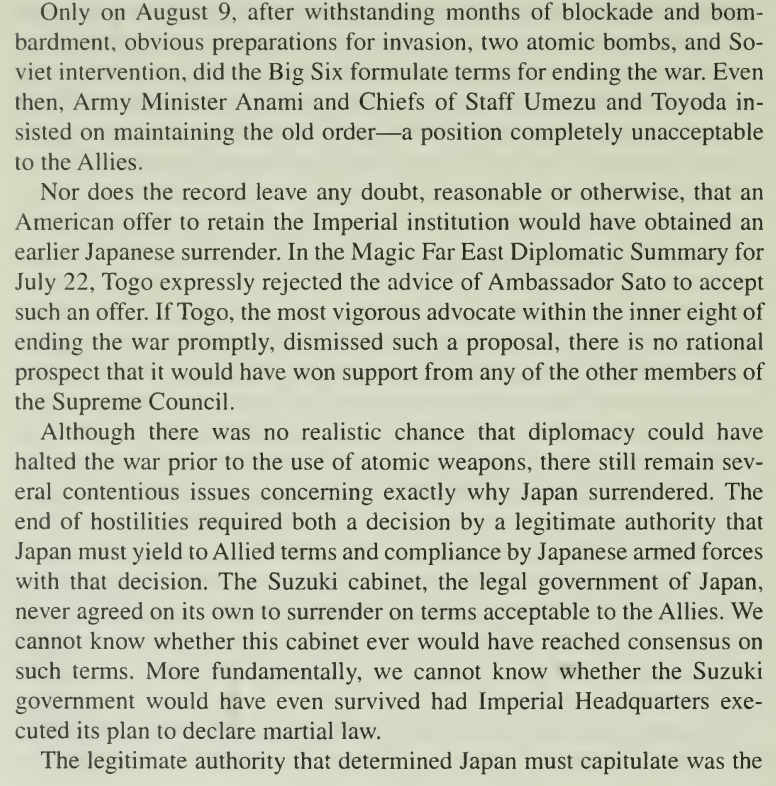
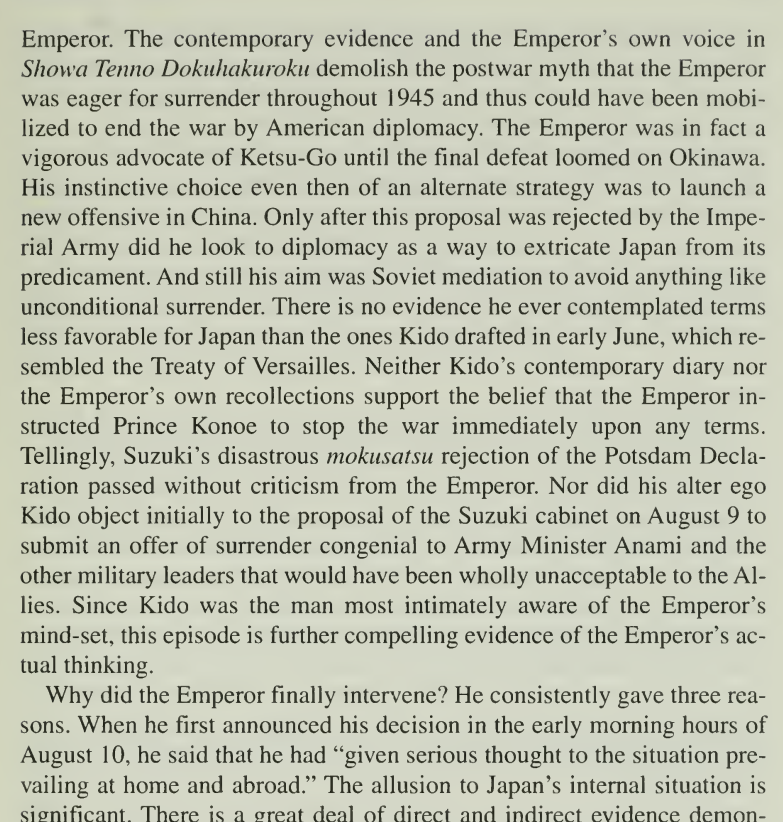
In the many places he talked about his reasons for surrender at the time, Hirohito mentioned the atomic bombs every single time, and Soviet intervention only once.
In the absence of the bombs, Olympic/Majestic, the planned invasion of Southern Kyushu, may not have happened, since all of the planning had assumed much smaller Japanese opposition than intelligence revealed in July. Millions of Japanese and occupied Asians would have starved.
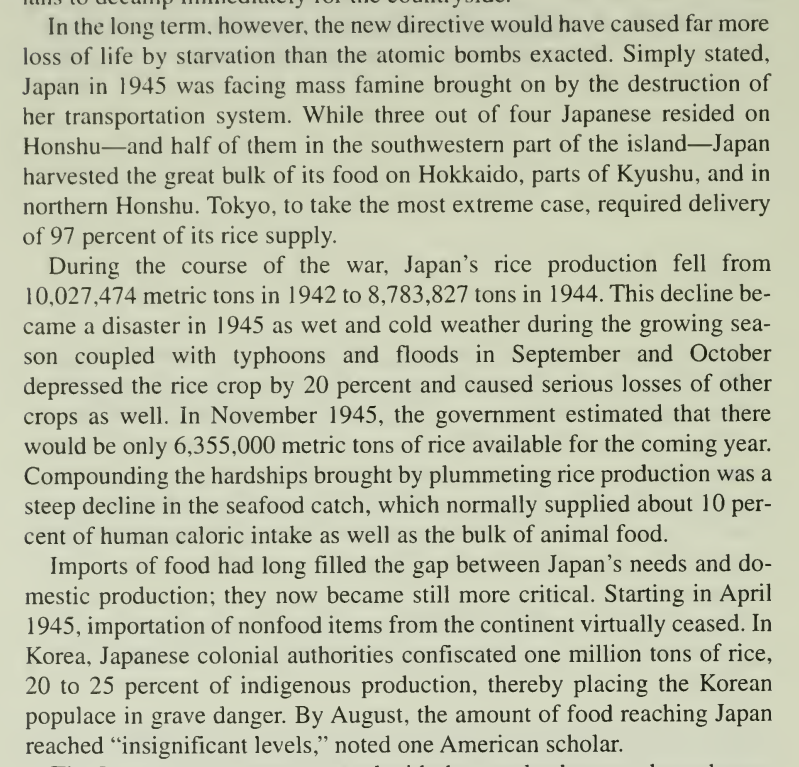
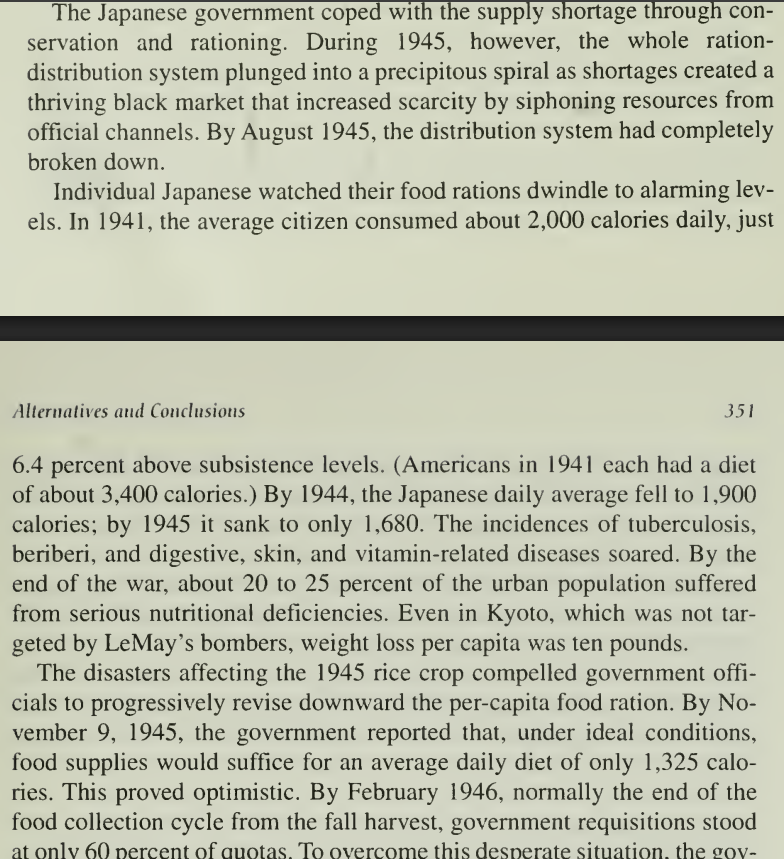
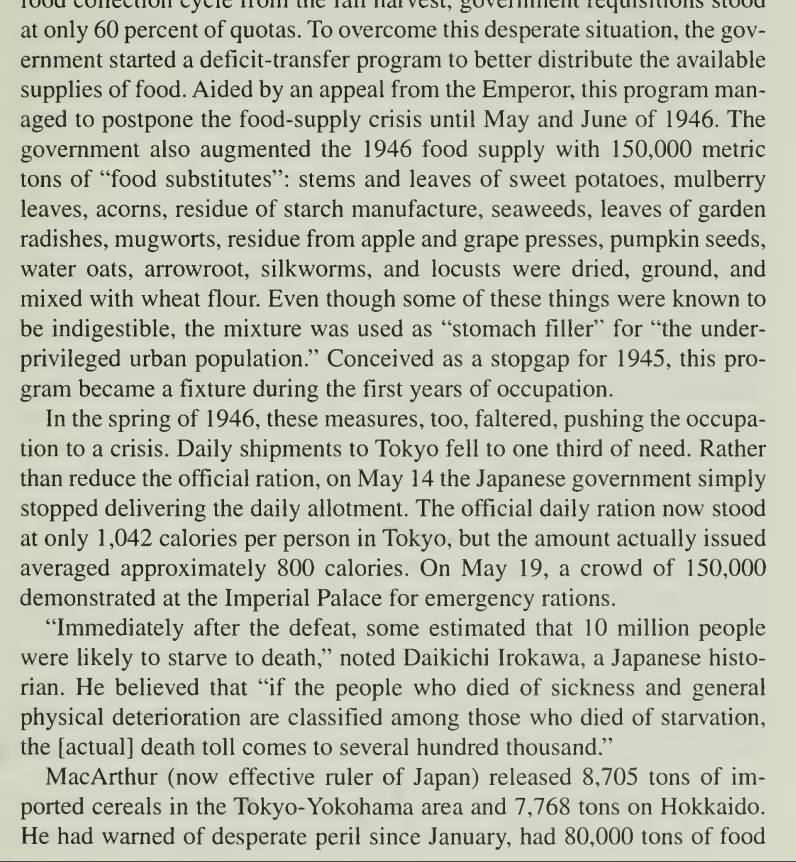
10M Japanese came very close to starving in 1946; only prompt action by MacArthur and Herbert Hoover got 600,000 tons of US food to Japan in time to prevent mass deaths. US planners did not know how little food Japan had during the war, or how vulnerableher railroads were.
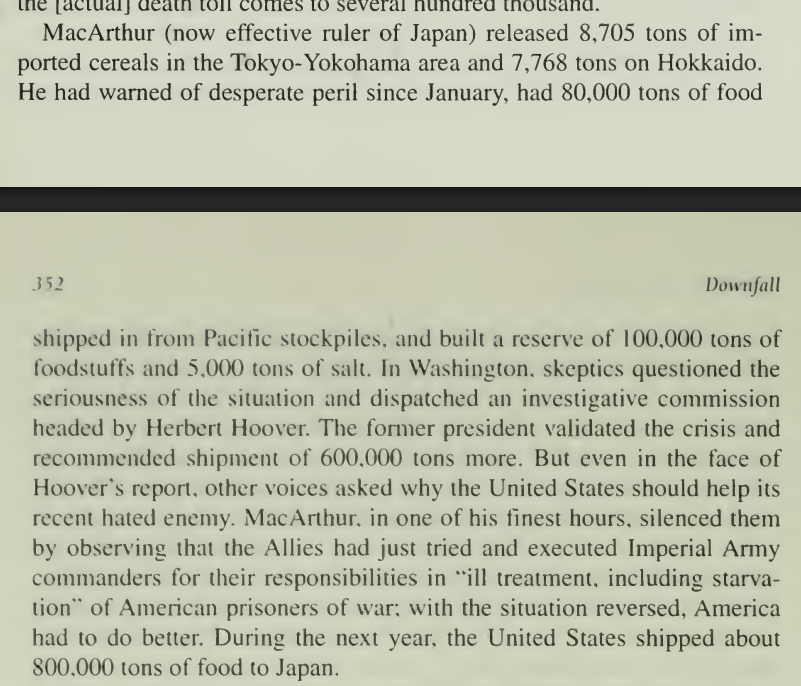
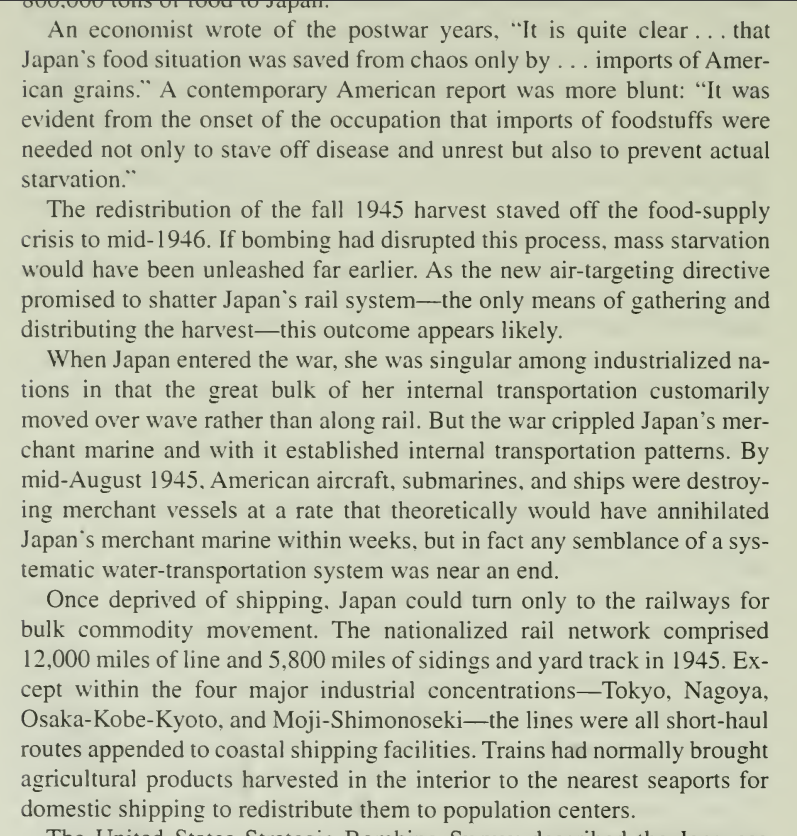

Given the situation in summer 1945 - Soviets planning to invade nearly undefended Hokkaido, Japanese leadership thinking they could salvage a negotiated peace via beating invasion, Olympic/Majestic being far too optimistic, hundreds of thousands dying in China, no certainty even invasion would lead to organized surrender (and defeating Japanese forces piecemeal across all of Asia would have been extremely bloody), mass starvation imminent in Japan - the historical Japanese surrender went extremely well.

• • •
Missing some Tweet in this thread? You can try to
force a refresh