A NEW study showed that pre-treatment with NMDA receptor blockers #memantine or #ifenprodil reduced brain inflammation in the pons and medulla and significantly improved survival after SARS‑CoV‑2 infection. 1/
These findings support further exploration of NMDA antagonist drugs like memantin which is already used in elderly neurological patients, as a possible neuroprotective therapy against COVID-related neurological damage. 2/2
As people get older, a growing population of cells starts to consume more energy — perhaps because the cells accumulate damage that leads them to rev up processes such as inflammation. 1/
An emerging hypothesis suggests that the brain accommodates these energy-hogging ‘senescent cells’ by stripping resources from other biological processes, which ultimately results in outward signs of ageing, such as greying hair or a reduction in muscle mass. 2/
It’s one example of a growing understanding of how our brains control ageing and how psychological stress can accelerate the process at a molecular level. 3/
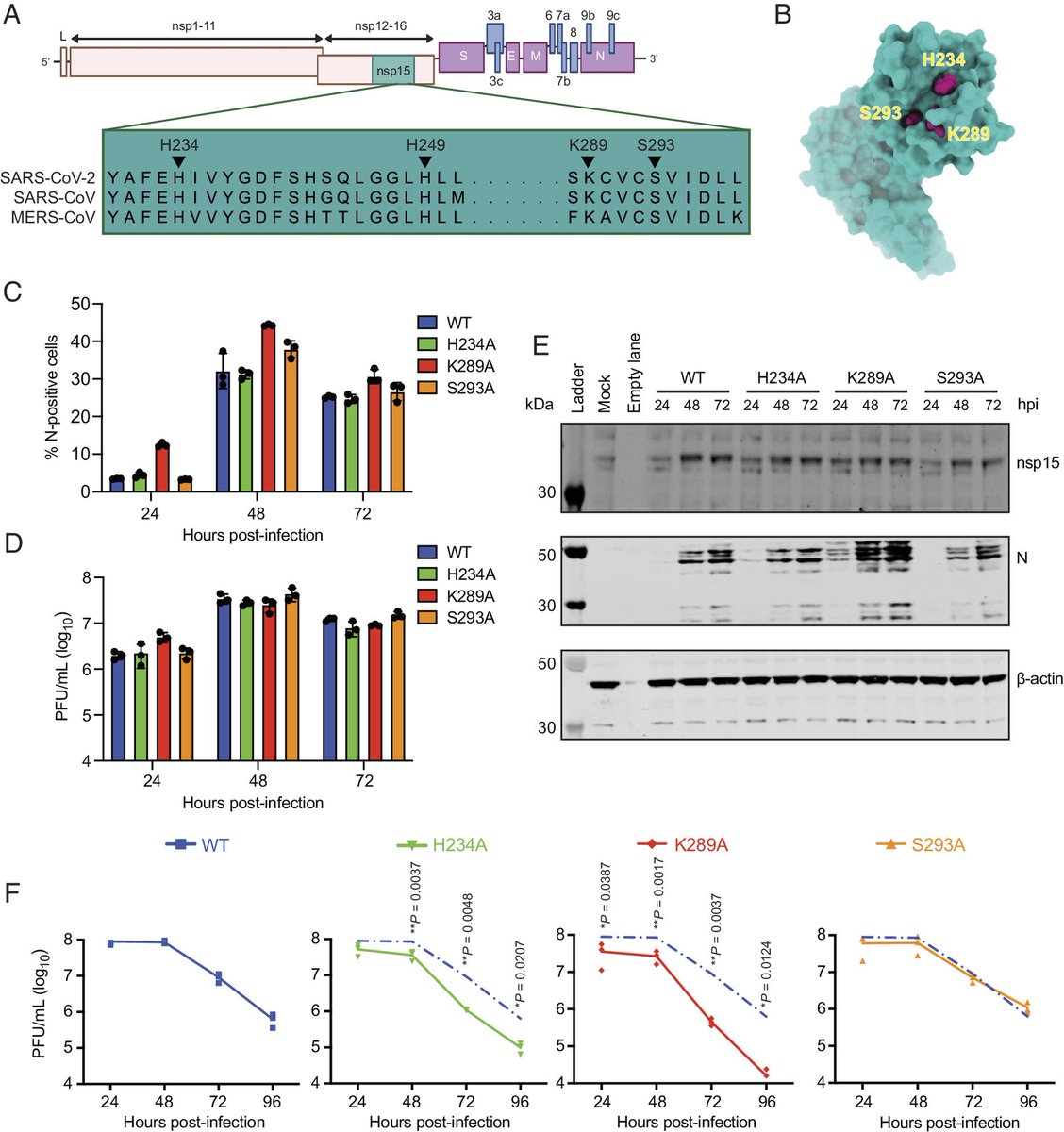
A NEW study found that the SARS-CoV-2 nonstructural protein 15 (nsp15) helps the virus hide from the immune system in human lung and nasal cells. The nsp15 endoribonuclease is important in promoting virus replication and influencing disease severity. 1/
SARS2 variants lacking this activity exhibit impaired replication & cause milder disease, highlighting nsp15 as a key virulence factor. This underscores the importance of nsp15’s endoribonuclease activity in both promoting virus replication & influencing disease severity. 2/
The viral variants lacking nsp15 endoribonuclease activity elicited higher innate immune responses and exhibited reduced replication in human stem cell–derived lung alveolar type II epithelial cells, as well as in the lungs of infected hamsters. 3/
Researchers developed a 23-amino acid peptide that mimics ACE2 and effectively binds the SARS-CoV-2 spike protein, preventing viral entry. 1/
The peptide demonstrated potent antiviral activity against both the original and Omicron strains, with a therapeutic index greater than 20, indicating strong potential for therapeutic use. 2/
Moreover, future viruses from this family of coronaviruses may likely use ACE2 as their host cell receptor, as recently demonstrated in the MERS Virus of bats and, therefore, the ACE2 decoy therapeutic may have future applications as well. 3/
A NEW preprint found that submaximal exercise in people with #LongCOVID caused large microclots to fragment into smaller microclots and this then triggered increases in inflammatory and vascular injury markers. 1/
The breakdown of large microclots, rather than clearing them from circulation, was linked to reduced oxygen uptake and heightened inflammation. 2/
The data suggest that while the immune system tries to control inflammation caused by microclot fragmentation after physical exertion, its compensatory mechanisms are inadequate or failing. 3/
Globally, NB.1.8.1 is now the dominant variant. The WHO has issued a warning about rising COVID-19 activity in the Western Pacific, Southeast Asia, and Eastern Mediterranean, driven by NB.1.8.1 this week.
H/T: @RajlabN
Classified as a "variant under monitoring" by the WHO & “ Nimbus” by @TRyanGregory, NB.1.8.1 has triggered a seventh consecutive week of surges in Southeast Asia. Taiwan has seen ER visits double again this week. 2/
Researchers found that people with LongCOVID fatigue have damaged gut barriers & signs of immune activation.
Preexisting gastrointestinal symptoms before COVID infection predisposed people to developing LongCOVID fatigue. 1/
LongCOVID patients were found to have an increased LBP/sCD14 ratio & lower IL-33 levels, which indicates altered immune activation & a reduced intestinal barrier. In addition, there were increased IL-6 levels, which are considered a marker for systemic inflammation. 2/
LBP/sCD14 is the ratio of lipopolysaccharide binding protein to soluble CD14.
This study emphasizes the impact of SARS-CoV-2 infection on the gut, which might be associated with the onset of Fatigue seen in LongCovid patients. 3/