Since Israel attacked Iran, German media outlets & journalists of all political persuasions have started questioning international law and or heralding a new age where the law of the strongest applies in international relationships.
A thread to which I will keep adding / 1
A thread to which I will keep adding / 1
https://twitter.com/giulio_mattioli/status/1935952797092155878
2. The ex editor of Bild, now at far-right website NIUS
https://x.com/giulio_mattioli/status/1935622311979491484
3. Colum in center-left daily Süddeutsche Zeitung
https://x.com/giulio_mattioli/status/1935448924829200729
4. The UK & Anglosphere correspondent of Die Zeit (high-brow, centrist) 
https://x.com/JochenBittner/status/1934556563286483084

5. The economics correspondent of the same Die Zeit
https://x.com/giulio_mattioli/status/1933841056002638317
6. German state-funded television network & international broadcaster DW
https://x.com/dwnews/status/1933733684240396319
[Given the many Germanophobic reactions, a few clarifications (which should really go without saying):
- no, not all columnists and journalists argue that way
- yes, there have been calls for respecting international law
- no this doesn't mean Germans are Nazis]
- no, not all columnists and journalists argue that way
- yes, there have been calls for respecting international law
- no this doesn't mean Germans are Nazis]
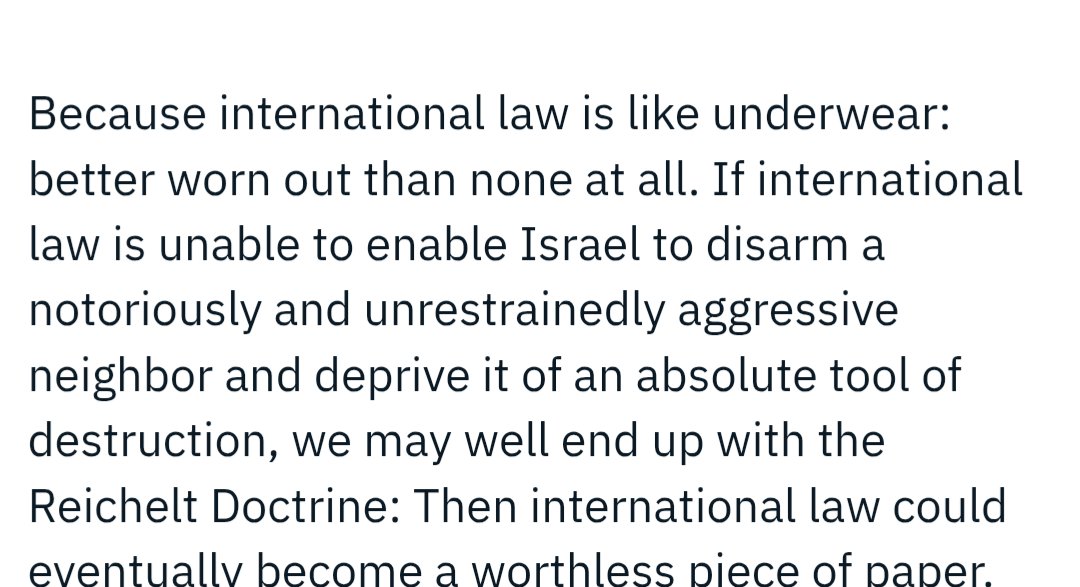
8. Right-wing daily Welt calls for an end to the government's "fennel tea diplomacy" which it sees as not supportive of Israel enough, and too preoccupied with international law
https://x.com/thorstenbenner/status/1937040071212884462?t=n6G0z5WwwUZUle88X0higA&s=19
9. Another column in centrist, high-brow German magazine Die Zeit denouncing "intolerable, one-sided" appeals to international law behind which "murderers are hiding"
zeit.de/kultur/2025-06…
zeit.de/kultur/2025-06…

10. Another column in Die Zeit lamenting "the bigoted incantation "international law! International law!" which "has nothing to do with a civilised political debate "
zeit.de/2025/27/nahost…
zeit.de/2025/27/nahost…

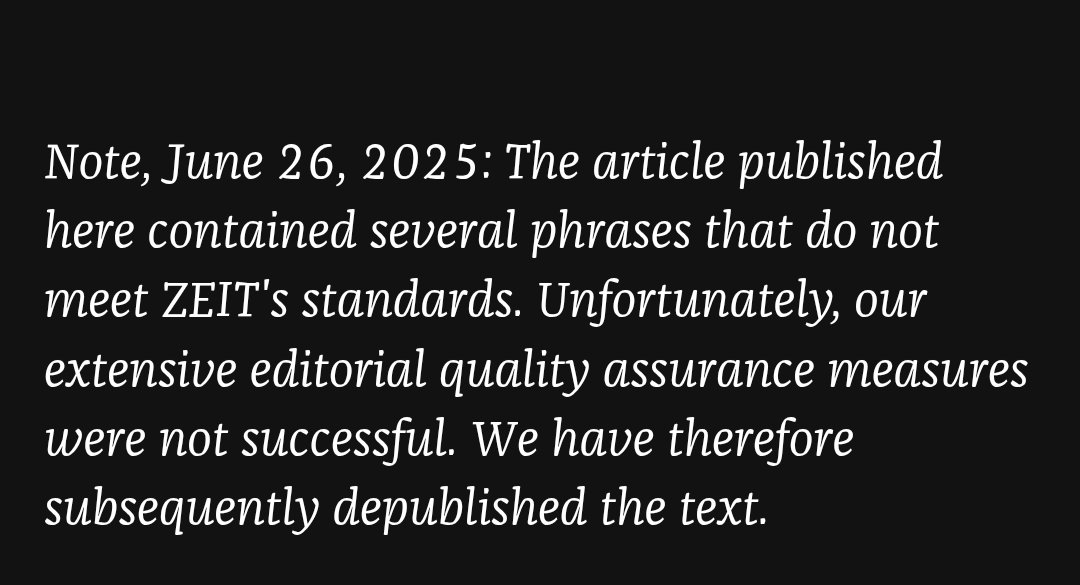
The article under 10. has just been withdrawn
• • •
Missing some Tweet in this thread? You can try to
force a refresh