Liquidity Master Guide - Part 4 🎉
Fear & Greed: The Invisible Hand's Moving Price 💎
Parts 1-3 and 4 Combined! 👇
1000 Likes and I will release Part 5.
Fear & Greed: The Invisible Hand's Moving Price 💎
Parts 1-3 and 4 Combined! 👇
1000 Likes and I will release Part 5.

Part 1 - What Is Liquidity ?
Page No, 1-4.
Page No, 1-4.


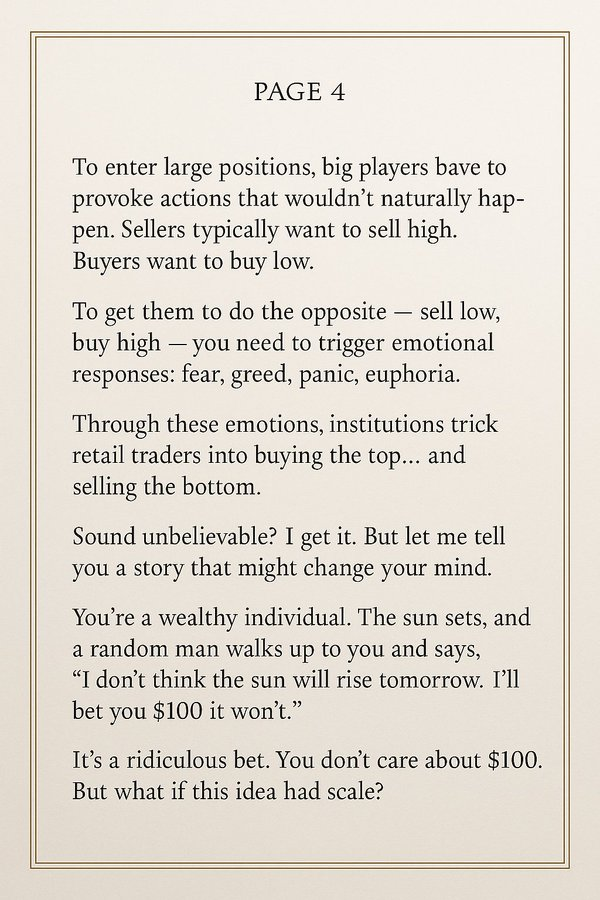
Part 1 - What is Liquidity?
Page's No. 5-6
Page's No. 5-6


Part 2 - The Foundational Principle of Liquidity 💎
Page No. 7 - 10
Page No. 7 - 10


Part 2 - The Foundational Principle of Liquidity 💎
Page No. 11 - 14
Page No. 11 - 14


Part 2 - The Foundational Principle of Liquidity 💎
Page No. 15, 16.
Page No. 15, 16.


Part 3 - The Art of Spotting Liquidity on the Chart 💎
Page No. 17 - 20
Page No. 17 - 20
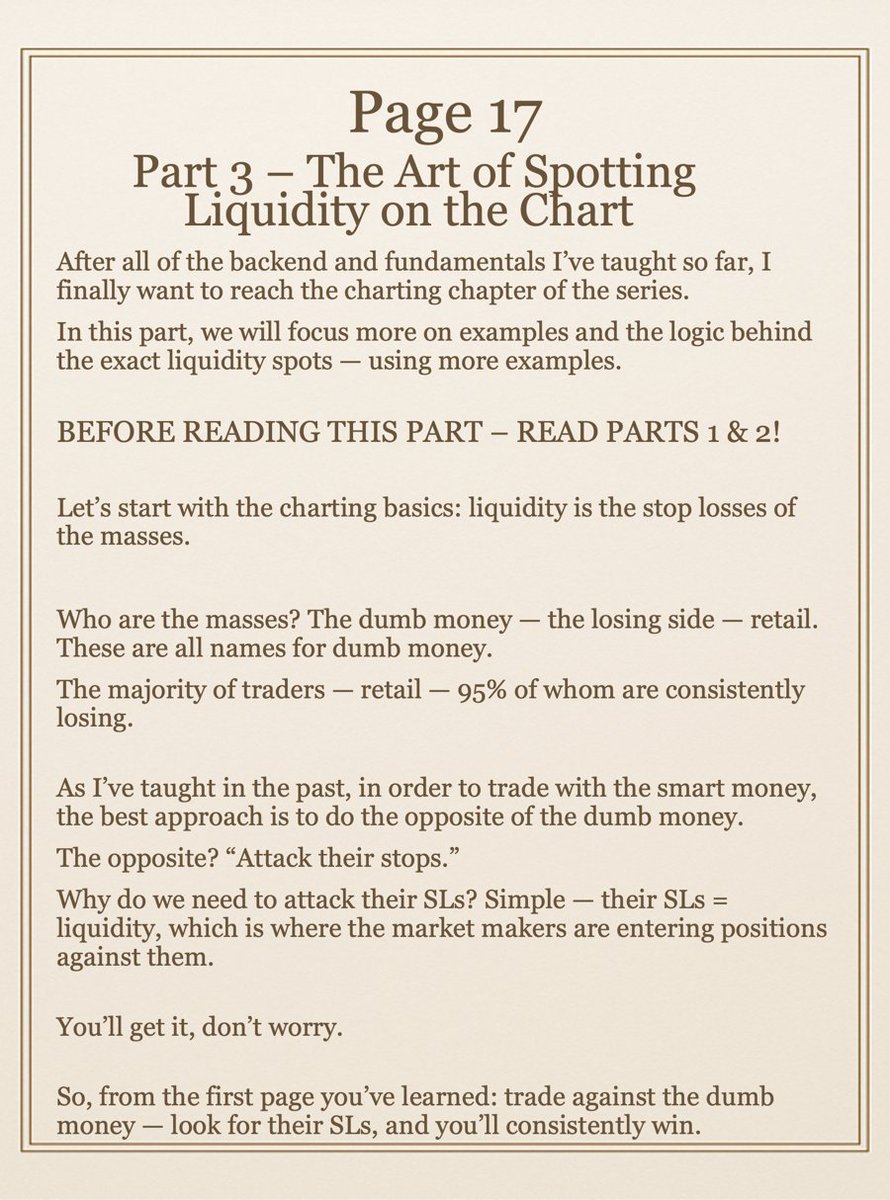


Part 3 - The Art of Spotting Liquidity on the Chart 💎
Page No. 21 - 24
Page No. 21 - 24


Part 3 - The Art of Spotting Liquidity on the Chart 💎
Page No. 25 - 26
Page No. 25 - 26

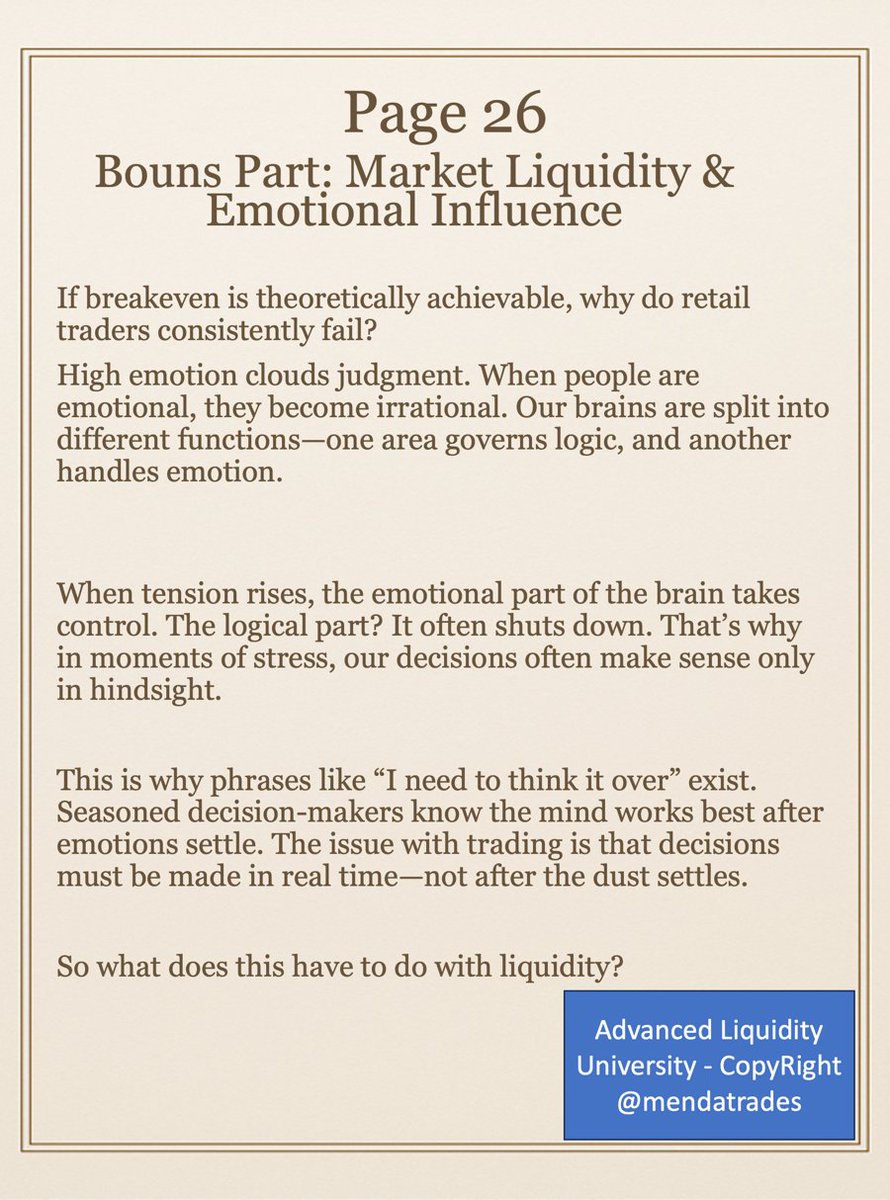
Part 4 - Bonus Part !
Market Liquidity & Emotional Influence 🧐
Page No. 27
Market Liquidity & Emotional Influence 🧐
Page No. 27

Part 4 - Bonus Part !
Market Liquidity & Emotional Influence 🧐
Page No. 28
Market Liquidity & Emotional Influence 🧐
Page No. 28

Part 4 - Bonus Part !
Market Liquidity & Emotional Influence 🧐
Page No. 29
Market Liquidity & Emotional Influence 🧐
Page No. 29

Part 4 - Bonus Part !
Market Liquidity & Emotional Influence 🧐
Page No. 30
Market Liquidity & Emotional Influence 🧐
Page No. 30

Part 4 - Bonus Part !
Market Liquidity & Emotional Influence 🧐
Page No. 31
Market Liquidity & Emotional Influence 🧐
Page No. 31

Part 4 - Bonus Part!
Market Liquidity & Emotional Influence 🧐
Page No. 32
Market Liquidity & Emotional Influence 🧐
Page No. 32

Part 4 - New Part!
Fear & Greed: The Invisible Hand's Moving Price 💎
Page No. 33
Fear & Greed: The Invisible Hand's Moving Price 💎
Page No. 33
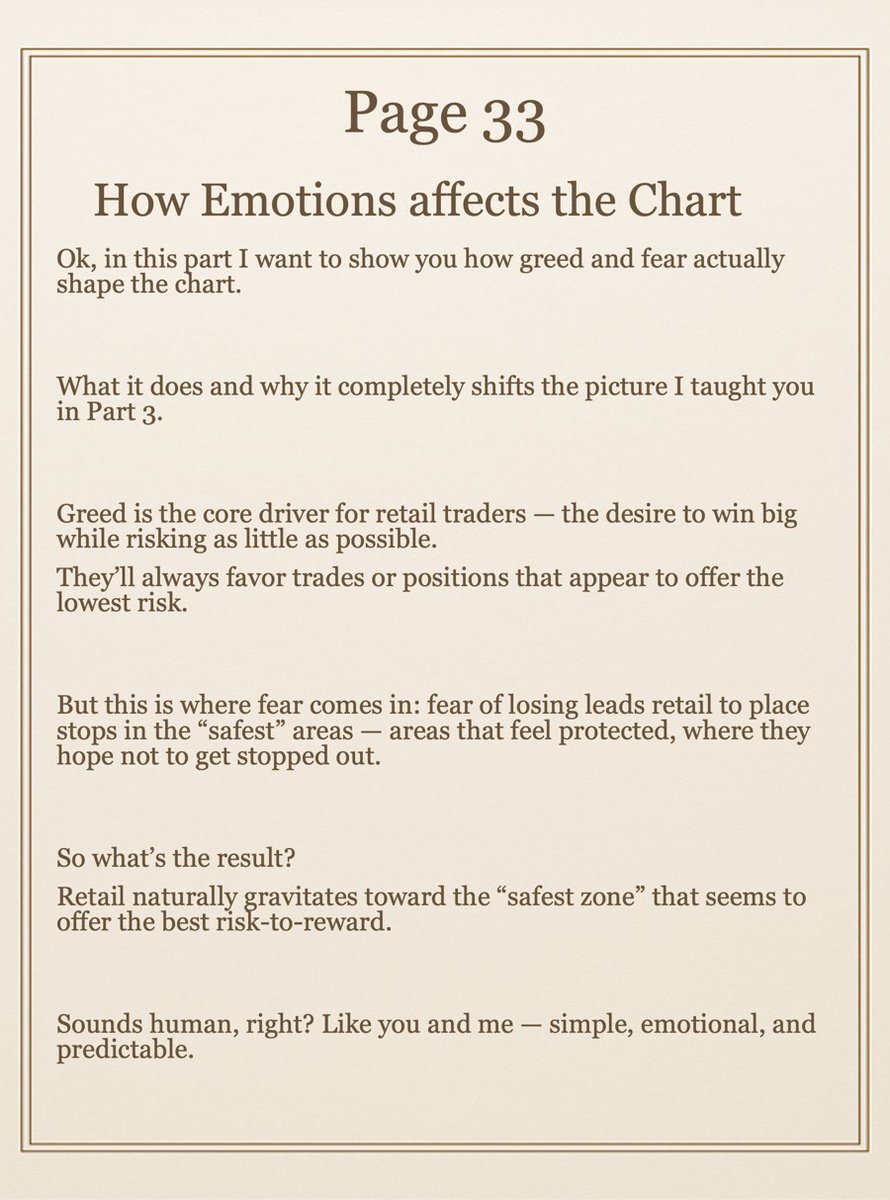
Part 4 - New Part!
Fear & Greed: The Invisible Hand's Moving Price 💎
Page No. 34
Fear & Greed: The Invisible Hand's Moving Price 💎
Page No. 34

Part 4 - New Part!
Fear & Greed: The Invisible Hand's Moving Price 💎
Page No. 35
Fear & Greed: The Invisible Hand's Moving Price 💎
Page No. 35

Part 4 - New Part!
Fear & Greed: The Invisible Hand's Moving Price 💎
Page No. 36
Fear & Greed: The Invisible Hand's Moving Price 💎
Page No. 36

Part 4 - New Part!
Fear & Greed: The Invisible Hand's Moving Price 💎
Page No. 37
Fear & Greed: The Invisible Hand's Moving Price 💎
Page No. 37

Part 4 - New Part!
Fear & Greed: The Invisible Hand's Moving Price 💎
Page No. 38
Fear & Greed: The Invisible Hand's Moving Price 💎
Page No. 38

Part 4 - New Part!
Fear & Greed: The Invisible Hand's Moving Price 💎
Page No. 39
Fear & Greed: The Invisible Hand's Moving Price 💎
Page No. 39

Part 4 - New Part!
Fear & Greed: The Invisible Hand's Moving Price 💎
Page No. 40 Last Page of Part 4
Fear & Greed: The Invisible Hand's Moving Price 💎
Page No. 40 Last Page of Part 4

If you’ve enjoyed this book so far, I recommend joining my Telegram channel @ mendaupdates (link in bio).
I’ve also launched the Advanced Liquidity University to teach these concepts in depth—check the pinned message.
Please like and RT for Part 5.
I’ve also launched the Advanced Liquidity University to teach these concepts in depth—check the pinned message.
Please like and RT for Part 5.
• • •
Missing some Tweet in this thread? You can try to
force a refresh