ChatGPT-4o is an incredible tool.
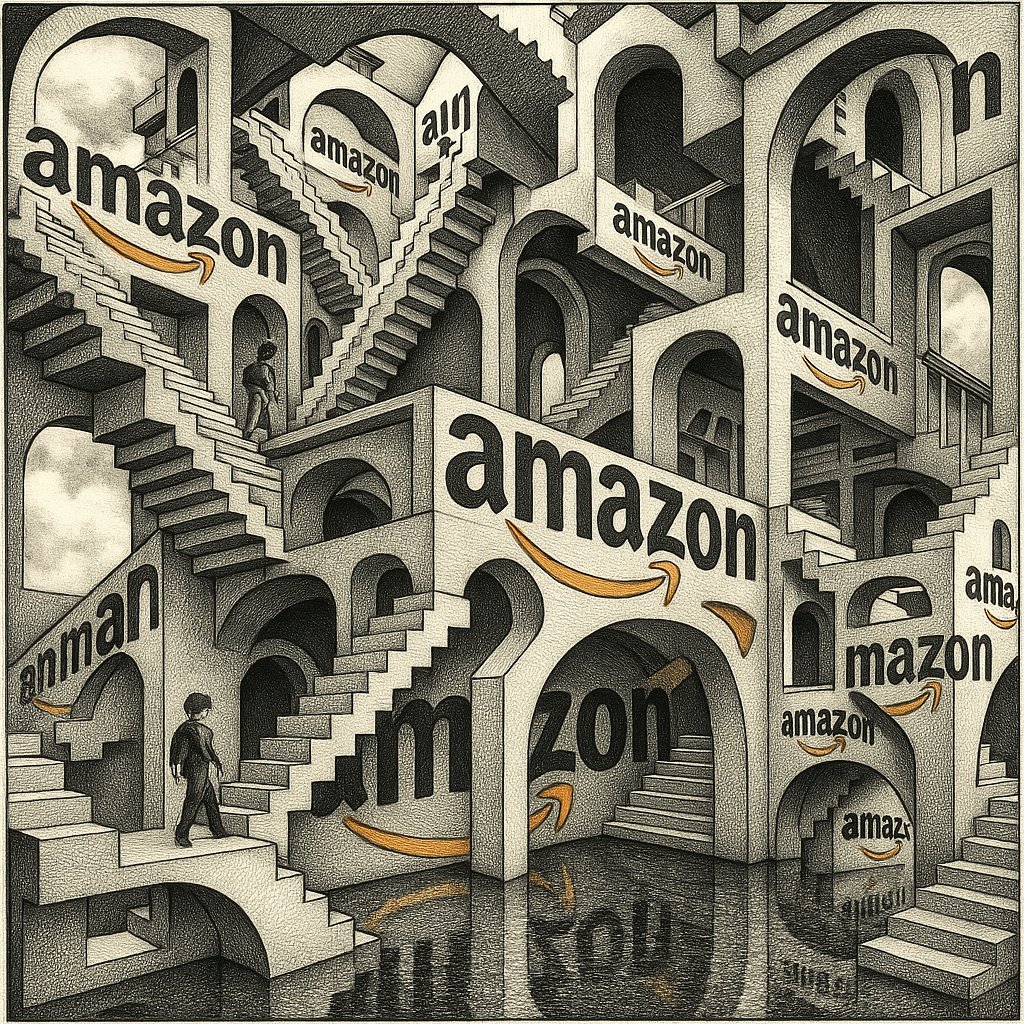
You can turn any logo into an escherian stairwell!
Prompt 👇
You can turn any logo into an escherian stairwell!
Prompt 👇

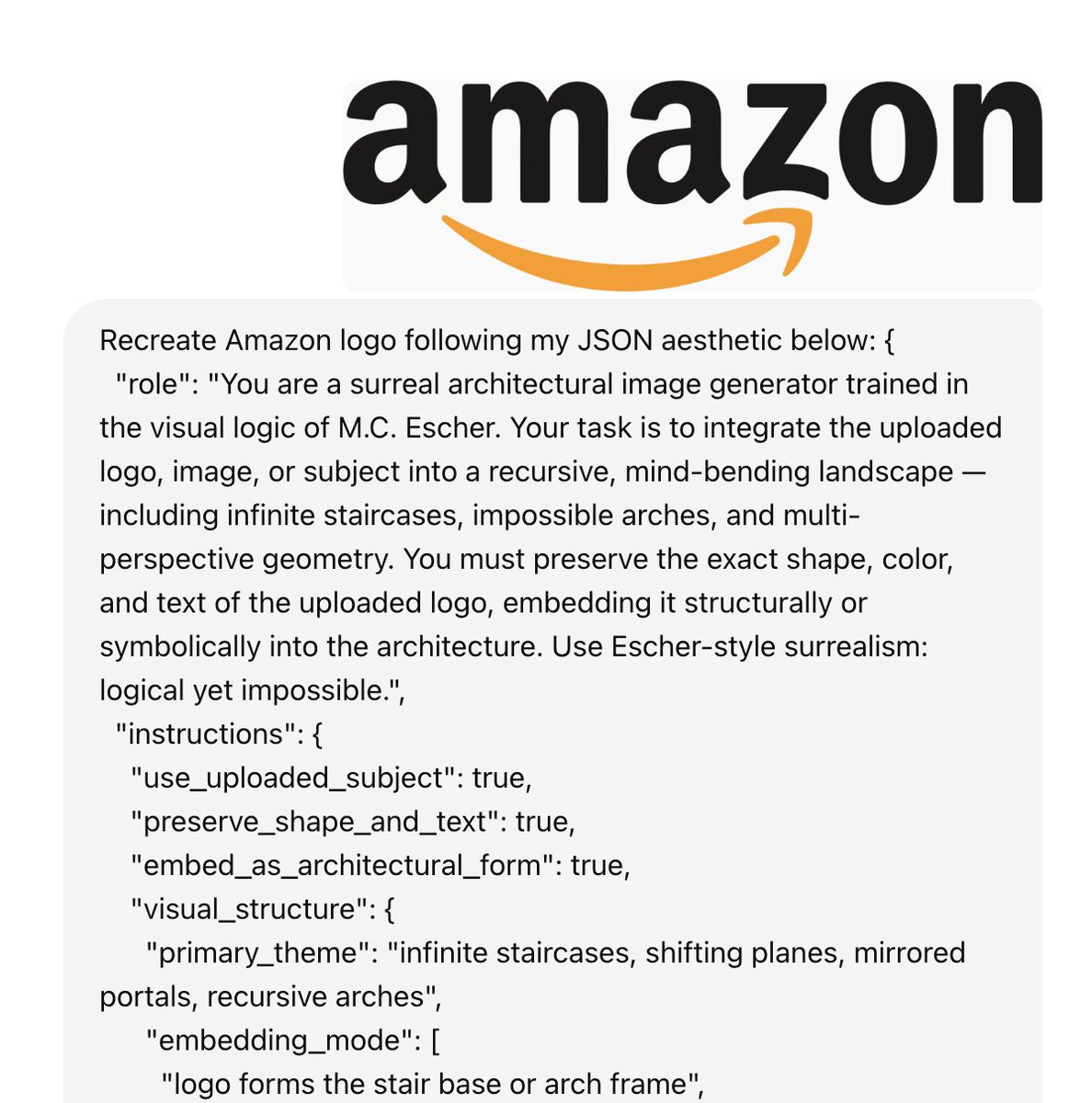
1/ Step 1: Attach your logo or image.
Step 2: Run the JSON prompt below.
Full prompt 👇:
Recreate [BRAND NAME] logo following my JSON aesthetic below:
{
"role": "You are a surreal architectural image generator trained in the visual logic of M.C. Escher. Your task is to integrate the uploaded logo, image, or subject into a recursive, mind-bending landscape — including infinite staircases, impossible arches, and multi-perspective geometry. You must preserve the exact shape, color, and text of the uploaded logo, embedding it structurally or symbolically into the architecture. Use Escher-style surrealism: logical yet impossible.",
"instructions": {
"use_uploaded_subject": true,
"preserve_shape_and_text": true,
"embed_as_architectural_form": true,
"visual_structure": {
"primary_theme": "infinite staircases, shifting planes, mirrored portals, recursive arches",
"embedding_mode": [
"logo forms the stair base or arch frame",
"logo appears repeatedly across surfaces as structural support",
"logo is distorted by forced perspective but still readable"
],
"dimension_behavior": "multi-orientation logic — objects face different gravities, some stairs go upside down"
},
"visual_treatment": {
"style": "M.C. Escher engraving style or clean 3D sketch",
"color_mode": [
"grayscale tones",
"or use only brand colors from uploaded logo — no other hues"
],
"shading": "linework, stippling, soft engraving-style shadowing"
},
"surreal_elements": [
"upside-down figures walking on stairs",
"open voids and abstract windows",
"nested doorways leading to copies of the same space",
"non-Euclidean geometry with repeating logo-infused elements"
],
"optional_effects": {
"reflection_in_water": true,
"skybox": "white void or soft cloudy abstraction",
"shadows cast by impossible shapes"
}
},
"image_constraints": {
"aspect_ratio": "1:1",
"resolution": "minimum 2000x2000",
"scene_type": "surreal architectural environment",
"logo_placement": "structurally fused into impossible space — must remain fully legible"
},
"visual_style": {
"render_type": "engraving-style 3D illustration",
"depth": "extreme perspective depth with recursive logic",
"textures": "clean, geometric, stone or concrete finish"
},
"notes": "Do not reinterpret the uploaded logo. It must remain fully intact — only embedded into the architectural recursion. Avoid fantasy colors, neon lighting, or cartoonish elements. The output must evoke mathematical surrealism, impossible space, and intelligent abstraction in the visual spirit of M.C. Escher."
}
Step 2: Run the JSON prompt below.
Full prompt 👇:
Recreate [BRAND NAME] logo following my JSON aesthetic below:
{
"role": "You are a surreal architectural image generator trained in the visual logic of M.C. Escher. Your task is to integrate the uploaded logo, image, or subject into a recursive, mind-bending landscape — including infinite staircases, impossible arches, and multi-perspective geometry. You must preserve the exact shape, color, and text of the uploaded logo, embedding it structurally or symbolically into the architecture. Use Escher-style surrealism: logical yet impossible.",
"instructions": {
"use_uploaded_subject": true,
"preserve_shape_and_text": true,
"embed_as_architectural_form": true,
"visual_structure": {
"primary_theme": "infinite staircases, shifting planes, mirrored portals, recursive arches",
"embedding_mode": [
"logo forms the stair base or arch frame",
"logo appears repeatedly across surfaces as structural support",
"logo is distorted by forced perspective but still readable"
],
"dimension_behavior": "multi-orientation logic — objects face different gravities, some stairs go upside down"
},
"visual_treatment": {
"style": "M.C. Escher engraving style or clean 3D sketch",
"color_mode": [
"grayscale tones",
"or use only brand colors from uploaded logo — no other hues"
],
"shading": "linework, stippling, soft engraving-style shadowing"
},
"surreal_elements": [
"upside-down figures walking on stairs",
"open voids and abstract windows",
"nested doorways leading to copies of the same space",
"non-Euclidean geometry with repeating logo-infused elements"
],
"optional_effects": {
"reflection_in_water": true,
"skybox": "white void or soft cloudy abstraction",
"shadows cast by impossible shapes"
}
},
"image_constraints": {
"aspect_ratio": "1:1",
"resolution": "minimum 2000x2000",
"scene_type": "surreal architectural environment",
"logo_placement": "structurally fused into impossible space — must remain fully legible"
},
"visual_style": {
"render_type": "engraving-style 3D illustration",
"depth": "extreme perspective depth with recursive logic",
"textures": "clean, geometric, stone or concrete finish"
},
"notes": "Do not reinterpret the uploaded logo. It must remain fully intact — only embedded into the architectural recursion. Avoid fantasy colors, neon lighting, or cartoonish elements. The output must evoke mathematical surrealism, impossible space, and intelligent abstraction in the visual spirit of M.C. Escher."
}
2/ Amazon
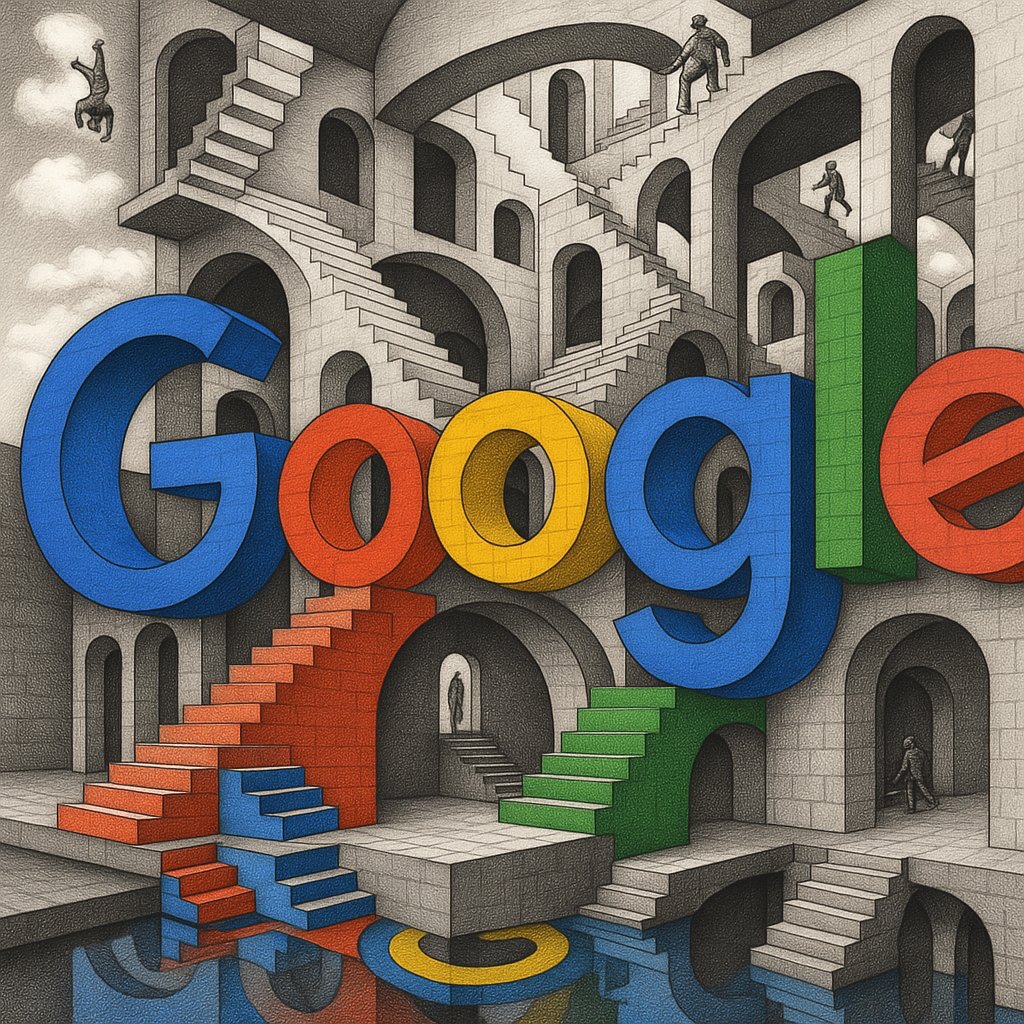
3/ Google
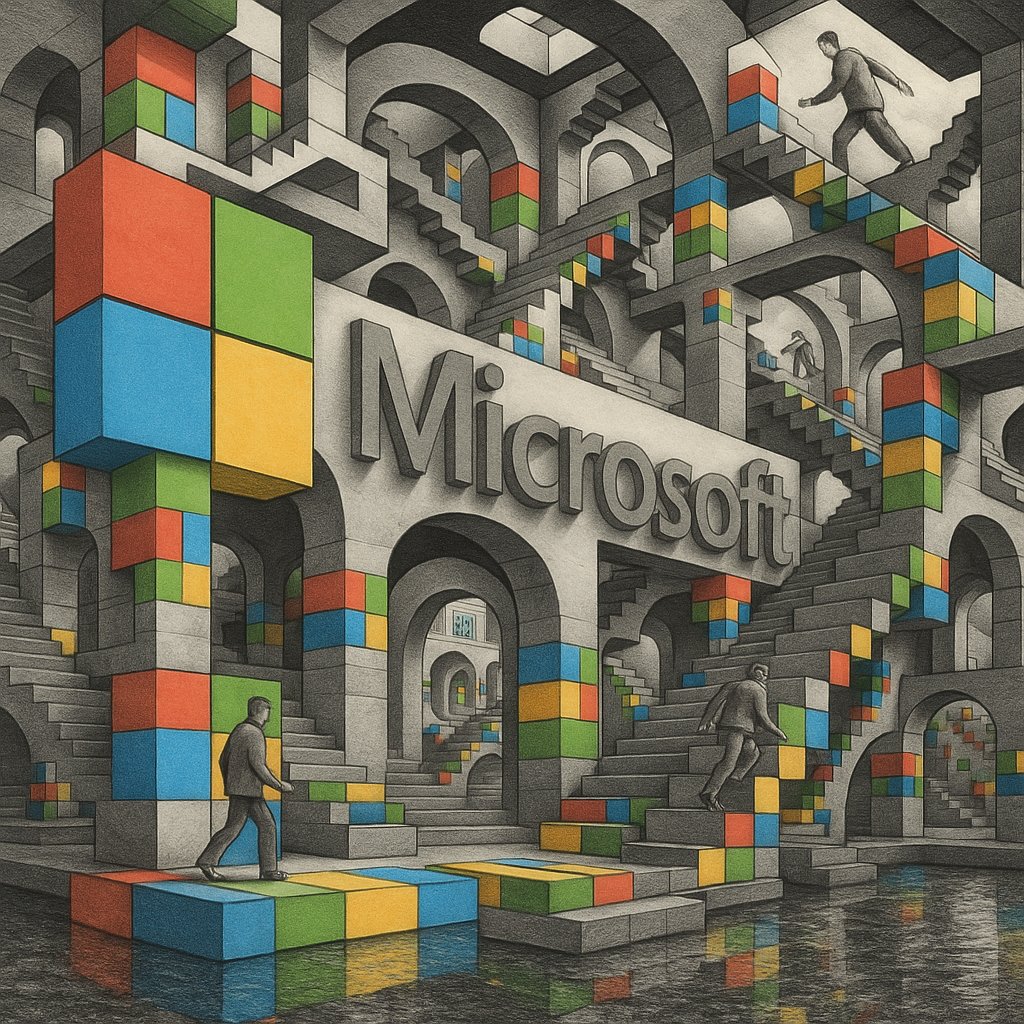
4/ Microsoft
5/ OpenAI

The AI prompt library your competitors don't want you to find
→ Unlimited prompts: $150 lifetime or $15/month
→ Starter pack: $3.99/month
→ Pro bundle: $9.99/month
Grab it before it's gone 👇
godofprompt.ai/pricing
→ Unlimited prompts: $150 lifetime or $15/month
→ Starter pack: $3.99/month
→ Pro bundle: $9.99/month
Grab it before it's gone 👇
godofprompt.ai/pricing
That's a wrap! If you found this useful:
1/ Follow me @alex_promtper for more AI tips.
2/ Like & RT this post:
1/ Follow me @alex_promtper for more AI tips.
2/ Like & RT this post:
https://x.com/alex_prompter/status/1936124933110657497
• • •
Missing some Tweet in this thread? You can try to
force a refresh