📢New paper in the Economic Journal @EJ_RES:
👉Differences in patience can account for substantial regional variation in educational achievement within countries
Data on Facebook interests allow us to derive regional measures of patience
A🧵 1/9 academic.oup.com/ej/advance-art…
👉Differences in patience can account for substantial regional variation in educational achievement within countries
Data on Facebook interests allow us to derive regional measures of patience
A🧵 1/9 academic.oup.com/ej/advance-art…

“Patience and Subnational Differences in Human Capital:
Regional Analysis with Facebook Interests”
w/ @EricHanushek, @KinneLavinia & P. Sancassani
Decisions to invest in human capital depend on time preferences
➡️New perspectives on longstanding within-country disparities
2/9
Regional Analysis with Facebook Interests”
w/ @EricHanushek, @KinneLavinia & P. Sancassani
Decisions to invest in human capital depend on time preferences
➡️New perspectives on longstanding within-country disparities
2/9
Regional differences in student achievement are large & longstanding:
Difference in math achievement between top- & bottom-performing 🇺🇸 states ≈ ⅔ of cross-country differences
Equivalent to > 2 years of learning
Similar for 🇮🇹 regions
3/9
Difference in math achievement between top- & bottom-performing 🇺🇸 states ≈ ⅔ of cross-country differences
Equivalent to > 2 years of learning
Similar for 🇮🇹 regions
3/9
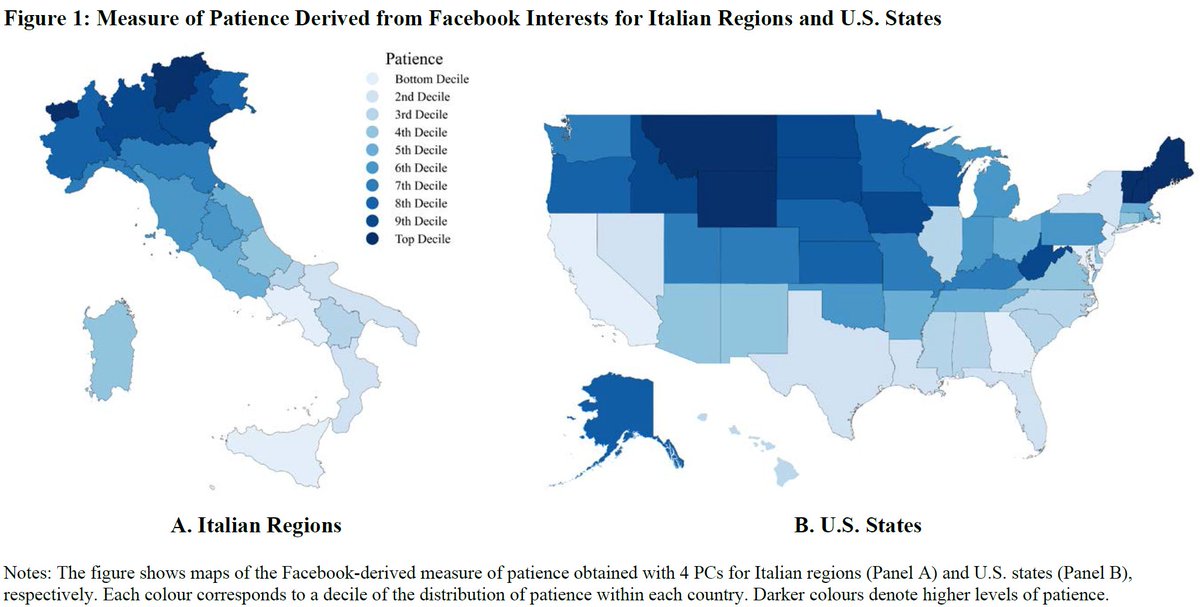
We combine the massive data available from social media –Facebook interests– with machine-learning algorithms to construct novel regional measures of patience within 🇮🇹 Italy & 🇺🇸 U.S.
Geographic patterns of patience coincide with longstanding North-South disparities
4/9
Geographic patterns of patience coincide with longstanding North-South disparities
4/9
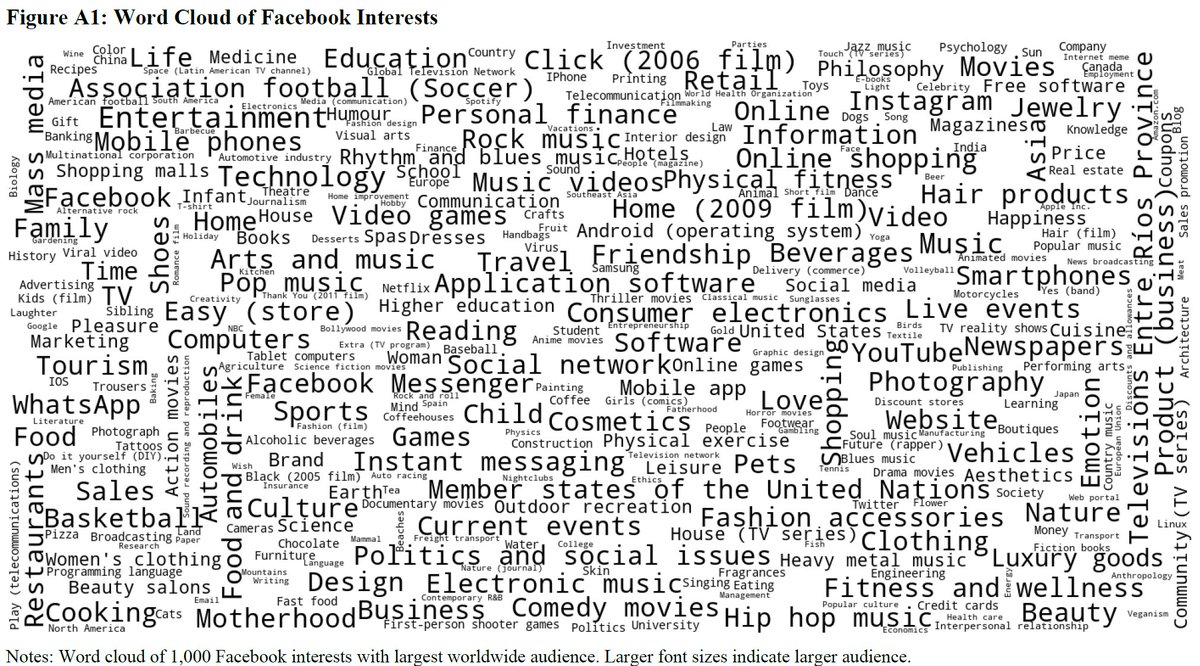
We validate the approach with a cross-country analysis of patience and Facebook interests
5/9
5/9
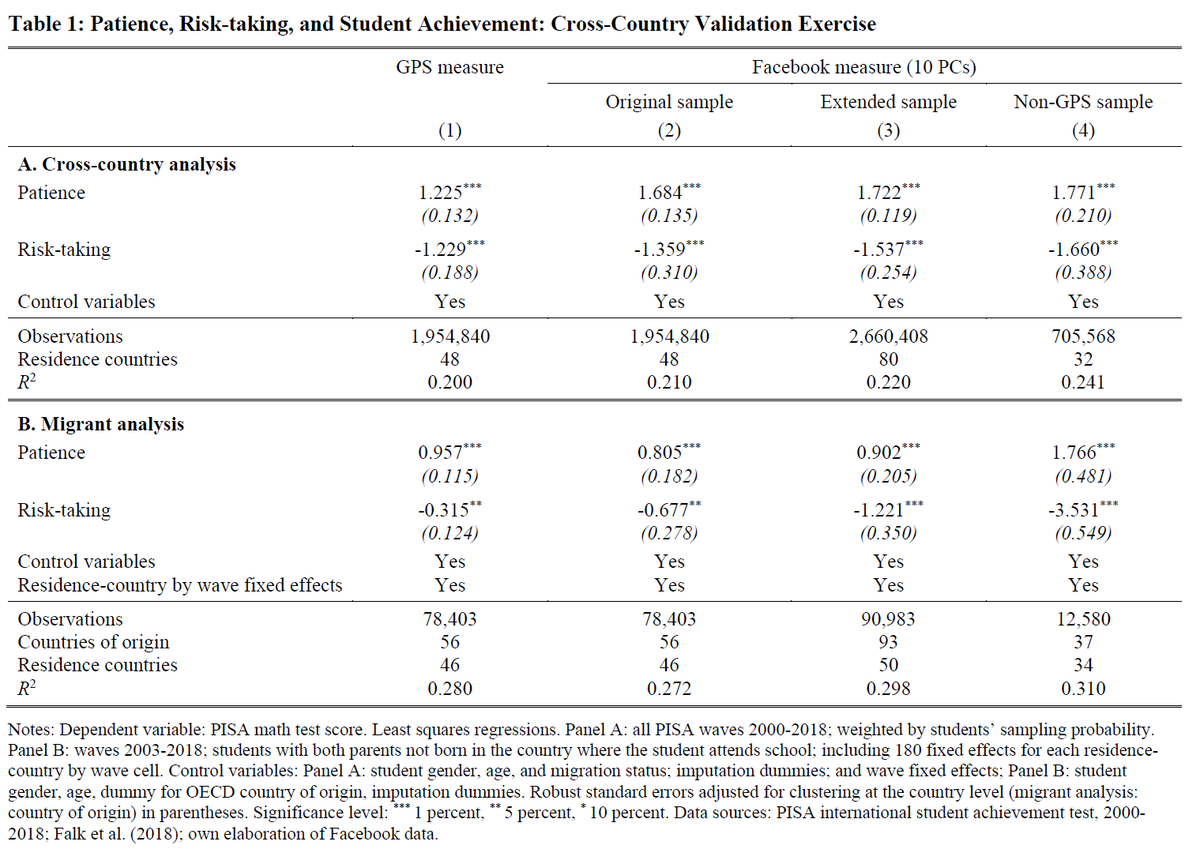
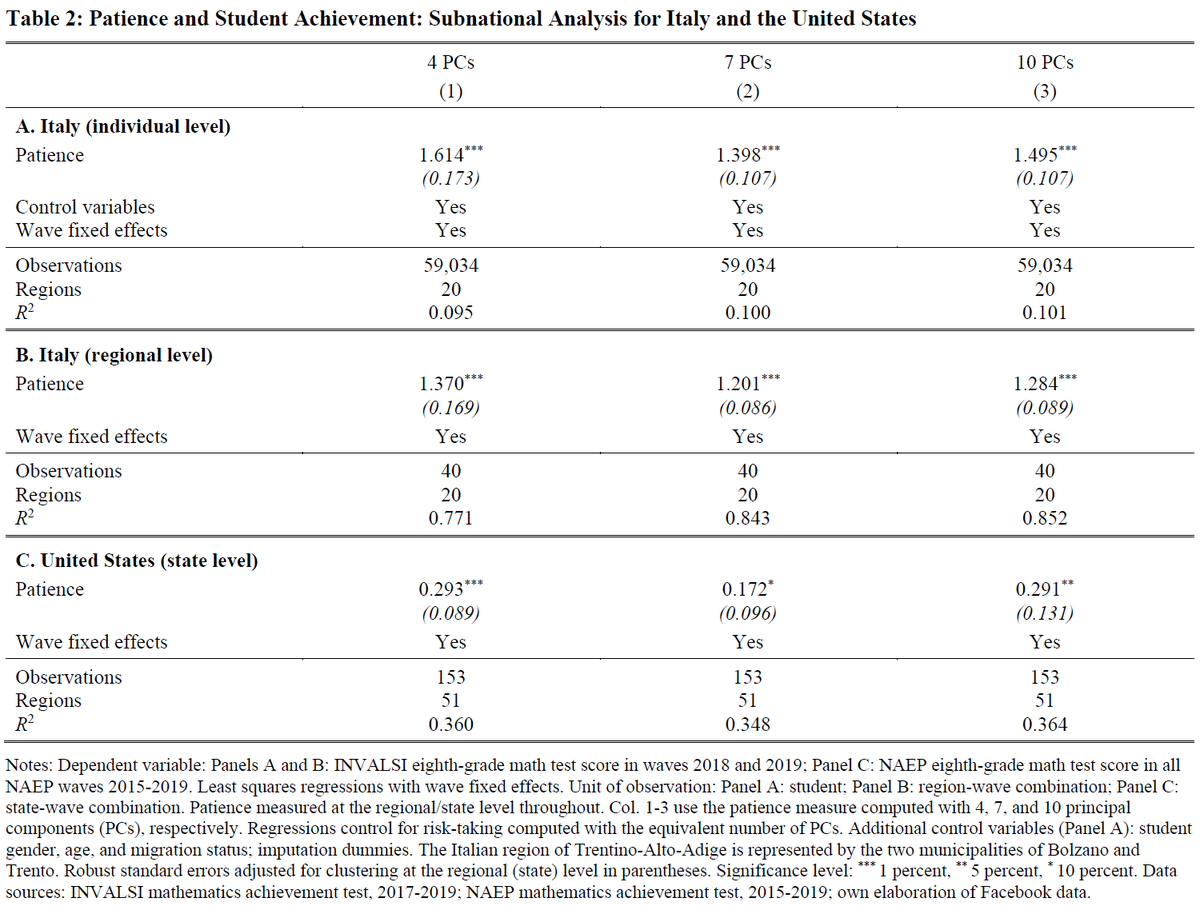
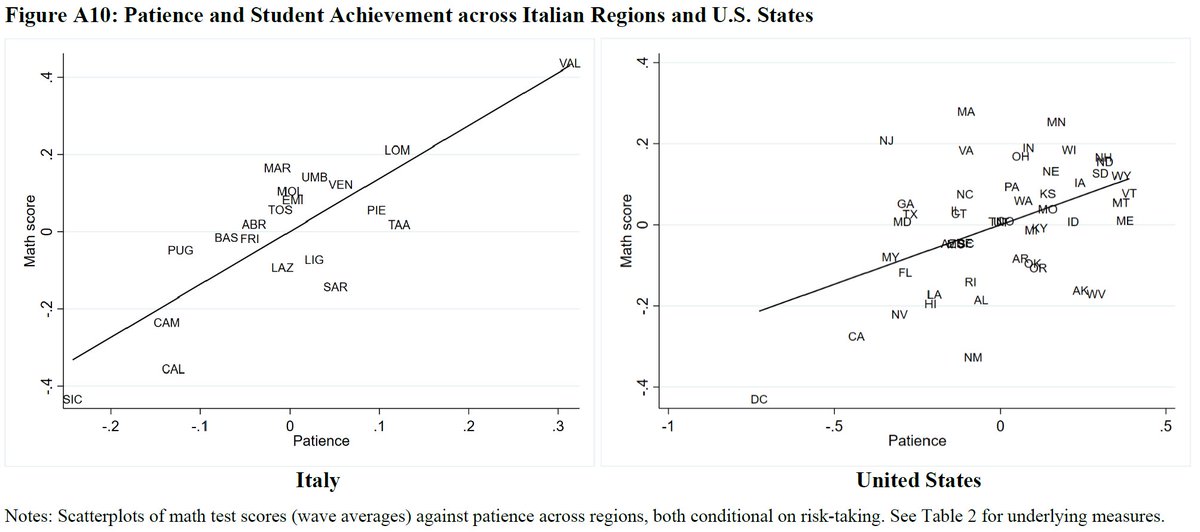
▶️Main result:
Patience is strongly positively associated with student achievement across regions in both countries
Accounts for ¾ of achievement variation across 🇮🇹 regions and ⅓ across 🇺🇸 states
Lower 🇺🇸 estimate possibly related to internal mobility
6/9
Patience is strongly positively associated with student achievement across regions in both countries
Accounts for ¾ of achievement variation across 🇮🇹 regions and ⅓ across 🇺🇸 states
Lower 🇺🇸 estimate possibly related to internal mobility
6/9
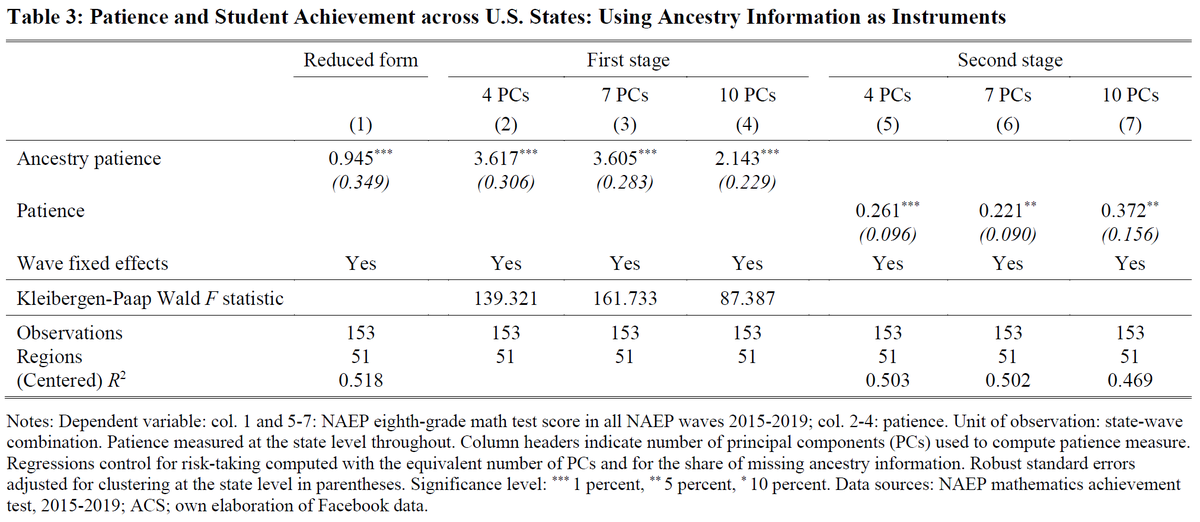
Finding is confirmed in identification strategy that employs variation in ancestry countries of current population of 🇺🇸 states
7/9
7/9
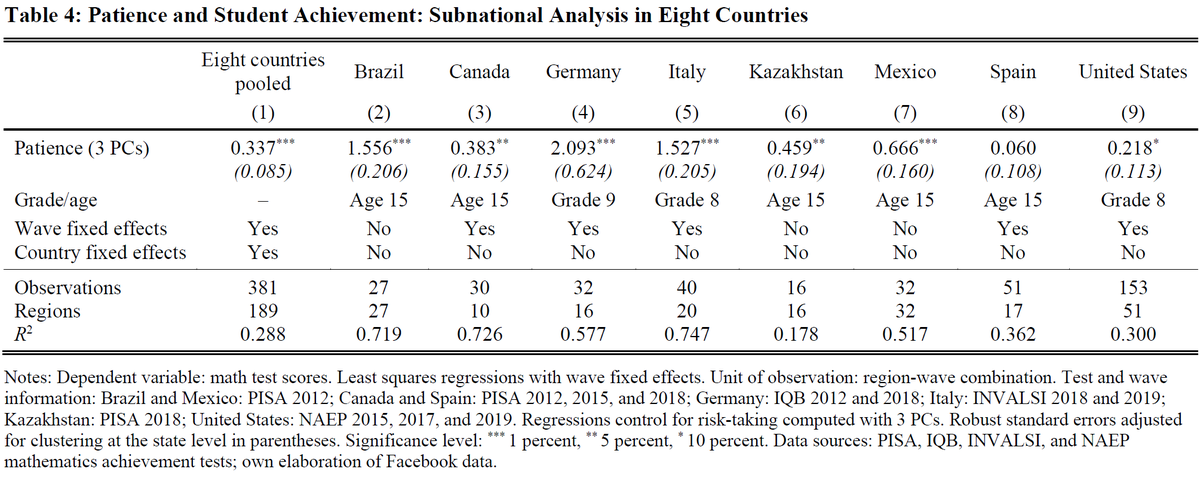
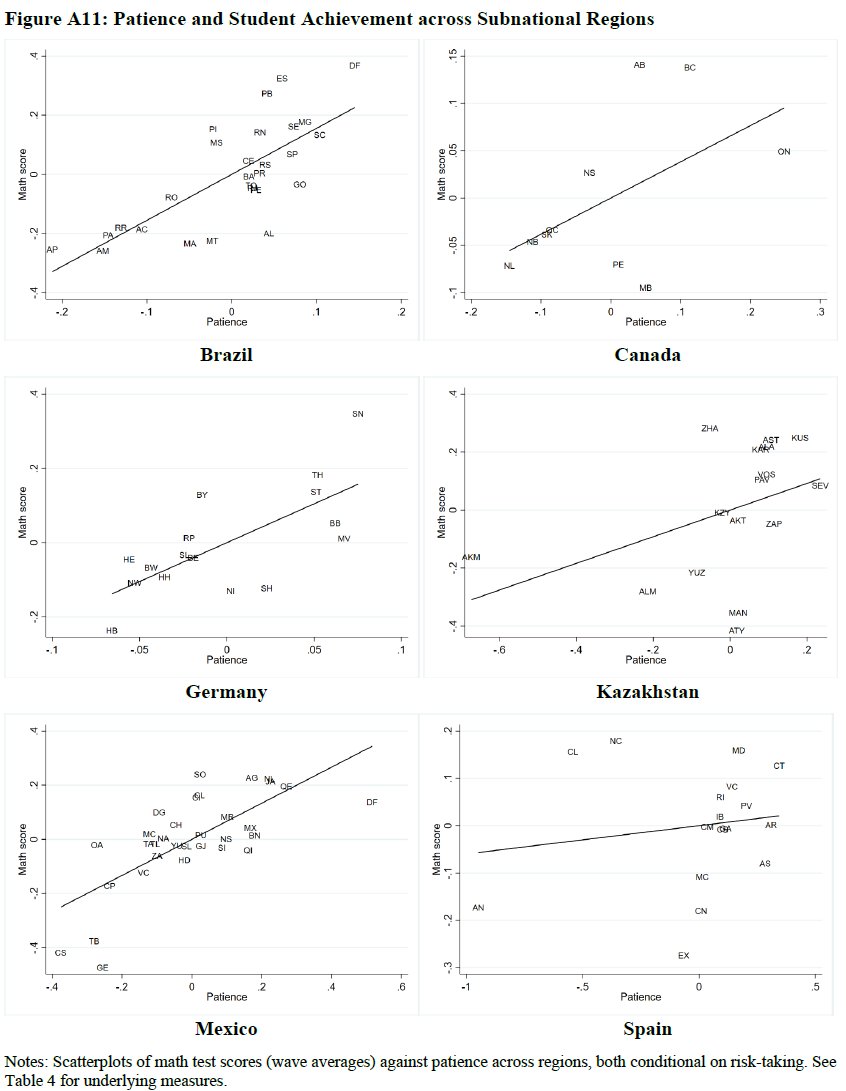
Results are consistent for 6 additional countries with more limited regional achievement data
🇧🇷🇨🇦🇩🇪🇰🇿🇲🇽🇪🇸
8/9
🇧🇷🇨🇦🇩🇪🇰🇿🇲🇽🇪🇸
8/9
Short VoxEU piece on the paper:
cepr.org/voxeu/columns/…
Link to the paper at the Economic Journal:
academic.oup.com/ej/advance-art…
9/9
cepr.org/voxeu/columns/…
Link to the paper at the Economic Journal:
academic.oup.com/ej/advance-art…
9/9
📢FYI: New paper in EJ on patience & regional achievement: @albertobisin @ProfTDee @BenjaminEnke @GalorOded @zingales @JRuhose @MariaBigoni1 @Borty_ste @acrumin @raganpetrie @klausvanieper @iyadrahwan @Econ_Sandy @jmontalbancas @AndreaIchino @SarahCohodes @uZoelitz @karthik_econ
📢FYI: New paper in EJ on patience & regional achievement: @karthik_econ @JeffDenning @edwinleuven @ALPWillen @MariSRege @pqblair @ChristinaFelfe @astrid_mjs @Gabri_EllaConti @hooster1 @ProfTDee @BenjaminArold @simon_jaeger @MatthewAKraft @giu_sorrenti @ariel_kalil @profsimonb
📢FYI: New paper in EJ on patience & regional achievement: @instrumenthull @D_Langenmayr @Lars_Feld @KhoaVuUmn @MathiasHuebener @jhaushofer @angrist_noam @CaciliaLipowski @FelixWeinhardt @mdoepke @CEDR_US @Lnavarrosola @econjeffsmith @margherita_fort @FabianKosse @DrNathanNunn
📢FYI: New paper in EJ on patience & regional achievement: @FuestClemens @ECONMunich @RationalityCRC @ifo_Education
• • •
Missing some Tweet in this thread? You can try to
force a refresh