
1/ Russian commanders have falsely declared potentially thousands of missing and dead soldiers to be deserters, as well as using such declarations for extortion. Relatives say they are being deprived of compensation payments and accuse commanders of concealing their losses. ⬇️ 
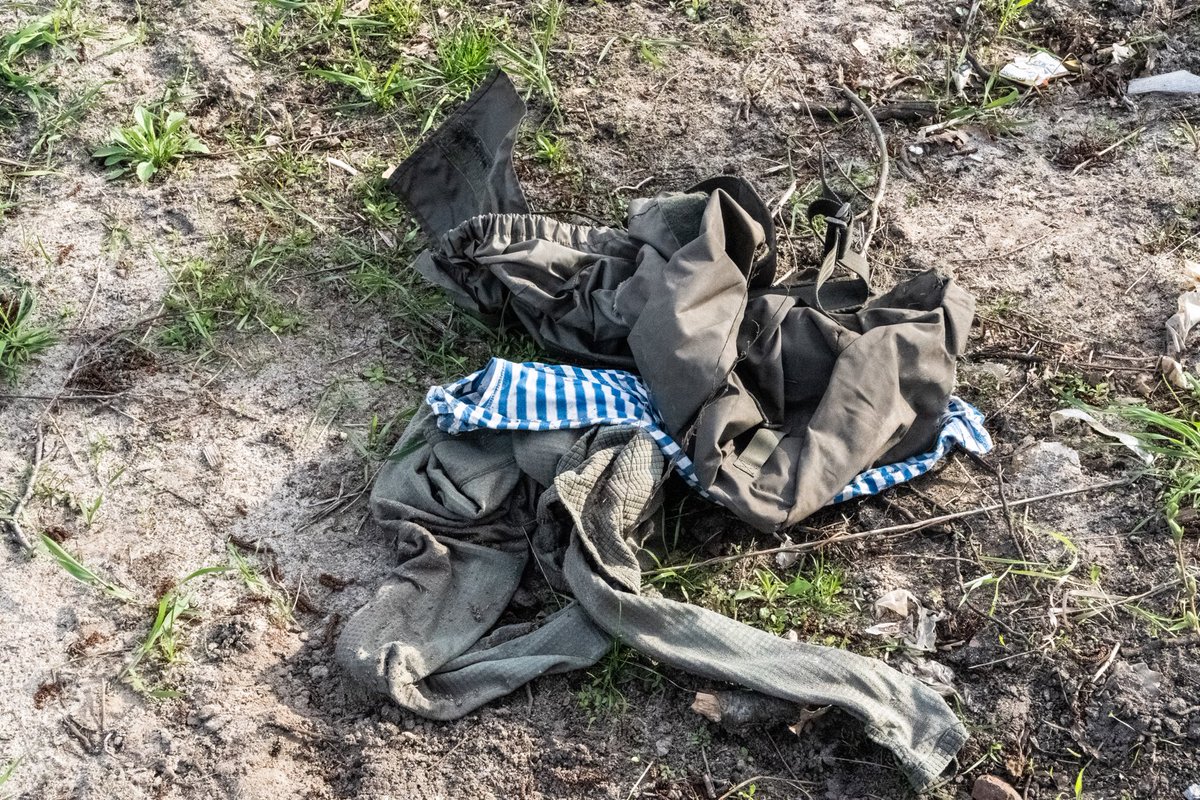
2/ Huge numbers of Russians have gone missing during the war in Ukraine. According to the Russian journalist Anastasia Kashevarova, who has campaigned for more to be done to find the missing, 99% of them will have died on the front line but have not been recovered.
3/ There has been a huge increase in the number of lawsuits filed in Russian district and garrison military courts to declare a person missing or dead. Mediazona reports that between January and June 2025, there were more than 26,000 such lawsuits.
4/ The numbers for the first six months of this year have already well exceeded those for the whole of 2024, when there were 22,600 lawsuits. Families and the military authorities bring lawsuits to enable a formal declaration of death and the release of compensation.
5/ However, a significant number of Russian soldiers are likely to have been killed by their own side – executed by their commanders, or shot after being wounded, as in an example recounted by the author of the Telegram channel 'Soldatskaya Pravda':
6/ "I'm not even talking about those cases when their death was not so much in vain, but in principle unnecessary. Like, for example, that fighter from Storm Z, who was wounded and with his screams and movements revealed his position and was shot by his own people..."
7/ Vot-Tak reports that commanders have turned to declaring soldiers to be deserters as a way to hide the number of men they have lost, as well as a means of punishment and extortion of the living.
8/ 25-year-old Dmitry was recruited from a prison in September 2024 and was sent on his first mission near Toretsk in the Donetsk region along with eight other people. None of them returned. The entire group was declared to be deserters three weeks later.
9/ Despite this, another soldier told Dmitry's wife that her husband had died and the coordinates of his body were known. It was not possible to recover it because of constant shelling, but the military authorities refused to rescind his status as a deserter.
10/ This has had serious financial consequences for his family. Missing soldiers are paid 30,000 rubles a month, but those declared to have deserted get nothing. Their relatives lose the 13.5 million rubles ($172,250) compensation they are owed for a death.
11/ Commanders have the right to declare a soldier to be AWOL after he is absent for more than two days, and can either involve the military police in searching for him, or do it independently, even without declaring him wanted.
12/ Deserters are often hunted unofficially though messages from the unit to relatives and friends. In one recently reported case, a deserter's lawyer was apparently bribed to turn him in.
https://x.com/ChrisO_wiki/status/1937036002708848825
13/ Leaks from the Russian army suggest that at least 48,000 people deserted between September 2022 and November 2024. 36,000 of them were subjected to criminal cases for desertion.
14/ However, commanders have abused their powers to declare soldiers to be deserters even when they are still alive and serving with the unit. One soldier who was wounded and undergoing treatment in Russia was declared a deserter while still in hospital.
15/ Similarly, another soldier lost one kidney and half of the other. He was being treated in hospital after being declared unfit for service when he too was declared a deserter, despite providing regular updates to his commander.
16/ Sergei Konovalov, a soldier with the 247th Airborne Assault Regiment, recorded a video complaining that he had been declared a deserter as a means of extortion. His unit had lost a DJI Mavic drone, for which his commander demanded financial compensation from his men.

17/ False accusations of desertion are also used as a means of punishment. A soldier from Tyumen who complained about the non-payment of compensation for an injury was told that he was being declared a deserter for writing complaints. Others have experienced the same punishment.
18/ Commanders have also been known to declare people missing to hide the fact that they have carried out illegal tortures or executions. Men who have died under torture have posthumously been declared to be missing or deserted, according to relatives.
https://x.com/wartranslated/status/1922297850186367429
19/ This has the advantage, for the commander, of relieving the army of any obligation to look for or recover the supposed deserter's body. According to Russian soldiers, executions take place on the front line, presumably so that the body can more easily be concealed.
20/ Desertion declarations are also used to prevent men from running away if they go on leave or for medical treatment. Such declarations may give men no choice but to return, as they will be hunted down if they do not do so.
21/ Men who refuse to fight, but have not left their units, are also declared to be deserters. Independent Russian media outlets have reported the existence of a chain of detention centres for refuseniks, where they are held prisoner and tortured until they agree to go back.
22/ Soldiers have also found themselves declared to be deserters because of bureaucratic foul-ups. Men who have been transferred from one unit to another have found themselves being given deserter status because their papers have been lost by the army bureaucracy.
23/ For families, apart from the loss of salary payments and compensation, a relative being given deserter status is often a source of shame. "Deserter status is like declaring a girl a slut to the entire country," a woman called Nina complains in a chat forum.
24/ "We have to explain to everyone that deserter status means nothing, that everyone is given it. Why is that? He's a hero, he fought for his country, and now he has to prove that he's not a goat." /end
Sources:
🔹 vot-tak.tv/87367214/zacze…
🔹 en.zona.media/article/2025/0…
🔹 t.me/soldat_prav/13…
🔹 t.me/ne_zhdi_novost…
🔹 t.me/ne_zhdi_novost…
🔹 t.me/ne_zhdi_novost…
🔹 t.me/ne_zhdi_novost…
🔹 vot-tak.tv/87367214/zacze…
🔹 en.zona.media/article/2025/0…
🔹 t.me/soldat_prav/13…
🔹 t.me/ne_zhdi_novost…
🔹 t.me/ne_zhdi_novost…
🔹 t.me/ne_zhdi_novost…
🔹 t.me/ne_zhdi_novost…
• • •
Missing some Tweet in this thread? You can try to
force a refresh






