Values are heritable.🧵
The belief that ethics and values differ (both within and between populations) because of parenting, 'culture', or school indoctrination is widespread.
That genetics account for much of this variation, less so.
1. Moral beliefs aren't equally heritable:
The belief that ethics and values differ (both within and between populations) because of parenting, 'culture', or school indoctrination is widespread.
That genetics account for much of this variation, less so.
1. Moral beliefs aren't equally heritable:
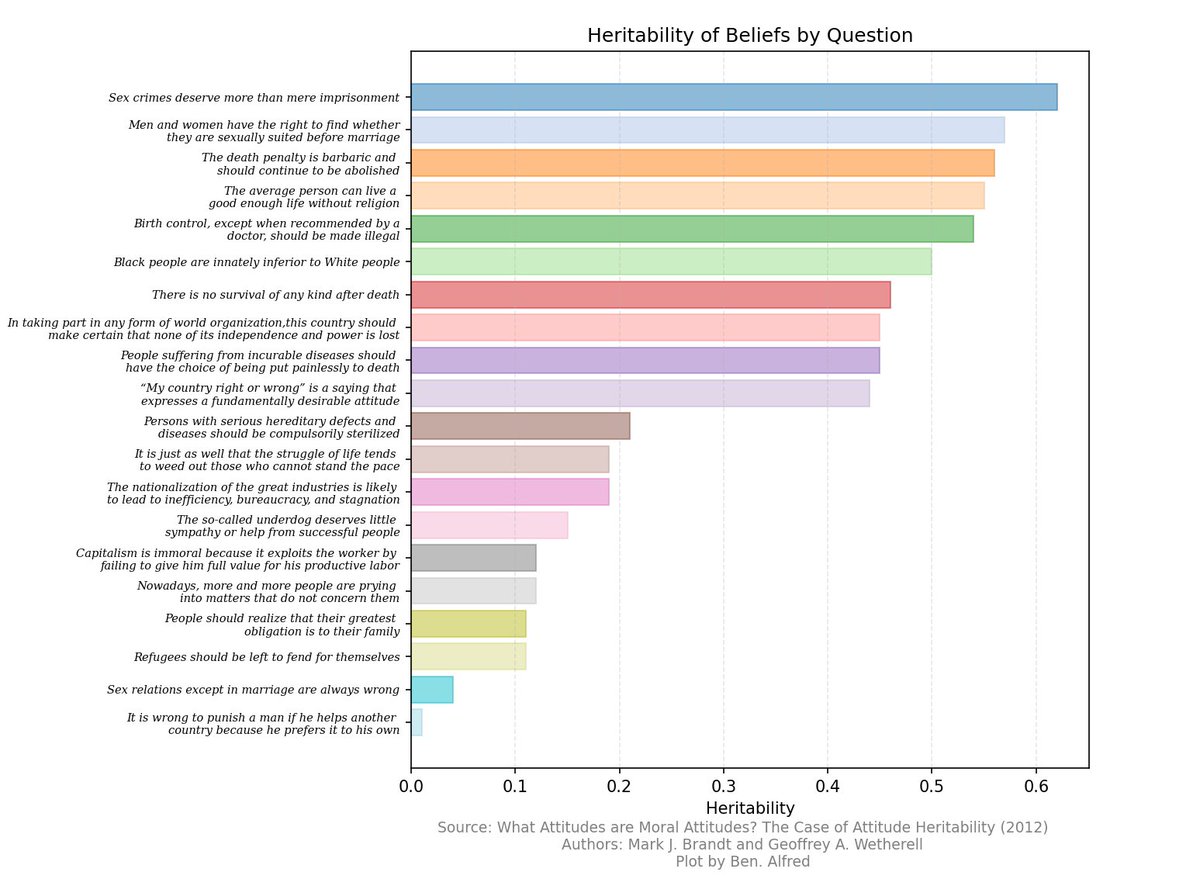
Some of this is due to some moral questions being more emotionally charged than others; how you feel about abortion is more genetic than how you feel about capitalism.
2. Visceral convictions (intuitive beliefs) tend to be more genetic regardless of the question being asked:
2. Visceral convictions (intuitive beliefs) tend to be more genetic regardless of the question being asked:

3. What decisions you reach during moral reasoning, such as considering and answering dilemmas, are also quite heritable. This means that what seems like reasoning is just you prompting yourself into revealing genetic intuitions you already have:
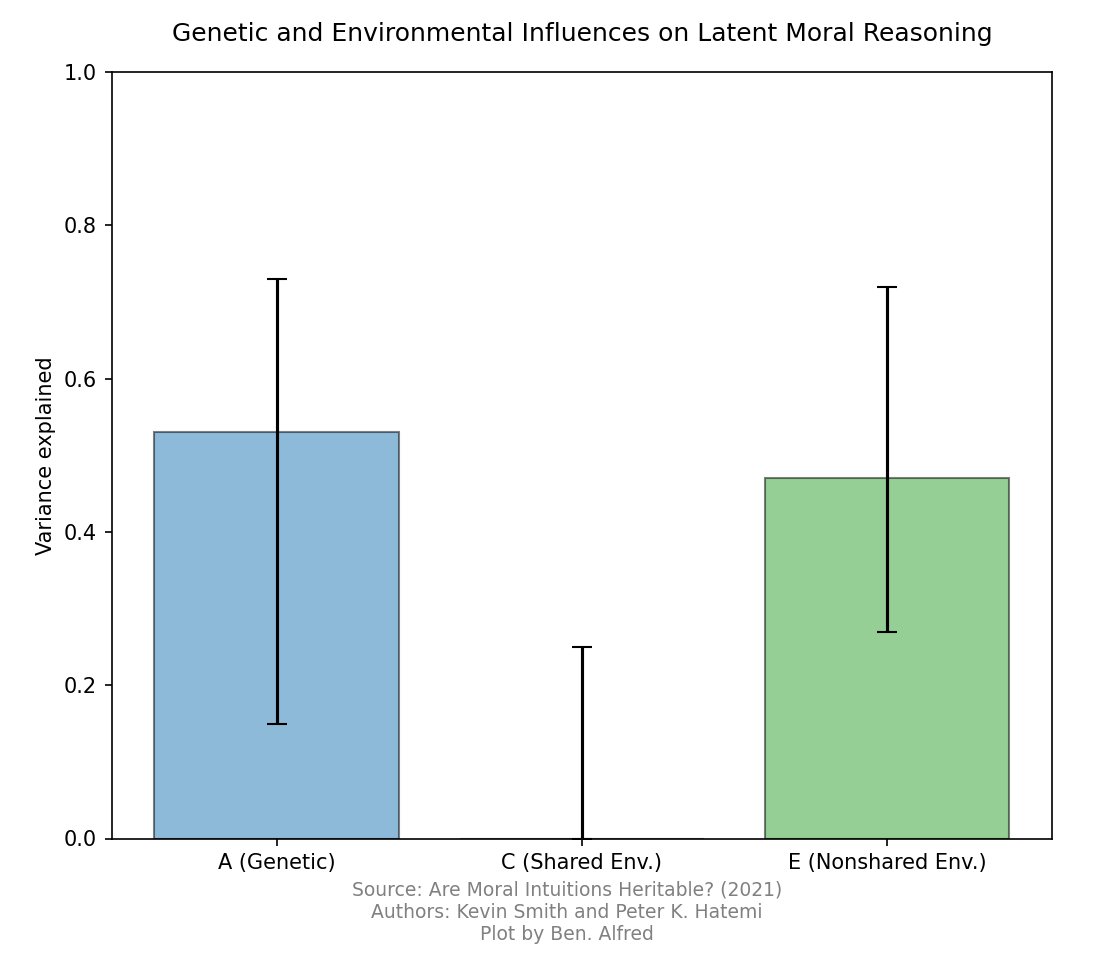
4. When we speak of how moral someone is, we are mostly referring to their past conduct.
One study found that latent antisocial behavior in children (the component that was common in ratings given by the child, their parents, and their teachers) was 96% heritable:
One study found that latent antisocial behavior in children (the component that was common in ratings given by the child, their parents, and their teachers) was 96% heritable:

So far we've observed that shared env. (parenting, schooling, etc.) has little to no influence on ethics or behavior. This doesn't exactly lend credence to the 'it's just how they were raised' position.
5. That said, a meta-analysis on ASB did find some shared env. effects:
5. That said, a meta-analysis on ASB did find some shared env. effects:

6. This was only when considering studies that included weighted matrices (although those models had better fits) and even then most of the variance was explained by additive genetic factors.
7. This same analysis also found shared env. became increasingly irrelevant with age:
7. This same analysis also found shared env. became increasingly irrelevant with age:

This drop in c^2 variance is less pronounced than in, say, IQ heritability studies, but noteworthy nonetheless.
8. Prosocial attitudes are also heritable, more so in men than women, with shared env. once again seeming to have zero influence (at least in males):
8. Prosocial attitudes are also heritable, more so in men than women, with shared env. once again seeming to have zero influence (at least in males):
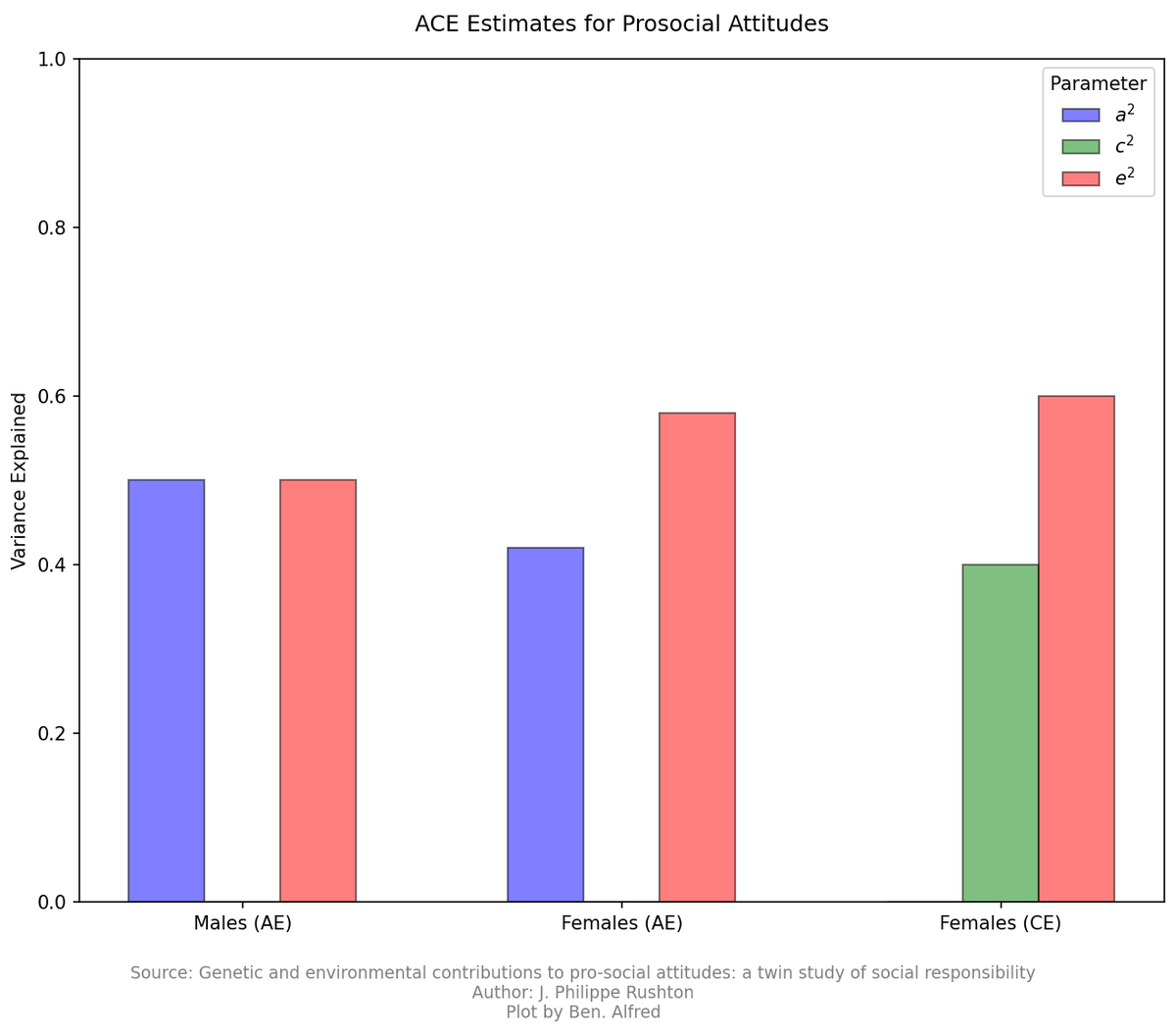
9. Why have proxies for latent ASB (murder rate) declined precipitously in Europe from the 14th-20th centuries?
Peter Frost hypothesizes much of this has to do with the state's monopoly on violence, and the most antisocial men being removed from the gene pool each generation:
Peter Frost hypothesizes much of this has to do with the state's monopoly on violence, and the most antisocial men being removed from the gene pool each generation:

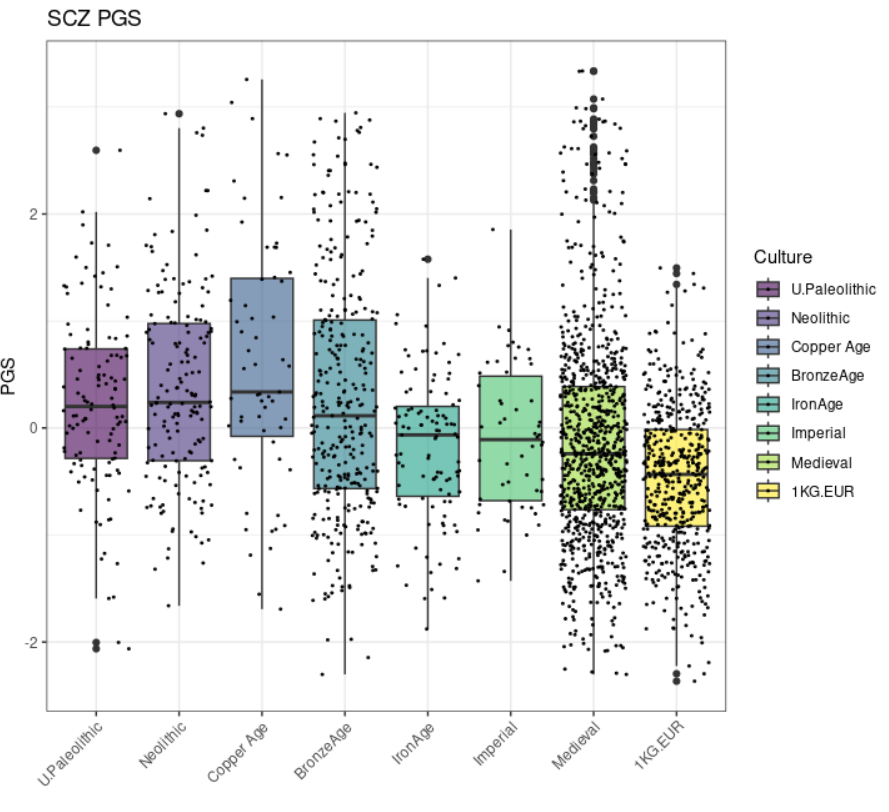
Some of the change in moral conduct over longer periods of time may have to do with there having been selection for other psychological traits associated with propensity for violence, such as for intelligence and against schizophrenia:

Conclusion: most interpersonal differences in values and moral conduct are due to genetic differences. The median person probably overestimates importance of parenting, socioeconomic status, schooling, etc. by an order of magnitude.
weight matrices*, not weighted😅
sorry, did this reading and made the plots late last night
sorry, did this reading and made the plots late last night
Source for polygenic score trends:
I included sources for the other stuff in subtext under each plot.researchgate.net/publication/37…
I included sources for the other stuff in subtext under each plot.researchgate.net/publication/37…
• • •
Missing some Tweet in this thread? You can try to
force a refresh