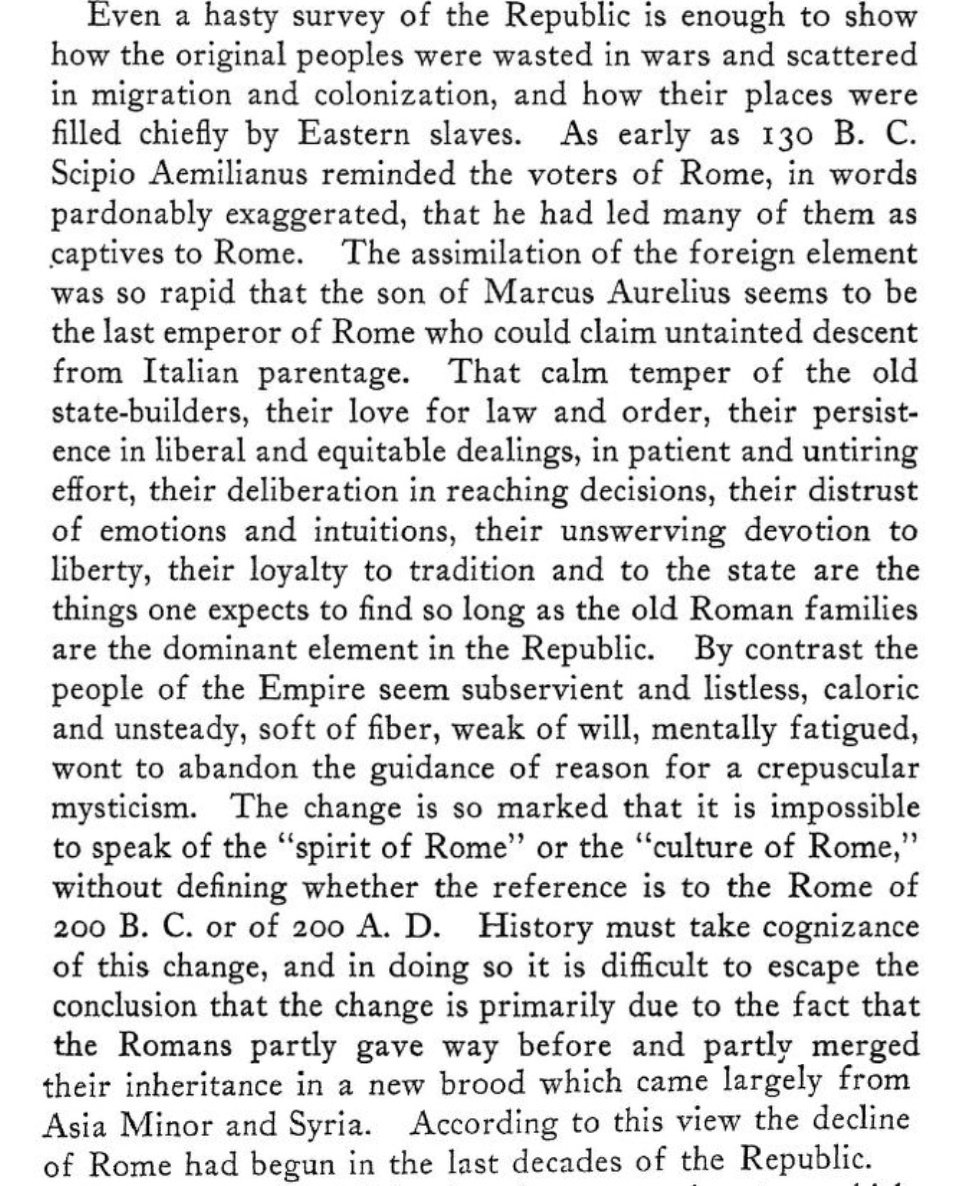
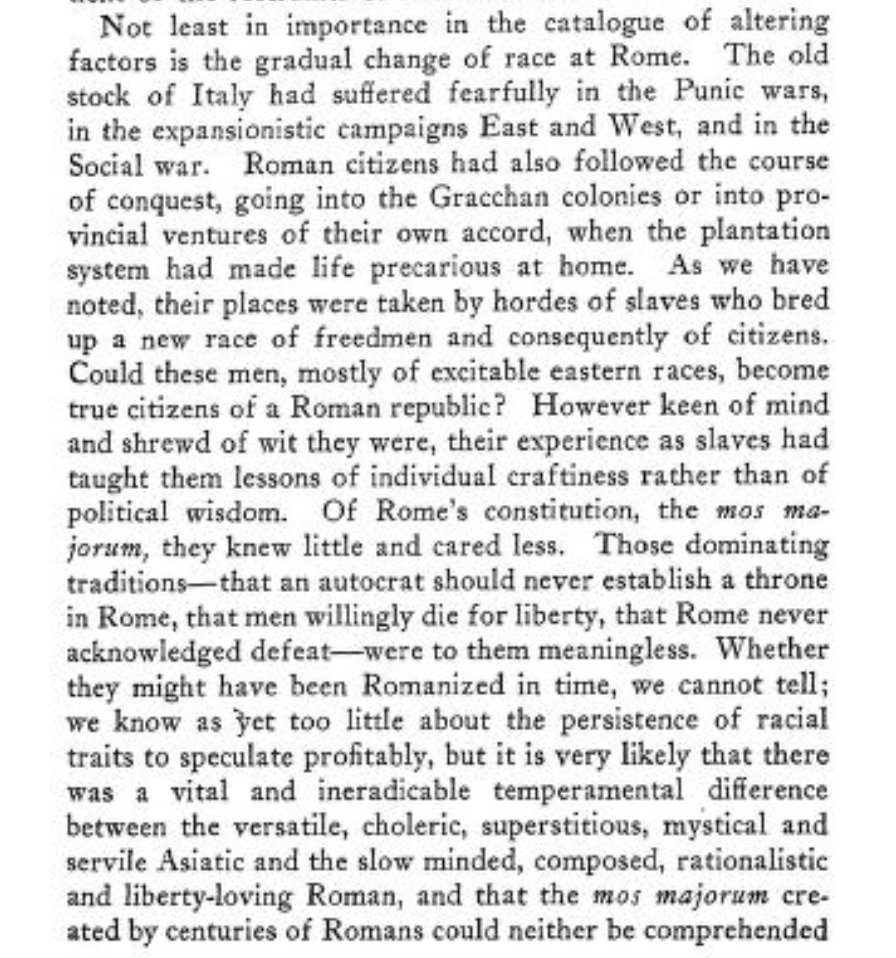
1/ America was not founded as a proposition, nor as an abstract idea divorced from flesh and blood. It was established as a nation for Europeans—a people bound by common ancestry, language, religion, and civilizational form. The nation took shape through their labor, their laws, and their sacrifices, not through slogans or abstractions.
That foundation has not eroded by accident. It has been deliberately dismantled.
What follows is not a list of ideological commitments, but the principles required to recover America from its degradation, to restore it as a real nation, not a territory filled with incompatible peoples and hollow ideals.
That foundation has not eroded by accident. It has been deliberately dismantled.
What follows is not a list of ideological commitments, but the principles required to recover America from its degradation, to restore it as a real nation, not a territory filled with incompatible peoples and hollow ideals.

2/ Halt and Reverse Demographic Replacement
The United States is undergoing a demographic transformation that threatens the survival of its historic character. Mass immigration, reinforced by policies designed to displace and replace Whites, is dissolving the core from which the nation once drew its identity, cohesion, and strength. This is not an accident of history. It is a deliberate and sustained effort, protected by law and enforced through cultural intimidation.
To halt the damage and begin the work of restoration, all immigration—legal and illegal—must be brought to an end. A serious program of demographic recovery must follow. This begins with the immediate deportation of illegal aliens. Immigration laws must then be fully enforced and expanded to target not only unlawful entry, but also those who facilitate it—employers, landlords, and institutions that profit from national erosion. Birthright citizenship must be abolished to prevent the automatic conversion of foreign presence into legal claim. The process of denaturalization must be streamlined for those who obtained citizenship through fraud or who act in clear opposition to the survival of the nation.
The future of the American people is not subject to compromise. It will be secured through decisive action, or it will not be secured at all.
The United States is undergoing a demographic transformation that threatens the survival of its historic character. Mass immigration, reinforced by policies designed to displace and replace Whites, is dissolving the core from which the nation once drew its identity, cohesion, and strength. This is not an accident of history. It is a deliberate and sustained effort, protected by law and enforced through cultural intimidation.
To halt the damage and begin the work of restoration, all immigration—legal and illegal—must be brought to an end. A serious program of demographic recovery must follow. This begins with the immediate deportation of illegal aliens. Immigration laws must then be fully enforced and expanded to target not only unlawful entry, but also those who facilitate it—employers, landlords, and institutions that profit from national erosion. Birthright citizenship must be abolished to prevent the automatic conversion of foreign presence into legal claim. The process of denaturalization must be streamlined for those who obtained citizenship through fraud or who act in clear opposition to the survival of the nation.
The future of the American people is not subject to compromise. It will be secured through decisive action, or it will not be secured at all.
3/ Defend the Right to Arms and Civic Responsibility
A free nation does not endure without the means to defend itself. The right to bear arms is not simply a legal clause, but a reflection of the civic character of a free people. It affirms that sovereignty resides not in bureaucracies or standing armies, but in the citizen himself. Disarmament is always a prelude to subjugation.
The right to keep and carry arms must be protected without compromise. All laws that restrict this right under the guise of public safety or administrative control must be repealed. A nation that expects its men to bear responsibility must allow them to bear arms. There is no freedom where the individual is defenseless, and no nation where the citizen is disarmed.
A free nation does not endure without the means to defend itself. The right to bear arms is not simply a legal clause, but a reflection of the civic character of a free people. It affirms that sovereignty resides not in bureaucracies or standing armies, but in the citizen himself. Disarmament is always a prelude to subjugation.
The right to keep and carry arms must be protected without compromise. All laws that restrict this right under the guise of public safety or administrative control must be repealed. A nation that expects its men to bear responsibility must allow them to bear arms. There is no freedom where the individual is defenseless, and no nation where the citizen is disarmed.

4/ Restore Moral Order and Uphold the Family
A healthy nation begins with healthy families. No institution is more vital to the continuity of a people than the natural union of man and woman, ordered toward the bearing and raising of children. When the family is weakened, the nation dissolves with it.
Today, the American family is under siege. It is assailed by pornography, ideological subversion, and a culture that rewards dysfunction while ridiculing virtue. The natural roles of men and women are pathologized, and moral limits are treated as forms of oppression.
This cannot continue. The state must actively promote the formation of stable, fertile, and morally grounded households. Public policy must support marriage, affirm the biological family, and encourage the birth and upbringing of children by White Americans. A future worth preserving cannot be built upon sterility, inversion, or decay.
A healthy nation begins with healthy families. No institution is more vital to the continuity of a people than the natural union of man and woman, ordered toward the bearing and raising of children. When the family is weakened, the nation dissolves with it.
Today, the American family is under siege. It is assailed by pornography, ideological subversion, and a culture that rewards dysfunction while ridiculing virtue. The natural roles of men and women are pathologized, and moral limits are treated as forms of oppression.
This cannot continue. The state must actively promote the formation of stable, fertile, and morally grounded households. Public policy must support marriage, affirm the biological family, and encourage the birth and upbringing of children by White Americans. A future worth preserving cannot be built upon sterility, inversion, or decay.

5/ Abolish Anti-White Discrimination
No nation endures by turning against its own. In the United States, a comprehensive regime of policies has been constructed to disadvantage Whites under the guise of equity, diversity, and historical justice. These include affirmative action, racial quotas, and educational programs that portray Whites as inherently guilty and undeserving of continuity.
These measures are not mistakes. They are deliberate tools of dispossession, designed to strip Whites of confidence, status, and legitimacy within the nation their ancestors built.
Such policies must be abolished in full. “Equality” in this context is not a principle of fairness, but a weapon used to justify exclusion and erasure behind the mask of morality. The logic of these programs has extended far beyond law, embedding itself in every level of institutional life. It is now routine for government officials, corporate executives, and educators to speak of Whites as a problem to be managed or removed. A regime that permits this cannot claim neutrality, much less legitimacy.
Those who design, implement, or publicly promote anti-White discrimination must face legal consequences. A nation that refuses to protect its majority from targeted hostility is no longer a free society. It is an occupied one.
No nation endures by turning against its own. In the United States, a comprehensive regime of policies has been constructed to disadvantage Whites under the guise of equity, diversity, and historical justice. These include affirmative action, racial quotas, and educational programs that portray Whites as inherently guilty and undeserving of continuity.
These measures are not mistakes. They are deliberate tools of dispossession, designed to strip Whites of confidence, status, and legitimacy within the nation their ancestors built.
Such policies must be abolished in full. “Equality” in this context is not a principle of fairness, but a weapon used to justify exclusion and erasure behind the mask of morality. The logic of these programs has extended far beyond law, embedding itself in every level of institutional life. It is now routine for government officials, corporate executives, and educators to speak of Whites as a problem to be managed or removed. A regime that permits this cannot claim neutrality, much less legitimacy.
Those who design, implement, or publicly promote anti-White discrimination must face legal consequences. A nation that refuses to protect its majority from targeted hostility is no longer a free society. It is an occupied one.

6/ Restore Sovereignty and the Right to Association
A nation that cannot determine its own composition is no longer sovereign. The right to choose with whom one lives, works, and builds community is essential to any enduring social order. This right has been systematically dismantled through judicial rulings, federal mandates, and ideological coercion, all under the pretext of equality and inclusion.
In practice, these measures have served one purpose: to prevent Whites from maintaining their own institutions, neighborhoods, and ethnocultural continuity. The Civil Rights legislation of the 1960s, particularly its prohibitions on freedom of association, must be repealed. No people can survive if they are denied the ability to draw boundaries around their own existence.
The American nation must reclaim its sovereignty. That includes the freedom to associate by heritage, conviction, and shared loyalty. Without this, there can be no real community, no trust, and no future worth preserving.
A nation that cannot determine its own composition is no longer sovereign. The right to choose with whom one lives, works, and builds community is essential to any enduring social order. This right has been systematically dismantled through judicial rulings, federal mandates, and ideological coercion, all under the pretext of equality and inclusion.
In practice, these measures have served one purpose: to prevent Whites from maintaining their own institutions, neighborhoods, and ethnocultural continuity. The Civil Rights legislation of the 1960s, particularly its prohibitions on freedom of association, must be repealed. No people can survive if they are denied the ability to draw boundaries around their own existence.
The American nation must reclaim its sovereignty. That includes the freedom to associate by heritage, conviction, and shared loyalty. Without this, there can be no real community, no trust, and no future worth preserving.

7/ End Foreign Wars and Reorient Military Purpose
The strength of a nation is measured by its ability to defend its own, not by its willingness to police the globe. For decades, the United States has squandered blood and treasure in wars that serve no legitimate national interest. These conflicts, often framed as moral crusades or strategic imperatives, have left Americans poorer, weaker, and more divided, while advancing the agendas of foreign states and transnational financial powers.
This posture must end. The American military exists to protect the borders, people, and interests of the nation. It is not a tool for exporting ideology, subsidizing the defense of others, or enforcing global abstractions.
War must be treated as a last resort, justified only by the need to preserve the American nation or to defend the survival of our European allies. A republic that wages permanent war ceases to be a republic. It becomes a machine that consumes its own people.
The strength of a nation is measured by its ability to defend its own, not by its willingness to police the globe. For decades, the United States has squandered blood and treasure in wars that serve no legitimate national interest. These conflicts, often framed as moral crusades or strategic imperatives, have left Americans poorer, weaker, and more divided, while advancing the agendas of foreign states and transnational financial powers.
This posture must end. The American military exists to protect the borders, people, and interests of the nation. It is not a tool for exporting ideology, subsidizing the defense of others, or enforcing global abstractions.
War must be treated as a last resort, justified only by the need to preserve the American nation or to defend the survival of our European allies. A republic that wages permanent war ceases to be a republic. It becomes a machine that consumes its own people.

8/ Break Corporate Power and Reassert National Control
The American economy no longer serves the American nation. It is controlled by corporations and a managerial class that is increasingly parasitic and, in many cases, foreign in origin, loyalty, and interest. These figures have no attachment to the land, the people, or the civilizational order they exploit.
They manipulate legislation, steer media narratives, and fund movements that undermine national identity and dissolve ethnocultural continuity. They operate across borders, answer to no electorate, and treat the American population not as a people to protect, but as a resource to extract.
This condition is intolerable. Corporations are not sovereign entities. They exist only by permission of the state and must be held subordinate to the national interest.
Monopolies must be dismantled. Hostile executives must be removed. Strategic industries must be brought under patriotic discipline. An economy directed by foreign and parasitic elites is not a system of free enterprise. It is a mechanism of conquest.
The American economy no longer serves the American nation. It is controlled by corporations and a managerial class that is increasingly parasitic and, in many cases, foreign in origin, loyalty, and interest. These figures have no attachment to the land, the people, or the civilizational order they exploit.
They manipulate legislation, steer media narratives, and fund movements that undermine national identity and dissolve ethnocultural continuity. They operate across borders, answer to no electorate, and treat the American population not as a people to protect, but as a resource to extract.
This condition is intolerable. Corporations are not sovereign entities. They exist only by permission of the state and must be held subordinate to the national interest.
Monopolies must be dismantled. Hostile executives must be removed. Strategic industries must be brought under patriotic discipline. An economy directed by foreign and parasitic elites is not a system of free enterprise. It is a mechanism of conquest.

9/ Protect the Environment as an Inheritance
A nation does not own its land in the way it owns property. It holds it in trust, to be cared for and passed down. The natural world is not a disposable asset, but a living inheritance—an extension of the homeland that shapes the character, health, and spirit of its people.
The destruction of forests, soil, air, and water in the name of short-term profit reveals a deeper cultural disorder. Just as a people without memory cannot endure, a people without land cannot remain rooted. Environmental protection must be restored as a duty of national stewardship, not a fashion of ideological convenience.
The preservation of forests, farmland, and rural landscapes must be pursued with seriousness and restraint. Conservation is not weakness. It is fidelity to blood, to soil, and to those yet unborn.
A nation does not own its land in the way it owns property. It holds it in trust, to be cared for and passed down. The natural world is not a disposable asset, but a living inheritance—an extension of the homeland that shapes the character, health, and spirit of its people.
The destruction of forests, soil, air, and water in the name of short-term profit reveals a deeper cultural disorder. Just as a people without memory cannot endure, a people without land cannot remain rooted. Environmental protection must be restored as a duty of national stewardship, not a fashion of ideological convenience.
The preservation of forests, farmland, and rural landscapes must be pursued with seriousness and restraint. Conservation is not weakness. It is fidelity to blood, to soil, and to those yet unborn.

10/ Reform Education and Cultivate National Character
A nation survives not only through its laws and borders, but through the minds and souls of its children. Today, American education does not form citizens. It produces deracinated individuals conditioned to hate their heritage, distrust their ancestors, and dissolve themselves in the language of grievance and guilt.
The teaching of history has been reduced to moral accusation. Literature is stripped of meaning. Discipline has been replaced by therapeutic indulgence. At every level, education is used to fragment identity and prevent the emergence of a conscious, loyal, and self-respecting people.
This must be reversed. Education must begin with character—instilling honor, duty, loyalty, and restraint before technical skill. The school must once again form the citizen, not the consumer. Curricula must be rebuilt from the ground up and purged of anti-White dogma and ideological subversion.
No nation endures when its youth are trained to despise it. The future does not belong to abstractions, but to a generation formed in discipline, memory, and purpose.
A nation survives not only through its laws and borders, but through the minds and souls of its children. Today, American education does not form citizens. It produces deracinated individuals conditioned to hate their heritage, distrust their ancestors, and dissolve themselves in the language of grievance and guilt.
The teaching of history has been reduced to moral accusation. Literature is stripped of meaning. Discipline has been replaced by therapeutic indulgence. At every level, education is used to fragment identity and prevent the emergence of a conscious, loyal, and self-respecting people.
This must be reversed. Education must begin with character—instilling honor, duty, loyalty, and restraint before technical skill. The school must once again form the citizen, not the consumer. Curricula must be rebuilt from the ground up and purged of anti-White dogma and ideological subversion.
No nation endures when its youth are trained to despise it. The future does not belong to abstractions, but to a generation formed in discipline, memory, and purpose.

Want to read this in full outside of X, or listen to the audio version?
Follow the link below:
chadcrowley.substack.com/p/a-program-fo…
Follow the link below:
chadcrowley.substack.com/p/a-program-fo…

• • •
Missing some Tweet in this thread? You can try to
force a refresh