BREAKING: Invivyd and lead researchers Dr. Amy Proal, Dr. David Putrino & Dr. Michael Peluso form SPEAR (Spike Protein Elimination and Recovery) study group to assess the effects of Monoclonal Antibody Therapy for Long COVID & COVID-19 Post-Vaccination Syndrome
2/ Invivyd announced today that it has formed a best-in-class clinical and translational study group, the SPEAR Study Group, with leading investigators focused on the biology and clinical disease or injury associated with chronic exposure to SARS-CoV-2 virus or mRNA vaccine-mediated spike protein.
3/The SPEAR Study Group will structure and guide anticipated clinical trials evaluating the effects of broadly neutralizing anti-SARS-CoV-2 spike protein mAb therapy in people suffering from Long COVID or Post-Vaccination Syndrome (PVS), conditions believed to be mediated by persistent viral reservoirs or circulating spike protein.
4/ The SPEAR Study Group includes the following investigators who will collaborate on the design and anticipated execution of relevant clinical trials:
-Michael Peluso, M.D., MHS, Assistant Professor of Medicine, University of California, San Francisco
-Amy Proal, Ph.D., Co-Founder and CEO, Polybio Research Foundation and Scientific Director, CoRE Clinic
-David Putrino, Ph.D., Nash Family Director of the CoRE clinic and Professor, Icahn School of Medicine at Mount Sinai
5/ The group was initiated in response to a growing number of case reports from across the U.S. suggesting meaningful symptom relief of Long COVID following use of PEMGARDA® (pemivibart), a mAb currently authorized by the FDA for the pre-exposure prophylaxis of COVID-19 in certain immunocompromised individuals.
6/ While these emerging reports are anecdotal and uncontrolled, they collectively support a longstanding, mechanistically plausible hypothesis: that prolonged exposure to pathogenic SARS-CoV-2 spike protein or viral material may drive disease in some patients, and that reducing this burden through mAb therapy may offer a promising therapeutic approach worthy of rigorous clinical investigation.
7/ Clinical research to be planned by the SPEAR Study Group is critical to exploring disease biology and evaluating efficacy endpoints that can enable registrational studies if appropriate in the future.
8/ “It is now clear from a growing body of high-quality, peer-reviewed research that persistent spike protein or viral reservoirs can be identified in a meaningful portion of people with Long COVID,” said Dr. Peluso. “For the first time in years, there is a company with the capability to explore this space using active, broadly neutralizing monoclonal antibodies.”
9/ “This research marks an essential step toward understanding what may cause debilitating COVID-driven chronic disease, and we hope will lay the groundwork for future efficacy studies that could deliver real therapeutic options to patients who have waited far too long.”
• • •
Missing some Tweet in this thread? You can try to
force a refresh

Breaking: PolyBio’s Dr. Amy Proal clarifies infectious drivers of aging at Boston Summit
PolyBio President and Research Director Dr. Amy Proal joined the Boston Aging Code Summit this past week. The Summit brought together leading academics, entrepreneurs, and investors to share the latest breakthroughs and big ideas shaping the future of aging and longevity science.
Dr. Proal participated in the “Master Switches of Aging” panel at the Summit. The other panelists included NeuroAge CEO Christin Glorioso, and quadraScope Venture’s Scientific Director José Navarro Betancourt.
In her panel comments, Dr. Proal raised the point that most models of aging currently assume that processes such as cellular senescence or epigenetic alteration occur under sterile conditions.
2/ A PolyBio-supported study published last week in the Journal of Immunology sheds new light on the myalgic encephalomyelitis/chronic fatigue syndrome (ME/CFS) disease process.
3/ This includes the identification of two biologically distinct ME/CFS subgroups based on cerebrospinal fluid (CSF) markers. The research was performed by a collaborative team of researchers connected via PolyBio Research Foundation.
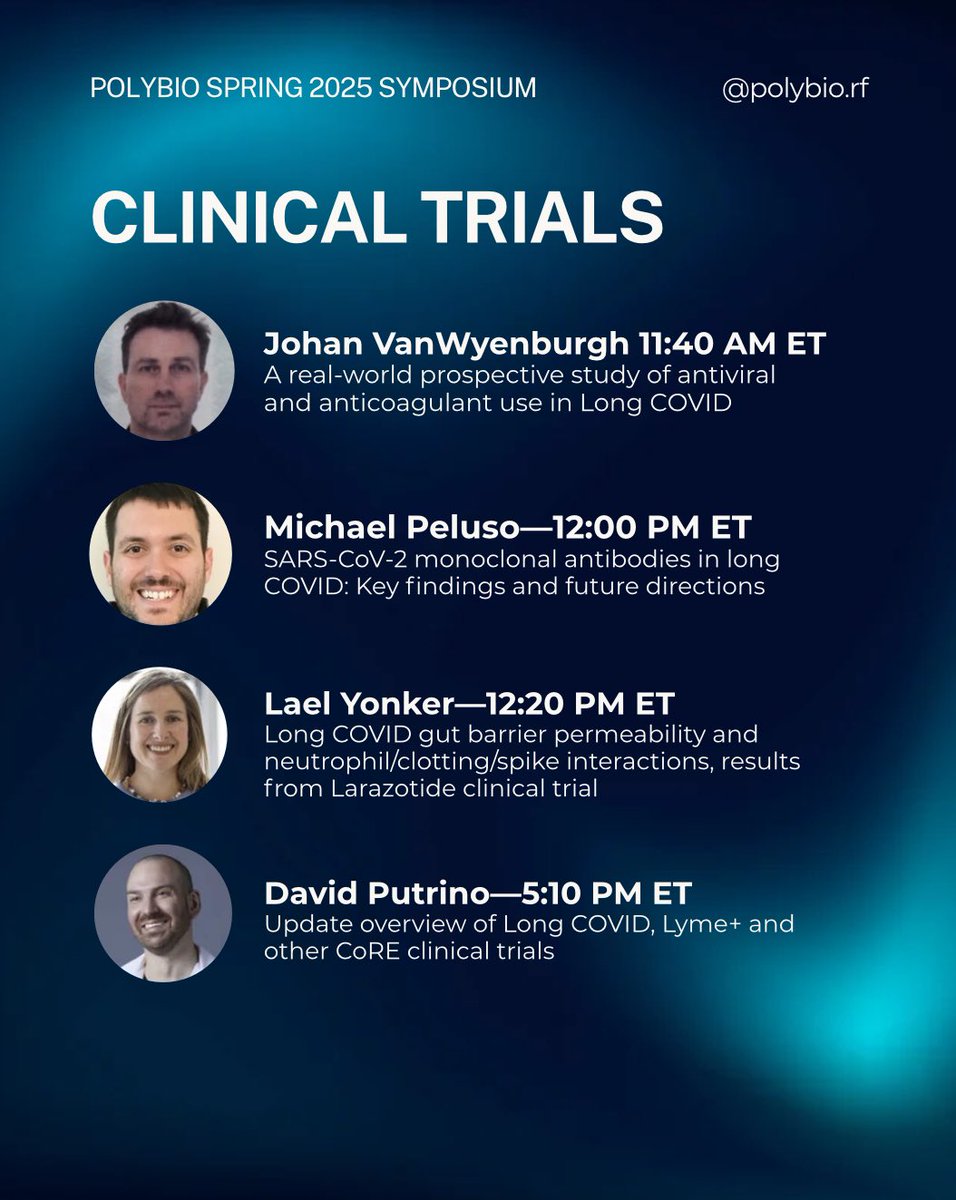
PolyBio’s Spring Symposium is tomorrow, May 16th 11-5 ET. The event will bring together scientists from several disciplines to cover the following topics:
Viral Persistence
Clinical Trials
Tissue Pipelines
Vascular & Clotting
Immune system function
Brain & Nervous system
Long Covid gut
Cardiovascular
Microbiome
Neurodegenerative disease
Tick-borne vector-borne illness
At PolyBio, our Long COVID Research Consortium & related complex chronic illness projects are moving full speed ahead. On Friday May 16 we have planned an online Symposium where PolyBio-supported researchers will present updates on their projects. The symposium schedule is below!
An overview of PolyBio’s complex chronic illness research & clinical trials program
Dr. Proal will detail PolyBio’s collaborative infrastructure to study and treat infection’s chronic consequences across a wide range of conditions. These include long COVID, ME/CFS and tick-borne/vector-borne illness, but also Alzheimer’s disease, cardiovascular disease, and even human aging.
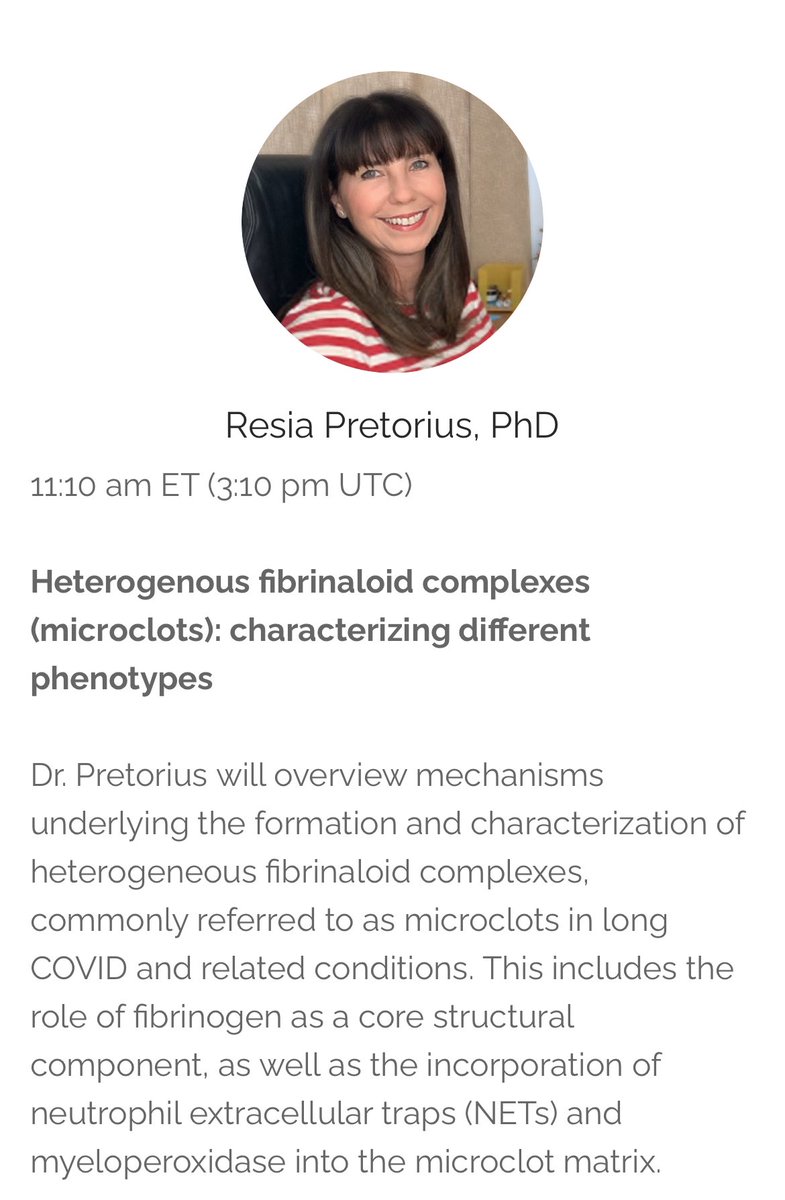
Resia Pretorius, PhD
11:10 am ET (3:10 pm UTC)
Heterogenous fibrinaloid complexes (microclots): characterizing different phenotypes
Dr. Pretorius will overview mechanisms underlying the formation and characterization of heterogeneous fibrinaloid complexes, commonly referred to as microclots in long COVID and related conditions. This includes the role of fibrinogen as a core structural component, as well as the incorporation of neutrophil extracellular traps (NETs) and myeloperoxidase into the microclot matrix.
1/ “[SARS-CoV-2] S1 protein leads to lower glucocorticoids,” said Dr. Matt Frank, who worked on a project to create a “multi-hit” model of Long Covid. “This may then disinhibit brain immune cells such as microglia, thereby priming these cells to subsequent inflammatory insults,” like a later bacterial or viral infection.
2/ PolyBio supported the research by Dr. Frank and team on neuroimmune priming in Long COVID. The team recently published their findings in the journal Brain, Behaviour and Immunity.
3/ The team showed that brain exposure to a SARS-CoV-2 spike protein subunit drove a long-term vulnerability not only to neuroinflammation, but also to forms of autonomic dysregulation such as increased heart rate and core body temperature.
BREAKING: PolyBio-supported study reveals long-term immune and metabolic damage after COVID-19 infection
New preprint study reveals profound & long-lasting biological disruptions that can follow a SARS-CoV-2 infection, i.e. changes connected to altered metabolism & cancer-associated epigenetic changes
2/ New research published by scientists from the University of California San Francisco reveals that COVID-19 can lead to significant and enduring alterations in the immune and metabolic systems of impacted individuals.
3/ Some of these changes may underlie the persistent symptoms experienced by many post-COVID-19 patients (Long COVID). The research was supported in part by PolyBio Research Foundation via the LIINC program.