Here's the latest variant picture for the United States, to mid-June.
The XFG.* "Stratus" variant looks less dominant as more data has been shared, down to 33%, with LP.8.1.* at 31%.
The NB.1.8.1 "Nimbus" variant finished at 14%.
#COVID19 #USA #XFG #Stratus
🧵
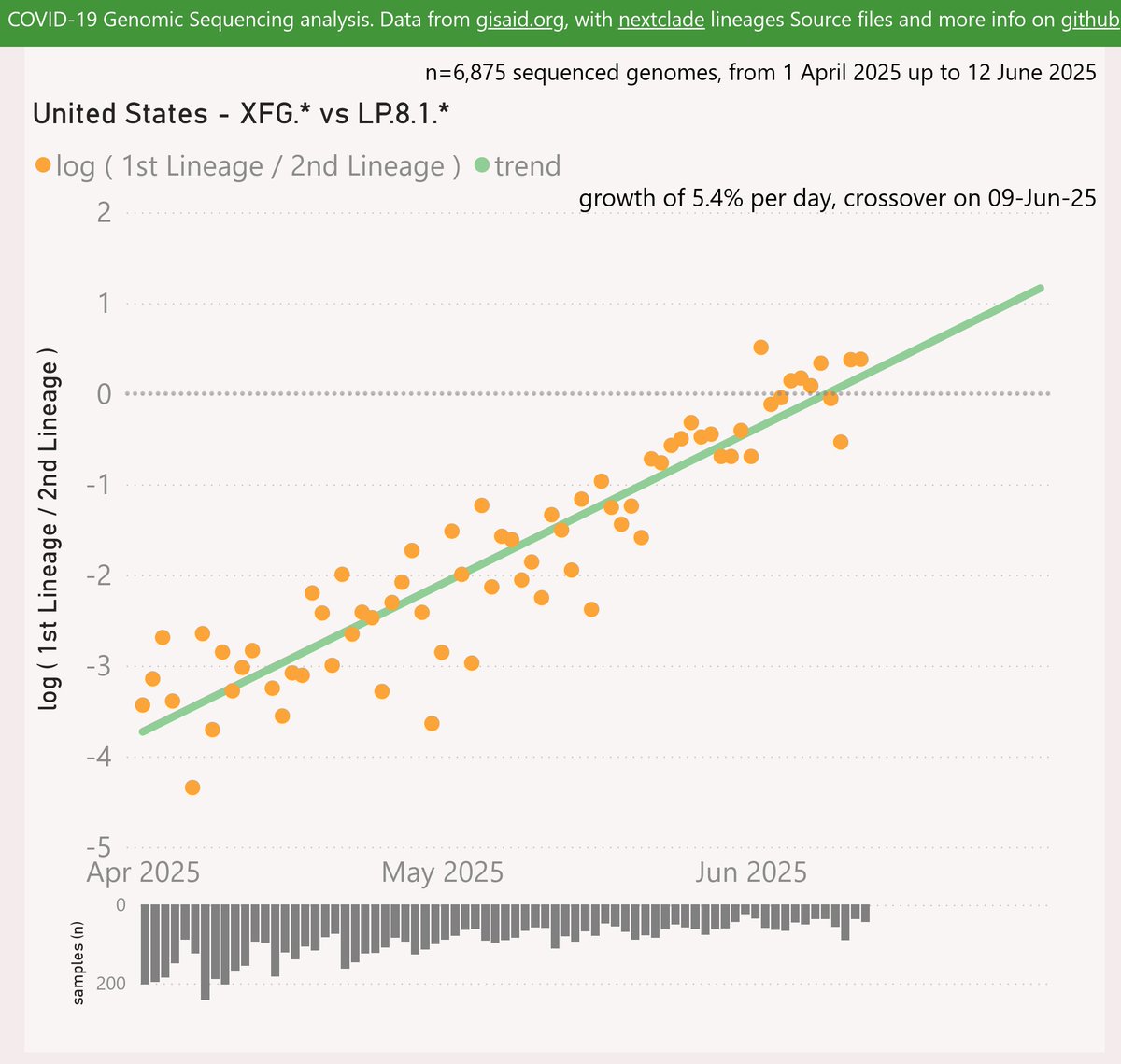
For the US, the XFG.* "Stratus" variant shows a strong growth advantage of 5.4% per day (38% per week) over LP.8.1.*, with a crossover in early June.
🧵
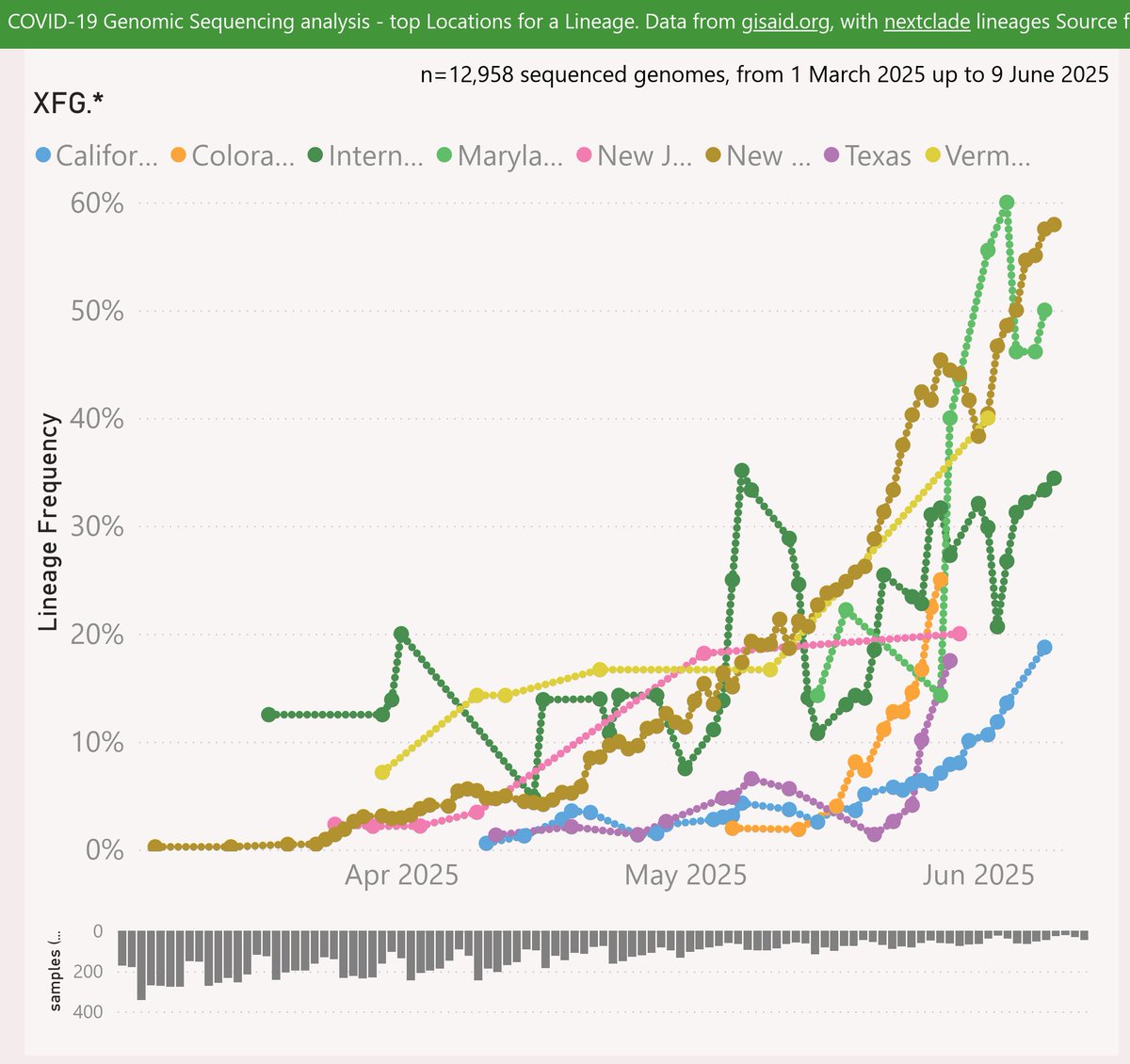
XFG.* "Stratus" has mainly been reported from New York state and Maryland at 40-60%. It has also been quite common among the International Traveller samples at 44%.
🧵
For the US, the NB.1.8.1 "Nimbus" variant showed a slightly stronger growth advantage of 5.6% per day (39% per week) over LP.8.1.*, which predicts a crossover in mid-June (the data routinely lags).
🧵
NB.1.8.1 "Nimbus" has mainly been reported among the International Traveller samples, and from California at 23% frequency.
🧵
The volatility is due to the ragged timing of submissions from various countries.
This perspective excludes all the high-volume countries and regions that I routinely report on: Australia, NZ, Europe, Canada and the US. The remaining countries are aggregated into this report.
🧵
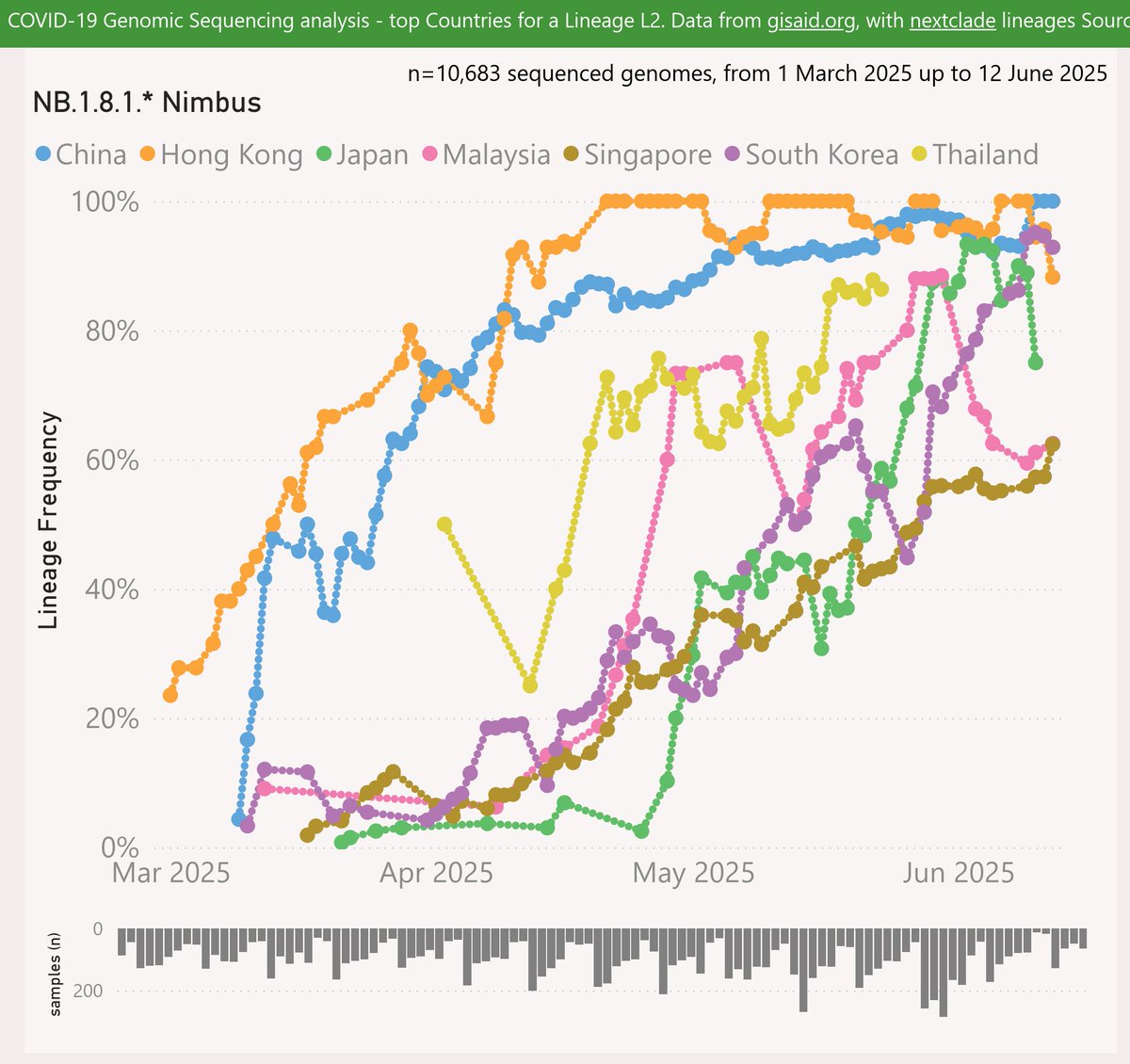
South Korea has joined Hong Kong, China and Japan in reporting a "clean sweep" of the NB.1.8.1 "Nimbus" variant. Thailand looks set to follow suit, but the frequency fell in Malaysia.
🧵
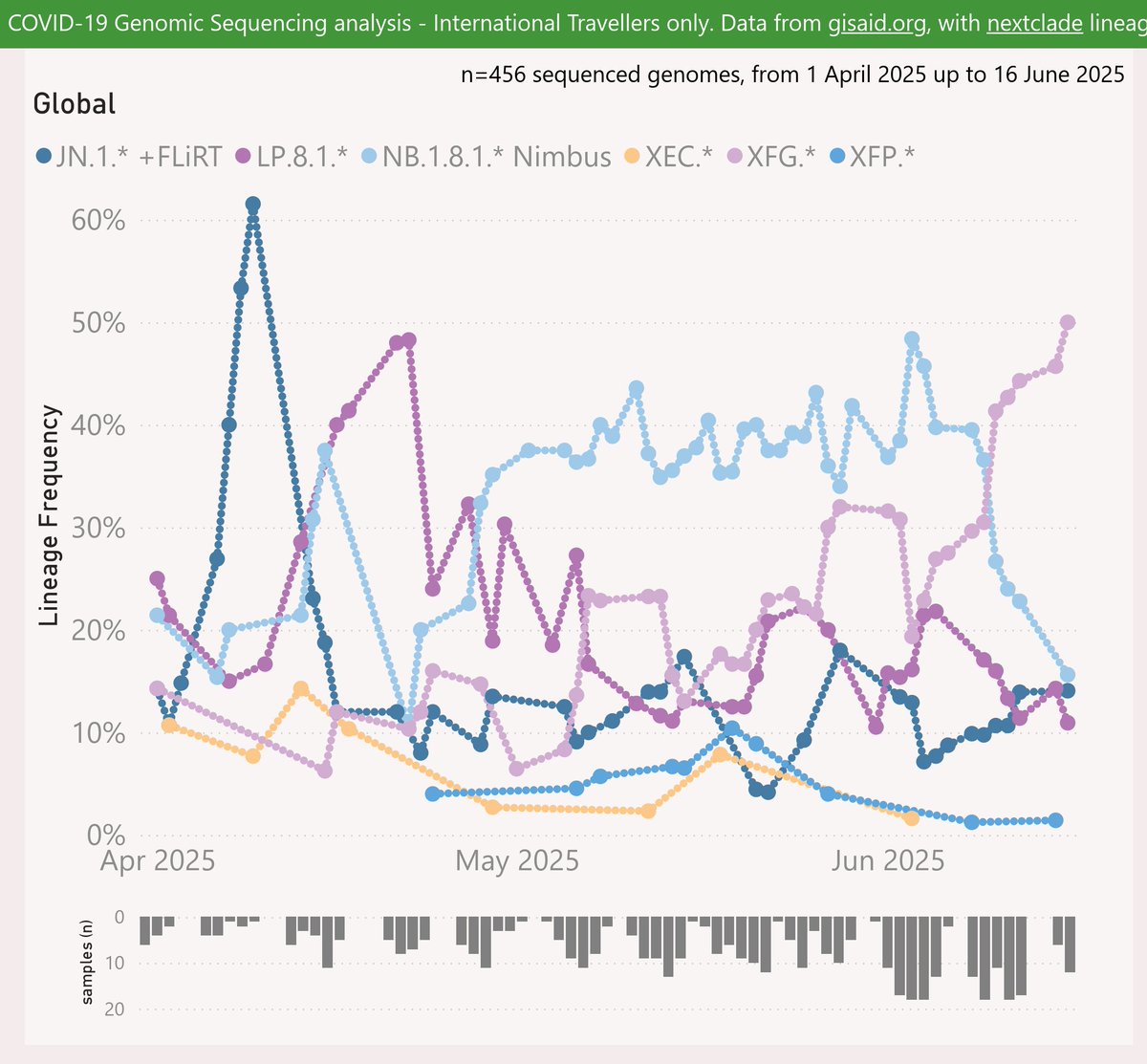
Here are the trends across all the International Traveller samples. From that perspective, XFG.* "Stratus" remains dominant, at 50%.
This dataset (mostly arrivals in the US and Japan) is arguably more random, as it is not skewed by sequencing volumes.
🧵
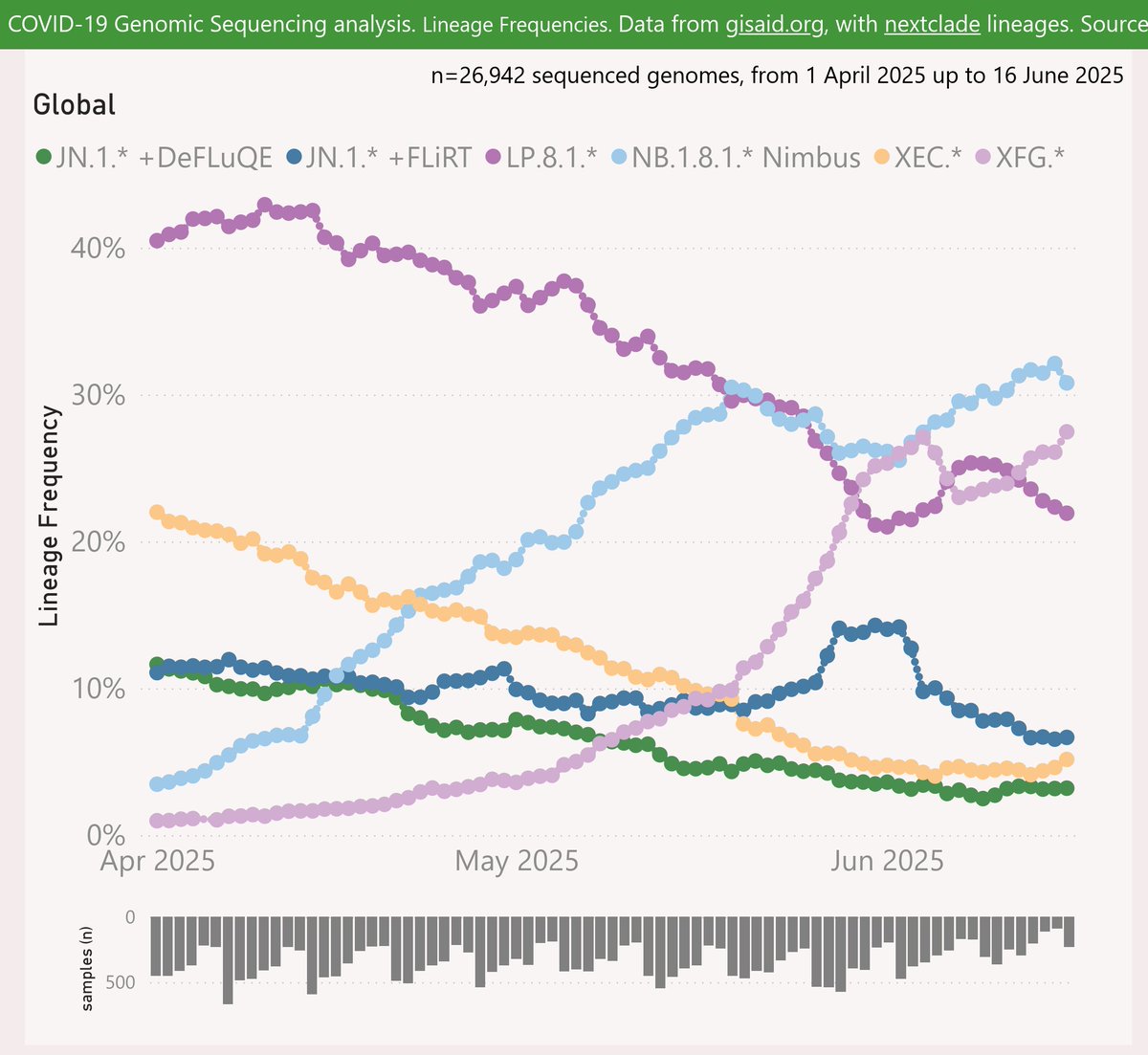
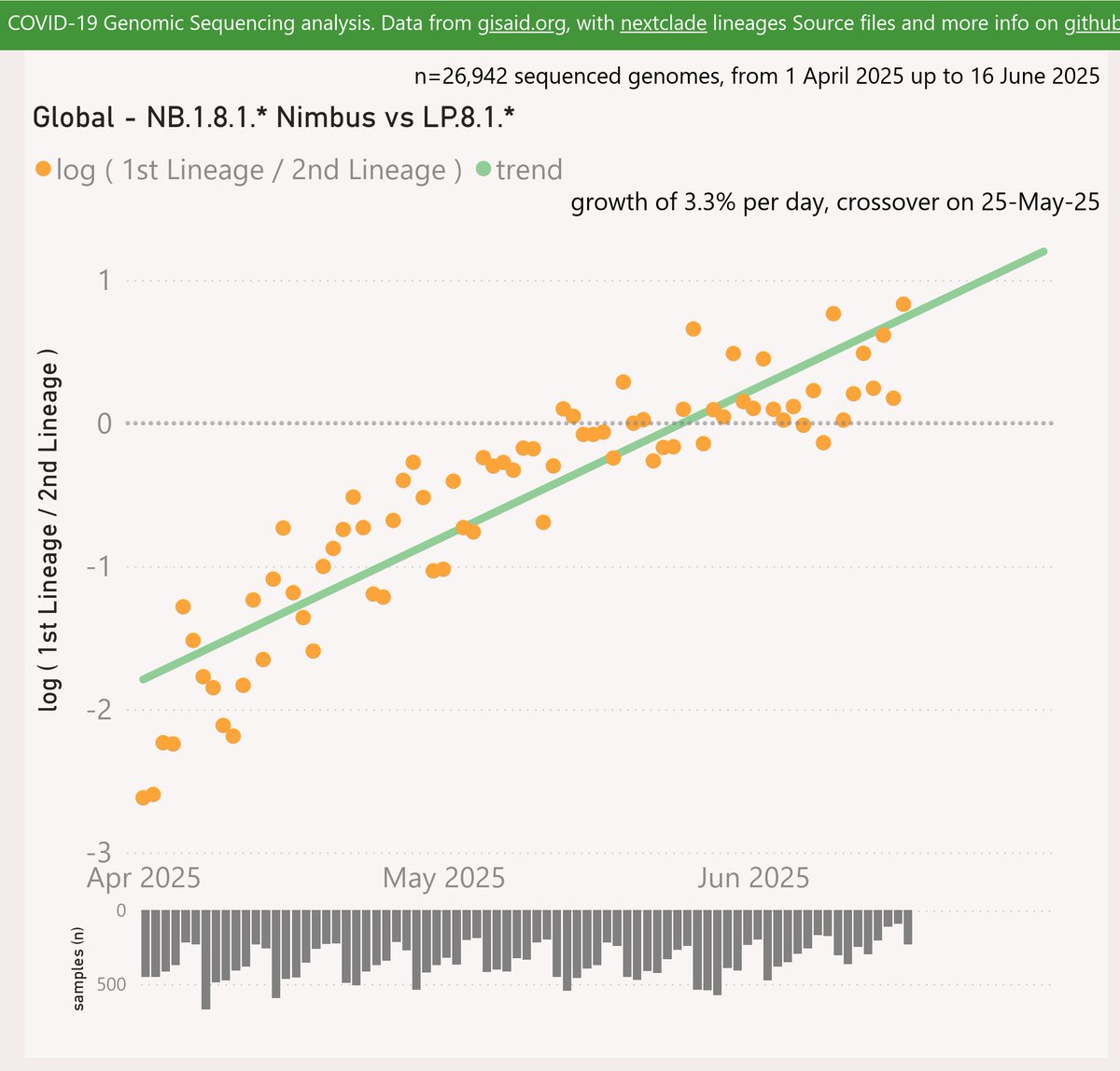
Globally, the NB.1.8.1 "Nimbus" variant is showing a steady growth advantage of 3.3% per day (23% per week) over the LP.8.1.* variant, with a crossover in late May.
🧵
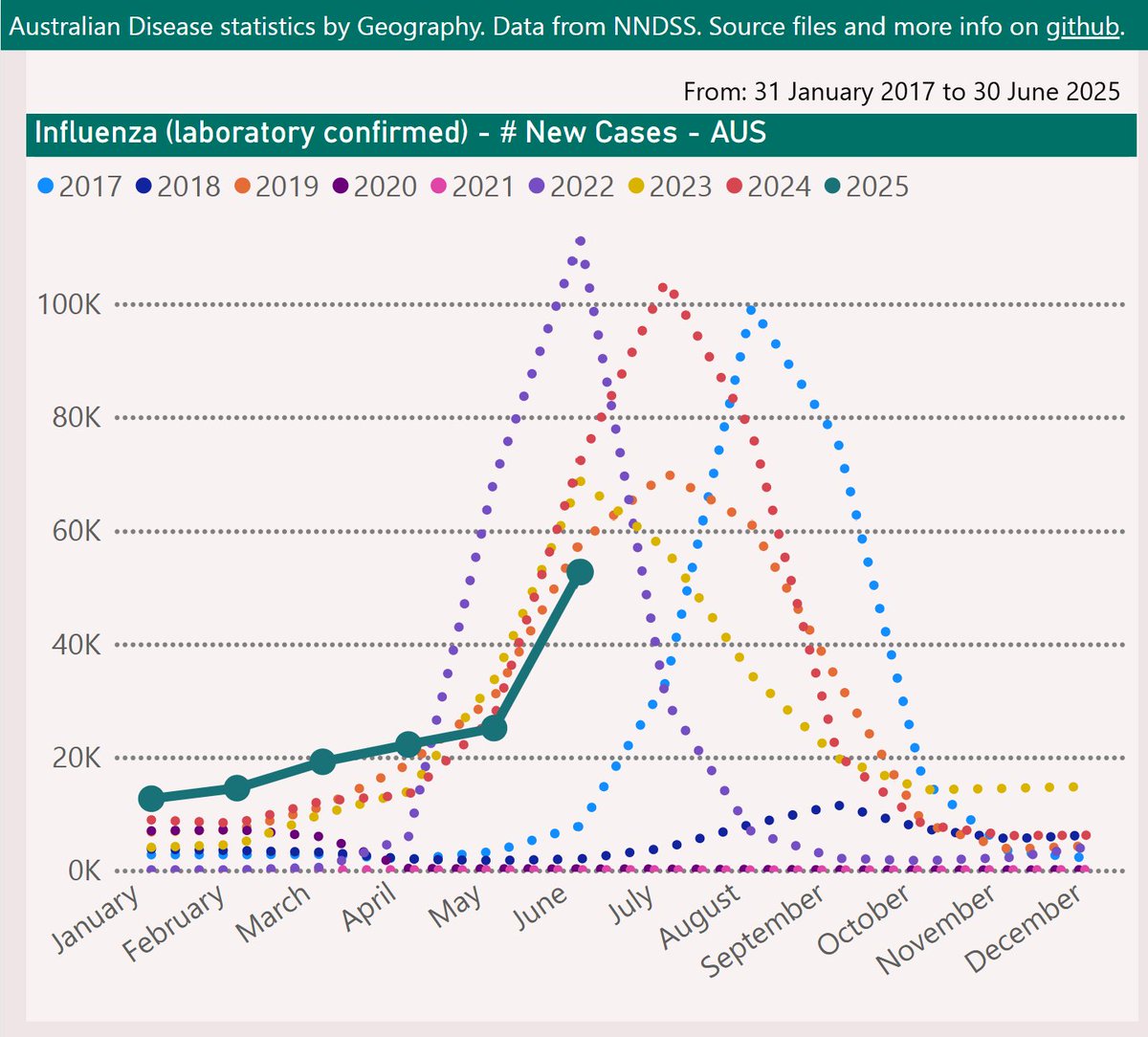
Reported Influenza cases continued to rise for June, but at a steady pace. Up to April cases were running at "flunami" pace, it now looks like either a lower or later peak than the recent "big" years.
#Influenza #RSV #Australia
🧵
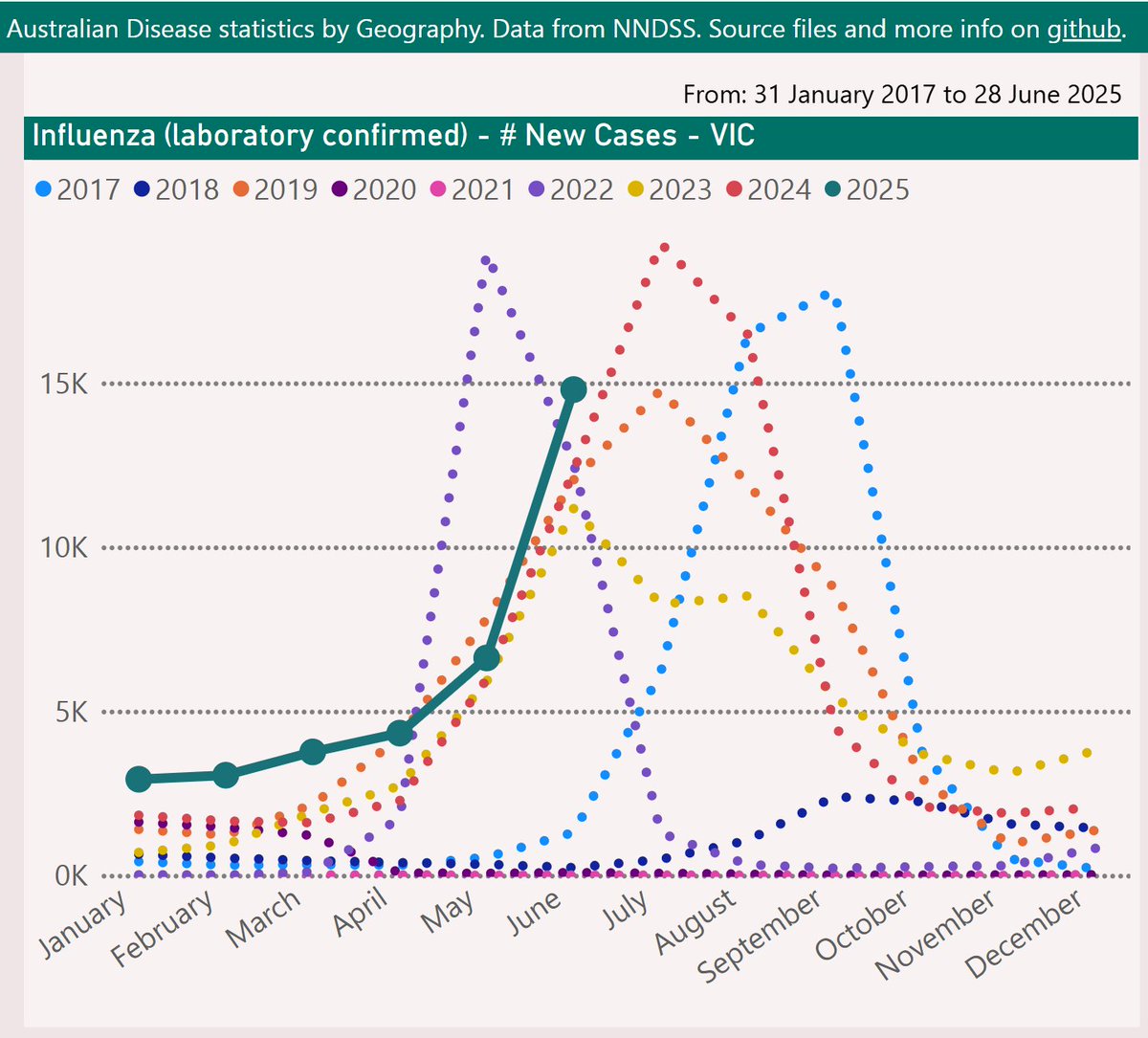
The trend for Influenza case growth in Victoria is significantly higher than the national picture. It is still tracking above the record-setting wave of 2024.
🧵
Looking at the Influenza cases on a per-capita basis for the eastern states (7-day rolling averages), NSW is setting the pace into June, with case rates almost double those reported from Queensland.
🧵
This perspective excludes all the high-volume countries and regions that I routinely report on: Australia, NZ, Europe, Canada and the US. The remaining countries are aggregated into this report.
🧵
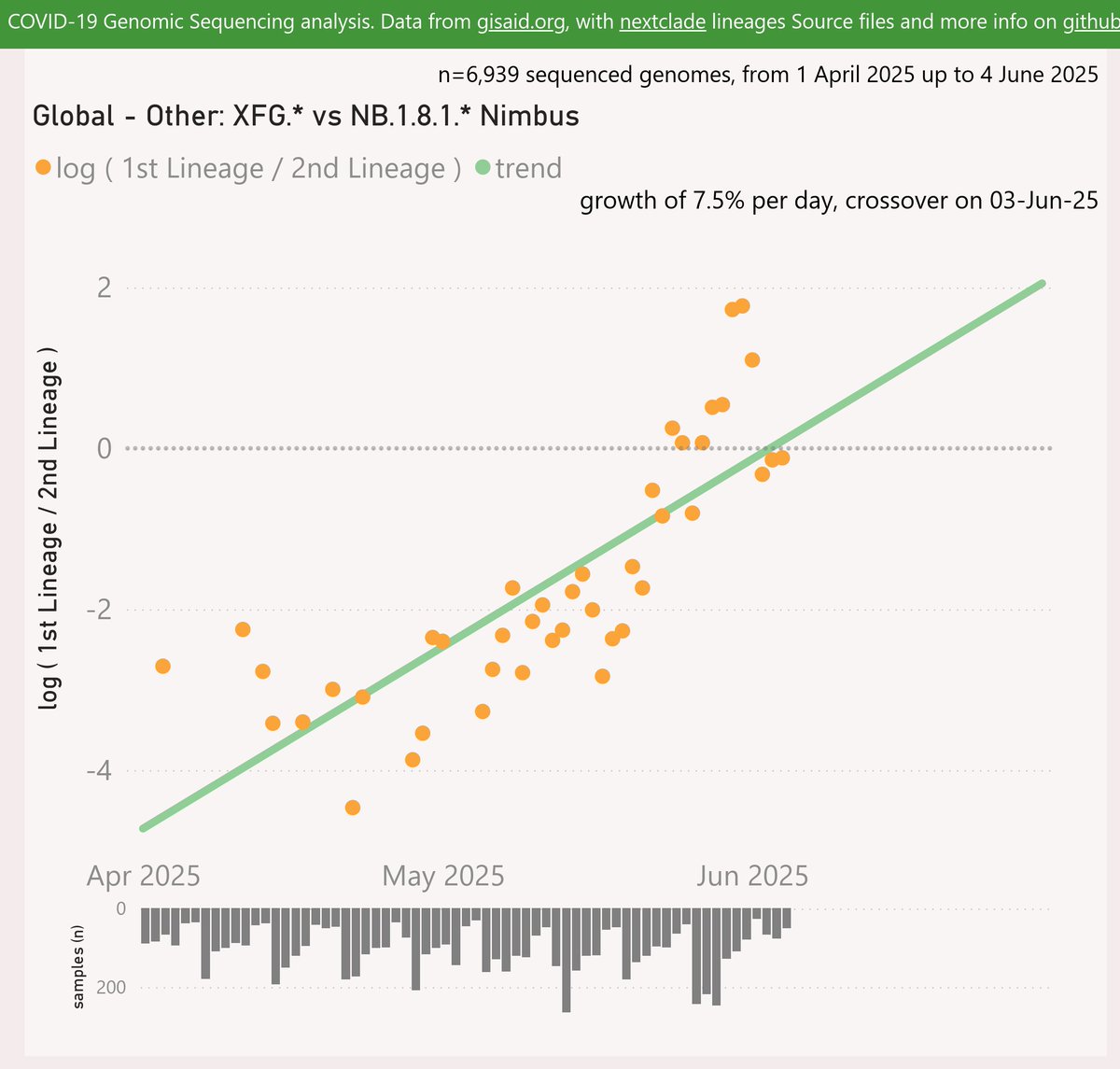
For the "Global - Other" countries, the XFG.* "Stratus" variant is showing a strong and accelerating growth advantage of 7.5% per day (53% per week) over the NB.1.8.1 "Nimbus" variant, with a crossover in early June.
🧵
Here's the latest variant picture for the United States, to early June.
The XFG.* "Stratus" variant grew strongly to dominance at 41%, while LP.8.1.* fell to 25%.
The NB.1.8.1 "Nimbus" variant grew steadily, to 20%.
#COVID19 #USA #XFG #Stratus #NB_1_8_1 #Nimbus
🧵
For the US, the XFG.* "Stratus" variant shows a strong growth advantage of 5.9% per day (41% per week) over LP.8.1.*, with a crossover in early June.
🧵
XFG.* "Stratus" has mainly been reported from New York state, rising to 58% frequency. Maryland finished at 50%. It has also been quite common among the International Traveller samples at 30-35%.
🧵
The XFG.* "Stratus" variant is also quite prevalent at around 19%. This is a novel scenario – until now I’ve only seen one or the other growing strongly in each country or region.
🧵
A double-wave seems very likely in Canada. This scenario raises the risk of rapid reinfections, for those relying on immunity from a recent infection.
🧵