A NEW study finds that infection with SARS-CoV-2 during the first year of the pandemic was associated with three to five times higher odds of cognitive impairment 2 years after infection. 1/
Survivors of the disease may require special attention from clinical doctors to diagnose and treat cognitive impairment, namely, those who were hospitalized for more than 15 days, in intermediate or intensive care units, and presented disorientation, changes in vision, gait or balance, during infection. 2/
Conversely, although cognitive impairment was less frequent and severe in COVID-19 cases who had been followed in the community during infection, this population is younger. Causality between SARS-CoV-2 infection and cognitive impairment could not be inferred from the present study. 3/
The follow-up of participants of the NeurodegCoV-19 and other COVID-19 cohorts are needed to better understand the long-term relation between COVID-19 and cognitive dysfunction. 4/
Nevertheless, in clinical practice, this antecedent may constitute as relevant information among other characteristics of the patients presenting a possible neurodegenerative cognitive dysfunction. 5/5
Fibrinoloid (amyloid-containing) microclots are resistant to degradation and are found in a variety of diseases including #LongCOVID, ME/CFS, and sepsis. A NEW review looks at the use of laser speckle imaging (LSI) and laser Doppler imaging (LDI) to assess how fibrinaloid microclots can disrupt the microcirculation. 1/
The microcirculation typically refers to those capillaries less than 100 mm in diameter. Having shown that blood can clot into an anomalous amyloid form that is rather resistant to fibrinolysis, researchers have previously developed the idea that endothelial dysfunction can both lead to and be caused by the fibrinaloid microclots so formed, such that this can slow or block entirely parts of the microcirculation. 2/
The microclots might be thought of as a ‘structural’ manifestation. This impairment of the microcirculation is referred to as ‘blood stasis’. It is thus desirable to have ‘functional’ methods that can measure these effects on the microcirculation directly. 3/
A NEW study finds that anti-SARS-CoV-2 antibodies play a protective role against vital organ-related #LongCovid (LC) symptoms, especially cardiovascular symptoms, but are insufficient in preventing or limiting other highly prevalent LC symptoms, such as neurological, psychiatric and pulmonary. 1/
These data underscore the complexity of the potential involvement of anti-SARS-CoV-2 immune responses in either protecting against or contributing to the development of different #LongCovid phenotypes. 2/
The disturbed immunological profile supports the idea of some sort of silent longCOVID, that may eventually manifest as critical clinical events, such as acute myocardial infarction or cerebral vascular accidents. 3/
A meta-analysis from Egypt of 125 studies involving over 4 million COVID survivors shows that months to years after infection, fatigue was the most common symptom at 43%. Around 27% of people experience cognitive impairment after COVID infection. 1/
Further, 28% experienced memory issues, 24% sleep disorders, 20% headaches, 16% dizziness, 14% depression, and 13% anxiety, with significant variability depending on follow‑up time, disease severity, sex, and BMI. 2/
Neurological symptoms are common & persistent in COVID survivors. This study highlights significant burden these symptoms place on individuals, emphasizing the need for well-resourced multidisciplinary healthcare services to support post-COVID recovery. 3/3
A new review on neuroimmune pathophysiology of #LongCOVID explores how SARS-CoV-2 can cause lasting neurological symptoms through a combination of direct infection, immune dysregulation, and persistent inflammation. 1/
Key mechanisms include viral antigen persistence, autoimmunity, blood–brain barrier disruption, neurotransmitter imbalances, and glial cell dysfunction. The authors link these processes to cognitive impairment, fatigue, dysautonomia, and other Long COVID symptoms. 2/
Despite the perception that COVID-19 is now a mild disease, there is overwhelming evidence indicating that SARS-CoV-2 infection is capable of producing widespread post-acute sequelae in a significant percentage of infections. 3/
As people get older, a growing population of cells starts to consume more energy — perhaps because the cells accumulate damage that leads them to rev up processes such as inflammation. 1/
An emerging hypothesis suggests that the brain accommodates these energy-hogging ‘senescent cells’ by stripping resources from other biological processes, which ultimately results in outward signs of ageing, such as greying hair or a reduction in muscle mass. 2/
It’s one example of a growing understanding of how our brains control ageing and how psychological stress can accelerate the process at a molecular level. 3/
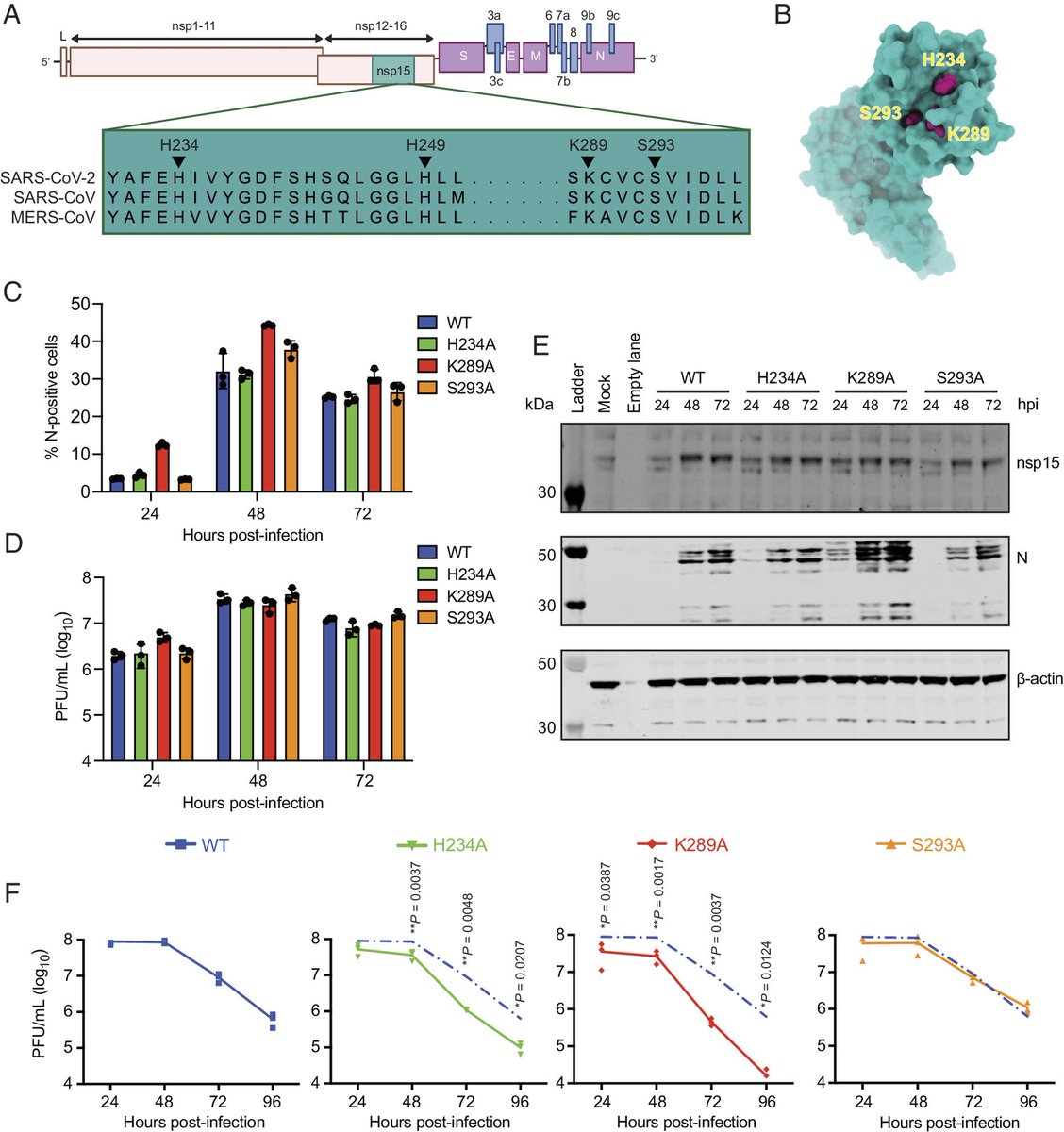
A NEW study found that the SARS-CoV-2 nonstructural protein 15 (nsp15) helps the virus hide from the immune system in human lung and nasal cells. The nsp15 endoribonuclease is important in promoting virus replication and influencing disease severity. 1/
SARS2 variants lacking this activity exhibit impaired replication & cause milder disease, highlighting nsp15 as a key virulence factor. This underscores the importance of nsp15’s endoribonuclease activity in both promoting virus replication & influencing disease severity. 2/
The viral variants lacking nsp15 endoribonuclease activity elicited higher innate immune responses and exhibited reduced replication in human stem cell–derived lung alveolar type II epithelial cells, as well as in the lungs of infected hamsters. 3/