Thread with excerpts from Richard Overy's "Why the Allies Won." I'm going to skip the fairly basic history portion of the book. 
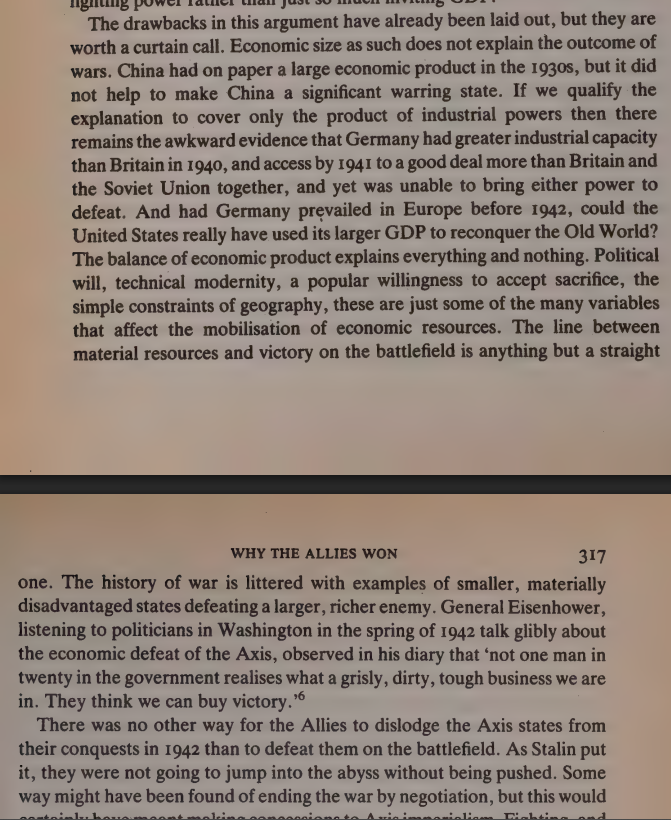
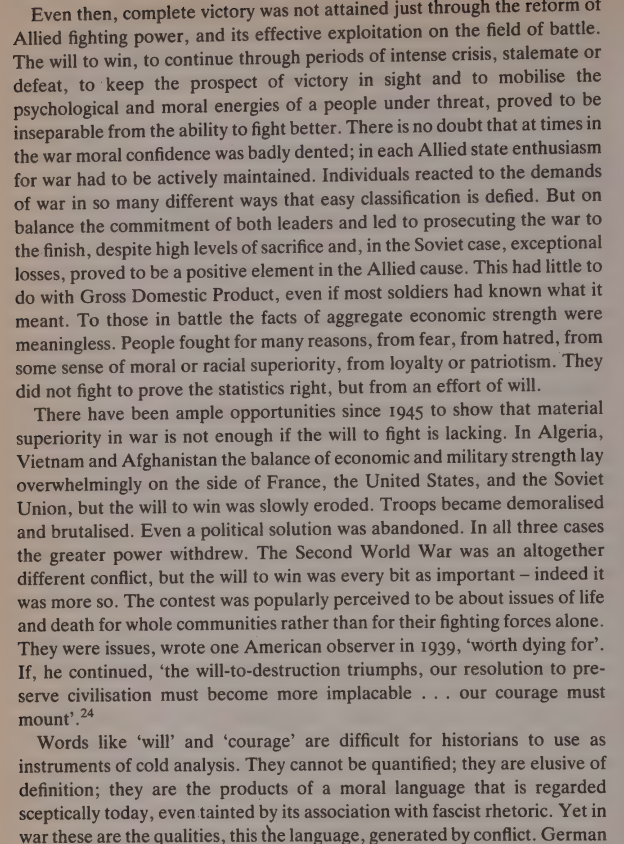
The economic determinist view of WWII misses four things: first, how quickly the US mobilized (contrast with shambolic WWI). Second, the insane endurance of the USSR. Third, the mismanagement of the German war economy 1940-43. Fourth, that GDP does not win battles.

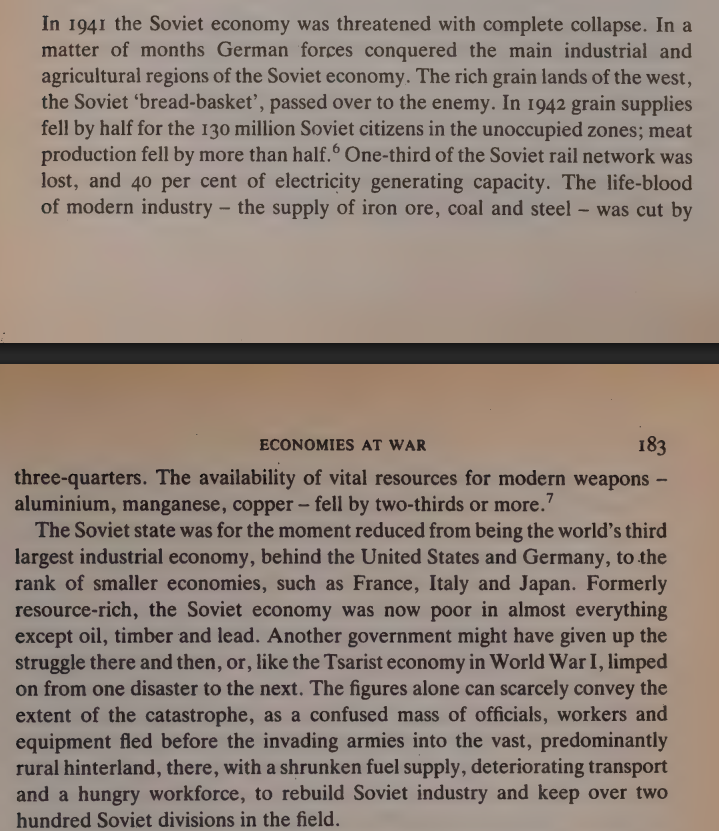
The most important front of WWII was the Eastern Front. The USSR was utterly devastated by Barbarossa/Blau - 40% of electricity, 2/3 of coal and steel, most non-ferrous metals, 65% of agricultural land (and consequently, millions of Russians starved).
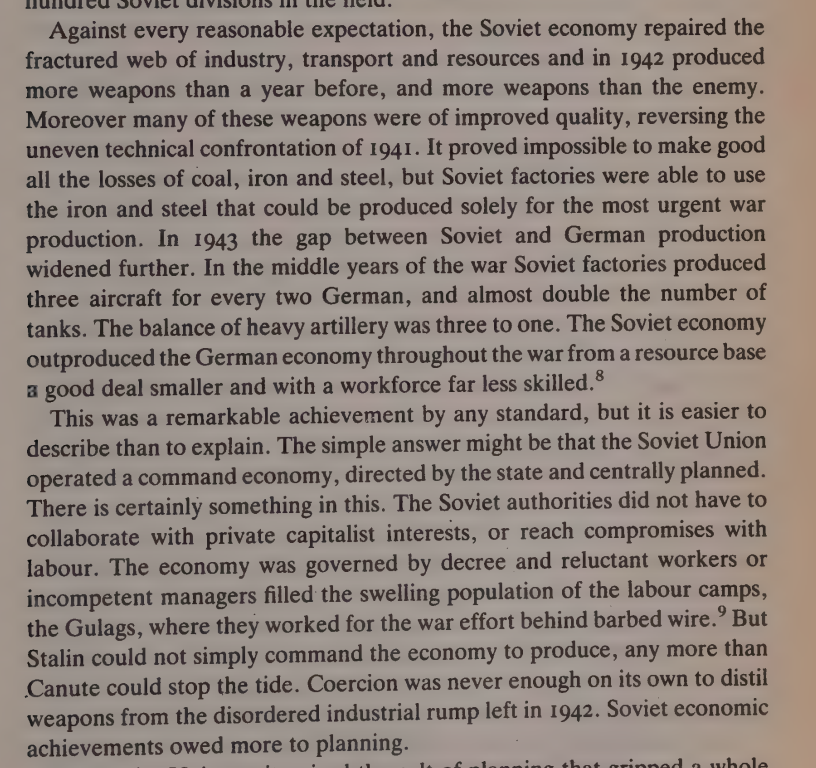
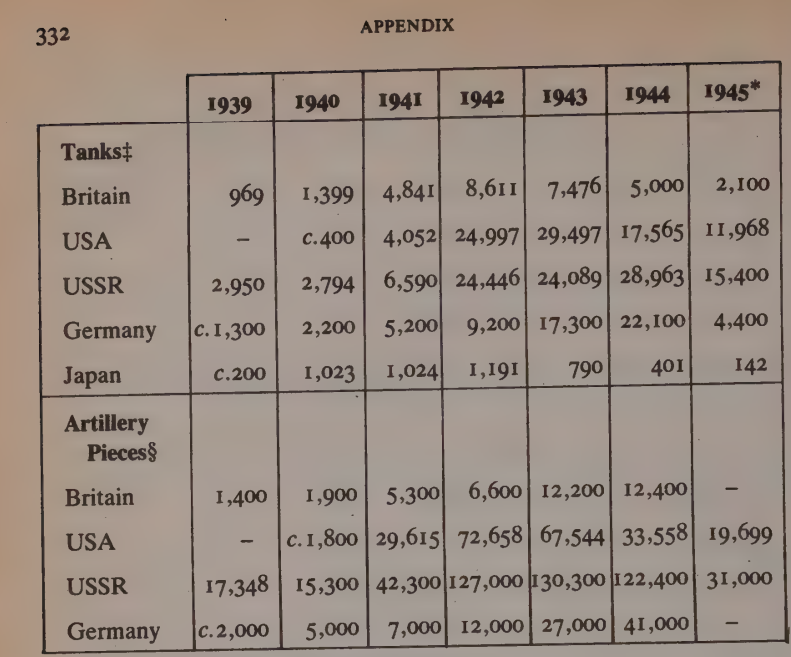
Economically, the USSR was outmatched by Germany + occupied Europe even before Barbarossa, and was a relative pygmy in 1942/43. Yet in these years, the USSR vastly outproduced Germany in the critical air and land armaments that decided the Eastern Front.
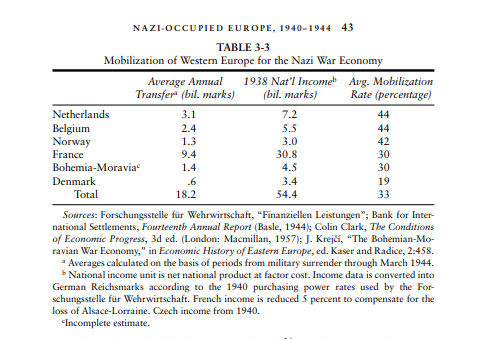
(Not from Overy): the Germans successfully mobilized the resources of occupied Europe for the war effort, which played a big part in the 1944 armaments miracle. This, plus Barbarossa, is why pre-war estimates of approx German/Soviet economic parity are very misleading.
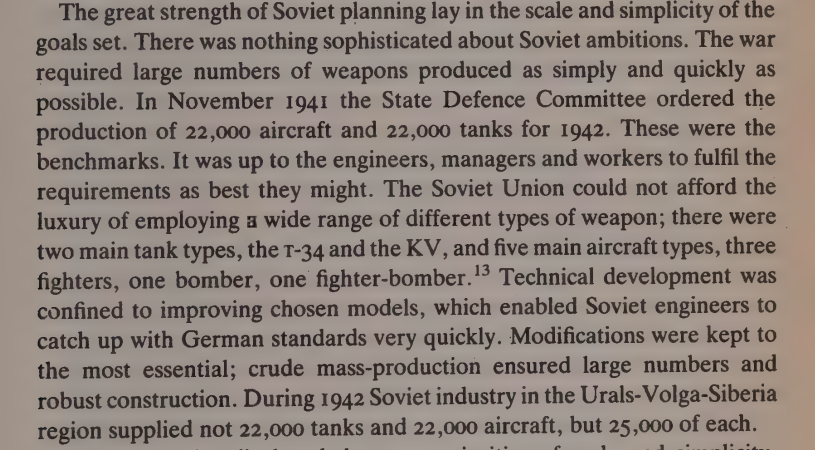
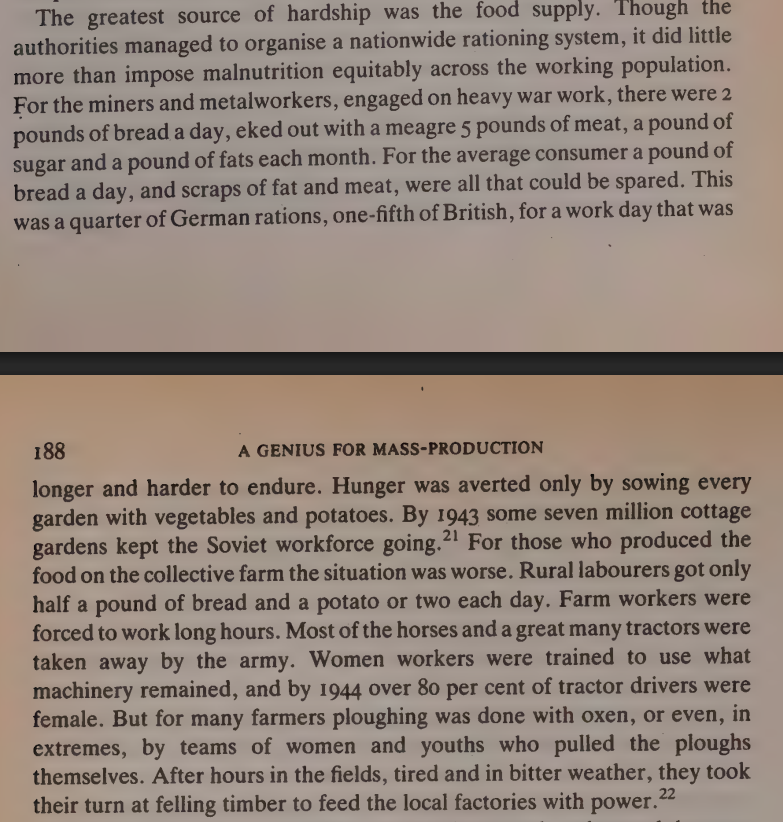
The Soviets were able to leverage their planning abilities to effectively rebuild their economy from scratch, totally militarize it, and field the world's largest army (several times, since Soviet combat abilities were quite poor and they kept taking massive casualties).
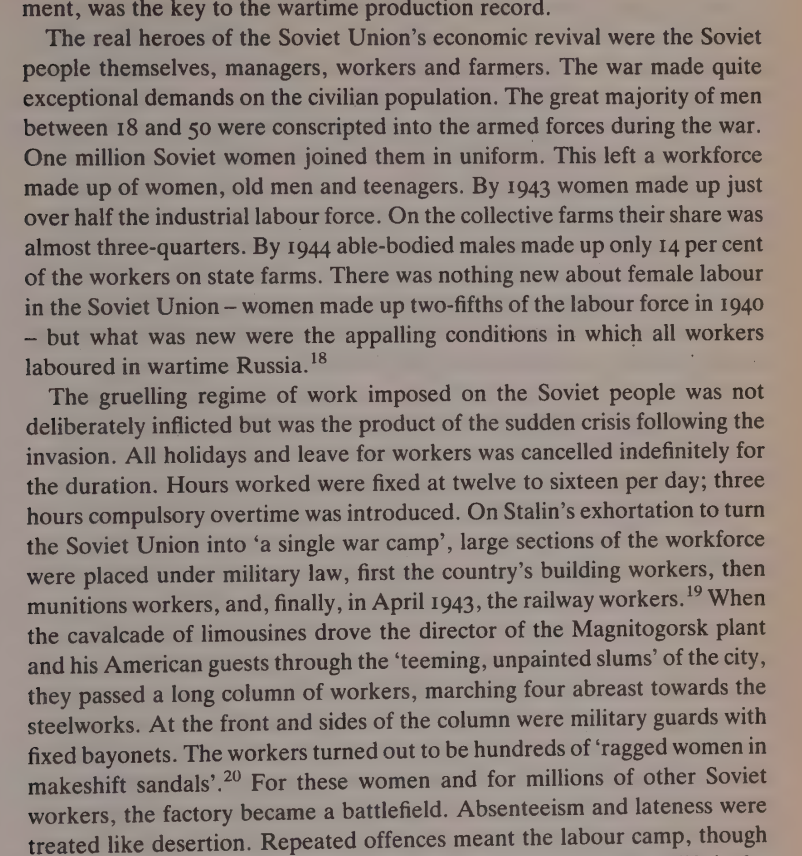
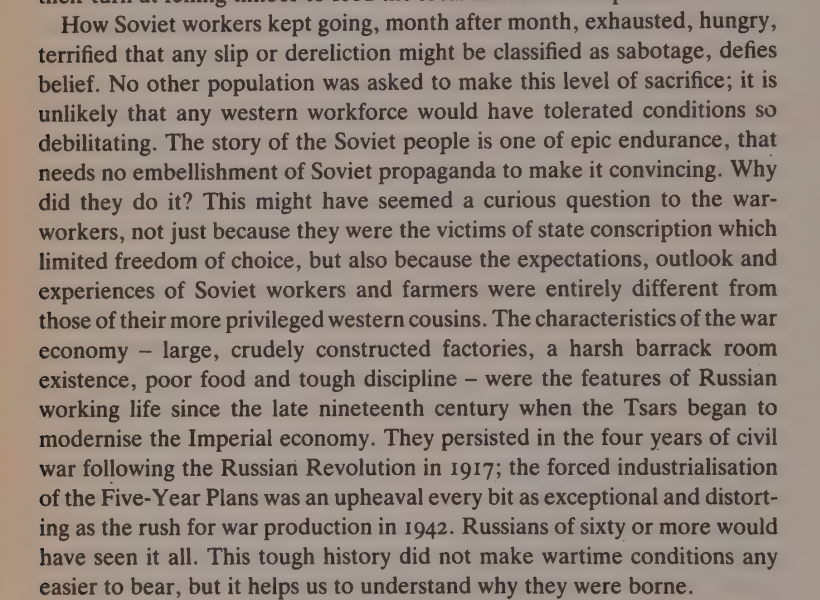
The conditions the Russians worked in during the war were abominable by the standards of the other combatants. Even bombed-out Japanese never suffered as badly, let alone Americans.
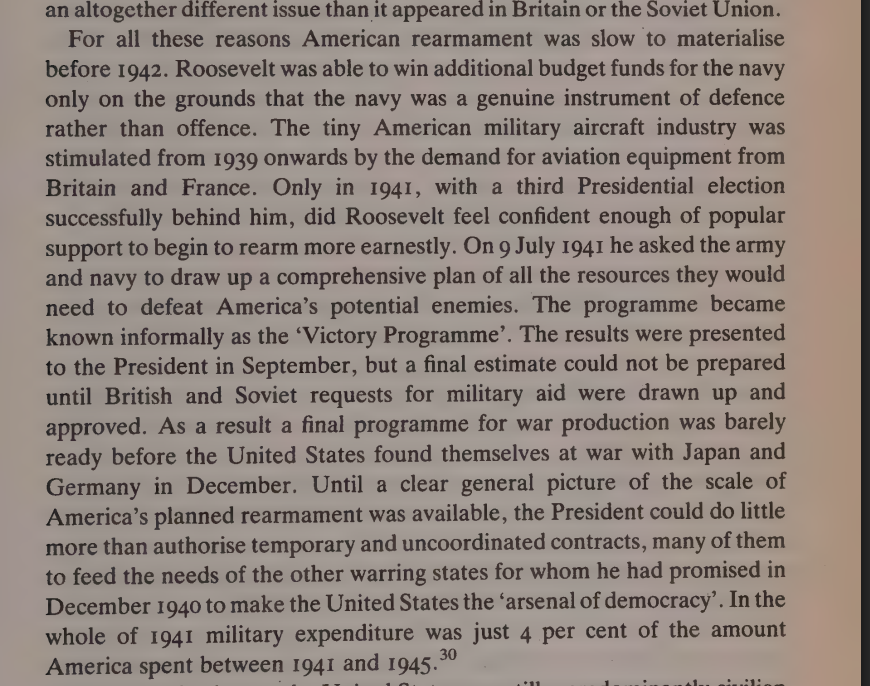
The American experience was very different. The US was already the world's economic superpower, but almost totally demilitarized. The other combatants all took at least 5-6 years to arm up; the US did it in 1.


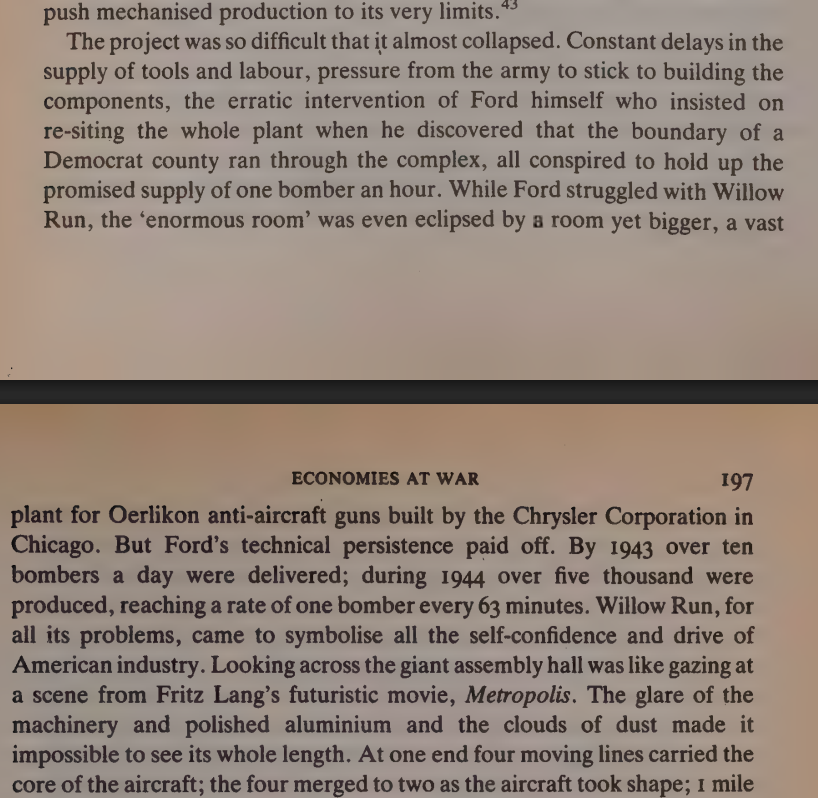
This was thanks to the strength of the American industrial tradition - great depth of technical/organizational skill, experience with mass production, gigantism, ethos of competition. This tradition has basically been lost; all of these speak more to China than the US today.

Henry Ford resited his famous B-24 mass production plant, which could produce 1 4-engine bomber an hour, because the boundary of a Democrat county ran through the complex. Patriot.
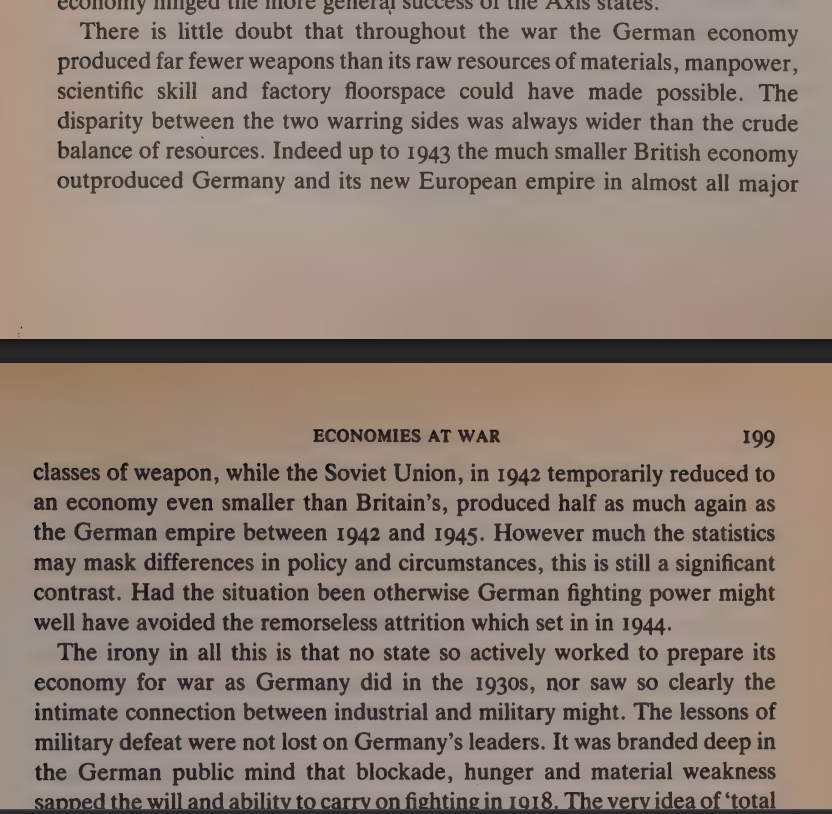
In 1942/1943, Germany was outproduced in most weapons categories by both Britain and the USSR, even though Germany with its European empire had far more economic potential than either, despite preparing for der tag for years.

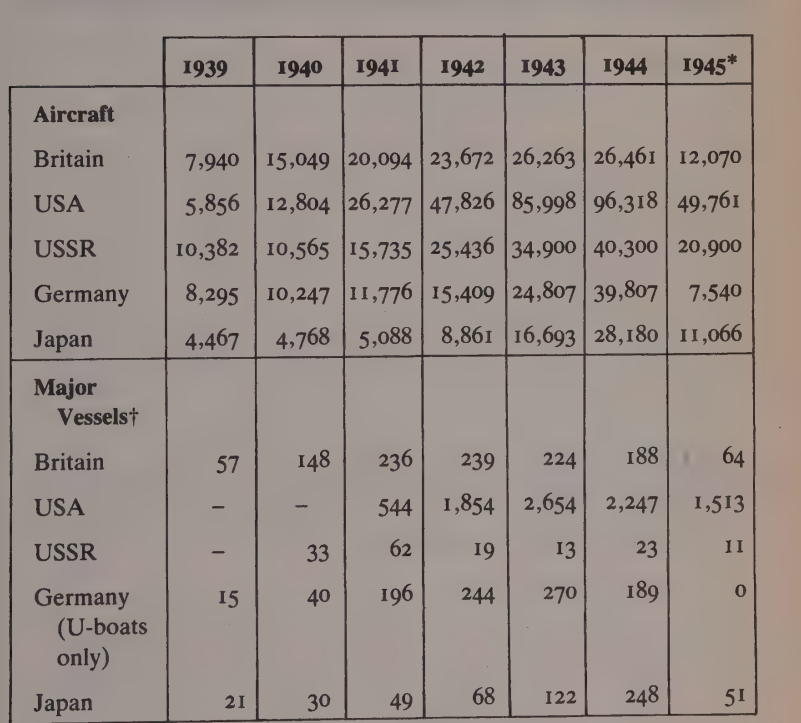
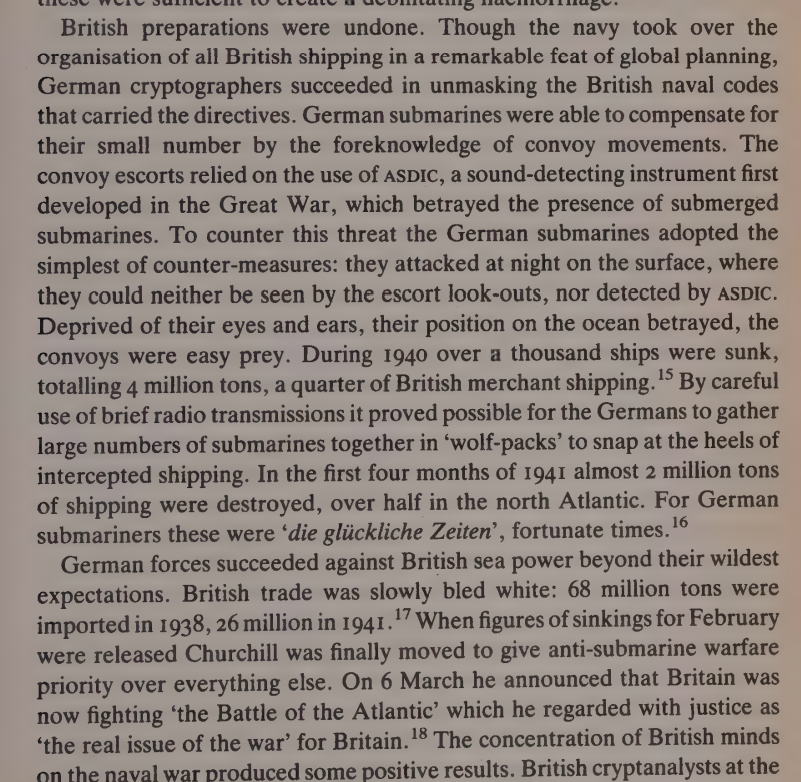
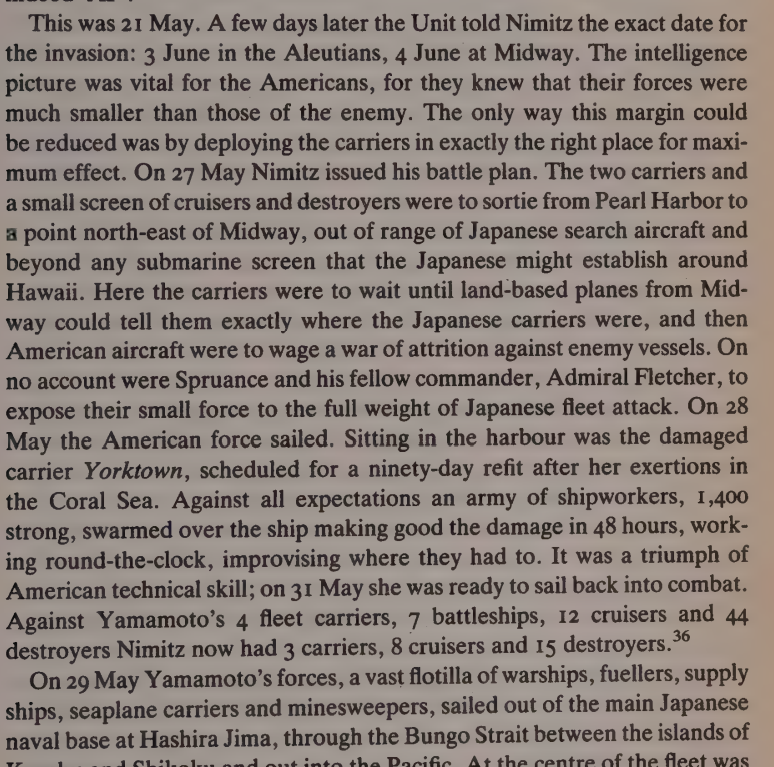
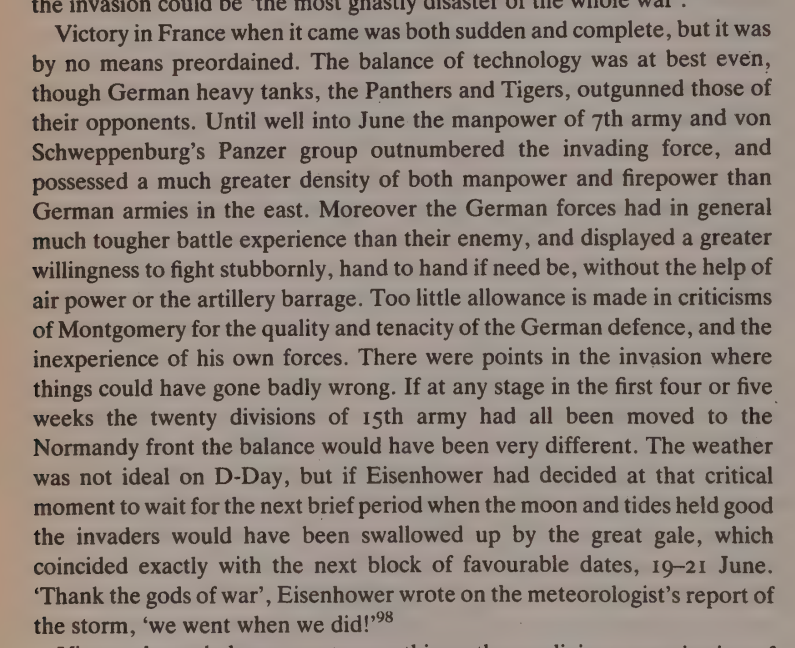
As far as specific turning points: the Battle of the Atlantic, Midway, Stalingrad, and D-Day all could have gone the other way. Midway didn't matter too much, and a failed D-Day wouldn't have saved Germany, but Stalingrad or the BoTA going the other way might have won the war.
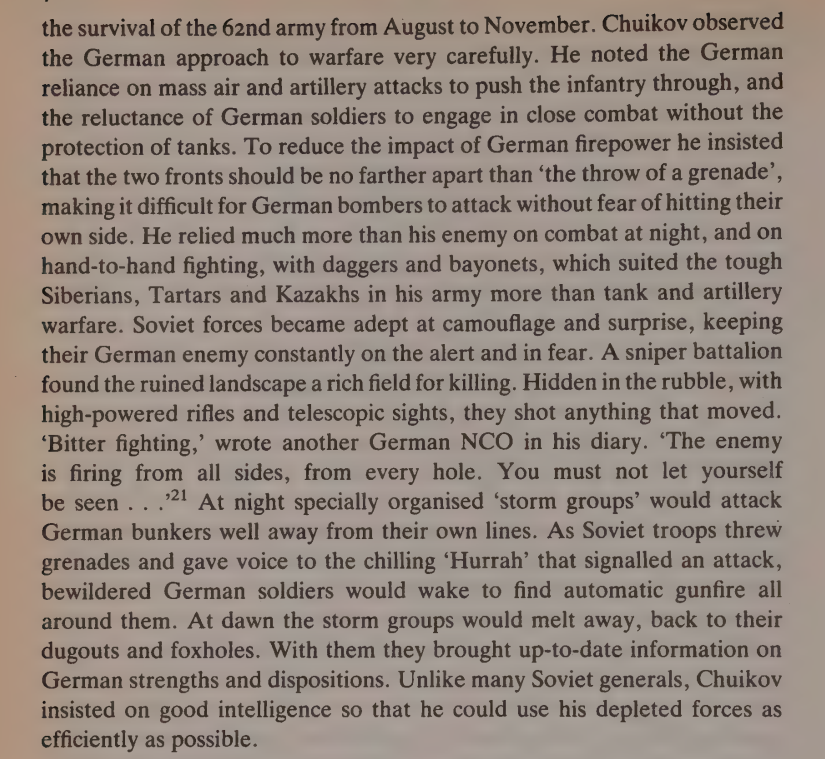
The Eastern Front was a very close run thing in general; the USSR in 1943/44/45 won so hard because of a positive feedback loop where they reconquered territory and rapidly integrated both the men and food to make good their losses, plus the WAllies picking up their campaigns.
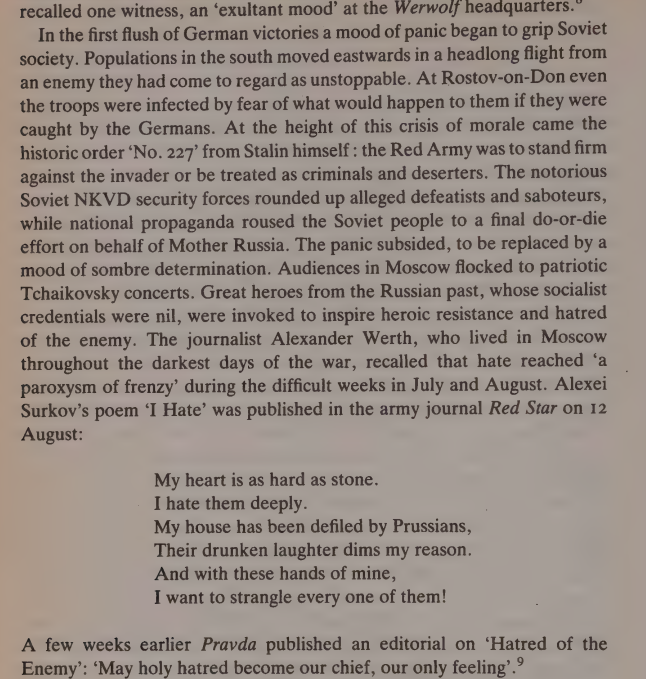
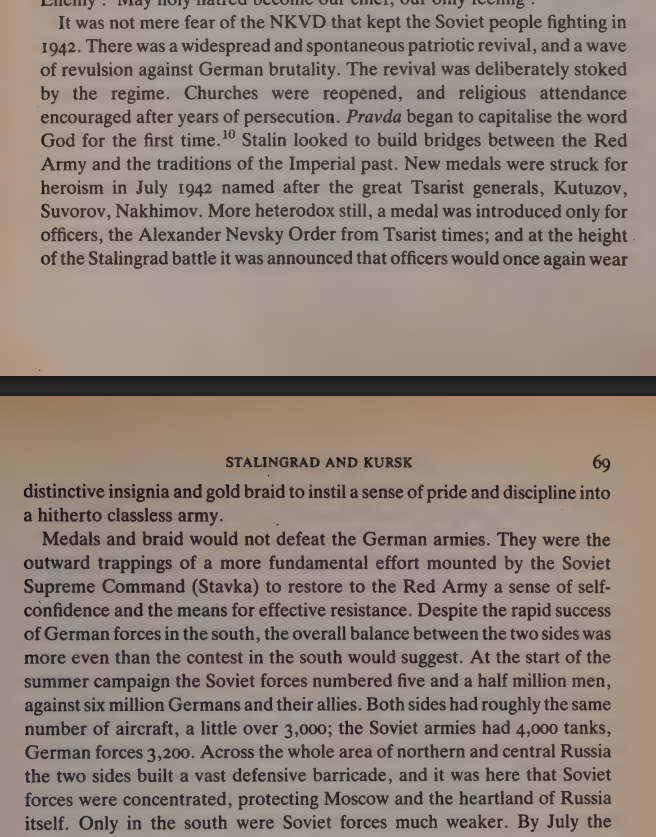
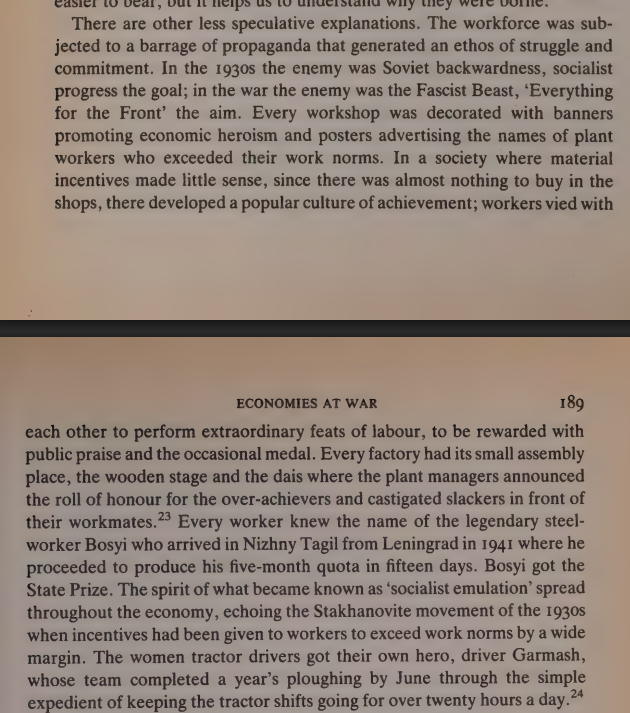
To keep Russia motivated through the 1941-43 catastrophes Stalin appealed to Russian patriotism, Orthodoxy, and race war with the Germans, all so contrary to Communist ideology. But nationalism and religion work; as with Bolshevik anti-family sentiment he bowed to reality.

The Soviet 1941-43 mobilization is probably the most insane feat of mobilization/militarization in human history. It's easy to see why Orwell thought mankind's future was totalitarian, and why even anti-Communists often thought it was the more effective system, however evil.

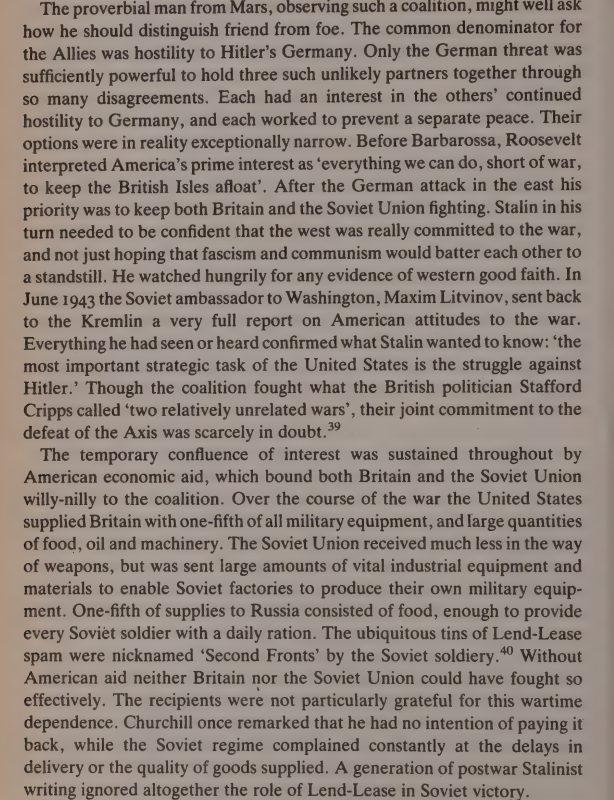
The US/UK and USSR was an unlikely coalition that quickly fell apart after the war. It was sustained by two things: hatred/fear of Hitler, and US economic aid, which both recipients were rather ungrateful for.
• • •
Missing some Tweet in this thread? You can try to
force a refresh