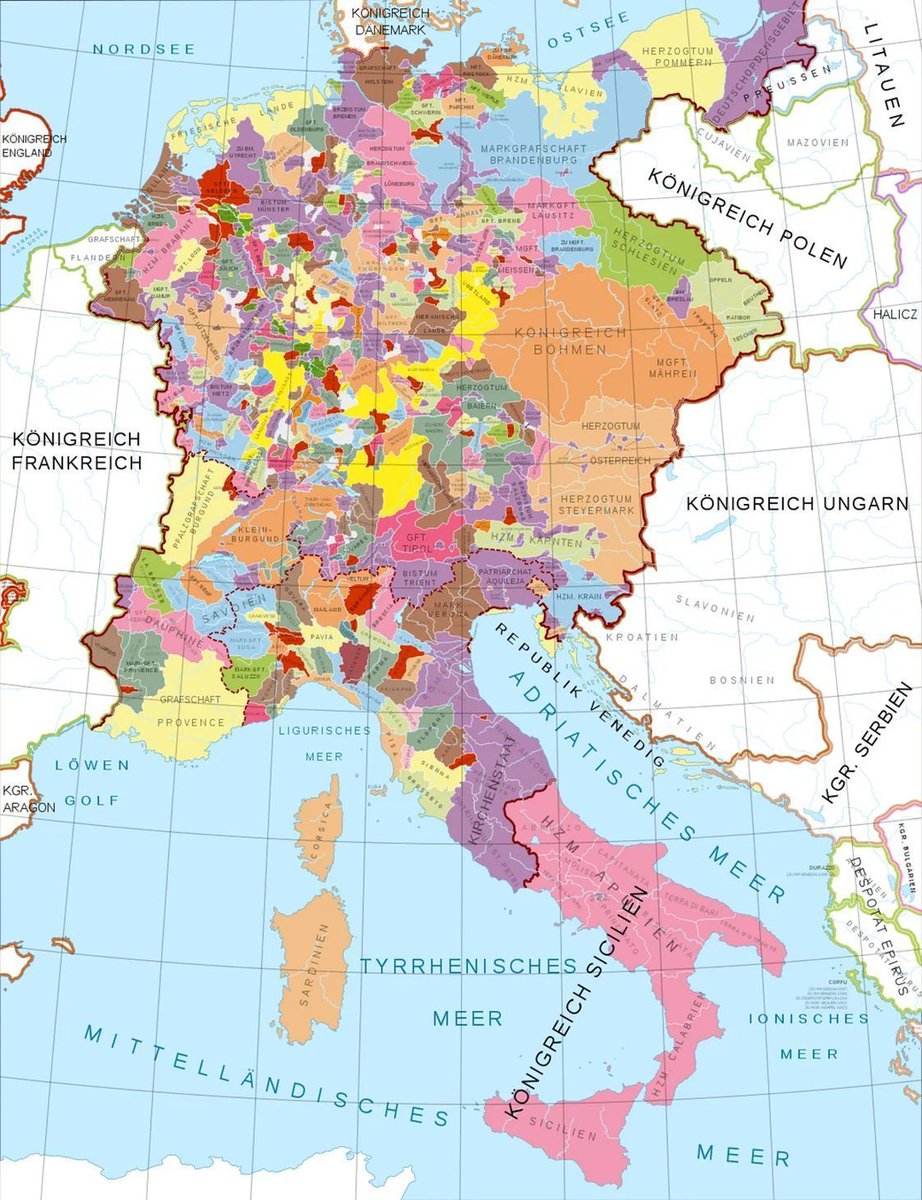
Every civilization eventually dies — it’s inevitable.
But what can be done about it? What will you do when civilization crumbles around you?
According to historian Arnold Toynbee, there are precisely 3 options — and only one leads to survival…🧵
But what can be done about it? What will you do when civilization crumbles around you?
According to historian Arnold Toynbee, there are precisely 3 options — and only one leads to survival…🧵

Toynbee was an English historian who published the 12 volume work “A Study of History,” which traced the life cycle of about two dozen world civilizations.
He attributed the growth and flourishing of civilizations to the creative energies of their leaders.
He attributed the growth and flourishing of civilizations to the creative energies of their leaders.

But once this energy is lost, disintegration and schism follow. A civilization then looks for new ways to recover its creativity.
Toynbee posited that during this phase citizens adopt new beliefs unlike the one that helped the civilization flourish in the first place.
Toynbee posited that during this phase citizens adopt new beliefs unlike the one that helped the civilization flourish in the first place.

He writes:
“Individual souls which have lost the opportunity…for initiating the creative actions by which the growth of a society is sustained are apt to take refuge in a series of alternative reactions to the pressures of disintegration…”
“Individual souls which have lost the opportunity…for initiating the creative actions by which the growth of a society is sustained are apt to take refuge in a series of alternative reactions to the pressures of disintegration…”

So what are these “alternative reactions” to societal decay?
There are broadly 3 sentiments which are adopted by the proletariat in declining civilizations:
-Detachment
-Utopianism
-Transcendence
There are broadly 3 sentiments which are adopted by the proletariat in declining civilizations:
-Detachment
-Utopianism
-Transcendence
The first reaction is detachment, or abandonment, where an individual dissociates from the difficult reality of the situation, and adopts either
1) ascetic self-discipline, or
2) a hedonistic abandoning of morality
1) ascetic self-discipline, or
2) a hedonistic abandoning of morality


A classic example of these contrasting mindsets can be found in Hellenic Greece, where the popularity of Stoicism and Epicureanism increased while Greek civilization declined.

Stoics adopted a life of self denial, believing a firm internal disposition could help them weather the storms of life.
Meanwhile the Epicureans embraced a vulgar hedonism where the pursuit of pleasure and avoidance of pain was prioritized.
Meanwhile the Epicureans embraced a vulgar hedonism where the pursuit of pleasure and avoidance of pain was prioritized.

Though seemingly opposite mindsets, they both involve a detachment from the realities of the disintegrating civilization. By focusing on internal states of being, Stoicism and Epicureanism abandon responsibility and allow fate to run its course in the real world.

The next reaction that individuals have amidst decline is utopianism — the embrace of an idealistic vision. Like detachment, this reaction comes in two contrasting forms:
1) Archaism — idealization of the past
2) Futurism — idealization of the future
1) Archaism — idealization of the past
2) Futurism — idealization of the future

Toynbee describes archaism as a mimesis (imitation) of past ancestors and ways of life:
“The cult of the past — archaism — offers escape from a deadly present to the myth-memory of an idealized past.”
“The cult of the past — archaism — offers escape from a deadly present to the myth-memory of an idealized past.”

Think the Romantics of the late 1800’s — they idealized the Middle Ages rather than tackling the pressing cultural issues of their day.

Toynbee claimed one sign of archaism is nationalism:
In early 20th-century Germany, an attempt was made to link political movements with Germany’s heritage. Kaiser Wilhelm I, for example, was depicted as a Teutonic knight, highlighting the nation’s medieval heroism.
In early 20th-century Germany, an attempt was made to link political movements with Germany’s heritage. Kaiser Wilhelm I, for example, was depicted as a Teutonic knight, highlighting the nation’s medieval heroism.

The flip side of archaism is futurism, a utopian vision that heralds a coming political or social revolution that will solve all of a society’s ills.

The problem with futurism, according to Toynbee, is that it tries to “leap-frog” the struggles of society by a single massive stride.
Instead of growing organically, building upon wisdom obtained via hardship, futurism provides the myth that utopia can be achieved immediately.
Instead of growing organically, building upon wisdom obtained via hardship, futurism provides the myth that utopia can be achieved immediately.

Toynbee writes that futurism is ultimately a palliative solution that fails to solve any real problems:
“The revolutionary cry for immediate release from oppression becomes a meaningless slogan: a cathartic outburst is no substitute for hard-won wisdom.”
“The revolutionary cry for immediate release from oppression becomes a meaningless slogan: a cathartic outburst is no substitute for hard-won wisdom.”
Worse, futurism often leads to tyrannical regimes — promises of a perfect society lure the masses into supporting despotic leaders.
Society, then, looks very different from the utopia the people were sold.
Society, then, looks very different from the utopia the people were sold.

Toynbee writes that the two sides of utopianism are ultimately attempts to escape harsh realities:
“…the modes of life which we have called ‘archaism’ and ‘futurism’ are both attempts to escape from a crushing present...by pointing to an alternative goal.”
“…the modes of life which we have called ‘archaism’ and ‘futurism’ are both attempts to escape from a crushing present...by pointing to an alternative goal.”

Besides detachment and utopianism, what options are left for an individual caught up in a crumbling society?
Toynbee points to a third option that allows one to rise above the darkness of the present moment…
Toynbee points to a third option that allows one to rise above the darkness of the present moment…

The last option for souls in a dying civilization is called transcendence.
Those who embrace transcendence reject detachment and utopianism, and instead use the hardships of their present moment to partake in the creation of something new.
Those who embrace transcendence reject detachment and utopianism, and instead use the hardships of their present moment to partake in the creation of something new.
Instead of escaping from their suffering, they channel it.
It is in this reaction that individuals “have it within their reach to participate in a greater act of creation than is witnessed in even the most vigorous stages of social growth.”
It is in this reaction that individuals “have it within their reach to participate in a greater act of creation than is witnessed in even the most vigorous stages of social growth.”

The suffering of the martyr, for example, was instrumental in spreading Christianity and eventually forging Western civilization.

Toynbee writes:
“It is not, then, by seeking to escape suffering, but by embracing and responding to it, that the soul born into a disintegrating society can win release and regain, on a higher plane, the path of growth from which his society has strayed…”
“It is not, then, by seeking to escape suffering, but by embracing and responding to it, that the soul born into a disintegrating society can win release and regain, on a higher plane, the path of growth from which his society has strayed…”

Ultimately, Toynbee’s study is a challenge to all who live during uncertain times:
Will you choose detachment, shirking the responsibility that the times demand? Or grasp at utopian ideals — cathartic fantasies that have no hope of coming true?
Or will you embrace the suffering of the moment, and use it to build something new?
Will you choose detachment, shirking the responsibility that the times demand? Or grasp at utopian ideals — cathartic fantasies that have no hope of coming true?
Or will you embrace the suffering of the moment, and use it to build something new?

We dive deeper in our newsletter.
In-depth articles straight to your inbox every week (free)👇
thinkingwest.substack.com
In-depth articles straight to your inbox every week (free)👇
thinkingwest.substack.com
• • •
Missing some Tweet in this thread? You can try to
force a refresh