Tivadar Danka Profile picture
Jul 13, 2025 10 tweets 3 min read Read on X
Conditional probability is the single most important concept in statistics.

Why? Because without accounting for prior information, predictive models are useless.

Here is what conditional probability is, and why it is essential. Image
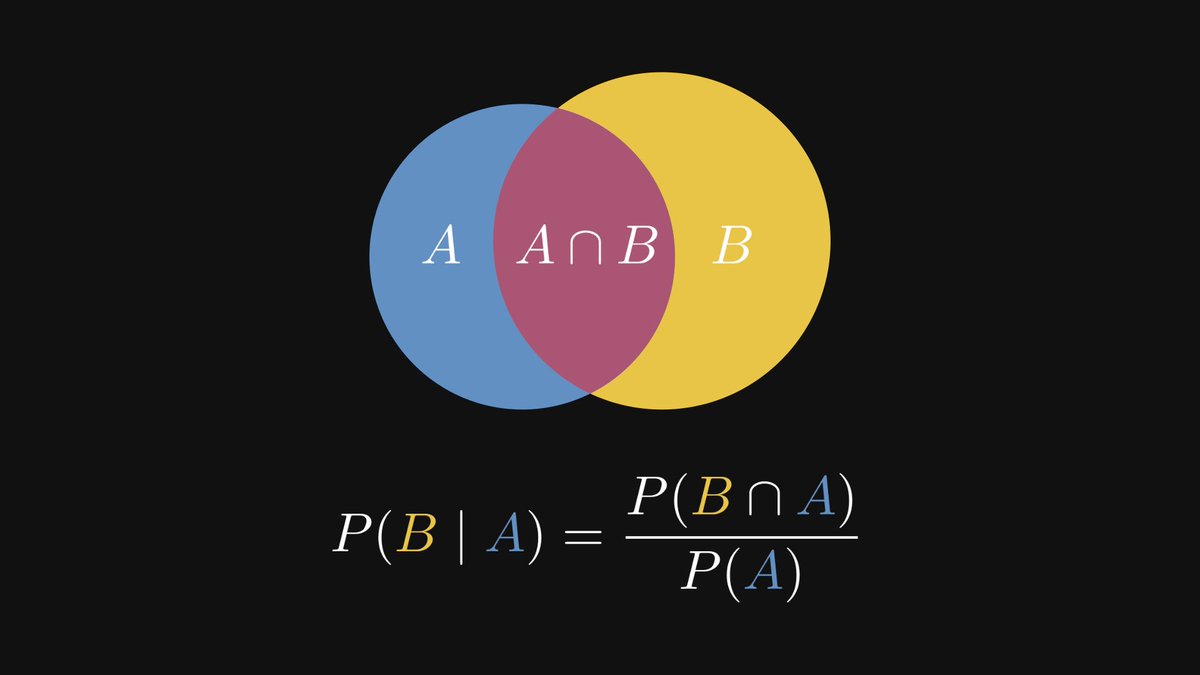
Conditional probability allows us to update our models by incorporating new observations.

By definition, P(B | A) describes the probability of an event B, given that A has occurred. Image
Here is an example. Suppose that among 100 emails, 30 are spam.

Based only on this information, if we inspect a random email, our best guess is a 30% chance of it being a spam.

This is not good enough. Image
We can build a better model by looking at more information.

What about looking for certain keywords, like "deal"?

It turns out that among the 100 emails, 40 contain this word. Image
Let's say that an email contains the word "deal".

How does our probabilistic model change?

We can leverage the prior information to get a more precise prediction than the random 30%. Image
By taking a more detailed look, we notice that 24 emails with the word "deal" are spam. Image
Thus, we can compute the conditional probability by focusing on the mails containing "deal". Image
Using a similar logic, we get that without the expression "deal", the probability of spam drops to 10%!

Quite a difference between our model with no prior information. Image
Conditional probability restricts the event space, thus providing a more refined picture.

This gives better models, leading to better decisions.
If this post sparked some love for math & ML, you will love my new book.

When you buy it, you also get access to:

• Discord community where you can talk to me directly
• GitHub repo with all the code
• FREE digital copy of the book (PDF)

Get it now: amazon.com/Mathematics-Ma…

• • •

Missing some Tweet in this thread? You can try to force a refresh

 

Keep Current with Tivadar Danka

Tivadar Danka Profile picture

Stay in touch and get notified when new unrolls are available from this author!

Read all threads

This Thread may be Removed Anytime!

PDF

Twitter may remove this content at anytime! Save it as PDF for later use!

Try unrolling a thread yourself!

how to unroll video
  1. Follow @ThreadReaderApp to mention us!

  2. From a Twitter thread mention us with a keyword "unroll"
@threadreaderapp unroll

Practice here first or read more on our help page!

More from @TivadarDanka

Jan 20
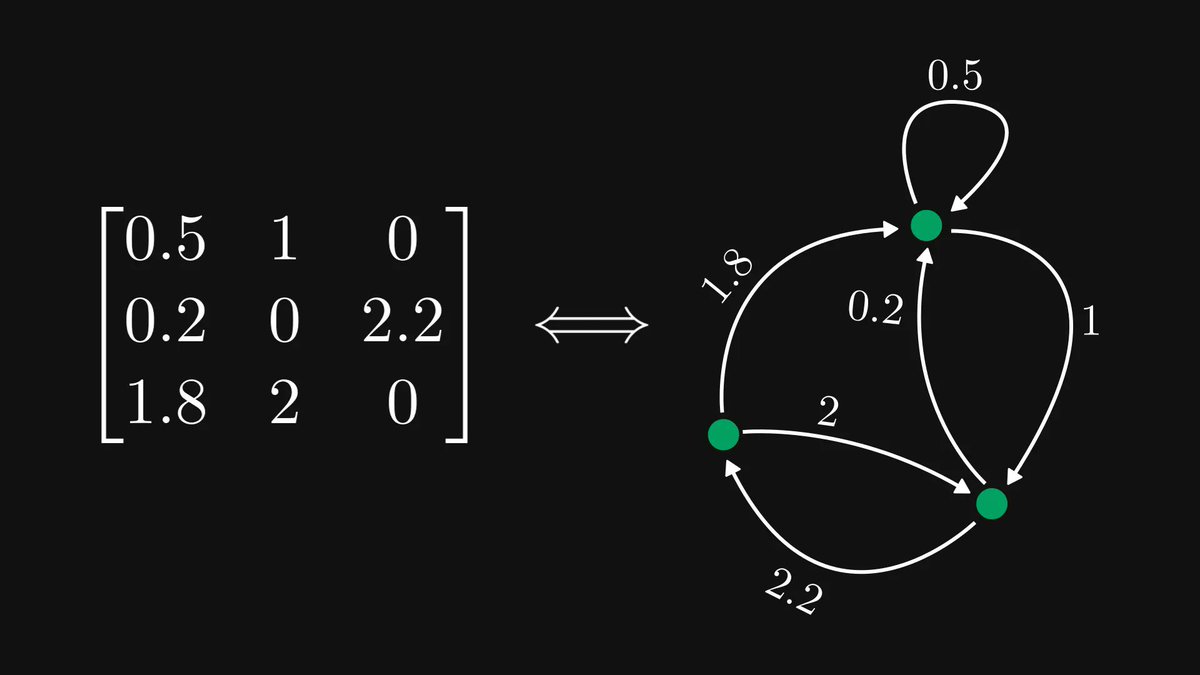
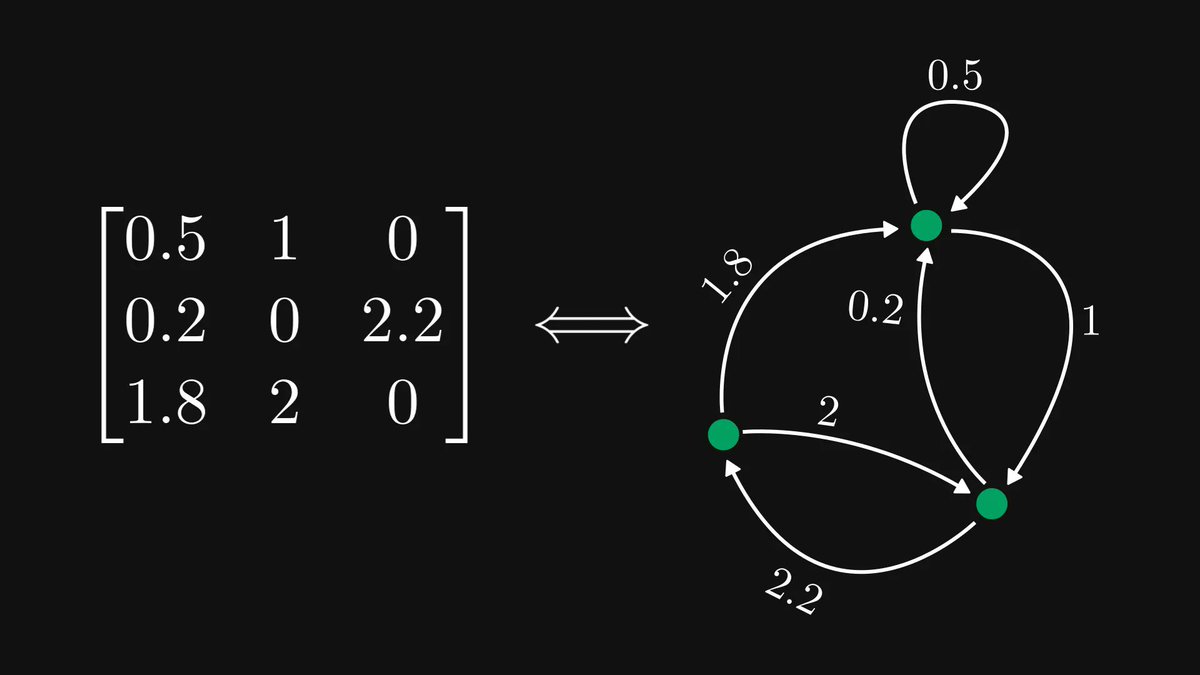
The single most undervalued fact of linear algebra: matrices are graphs, and graphs are matrices.

Encoding matrices as graphs is a cheat code, making complex behavior simple to study.

Let me show you how! Image
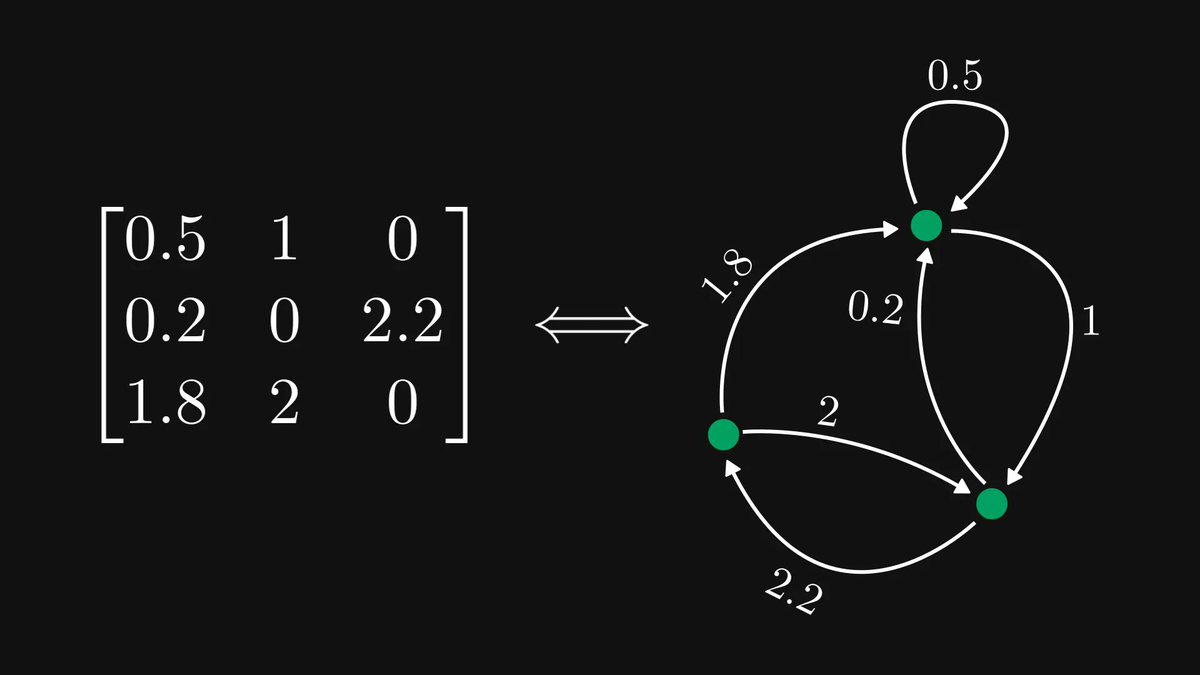
If you looked at the example above, you probably figured out the rule.

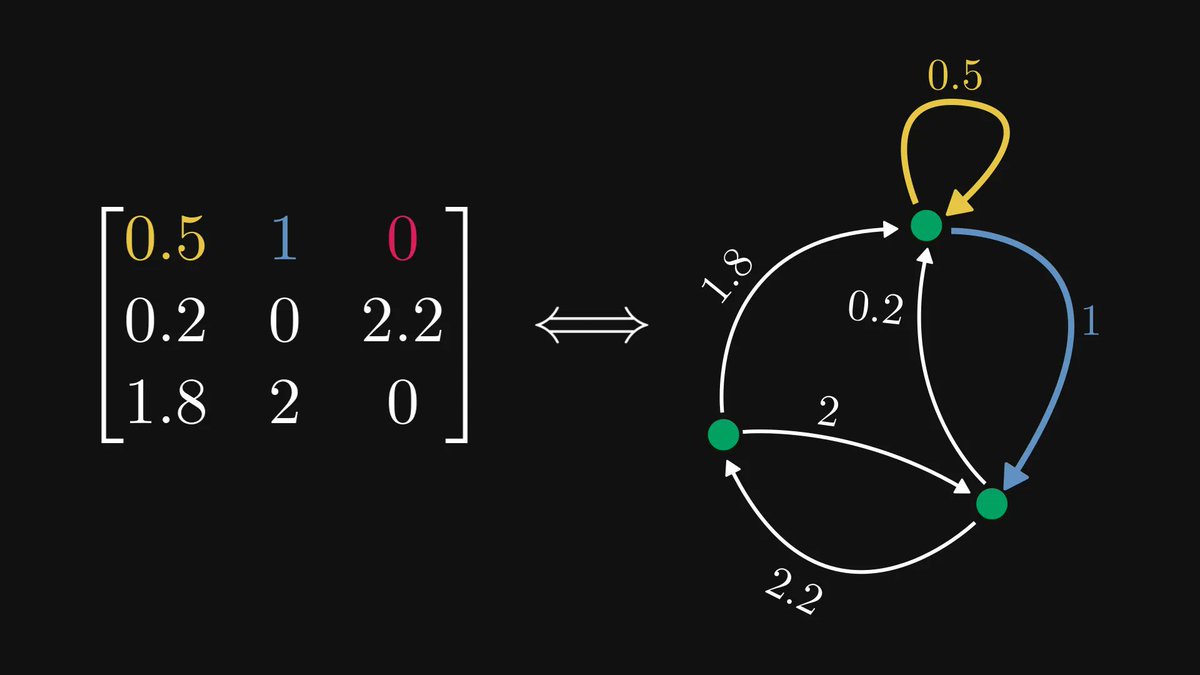
Each row is a node, and each element represents a directed and weighted edge. Edges of zero elements are omitted.

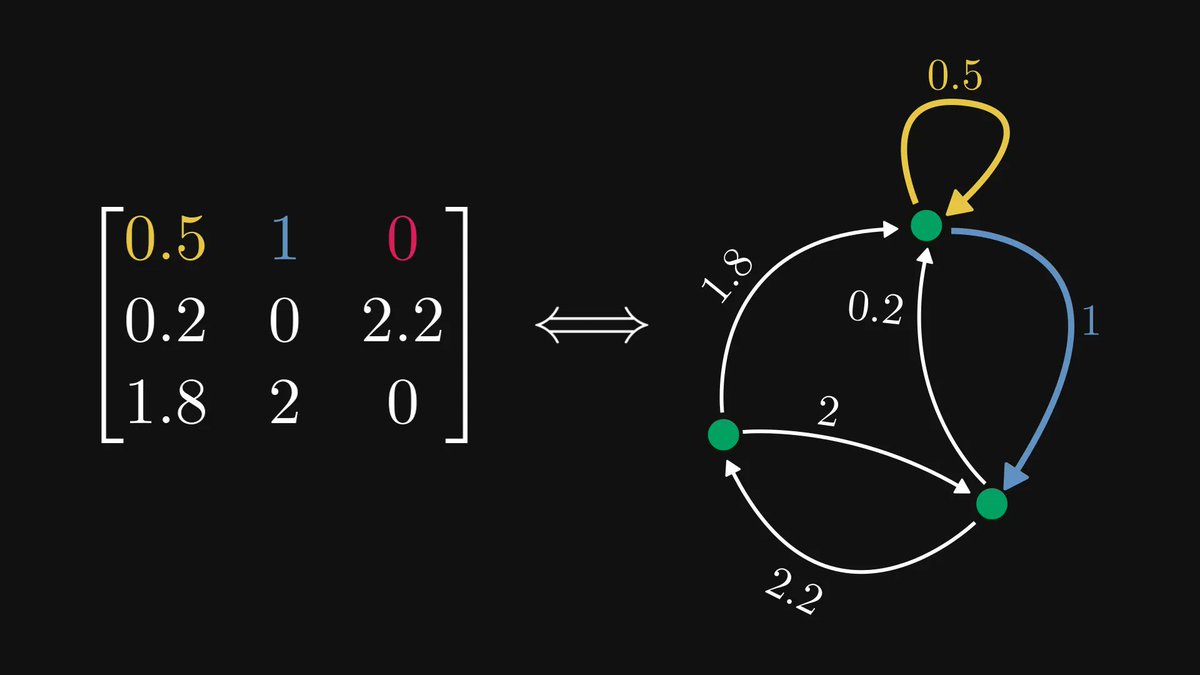
The element in the 𝑖-th row and 𝑗-th column corresponds to an edge going from 𝑖 to 𝑗.
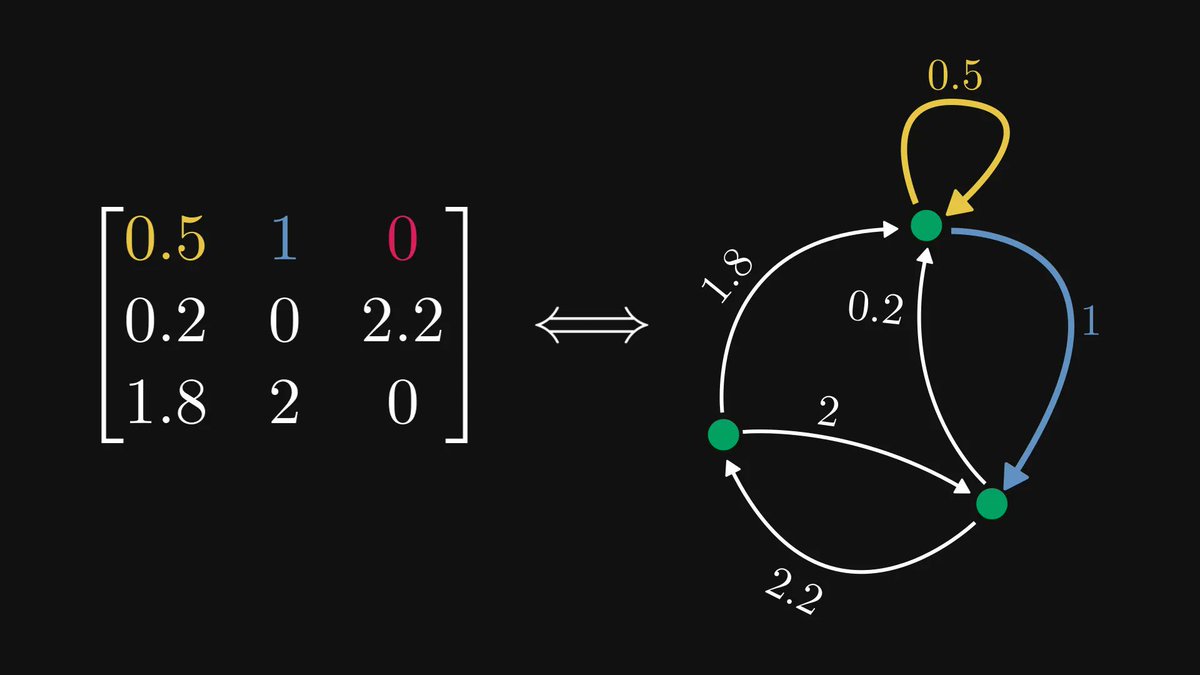
To unwrap the definition a bit, let's check the first row, which corresponds to the edges outgoing from the first node. Image
Read 18 tweets
Jan 14
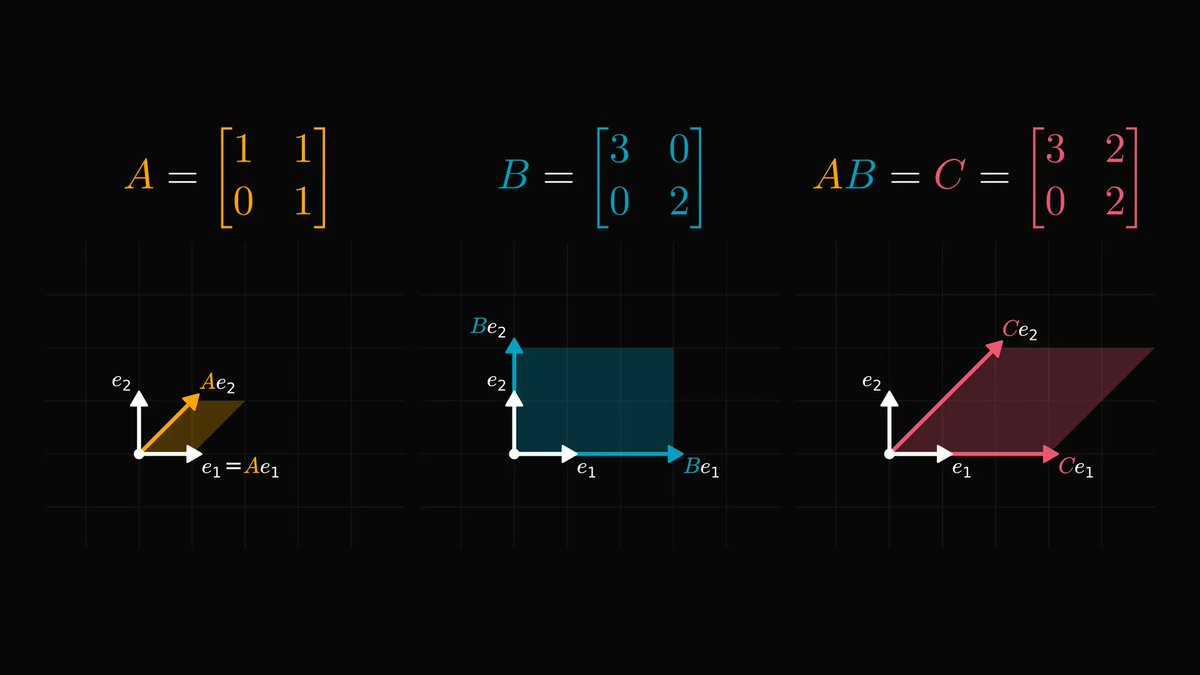
Matrix multiplication is not easy to understand.

Even looking at the definition used to make me sweat, let alone trying to comprehend the pattern. Yet, there is a stunningly simple explanation behind it.

Let's pull back the curtain! Image
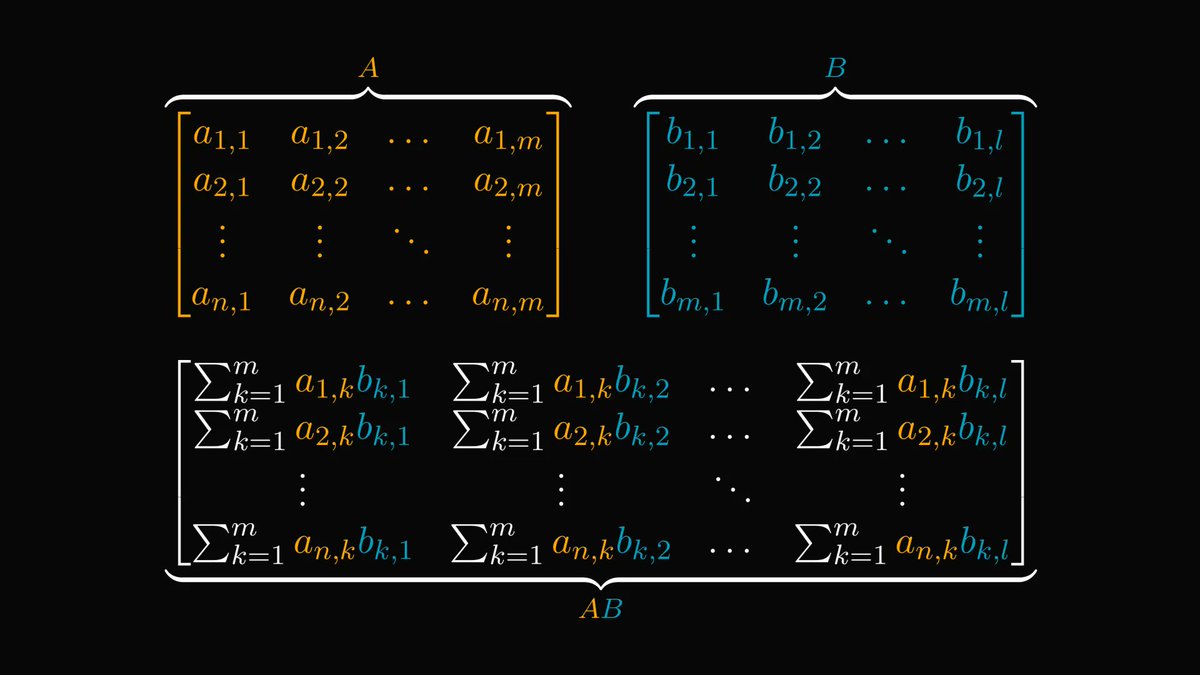
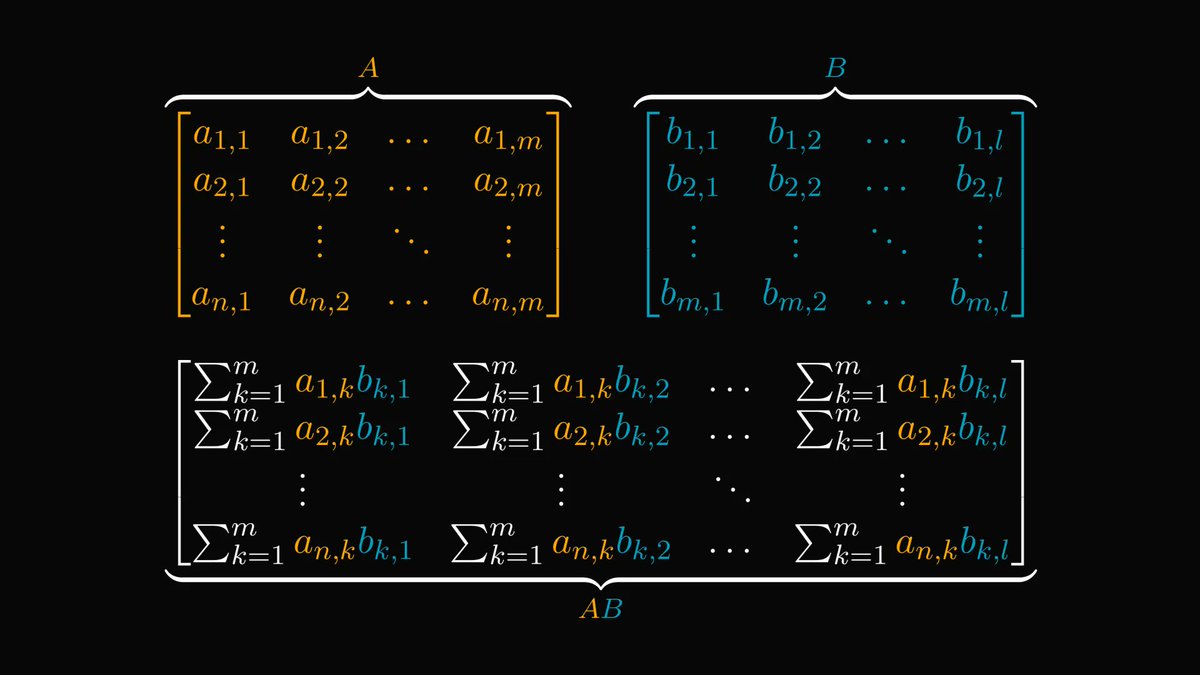
First, the raw definition.

This is how the product of A and B is given. Not the easiest (or most pleasant) to look at.

We are going to unwrap this. Image
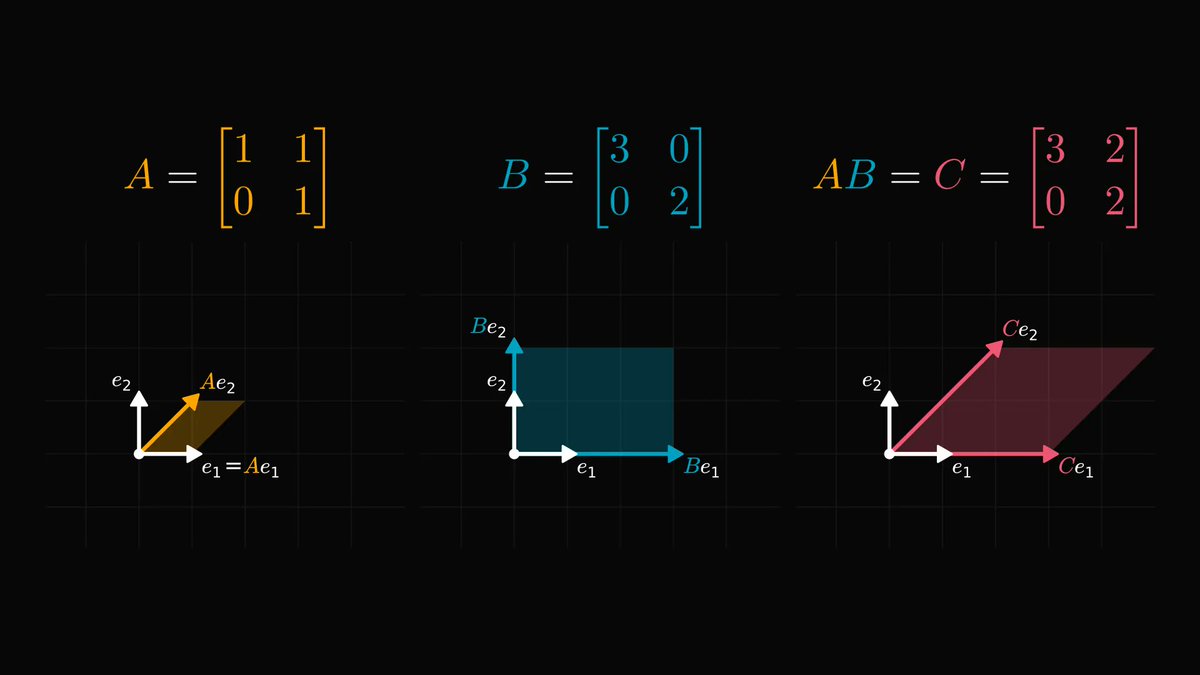
Here is a quick visualization before the technical details.

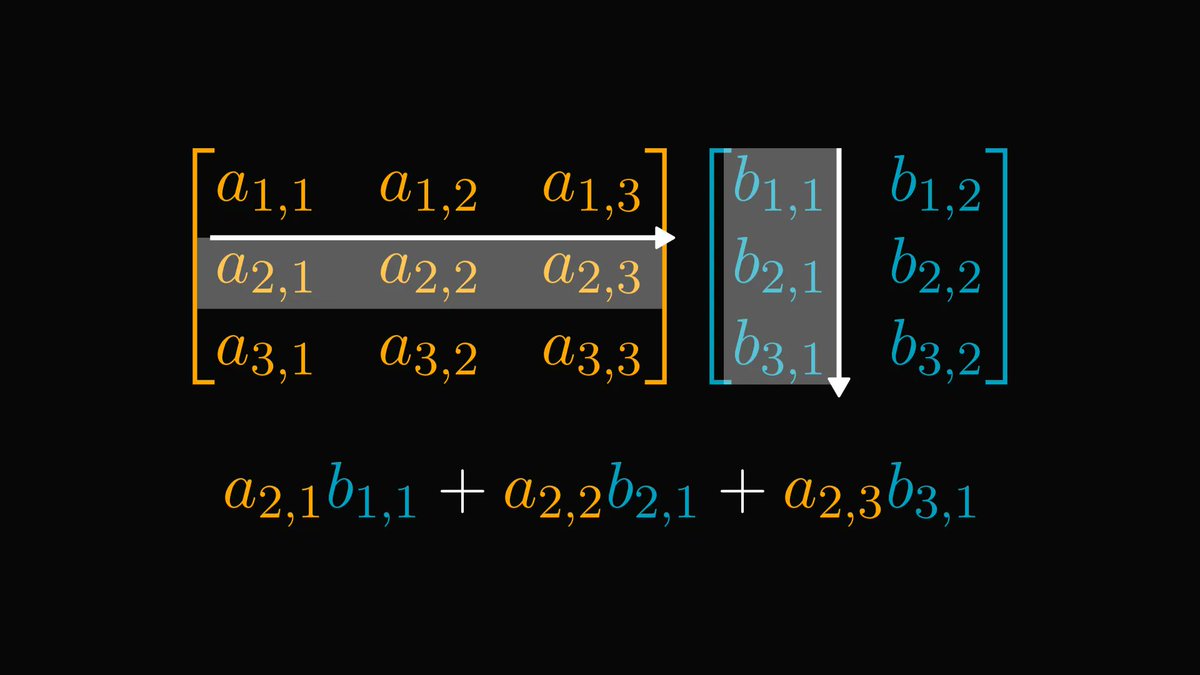
The element in the i-th row and j-th column of AB is the dot product of A's i-th row and B's j-th column. Image
Read 17 tweets
Jan 8
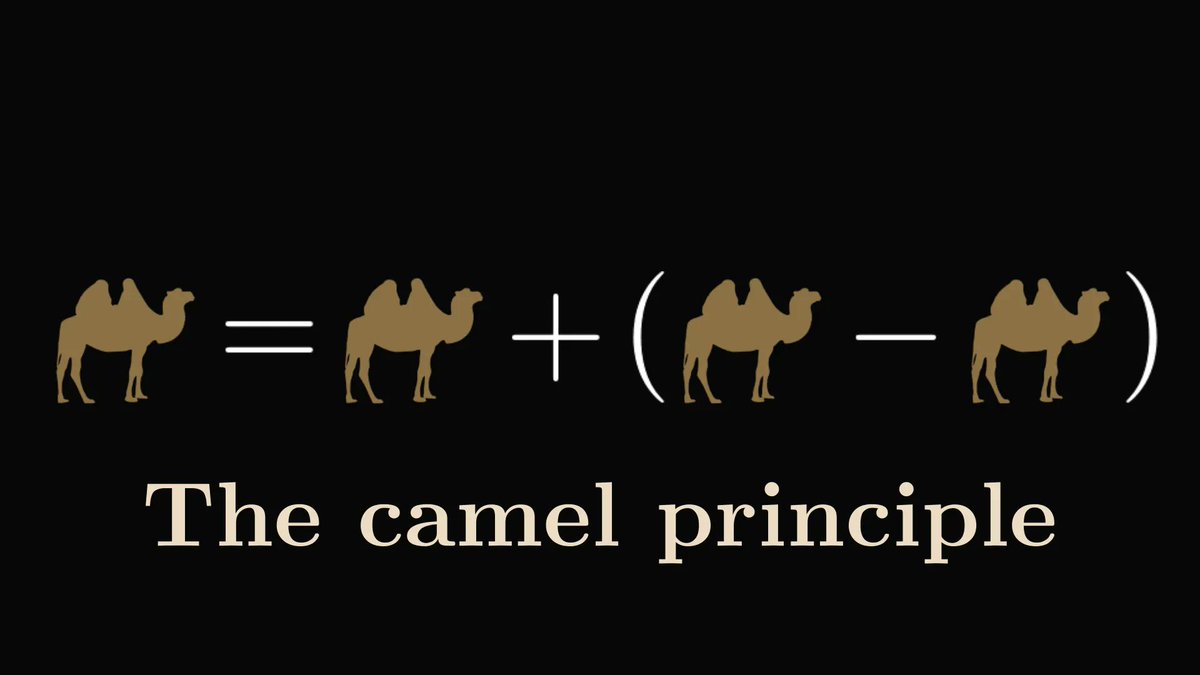
Behold one of the mightiest tools in mathematics: the camel principle.

I am dead serious. Deep down, this tiny rule is the cog in many methods. Ones that you use every day.

Here is what it is, how it works, and why it is essential: Image
First, the story:

The old Arab passes away, leaving half of his fortune to his eldest son, third to his middle son, and ninth to his smallest.

Upon opening the stable, they realize that the old man had 17 camels. Image
This is a problem, as they cannot split 17 camels into 1/2, 1/3, and 1/9 without cutting some in half.

So, they turn to the wise neighbor for advice. Image
Read 18 tweets
Jan 1
The single most undervalued fact of linear algebra: matrices are graphs, and graphs are matrices.

Encoding matrices as graphs is a cheat code, making complex behavior simple to study.

Let me show you how! Image
If you looked at the example above, you probably figured out the rule.

Each row is a node, and each element represents a directed and weighted edge. Edges of zero elements are omitted.

The element in the 𝑖-th row and 𝑗-th column corresponds to an edge going from 𝑖 to 𝑗.
To unwrap the definition a bit, let's check the first row, which corresponds to the edges outgoing from the first node. Image
Read 18 tweets
Dec 11, 2025
The single most undervalued fact of linear algebra: matrices are graphs, and graphs are matrices.

Encoding matrices as graphs is a cheat code, making complex behavior simple to study.

Let me show you how! Image
If you looked at the example above, you probably figured out the rule.

Each row is a node, and each element represents a directed and weighted edge. Edges of zero elements are omitted.

The element in the 𝑖-th row and 𝑗-th column corresponds to an edge going from 𝑖 to 𝑗.
To unwrap the definition a bit, let's check the first row, which corresponds to the edges outgoing from the first node. Image
Read 18 tweets
Dec 9, 2025
Matrix multiplication is not easy to understand.

Even looking at the definition used to make me sweat, let alone trying to comprehend the pattern. Yet, there is a stunningly simple explanation behind it.

Let's pull back the curtain! Image
First, the raw definition.

This is how the product of A and B is given. Not the easiest (or most pleasant) to look at.

We are going to unwrap this. Image
Here is a quick visualization before the technical details.

The element in the i-th row and j-th column of AB is the dot product of A's i-th row and B's j-th column. Image
Read 17 tweets

Did Thread Reader help you today?

Support us! We are indie developers!


This site is made by just two indie developers on a laptop doing marketing, support and development! Read more about the story.

Become a Premium Member ($3/month or $30/year) and get exclusive features!

Become Premium

Don't want to be a Premium member but still want to support us?

Make a small donation by buying us coffee ($5) or help with server cost ($10)

Donate via Paypal

Or Donate anonymously using crypto!

Ethereum

0xfe58350B80634f60Fa6Dc149a72b4DFbc17D341E copy

Bitcoin

3ATGMxNzCUFzxpMCHL5sWSt4DVtS8UqXpi copy

Thank you for your support!

Follow Us!

:(