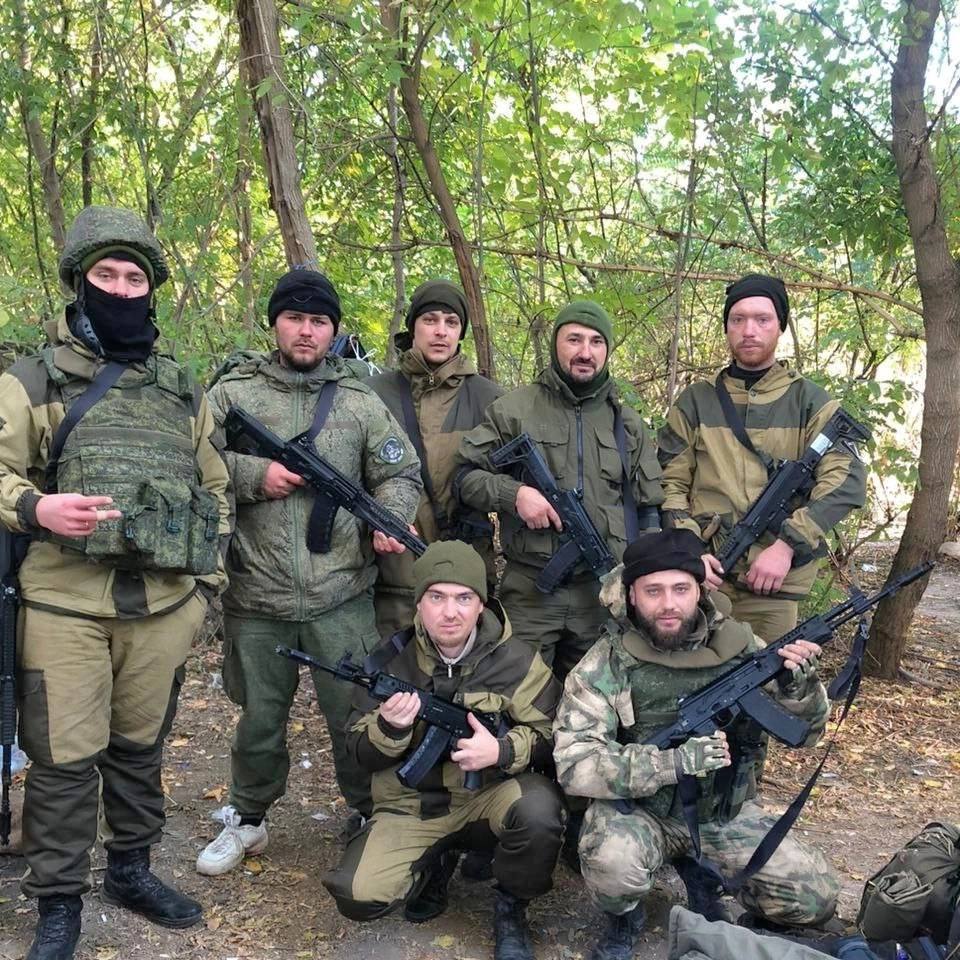
1/ FOOL'S GOLD IN UKRAINE, PART 2: Former Russian soldier Igor S. from Chuvashia was invalided out of the Russian army after sustaining injuries at Chasiv Yar. This thread continues his account of how the riches promised to Russians fighting in Ukraine are illusory. ⬇️ 
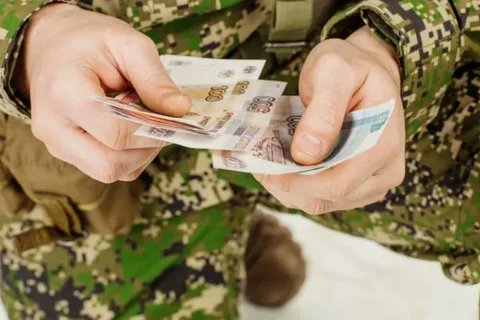
3/ Igor writes:
"How did our "Ministry of Finance" work? Very simple: we handed over cards with a PIN code, they were at the base in Berdiansk [in the occupied part of Ukraine's Zaporizhzhia region]."
"How did our "Ministry of Finance" work? Very simple: we handed over cards with a PIN code, they were at the base in Berdiansk [in the occupied part of Ukraine's Zaporizhzhia region]."
4/ "All collections for the common fund, for combat, for personal, for everyday life, for transport, gas, petrol, repairs and so on – everything was done through platoon quartermasters. It was written down in notebooks, entered into a table on a tablet.
5/ "And then, if necessary, authorized guys would cash out at ATMs in Berdiansk or Melitopol, pay for purchases by bank transfer. But all this was done through their own people, so there was no deception.
6/ "How much was left on hand after paying all the "taxes" and "utilities"? I had 40-50 thousand [$514-643). Family men, of course, were more frugal, saved on personal things, cut things out, maybe had 70 thousand [$900] for the household. But that's the maximum.
7/ "What we didn't have was corruption and extortion of money by any means, we were really LUCKY here. That is, we didn't give bribes. From stories I know that in other units they paid for everything – for the right to get away to the hospital, for vacation, for flights.
8/ "We had a strict queue for vacations, it was useless to bribe the company commander. If you cut in line, you put yourself in opposition to the team. Not according to the rules. But for delicate issues, there were our own "fixers".
9/ "For example, one signalman on a mission in Mariupol got drunk, got into a fight, lost government property, basically. A real mess. In such cases, the conversation is short: beat them up, go to the basement, from there, get sent to "Storm Z" and forget your name.
10/ "But this kid begged them to sort it out for him. The "fixers" talked it over with the battalion commander, he used his connections higher up, and in the end, the matter was hushed up. They paid everyone – the victim, the military police, the prosecutors.
11/ "I don't know how much it cost the attacker, but it was well over a million [$12,800]. Life is still more expensive.
Is it possible to make money in the Special Military Operation? For me, this is an abstract question, no one asked me if I wanted to fight.
Is it possible to make money in the Special Military Operation? For me, this is an abstract question, no one asked me if I wanted to fight.
12/ "If they mobilised me, I went. If they didn't mobilise me, I wouldn't have gone. But those who go to war for the long ruble are very wrong in their calculations. Even those who adequately assess the risks think that this risk will be well paid at a fixed rate.
13/ "In fact, when you end up on the line of contact, you pursue only one goal – to survive.
If you end up in a bad unit, where everyone is on their own, you will quickly die. Or shoot yourself to escape this hell.
If you end up in a bad unit, where everyone is on their own, you will quickly die. Or shoot yourself to escape this hell.
14/ "But then you will have to give the doctors and special agents everything you have, just so they do not register the suicide [which would deprive your family of compensation payments].
15/ "And in good units, like ours, everything is based on mutual aid and SELF-SUFFICIENCY. Is it possible to refuse to pay "for the common good", not to chip in for combat supplies, for the boiler? I can't say that anyone was forced to do this.
16/ "In war, you are either part of the team, or you will not survive long. And being part of the team at someone else's expense will not work. Our survival rate was much higher than in other units. Although the losses were still considerable.
17/ "From my close circle of twenty people, four guys were 200s [killed] in six months, another five were wounded, someone, like me, is no longer a soldier after that.
18/ "So, calculate for yourself what the “turnover rate” is and what the statistical probability of surviving at least a year at war is.
There are also “expendable” units, which are like a leaky bucket – no matter how you fill it with water, it’s still empty.
There are also “expendable” units, which are like a leaky bucket – no matter how you fill it with water, it’s still empty.
19/ "It’s like this: a company is replenished to its regular strength, a month later there is no infantry at all, only commanders, drone operators, signalmen, drivers, mortar men have survived, and not all of them.
20/ "The company is replenished again – it goes into meat assaults over the bodies of its predecessors and burns out completely in a few weeks. There is simply no time to form a stable combat backbone, to establish relationships, there are many deserters and suicides.
21/ "It’s a pity for them, especially when young guys die. They went to war for money and medals – and then it's such a mess.
22/ "I know of one case: a guy of about 20 decided to run away after a week “at zero” [at the front] before his first assault, realizing that it could be his last. So, to teach others a lesson, they caught him, stripped him naked and threw him into a pit.
23/ "They said: if you survive a day, you'll be lucky, we'll give you a chance to atone for your guilt with blood. He survived, but his mind went crazy. What should we do with him? We can't send him home? He'll recover there, and he'll still tell us what's unnecessary.
24/ "So they simply zeroed him out [executed him] – fewer problems.
But let's get back to the money issue. To earn money, you have to stay alive. To survive, you have to invest the money you earn in your survival.
But let's get back to the money issue. To earn money, you have to stay alive. To survive, you have to invest the money you earn in your survival.
25/ "Then the bottom line will be like me, with fifty [thousand] a month left at best. Now the question: would you go to work in civilian life, say, in a mine under these conditions: no one goes up to the surface, not even the sick.
26/ "The workday is not standardised, someone is constantly being buried, someone suffocates, someone disappears in the adits without a trace. Half the team dies within six months. You live constantly in dirt, cold, hunger, fear. Your death is only a matter of time.
27/ "You are allowed to go home once a year for two weeks. And for all this you are paid 40-50 thousand.
Well, there are no idiots who would sign up for something like that!
Well, there are no idiots who would sign up for something like that!
28/ "But that's exactly how it is in war, and, I emphasize, that's in the best case scenario, if you end up in a normal unit. And if you end up in a "discharged" unit, you won't even have time to appreciate all the delights of frontline life, because you won't last a week." /end
29/ (to be continued in part 3)
• • •
Missing some Tweet in this thread? You can try to
force a refresh